Ingredients and steps on one page. Print it, or choose “Save as PDF” in the print dialog.
Sekai Gohan
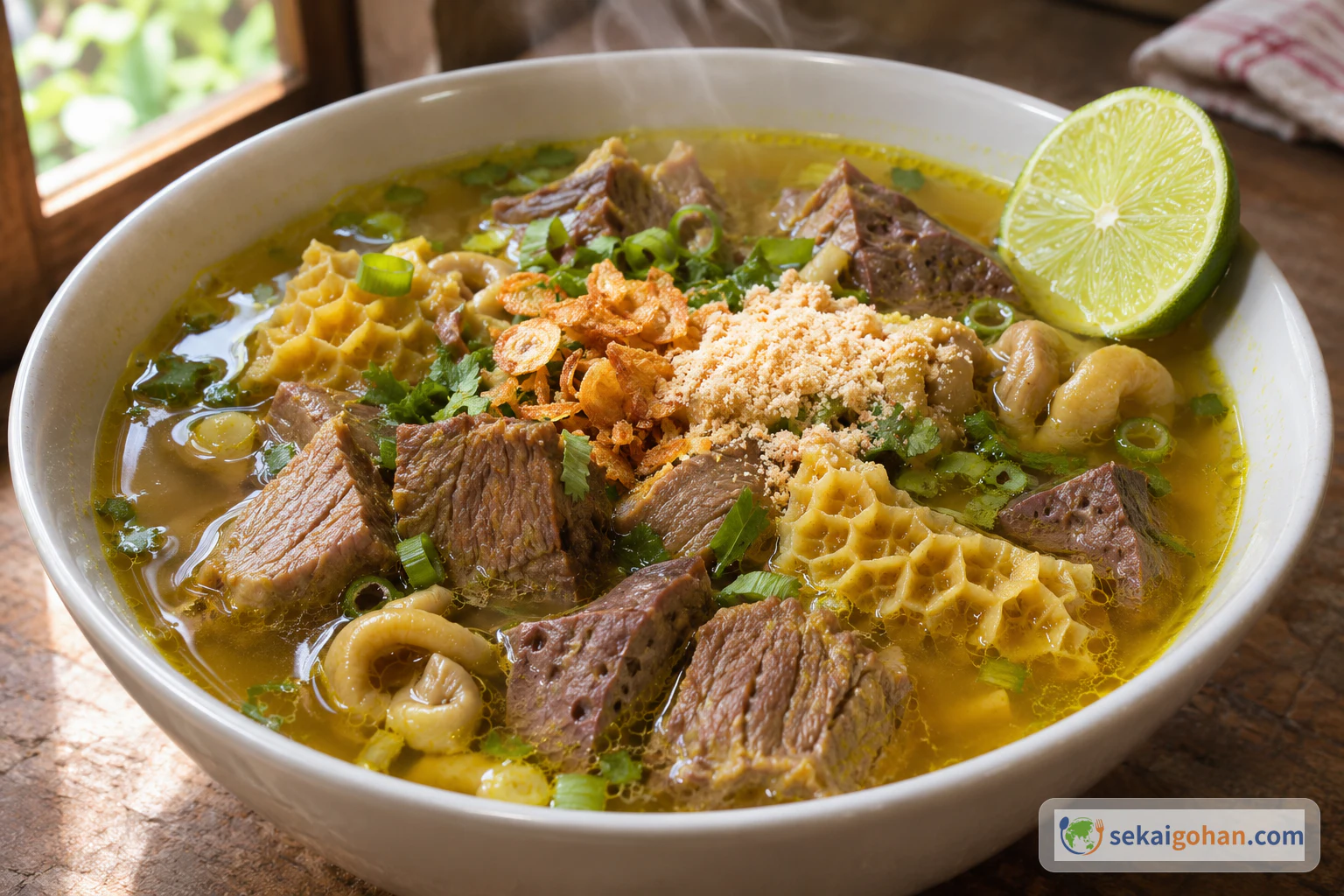
Soto Madura: East Javanese Clear Turmeric Beef and Offal Soup
Ingredients
| Ingredient | Amount | Role |
|---|---|---|
| Beef (daging sapi) | 10½ oz (300 g) | The body of the broth and the big chunks in the bowl |
| Water (air) | 3¾ quarts (3.5 L) | The broth |
| Honeycomb tripe (babat) | 5 oz (150 g) | Chew and gelatin |
| Beef small intestine (usus sapi), pre-boiled | 5 oz (150 g) | Deep offal savor |
| Beef lung (paru sapi), pre-boiled | 5 oz (150 g) | Spongy pieces that soak up broth |
| Kaffir lime leaves (daun jeruk), stems removed | 4 | Citrus aroma, fried with the paste |
| Galangal (lengkuas), bruised | 1¼-inch (3 cm) piece | Bright, sharp heat |
| Lemongrass (serai), white part only, bruised | 3 stalks | Lemony aroma |
| Salt (garam) | 6 tsp | The backbone of the seasoning |
| Sugar (gula pasir) | 6 tsp | Roundness and the East Javanese sweet-savory lean |
| Cooking oil (minyak goreng) | 3 tbsp | For frying the spice paste |
| Candlenuts (kemiri), toasted | 4 | Richness and a little body in the paste |
| Fresh turmeric (kunyit), roasted | ¾-inch (2 cm) piece | The yellow color and an earthy note |
| Shallots (bawang merah) | 14 small | The main sweetness |
| Garlic (bawang putih) | 6 cloves | The aromatic core |
| Coriander seed (ketumbar) | 2 tsp | Citrusy spice |
| Ginger (jahe) | ¾-inch (2 cm) piece | Warmth |
| Pepper (merica) | 1 tsp | The edge of heat |
| Scallions (daun bawang), thinly sliced | 3 | Green aroma at the table |
| Leaf celery (seledri), thinly sliced | 3 stalks | A cool, fresh note |
| Fried shallots (bawang goreng) | 3 tbsp | Toasty crunch on top |
| Limes (jeruk nipis) | 3 | Sourness squeezed in at the end |
| Shrimp crackers (kerupuk udang), for the koya | 6 | The base of the koya powder |
| Garlic, thinly sliced, for the koya | 3 cloves | Toasty depth in the koya |
| Kaffir lime leaves, for the koya | 2 | Citrus lift in the koya |
| Oil, for frying the koya | as needed | Frying the crackers and garlic |
| Steamed white rice | as needed | Served with every bowl |
Steps
1Clean the tripe and offal
Wash the honeycomb tripe well under running water, rub it all over with a little salt and flour, and rinse until the water runs clear. Turn the small intestine inside out and rinse it the same way. Blanch the tripe, intestine and lung in a separate pot of boiling water, then pour that water away. Move on when the offal smells clean and the tripe looks pale.
2Bring the meat and offal to a boil
Put the water, beef, tripe, intestine and lung into the large pot and set it over high heat. Bring it to a full boil. As it comes up, foam gathers at the edges. Move on when the surface of the meat has turned grey-brown and the scum has risen.
3Cut the meat and strain the broth
Lift the beef and offal out onto a board and cut everything into 1¼-inch (3 cm) cubes. Set the cloth-lined sieve over the heatproof bowl and pour the broth through it. Throw away the scum and residue left in the cloth. The broth that comes through should be pale gold and clear.
4Simmer the meat back in the clear broth
Rinse the pot, pour the strained broth back in and bring it up to a boil again. Return the cut beef and offal. Lower the heat until only small bubbles break at the edge, and keep it there, skimming anything that rises. Simmer until a skewer slides into the beef with no resistance and the tripe is tender.
5Grind the spice paste
Toast the candlenuts in a dry pan until they smell nutty. Roast the turmeric in the same pan or over a flame. Grind them with the shallots, garlic, coriander seed, ginger and pepper in a mill or mortar. The paste is ready when it is thick and smooth, bright yellow-orange, with no whole seeds left.
6Fry the paste with the aromatics
Heat the 3 tbsp oil in a wok over medium heat. Add the paste with the kaffir lime leaves, galangal and lemongrass, and stir as it fries. Keep it moving so it never catches on the bottom. Stop when the paste has darkened, the oil has turned reddish-brown and the raw smell of garlic is gone.
7Stir the paste into the pot
Scrape the fried paste and every bit of its oil into the simmering broth, leaves and stalks included. The oil carries most of the aroma. Stir once so it spreads across the surface. Watch the broth turn from pale to yellow to gold.
8Season with salt and sugar
Add the 6 tsp salt and then the 6 tsp sugar, and stir until both dissolve. Keep the pot at a gentle simmer until everything is cooked through, with the center of the meat and offal at 167°F (75°C) for at least 1 minute. If the broth reduces, top it up with hot water. It is done when the meat and offal are tender to the center and the broth tastes rounded, salty and sweet.
9Fry the crackers and garlic for the koya
Heat the oil for the koya in a small pan and fry the shrimp crackers until they puff fully. Drain them on paper. Fry the sliced garlic over low heat until it is evenly golden and lift it out before it darkens. Stop when the crackers are crisp all the way through and the garlic is golden.
10Grind the koya
Strip the two kaffir lime leaves from their stems and grind them in the mortar. Add the fried crackers and garlic and grind everything in a mill or blender. Keep going until it is a fine, pale beige powder. Set it in a small bowl with a spoon.
11Assemble the bowls
Rinse the scallions, leaf celery and limes well under running water, washing the lime skins before cutting. Put a few pieces of beef and offal in the bottom of each deep bowl and ladle hot broth over them. Top with scallions, leaf celery and fried shallots, and put a lime half on the side. Sprinkle the koya just before eating. It is right when the koya sits on the surface and the bowl smells toasty and citrusy at once.