Ingredients and steps on one page. Print it, or choose “Save as PDF” in the print dialog.
Sekai Gohan
Xôi Đỗ Xanh: Vietnamese Steamed Sticky Rice with Mung Beans
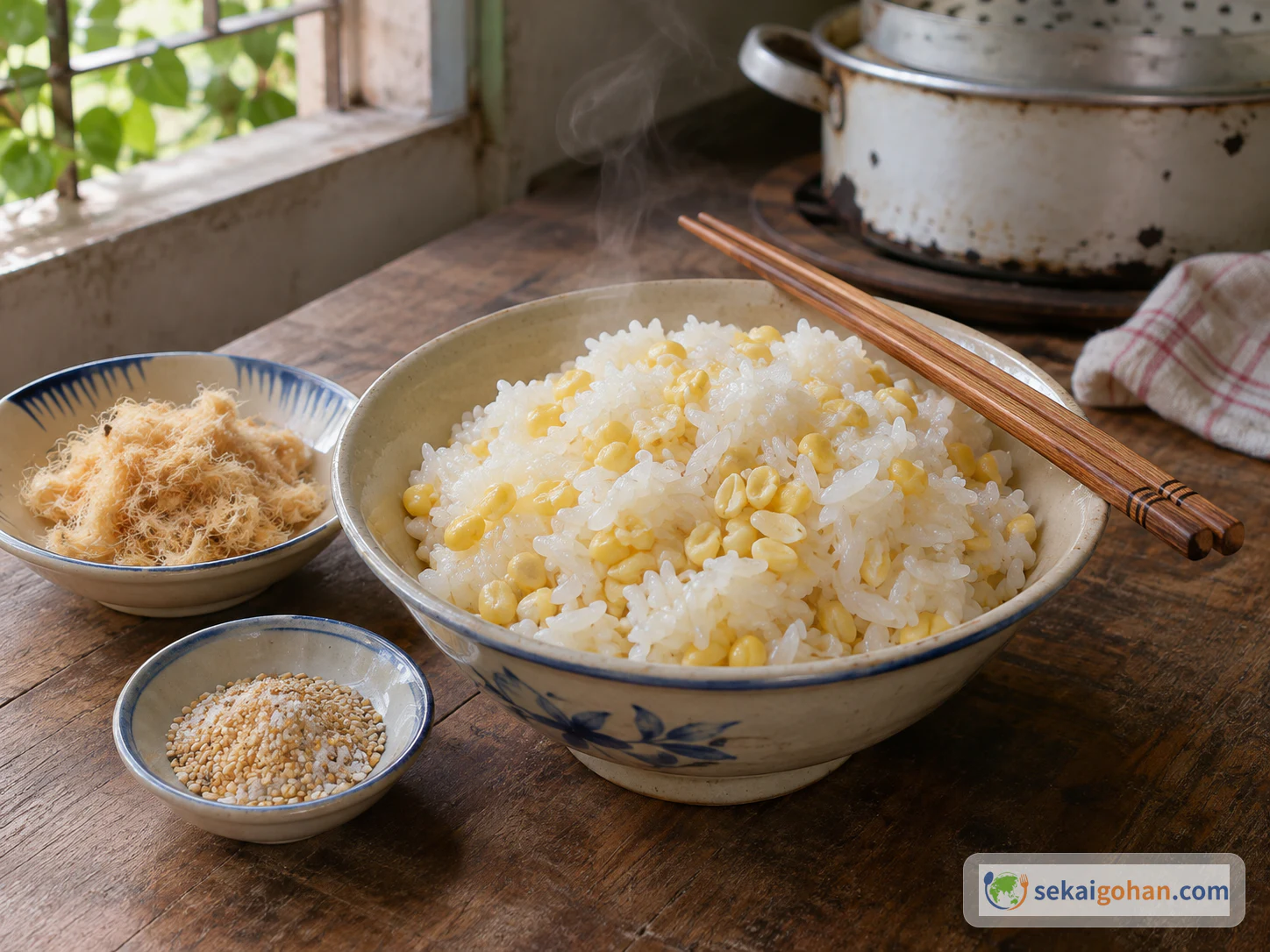
Ingredients
| Ingredient | Amount | Role |
|---|---|---|
| Glutinous rice (gạo nếp) | 1 lb 2 oz (500 g) | The body of the dish. Its stickiness and distinct grains are the texture |
| Skinned split mung beans (đậu xanh bỏ vỏ) | 7 oz (200 g) | Soft, crumbly, faintly sweet beans running through the rice |
| Coarse salt (muối hạt) | 2 tsp | Seasons the rice and beans from the inside as they steam |
| Neutral cooking oil (dầu ăn) | 3½ tbsp (50 ml) | Loosens the grains, adds gloss and keeps the texture soft as it cools |
Steps
1Soak the glutinous rice
Rinse the rice lightly in a large bowl, swirling it once or twice and pouring off the cloudy water. Cover it with plenty of fresh water and leave it to soak for 6–8 hours. In cold weather the grains swell more slowly, so judge by the rice and not only the clock. It is ready when the grains have turned opaque white and plump, and one crushes easily between your fingers.
2Soak the mung beans
Put the split beans in a second bowl and cover them generously with water. Leave them for about 4 hours so the soaking reaches the very centre of each bean. A few will float; that does no harm. The beans are ready when one squashes flat under your finger with no hard core left in the middle.
3Wash together, drain and salt
Drain the rice and the beans, tip them into one bowl and wash them together, changing the water several times. Turn everything into a colander and let it drain well. Sprinkle the 2 tsp coarse salt over the mixture and toss with your hands until it is spread through every part, rice and beans alike. Move on when no more water drips from the colander and the grains look damp rather than wet.
4Line the steamer and spread the mixture
Bring water to a boil in the pot under your steamer. Line the basket with the cotton cloth, dampened and wrung out, and spread the rice and beans over it in an even layer. Poke a few holes through the layer with a chopstick so steam can rise through the middle. The water must stay below the basket and never touch the rice. You are ready when steam begins to curl up through the holes.
Steam it, never boil itThis rice cooks only in steam rising from below. If boiling water reaches the cloth, the bottom layer turns into a mushy, dumpling-like mass. Keep the water level comfortably below the basket.
5Steam for 30 minutes
Cover the steamer and steam over a steady boil for about 30 minutes. Keep the lid on; each time you lift it, steam escapes and the rice stalls. At 30 minutes, open it and break a few grains and beans between your fingers. The first steam is done when the rice is plump and opaque white, the beans are soft and crumbling, and the surface is still matte. If you feel a hard centre, cover again and steam a few minutes more before checking again.
Hot steamLift the lid tilted away from you so the first cloud of steam goes the other way, and keep your face and wrists clear of the basket.
6Turn the rice and fold in the oil
With the paddle, turn the whole layer over from the bottom up so the rice from the cloth comes to the top. Drizzle the 3½ tbsp (50 ml) oil over it in a thin circle. Fold and loosen the rice gently, breaking up any clumps, until the oil is worked through. Stop when the grains have begun to glisten and separate and the beans are scattered evenly.
Oil only after the first steamThe oil goes in once the rice is cooked through, and it goes in with the turning. The turn brings the dense bottom layer up into the steam, and the oil coats each grain so the rice stays loose and soft instead of setting into a block as it cools.
7Steam for another 10 minutes
Spread the rice back into an even layer, cover, and steam for about 10 minutes more. The oil warms through and settles into the grains during this time. Lift the lid and stir once with the paddle. The rice is done when every grain is glossy and plump and the mass falls loose from the paddle instead of pressing into a cake.
8Fluff and serve
Loosen the rice once more and scoop it into bowls or onto a shared plate while it is still steaming. Put the accompaniments on the side so each person adds their own. Taste a mouthful before you salt anything else on the table; the rice is already seasoned. Break one bean with your spoon: its centre should be dry and crumbly, and the rice grains should squash softly between your teeth with a clean chew.