Ingredients and steps on one page. Print it, or choose “Save as PDF” in the print dialog.
Sekai Gohan
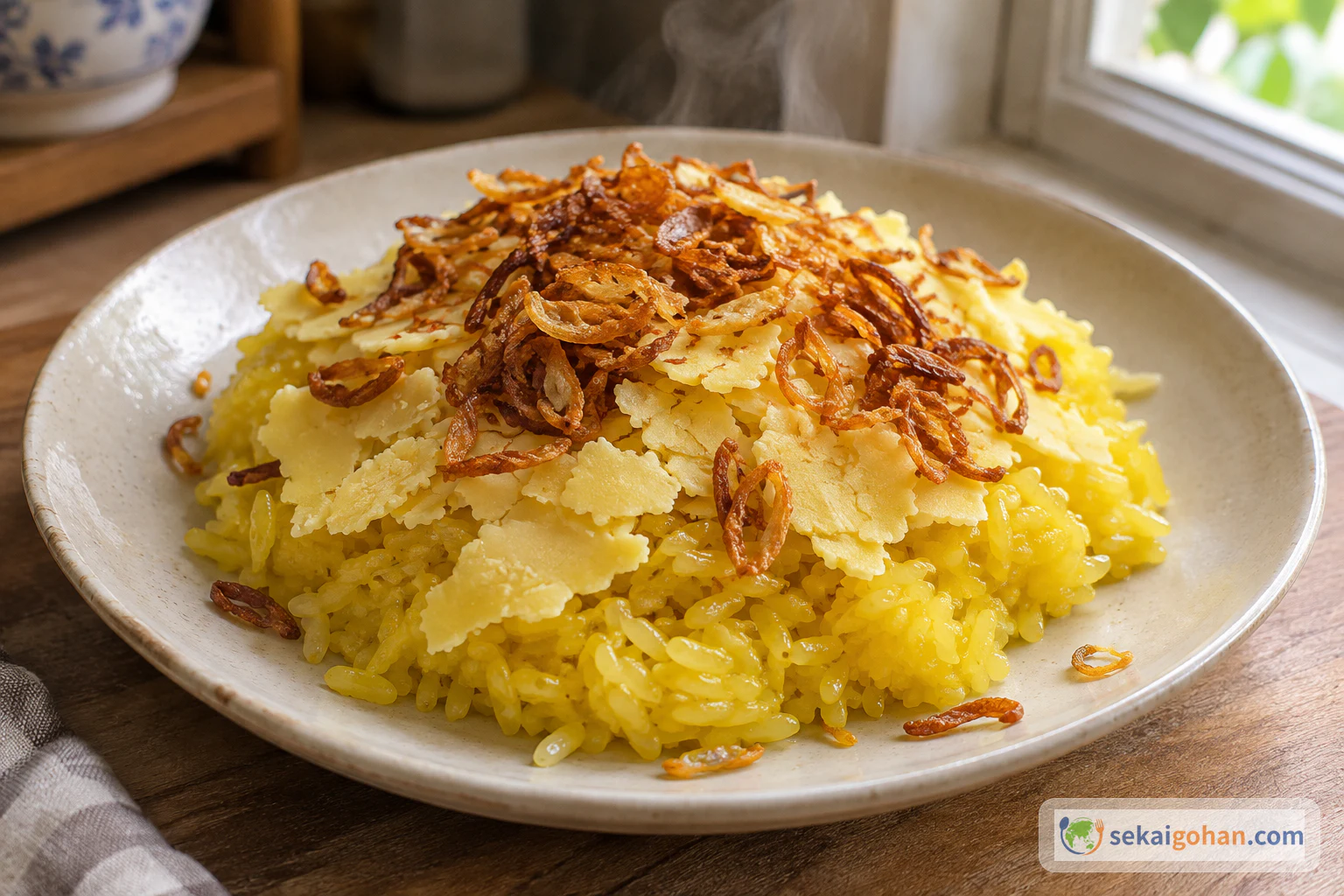
Xôi Xéo: Hanoi Turmeric Sticky Rice with Shaved Mung Bean
Ingredients
| Ingredient | Amount | Role |
|---|---|---|
| Glutinous rice (gạo nếp) | about 1½ cups / 8 oz (225 g) | The base; chewy grains and gentle sweetness |
| Turmeric powder (bột nghệ) | ¼ tsp | Colours the rice during the soak |
| Peeled split mung beans (đậu xanh cà vỏ) | 3½ oz (100 g) | Steamed, mashed, shaped and shaved over the rice |
| Salt for the rice (muối) | ½ tsp | Seasons the rice before steaming |
| Salt for the beans (muối) | ¼ tsp, plus a little to taste | Seasons the beans before steaming |
| Coconut milk (nước cốt dừa), optional | 3–4 tbsp (45–60 ml) | Softer, richer rice in place of the street fat |
| Fried shallots (hành phi) | as needed | Crunch and toasted aroma on top |
Steps
1Soak the rice in turmeric water
Rinse 8 oz (225 g) glutinous rice and drain it. Fill a bowl with plenty of water, stir in ¼ tsp turmeric powder until it dissolves, and add the rice. Leave it for at least 2–3 hours; overnight is fine. The soak does two jobs at once, softening the core of each grain and carrying the colour in. It is ready when the water is pale yellow and the grains have swelled and turned opaque white.
2Soak the beans separately
Rinse 3½ oz (100 g) peeled split mung beans and put them in a second bowl with plenty of plain water. Soak them alongside the rice, at least 2–3 hours. Soaked beans steam faster and mash smoothly, which matters for the shaping later. Move on when the beans look plump and slightly paler.
3Steam the rice
Line the steamer with muslin and bring the water underneath to a boil. Drain the rice well, toss it with ½ tsp salt, and spread it in an even, thin layer on the cloth. Steam over medium heat, keeping a steady flow of steam, for 25–30 minutes, turning the rice over once halfway so the top and bottom cook evenly. Bite a grain: it is done when it is tender all the way through with no hard core.
4Fold in coconut milk (optional)
For softer, richer rice, drizzle 3–4 tbsp (45–60 ml) coconut milk over the steamed rice and fold it through gently with a wooden spoon. Cover and steam for 2–3 minutes more. For the plain version, skip straight to the beans. The rice is ready when the milk has soaked into the grains and the surface looks glossy rather than wet.
5Steam the beans
Drain the beans, toss them with ¼ tsp salt, and spread them on the muslin in the second tier, or in the same steamer once the rice is off. Steam for 15–20 minutes. Taste one and add a little more salt if the beans taste flat. They are done when a bean crushes flat under your finger with no powdery center.
6Mash and shape the beans while warm
Tip the beans into a bowl, shake off any loose drops of water, and let them cool just until you can handle them. While they are still warm, mash them in a mortar or food processor until no coarse grains remain. Divide the paste in two and press each half firmly into a ball. The ball holds together and its surface is smooth when it is right.
Shape the beans warmWarmth is what binds the paste. Bean paste that has gone cold crumbles when you shape it and falls apart when you shave it. Mash and press as soon as the beans are cool enough to hold.
7Plate the rice and shave the beans
Spoon the warm rice into a mound on each plate. Hold a bean ball in one hand and, with a sharp knife, shave thin slices off it so they drop straight onto the rice. Turn the ball as you go and start the second one when the first runs out. Stop when a thin, pale layer of bean drapes over the rice.
8Add the shallots and serve
Scatter a generous handful of fried shallots over each plate. Do this at the last moment, right before the plates go to the table, because the steam from the rice softens them quickly. Serve immediately, while the rice is still warm and the shallots still crackle under the spoon.