Ingredients and steps on one page. Print it, or choose “Save as PDF” in the print dialog.
Sekai Gohan
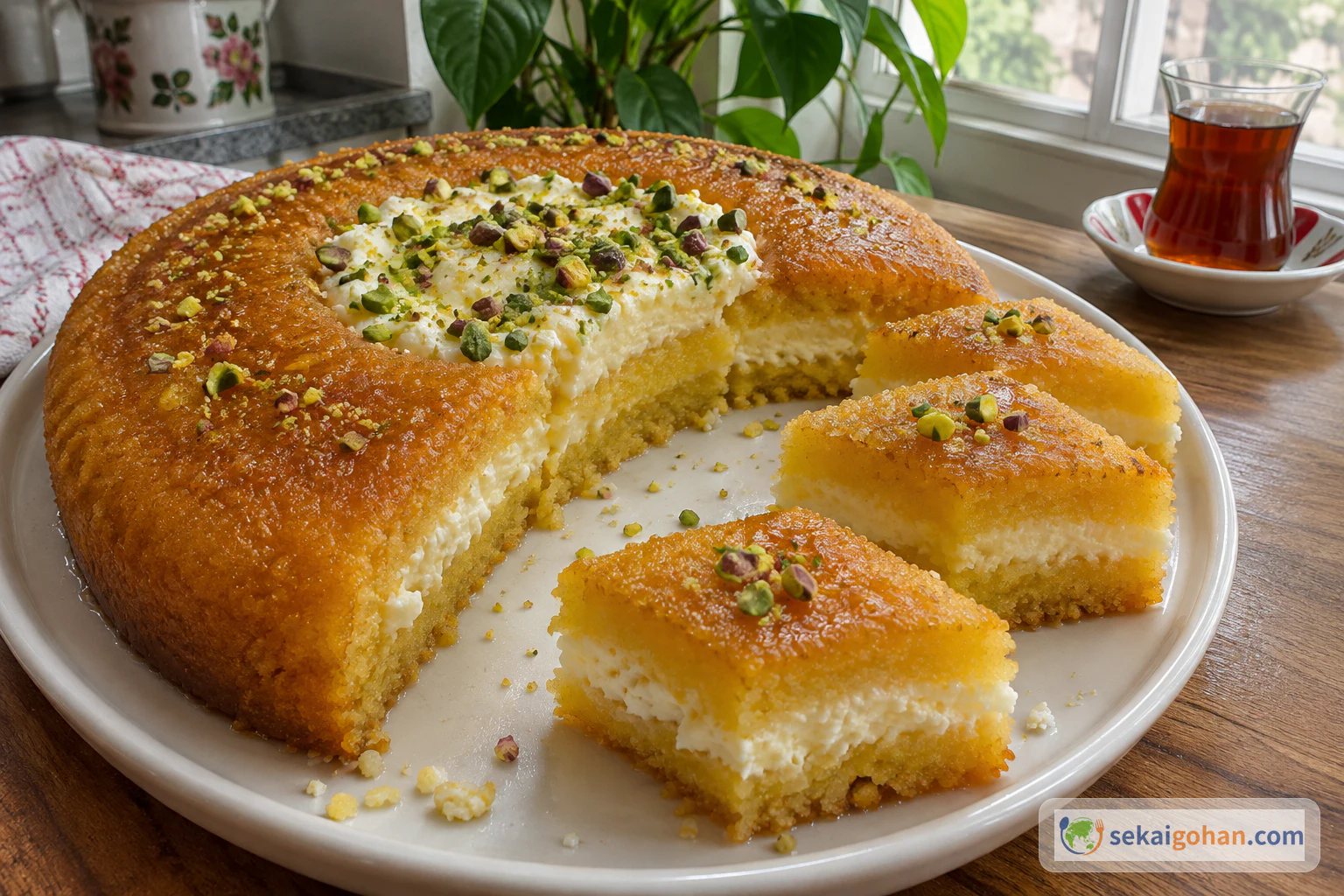
Besbousa: Algerian Semolina Cake with Syrup and Ricotta Cream
Ingredients
Cake
| Ingredient | Amount | Role |
|---|---|---|
| Sugar (sucre) | 5¾ oz (160 g) | Sweetness in the crumb |
| Eggs (œufs) | 3 | Bind the batter and help it rise |
| Plain yogurt (yaourt nature) | 2 single-serve pots | Moisture and a gentle tang |
| Sunflower oil (huile de tournesol) | generous ¾ cup (200 ml) | Keeps the crumb moist |
| Baking powder (levure chimique) | ¼ oz (7 g) | Lift |
| Fine semolina (semoule fine) | 9 oz (250 g) | The body and grain of the cake |
| Salt (sel) | a pinch | Sharpens the sweetness |
| Lemon zest (zeste de citron) | zest of 1 lemon | Aroma |
| Butter or oil, for the pan | a little | Holds the semolina coating |
| Fine semolina, for the pan | a little | Lets the cake release cleanly |
Syrup
| Ingredient | Amount | Role |
|---|---|---|
| Sugar | 8 oz (225 g) | Body of the syrup |
| Water (eau) | 1¼ cups (300 ml) | Body of the syrup |
| Lemon slices (tranches de citron) | 2 | Fresh, sharp note |
Cream and topping
| Ingredient | Amount | Role |
|---|---|---|
| Milk (lait) | 1¼ cups (300 ml) | Base of the cream |
| Cornstarch (maïzena) | ¾ oz (20 g) | Thickens the cream |
| Sugar | scant 1 oz (25 g) | Sweetens the cream |
| Orange blossom sugar (sucre à la fleur d'oranger) or orange blossom water | ½ oz (15 g) sugar, or 1 tbsp water | Floral scent |
| Ricotta or cream cheese | 7 oz (200 g) | Body and milky richness |
| Pistachios, chopped | as needed | Colour and crunch |
| Honey | a little, optional | Extra gloss and sweetness |
Steps
1Boil and cool the syrup
Put 8 oz (225 g) sugar, 1¼ cups (300 ml) water and the 2 lemon slices in a small saucepan. Set it over medium heat and stir until the sugar dissolves. Once it boils, let it bubble for 4 minutes, then turn off the heat. Leave it to cool completely. It must be completely cold before it goes onto the cake.
2Coat the pan with semolina
Heat the oven to 355°F (180°C). Brush the pan thinly with butter or oil, right into the corners and up the sides. Tip in a little fine semolina and turn and tap the pan until every surface is covered. Turn it upside down over the sink and tap out the loose grains. You should see an even, pale yellow film with no shiny bare patches.
3Mix the runny batter
In a large bowl, combine the 5¾ oz (160 g) sugar, eggs, oil, yogurt, lemon zest, salt, baking powder and 9 oz (250 g) fine semolina. Whisk until everything is evenly mixed, or blend everything in a blender. The batter will be thin and pourable, closer to pancake batter than cake dough, and that is right. It is ready when no dry pockets of semolina remain.
Leave the batter runnyDo not add semolina to thicken it. The grain swells in the oven and soaks up syrup afterwards. Extra semolina makes a dry, heavy cake.
4Bake until golden
Pour the batter into the prepared pan and smooth the top gently. Bake for about 35 minutes. Push a skewer into the centre and pull it out. The cake is done when the top is evenly golden and the skewer comes out clean.
5Turn it out hot and pour on the cold syrup
While the cake is still hot, set the serving plate over the pan and turn both over together so the cake drops onto the plate. Lift off the pan. Remove the lemon slices and pour all of the cooled syrup slowly over the top. Brush syrup up the sides with a pastry brush. Stop when the top and sides are glossy and wet all over.
Cold syrup, hot cakeThe temperature contrast is what makes this work. The hot crumb drinks in the cold syrup and the cake keeps its shape. Do not let the cake cool before you pour, and do not warm the syrup.
6Cook the cream and fill the centre
In a saucepan, whisk the cornstarch, scant 1 oz (25 g) sugar and orange blossom sugar (or orange blossom water) with a little of the milk until smooth. Whisk in the rest of the milk. Stir constantly over medium heat until it thickens to a soft custard, and strain it if any lumps appear. Take it off the heat, stir in the ricotta, and pour it straight away into the hollow in the centre of the cake. The cream should be smooth, thick and still warm enough to settle level on its own.
Slurry first, then milkDissolving the cornstarch in a little milk before the rest goes in is what keeps the cream free of lumps. Cornstarch added straight to a full pan of milk clumps at once.
7Garnish and let it cool
Scatter chopped pistachios over the cream. Leave the cake to cool before serving, so the cream firms up and the syrup soaks through. Drizzle a little honey over the top if you want more shine. Cut it into diamonds once the cake and cream feel cool to the touch.