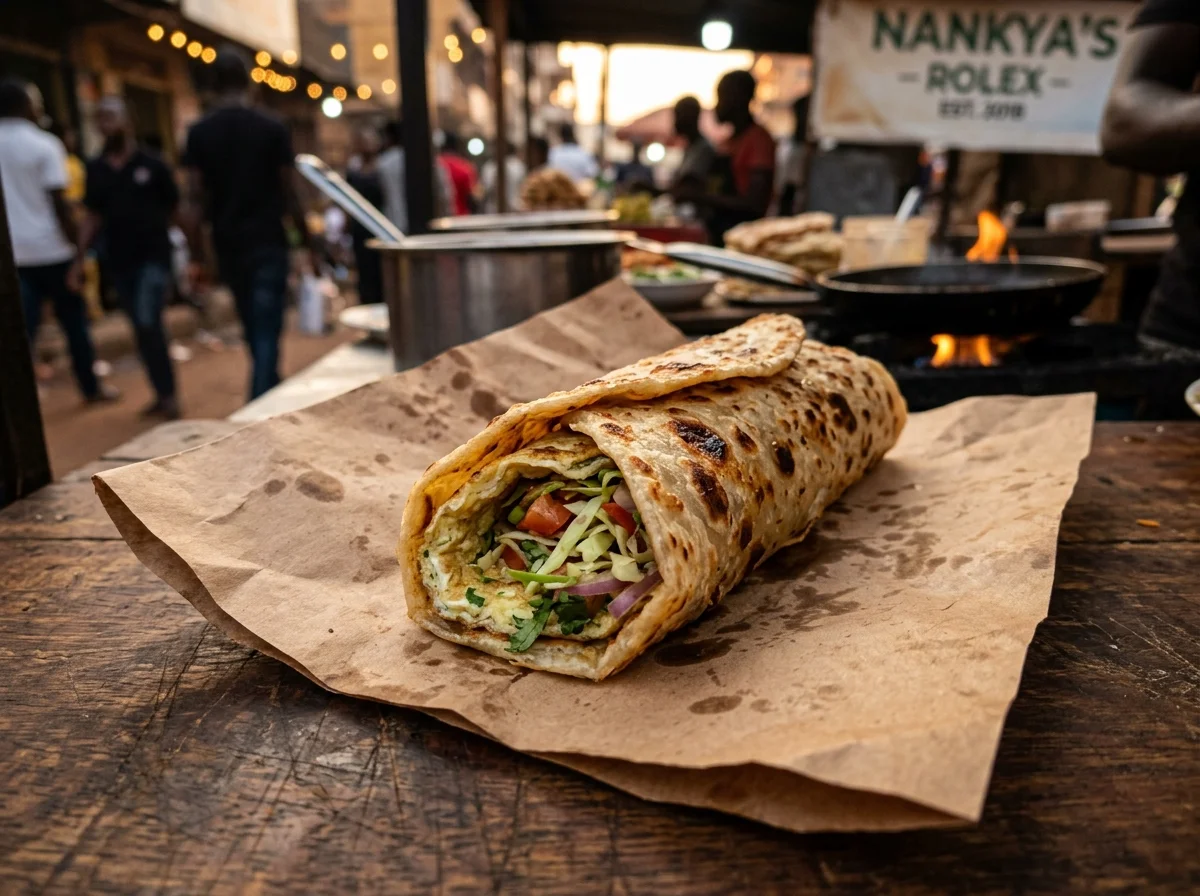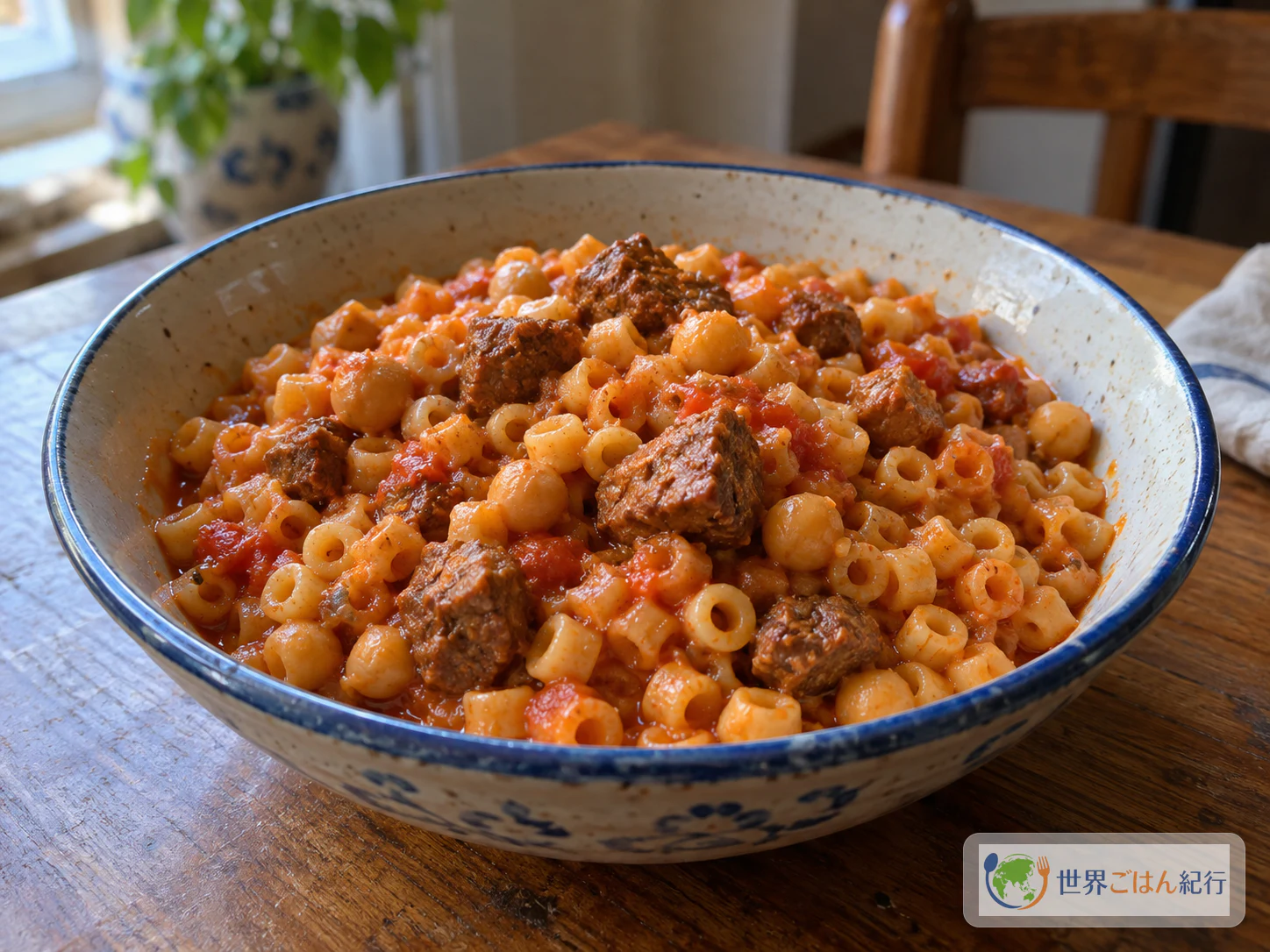
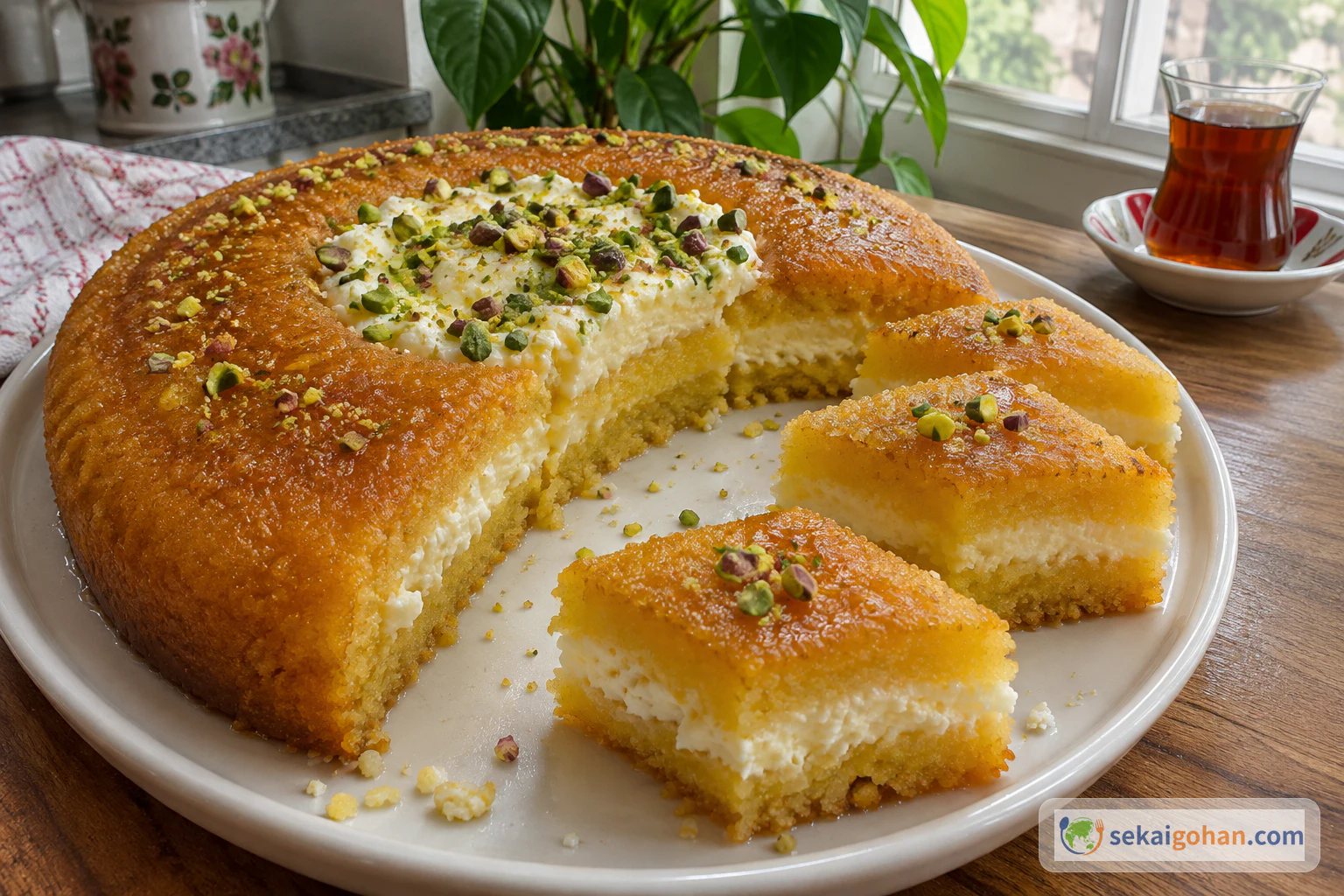
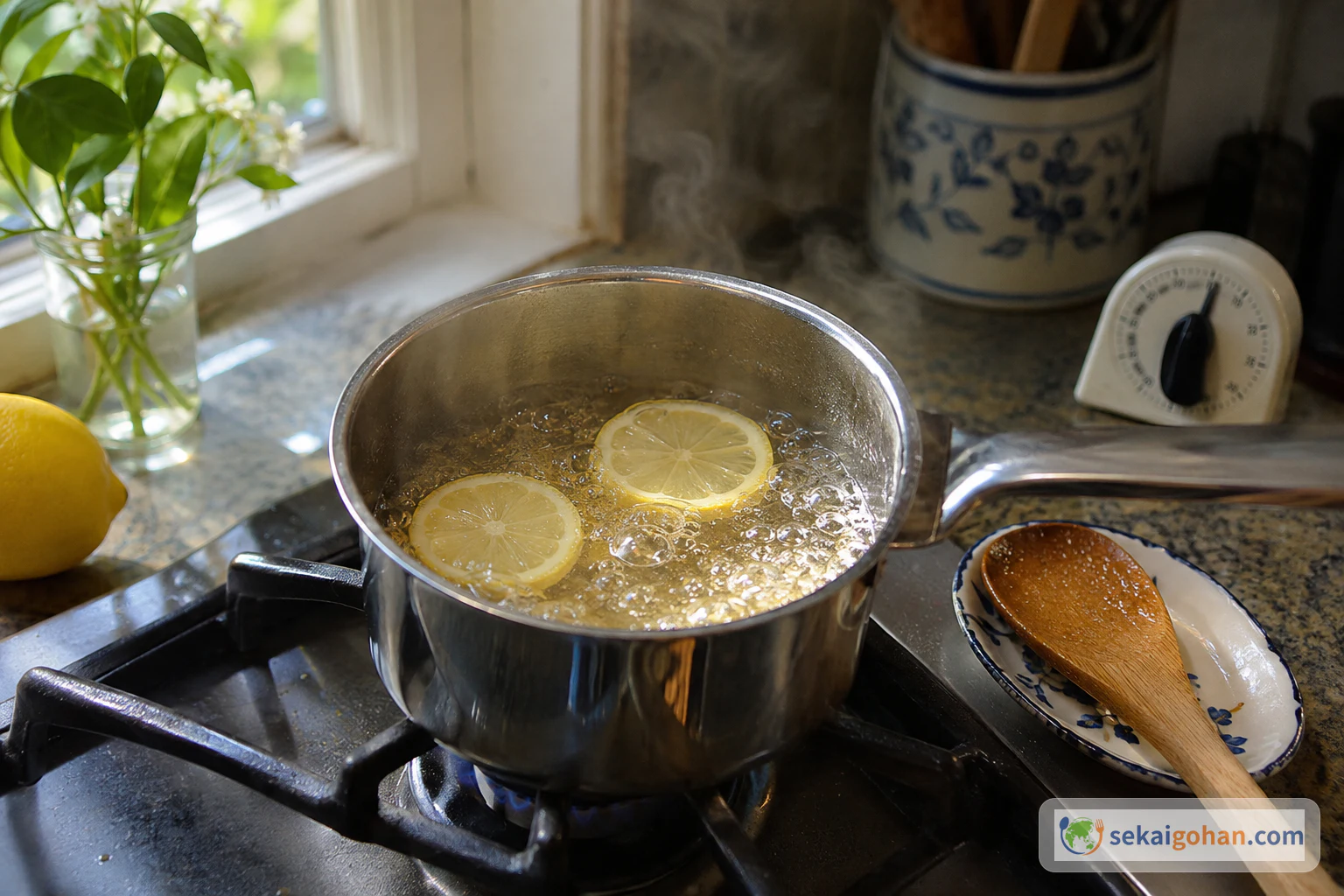
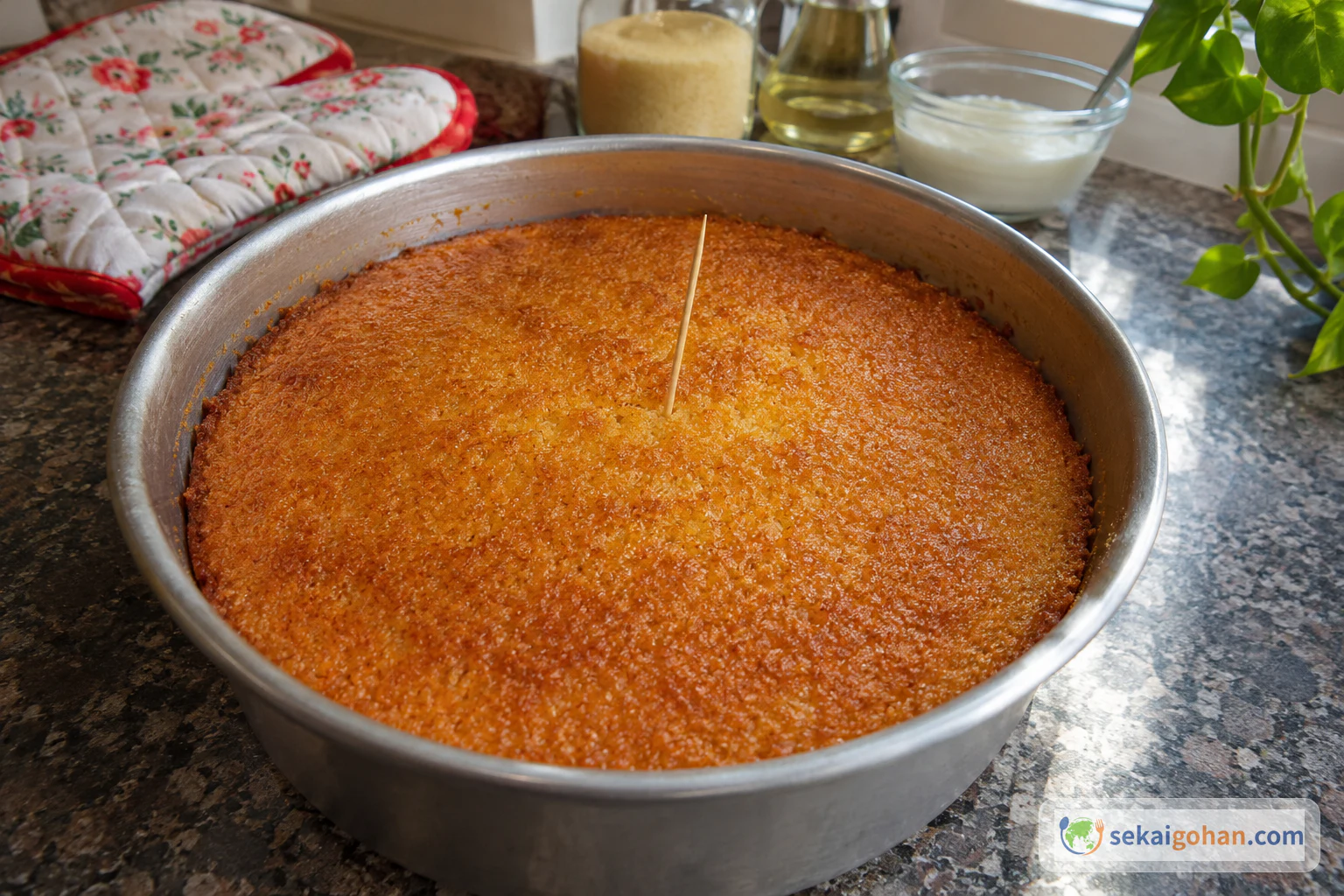
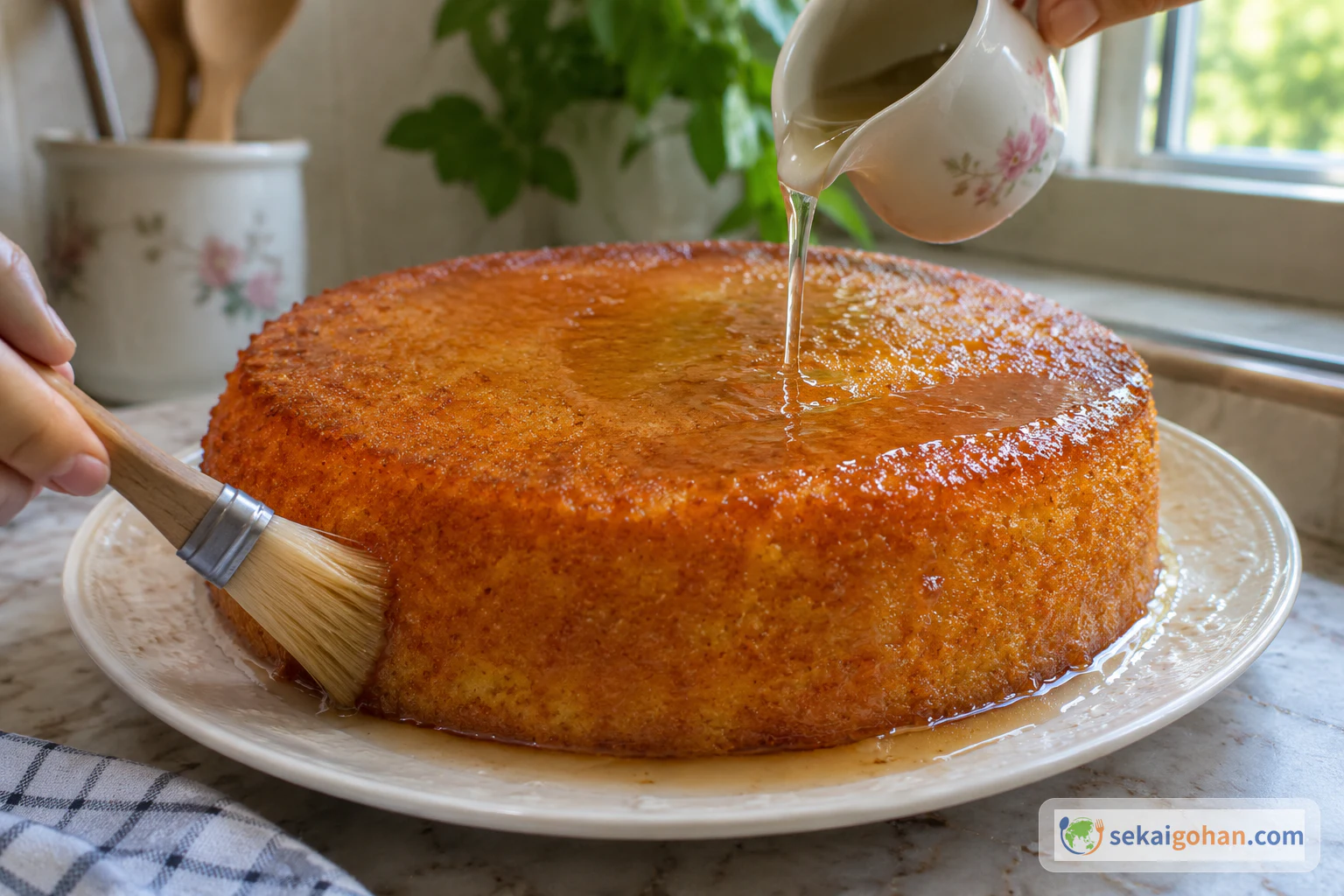
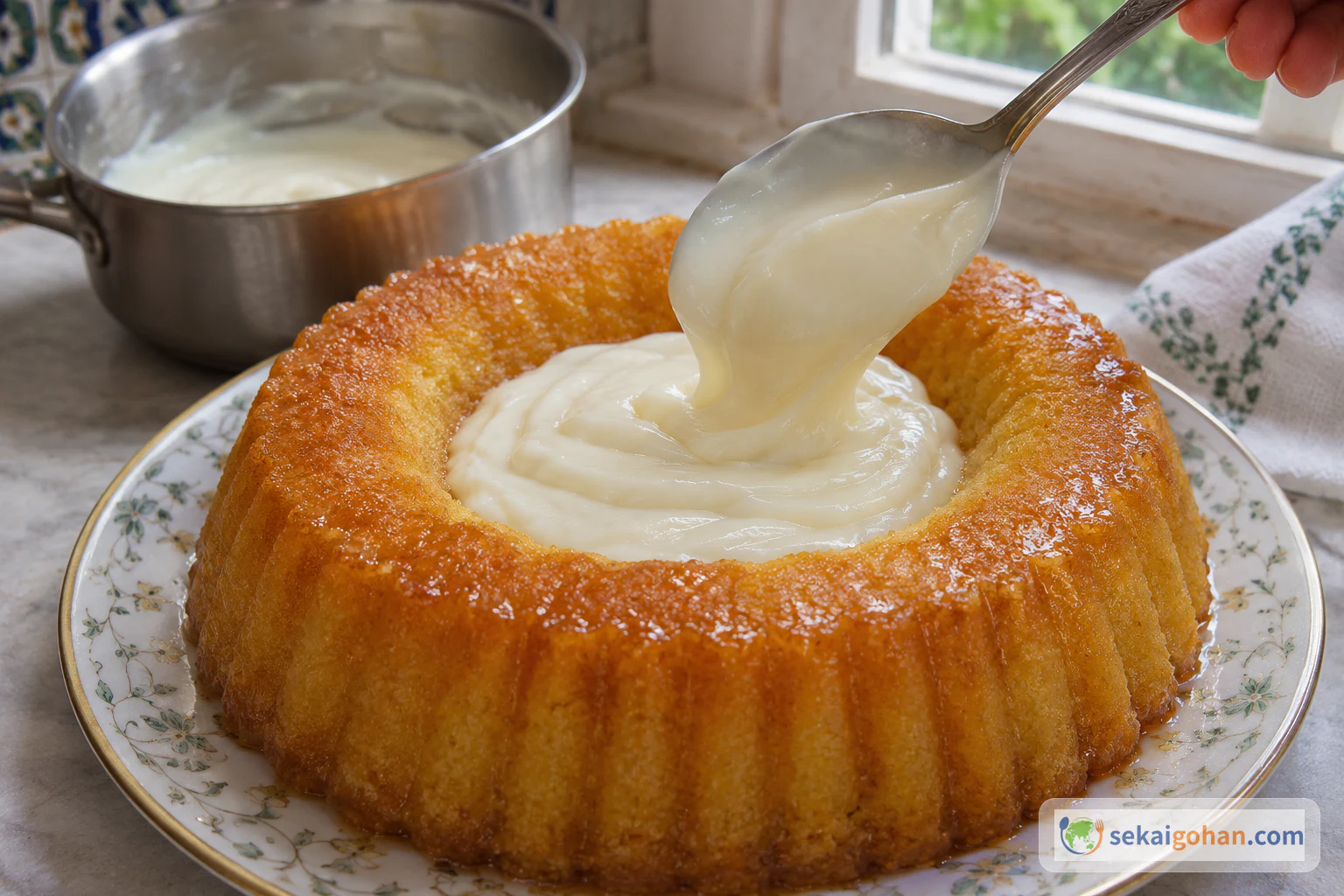
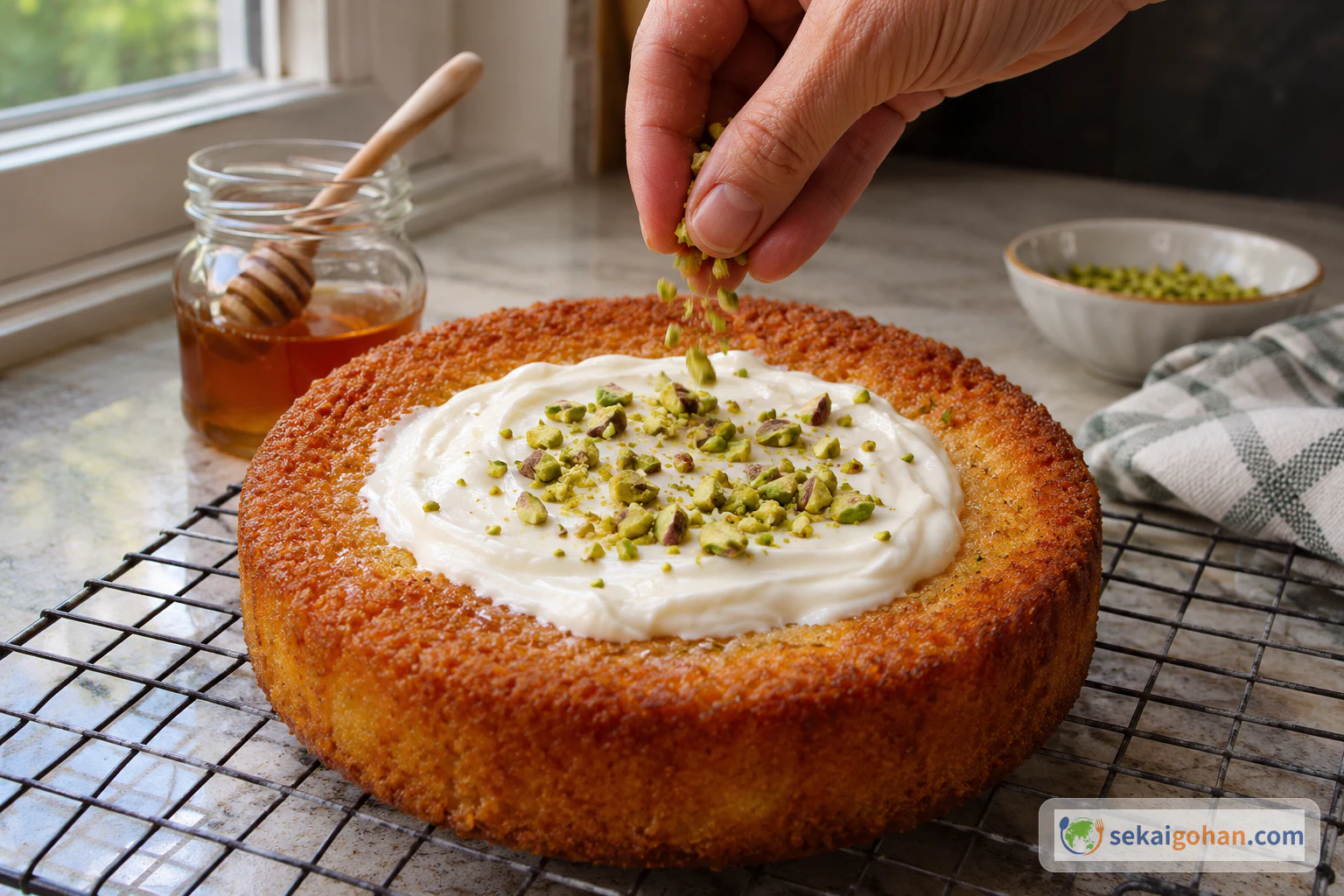
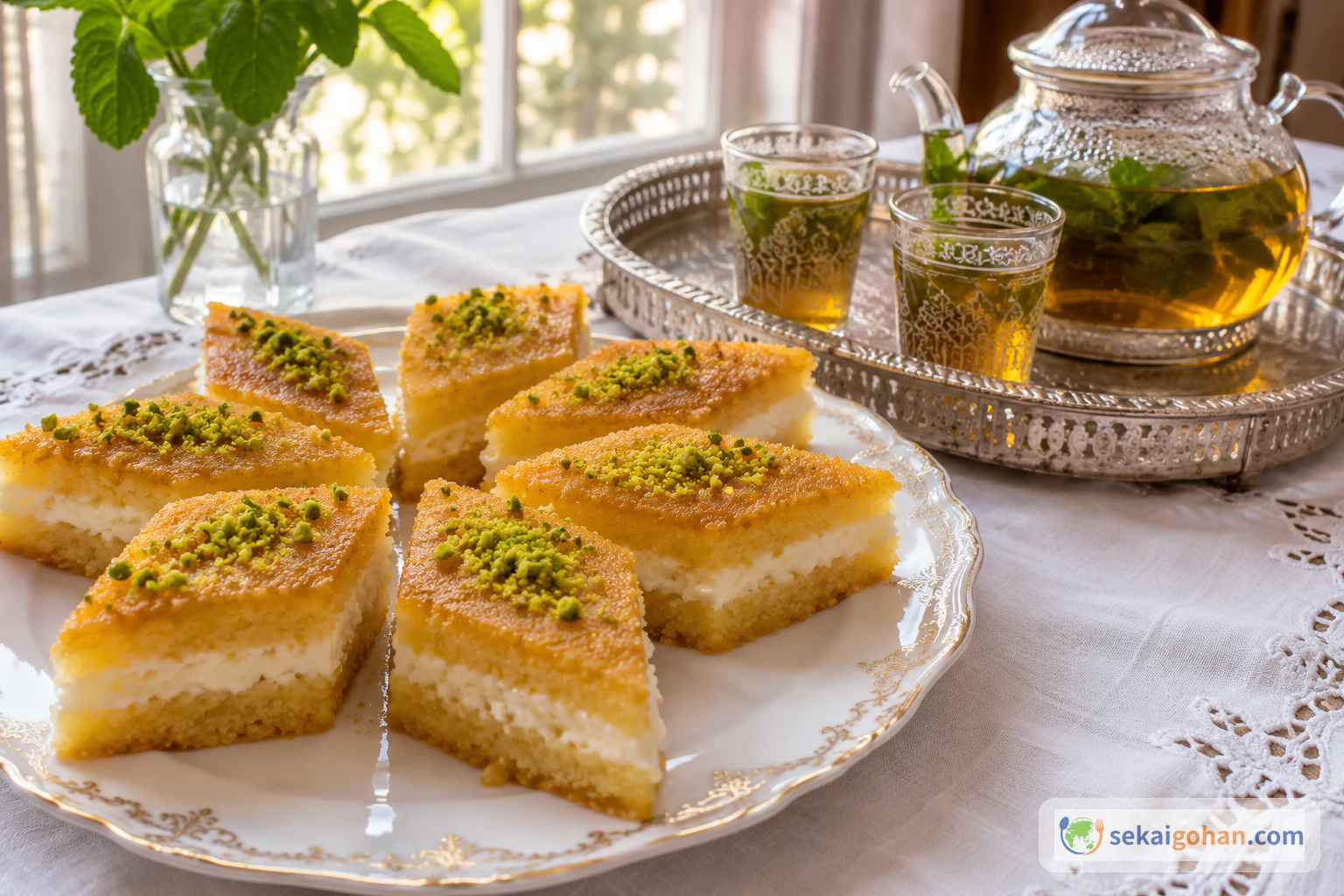
The cake comes out of the oven deep gold, and while it is still too hot to touch it goes onto the serving plate. Cold lemon syrup goes over it, and the fine semolina crumb drinks it in until the whole surface shines. Then a warm, soft cream of milk and ricotta, scented with orange blossom, fills the hollow in the middle, and chopped pistachios go on top. Algerian besbousa is a home cake that you stir together in one bowl. It is moist and sweet with a bright lemon edge, and the cream gives it a milky, cool centre.
Besbousa in Algeria and Its Many Names
Semolina cakes soaked in syrup are baked across the Middle East and North Africa, and every place has its own name for them. In Turkey the family is called revani, so see revani for a close cousin. In Lebanon it is namoura. In the Maghreb, in Algeria and Tunisia, the same kind of cake also goes by harissa (hrissa), harissa hloua or aricha. That is a sweet harissa with nothing to do with the chilli paste of the same name. Maghreb versions usually use butter or margarine, eggs and dairy, and the syrup is scented with orange blossom or vanilla. Where the cake first came from is not settled.
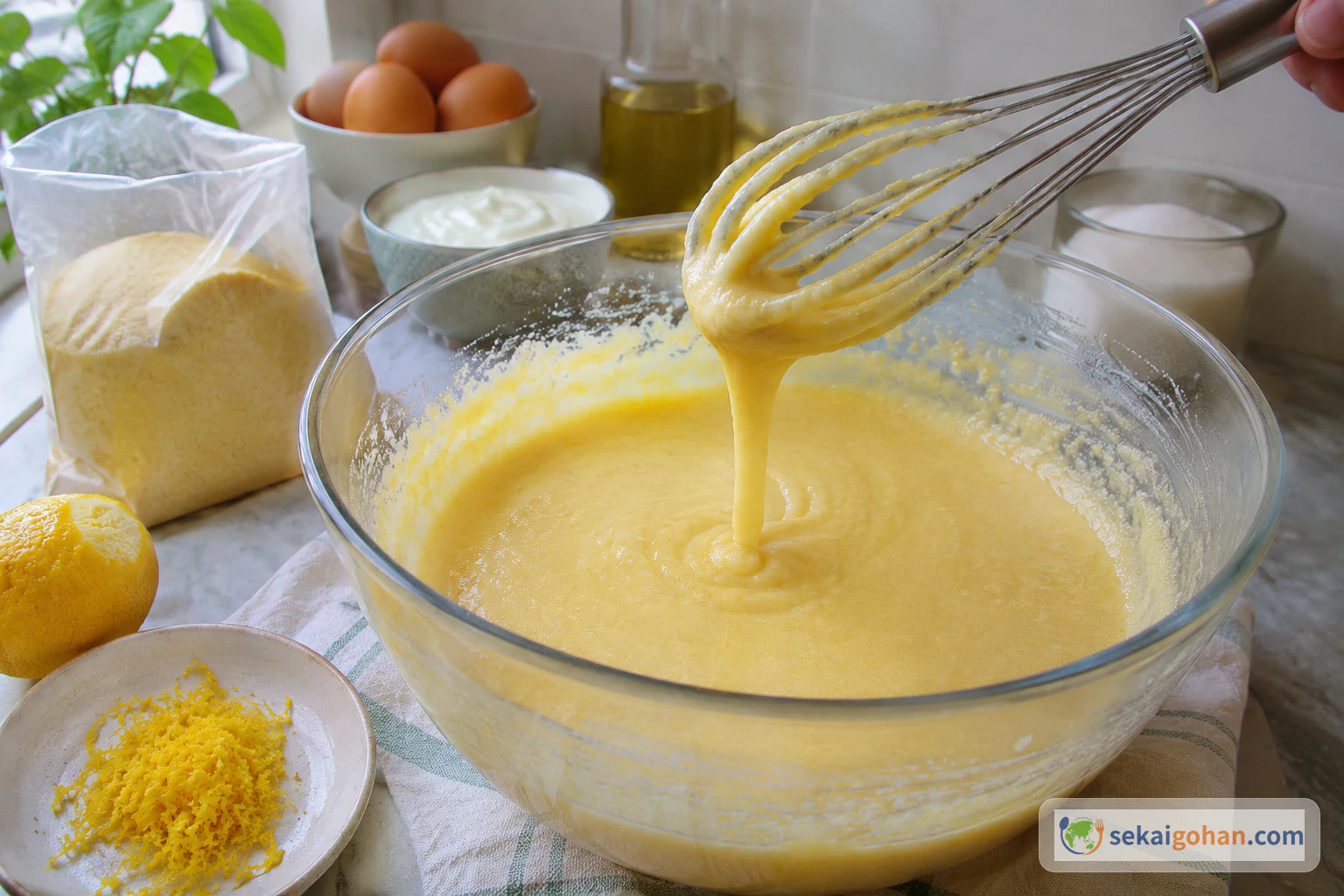
The Algerian home version here is made with eggs, yogurt and sunflower oil. You mix it in one bowl, pour it like a thin batter and bake it. It has no coconut and no ghee, so it is a different cake from the Egyptian basbousa, which uses ghee, coconut and yogurt and no eggs. The Algerian cake has a lighter, cake-like crumb with lemon zest running through it. What makes it a dessert for guests is the finish: a cold syrup over a hot cake, and a ricotta cream poured into the centre once the cake is on the plate.
The cake is made in more than one way. Another Algerian-style version adds coconut to the egg, oil and yogurt batter. That cake is scored into pieces with an almond pressed into each one, cut while warm, and then given cooled syrup. More of the country's cooking is on the Algeria page.
If you are hunting for more versions, search for basboussa, besbousa, hrissa, harissa hloua and aricha. Revani and namoura bring up the Turkish and Lebanese relatives.
Ingredients (serves 10)
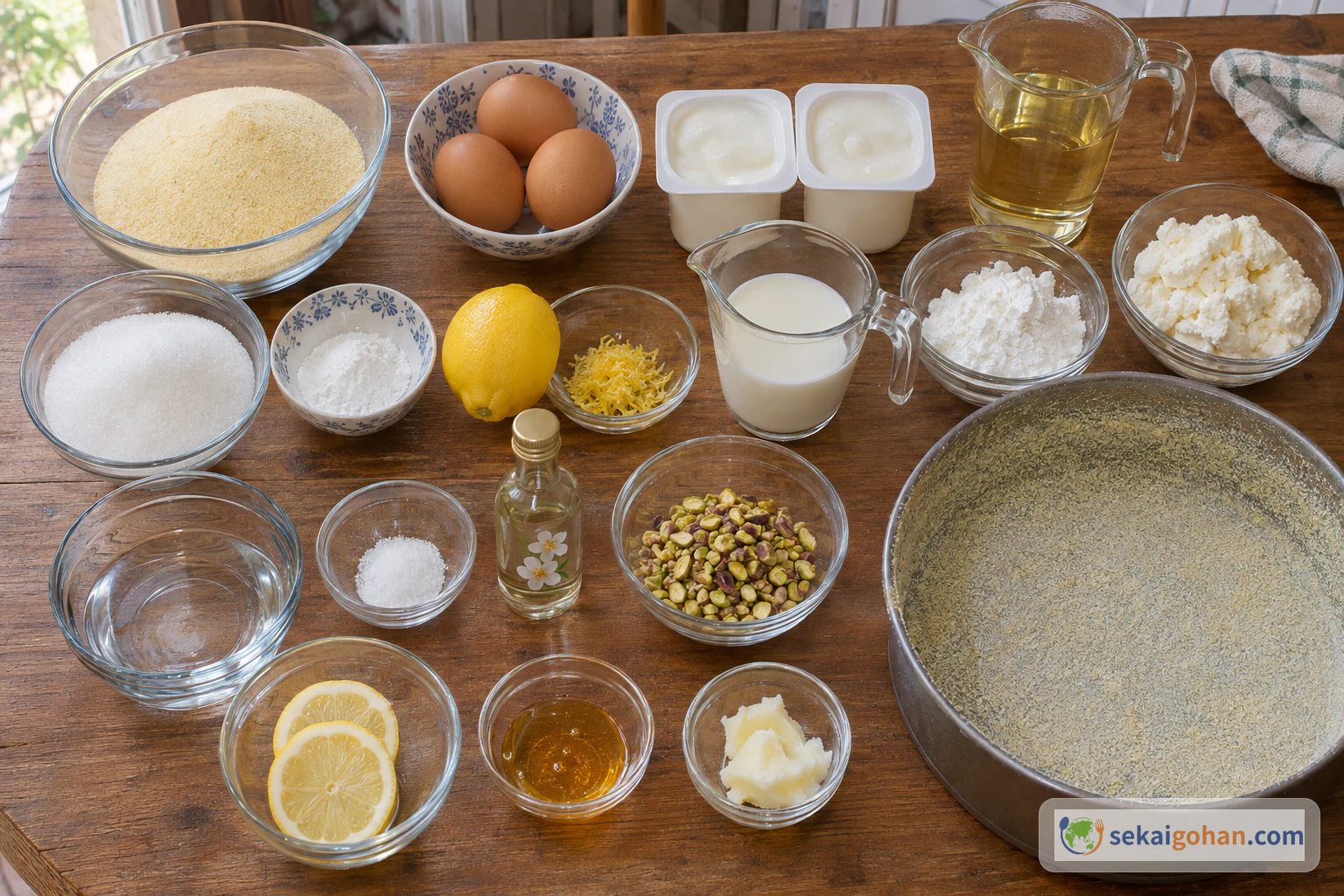
The sugar is used three times, in the cake, the syrup and the cream. Weigh each portion separately so none of them goes into the wrong bowl. The lemon is also used twice: zest for the batter and slices for the syrup.
This cake contains wheat (semolina), egg, milk (yogurt, milk, ricotta or cream cheese) and tree nuts (pistachios). Leave the pistachios off for anyone with a nut allergy.
Equipment
- A 10-inch (25–26 cm) round cake pan with a rounded bottom. A square or ordinary cake pan also works
- Small saucepan for the syrup
- Saucepan for the cream
- Large mixing bowl and whisk, or a blender
- Zester or fine grater
- Pastry brush
- Fine sieve, for straining the cream if needed
- Wooden skewer
- Flat serving plate wide enough for the cake
Choosing and Substituting
Fine semolina decides the texture, and it is the one thing worth a trip to a Middle Eastern or North African grocer or an online order. Coarse semolina or durum flour bakes into a different cake, with a rougher grain or a denser crumb. Use a plain, pourable yogurt. Greek yogurt holds much less water, so it is not a one-for-one swap. If you cannot find sunflower oil, another neutral oil such as rice bran oil keeps the flavour clean. Strongly flavoured oils show through the lemon.
Orange blossom water is sold at import shops and online. It is easier to find than orange blossom sugar, and 1 tablespoon replaces the scented sugar. Ricotta gives the softest, lightest cream, and cream cheese works in its place for a denser, tangier filling. If your lemon has a waxed skin, scrub it well before you zest it.
Method
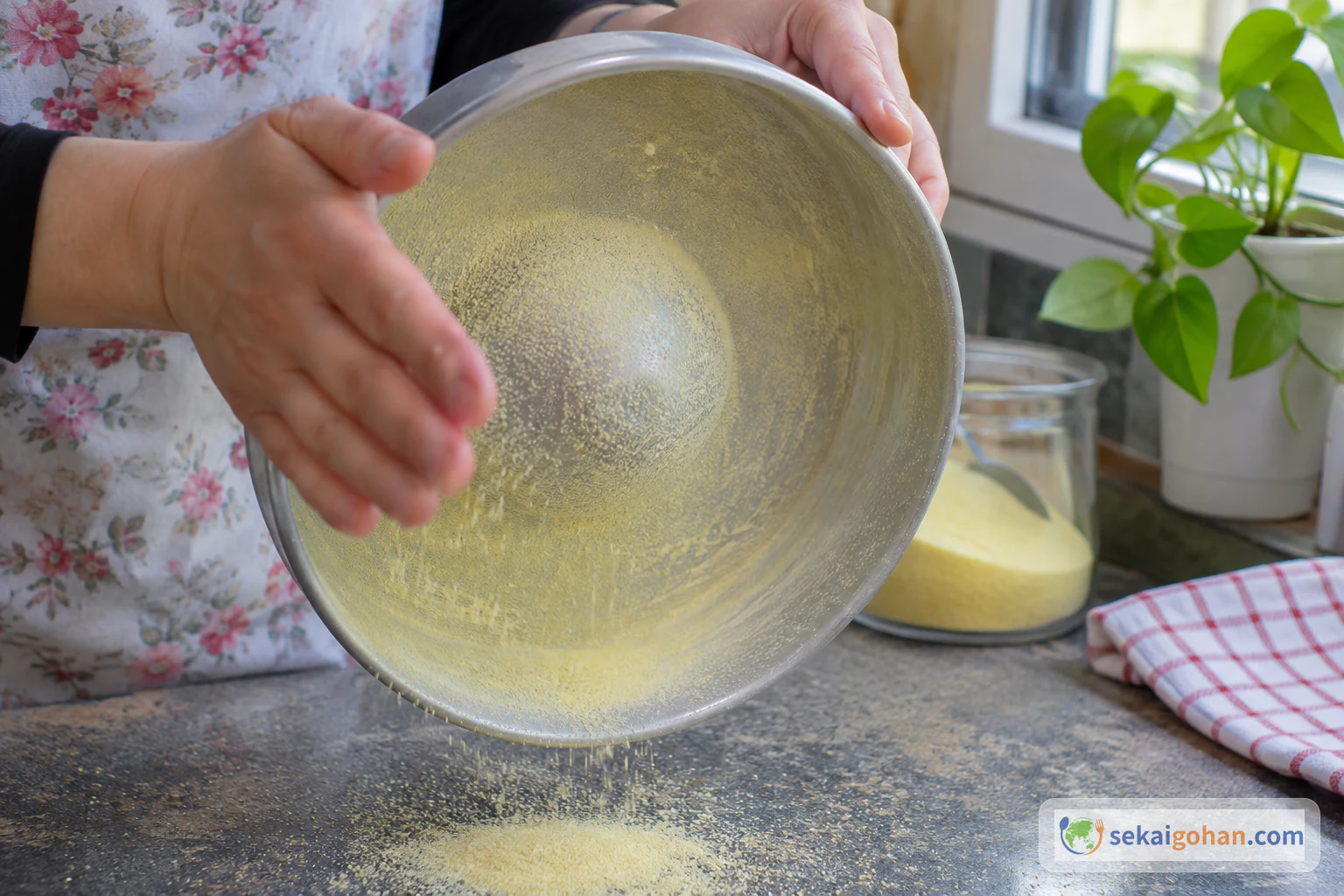
Make the syrup first, because it has to be completely cold by the time the cake comes out. Prepare the pan while it cools. The batter takes only minutes to mix. Make the cream during the last minutes of soaking, because it goes into the cake as soon as the ricotta is in.
Boiling sugar syrup burns badly, so keep children away from the stove and do not taste it from the pan. Wear oven mitts to turn out the hot cake, and use a plate wide enough to catch it.
When It Goes Wrong
| What you see | Why | What to do |
|---|---|---|
| The batter looks far too thin | It is meant to be liquid | Pour it into the pan as it is. Never add more semolina |
| The cake tears or sticks as you turn it out | Bare spots in the semolina coating | Next time, coat every surface and tap out only the loose grains. Press torn pieces back in place, because the syrup glues them |
| The skewer comes out wet at 35 minutes | The pan is smaller, so the cake is thicker | Keep baking and test again. If the top darkens first, cover it loosely with foil |
| The cake turns soggy and collapses under the syrup | The syrup was still warm, or the cake had cooled | Pour fully cooled syrup onto a hot cake |
| The cream is lumpy | The cornstarch went into all the milk at once | Strain it through a fine sieve, then stir in the ricotta |
| The cream sets before it reaches the cake | It waited too long after cooking | Have the soaked cake ready and pour the cream as soon as the ricotta is mixed in |
Serving, Variations and Storage
At the table
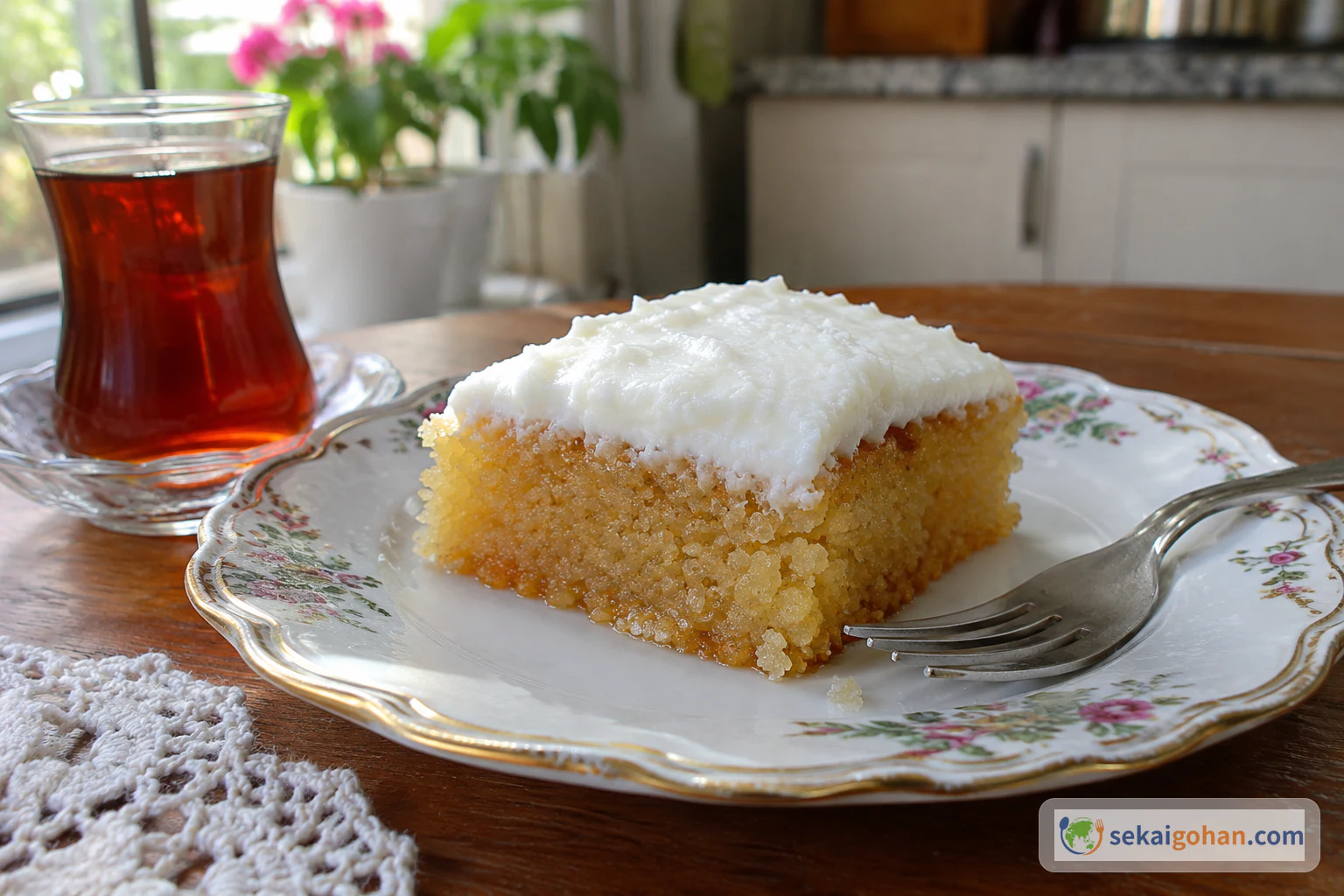
Cut the cake into diamonds. A good slice shows a fine, moist crumb that is full of syrup without being wet, with the cream and green pistachios on top. Serve small pieces, because it is rich and very sweet. A glass of mint tea beside each plate cuts the sweetness.
Variations
- Without the cream: stop after the syrup in step 5 and top the cake with pistachios. You get a plainer syrup cake that is quicker to make.
- Coconut and almond: add coconut to the batter, score the cake into diamonds and press an almond into each one. Cut it while warm, pour cooled syrup over and leave it for at least 2 hours. The crumb is chewier and more fragrant.
- Cream cheese filling: use cream cheese in place of ricotta for a denser, tangier centre.
Storage
The cream is made with milk and cheese, so do not leave the cake out once it has cooled. Cover it and refrigerate it promptly, and keep leftovers in the refrigerator, covered.
Frequently Asked Questions
Can I use a 9½-inch (24 cm) round pan?
Yes. Use the same amounts. The batter will sit deeper, so the cake needs longer in the oven. Go by the skewer and the golden top rather than the 35 minutes.
Can I thicken the cream with potato starch instead of cornstarch?
Use cornstarch. Cornstarch is made from corn and potato starch from potatoes, and the two thicken differently. The cream is balanced for cornstarch.
Can I skip the orange blossom entirely?
Yes, the cream still works. It will taste of milk and ricotta, with nothing floral against the lemon syrup. If you leave it out, the pistachios and a little honey on top give the cream more character.