Ingredients and steps on one page. Print it, or choose “Save as PDF” in the print dialog.
Sekai Gohan
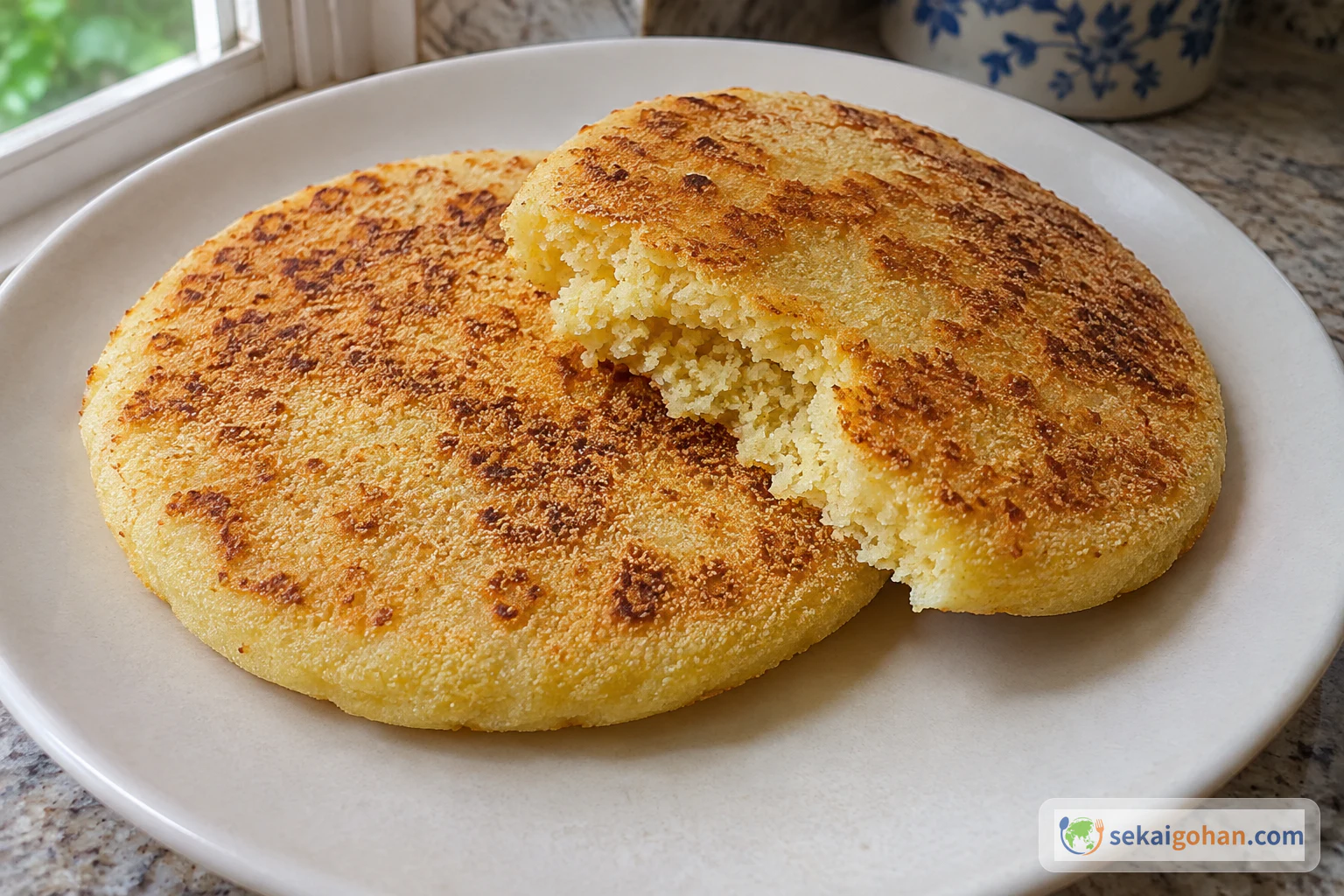
Matlouh: Algerian Yeast-Risen Semolina Flatbread Baked in a Pan
Ingredients
| Ingredient | Amount | Role |
|---|---|---|
| Extra-fine durum semolina (semoule extra-fine) | 12½ oz (350 g), plus extra for dusting | The body, color and toasty flavor of the bread |
| All-purpose flour (farine) | 5¼ oz (150 g) | Binds the dough and keeps the crumb tender |
| Salt | 1½ tsp | Seasoning; adjust to your salt's grain size |
| Fresh baker's yeast (levure de boulanger) | ½ cube | Raises the dough |
| Sugar | 1 tsp | Dissolved with the yeast to feed it |
| Milk powder | 2 tbsp | Softens the dough |
| Lukewarm water | 1¼ cups plus 2 tsp (310 ml), adjusted as needed | Brings the dough together; add gradually |
Steps
1Mix the dry ingredients and dissolve the yeast
In a large bowl, combine the semolina, flour, salt and milk powder, and make a deep well in the center. Pour a little of the lukewarm water into a small glass, crumble in the yeast and add the sugar. Stir until the yeast has fully dissolved and the water looks cloudy, with no lumps. Pour it into the well. The water should feel pleasantly warm on a fingertip, never hot.
2Add the water gradually and knead
Draw the flour into the yeast water with your fingers, then add the rest of the lukewarm water a little at a time. Let each addition soak in before you pour more, because semolina absorbs water slowly. Knead until the dough gathers into a ball that leaves the sides of the bowl clean. It is ready when it is soft and slightly sticky to the touch.
Hold back some waterStop pouring when the dough is just slightly sticky and judge from there. You can always add a spoonful more. Removing water means adding semolina, and that throws the recipe off balance.
3Let the dough rise the first time
Shape the dough into a smooth ball and leave it in the bowl. Cover it with a damp towel or plastic wrap and set it somewhere warm. Leave it for about 1½ hours. It is ready when it has doubled or even tripled in size and the surface is domed and soft.
4Deflate and divide in two
Press the risen dough down to release the gas, then turn it out. Divide it into two equal pieces and round each into a ball. Set them on a board dusted with semolina. The balls are ready when they are smooth and hold their round shape.
5Flatten and let rise a second time
Press each ball out with your palms into a round about ⅜ inch (1 cm) thick, keeping the thickness even from center to edge. Lay the rounds on a cotton cloth dusted with semolina and cover them with a thick cloth. Leave them to rise for about 1 hour. They are ready when they have puffed slightly and feel airy under the cloth.
6Heat the pan hard, then cook the first side gently
Set the tajine or pan over high heat and let it get thoroughly hot. Lift one round gently and lay it on the pan without stretching it, then turn the heat down. Cook for 2 to 3 minutes. The first side is done when the underside is golden in patches and the edges look matte and dry.
High heat first, low heat to cookThe high heat is only for charging the pan. Once the dough is on, keep the heat low. Otherwise the crust darkens long before the thick center has cooked.
Hot ironA cast-iron tajine stays very hot long after the flame is turned down. Use tongs or a spatula to move the bread, and an oven mitt for the pan.
7Flip, finish and check the inside
Turn the bread and cook the second side for 2 to 3 minutes, until it is golden too and the edges have browned. Lift the first bread onto a wire rack and break into its center. If the crumb is still damp and sticky, return it to the pan over low heat and turn it a few more times. Cook the second bread longer from the start. The bread is done when both sides are golden and the inside is dry and springy.