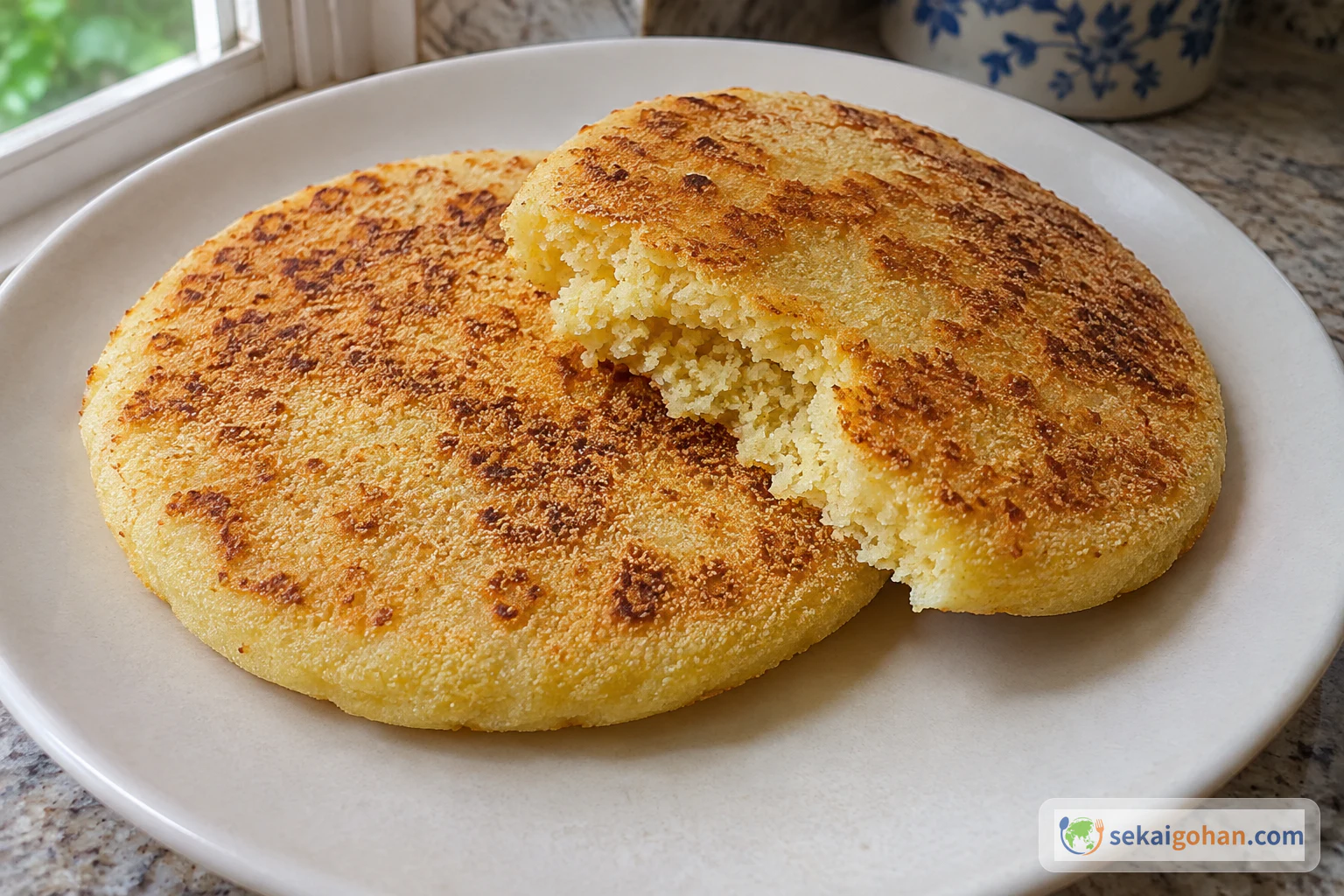
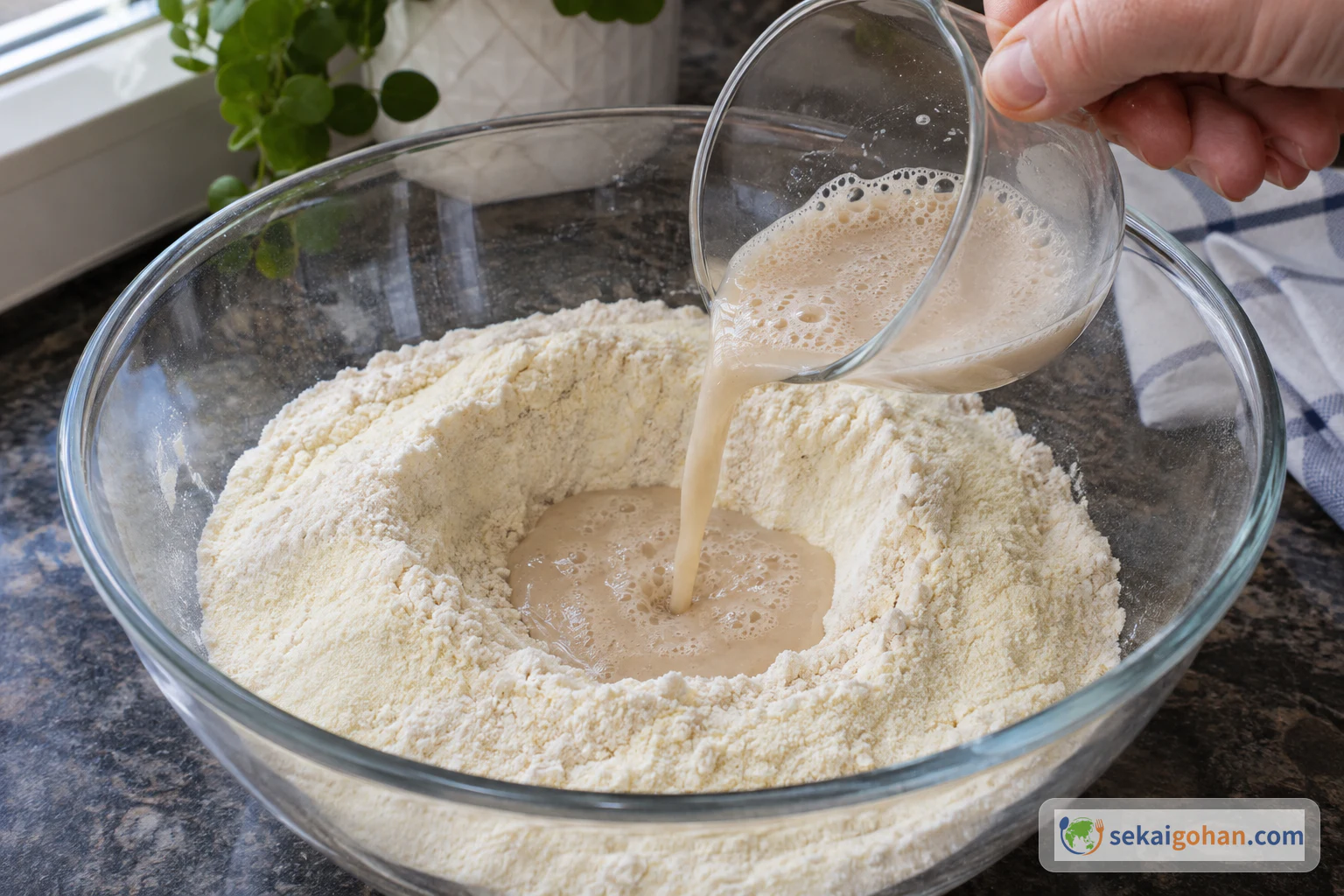
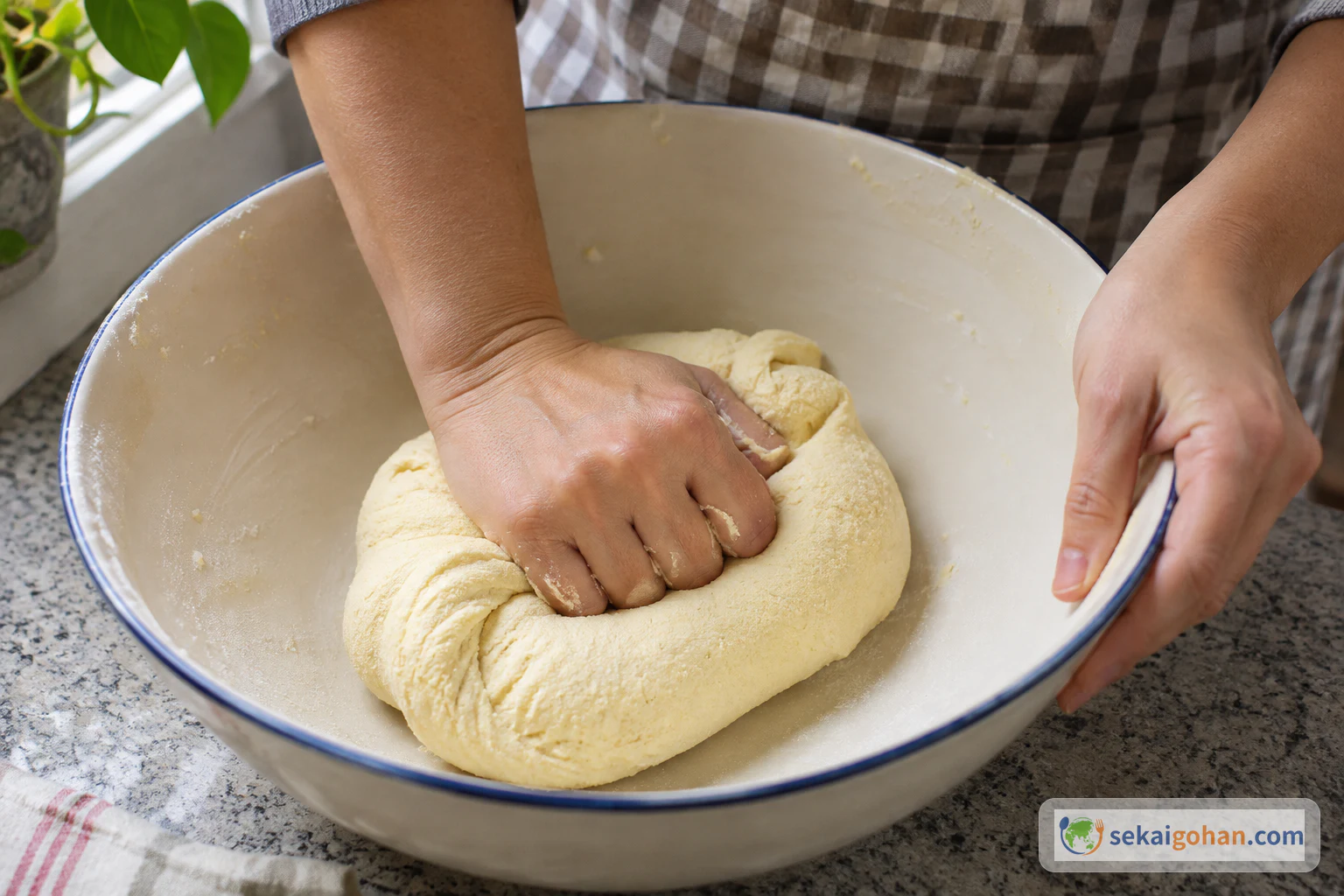
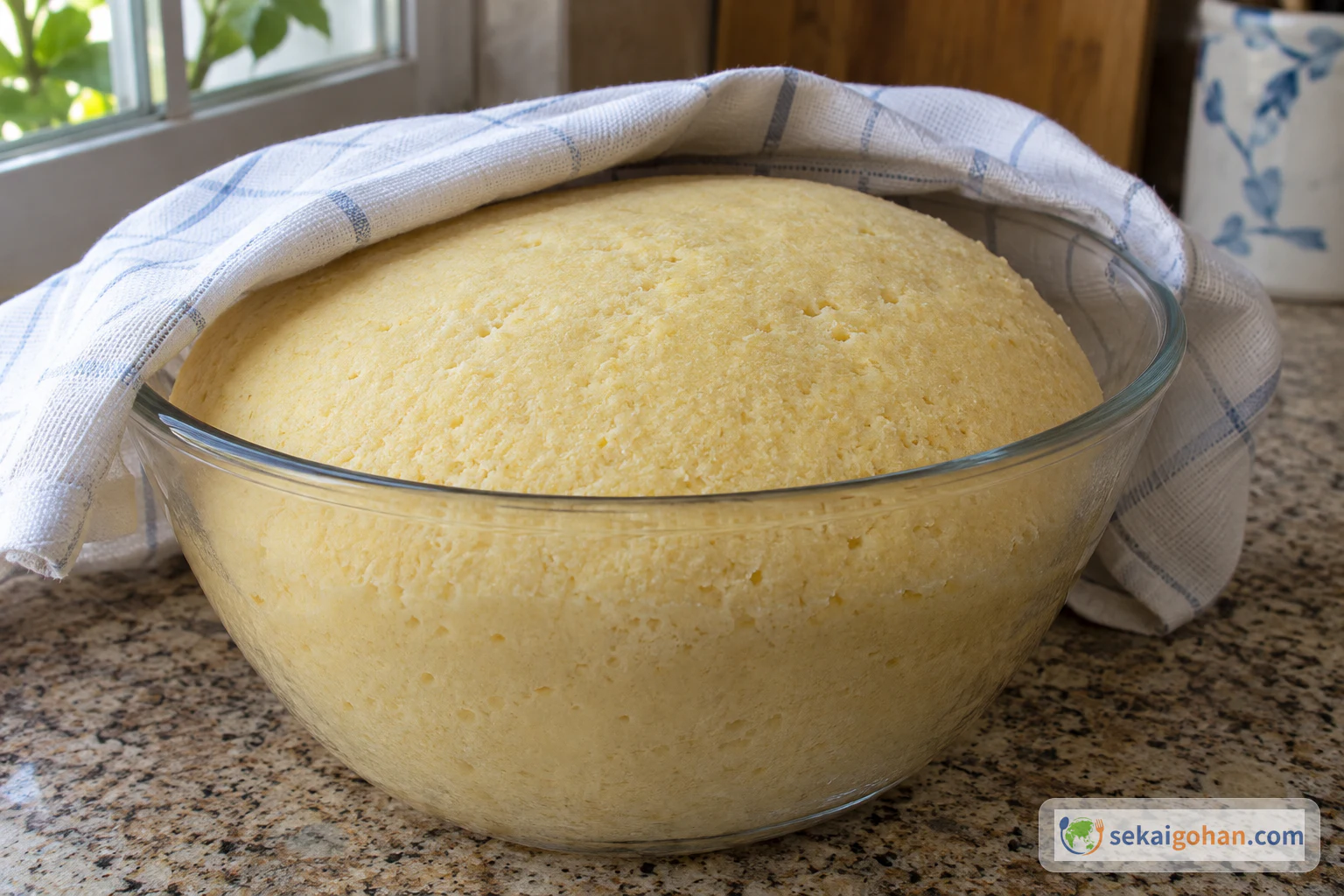
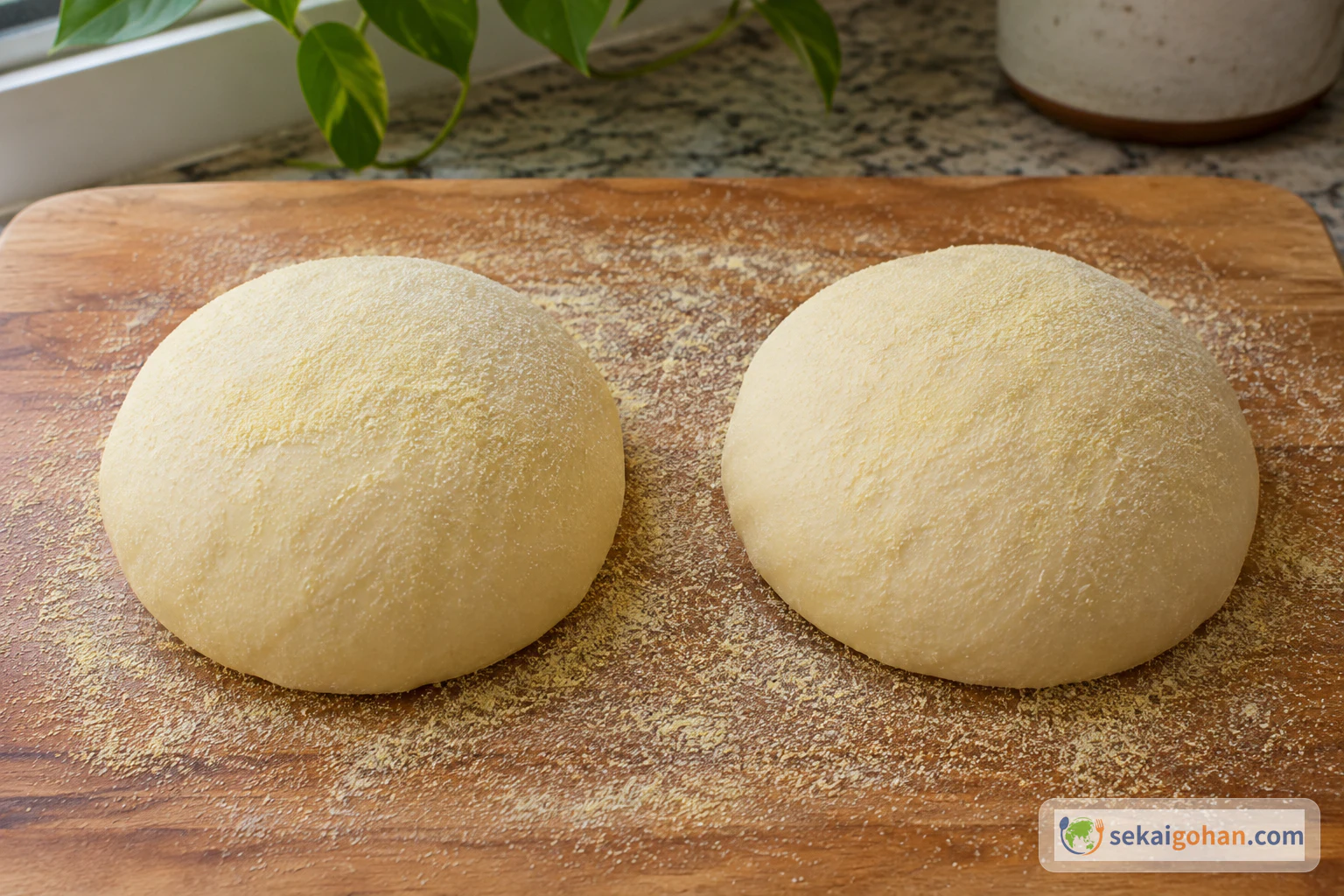
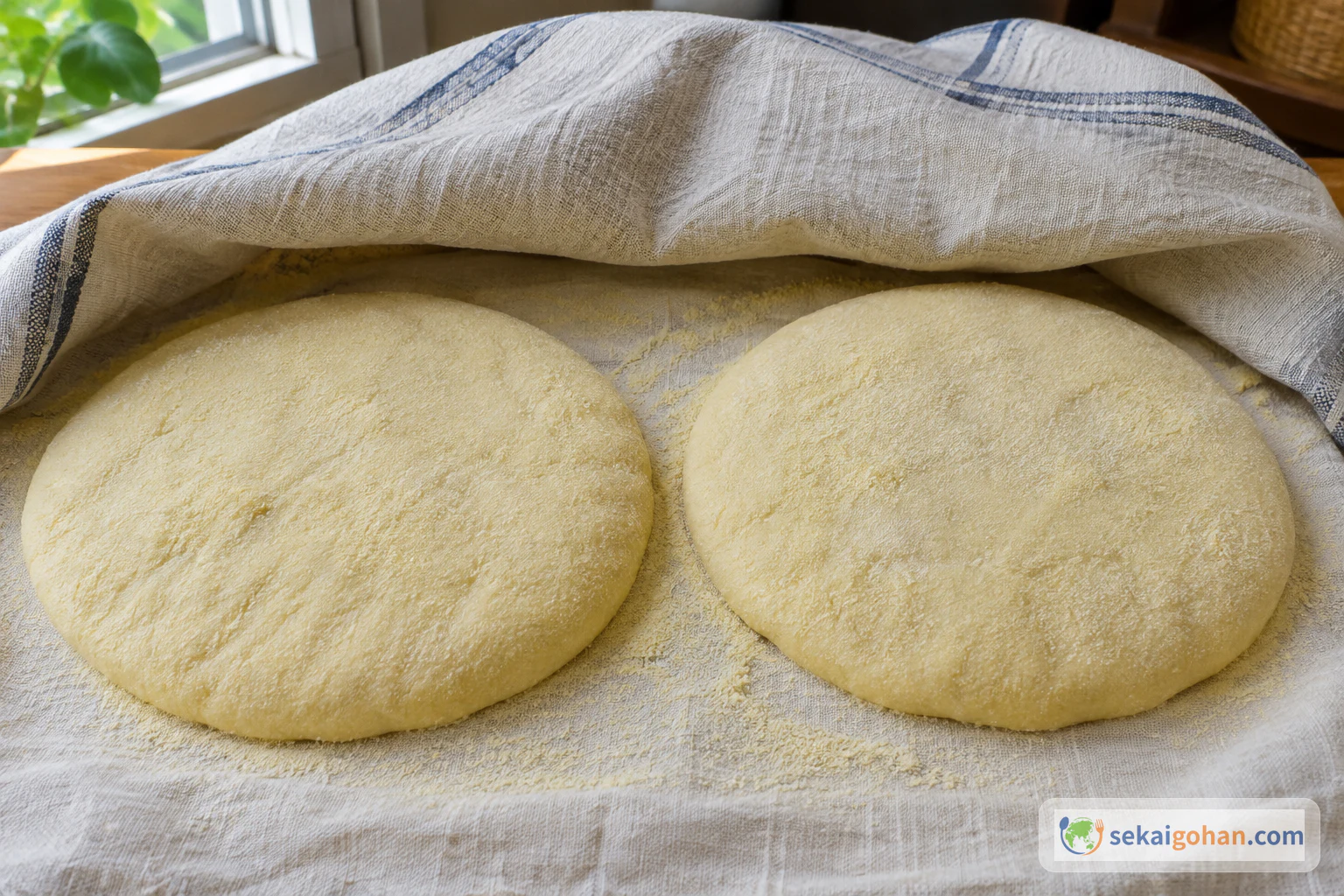
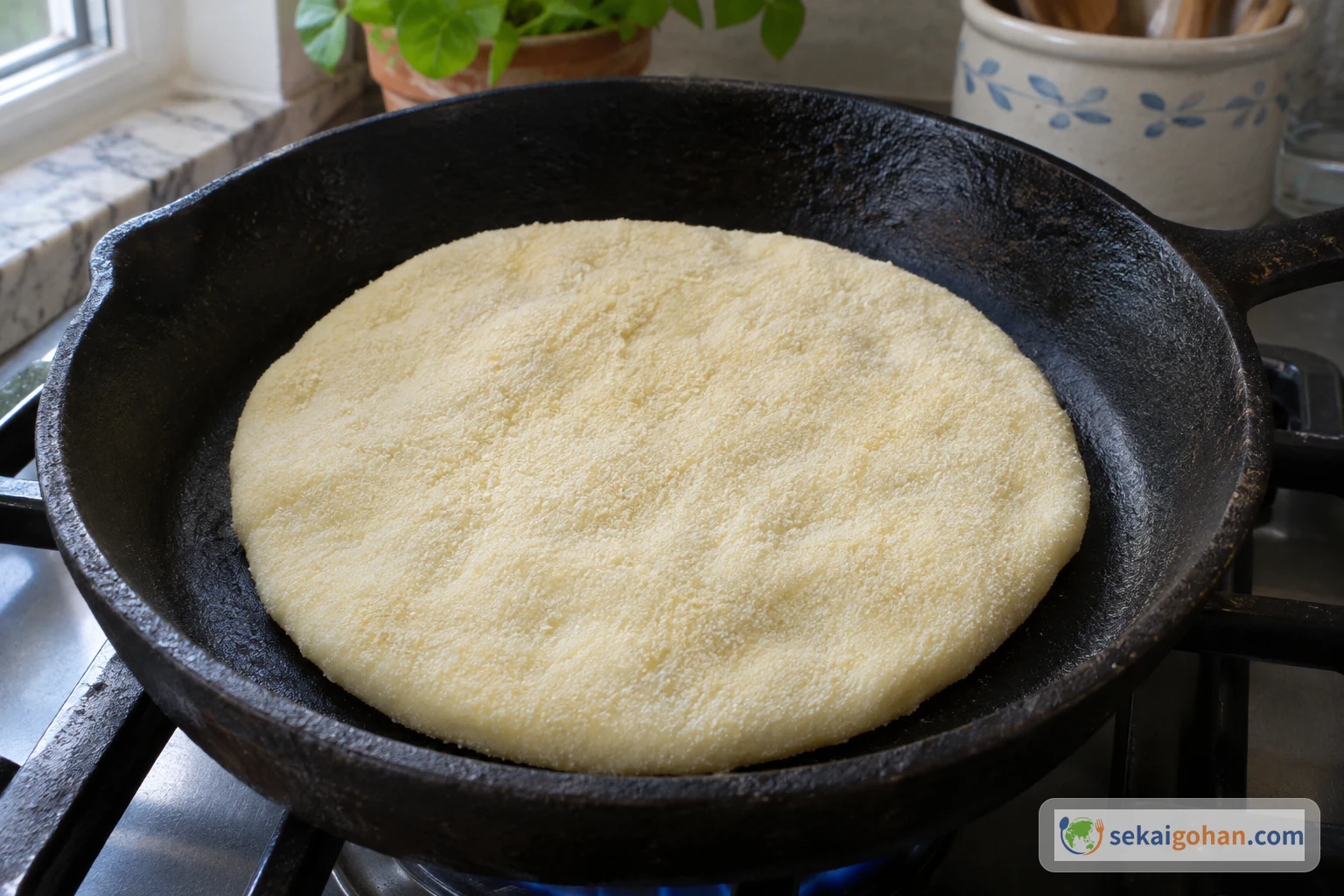
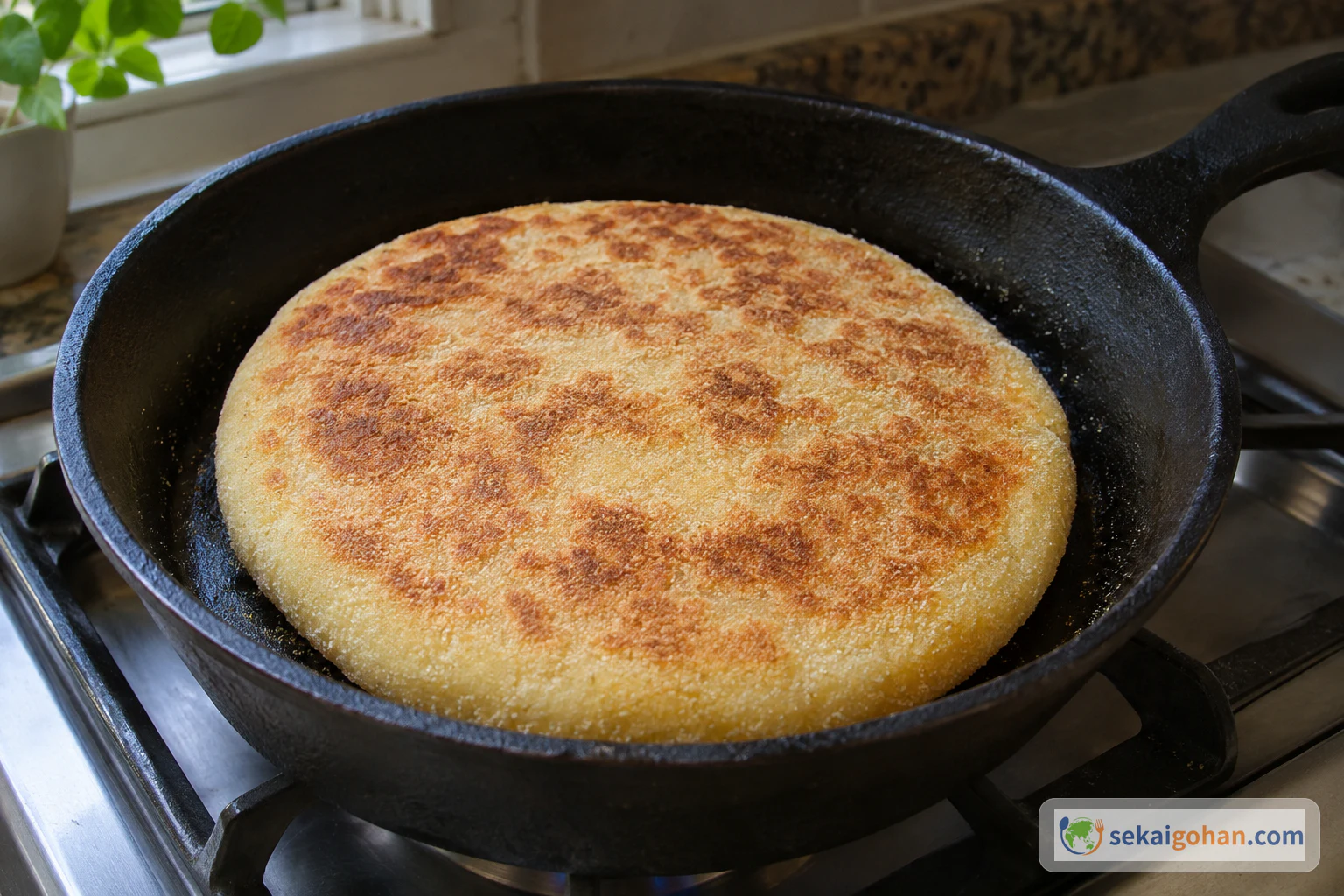
The disc of dough goes down on the hot iron with barely a sound, and soon the edges turn matte and the underside starts to freckle gold. Flip it and the top has puffed into a soft dome. Tear it open once it has cooled a little and the inside is pale, fine and springy, with a few small air pockets.
Matlouh is the yeast-risen semolina flatbread of Algeria, cooked on a flat tajine or a heavy pan rather than in an oven. It tastes of toasted grain, lightly salted, with a tender crumb and a thin golden crust, and it is a bread of the family table that also appears at Ramadan meals.
Matlou, Khobz Tajine and the Bread of the Pan
The bread goes by several names. You will hear matlou', khobz e-matlou and khobz e-tadjine, the last naming the flat cooking pan that gives the bread its crust. In Arabic it is written المطلوع. It is cooked on a clay or cast-iron tajine, set over the flame and heated hard before the dough goes on. It is a bread of the family table, and it appears at Ramadan meals. Some also call it a Tunisian bread; where it was first made is not settled.
An older way of raising the dough
Before packaged yeast, the dough was raised with a natural leaven. One name for it is ghessen temtount. Nineteenth-century descriptions of food in Kabylie record a leaven made by letting a small piece of dough ferment for 18 to 20 hours, then kneading it into a fresh batch. The bread made that way was called ar'eroum-en-temtount, and the same accounts describe it as poorly risen and imperfectly cooked. Next to it stood ar'eroum akouran, an unleavened bread. How those breads connect to the matlouh baked today is not settled, so treat them as a related tradition rather than the same loaf.
The home version here rises with baker's yeast. It takes an afternoon: two rises of about 2½ hours together, then a few minutes per side on the pan.
How it differs from kesra
Another Algerian pan bread is kesra, a thin disc that is unleavened or barely leavened, pricked with a fork and cooked in a few minutes. Matlouh rises twice and is pressed only to about ⅜ inch (1 cm) thick, so it comes off the pan soft and bready inside, closer to a loaf than to a cracker.
The difference is in the dough. Kesra is unleavened or barely leavened and cooks in a few minutes. Matlouh is yeast-raised and waits under a cloth until it has puffed.
Ingredients
These amounts make two medium breads, a size that fits a home pan.
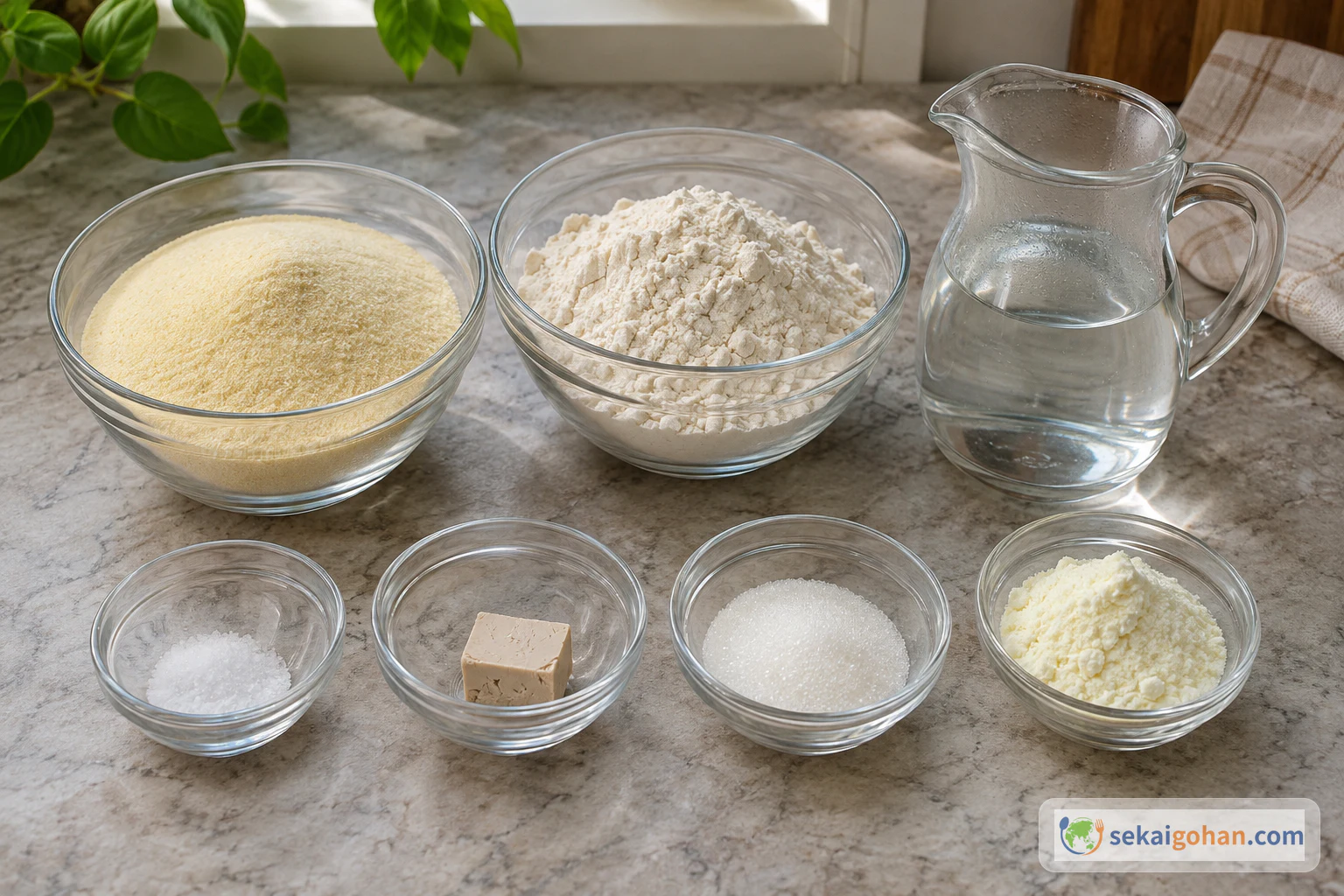
Look for semolina labeled extra-fine. The fine grind absorbs water evenly and gives the even, soft crumb. Use the same semolina for dusting the board and the cloth, which keeps the dough from sticking and adds a light crunch to the crust.
This bread contains wheat (semolina and flour) and milk (milk powder).
Equipment
- Large mixing bowl
- Small glass or cup for dissolving the yeast
- Kitchen scale
- Damp kitchen towel or plastic wrap
- Clean cotton cloth and a thick cloth for the second rise
- Cast-iron tajine base, heavy cast-iron pan or nonstick pan
- Tongs or a wide spatula
- Wire rack
Choosing and Substituting
Semolina is the one ingredient worth tracking down. Fine durum semolina is sold in Middle Eastern, North African and Italian groceries and online. Ordinary supermarket semolina is often coarser. It still makes bread, but the crumb turns grittier and the dough drinks water differently, so add the water more slowly.
For the flour, all-purpose works well. It sits between soft cake flour and strong bread flour, and that keeps the bread tender without turning it chewy. Skimmed milk powder is the easiest milk powder to find. Whole milk powder gives a slightly richer taste.
Fresh yeast comes in cubes from a bakery counter or the chilled section. If you only have dried yeast, use the amount the sachet gives for this quantity of flour and dissolve it with the sugar the same way. A cool kitchen slows the rise.
For a local result, keep the semolina, the long first rise and the hot iron. The kind of pan and the exact flour are the parts you can change at home.
Method
The work comes in short bursts with long waits between them. Mixing and kneading take about twenty minutes. Then the dough rises once in the bowl and again after shaping, and those two rises are your hands-off time. Heat the pan only at the end of the second rise, because cooking moves fast once it starts.
When It Goes Wrong
| What you see | Why | What to do |
|---|---|---|
| The dough is very sticky and will not form a ball | Too much water went in at once | Next time add the water gradually. For now, knead with lightly semolina-dusted hands and let it rest a few minutes so the semolina can drink |
| The dough barely rises | Old yeast, water that was too hot, or a cold room | Use fresh yeast and only lukewarm water. In a cool kitchen, give the first rise longer and wait for the size change |
| Golden outside, gummy inside | The heat stayed too high, or the round is thicker in the middle | Lower the heat and keep turning the bread until the inside dries. Press the next rounds to an even thickness |
| The dough tears or cracks while shaping | It sticks to the board and pulls apart | Dust the board and cloth with a little more semolina and press gently with the palms |
| The crust burns before the bread puffs | The pan is still on high heat | Turn the flame down the moment the dough goes on |
Serving, Variations and Storage
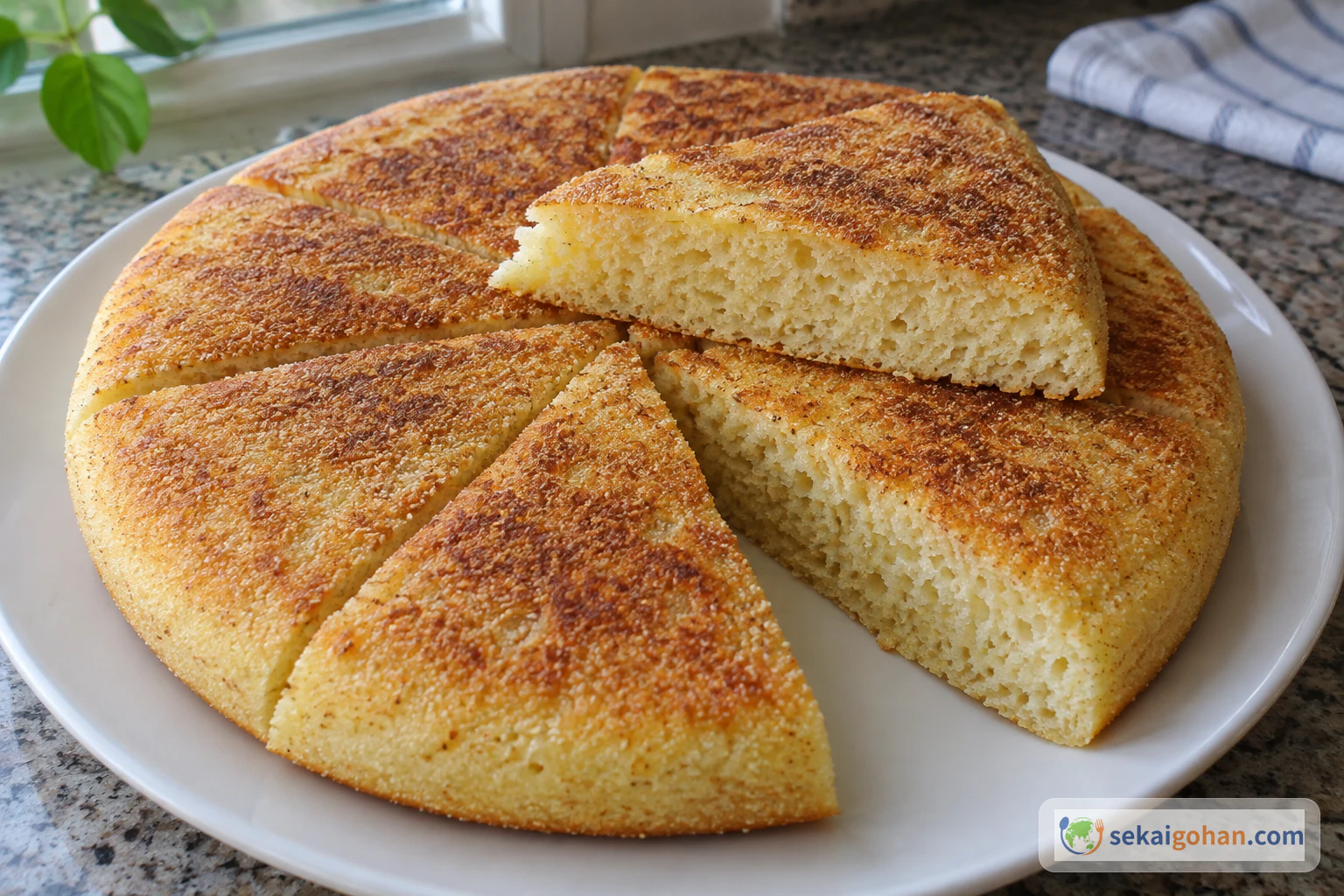
Let the bread cool on the rack, then cut it into wedges. It is a bread for dipping and wiping plates. Set it beside a bowl of chorba frik, next to a pot of mtewem, or with the sweet, fruity tajine lham lahlou on a Ramadan evening. In the morning, it is good split with butter and jam.
Variations
- Six small breads. Divide the dough into six instead of two. The smaller rounds cook through faster and suit individual plates.
- Oil or butter in the dough. Other home formulas work olive oil or butter into the dough. It gives a richer taste and a softer crust.
- A starter alongside the yeast. Some bakers mix a sourdough starter with a little fresh yeast. The bread picks up some of the tang of the starter.
- A different cooking surface. A clay tajine, a crepe pan or an electric stone tajine all work. Clay heats more slowly, so give it time to warm before the dough goes on.
Storage
Matlouh is best eaten the day it is baked. If some is left, wrap it in a cloth so it does not dry out, keep it at room temperature and finish it the next day.
Frequently asked questions
Can I make matlouh with semolina only?
Yes. Some formulas use only semolina, blending fine and medium grinds. With these amounts, keep the flour, because it binds the dough and keeps the crumb soft. Swapping it all for semolina changes the water the dough needs.
Can I use instant or active dry yeast?
Yes. Use the amount the sachet gives for this quantity of flour, and dissolve it with the sugar in a little lukewarm water as in step 1. Then judge both rises by size: doubled or tripled in the bowl, slightly puffed on the cloth.
Why do I break the first bread open?
A bread this thick browns faster than it cooks inside, and the crumb is the only true test. Checking the first bread tells you how long the second needs at your heat. Once you know your pan, you will judge it from the color of the edges alone.