Ingredients and steps on one page. Print it, or choose “Save as PDF” in the print dialog.
Sekai Gohan
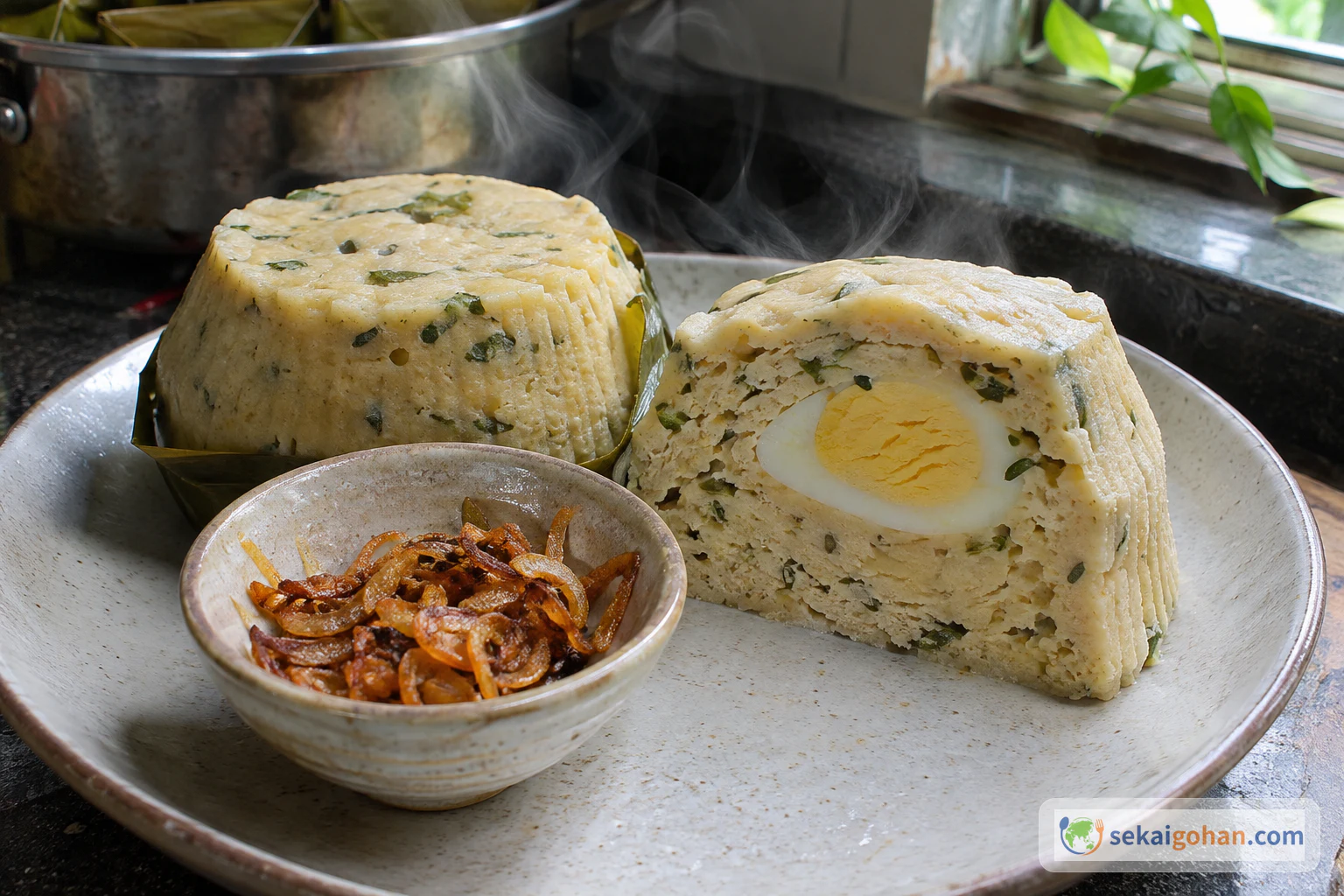
Gonré: Burkina Faso Steamed Cowpea Cakes with Egg
Ingredients
| Ingredient | Amount | Role |
|---|---|---|
| Dried cowpeas or black-eyed peas (haricots / benga) | 7 oz (200 g) | The body of the cake. Peeled before grinding |
| Green onion leaves (feuilles d'oignon) | ¾ oz (20 g) | Fresh onion aroma and green flecks |
| Parsley (persil) | ⅓ oz (10 g) | Grassy, fresh flavor |
| Celery (céleri) | ¾ oz (20 g) | Savory herb note |
| Onion | ⅕ of an onion | Sweetness in the paste |
| Garlic | 1 small clove | Depth |
| Fresh ginger | a little, grated | A warm edge |
| Baking soda (in place of kali / potasse) | ½ tsp | Lift and softness |
| Salt | ½ tsp | Seasoning |
| Vegetable oil | scant ½ cup (100 ml), plus a little for the dishes | Worked into the paste for a smooth, rich set |
| Eggs, hard-boiled | 2–3, halved | The filling, one half per cake |
| Water | a little | Loosens the paste only as needed |
| Onion and vegetable oil, for serving | as needed | Fried onions or plain oil to spoon over the cakes |
Steps
1Soak the cowpeas and boil the eggs
Put the dried cowpeas in a large bowl and cover them with plenty of water. Leave them for 2–3 hours, or overnight if that suits your day better. While they soak, hard-boil the eggs until the yolks are firm, then cool, peel and halve them. The beans are ready when they are plump and the skins wrinkle and slip when you pinch a bean between two fingers.
2Rub off the skins
Keep the beans in their water and rub handfuls hard between your palms, as if washing your hands. The skins come away and float to the top. Tip the water off with the floating skins, add fresh water and rub again. Repeat until almost no skins are left and the bowl holds pale cream beans.
Peel all the wayEvery skin left behind ends up as a rough speck in the finished cake. Take one more rinse than you think you need. Pick out stragglers by hand, especially the dark-eyed ones.
3Grind the beans with the herbs
Roughly chop the green onion leaves, parsley, celery, onion and garlic. Put them in the blender with the peeled beans and the grated ginger, then add only a spoonful of water. Blend, stopping to scrape down the sides, and add more water a spoonful at a time only if the blades stop catching. The paste is ready when it is thick, smooth and pale green, with no bean pieces left, and it falls from the spatula in heavy lumps.
4Beat in the baking soda and oil
Scrape the paste into a pot or a large bowl. Add the baking soda and a small splash of water and stir it through. Then pour in the oil in a thin stream, beating with a wooden spatula the whole time. Keep beating until the oil has disappeared into the paste and the paste looks glossy and even, with no streaks of oil on the surface.
5Season, fill the dishes and add the eggs
Beat in the salt. If the paste has tightened up, loosen it with a little water until it is a heavy batter that drops slowly from the spatula. Brush the small dishes with oil and fill them with the paste. Press half an egg into the centre of each and let the paste close up around it. Each dish should hold one egg half, set firmly in the middle.
6Steam under a cloth
Bring the water in the steamer to a boil and set the dishes in a single layer. Lay a clean cloth or a sheet of parchment over them, under the lid, so condensation cannot drip onto the cakes. Cover and steam for 45 minutes. Check the water level now and then and top it up with boiling water so the steamer never boils dry. When the time is up, the tops are set and no longer look wet.
Steam and donenessLift the lid away from you, because the steam that rushes out burns. Cowpeas are not eaten raw, so steam the paste until it is set all the way through, and keep boiling water in the steamer the whole time.
7Test with a skewer and turn out
Push a skewer into a cake beside the egg and pull it straight out. If wet paste clings to it, cover and steam a little longer, then test again. When the skewer comes out clean, lift the dishes out with a cloth and run a thin knife around the edge. Turn each cake onto a plate. It should come out whole, firm and evenly pale, with fine green flecks.