
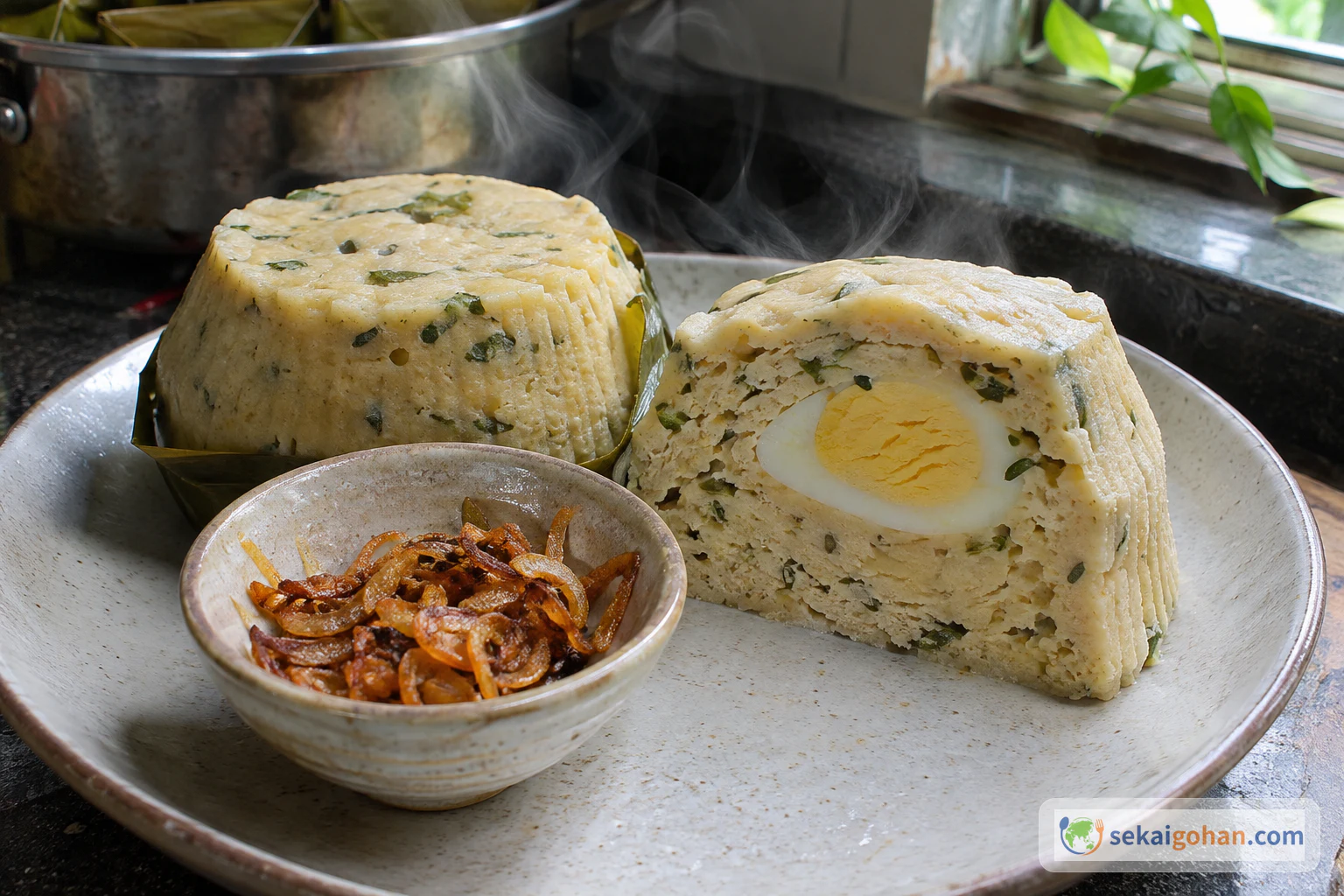
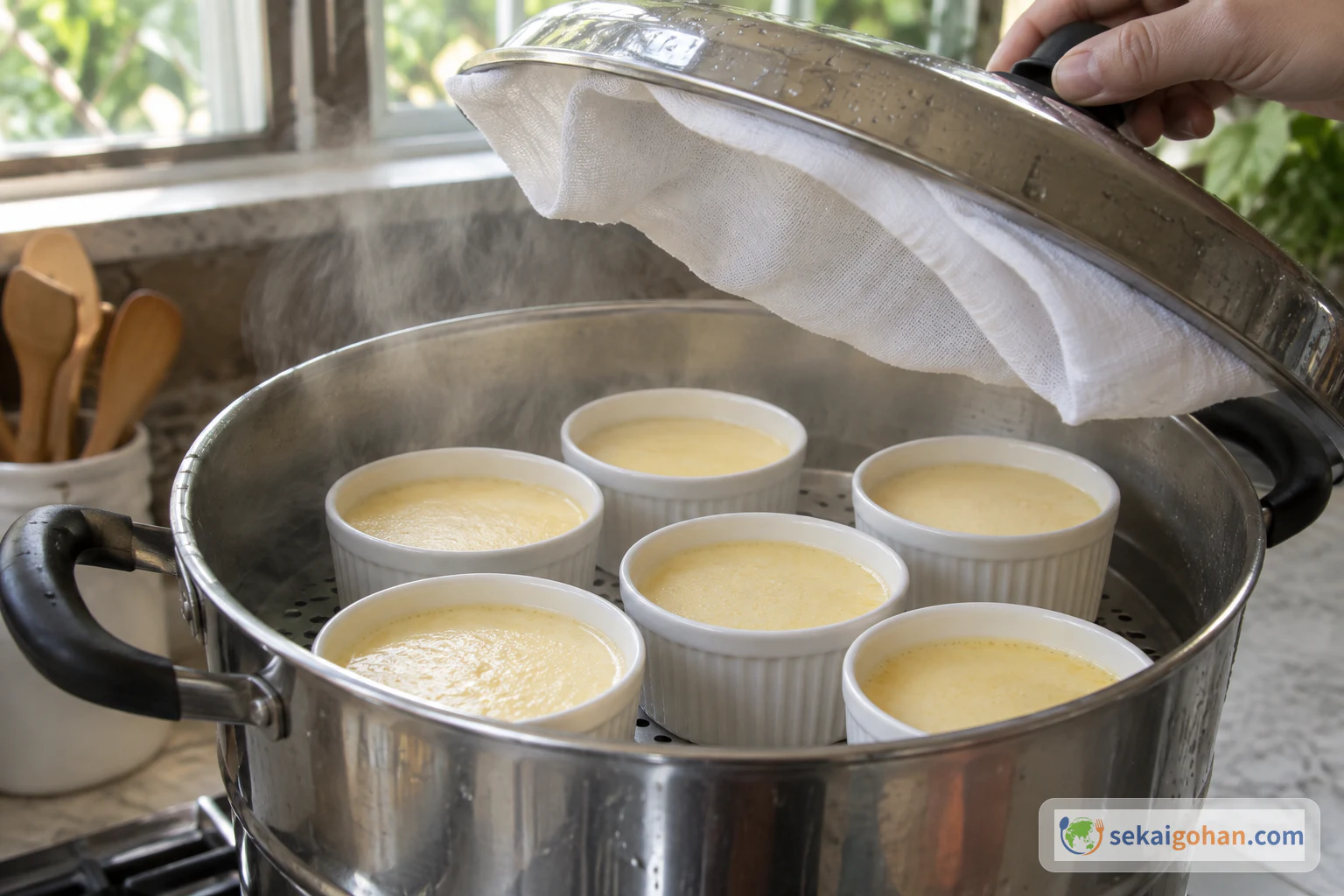
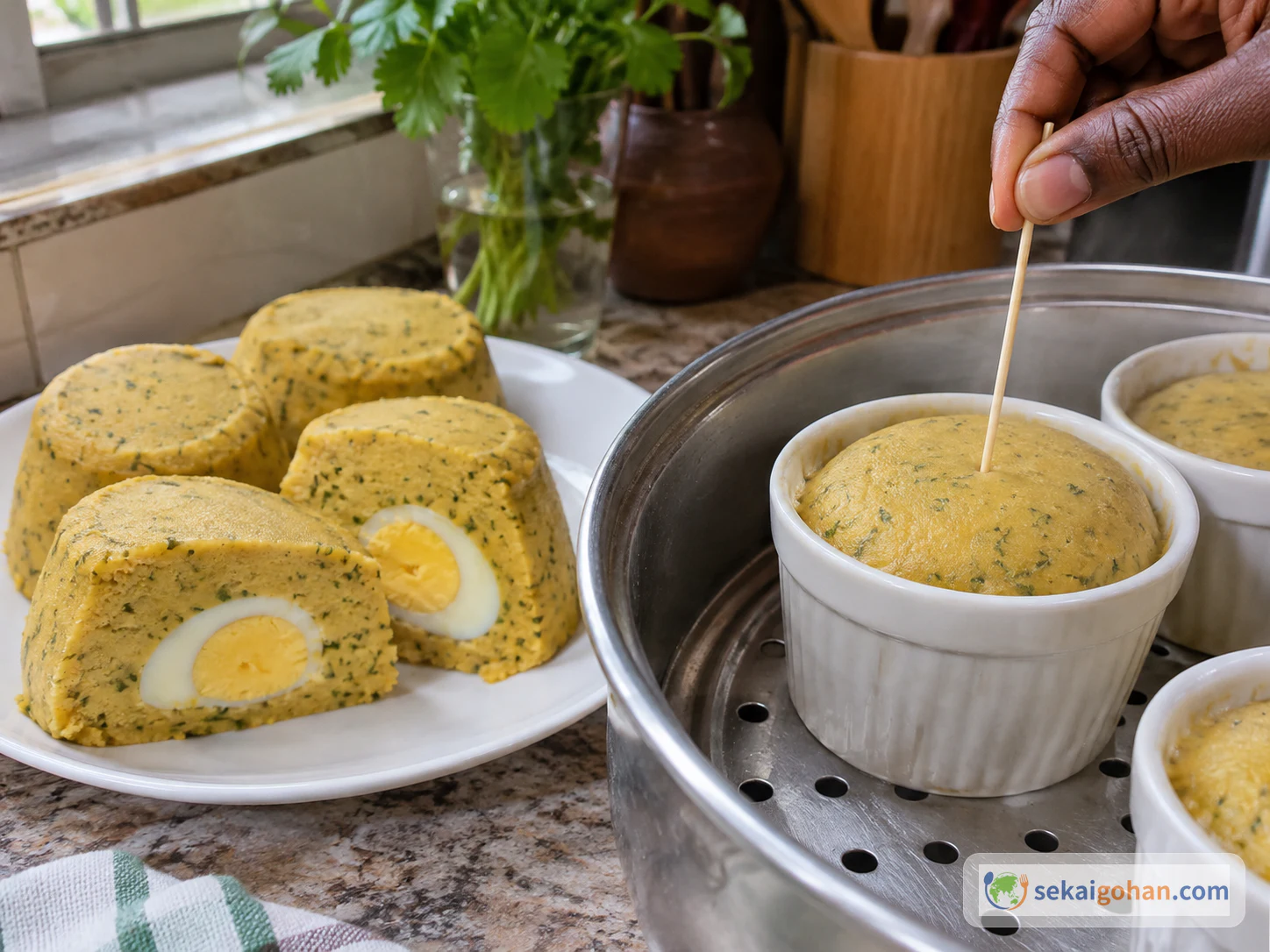
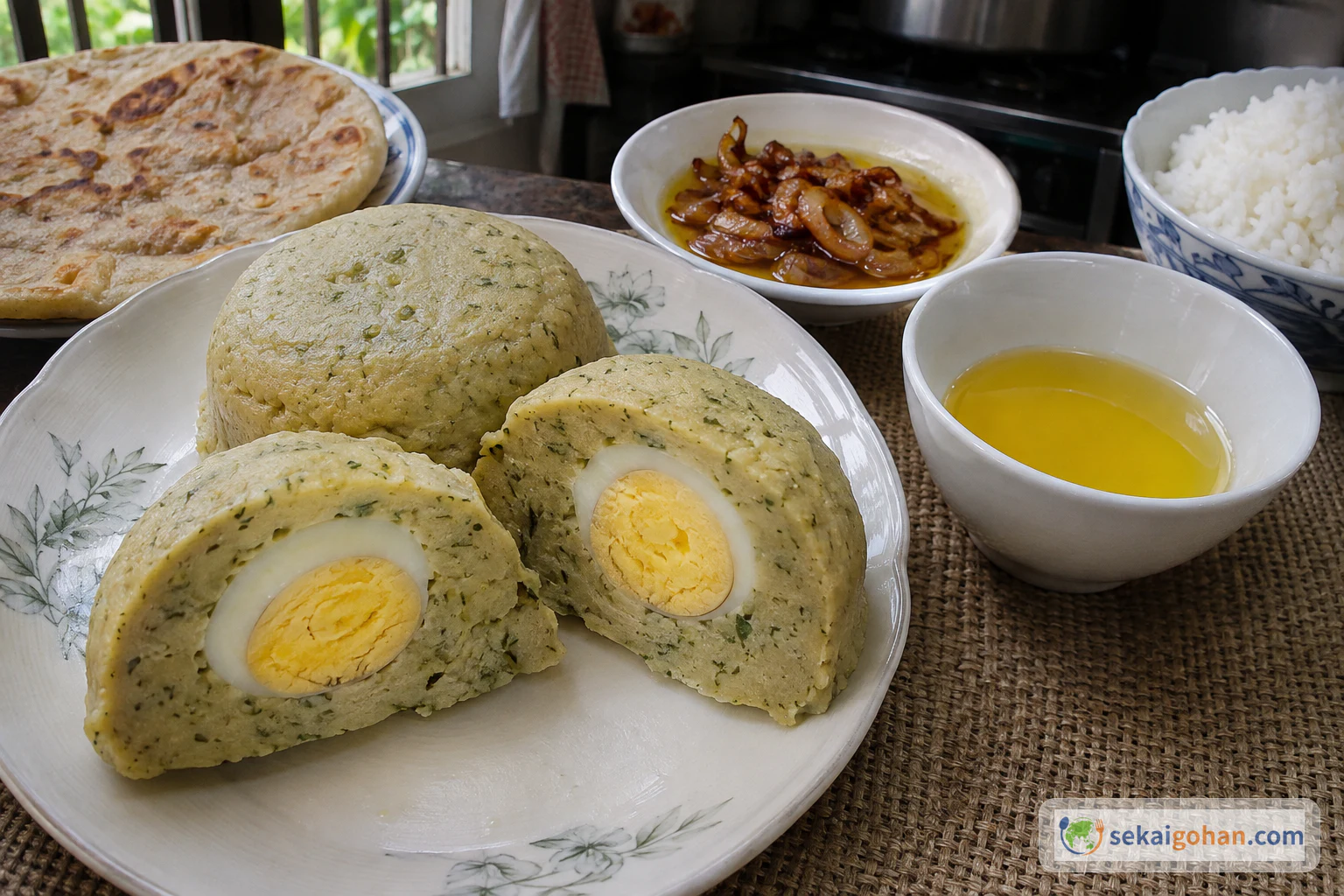
When you lift the steamer lid, a cloud of steam rolls out. Under the cloth, the small dishes hold pale cream cakes that have set firm and smell of green onion and celery. Push a skewer in beside the egg and pull it out clean, then turn a cake onto the plate. When you cut it, half a boiled egg sits in the middle of a dense bean paste flecked with green herbs. That is gonré, Burkina Faso's steamed cowpea cake. It is made from peeled beans ground with herbs, worked smooth with oil, and eaten warm with a little oil or onions fried in oil spooned over the top.
A Bean Paste, a Boiled Egg, and a Name That Covers Two Dishes
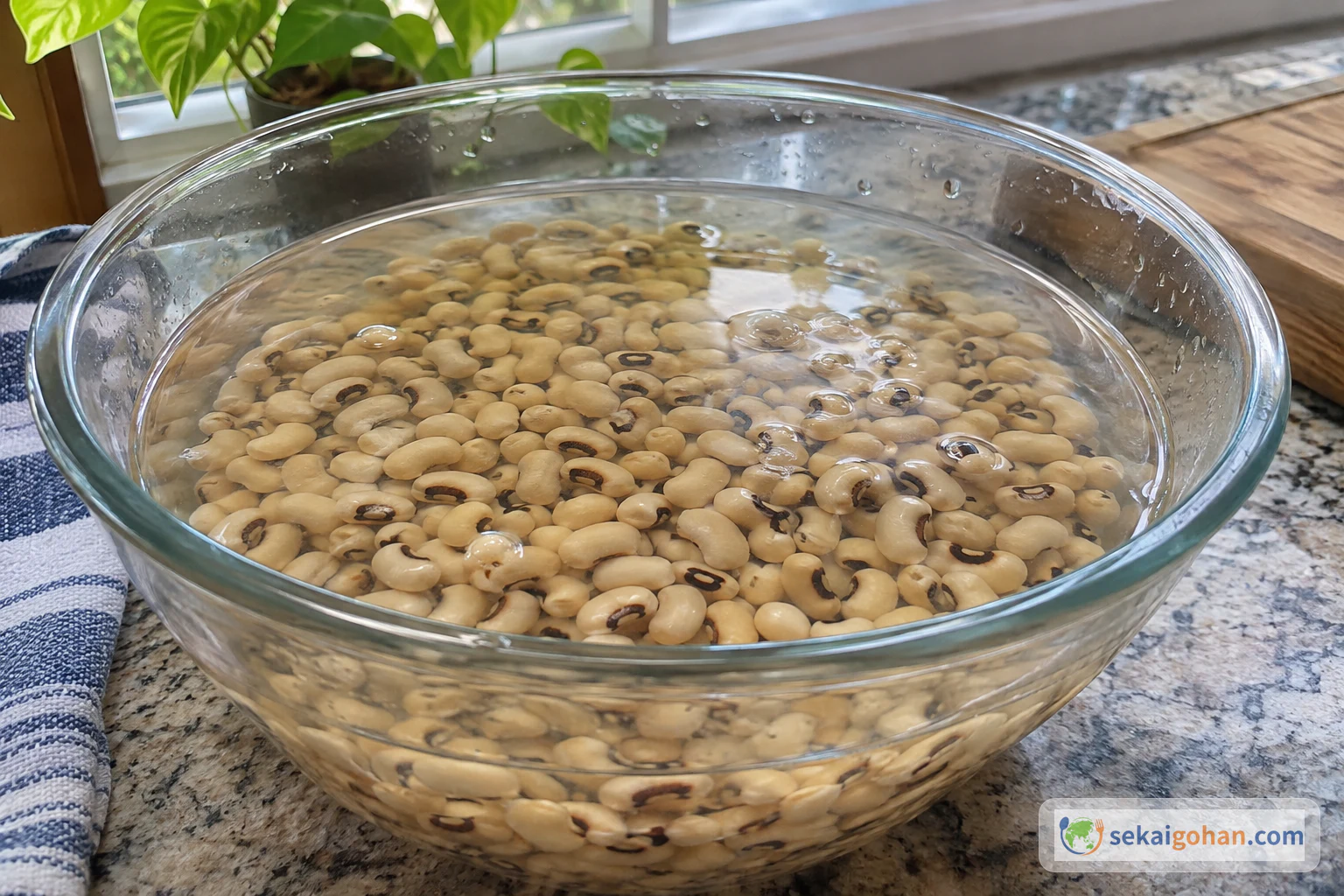
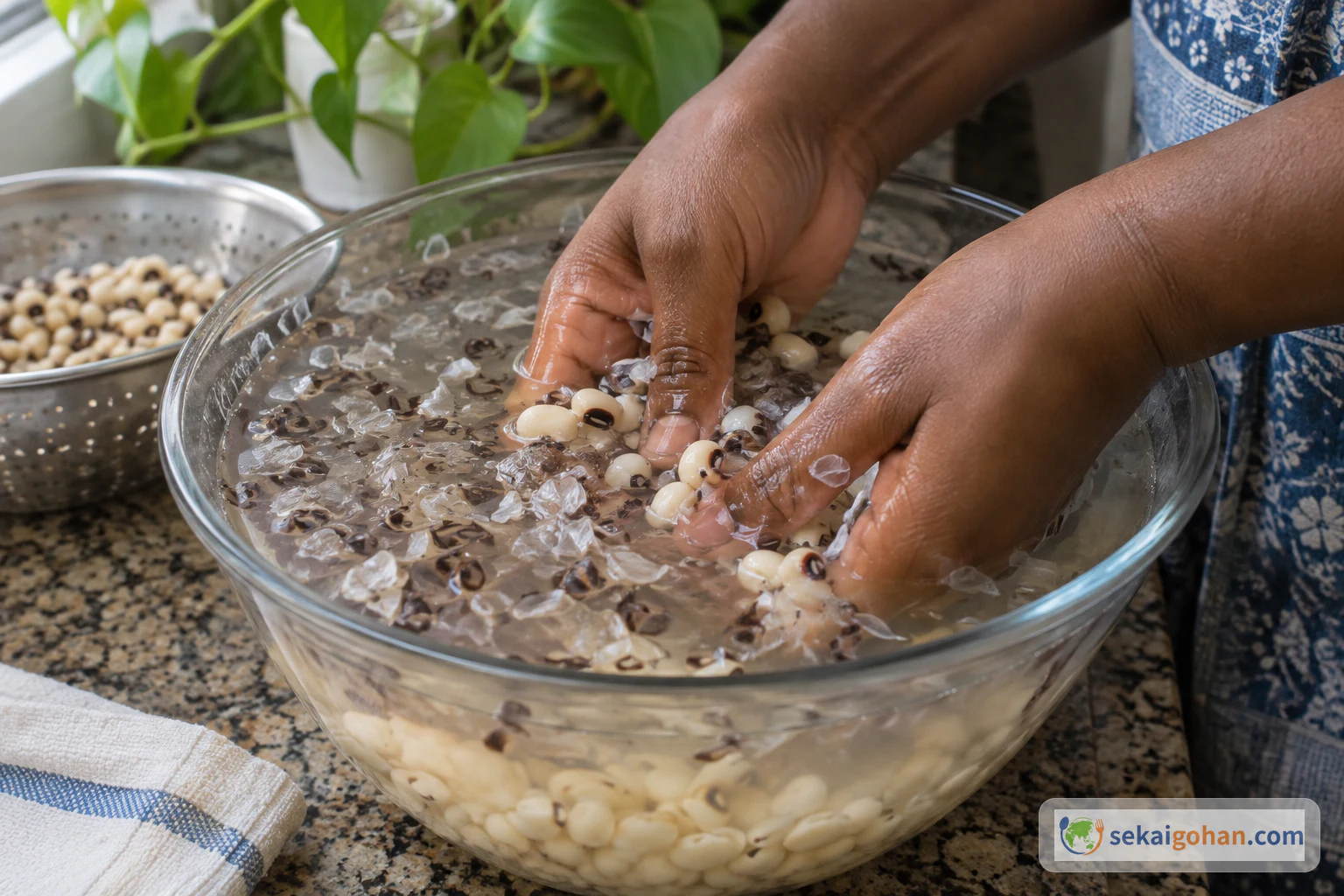
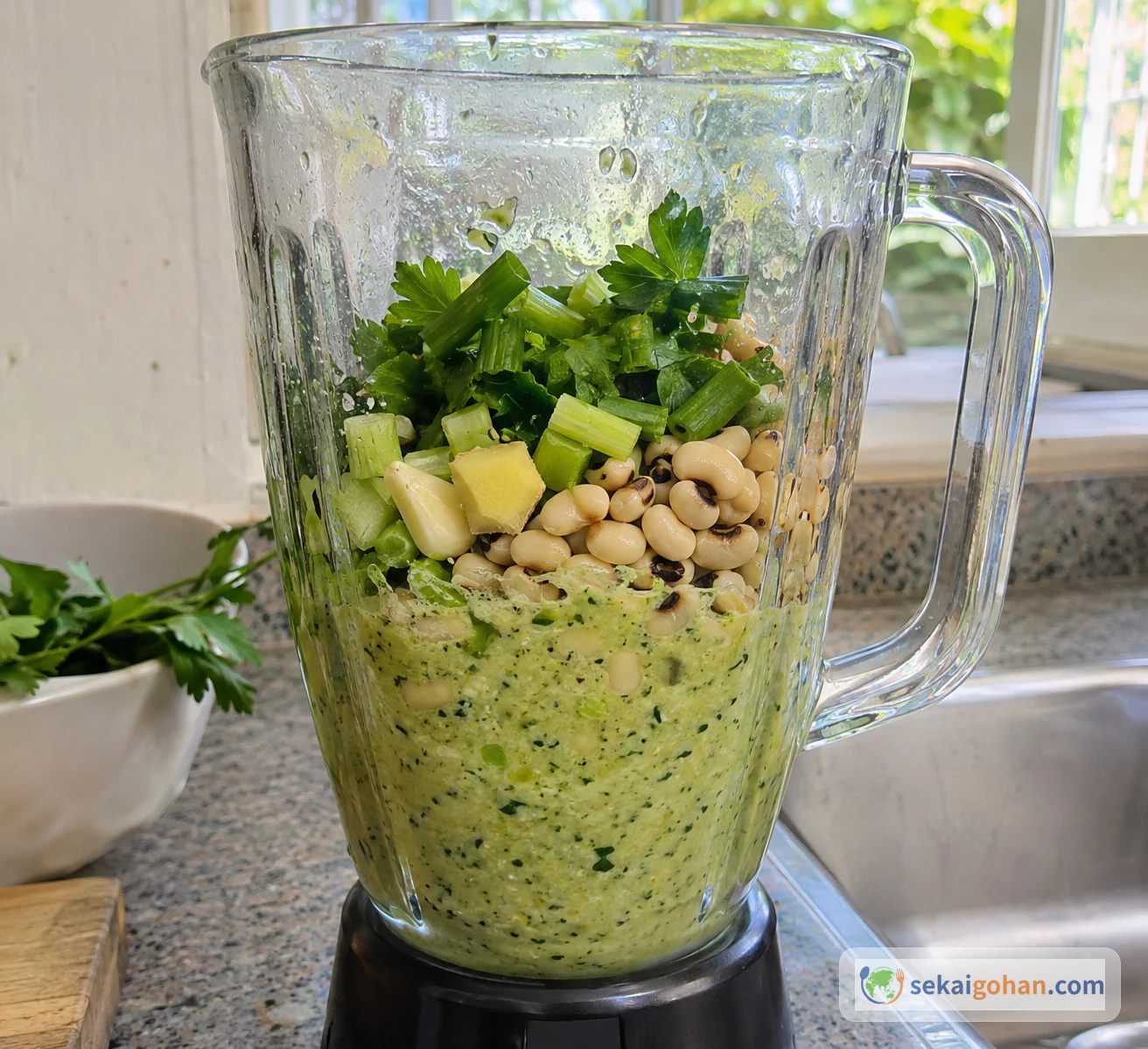
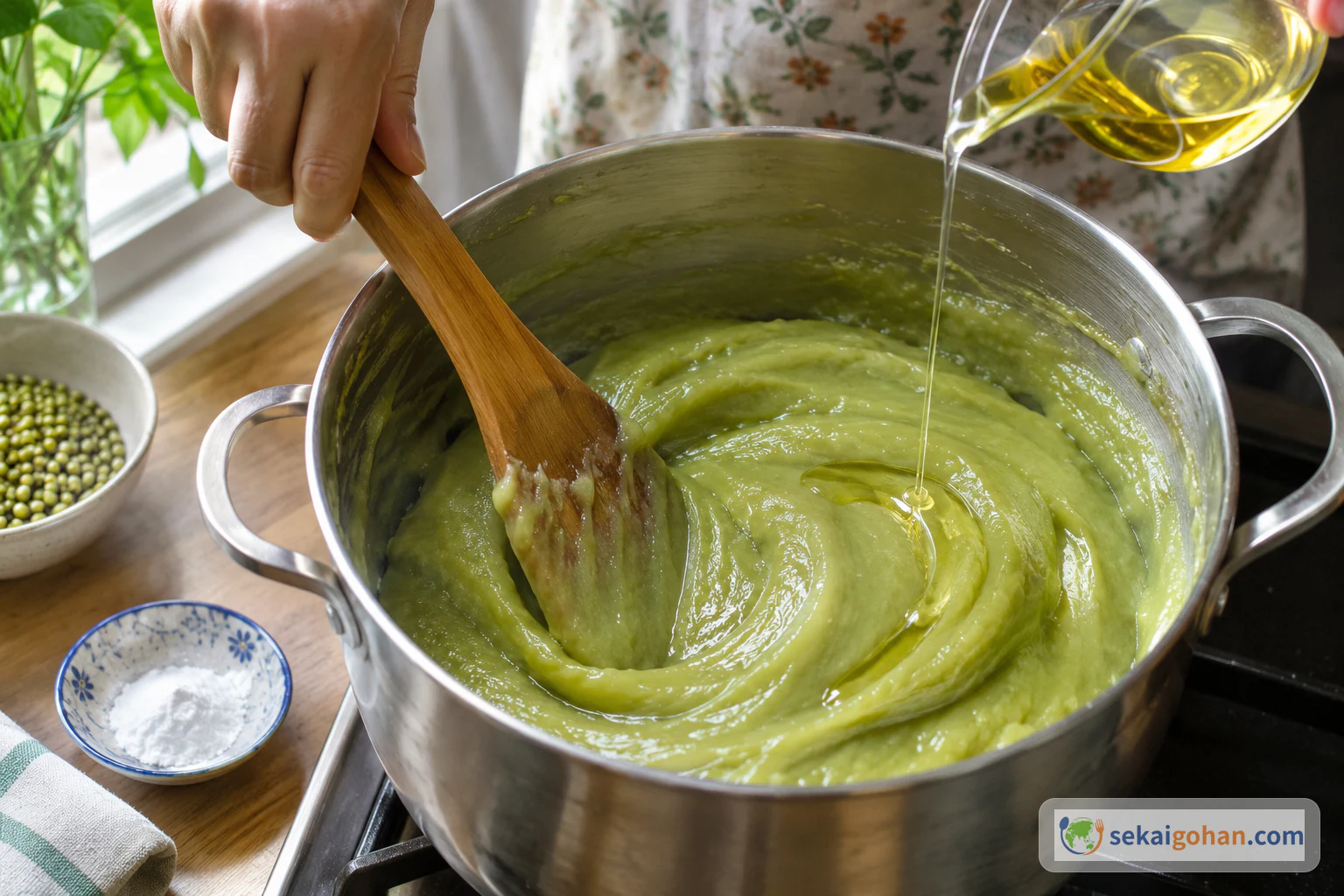
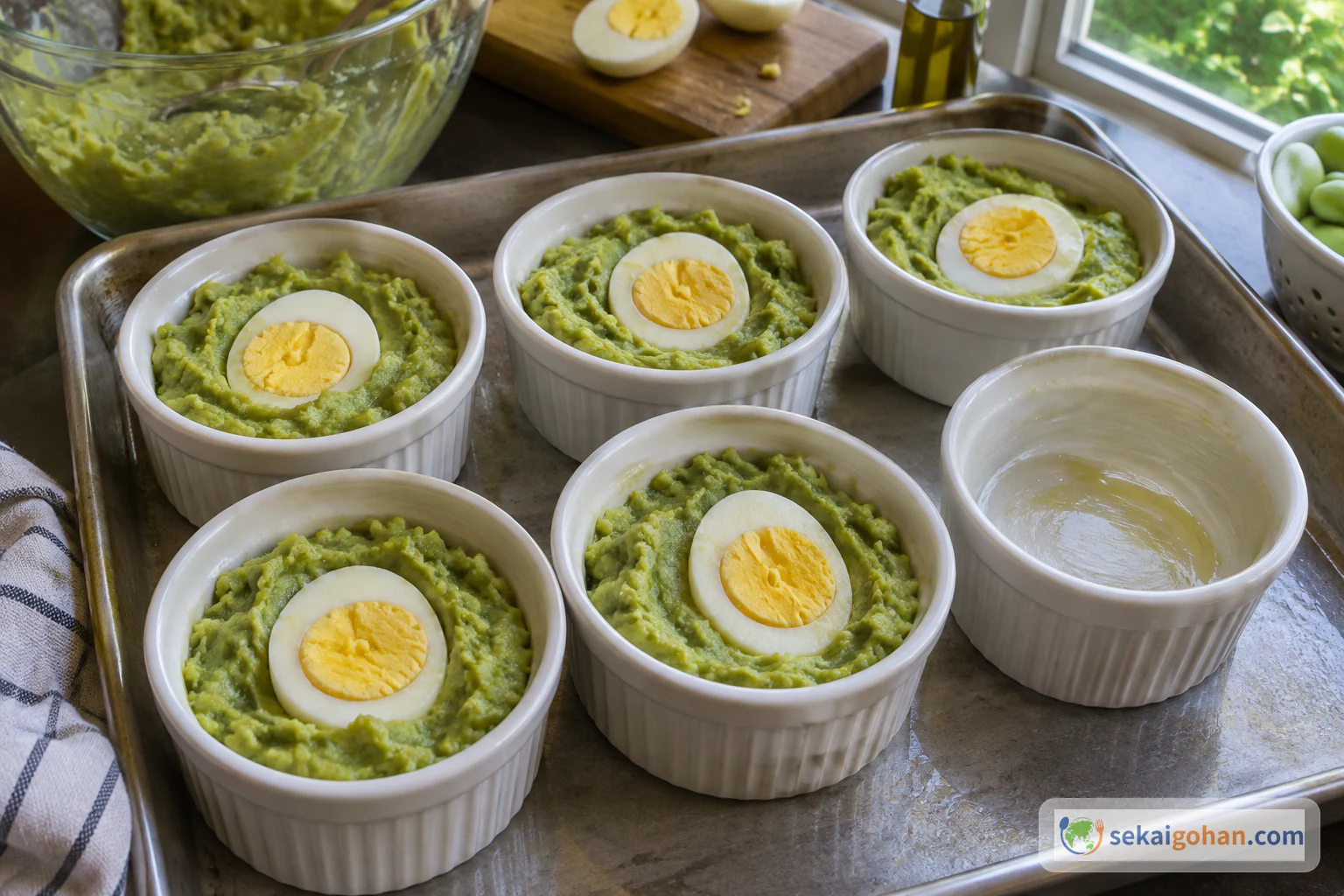
The bean gonré starts with dried cowpeas, the same species as the black-eyed peas sold abroad. The beans are soaked, rubbed out of their skins and ground with green onion leaves, parsley, celery, ginger, garlic and onion. The paste gets kali (potash) or baking soda, a splash of water and a generous amount of oil, all worked in with a wooden spoon. Then it goes into small oiled dishes, each with half an egg pressed into the centre, and into the steamer. Some cooks skip the dishes and wrap the paste in oiled kola leaves or oiled paper, and some use shea butter instead of oil.
The name is spelled several ways: gonré, gonrè, gaonré, gnon, gnonkon. The same words also cover a different dish. Gonré de mil, also called gnonkon, is made from crushed millet, peanut flour, fresh cowpea leaves and kali, mixed with a little water, shaped into balls and steamed. It comes with a fried-onion sauce or a tomato sauce, and cooks abroad sometimes use rice or couscous in place of the millet. It shares the steamer and the name but nothing else, so this recipe keeps to the bean paste.
Ask for gonré in Burkina Faso and you can get either dish. One is a smooth, herby cowpea paste with an egg inside. The other is a millet ball made with peanut flour and bean leaves. Where the name began, and which dish had it first, is not settled.
Gonré is a different dish from the country's everyday staple, tô, the stiff sorghum porridge eaten with sauce. Nigeria's moin-moin is also a steamed cowpea pudding, and the resemblance is plain. The Burkinabè pot sets itself apart with its heap of fresh herbs, the alkaline lift of kali or baking soda, and the boiled egg at the centre. There is more from the same table on the Burkina Faso page.
Ingredients
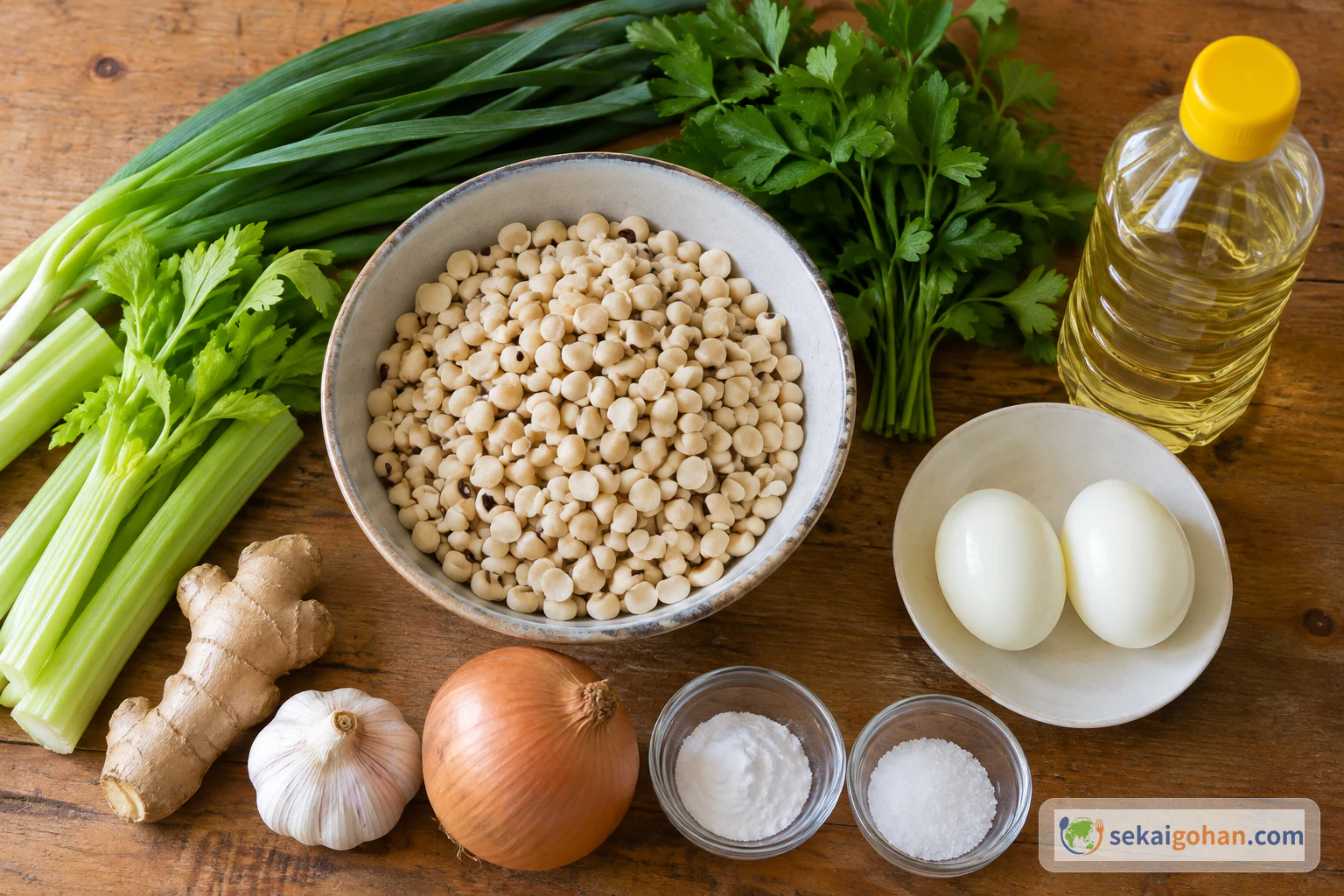
The oil is measured against the beans: half a liter of oil for every kilo of dried beans, which gives the amount above. Add it in a thin stream while you beat, so the paste takes it in and turns glossy instead of leaving oil pooling on top.
This recipe contains egg. The millet gonré (gnonkon) contains peanut flour. Cowpeas are legumes; check packaged beans and bean flour for shared-facility statements.
Equipment
- Large bowl for soaking and peeling
- Blender, or a stone grinder or mortar
- Pot or large mixing bowl and a wooden spatula
- Small heatproof dishes (ramekins or pudding molds)
- Steamer with a lid, large enough to hold the dishes in one layer
- Clean cloth or parchment paper to set under the lid
- Bamboo skewer
- Kettle of boiling water to top up the steamer
What to Buy and What to Swap
Black-eyed peas are the bean to look for. They are the same cowpea species used in Burkina Faso. Buy dried, not canned, because the dried beans soak, peel and grind into the thick paste the dish needs. Dried cowpea flour also works. It skips the peeling and changes the method a little (see the variations below).
Green onion tops stand in well for onion leaves. Use only the green parts, which give the paste its colour and a fresh onion smell. Flat or curly parsley and ordinary celery stalks with some leaves are fine.
The ingredient to replace is kali. In Burkina Faso, cooks add potash to the paste. At home, use baking soda and nothing else. It does the same job of lifting and softening the cake, and it is an ordinary food product. Shea butter is the one local swap that changes the flavour. Use it in place of oil and the cakes taste nuttier and earthier. Vegetable oil gives a cleaner, milder cake.
Method
Most of the time is hands-off. The beans soak and the cakes steam without you. The hands-on work is the peeling, and it decides the texture, so give it your full attention. Boil the eggs while the beans soak. Then grind, mix and fill the dishes in one go, and have the steamer heating by the time the last dish is filled.
When It Goes Wrong
| What you see | Why | What to do |
|---|---|---|
| Gritty, rough specks in the cake | Skins were left on the beans | Next time, rinse and rub until almost no skins float up. Skins cannot be removed after grinding |
| The blender stalls and will not catch | The paste is very thick | Add water a spoonful at a time and scrape down. Too much water at this stage makes a slack batter |
| Wet, pitted tops | Condensation dripped from the lid | Set a clean cloth or parchment between the lid and the dishes |
| Paste sticks to the skewer | The centre has not set | Top up the steamer with boiling water, cover and keep steaming, then test again |
| A bitter, soapy edge or an odd colour | Too much baking soda | Measure a level ½ tsp and stir it through evenly before the oil goes in |
| Oil pools on top of the paste | The oil went in too fast | Keep beating until it is absorbed, and pour more slowly next time |
Serving, Variations and Storage
At the table
Serve gonré warm, cut in half so the egg shows. Put out plain vegetable oil or onions fried in oil and let everyone spoon some over. Fry sliced onion slowly in oil until soft and golden, so the oil picks up its sweetness and soaks into the dense bean cake.
Variations
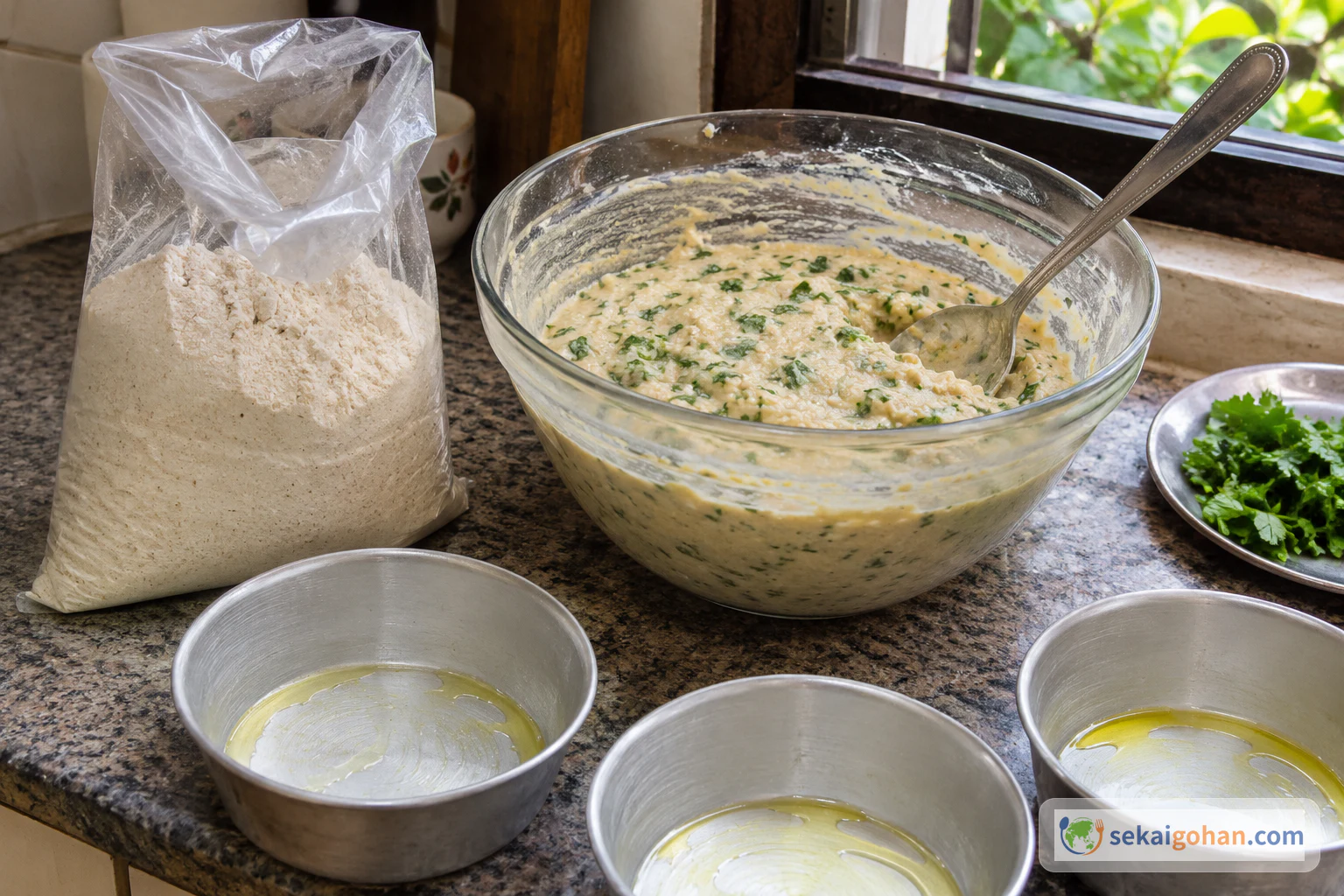
- Bean flour gonré. Start from dried cowpea flour and follow the same steps from mixing onward. Stir the flour with water and the chopped herbs into a thick batter, then spoon it into oiled dishes. You skip the soaking and peeling.
- Shea butter instead of oil. Work it into the paste in place of the vegetable oil for a nuttier, more local flavour.
- Without the egg. The egg can be left out. Fill the dishes with paste alone for a plain bean cake that steams the same way.
Storage
Let leftover cakes cool, then refrigerate them quickly in a covered container. Reheat in the steamer until they are hot all the way to the centre.
Frequently asked questions
Can I soak the beans overnight instead?
Yes. Overnight soaking works well. The skins loosen even more, and peeling goes faster in the morning. Keep the bowl somewhere cool and drain off the soaking water before you start rubbing.
I don't have a blender. What else works?
In Burkina Faso, the beans and herbs are often ground on a stone, and a mortar does the same job. Another way to peel is to pound the dry beans in a mortar to crack the skins, winnow them off, and then soak the beans before grinding. Either way, the paste has to end up smooth with no bean pieces.
Can I wrap the paste instead of using dishes?
Yes. In Burkina Faso, cooks also wrap the paste in oiled kola leaves or oiled paper, with the egg inside. Oil the wrapping well so the cake peels away cleanly. Steam them the same way as the dishes.
What does the baking soda actually do?
It lifts the paste a little and keeps the steamed cake soft rather than tight. That is the job kali does in Burkina Faso. Stir it through before the oil goes in so it spreads evenly. Clumps of soda taste bitter.


