Ingredients and steps on one page. Print it, or choose “Save as PDF” in the print dialog.
Sekai Gohan
Ndunda: Congolese Amaranth Greens Stewed with Smoked Fish
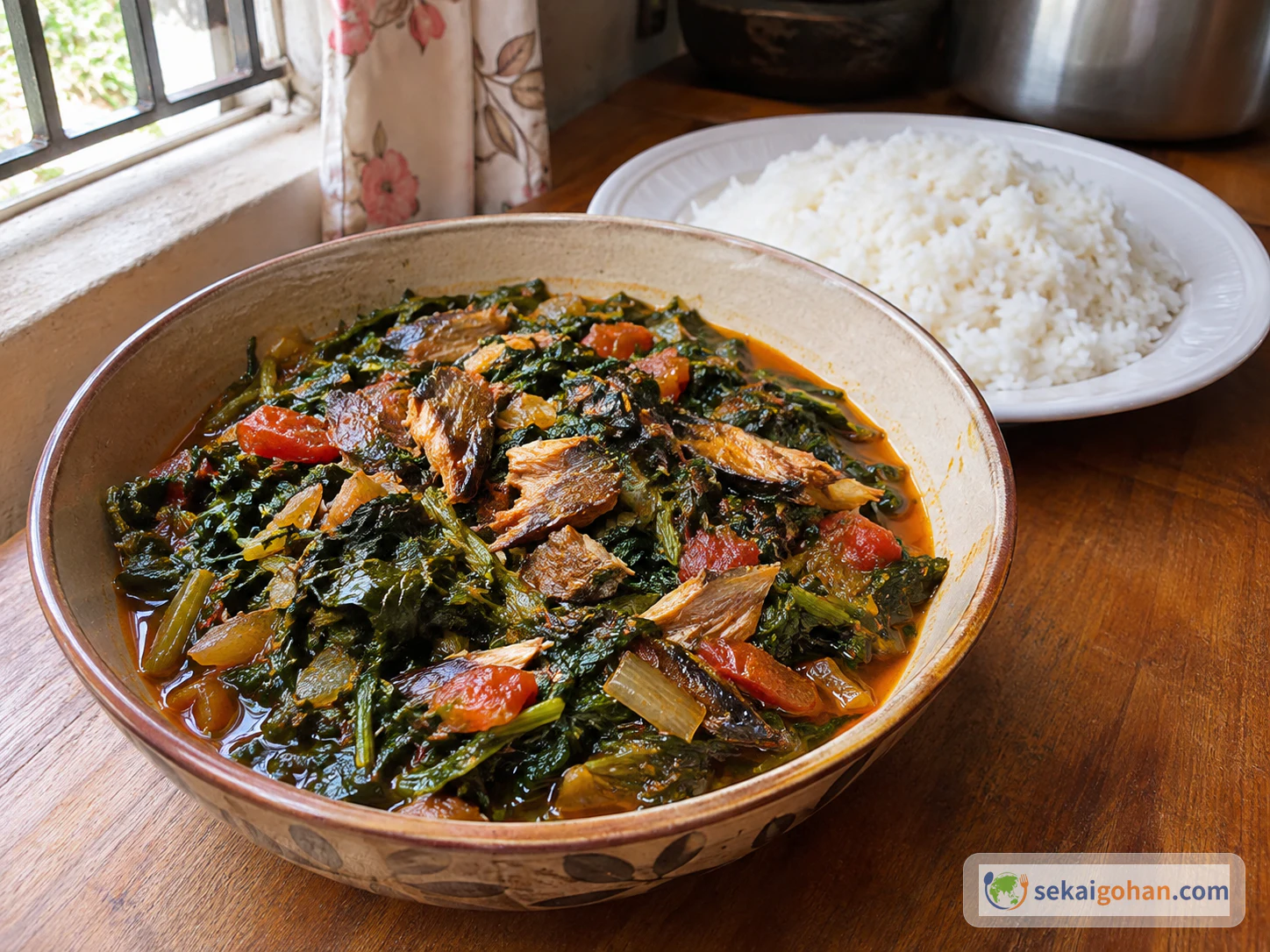
Ingredients
| Ingredient | Amount | Role |
|---|---|---|
| Amaranth leaves (bitekuteku), thick stems removed | 2 lb (900 g) | The main green. It shrinks a lot as it cooks |
| Smoked fish, such as smoked catfish | about 6 oz (170 g), weighed after soaking and boning | Smoke, savour and salt |
| Onion, chopped | 1 | Sweetness and body |
| Green onions (scallions), chopped | 15 stalks | Fresh, oniony aroma |
| Tomato, chopped | 1 medium | Acidity and thickness in the broth |
| Mint leaves, chopped | ½ cup (120 ml) | A cool, herbal lift |
| Yellow bell pepper, chopped | ½ | Sweetness and colour |
| Yellow habanero pepper | 1 | Heat. It is very hot |
| Red palm oil | ½ cup (120 ml) | Colour and the defining flavour |
| Salt | ½ tsp, adjusted after tasting | Seasoning |
| Water | 2 cups (480 ml) | The cooking liquid |
Steps
1Soak the smoked fish and pick out the bones
Put the smoked fish in a heatproof bowl and cover it with boiling water from the kettle. Leave it for 10 minutes to soften the flesh and draw out some of the salt. Lift it out, rinse it in warm water, and pull out every bone. Rub the flesh between your fingers to find any sand or grit, and rinse again. It is ready when the flesh breaks apart under your fingers and no bones or grains of sand are left.
2Strip and chop the amaranth
While the fish soaks, pull the leaves and tender stems away from the thick stalks and throw the woody parts away. Pile the leaves on the board and chop them finely. Wash them well in plenty of water and drain them in a colander. Before they go in the pot, there should be no hard stem ends left in the pile.
3Simmer the fish in palm oil and water
Put the fish in the deep pot with the 2 cups (480 ml) of water, the palm oil and a small pinch of the salt. Keep the rest of the salt for the end. Bring it to a boil over medium heat and keep it bubbling for 10 minutes, so the fish is thoroughly cooked in the boiling liquid. You're ready for the next step when the palm oil floats red on the surface and the sharp smoky smell has softened.
Let the fish go firstSimmering the fish alone first gives it time to soften and to flavour the broth before the greens go in. By the time the leaves arrive, the broth already tastes of smoke.
4Add the vegetables, then pile in the greens
Add the onion, green onions, tomato, mint, yellow pepper and habanero to the simmering broth. Pile all the chopped amaranth on top. It will rise far above the liquid, and that is fine. Leave it unstirred for 5 minutes. The leaves are ready to stir when they have darkened and wilted and the heap has started to sink.
HabaneroA yellow habanero is very hot. For a milder pot, use half of it with the seeds removed, or leave it out and rely on the bell pepper. Wash your hands, board and knife after handling it, and keep your fingers away from your eyes.
5Stir and stew until soft
After the 5 minutes, stir everything together so the vegetables, fish and red oil mix through the leaves. Turn the heat to medium-low and simmer for 20–25 minutes, stirring now and then. If the bottom starts to catch, add a splash of water, but no more than that. The stew is done when the leaves are completely soft, the broth has thickened, and a little oil shines on top.
Water a splash at a timeUse only the starting 2 cups of water. Extra water at the start thins the broth so it runs off the rice, and diluting it later gets rid of the thickness you just built.
6Taste, salt and serve
Take a spoonful of broth and taste it before you add any more salt. The smoked fish and its liquid are already salty, so you often need little or no more. If it tastes flat, add salt a pinch at a time and taste again. Spoon the stew next to white rice, fufu, plantains or cassava. It is right when the broth clings to the leaves and fish and stays put on the rice.