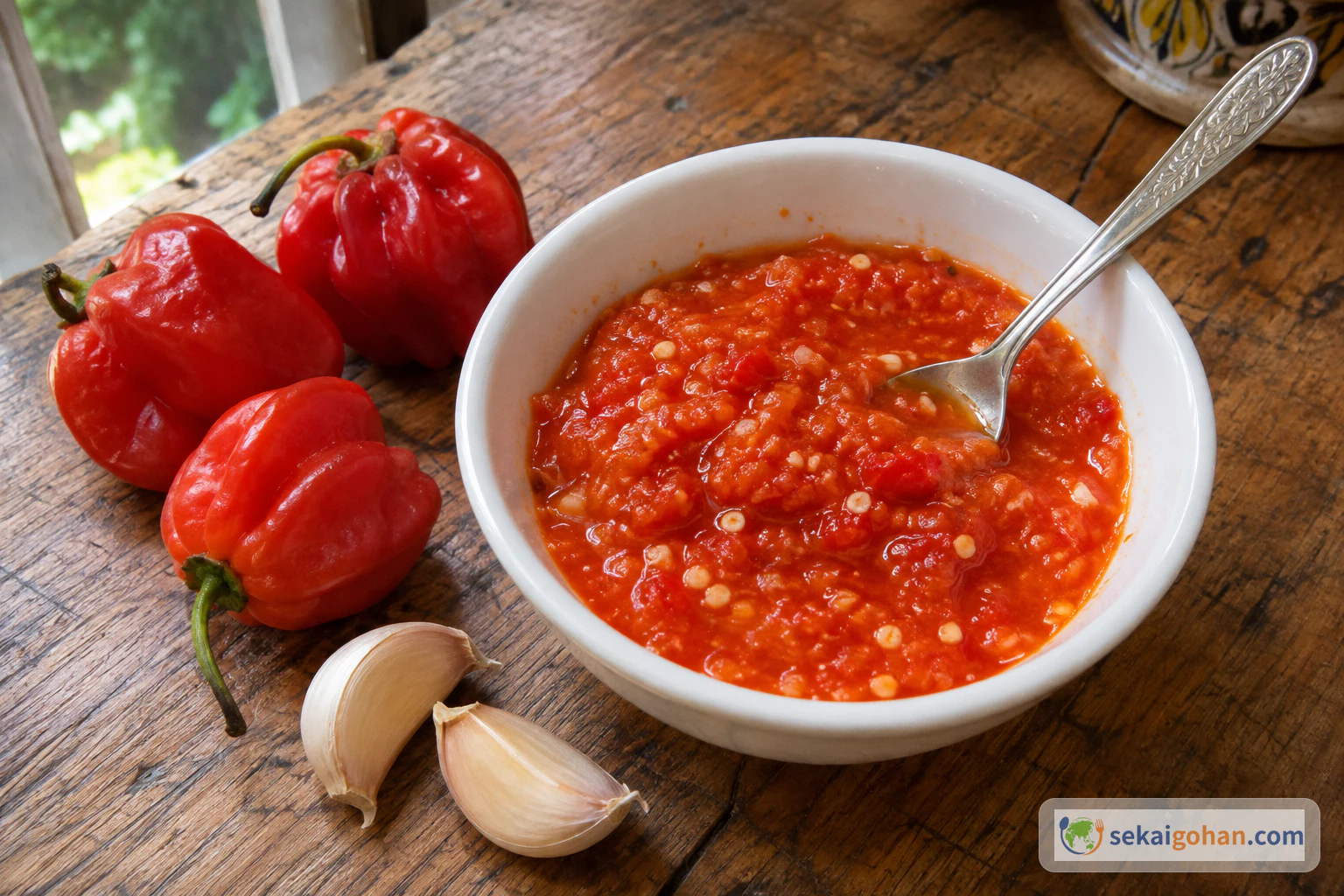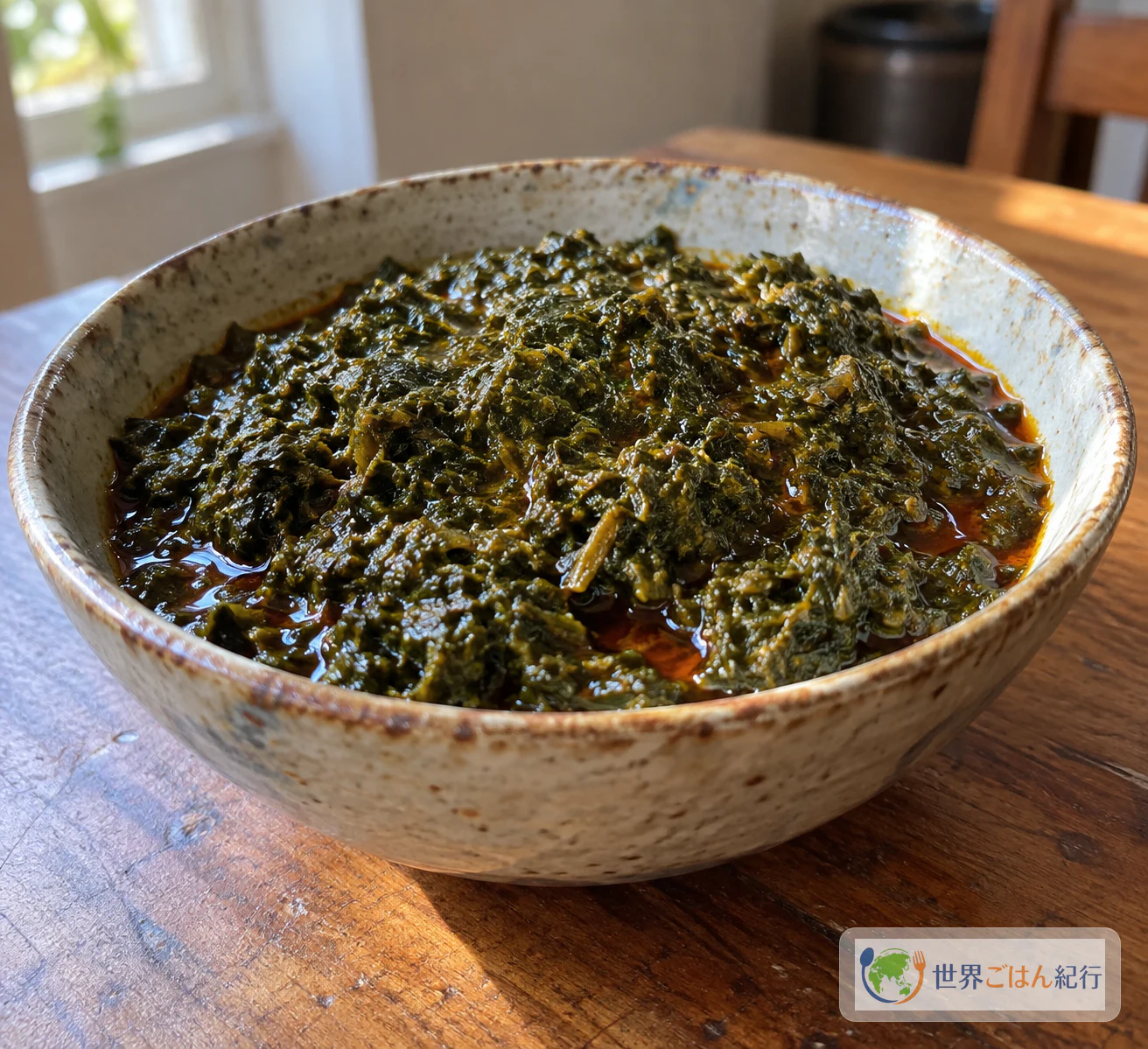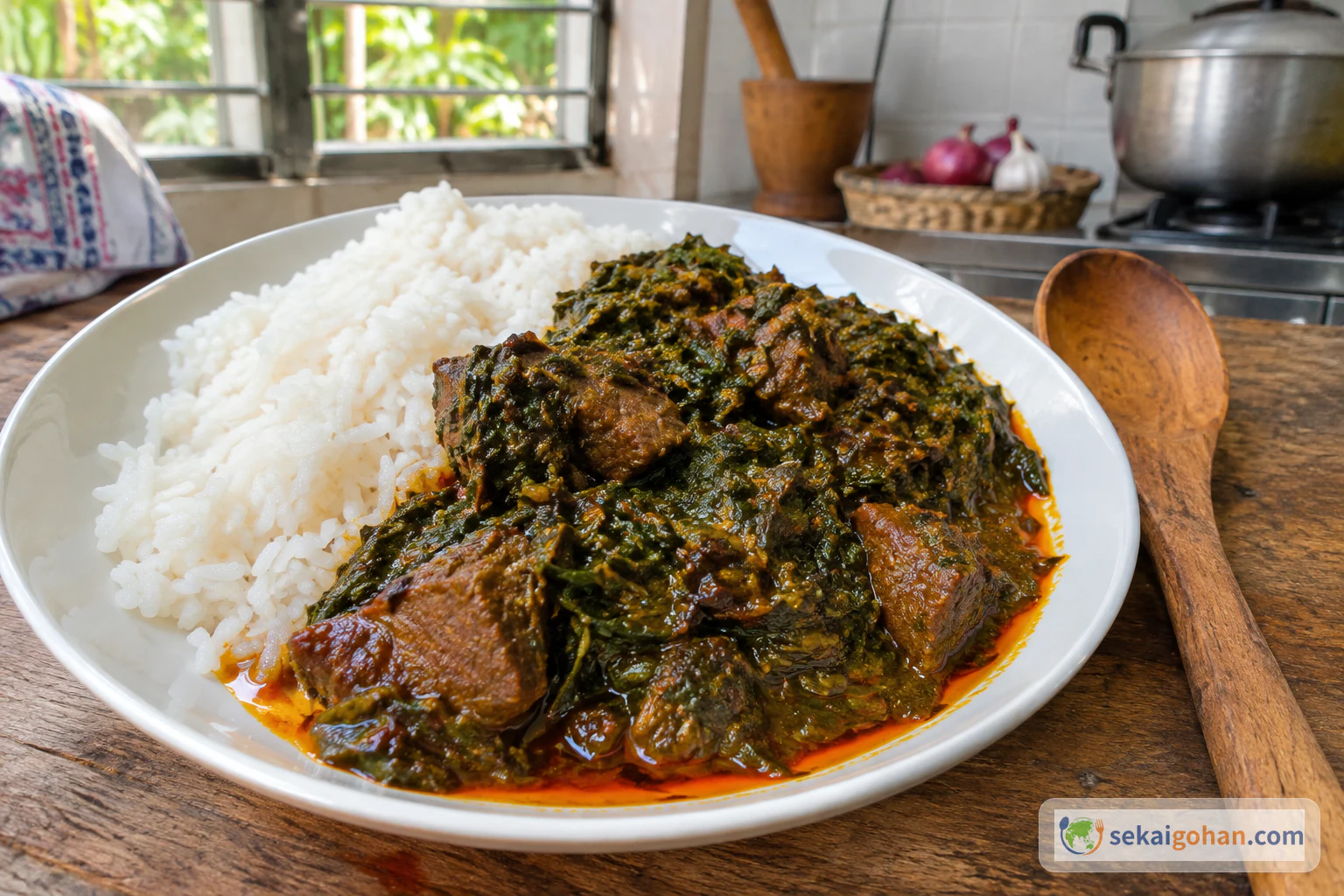
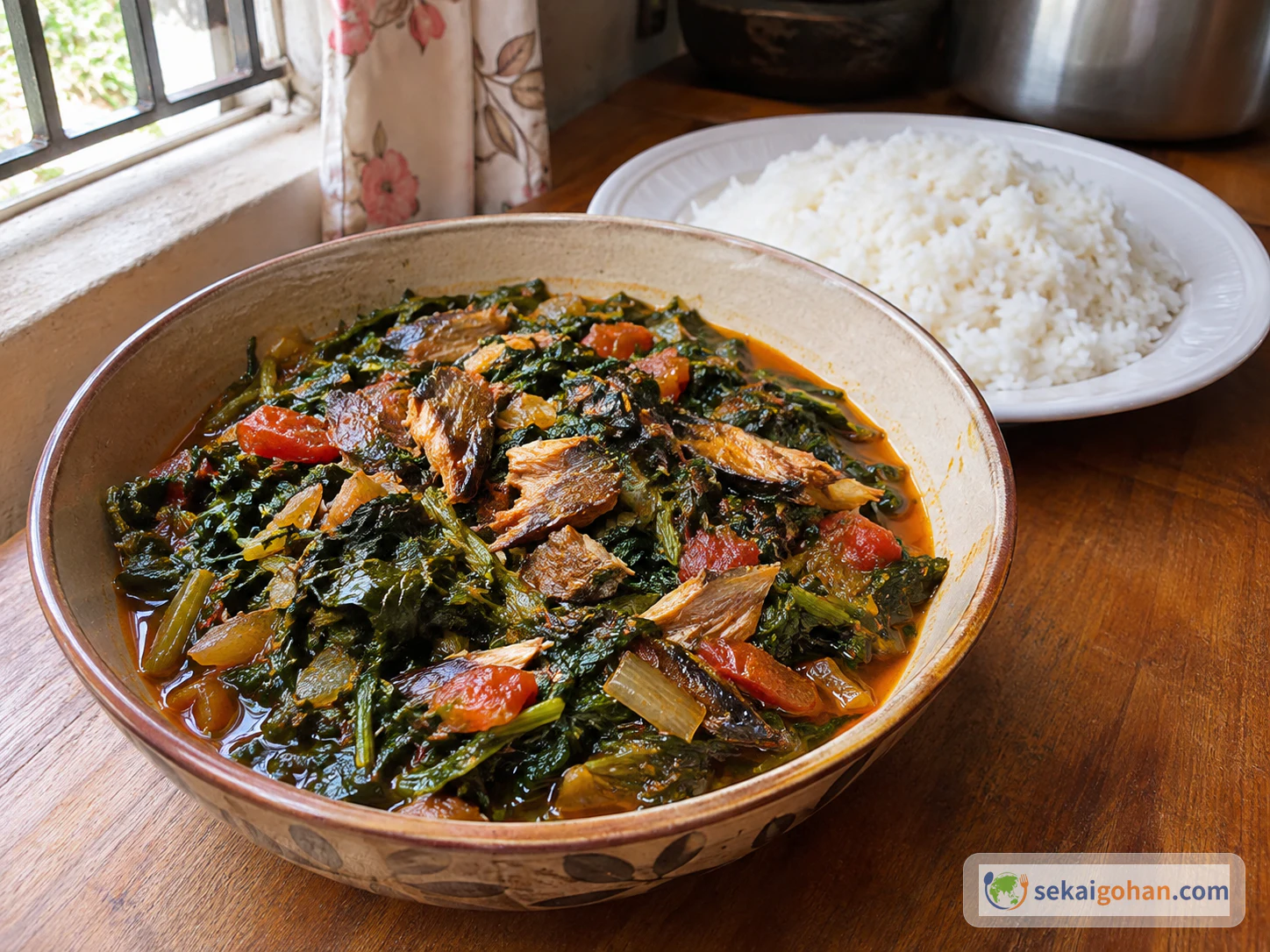
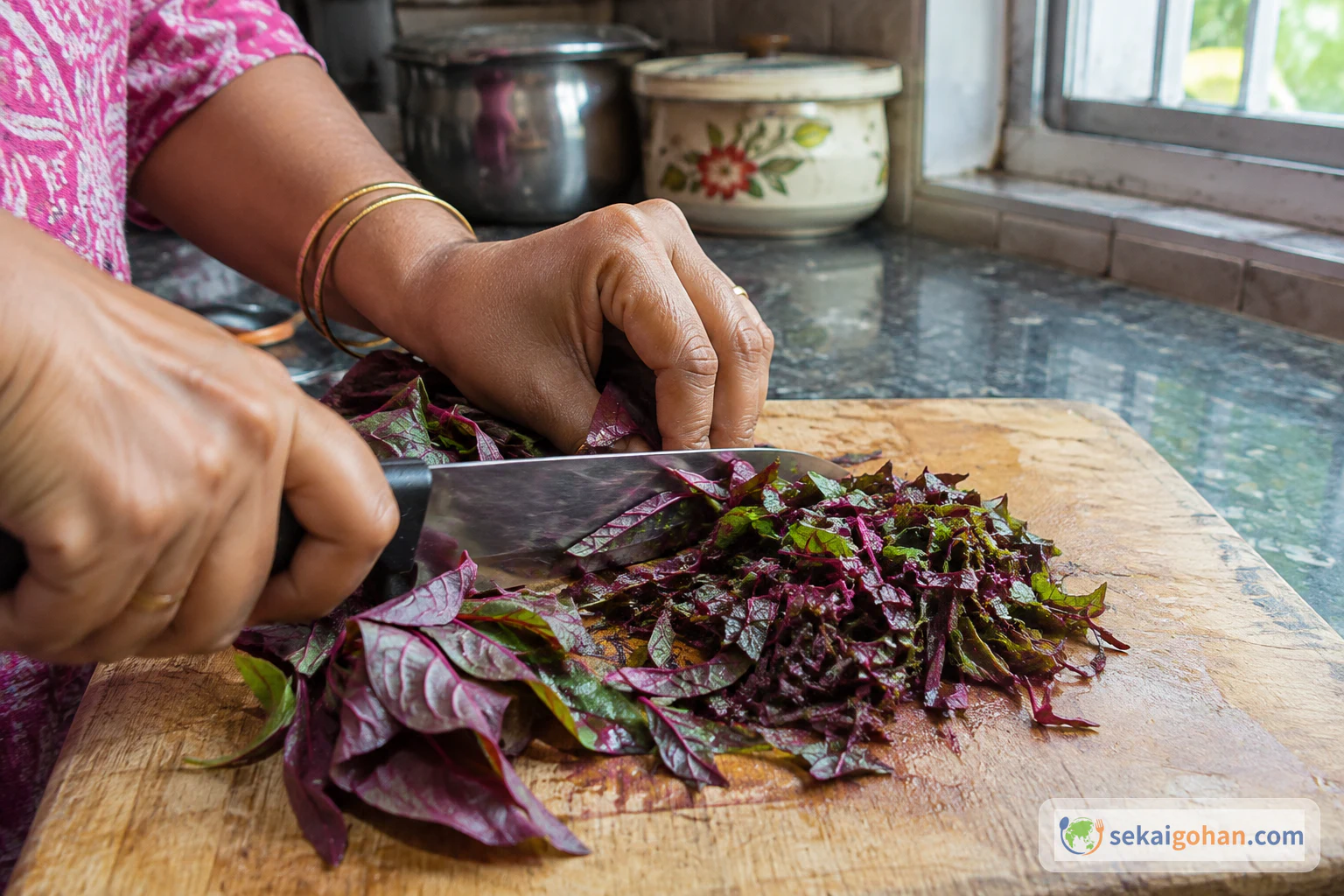
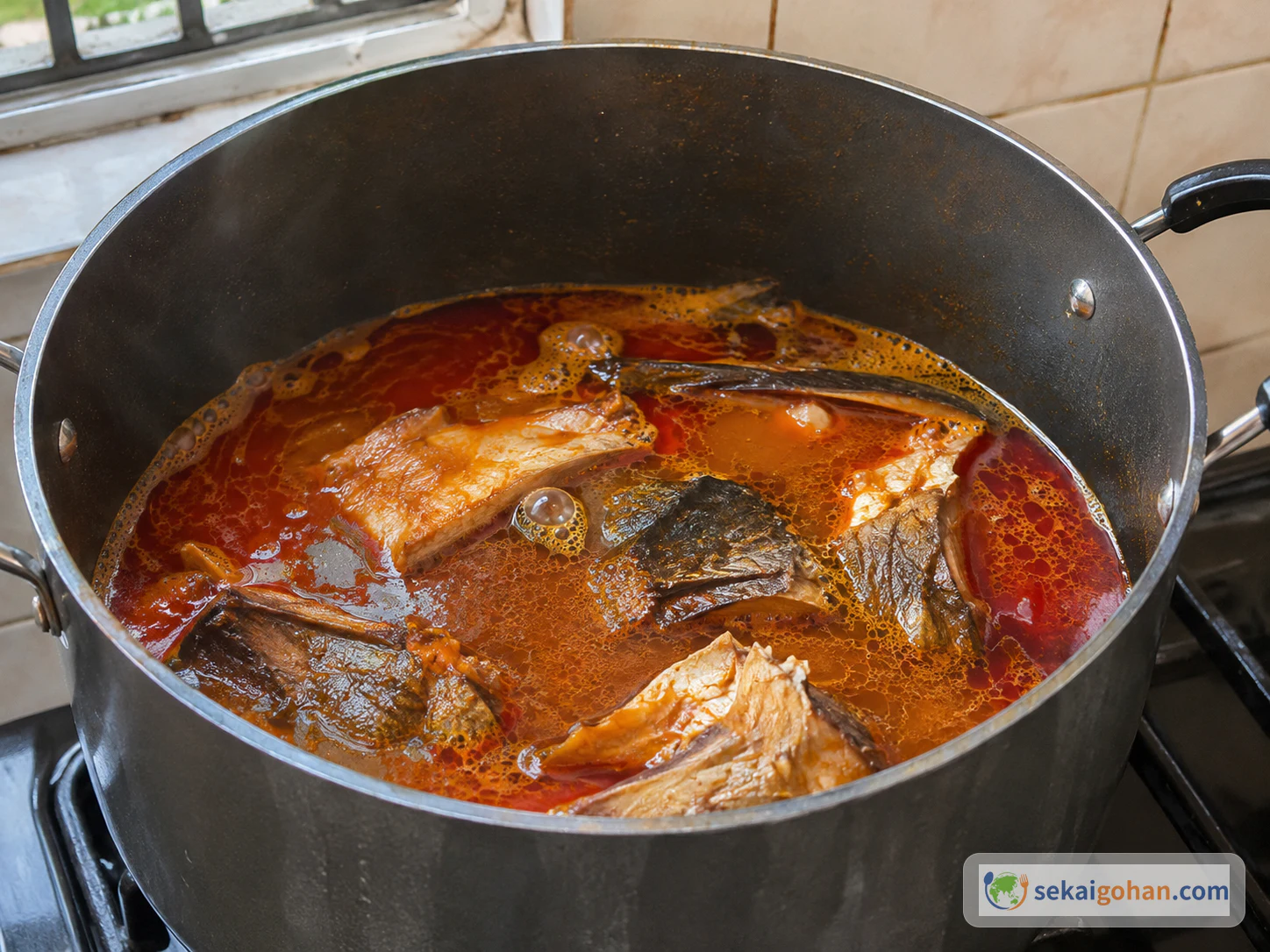
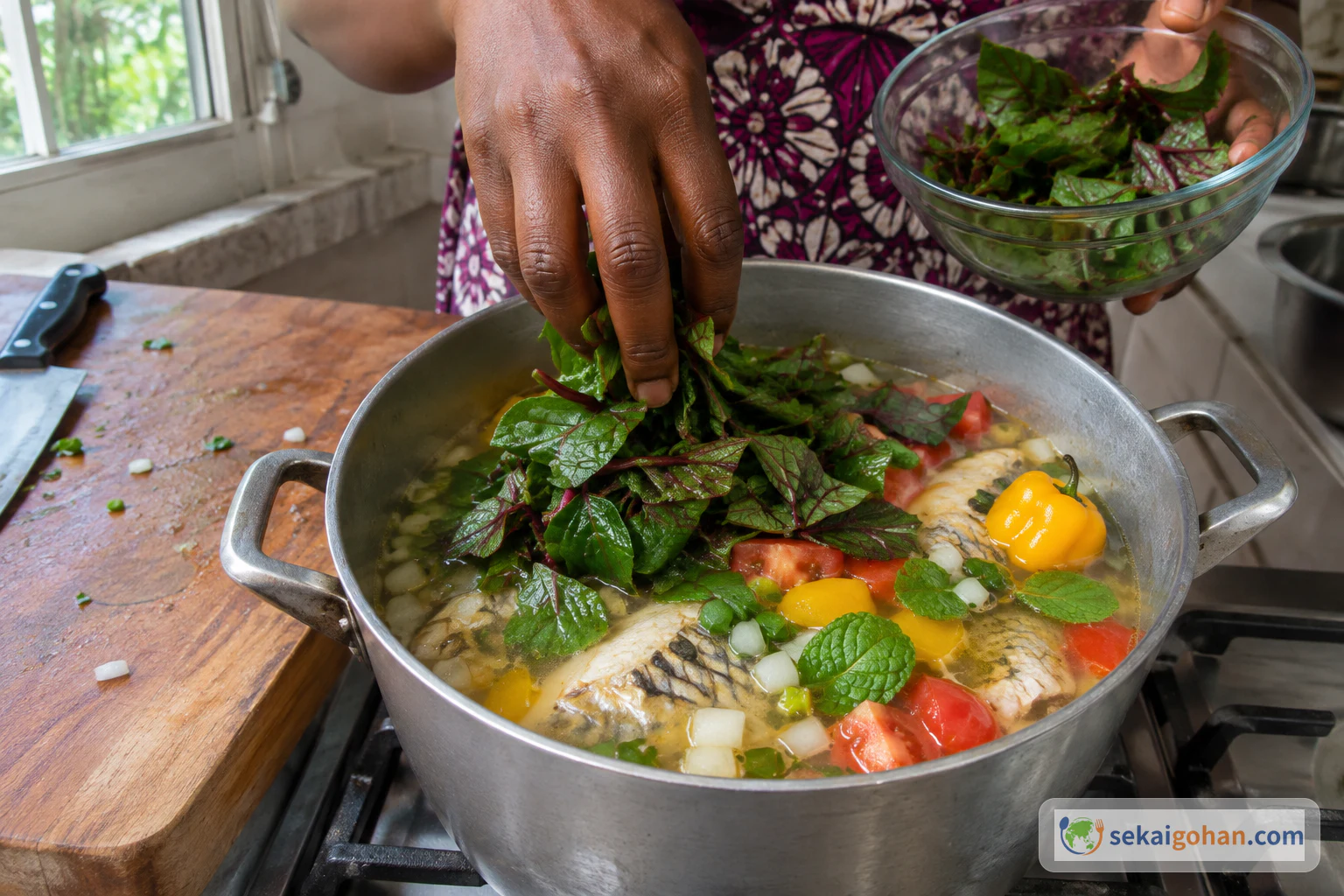
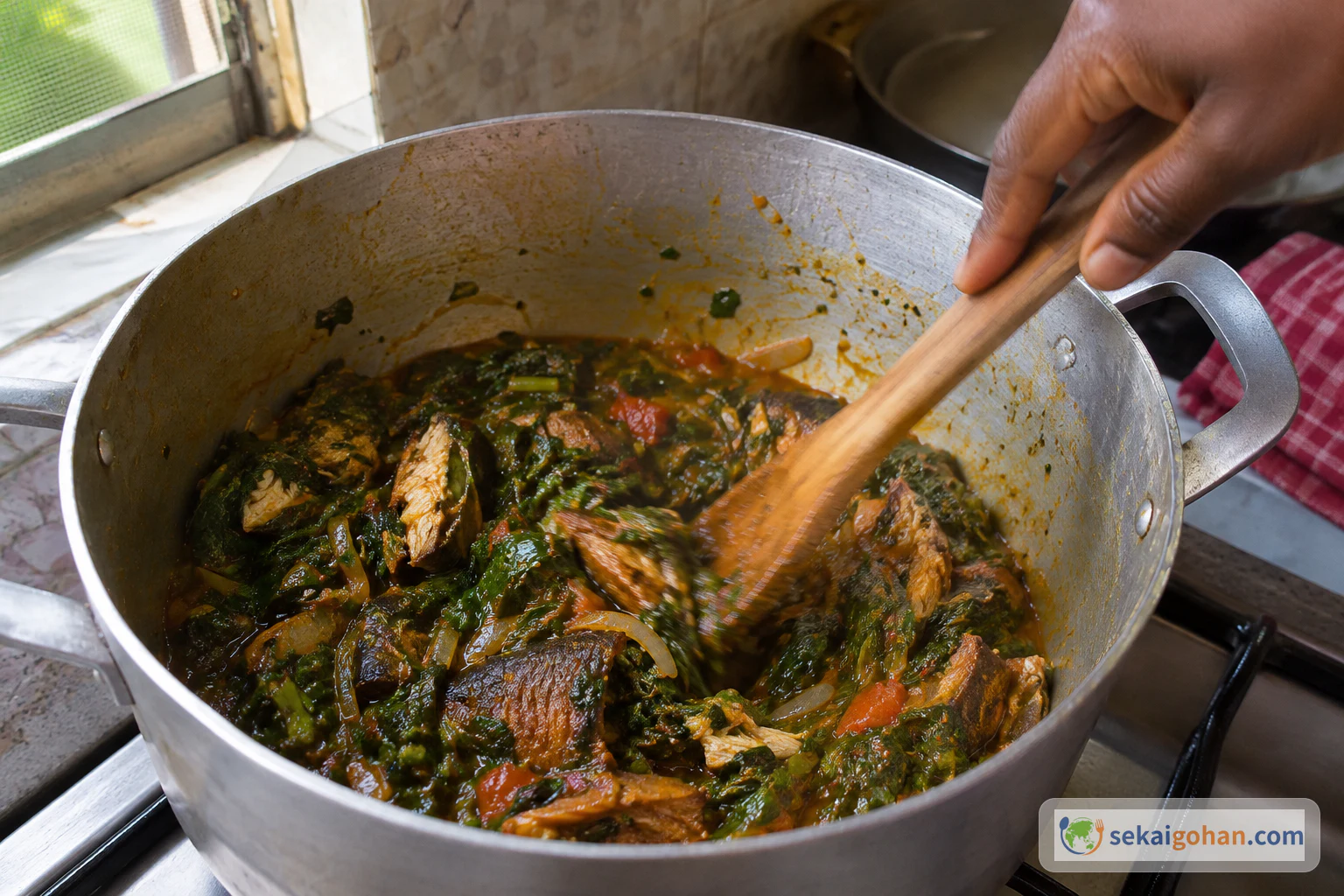
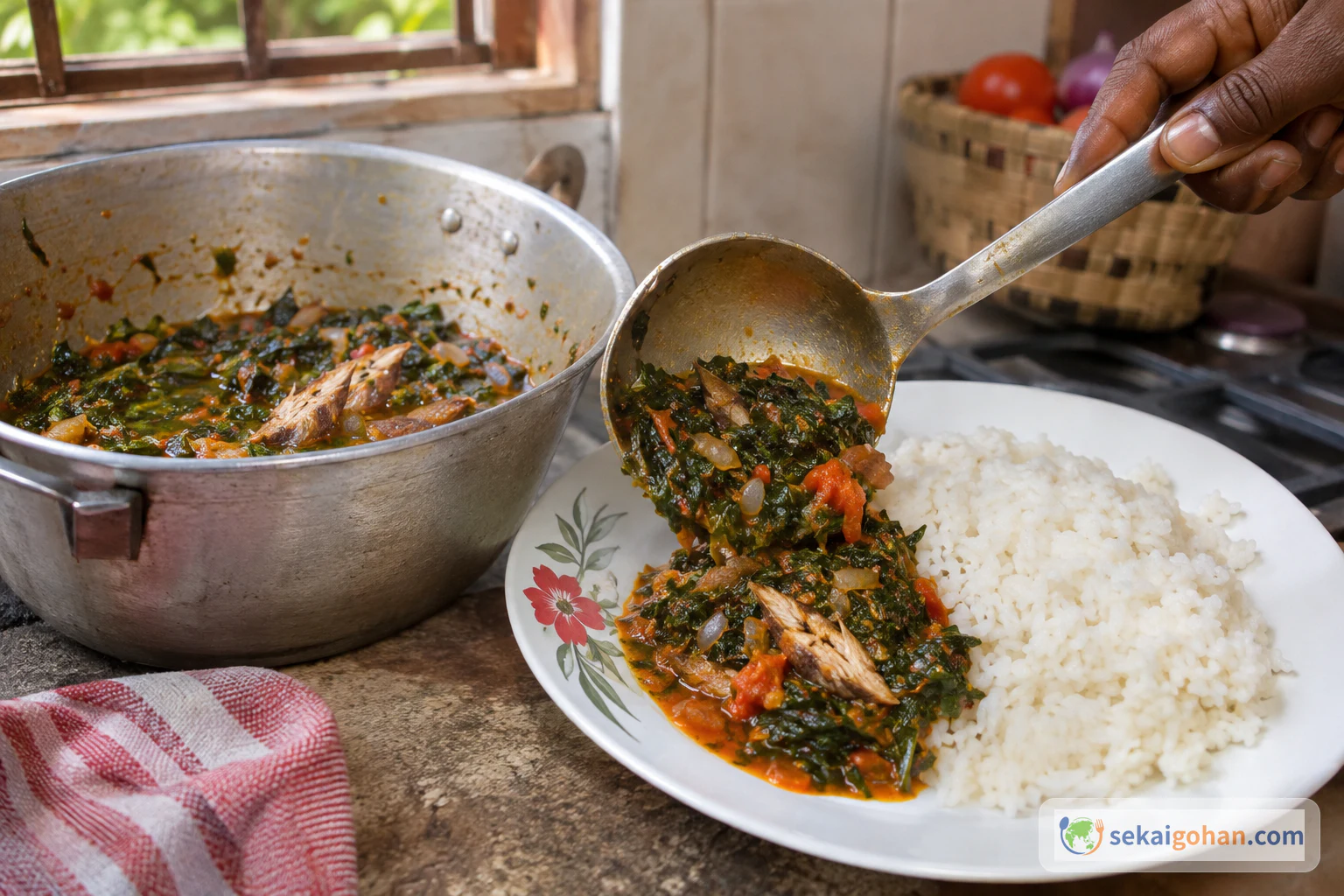
The chopped amaranth goes into the pot in a heap that sits well above the rim of the broth. A few minutes later it has slumped into the red palm oil, and the kitchen smells of smoked fish, onion and mint. Ndunda is a pot of dark greens from the Democratic Republic of the Congo, stewed with onion, tomato and red palm oil. In many homes a little smoked fish goes in as well. It tastes deep and green, a little like spinach but with more weight. The fish brings salt and smoke and the habanero brings heat, and the whole pot is spooned over white rice so the oily broth soaks in.
One Leaf, Many Names: Ndunda at the Congolese Table
The leaf at the centre of this pot is amaranth. In Lingala it is called bitekuteku, in French amarante, and across Africa the same green goes by other names too, among them efo tete and ndunda. Where the word "ndunda" comes from is not settled, and the name changes from region to region and from household to household. What stays the same is the plant: tender, dark leaves on stems that turn thick and woody toward the base, cooked until they collapse into a soft, glossy mass.
At the table, ndunda goes with a starch. White rice is the most common partner, and fufu, plantains and boiled cassava (manioc) are just as much at home beside it. You scoop up the greens and the broth with whatever starch you have, which is why the finished stew is thick enough to sit on rice without running off.
Bitekuteku, efo tete and ndunda all name the same leaf. In English-speaking kitchens the green is sometimes sold as callaloo, but the Caribbean dish of that name, like Trinidadian callaloo, is a separate dish.
How households make it their own
Every Congolese kitchen has its own pot. Fish is an addition, and a mark of the richer version: plenty of households cook the greens with onion and nothing else, and others add smoked fish, dried catfish or smoked turkey. Some fry eggplant with the onion before the leaves go in. Some cooks blanch the leaves for three to four minutes in water with a pinch of baking soda to keep them bright green. The oil changes too. Red palm oil is the traditional choice and gives the dish its colour and much of its flavour, though some cooks use a little vegetable or olive oil instead.
Ndunda sits among several Congolese leaf dishes that are easy to mix up. Pondu, also called saka-saka, is made from cassava leaves. Fumbwa is cooked with peanut paste. Matembele uses sweet potato leaves and is often cooked with salt cod. Isombe is a cassava-leaf dish from Rwanda. If you know the cassava-leaf pots of West Africa, such as Sierra Leonean cassava leaf stew, ndunda will taste lighter and greener. For the bigger, palm-rich Sunday dish from the same country, try poulet moambé, and you can find more dishes from the region on the Democratic Republic of the Congo page.
Ingredients (serves 6)
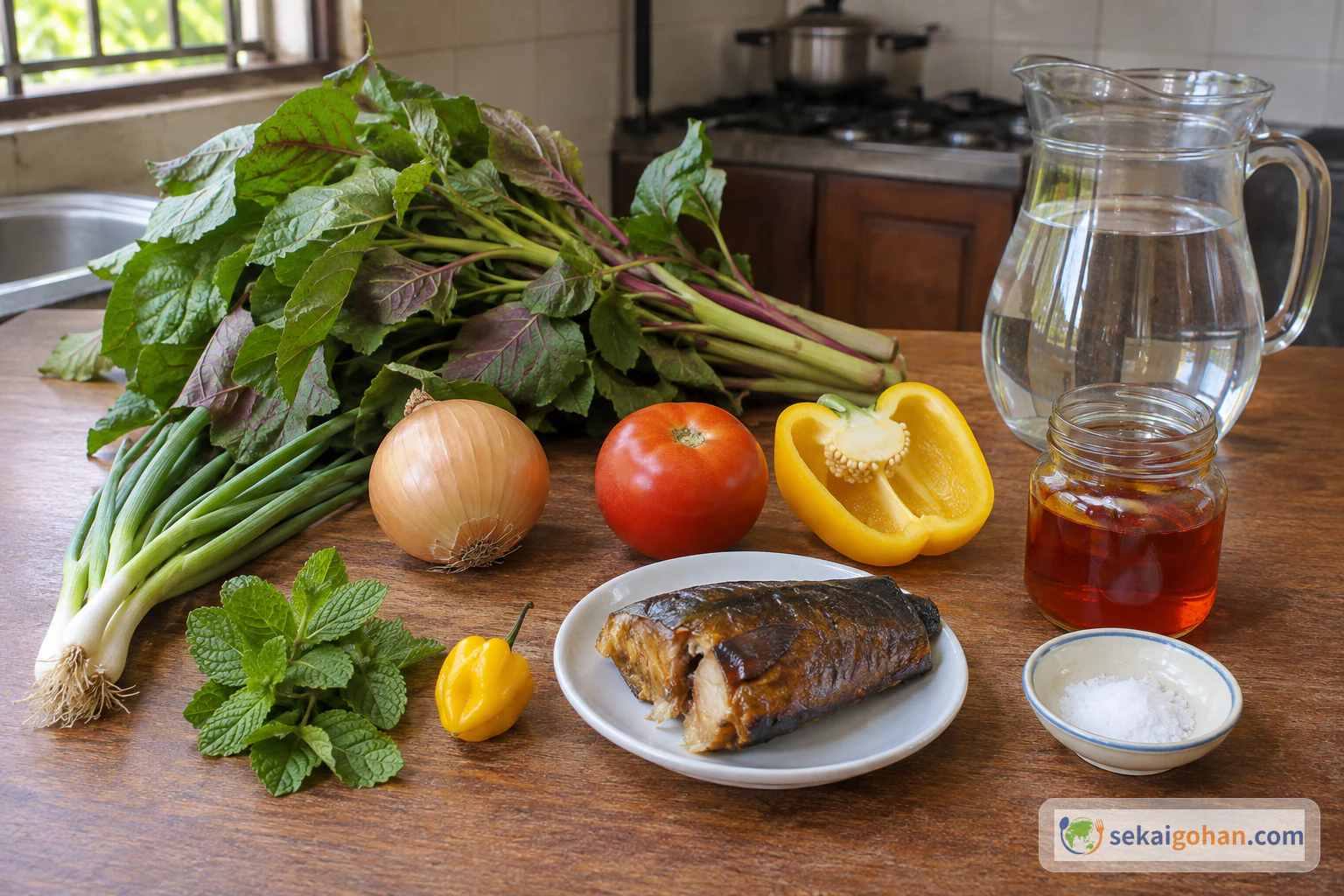
The two things that decide the flavour are red palm oil and the salt the smoked fish brings. Everything else is ordinary produce.
This dish contains fish (smoked fish), plus palm oil, mint and tomato, all of which can affect sensitive eaters. Peanuts are not part of ndunda. If you add peanut paste, which moves the dish toward fumbwa, tell your guests.
Equipment
- A large, deep pot (the raw leaves take up a lot of room)
- A heatproof bowl and a kettle for soaking the fish
- Cutting board and sharp knife
- Colander
- Wooden spoon
Buying and Swapping: What Keeps It Tasting Congolese
Look for fresh amaranth leaves at African, Caribbean or Asian grocers, where they may be labelled amaranth, callaloo or by a local name. When you can't find amaranth, use spinach. It is the usual swap in the United States, and the pot comes out milder and softer, with less of amaranth's deep green taste. Spinach collapses faster, so watch it toward the end of cooking.
Buy edible red palm oil, the deep orange-red kind, from an African grocer or online. It gives the dish its colour and its signature taste. Vegetable oil works, but the stew turns paler and plainer and loses that flavour.
Smoked catfish is the classic fish and is sold at African shops. Other smoked fish will work, though each one has its own saltiness and firmness, so soak it and taste the broth before you add salt. Dried catfish works too and needs a more careful wash, covered under the variations below.
The rest is easy to swap. Green bell pepper can stand in for yellow. Ordinary scallions are the right green onions. Keep the mint, because it is part of what makes this pot taste like itself.
| Keep this for a local taste | Fine to let go |
|---|---|
| Red palm oil | Yellow bell pepper (green works) |
| Amaranth, if you can find it | The full habanero (use less, see below) |
| Mint | The fish (many homes leave it out) |
Method
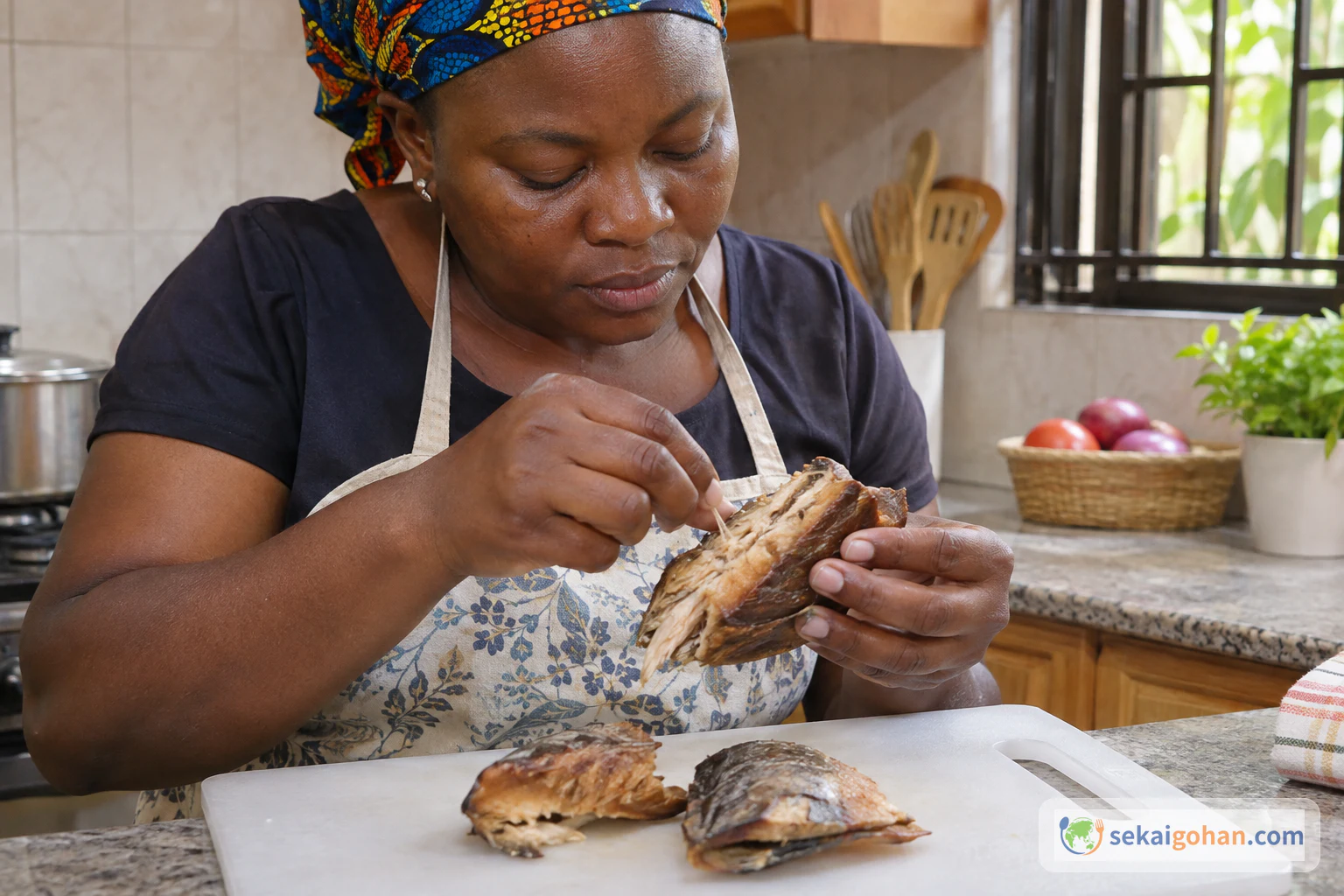
Start by soaking and boning the fish, and prepare the greens while it soaks. Then the fish simmers on its own so it can flavour the broth before the vegetables go in. Most of the cooking after that is hands-off simmering. Leave the leaves alone for the first five minutes after they go in, then stir and let the pot work.
Taste before the final salt every time. How salty the stew turns out depends on the fish more than on the spoon.
When It Goes Wrong
| What you see | Why | What to do |
|---|---|---|
| The stew is too salty | The smoked fish and its broth brought a lot of salt | Serve it with more plain rice or fufu. Next time, soak the fish for the full time and hold back the salt until the end |
| Grit between your teeth | Sand left in the fish or on the leaves | Rub the soaked fish carefully between your fingers and wash the leaves in plenty of water |
| A bone in a mouthful | Small bones missed while picking the fish | Pick the fish over by touch, piece by piece, before it goes in the pot |
| Tough, stringy bits in the greens | Thick stems were left on | Strip the leaves from the woody stalks and keep simmering until everything is soft |
| The bottom is catching | The broth thickened faster than the leaves softened | Lower the heat, add a splash of water and stir from the bottom |
| Pale colour and plain flavour | Vegetable oil was used instead of red palm oil | Use red palm oil, which gives the dish its colour and much of its taste |
Serving and Variations
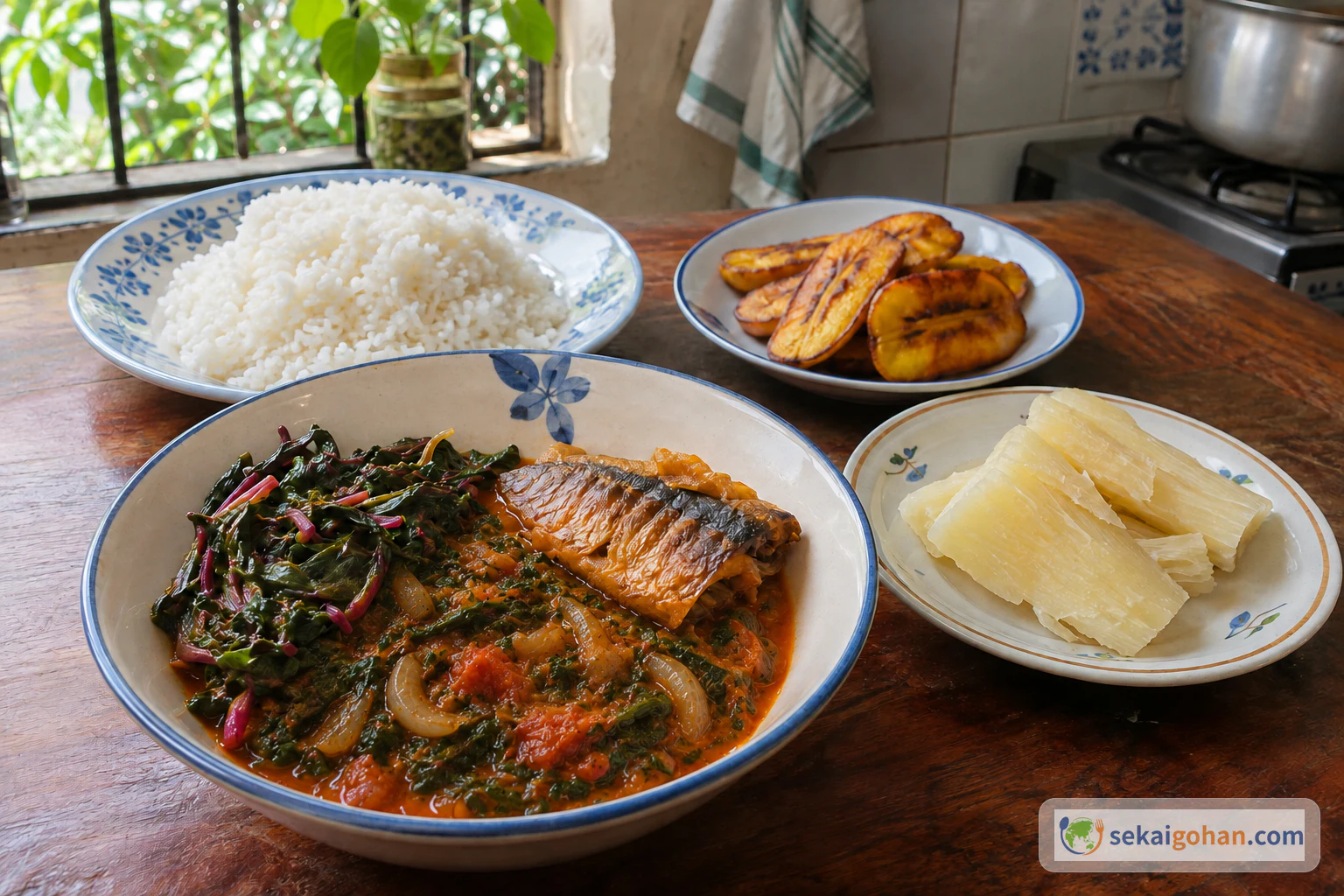
Put the pot in the middle of the table with white rice and, if you have them, fried ripe plantains, fufu or boiled cassava. Everyone takes greens and broth over their own starch. With fish, it makes a full meal. Without fish, it works as the vegetable dish next to a meat stew.
Variations
- Dried catfish instead of smoked fish. The flavour is drier and more concentrated. Wash the fish well and rub it with salt to remove the oil and dirt from the skin, then soak and bone it as in step 1.
- Spinach in place of amaranth. The pot comes out gentler and silkier. Spinach softens sooner, so check it before the full simmering time is up.
- With eggplant. Fry chopped eggplant with the onion and add them together. The eggplant melts into the broth and makes the stew richer.
- Smoked turkey instead of fish. You keep the smoke without any fish, and the stew becomes meatier.
Frequently asked questions
Do I have to add the fish?
No. Plenty of Congolese households make ndunda with only greens, onion, tomato and palm oil. The fish adds smoke and salt. Without it, start with the full ½ teaspoon of salt and adjust from there.
Is ndunda the same as pondu or callaloo?
They are different dishes. Pondu, or saka-saka, is made from cassava leaves. Caribbean callaloo is its own dish, even though "callaloo" is also an English name for the amaranth leaf. Ndunda is amaranth stewed with onion, tomato and palm oil.
Can I stir in peanut paste?
You can, but the pot then moves toward fumbwa, which is a separate Congolese dish built on peanut paste. To keep it ndunda, leave the peanuts out and let the palm oil carry the flavour.
Can I cook the greens briefly, like a quick sauté?
Ndunda is a stew, and the leaves are always served fully cooked. Give them the whole simmer until they are soft all the way through. That long simmer is also what thickens the broth so it holds on the rice.