Ingredients and steps on one page. Print it, or choose “Save as PDF” in the print dialog.
Sekai Gohan
Lou Fo Tong: Cantonese Slow-Simmered Watercress Pork Bone Soup
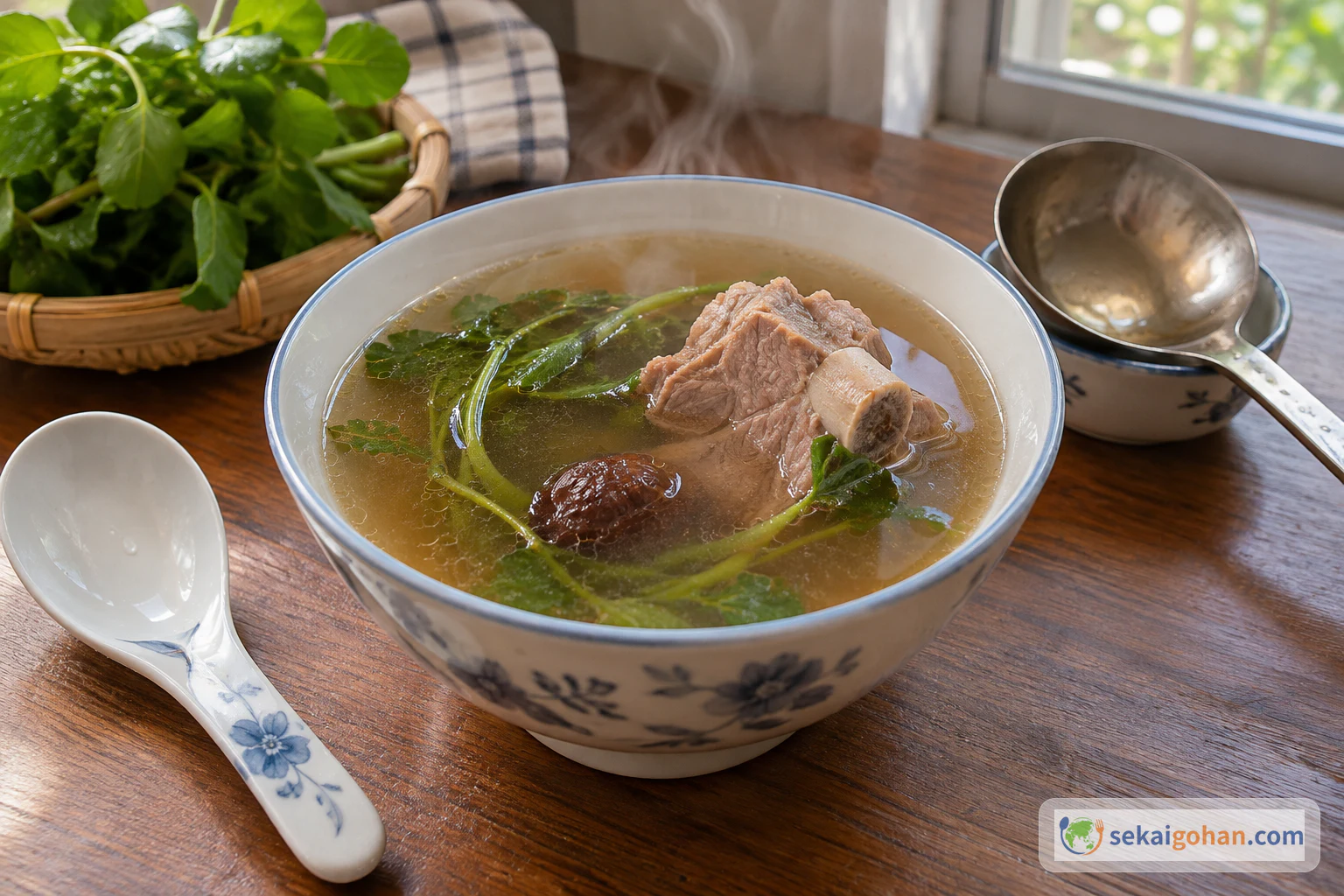
Ingredients
| Ingredient | Amount | Role |
|---|---|---|
| Watercress (西洋菜, sai yeung choi) | 1 bunch, about 12 oz (340 g) | Green aroma and gentle bitterness; goes in whole |
| Pork neck bones (豬頸骨) | 1½ lb (680 g) | Body and richness of the broth |
| Chinese honey dates (蜜棗, mì zǎo) | 2 | Rounded sweetness at the finish; added whole |
| Water | 12 cups (2.8 L) | The soup itself |
| Salt | ¼ tsp, then to taste | Seasoning, added only at the end |
Steps
1Soak and rinse the watercress
Fill a large bowl with cold water and push the whole bunch of watercress under. Leave it for about 15 minutes so soil and small insects loosen and sink. Lift the greens out, tip the water away, refill the bowl and rinse again, about three times in all. Soil hides at the base of the bunch and between the stems, so spread them with your fingers as you rinse.
2Rinse and blanch the pork bones
Rinse the pork neck bones with hot water. Bring a saucepan of water to a boil, add the bones and boil them for 1–2 minutes. Grey scum and foam will rise to the surface. Lift the bones into a colander with the skimmer and rinse them well under running water. They are ready when the surface looks pale and clean, with no blood or scum clinging to it.
Blanching decides how clear the broth isBlanching is optional, but it pays off. Those two minutes take out fat and blood that would otherwise cloud the broth. Rinse the bones after blanching too, or the scum goes straight into the stockpot with them.
3Fill the stockpot
Put the blanched bones, the whole washed watercress and the 2 honey dates in the stockpot. Leave the dates whole so they sweeten the broth slowly. Pour in 12 cups (2.8 L) of water. The watercress goes in now, at the start, and cooks for the whole time. Everything should sit under the water, with the greens pushed down between the bones.
4Boil, then simmer for about two hours
Set the pot over medium-high heat and bring it to a boil. Turn the heat to low, set the lid slightly ajar and let the soup simmer for about 2 hours. Keep it at a quiet simmer the whole time so the pork cooks through. A hard boil churns the fat into the broth. By the end only small bubbles break the surface, the watercress is dark green and very soft, and the broth has turned clear amber.
Low heat, lid ajarThe setting is right when the surface barely trembles. With the lid ajar the pot loses steam slowly and holds a gentle simmer for two hours with little attention.
Hot potThe full pot is heavy and the broth is near boiling. Skim and ladle with the pot on the stove instead of carrying it, and keep handles turned away from the edge.
5Skim the fat and season
Turn off the heat and let the pot settle for a moment so the fat collects on top. Draw the ladle across the surface to lift off the fat. Stir in ¼ tsp salt, taste, and add more a pinch at a time only if it needs it. The broth is done when it looks clear, with only a thin shine of fat left, and tastes sweet and savory with the bitterness of the greens in the background.
6Serve hot
Ladle the broth into bowls with some watercress and a piece of bone in each. Serve it hot, with a bowl of steamed white rice on the side. Some people spoon the broth over the rice. Pick the tender meat off the bones with chopsticks. Serve while steam is still rising off the bowls.