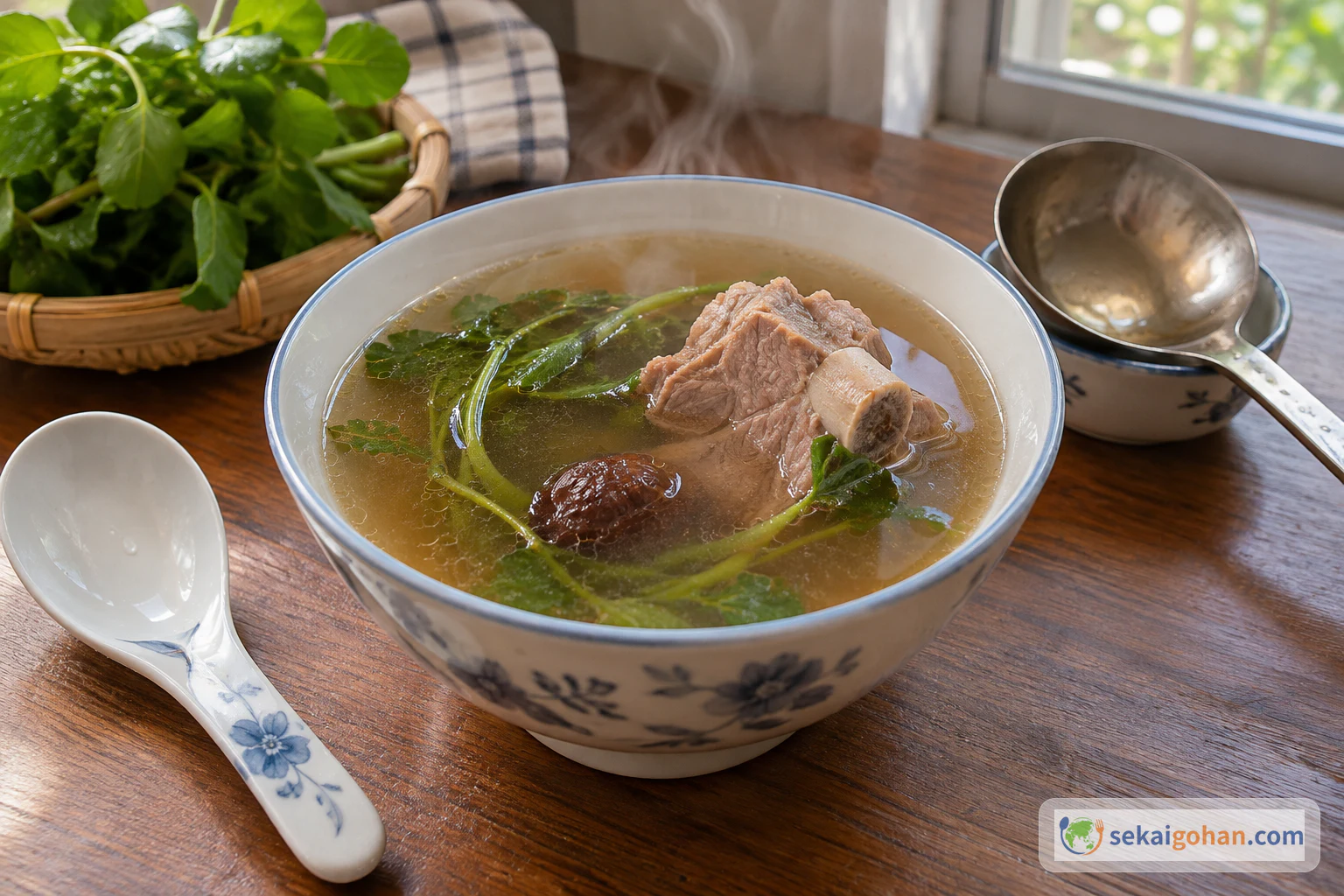
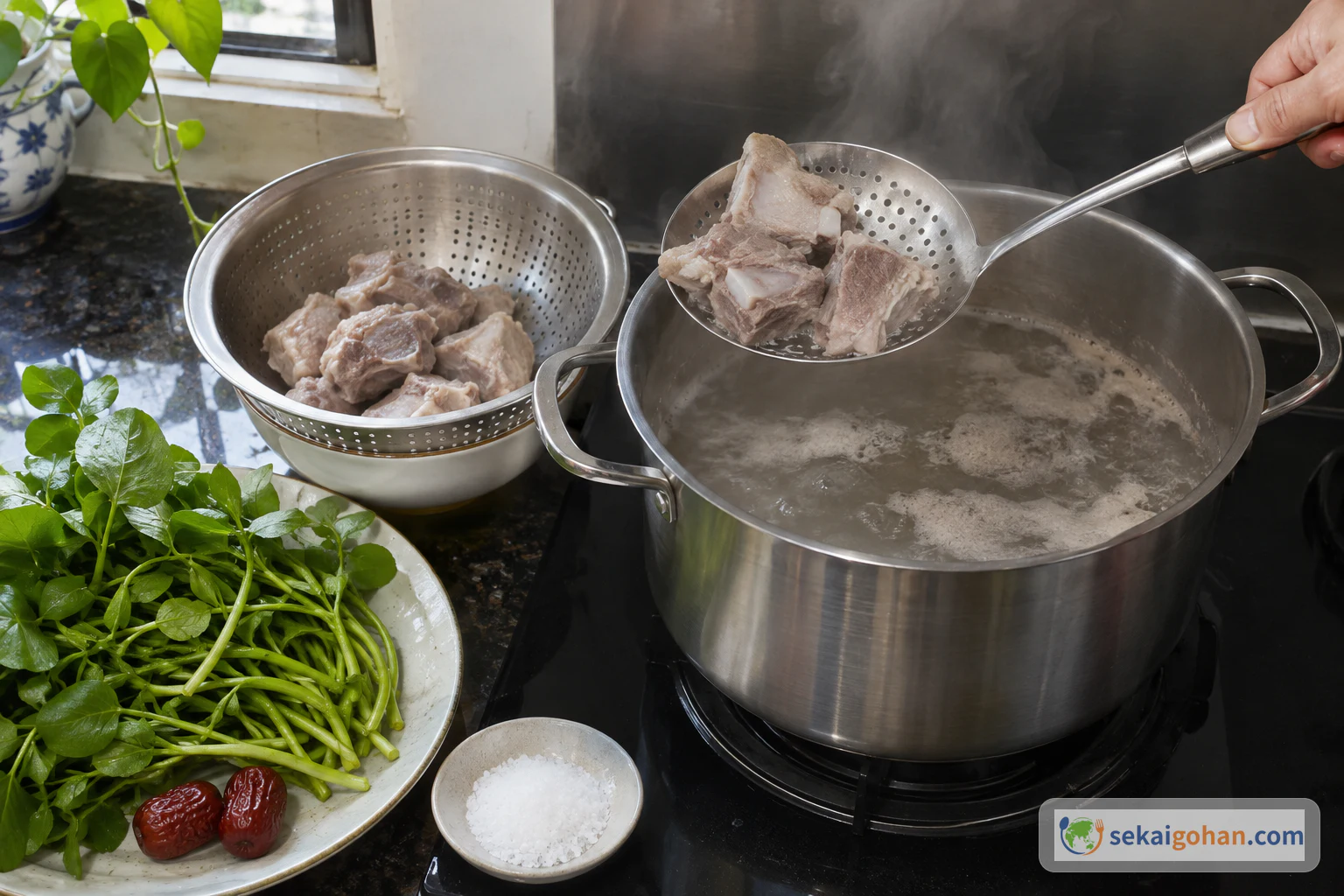
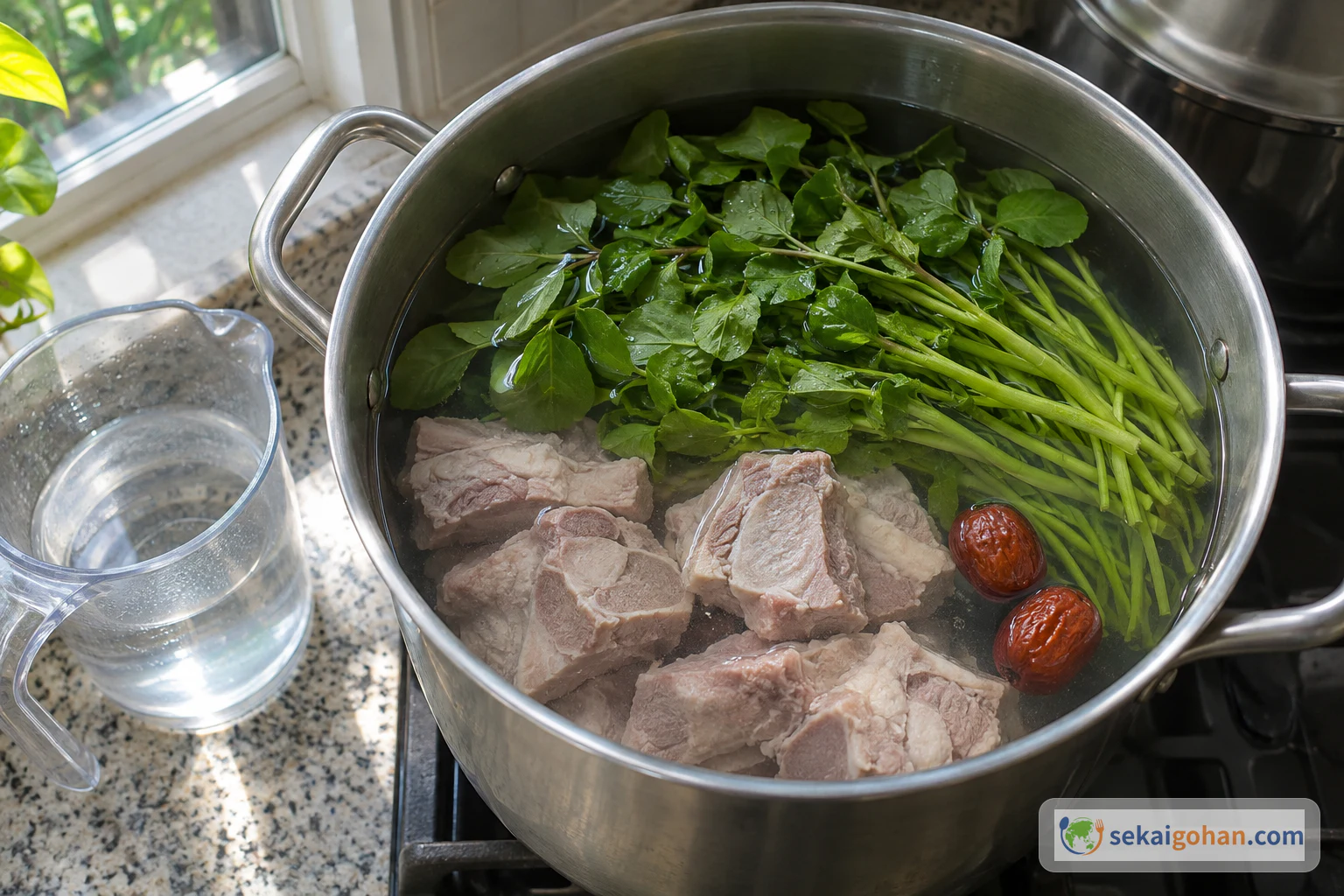
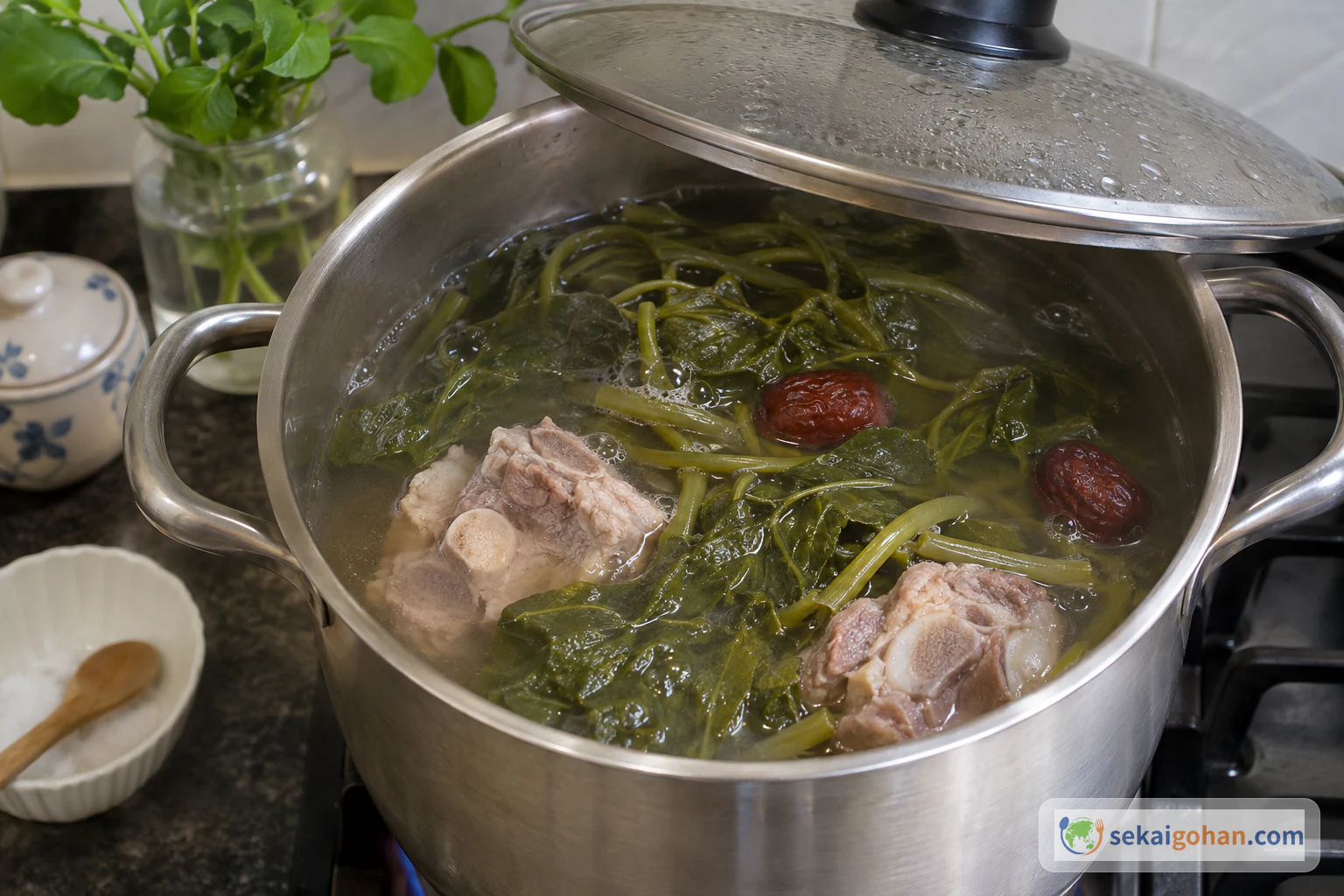
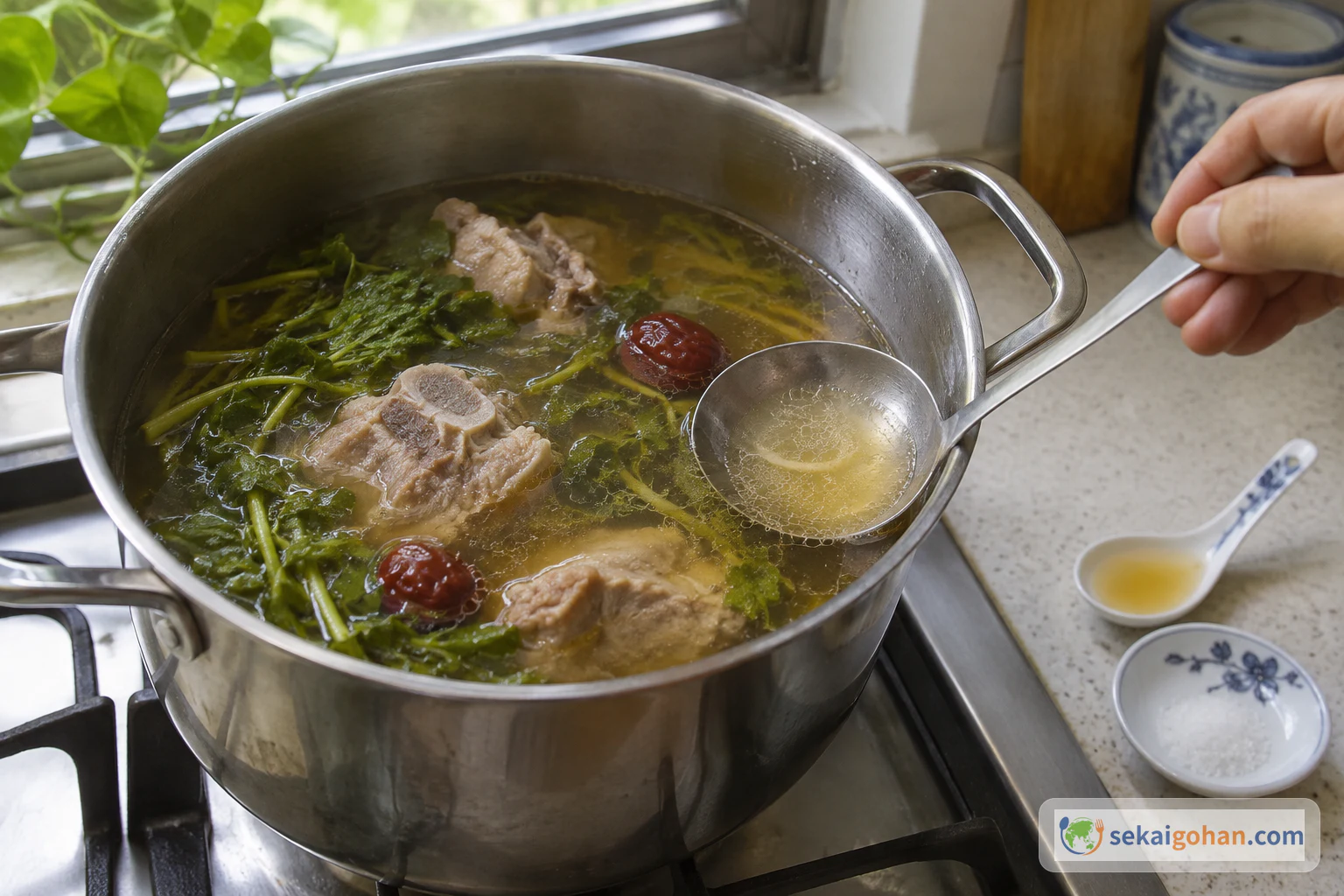
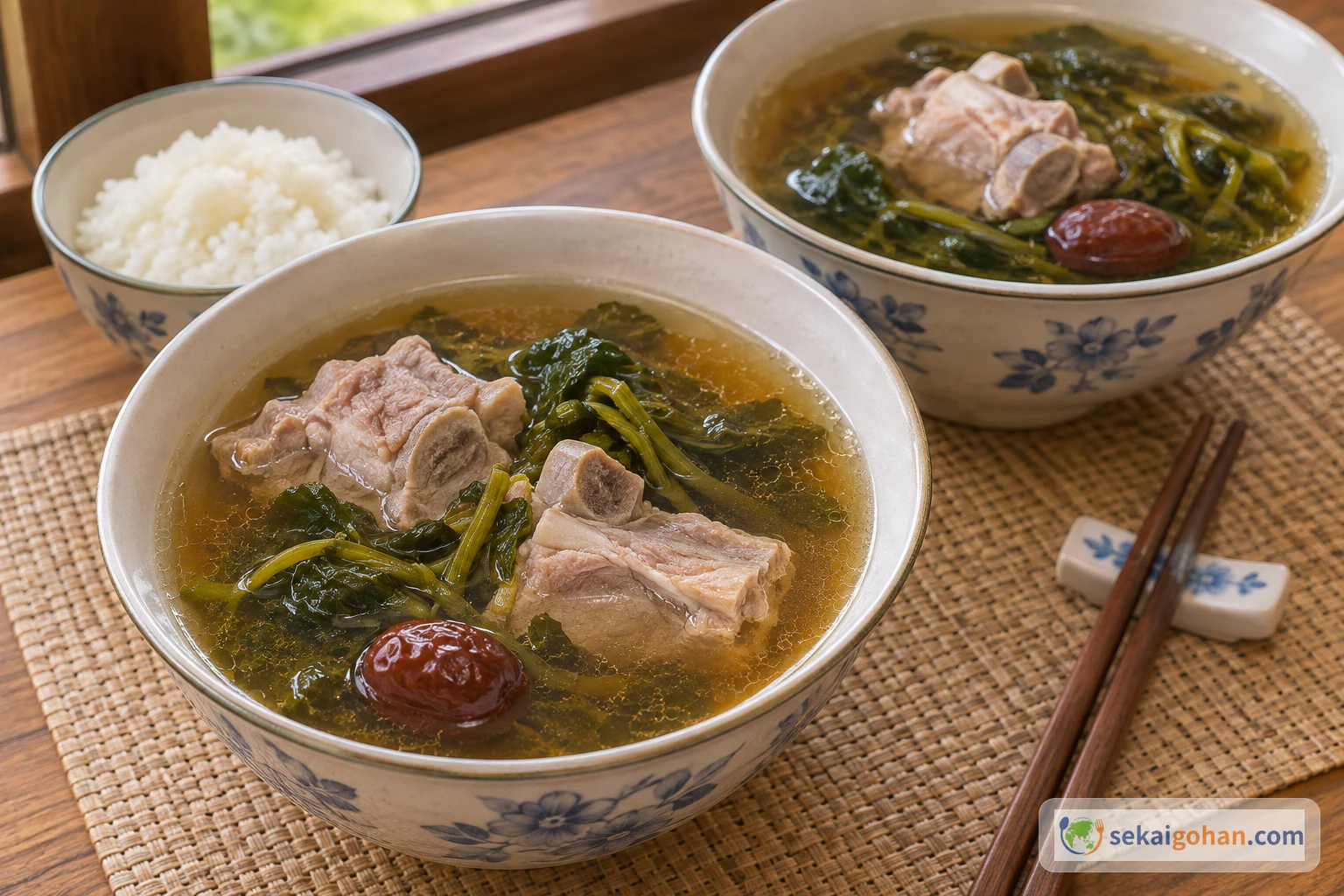
About an hour into the simmer the kitchen fills with a smell that is green, meaty and faintly sweet at once. The watercress has gone from bright to deep green under the surface, small bubbles rise lazily past the bones, and the water has turned a clear amber. That is lou fo tong. The name covers a whole family of long-simmered Cantonese soups. The one on the stove tonight is watercress, pork bone and honey date soup, which tastes light and clean, with a quiet sweetness from the dates and a soft bitter edge from the greens.
Old Fire Soup: The Pot That Waits on the Stove
The name explains itself. Lo foh (老火) means "old fire" and tong (湯) means soup, so the name points to the long, steady heat under the pot. Lou fo tong belongs to Cantonese cooking and has spread with it through Guangdong, Hong Kong, Macau and Chinese communities overseas. Cooks put vegetables, fruit, meat and herbal ingredients in a pot and leave them simmering for hours. They use whatever vessel the household has: a clay pot, a ceramic pot, a wok, a vacuum pot or a pressure cooker. The hot, humid climate of the Lingnan region, the far south of China, is often given as the reason these nourishing soups took such a hold there.
Many Chinese homes once made a pot every day. That habit has been fading, but the soup is still a home staple, the thing that sits on the back burner while the rest of dinner is made. Households have their own rules about it. Some say a soup only earns the name after three hours or more. Others give it a strong first hour on the stove, then move it into a thermal cooker and let it go all day.
Why watercress, pork and honey dates
There are countless lou fo tong combinations: lotus root with pork, daikon with carrot, and many more. Watercress, pork bone and honey date soup (西洋菜豬骨蜜棗湯), often shortened to sai yeung choi tong (西洋菜湯), is a classic among them. It also has a short shopping list, with only three ingredients that matter. The pork bones give body and a little fat. The watercress gives a fresh bitterness. Two honey dates give the sweetness that carries the soup. In Chinese food tradition watercress counts as a "cooling" ingredient, so it fits the idea of a soup that balances the body.
It belongs to the same Cantonese kitchen as char siu and steamed spare ribs with black bean. Where those are about the meat, this pot is about the broth. More dishes from across the country are on the China page.
Ingredients (serves 6)
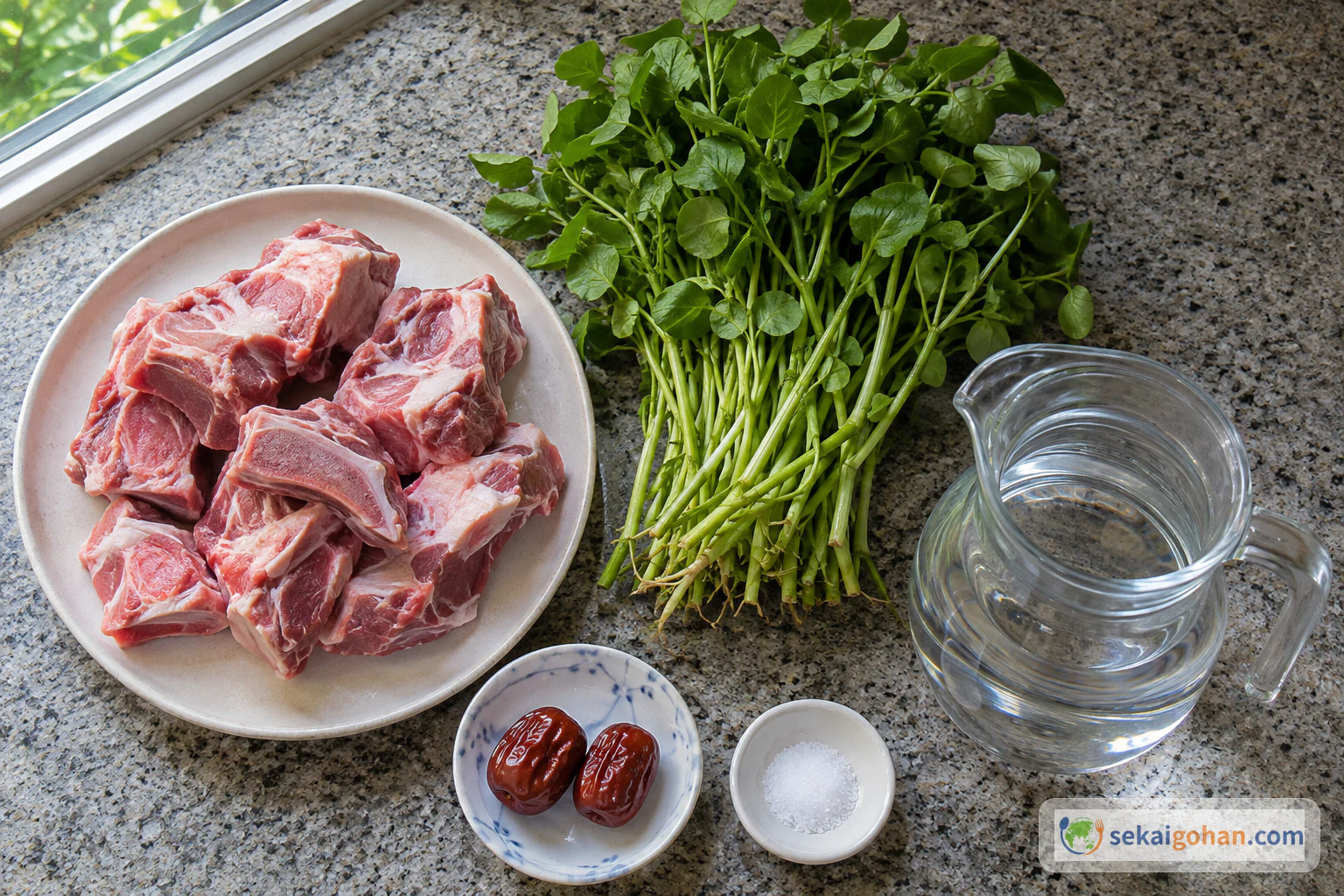
This soup contains pork. Honey dates are candied in sugar. There are no other ingredients.
Equipment
- Large bowl for soaking the watercress
- Saucepan for blanching the bones
- Large stockpot, at least 4–5 quarts (about 4–5 L), with a lid
- Slotted spoon or mesh skimmer
- Colander
- Soup ladle
Choosing and Substituting
Honey dates are the one thing worth a special trip. Look for them at a Chinese grocery or online. They are sold as Chinese honey dates or candied dates (蜜棗). They are golden-brown and sticky, and they give the soup its soft sweetness. Dried jujubes, also called red dates, can stand in, but the soup will taste different. If you want it to taste the way it does in Cantonese homes, buy honey dates.
Pork neck bones can be hard to find, so ask a butcher what pork bones they have. Spare ribs or other pork bones work in the same amount, so any butcher's pork bones will do. The watercress comes from any supermarket. Choose a bunch with firm stems and no yellowing leaves.
Pork bones, watercress and honey dates make this soup. Any pork bone will do, but drop one of the three and you have made a different pot.
Method
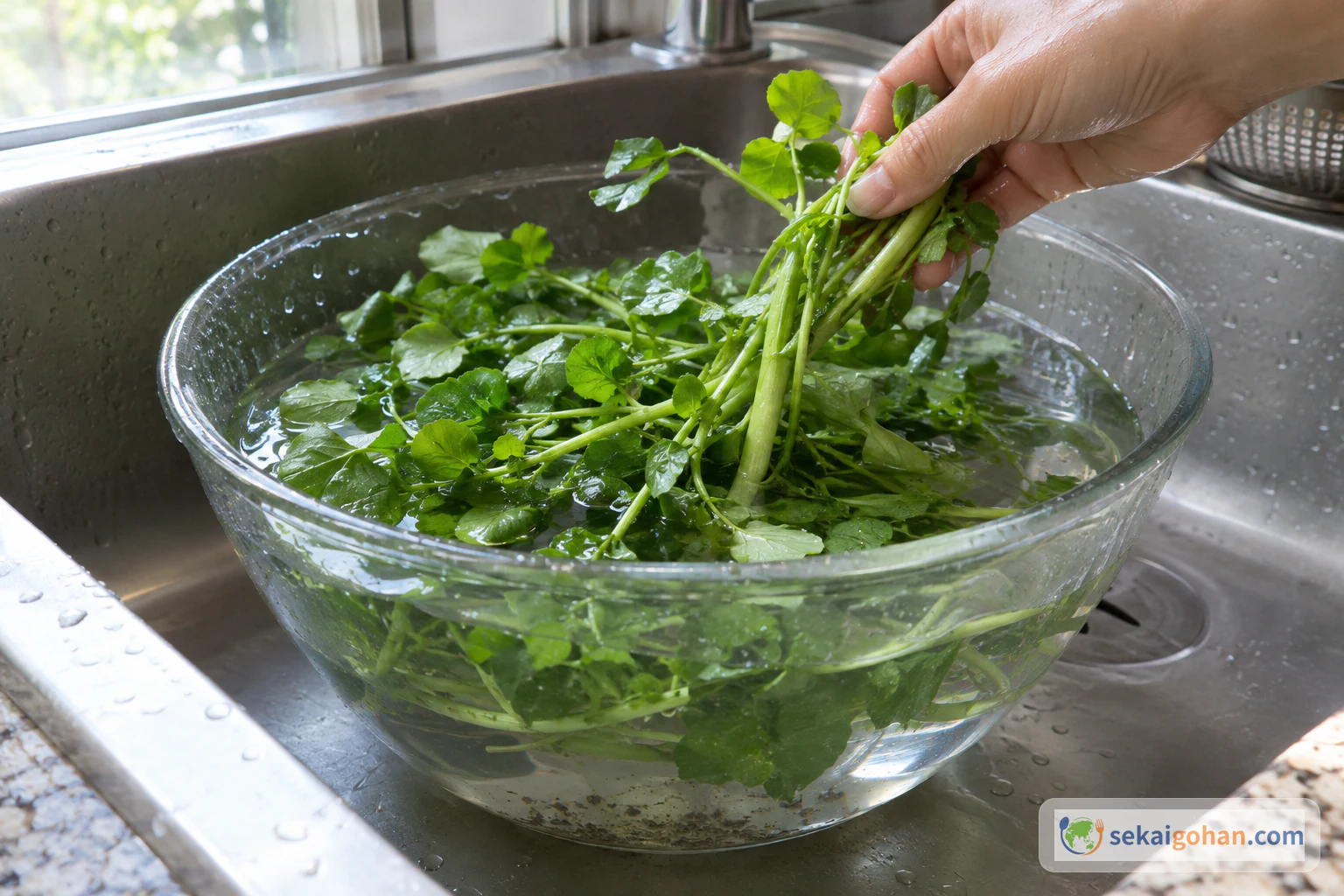
Wash the watercress and blanch the bones first. Both are quick jobs up front. After that the pot needs no hands for about two hours. Season only after the fat has been skimmed.
When It Goes Wrong
| What you see | Why | What to do |
|---|---|---|
| Grit at the bottom of the bowl | Soil left in the watercress | Next time soak for the full 15 minutes and rinse about three times, spreading the stems |
| Grey, murky broth | Bones went in without blanching or rinsing | Skim the scum as soon as the pot boils. Next time blanch and rinse first |
| Greasy surface | Fat from the bones | Skim more. Or chill the soup until the fat sets and lift it off in one piece |
| Too salty | The whole pot was seasoned heavily | Start at ¼ tsp. Or ladle out what you will drink and salt only that |
| Meat is dry and stringy | Simmered far past three hours | Keep to 2–3 hours when you want to eat the meat |
Serving, Variations and Storage
At the table
Serve it with steamed rice and other dishes, and add a plate of fried rice on a bigger night. Don't drink a lot right before eating, because it fills you up.
Hong Kong sources say that long simmering draws purines out of the meat and into the broth, and that the body turns purines into uric acid. They advise people with gout to drink lou fo tong sparingly, and give the same advice for people with diabetes.
Variations
- Watercress added late. Make a stock of chicken and pork first. Simmer dried shiitake, honey dates, red dates and carrot in it for 15 minutes, then add the watercress and give it 20 minutes on low. The greens stay brighter and fresher. This version follows the view that leafy greens should not be cooked long.
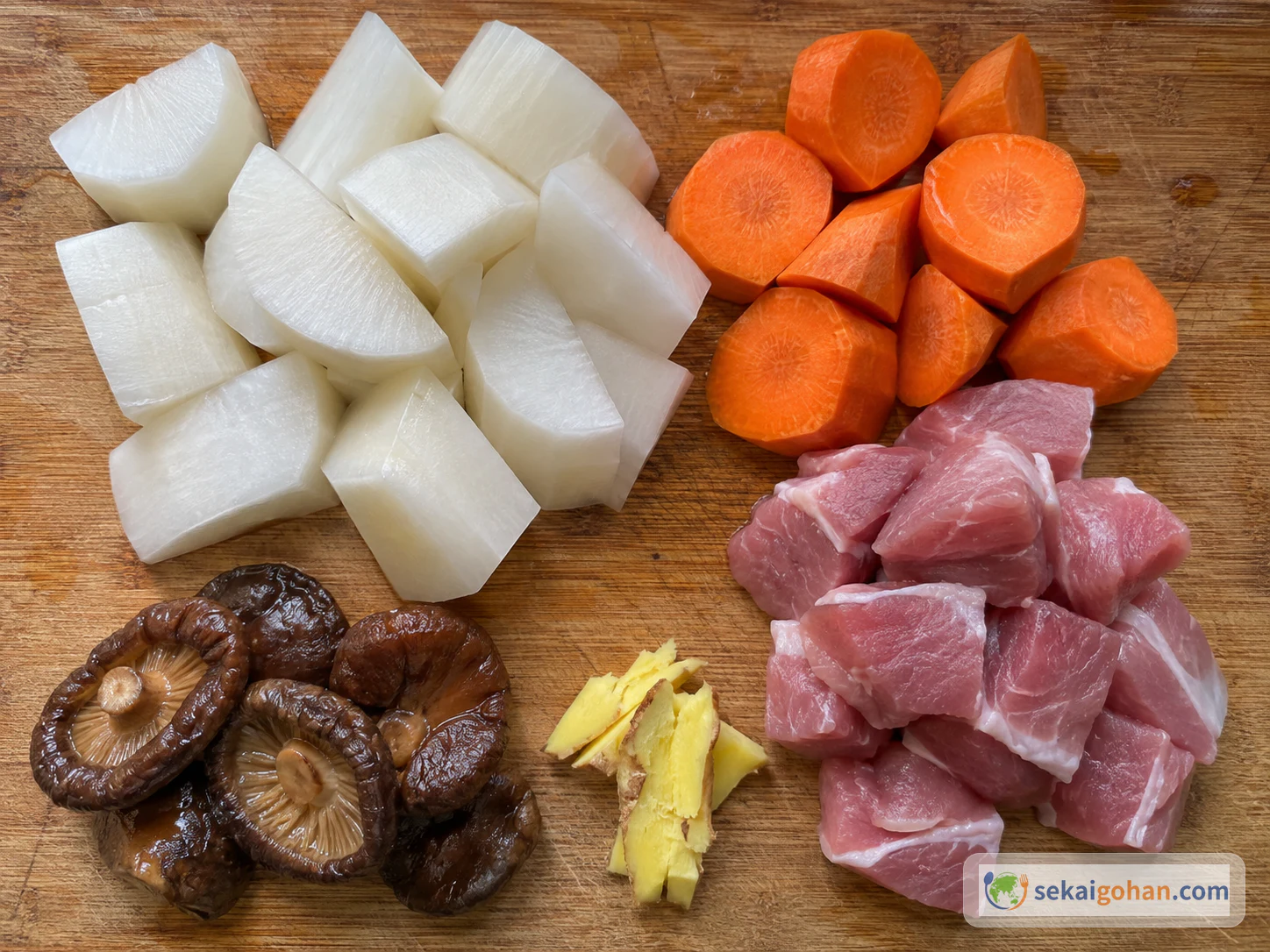
- Daikon and carrot. Lean pork, daikon, carrot, ginger and dried shiitake simmer with some canned chicken broth and boiling water. After the first skim it needs about 30 minutes over medium-low. The result is a quick, sweet and earthy weeknight soup.
- Lotus root and pork. Lotus root, pork, dried squid and red dates make a deeper, more savory pot that can take anywhere from one to four hours after its first half hour. Fatty pork is common here because it softens the slight astringency of lotus root.
- Pressure cooker. Use 10 cups (2.4 L) of water with the same ingredients, cook at high pressure for 60 minutes, and let the pressure release naturally. The soup is ready in a fraction of the time.
Storage
Let the soup cool, then refrigerate it in a covered, airtight container and eat it within a few days. You can also freeze it. Many cooks keep their soup in glass or ceramic rather than aluminum or stainless steel. Chilling has a bonus: the fat sets on top and lifts off in one piece. Bring the soup back to a full boil before serving.
Frequently asked questions
Can I simmer it longer than two hours?
Yes. Two to three hours is the usual range, and the broth gets deeper with time. Go much past three hours and the meat turns dry and loses its texture. If you plan to eat the meat, stop within that window.
Can I finish it in a thermal cooker?
Yes. Some households give the soup its first hour at a strong simmer on the stove, then move the pot into a thermal cooker for the rest of the day. Bring it back to a boil on the stove before serving.
Do you eat the bones and the watercress?
Eat the meat off the bones and the soft watercress with the broth. Households choose between eating the meat and getting the most out of the broth. A shorter simmer keeps the meat good to eat, and a longer one puts more of it into the soup.
Why do the dates go in whole?
Whole honey dates give up their sweetness slowly over the two hours, so it spreads evenly through the broth. Two are enough for the whole pot, and they leave a gentle sweetness at the end of each sip.