Ingredients and steps on one page. Print it, or choose “Save as PDF” in the print dialog.
Sekai Gohan
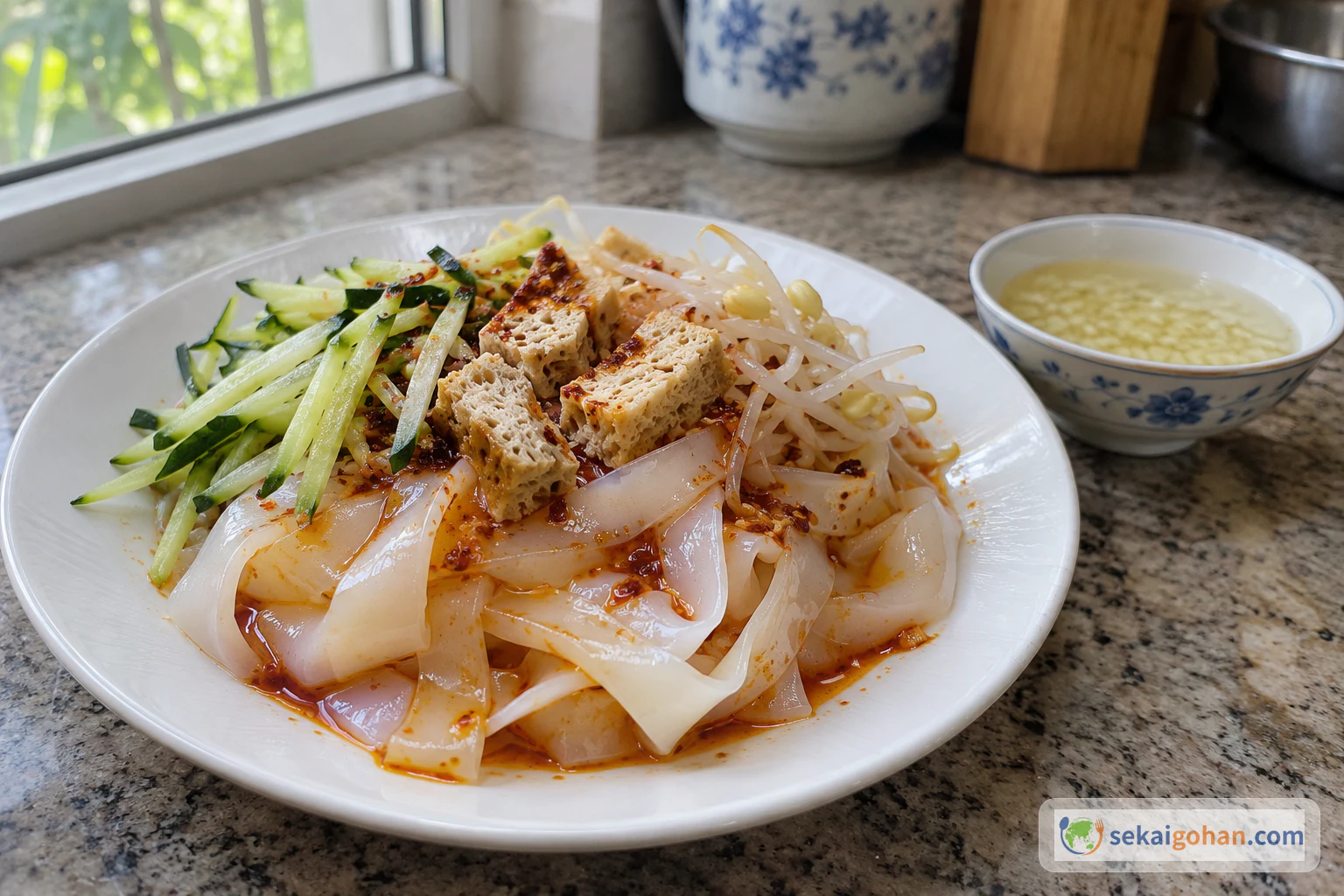
Liangpi: Shaanxi Cold Steamed Wheat Starch Noodles
Ingredients
| Ingredient | Amount | Role |
|---|---|---|
| All-purpose flour | 1 lb (450 g), about 3¼ cups | Dough to wash for starch and gluten |
| Salt, for the dough | 4 g | Seasons and firms the dough |
| Water, for the dough | 9 oz (250 g) | Brings the dough together |
| Cold water, for washing | 3 cups, then 2 cups twice, then 1 cup three times, then about 1 cup for 1–2 final hand washes | Carries the starch out of the dough |
| Settled wheat starch | 10¾ oz (300 g) per batch | The noodle sheets |
| Salt, for each starch batch | 2 g | Seasons the sheets |
| Water, for each starch batch | ½ cup + 2 tbsp (150 ml) | Thins the starch to a pourable batter |
| Vegetable oil | As needed | Greases the pan and coats the sheets so they peel and separate |
| Wheat gluten (面筋, left from washing) | All of it | Steamed and sliced as a chewy topping |
| Cucumber | As needed | Shredded, for crunch |
| Bean sprouts | As needed | Boiled, for a fresh bite |
| Garlic | To taste | Crushed and soaked in water for garlic water |
| Chinese black vinegar | To taste | Sour, dark backbone of the dressing |
| Light soy sauce (生抽, shengchou) | To taste | Salt and savory depth |
| Chili oil (油泼辣子, youpo lazi) | To taste | Red color, aroma and heat |
| Salt, for the dressing | To taste | Final seasoning |
Steps
1Mix and knead the dough
Combine the flour and 4 g salt in a large bowl, then pour in the 9 oz (250 g) of dough water. Stir with your hand until the flour turns shaggy, then press it together into one mass. Knead for 3 minutes. Cover the bowl and let it rest for 10 minutes. It is ready when no dry flour is left and the dough holds as a single rough ball.
2Knead again and rest until smooth
Uncover the dough and knead it again on the board. The short rest makes it easier to work, and it turns smooth under your hands. Return it to the bowl, cover, and rest for 30 minutes. Move on when the surface is evenly smooth all over.
3Wash out the first starch
Put the dough in a large bowl and pour in 3 cups of cold water. Let it sit under the water for 5 minutes, then squeeze and knead it below the surface. The water quickly turns milky white as the starch washes out. Pour this cloudy starch water into your large settling container, holding the dough back in the bowl.
4Keep washing until only gluten remains
Add 2 cups of fresh water, wash the dough for 3 minutes, pour the starch water into the container, and drain. Do this twice with 2 cups, then three times with 1 cup. Finish with one or two hand washes under about 1 cup of water. Stop when the water runs nearly clear and you are holding a springy, elastic knot of gluten. Cover the gluten and rest it at least 2 hours, in the refrigerator if you like.
5Strain and settle the starch water
Pour all the starch water through a fine strainer to catch the stray threads of gluten. Cover the container and leave it to settle for at least 6 hours, preferably overnight. On warm days, settle it in the refrigerator. Give it the full time, because this step cannot be hurried. It is done when a clear layer of water sits on top of a thick white layer of starch.
6Pour off the water and mix the batter
Tip the container slowly and pour off the clear water without stirring up the starch below. Scoop the thick starch from the bottom and weigh out 10¾ oz (300 g). Add 2 g salt and ½ cup + 2 tbsp (150 ml) water, and stir well. Mix any remaining starch into further batches the same way. The batter is ready when it is smooth, lump-free and runs easily off the spoon.
7Pour and steam the first sheet
Bring the water in your steamer to a rolling boil. Brush the cake pan lightly with oil. Stir the batter, then pour in just enough to cover the base in a thin layer. Set the pan in the steamer, cover, and steam on high heat for 90 seconds to 2 minutes. The sheet is done when the batter has set into one thin sheet across the whole pan.
Steam and hot metalLift the lid away from you so the steam rises behind it. Use a towel or tongs to take the metal pan out of the steamer, because the pan and its rim are very hot.
8Cool, oil and peel each sheet
Lift the pan straight into cold water and leave it for about 1 minute. You can add ice to the water if you like. Brush the top of the sheet with oil, then loosen an edge and peel the sheet away. Stack it, oiled side up. Stir the batter again before every pour, then repeat steps 7 and 8 until the batter is used up. The cue is a sheet that lifts off in one piece.
9Steam the gluten and prepare the toppings
Put the rested gluten in the steamer and steam it for 30 minutes. While it steams, boil the bean sprouts, drain them and let them cool, then wash the cucumber well under running water and shred it. Crush the garlic and cover it with water to make garlic water. Take the gluten out after the 30 minutes and let it cool before cutting.
10Cut the sheets and gluten
Brush a little oil between any sheets that look dry, keeping the stack together. Cut the stack into thin strips with a sharp knife. Loosen the strips with your fingers so they fall apart into noodles. Slice the cooled gluten thinly. You are ready when the strands separate cleanly without sticking together.
11Dress and toss
Put the noodles and gluten in a bowl and top with the cucumber and bean sprouts. Spoon over garlic water, black vinegar, chili oil and soy sauce, a little at a time. Toss, taste a strand, then adjust with more vinegar, chili oil or salt. The bowl is ready when every strand is glossy and the sour, salty and hot flavors are in balance.