Ingredients and steps on one page. Print it, or choose “Save as PDF” in the print dialog.
Sekai Gohan
Onsen Tamago: Japanese Hot-Spring Egg Cooked in a Covered Pot
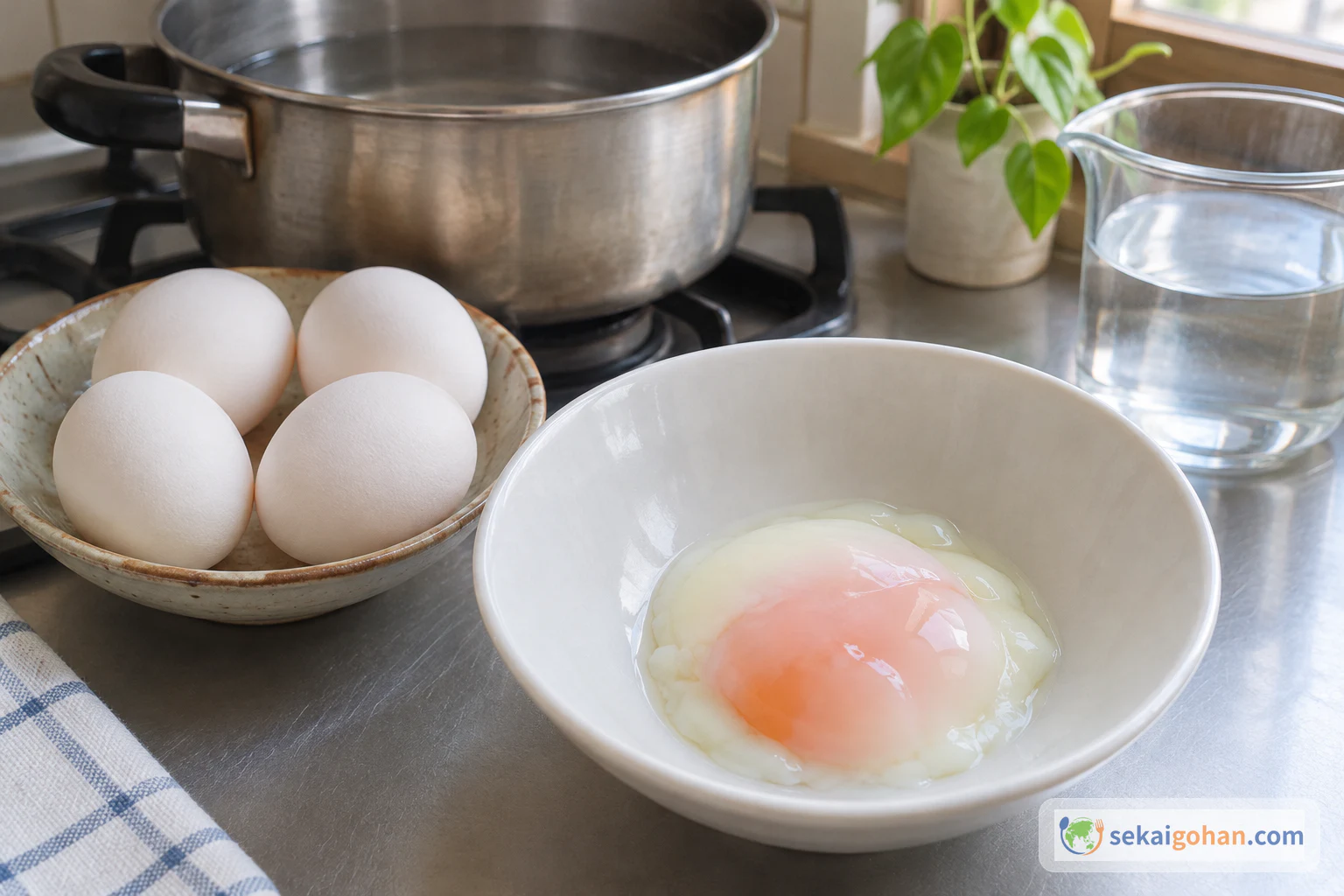
Ingredients
| Ingredient | Amount | Role |
|---|---|---|
| Eggs (tamago), medium (M size), straight from the refrigerator | 4 | The dish itself |
| Water, for boiling | 4 cups plus 3 tbsp (1,000 ml) | Becomes the hot bath the eggs sit in |
| Cool tap water, about 59°F (15°C) or below | ¾ cup plus 1 tbsp (200 ml) | Brings the boiled water down to egg-cooking heat |
| Cool tap water, for chilling | as needed | Stops the cooking once the eggs come out |
Steps
1Bring the water to a boil
Measure 4 cups plus 3 tbsp (1,000 ml) of water into the heavy pot and set it over high heat. Leave the eggs in the refrigerator for now. Fill the jug with ¾ cup plus 1 tbsp (200 ml) of cool tap water and keep it next to the stove. The water is ready when large bubbles roll across the whole surface.
2Turn off the heat and add the cool water
Turn the burner off completely. Pour in all of the cool water from the jug at once. This one pour takes the bath from boiling down to the temperature that cooks the eggs gently, so add the whole measure. The bubbling stops and the surface goes calm.
3Lower in the cold eggs and cover
Take the four eggs out of the refrigerator now. Set each one on a ladle and lower it gently to the bottom of the pot, one at a time, so the shells do not knock or crack. Check that every egg sits fully under the water, then put the lid on. All four shells are hidden under the water when the lid goes on.
4Leave the pot covered for 30 minutes
Leave the pot on the unlit stove with the lid closed for 30 minutes. Keep the lid on and the heat off for the whole time. Every peek lets steam and heat escape, and the bath needs to stay steady to set the white. The pot stays quiet and closed until the time is up.
Leave the lid aloneThe lid and the heavy pot hold the heat for the full rest. Use a timer, set it, and leave the kitchen if you must. Lifting the lid to check is the quickest way to end up with a runny white.
5Lift out the eggs
When the 30 minutes are up, take off the lid. Lift the eggs out one at a time with a ladle or slotted spoon. Handle them gently, because the inside is soft. The shells come out warm, whole and dripping.
6Chill the eggs in cold water
Fill a separate bowl with cold tap water at about 59°F (15°C) or below. This water is separate from the 200 ml that went into the pot. Move the eggs into it so they are covered and leave them for about 5 minutes.
7Crack each egg into a bowl
Tap one cooled egg firmly on the edge of a clean, empty bowl. Hold it low over the bowl, pull the two halves of the shell apart, and let the egg slide out. Do the same with the rest, one egg to a bowl. The yolk should land round and tender inside a loose, softly set white.