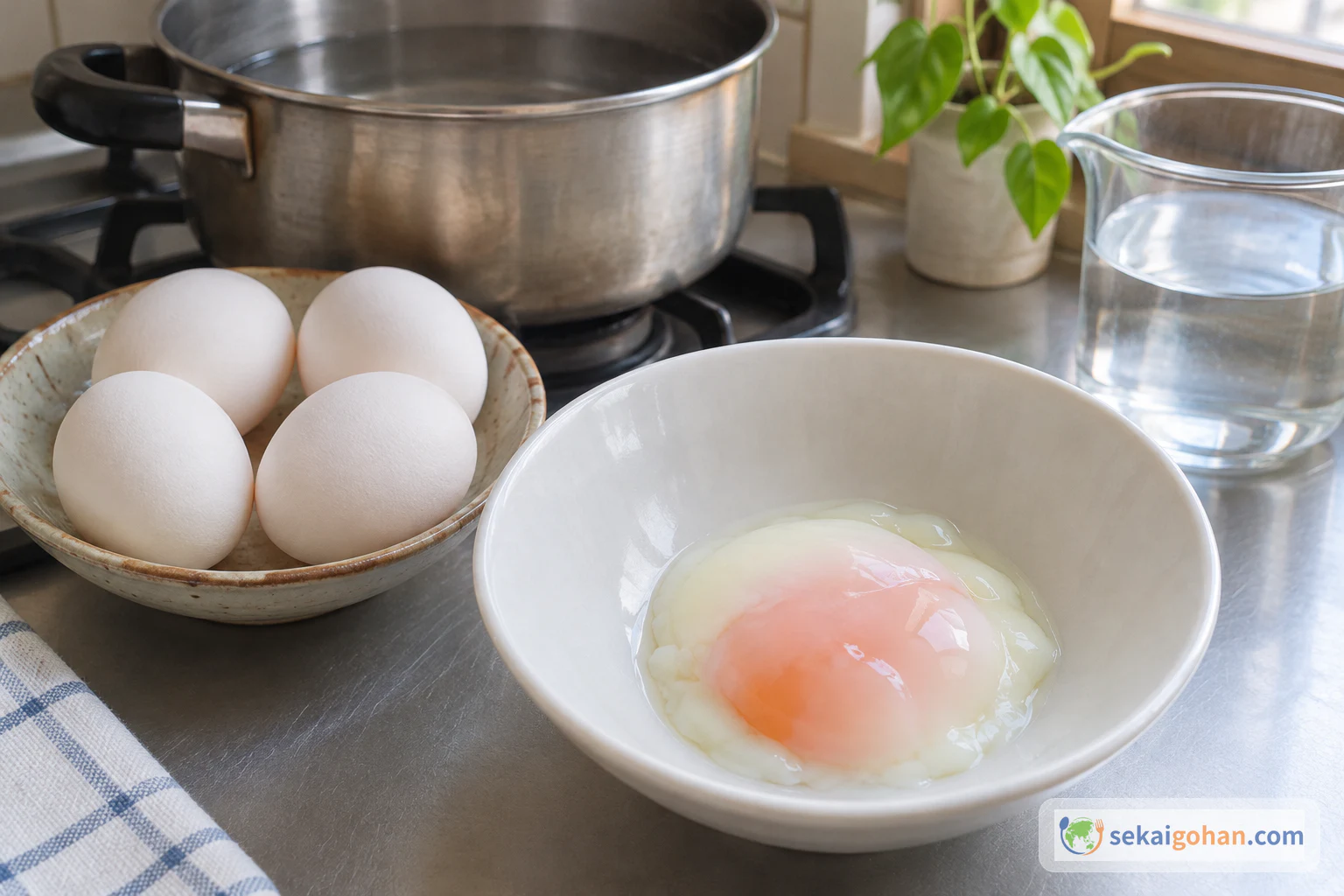
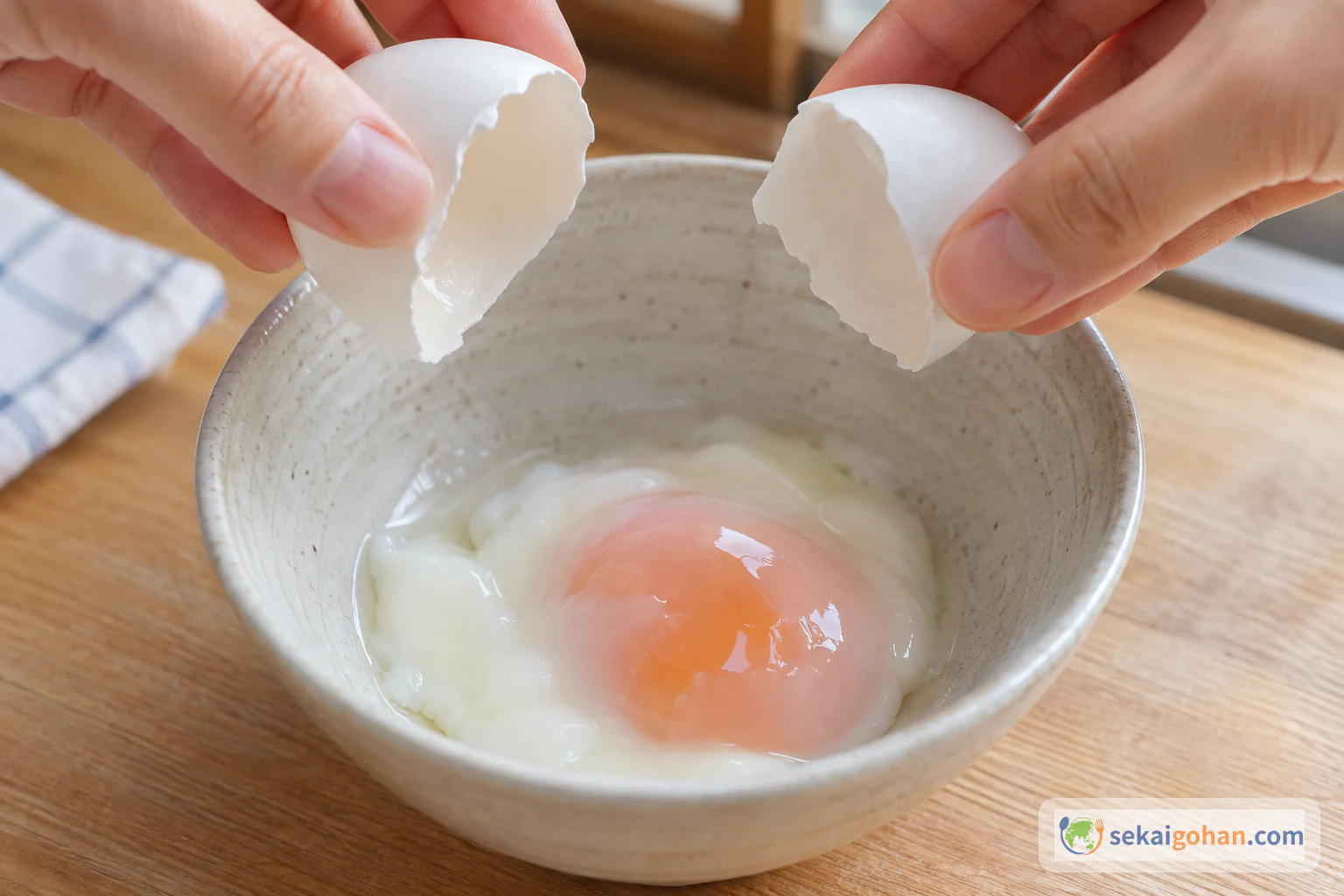
You tap the cooled shell on the rim, pull the halves apart over an empty bowl, and the egg slides out whole. The yolk sits round and glossy. The white around it is loose and trembling, just set enough to hold together. This is onsen tamago, Japan's hot-spring egg. It tastes of nothing but egg, rich, soft and warm, with a texture that sits between raw and boiled.
The Egg From the Hot Spring
Onsen tamago is a kind of boiled egg, but it is cooked in the opposite way from most boiled eggs. Here the yolk stays soft and the white has only begun to set. Ordinary boiling firms the white first and works inward. Gentle, steady heat lets the yolk turn tender and creamy while the white stays barely set, almost like custard.
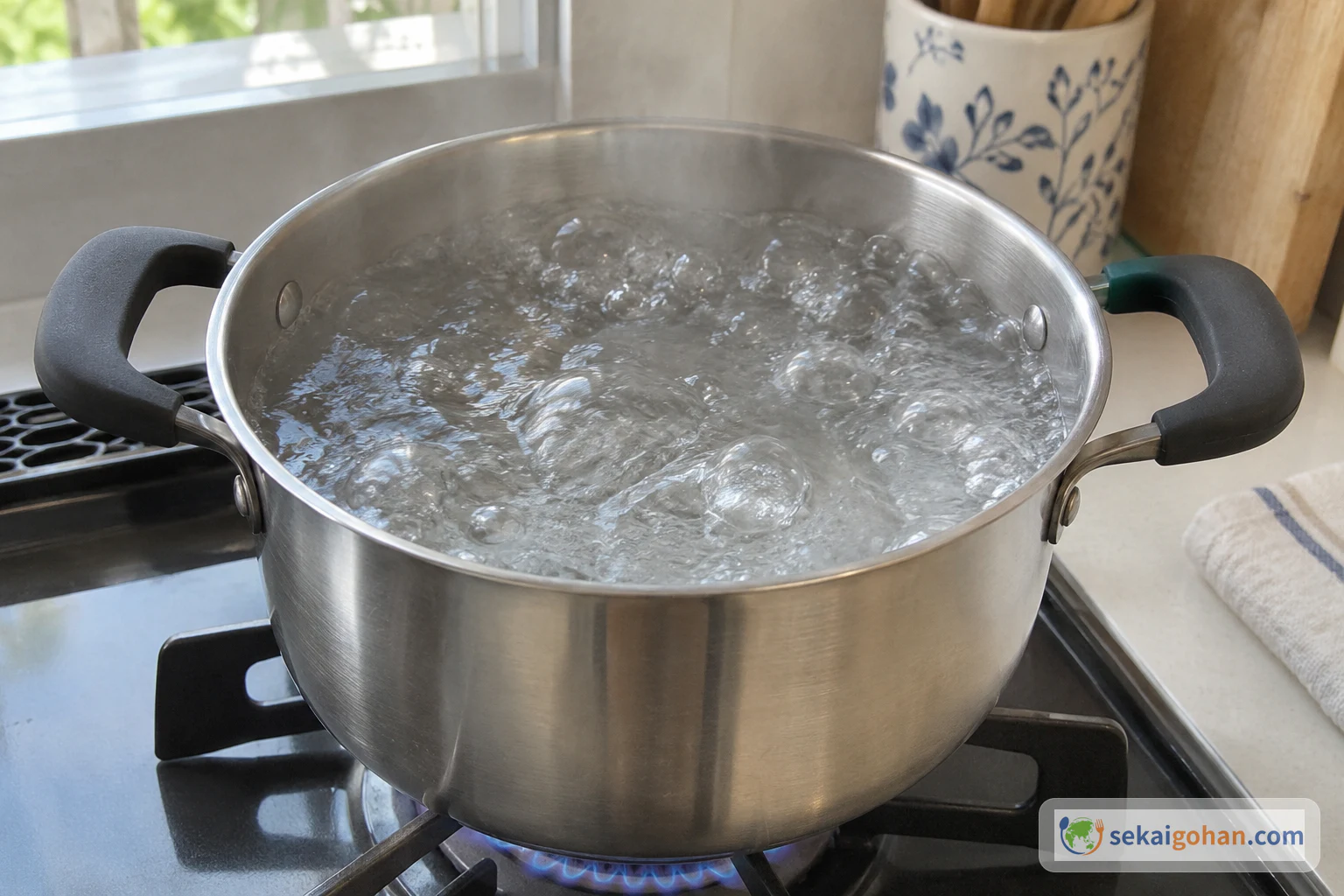
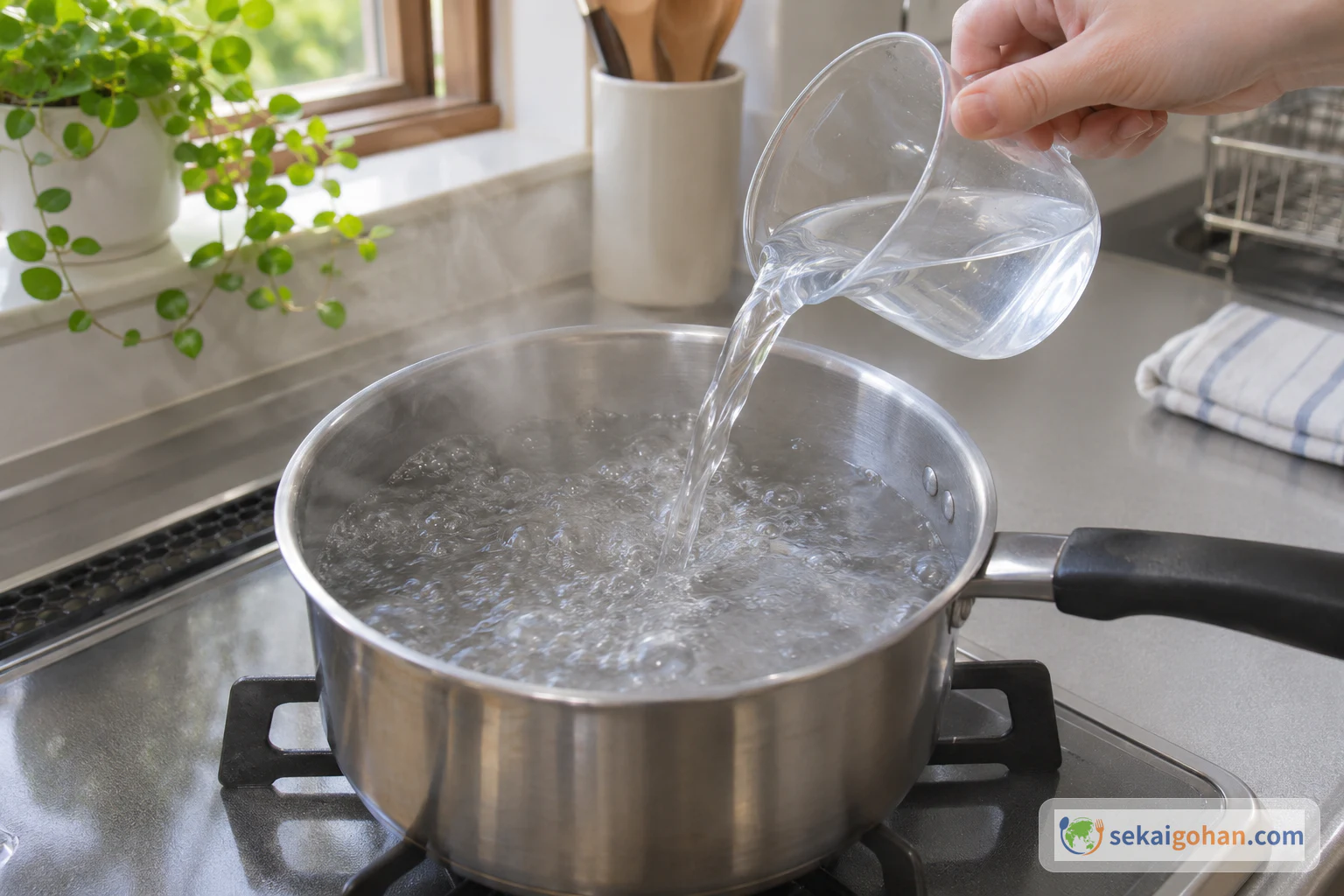
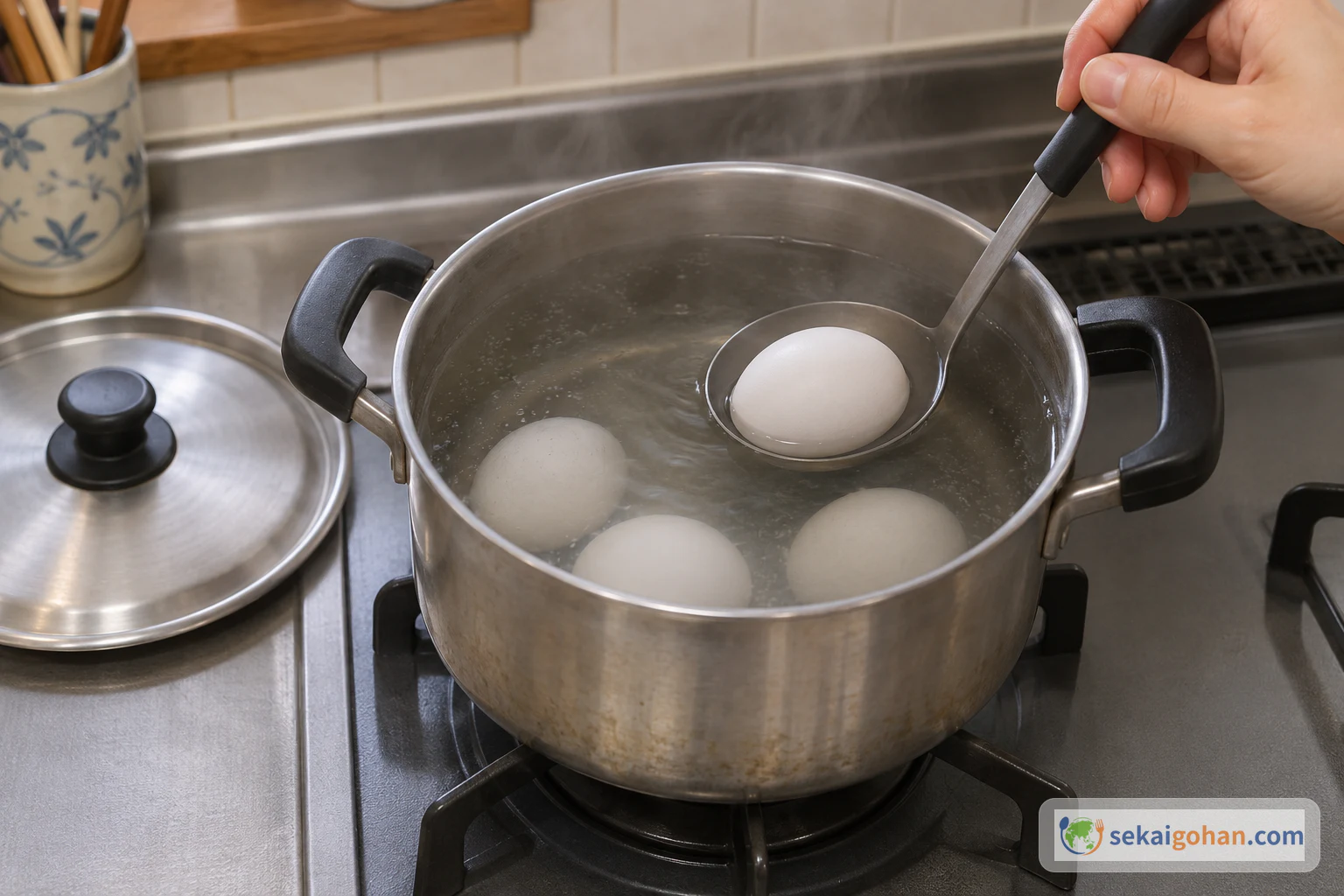
The name ties it to hot-spring water. In Japan the egg is closely linked to hot springs and hot-spring inns, and it often turns up at breakfast at a hot-spring inn. There it is a plain, quiet dish, cracked into a small bowl and eaten with a spoon. You can make the same egg at home with a heavy pot, measured water and a lid. The water starts at a full boil, then gets cooled by a small pour of cold water before the eggs go in. The lid and the weight of the pot do the rest.
Onsen means hot spring, and tamago means egg. The name points to water from the spring. It describes eggs cooked gently in hot water until the yolk is soft and the white just holds.
Ingredients
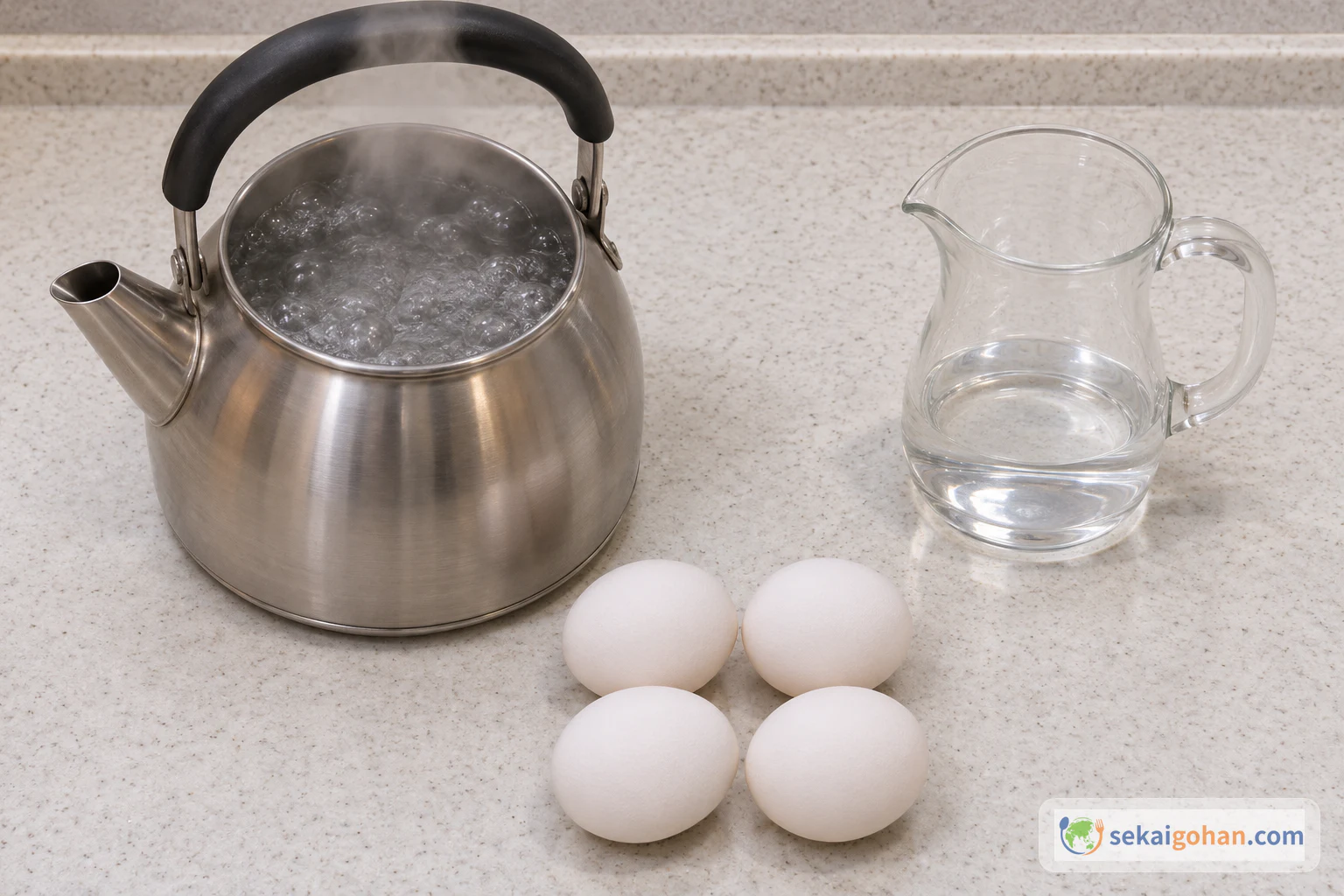
This dish is made entirely of egg. The yolk stays soft and the white is only lightly set, so treat it as a lightly cooked egg. Buy eggs from a trusted grocer. Keep them in the refrigerator until the moment they go into the pot. Use only eggs with whole, uncracked shells. If one cracks, cook it through for another dish right away. Keep the bowls and spoons you use for the opened eggs clean and apart from other food, and eat the eggs the same day. Anyone who is pregnant, elderly, very young or has weakened immunity should skip onsen tamago and have a fully cooked egg instead.
Equipment
- An ordinary heavy pot, 7 to 8 inches (18–20 cm) across, with a lid (not a pressure cooker)
- A measuring cup
- A jug for the cool water
- A ladle or slotted spoon
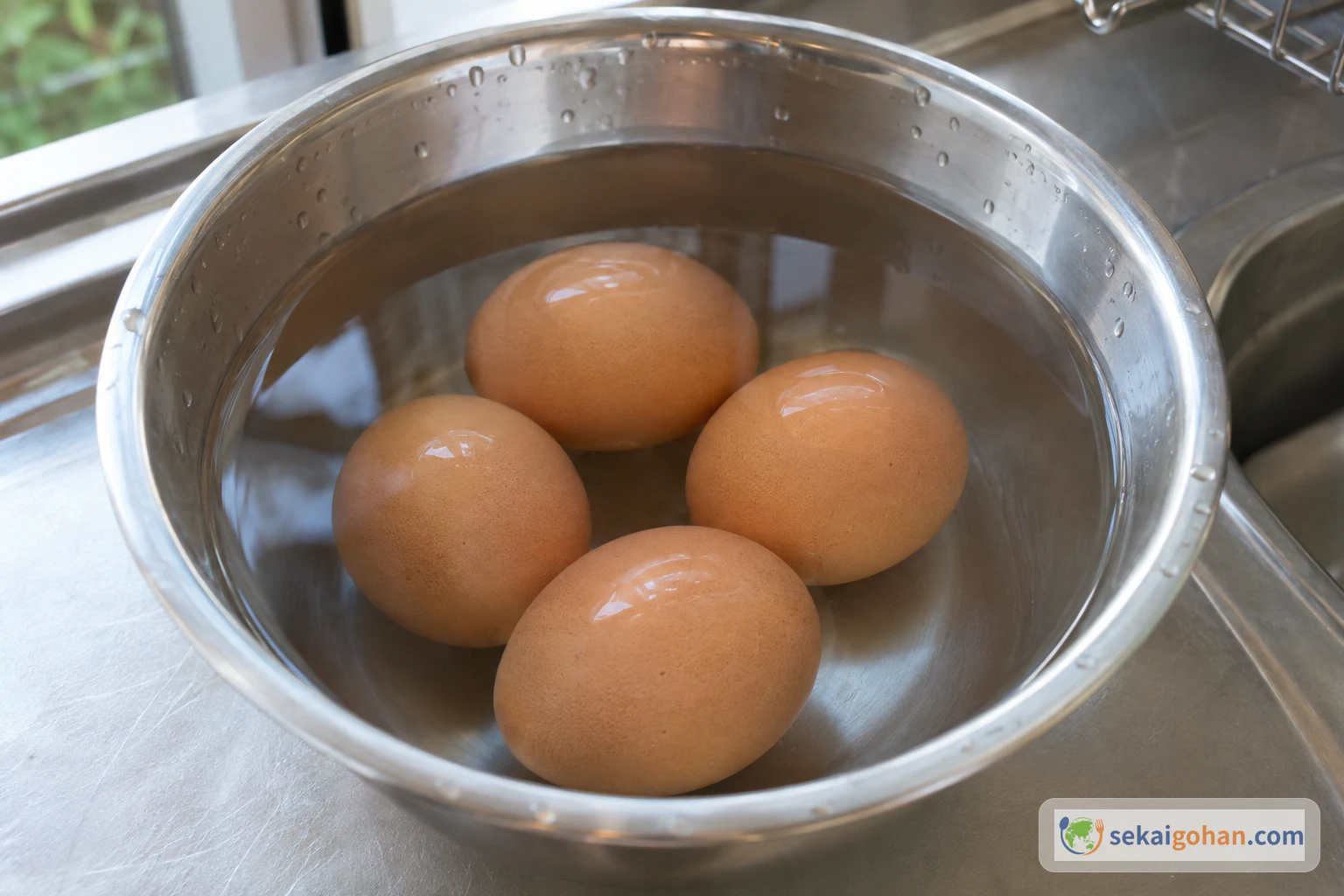
- A bowl of cold water for chilling the eggs
- Small serving bowls
Choosing the Eggs, the Water and the Pot
The shopping is simple, and the success of this dish rests on three choices. The first is the eggs. Use medium eggs taken straight from the refrigerator. The timing is set for cold eggs of that size, and four eggs fit the pot and the water.
The second is the water. Measure both amounts exactly, because the small pour of cool water sets the temperature of the whole bath. That water should come straight from the tap and be about 59°F (15°C) or below. Warmer tap water leaves the bath hotter than intended, and the white and yolk firm up more.
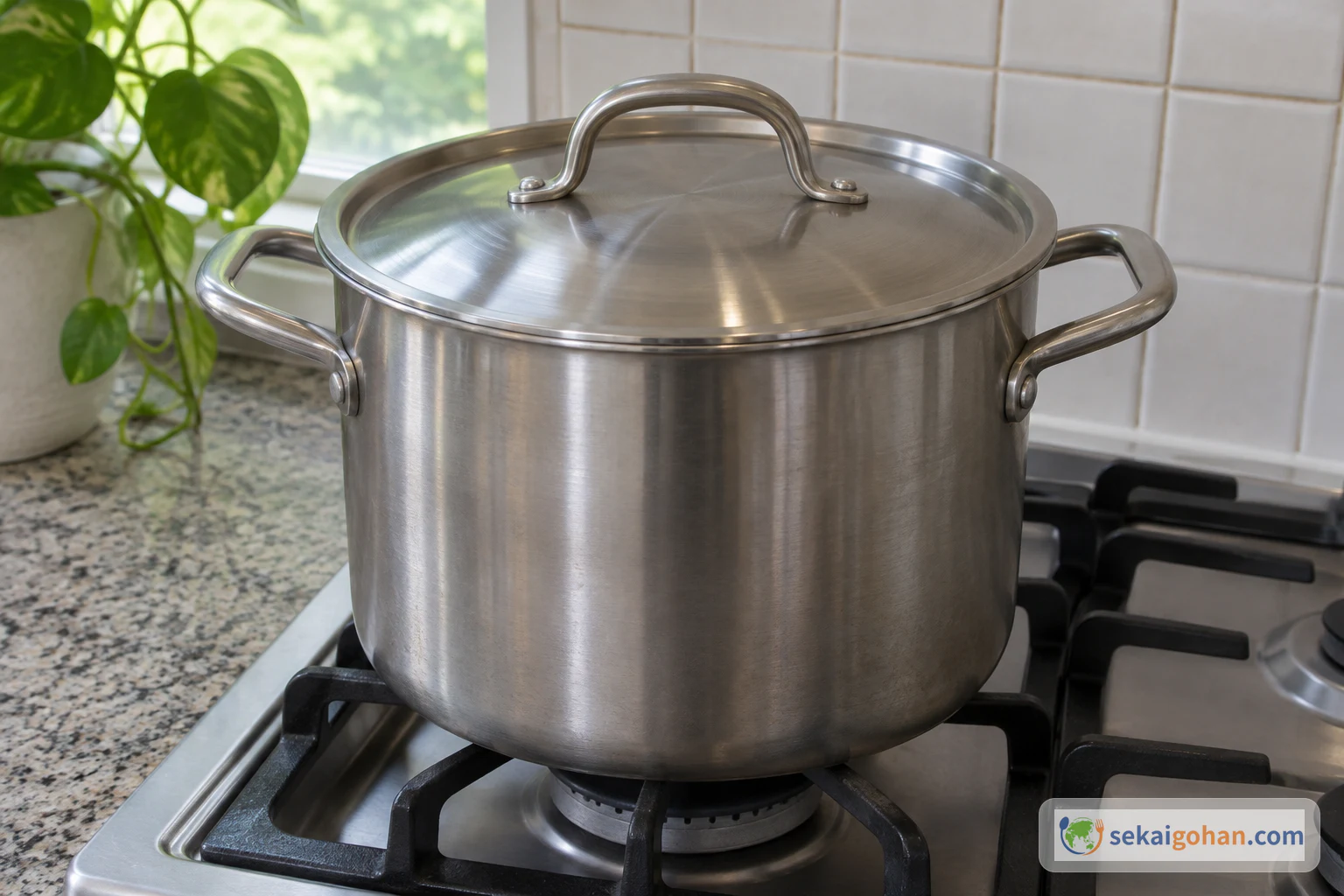
The third, and the one that matters most, is the pot. The covered pot is meant to hold the water at about 149–158°F (65–70°C) for the whole rest, the range that gives a softly set white and a tender yolk. A heavy pot 7 to 8 inches (18–20 cm) across holds that heat and keeps all four eggs under the water. A wider pot spreads the water too shallow, and the tops of the eggs end up exposed. An enameled cast-iron pot holds its heat longer than an ordinary heavy pot, so the 30-minute rest here belongs with the ordinary heavy pot.
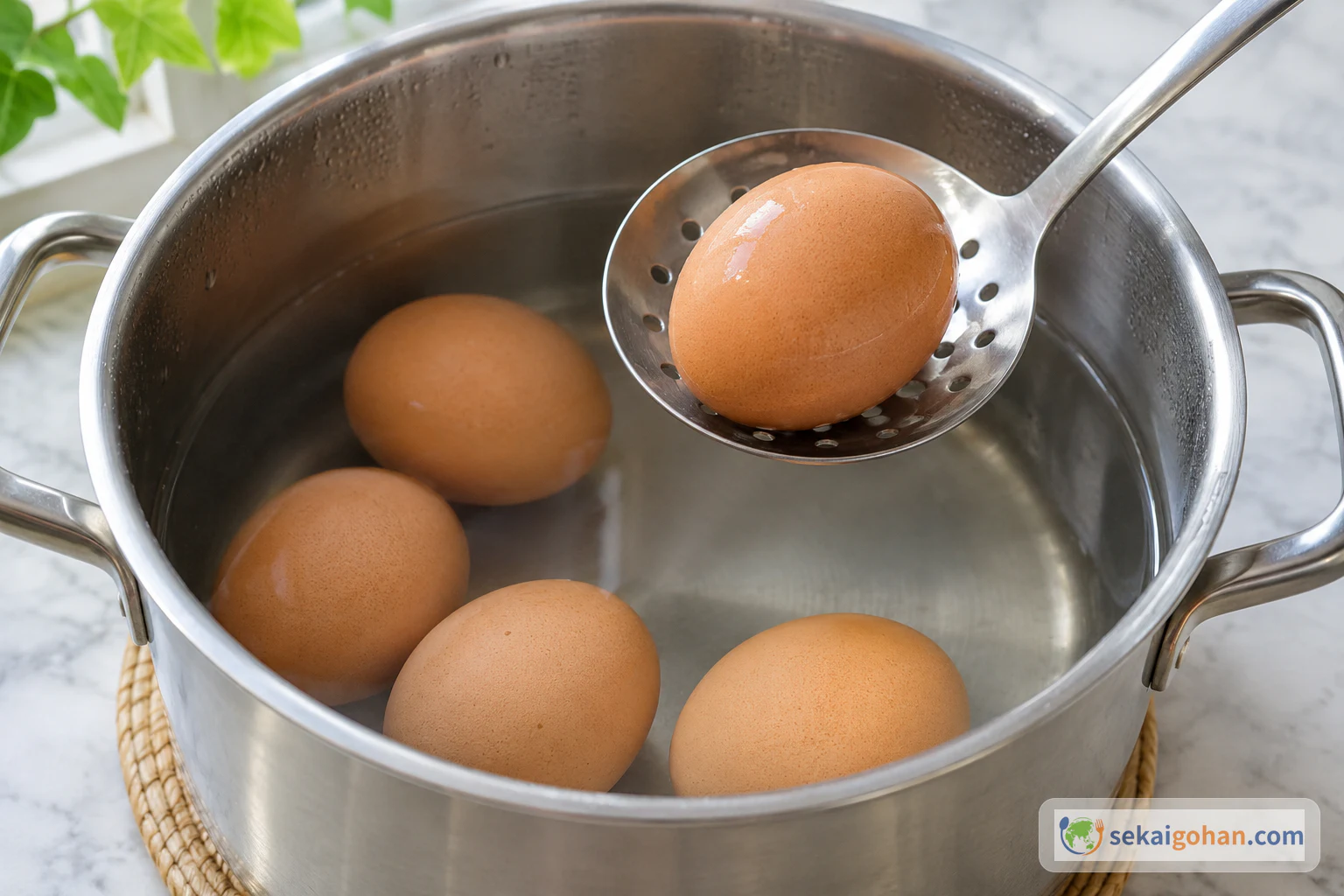
Before you start, place the four cold eggs in the empty pot and look at them. In a pot that is the right size, 1,000 ml of water will cover them completely. If the pot is so wide that the eggs sit in a single spread-out layer with lots of space around them, choose a smaller one.
Method: Boil, Cool, Cover and Wait
All the cooking happens in one pot, and only the first few minutes take any attention. You boil the water, cool it slightly, slip in the eggs and close the lid. Then the 30-minute covered rest is fully hands-off, with the burner off the whole time. After that, a short cold bath and the crack into the bowl finish the job.
Hold the shell just above the bottom of the bowl when you open it. The white is barely set and keeps its shape best when it has only a short way to fall.
When It Goes Wrong
| What you see | Why | What to do |
|---|---|---|
| The white is clear and watery around the yolk | The bath lost heat too fast. The pot was thin or light, the lid was lifted, or the water was not measured | Use a heavy pot 7 to 8 inches (18–20 cm) across, measure both amounts of water exactly, and keep the lid closed for the full 30 minutes |
| The tops of the eggs stuck out of the water | The pot was too wide for the amount of water | Choose a smaller pot in the 7- to 8-inch (18–20 cm) range so all four eggs are fully covered |
| The yolk is firmer than you wanted | The pot held its heat longer, as enameled cast iron does, or the added water was warm | Use an ordinary heavy pot, and add tap water that is actually about 59°F (15°C) or below |
| A shell cracked going in | The egg dropped or knocked against the bottom of the pot | Lower each egg on a ladle. Take a cracked egg out and cook it through for another dish right away |
At the Table
Onsen tamago goes to the table in its own small bowl, eaten soon after the shell comes off. This is how it often appears at a hot-spring inn breakfast, one plain egg to a bowl. Eat it with a spoon, breaking the yolk into the white. With nothing added, the taste is pure egg, and you catch every difference the pot made, the softness of the yolk and how gently the white has set. Make four at a time, crack only as many as are being eaten, and refrigerate any eggs you are not opening right away and eat them the same day.
Frequently asked questions
Do I need a kitchen thermometer?
This method works with just the pot, the lid and the measured water. Boiling water plus the cool pour sets the starting heat. The heavy covered pot then holds the bath steady through the rest. What matters is measuring exactly and using the right pot.
Why put the eggs in straight from the refrigerator?
The 30-minute rest is set for cold medium eggs. Cold eggs take in the heat at the pace that sets the white and keeps the yolk soft. Keeping them refrigerated until the last moment also keeps them cold the whole time before cooking.
Can I make more than four eggs at once?
Make four at a time. The two amounts of water, the size of the pot and the timing all fit four medium eggs. For more, make a second pot the same way.