Ingredients and steps on one page. Print it, or choose “Save as PDF” in the print dialog.
Sekai Gohan
Sōmen: Chilled Japanese Wheat Noodles with Dashi Dipping Sauce
Ingredients
| Ingredient | Amount | Role |
|---|---|---|
| Sōmen (素麺), thin dried hand-pulled wheat noodles | 4 bundles (about 7 oz / 200 g) | The noodles; fine strands with a springy bite |
| Water, for the sauce | 1⅔ cups (400 ml) | Draws the flavor out of the dashi pack |
| Dashi pack (だしパック), bonito-based, tea-bag style | 1 | The savory base of the dipping sauce |
| Soy sauce (濃口しょうゆ, koikuchi) | 1½ tbsp | Salt and color |
| Mirin (みりん) | 1½ tbsp | Sweetness and gloss; softens the edge of the soy |
| Myoga (茗荷), thinly sliced | to taste | Sharp, fresh aroma |
| Scallions (青ねぎ), thinly sliced | to taste | Aroma and green color |
| Fresh ginger (生姜), grated | to taste | Clean heat |
| Water, for boiling | 2 quarts (2 L) | Room for the noodles to move |
| Ice water | as needed | Stops the cooking and firms the noodles |
Steps
1Boil the water and add the noodles
Bring 2 quarts (2 L) of water to a full boil over high heat. While it heats, slip the paper bands off the bundles so every strand is free. Drop the noodles in loosely, scattering them over the whole surface, and loosen them once with cooking chopsticks. Move on when the water comes back to a rolling boil and the strands float apart.
2Cook for 1½ to 2 minutes
Start the timer for 1½ to 2 minutes. If the foam climbs, turn the heat down instead of adding cold water: a splash of cold water drops the temperature all at once, the noodles can cook unevenly and lose their texture. For noodles headed for nyumen or a stir-fry, stop at 1 to 1½ minutes, because they will be heated again. The noodles are done when the timer sounds and the strands are swimming loose in the bubbling water with none stuck together.
3Drain and rub-wash under running water
Tip the noodles into the colander the moment the timer sounds, and pour cold water over them to take off the heat. Then rinse them under the running tap, rubbing handfuls firmly between your hands. This rub washes off the slick surface starch and the oil and salt left from making the noodles. Keep going until the water running off is clear and the strands feel smooth instead of slippery.
4Chill in ice water and drain
Lower the colander into the bowl of ice water for a quick dip, so all the noodles sit in the cold. The ice stops the leftover heat from softening them further and tightens the strands. Lift the colander out, shake it and leave it to drain well. The noodles are ready when they are cold through and a pinched strand springs back.
5Simmer the dashi
Put 1⅔ cups (400 ml) of water and the dashi pack in a small saucepan and set it over the heat. When it boils, turn the heat to medium and simmer for 3 to 5 minutes. Press the pack under the surface now and then with chopsticks so it stays submerged. The dashi is ready when it is a clear pale gold and smells strongly of bonito.
6Season the sauce
Lift out the dashi pack and let it drip back into the pan for a moment. Add 1½ tbsp each of soy sauce and mirin and stir. The mirin softens the sharp edge of the soy and gives the sauce its gloss. The sauce is done when it is an even, clear amber with no dark streaks of soy.
7Cool and refrigerate the sauce
Take the pan off the heat and let the sauce cool until it no longer steams. Pour it into a clean container, put on the lid and set it in the refrigerator. Warm sauce softens and swells the noodles the moment they touch it, so the colder the sauce, the longer each mouthful keeps its bite. It is ready when the container feels cold in your hand.
8Serve
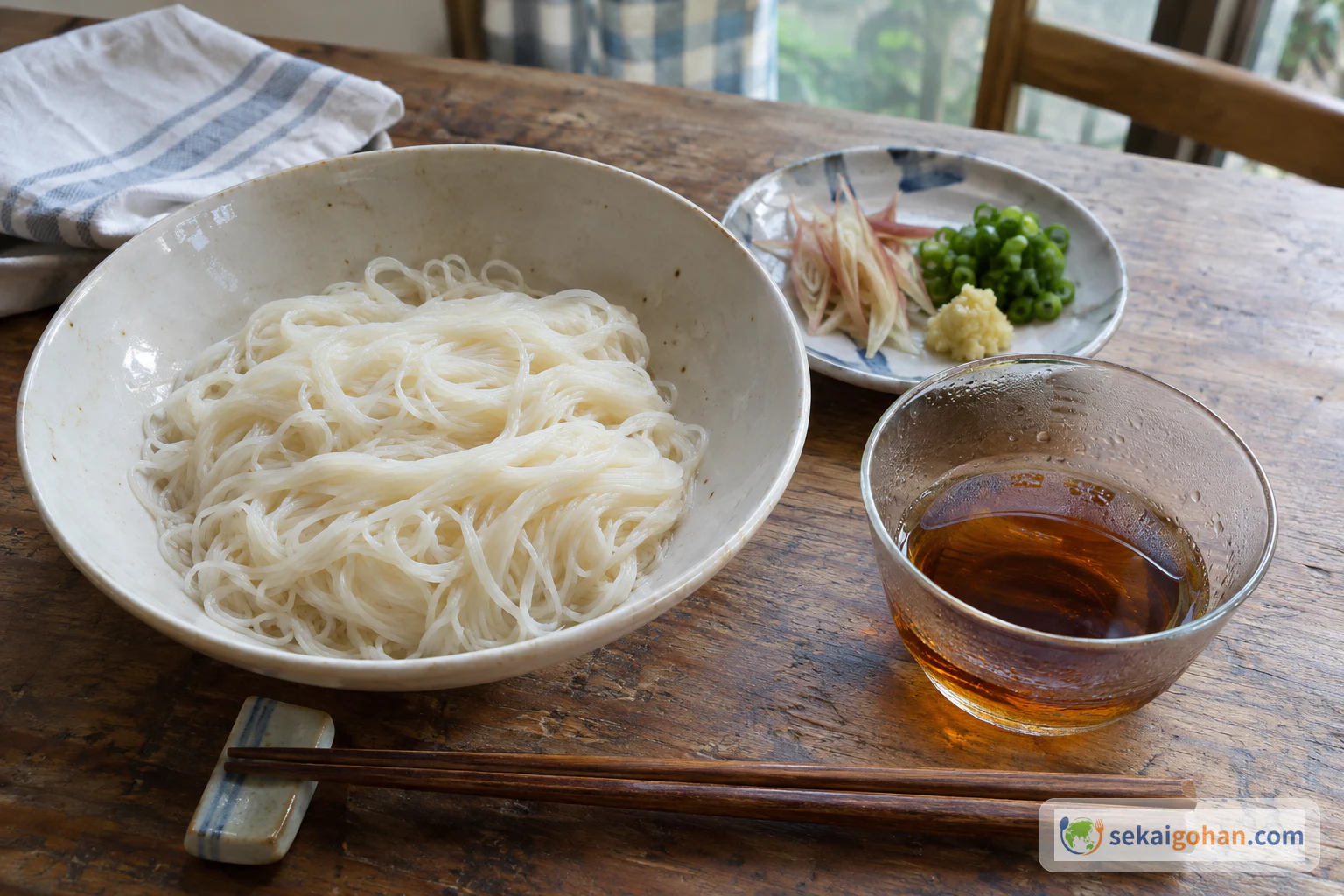
Shake the colander once more so no water drips into the bowls, then mound the noodles in shallow dishes. Put the garnishes on a small plate of their own, and pour the cold sauce into a small cup for each person. At the table, everyone adds garnish to their own cup, dips a mouthful of noodles and eats. Serve as soon as the noodles are drained, while the strands are still cold and glossy.