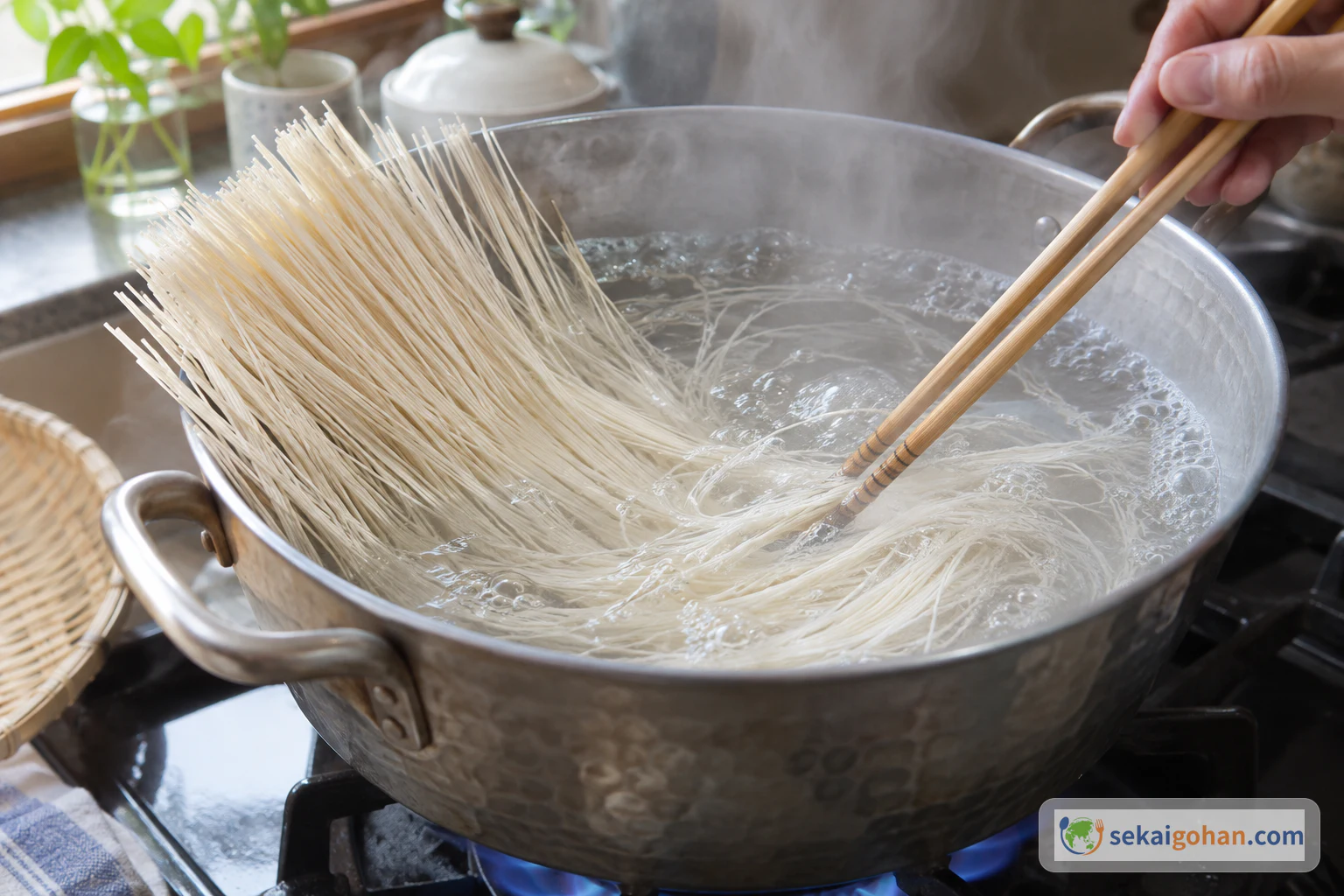
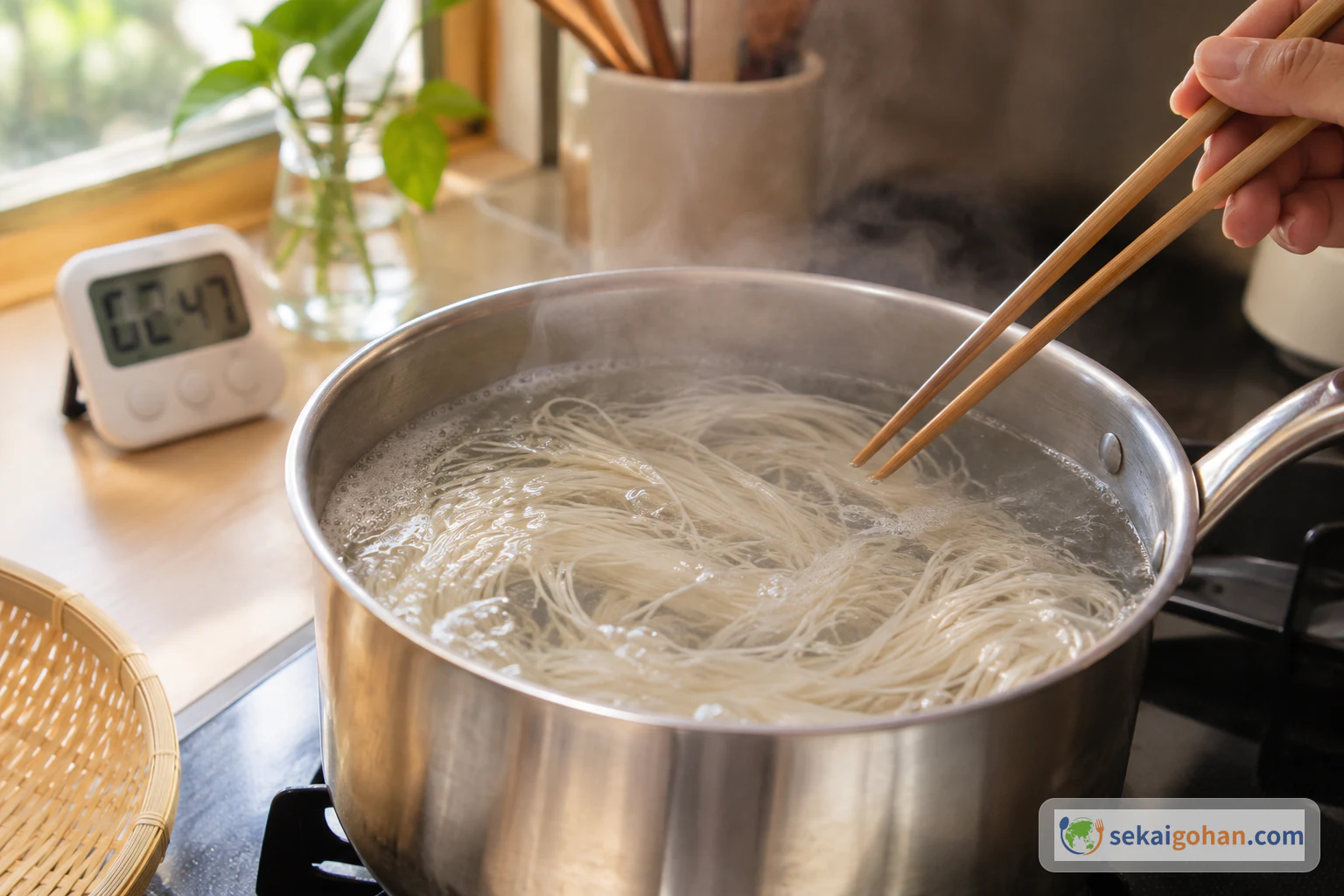
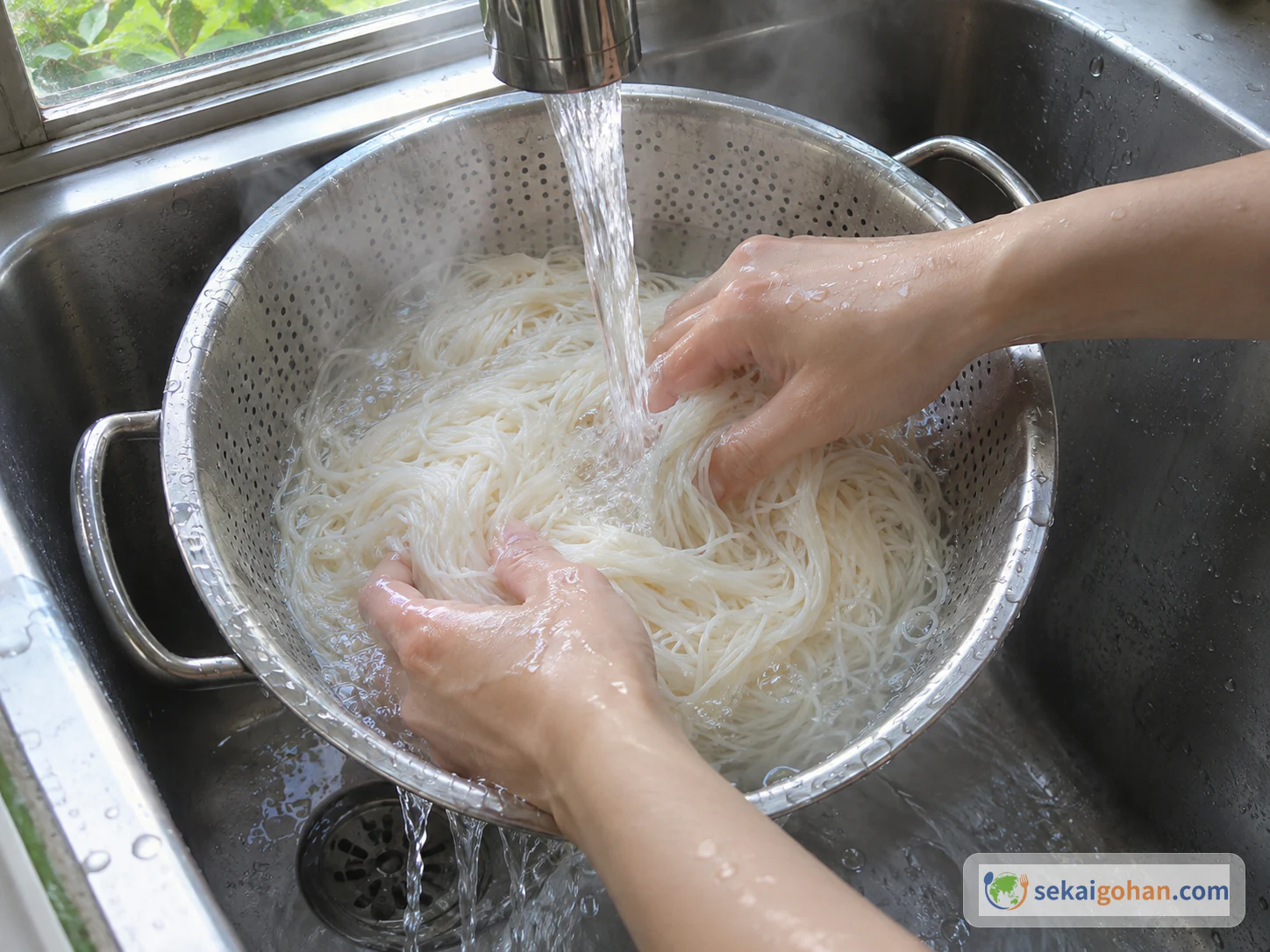
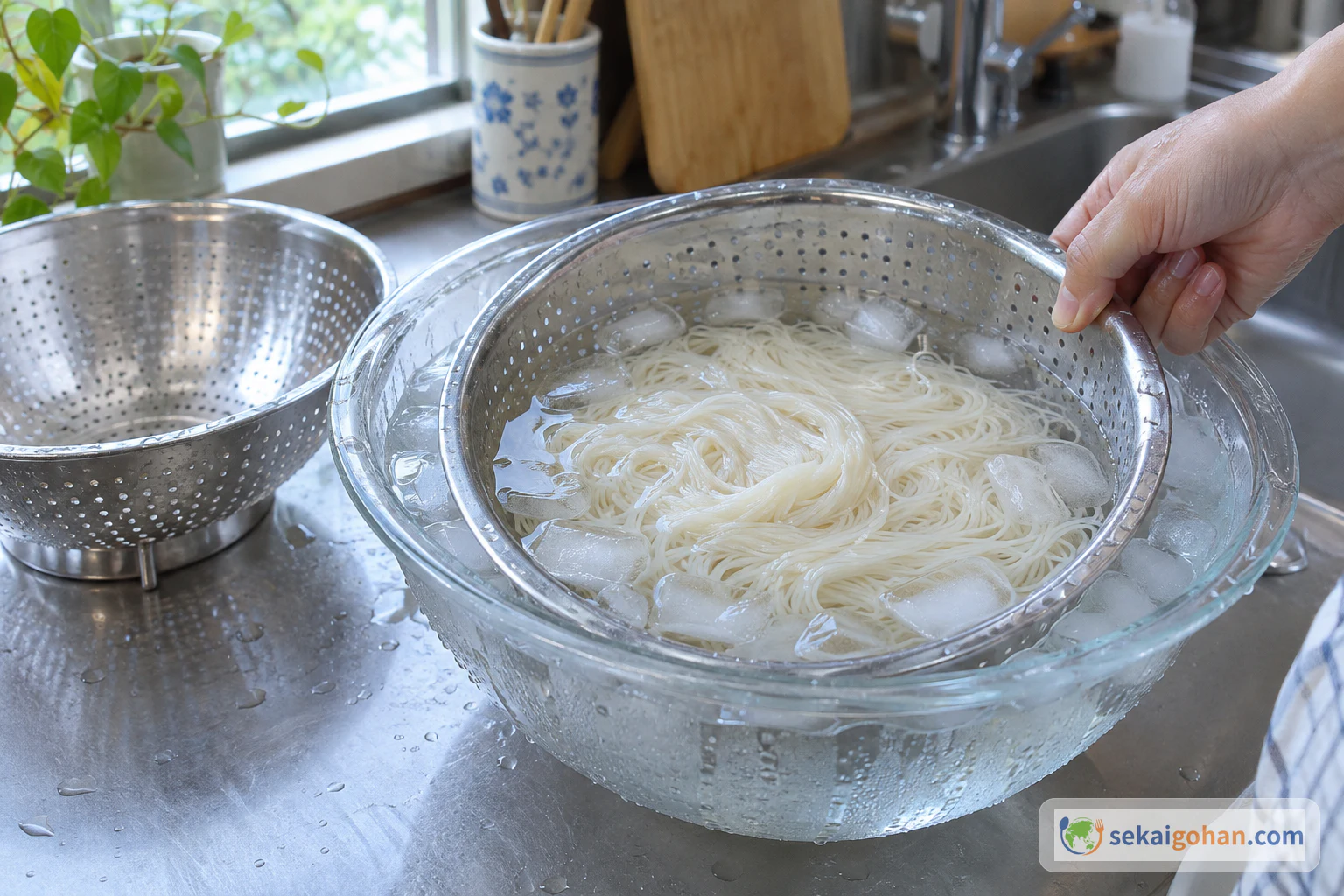
A big pot of water rolls at a full boil, and the noodles go in loose, fanning out across the surface. The dry tips stand up for a moment, then soften and slide under, and the white strands start to circle in the bubbles. Barely two minutes later they are in a colander under the cold tap, then in a bowl of ice.
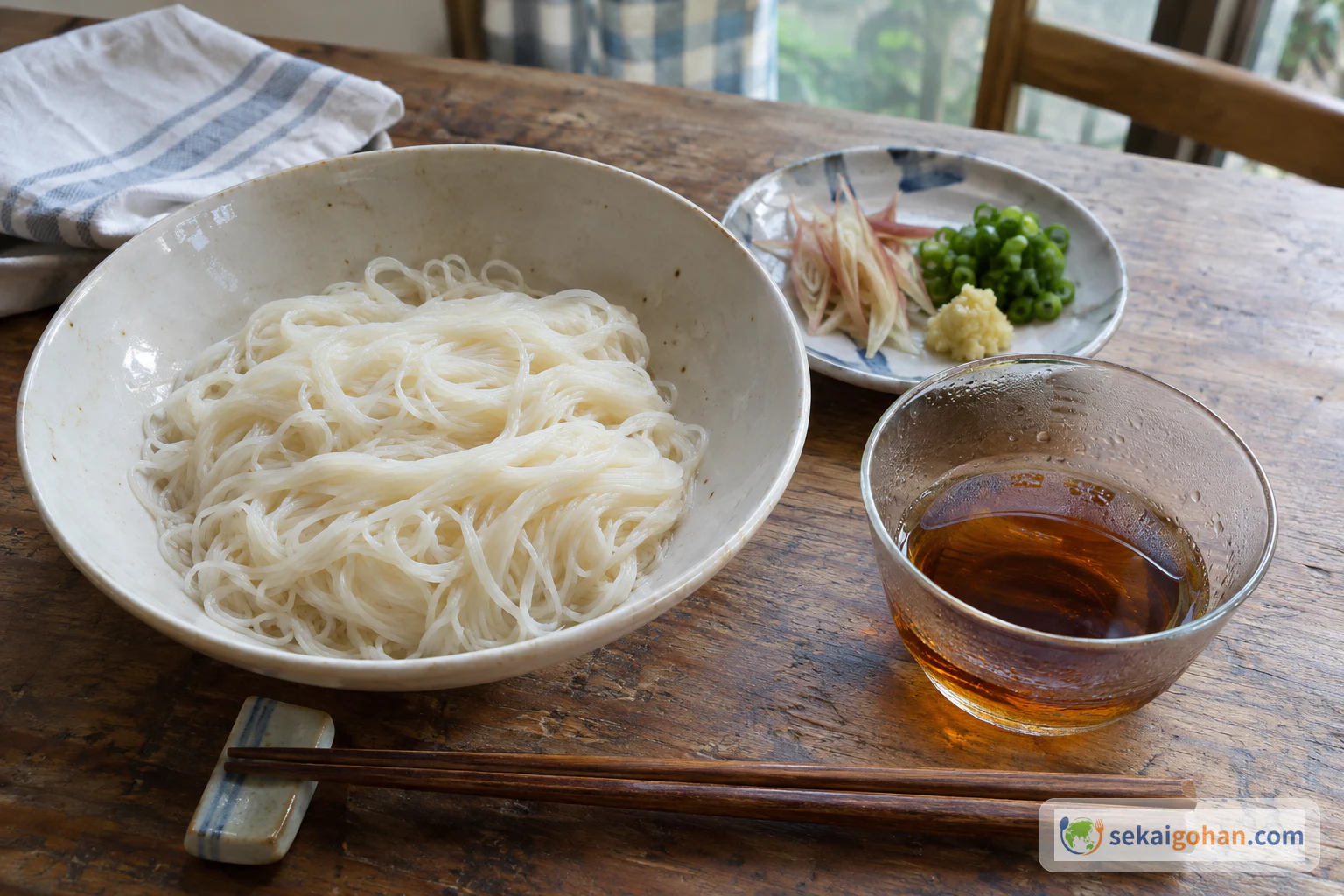
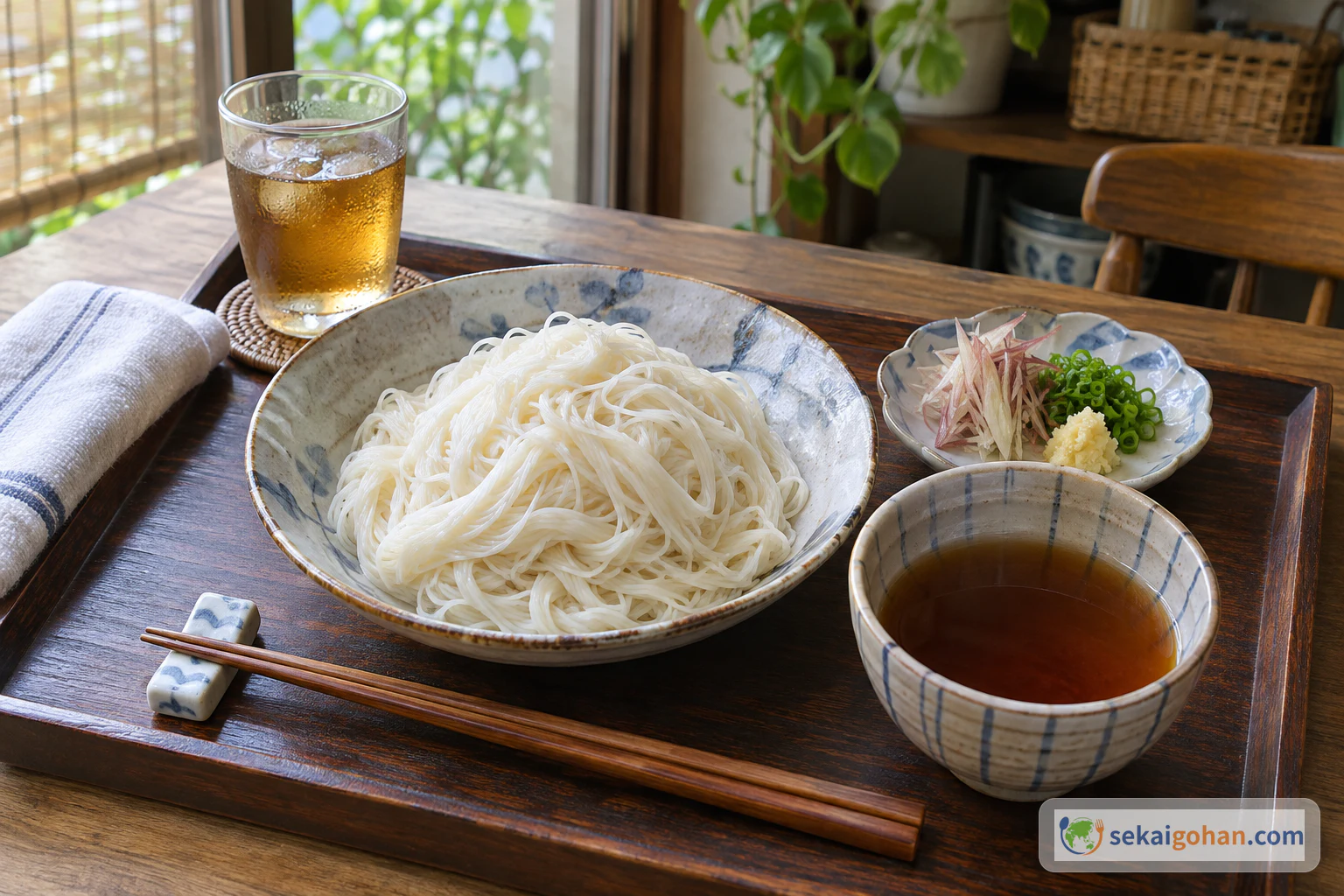
Sōmen is one of Japan's finest wheat noodles, and in summer it is eaten cold: a mound of glossy white strands, a small cup of clear amber sauce made from dashi, soy sauce and mirin, and a little dish of sliced myoga, scallion and grated ginger. You dip a mouthful, and it comes up cool, springy and lightly salty, smelling of bonito and fresh ginger.
Fine as Thread, White as Snow
From a shrine field to four noodle towns
Dried noodles have been made in Japan for more than 1,200 years, and their arrival is usually traced to the Nara period, when envoys returned from Tang China. In Miwa, at the edge of the Nara basin, local tradition puts the beginning of sōmen with the son of the chief priest of Ōmiwa Shrine, who sowed wheat and turned the harvest into noodles. In the Edo period Miwa was a post town on the pilgrims' road to Ise, and the travelers who passed through are credited with carrying the craft to Banshū in Hyōgo, to the island of Shōdoshima and to Shimabara in Nagasaki. Those four places are still the names to look for on a package. By 1754 Miwa sōmen was already praised in print as fine as thread and white as snow, and a Miwa sōmen union was founded in 1895.
The noodles are made in the cold. In Miwa the season runs from December to the end of March, when the Nara basin is hard-frozen and dry, and each batch takes two days, with the dough left to rest and mature, a stage called umashi, again and again between pulls. The finished noodles are dried until their moisture is 13.5% or less. Fineness is counted in strands: standard Miwa sōmen has 65 to 75 strands per ⅓ oz (10 g), top grade 75 to 95, and the finest grade more than 95. That thinness is why a few seconds in the pot show in your mouth. In southwest Hyōgo, around 400 workshops make sōmen from October to April, helped by the soft water of the Ibo River, good wheat, salt from Akō and a climate with little rain; they have sold under one shared trademark, named for the river, since 1894. Miwa Somen was registered as a protected geographical indication in March 2016, and every February 5, a ceremony at Ōmiwa Shrine divines the year's wholesale price.
How Japan eats it
Sōmen belongs to hot days. It is the quick lunch when the kitchen is too warm to cook, it goes on the table when guests come, and it turns up through the Obon holidays. Since 1982, July 7, the star festival of Tanabata, has also been Sōmen Day. It sits at the light, fast end of Japanese home cooking, next to thicker udon and hiyamugi.
Each region bends it a different way. In Miwa people eat it chilled in summer and in hot broth as nyumen in winter, and February 5 is Nyumen Day as well. In Banshū, the curved offcuts from noodle making, called bachi, go into a soup called bachi-jiru. Shimabara's noodles are firm and hold up in a simmering pot, so in Minamishimabara they go into miso soup and simmered dishes. Around Kanazawa, eggplant is simmered in dashi with sōmen. In Okinawa every house once kept a stock of dried sōmen for days when a typhoon kept everyone indoors, and the noodles were stir-fried rather than chilled.
The name nyumen is usually traced to nimen, "simmered noodles", softened in everyday speech. In Okinawa, stir-fried sōmen is sōmin tashiyā. Calling it "sōmen champurū" is wrong there, because champurū means a stir-fry with fried tofu in it. A soft version finished with dashi until the starch turns it silky is sōmin pottōrū.
Nagashi sōmen
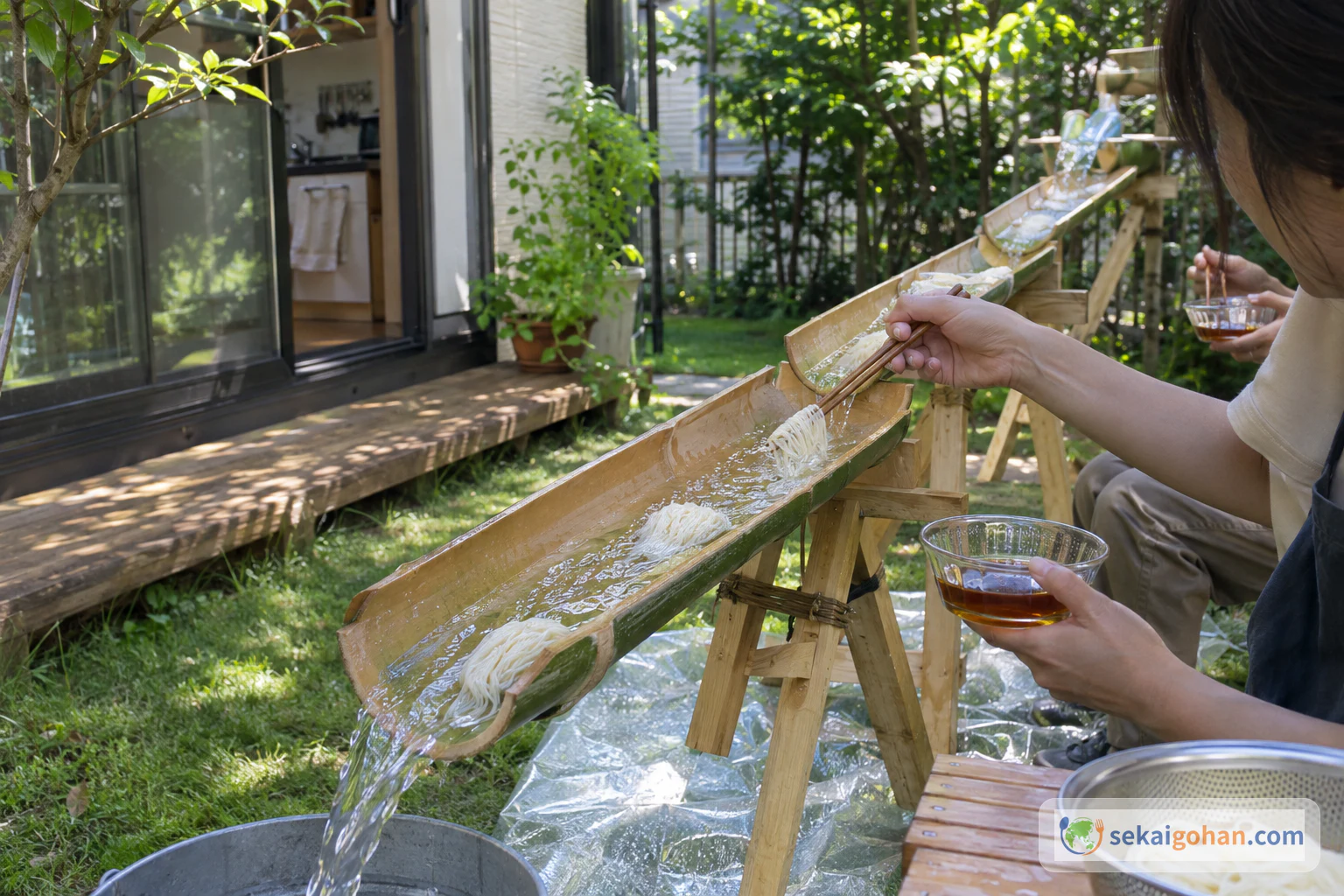
In the gorge town of Takachiho in Miyazaki, before refrigerators, villagers cooled their boiled sōmen in summer in the spring water of the Tamadare waterfall. When Mitsuyoshi Satō wanted to turn the custom into a business, the health authorities would not let food run directly over the rock, so he built long split-bamboo troughs to carry the spring water instead. His restaurant, Chiho no Ie, opened beside the gorge in 1955 and now runs the spring water down four bamboo troughs, with a set meal of simmered vegetables, salad, rice balls, konnyaku sashimi and charcoal-grilled yamame trout alongside. Whether "flowing sōmen" really began in Takachiho is not settled, but the bamboo trough caught on everywhere, and families set one up in the garden in summer to catch the noodles as they slide past.
Ingredients (serves 2)
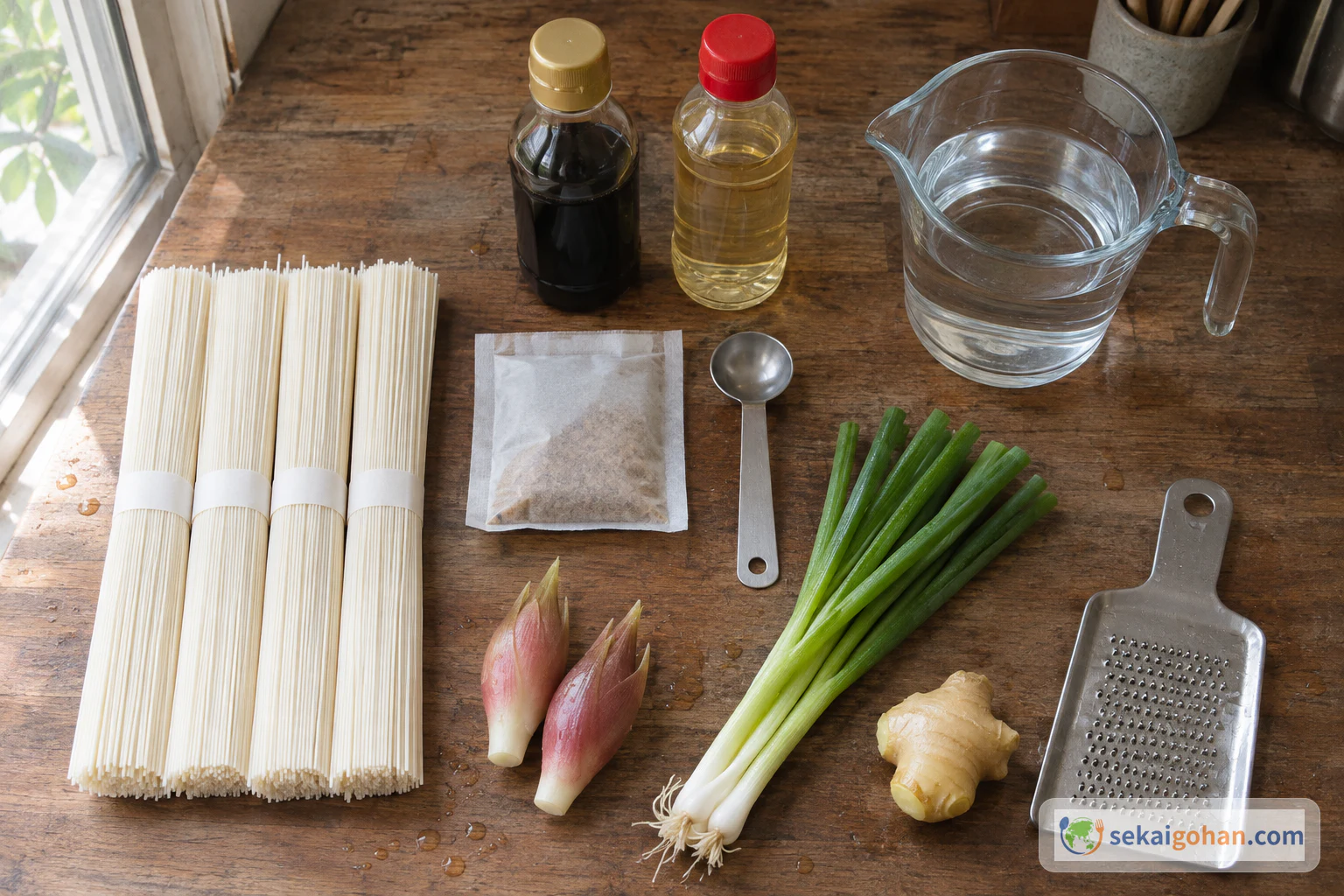
Bundle weight differs from brand to brand. In top-grade hand-pulled sōmen, two bundles weigh 3½ oz (100 g), one serving, so check the weight on the pack rather than counting bundles. The dipping sauce uses equal spoons of soy sauce and mirin, and the garnishes are up to you.
Use 1 quart (1 L) of boiling water for every 3½ oz (100 g) of dry noodles. In too little water the noodles cannot circle, the temperature drops when they go in, and they stick together in clumps.
Sōmen is made from wheat. One Banshū brand lists wheat flour, salt and cottonseed oil, with no buckwheat or egg, and also sells some noodles with sesame. Read the label on the brand of noodles you buy and on the dashi pack for their full ingredients.
Equipment
- A large pot that holds 2 quarts (2 L) of water with room to boil
- A colander that fits into your ice-water bowl
- A large bowl for ice water
- A small saucepan for the sauce
- Measuring spoons
- A kitchen timer
- Cooking chopsticks
- A covered container for chilling the sauce
Choosing and Substituting
Look for hand-pulled sōmen (tenobe sōmen) at a Japanese grocer or online. The production region on the pack tells you something: Shimabara's noodles are firm and hold up in a simmering pot, which suits hot broth. A pack marked hine has been aged for an extra year in a dedicated warehouse. Hiyamugi is the nearest swap; the strands are thicker and softer, so the dish turns gentler and less springy.
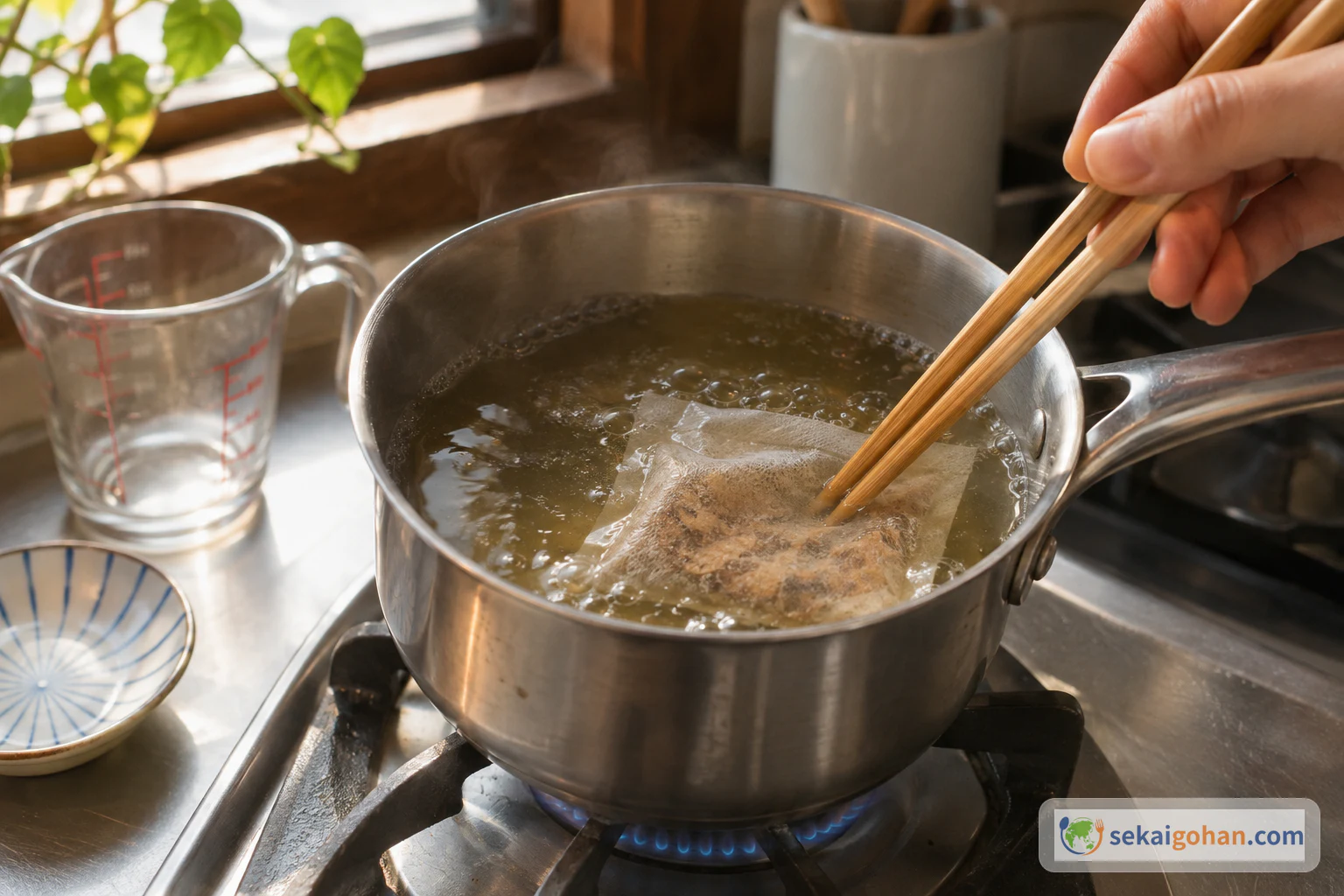
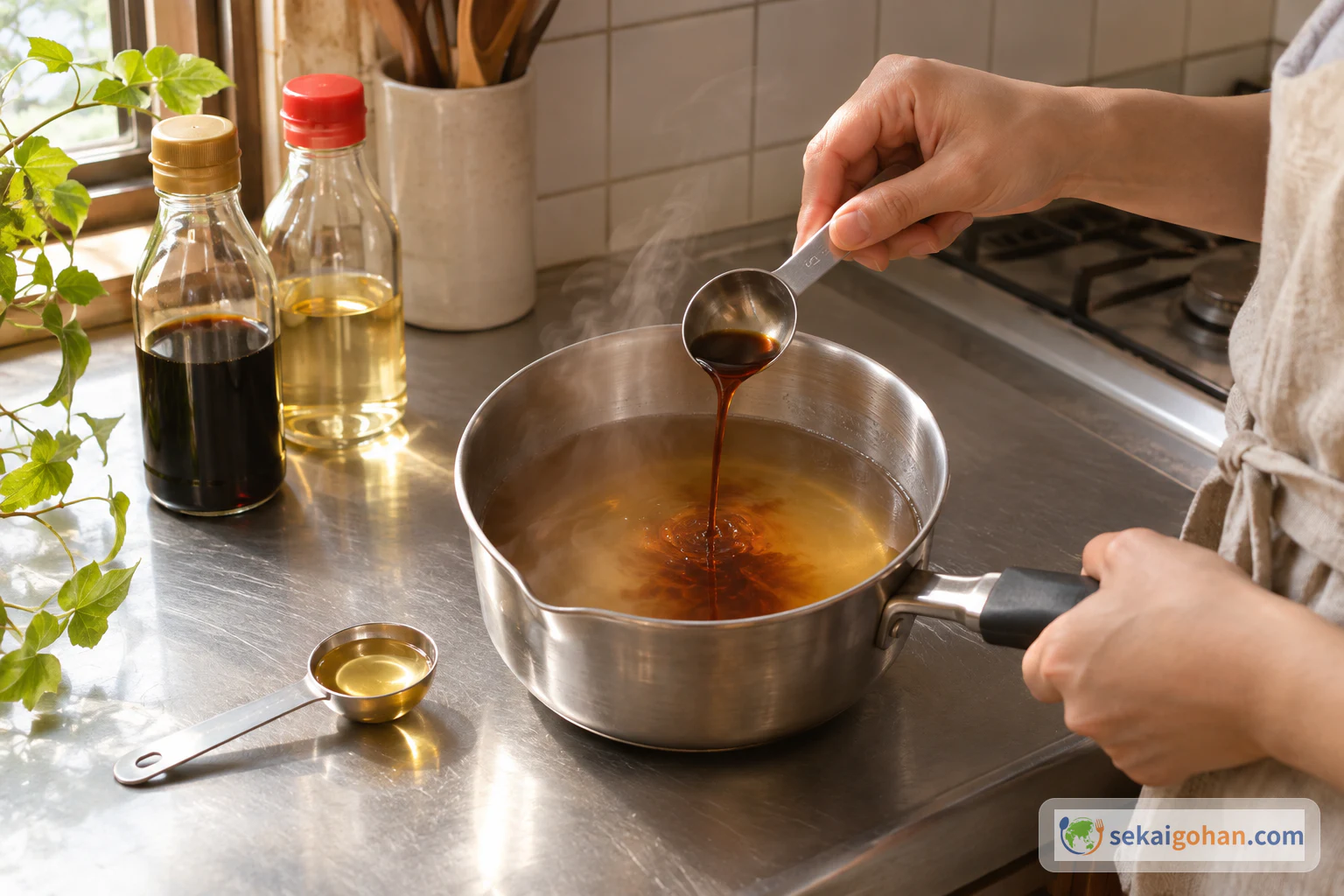
A dashi pack is the easiest way to the sauce. The kind of bonito in the pack changes how the aroma rises. If you make dashi from bonito flakes, kombu or granules instead, use the amounts on that product's label. Light soy sauce (usukuchi), which Nara uses for nyumen, gives a paler sauce that can be just as salty or saltier, so add it a little at a time and taste. Sugar and sake can stand in for mirin, but the character of the sweetness changes, and so does the alcohol content.
For the garnishes, shiso leaf or yuzu peel can replace myoga and steer the aroma somewhere new, and sliced white leek shifts the balance of sharpness and sweetness. Garlic in place of ginger changes the dish too much. What keeps sōmen tasting like itself is the springy bite of a fine noodle, a clear dashi dipping sauce and fresh aromatic garnishes; hold onto those three and the rest can follow your shopping.
Method
The whole meal takes about 20 minutes. The noodles are steps 1 to 4 and the sauce is steps 5 to 7. The sauce needs time to cool, so do steps 5 to 7 first and boil the noodles just before you sit down. Once the noodles hit the water, everything to the ice bath happens in a few minutes, so put the colander in the sink and fill the ice-water bowl before you start.
Fine noodles turn from springy to soft in seconds, and the color barely changes. Set a timer for every batch, and pull the noodles when it rings.
A large pot of boiling water foams up fast once the noodles go in. Keep your face back, lower the heat if the foam rises toward the rim, and pour into the colander slowly, away from your body.
When It Goes Wrong
| What you see | Why | What to do |
|---|---|---|
| Noodles clump together, or taste floury and dry in the middle | Too little water, undercooked, or heat too low to keep them moving | Use 1 quart (1 L) per 3½ oz (100 g), keep the noodles circling after the water returns to the boil, and time them |
| Noodles are soft and mushy | Overcooked | Treat 2 minutes as the limit; cook noodles for nyumen or stir-fries shorter |
| Strands stick together in bunches | Bands left on, or noodles not loosened after going in | Untie every bundle before the water boils and loosen the noodles once with chopsticks |
| Sauce tastes weak or harsh | Dashi simmered too briefly, or spoons not level | Use level 1 tbsp (15 ml) measures, simmer the full 3 to 5 minutes, and when you adjust, keep soy and mirin in equal parts |
| Noodles go limp and swollen at the table | Left standing after rinsing, or sauce served warm | Boil just before eating, finish in ice water and keep the sauce in the refrigerator until serving |
Serving, Variations and Storage
On the table
Chilled sōmen is a meal by itself on a hot afternoon. Set a bowl of noodles, a cup of sauce and a plate of garnishes in front of each person, and refill the noodles from a shared bowl. For a gathering, make it nagashi sōmen: run cold water down a split bamboo trough in the garden, drop small bundles of cooked noodles in at the top and let everyone catch them with chopsticks as they pass.
Nyumen
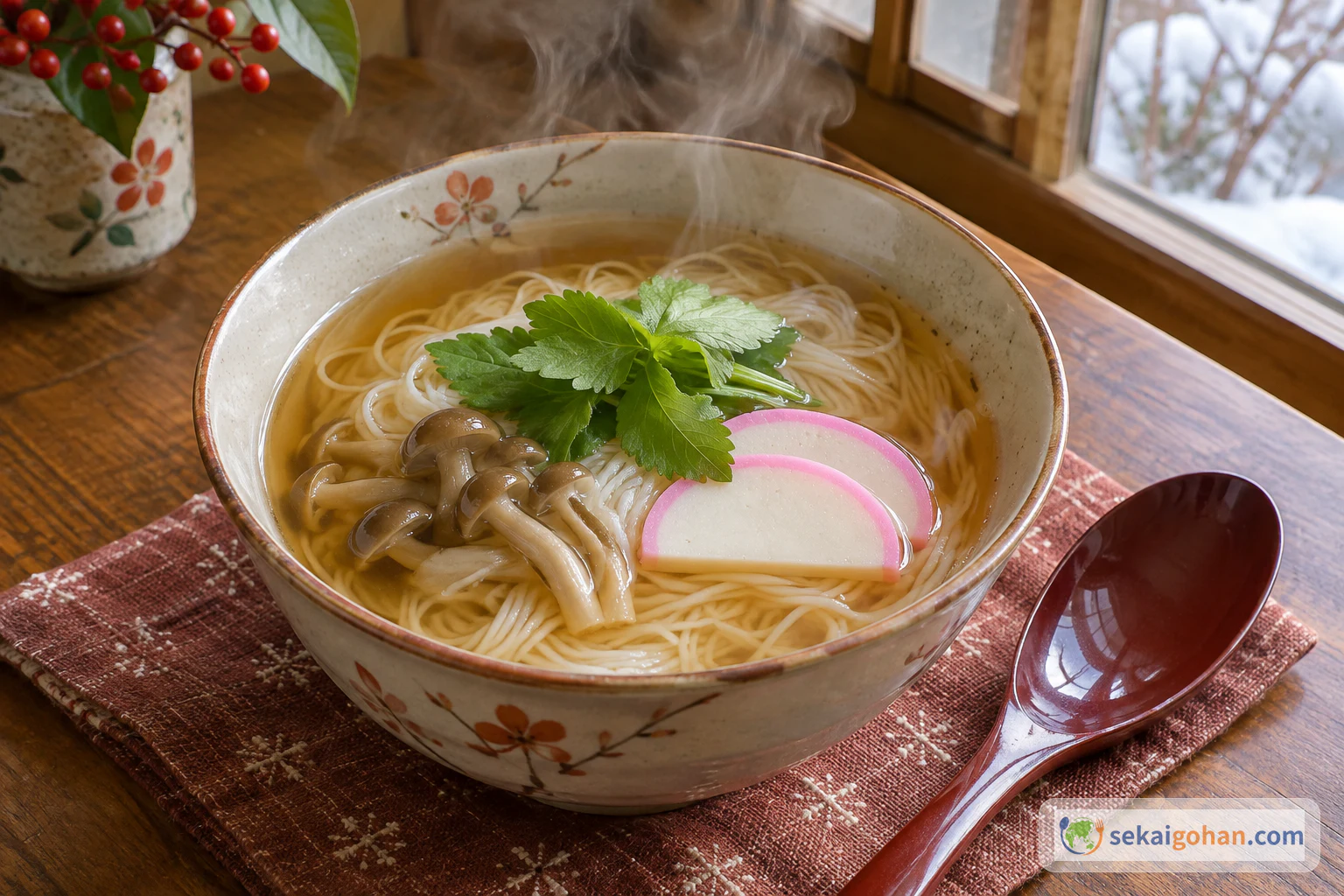
When the weather turns cold, Nara eats the same noodles hot. Boil the noodles for 1 to 1½ minutes in a separate pot from the broth, rinse them under running water, then drop them into hot dashi and bring it just back to a simmer. Season the broth with light soy sauce, sake and salt to taste, and top it with shimeji mushrooms, slices of kamaboko fish cake and mitsuba. Boiling the noodles in their own pot keeps their salt and starch out of the broth, so it stays clear.
Sōmin tashiyā
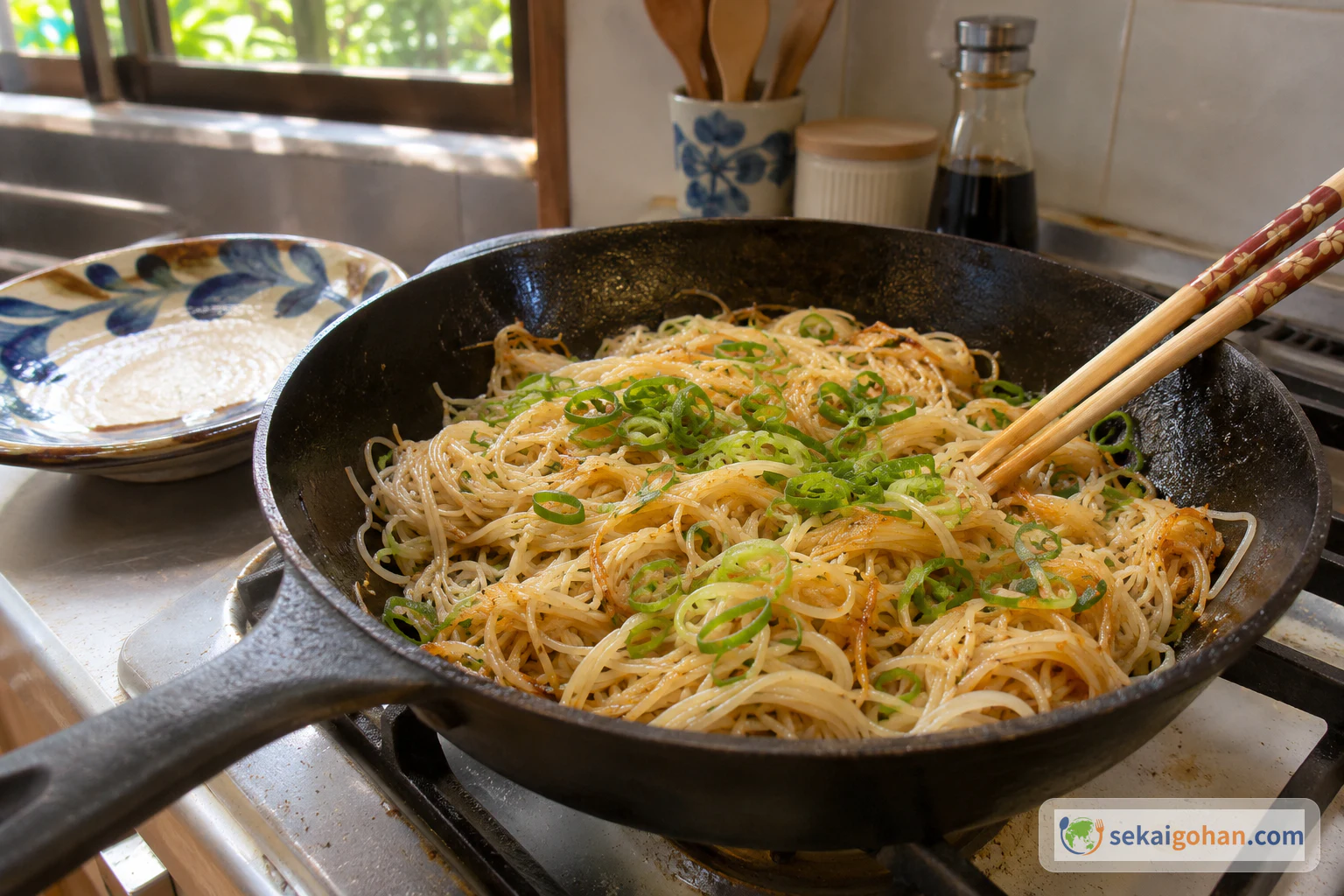
Okinawa's stir-fried sōmen serves four from 2 bundles of noodles, a little scallion, 1 tbsp of oil, and salt and soy sauce as needed. The Okinawan method boils the noodles in plenty of water with a splash of cold water added once at the first boil; when the water boils again, they are done. That is a different approach from the chilled sōmen above, so keep each method with its own dish. Drain and rub-wash the noodles, drain them well, then heat the oil and stir-fry them over high heat, teasing the strands apart with chopsticks. If they start to stick, add a little dashi. Season with salt, add a few drops of soy sauce for aroma and scatter sliced scallion over the top. Households also add shredded carrot, canned tuna, meat or kamaboko.
Warm dipping sauce
On a cool day, heat the sauce and serve it warm with the chilled noodles. The noodles keep their cold, firm bite, while the hot sauce brings the dashi aroma up to meet you.
Storage
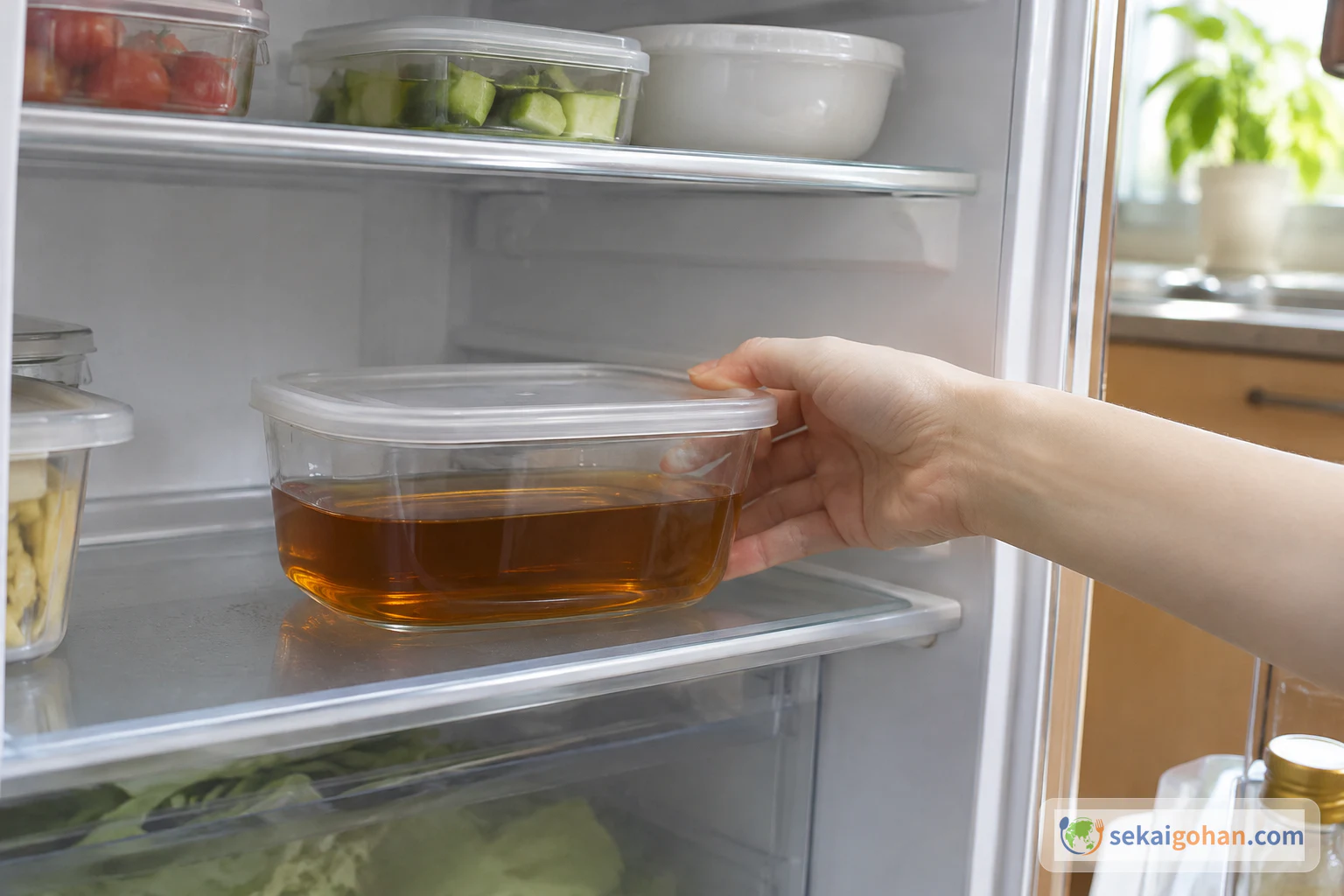
Keep dry sōmen in a sealed bag or container, away from direct sun, heat, humidity, insects and strong smells. It keeps a long time at room temperature, and the refrigerator works too. Once a pack is open, use it soon. If you boiled too much, drain the leftovers well, put them in a dish, cover with plastic wrap, refrigerate and eat them the same day if you can. Cool the dipping sauce, then keep it covered in the refrigerator.
Frequently asked questions
What is the difference between sōmen and hiyamugi?
Under Japan's standard for hand-pulled dried noodles, any noodle under 1.7 mm (about 1/16 inch) across can be sold under either name. In practice, people choose by thickness and texture: hiyamugi is the thicker, softer one, and sōmen the finer one with more spring.
Does rinsing really take salt out of the noodles?
Yes, and a lot of it. In top-grade hand-pulled sōmen, 3½ oz (100 g) of dry noodles carries about 5.7 g of salt; after boiling and rub-washing, it holds about 0.6 g. Most of that salt is lost in the pot water and the rinse.
What does "hine" on a package mean?
Hine noodles have been aged for an extra year in a dedicated warehouse after they are made. Follow the cooking directions on the pack.
How much do the noodles grow when cooked?
A great deal. One serving of top-grade sōmen, 3½ oz (100 g) dry, weighs about 10½ oz (300 g) after boiling. Two bundles per person looks small in the pack but fills a bowl.