Ingredients and steps on one page. Print it, or choose “Save as PDF” in the print dialog.
Sekai Gohan
Sumeshi: Japanese Sushi Rice with Rice Vinegar and Kombu
Ingredients
| Ingredient | Amount | Role |
|---|---|---|
| Japanese short-grain white rice (kome) | 2 go (2 rice-cooker cups) | The body of the dish |
| Water | 2 go (2 rice-cooker cups) | Cooking water |
| Dried kombu kelp (konbu) | a 2-inch (5 cm) piece | Gives the rice a gentle savoury depth as it cooks |
| Rice vinegar (komezu) | 4 tbsp | Sourness, the main flavour of the seasoning |
| Sugar | 2 tbsp | Sweetness and shine |
| Salt | 1 tsp | Sharpens the outline of the flavour |
Steps
1Rinse the rice
Put the rice in a large bowl and cover it with cold water. Stir gently with your fingertips, more of a swirl than a scrub, so the grains stay whole. Pour off the cloudy water and repeat with fresh water. Stop when the rinse water is clearly lighter than the first milky bowl.
2Drain in a sieve
Tip the rice into a fine-mesh sieve set over a bowl. Leave it for 30 minutes to 1 hour. Draining means the 2-go water measure is close to all the water the rice cooks in. Skip it, and extra water clinging to the grains makes the finished rice sticky. The rice is ready when the drips have stopped and no water stands among the grains.
Give draining its full timeMost sticky sumeshi starts here. The cooker cannot tell your measured water from the water left on the rice, so drain the rice fully before you measure the water.
3Cook with kombu on the normal setting
Put the drained rice in the rice cooker's inner pot and add 2 go of water. Wipe the kombu lightly with a damp cloth, without rinsing it, and lay it on top. Cook on the normal setting. Your cooker decides how long it takes. Leave it alone until it signals done.
4Mix the seasoned vinegar
While the rice cooks, put the rice vinegar, sugar and salt in a small bowl or jug. Stir until the sugar and salt have fully dissolved. Keep it near where you will turn out the rice. Hold the jug up to the light: it should be clear all the way to the bottom, with no white layer or grit.
5Turn out the rice and pour the vinegar
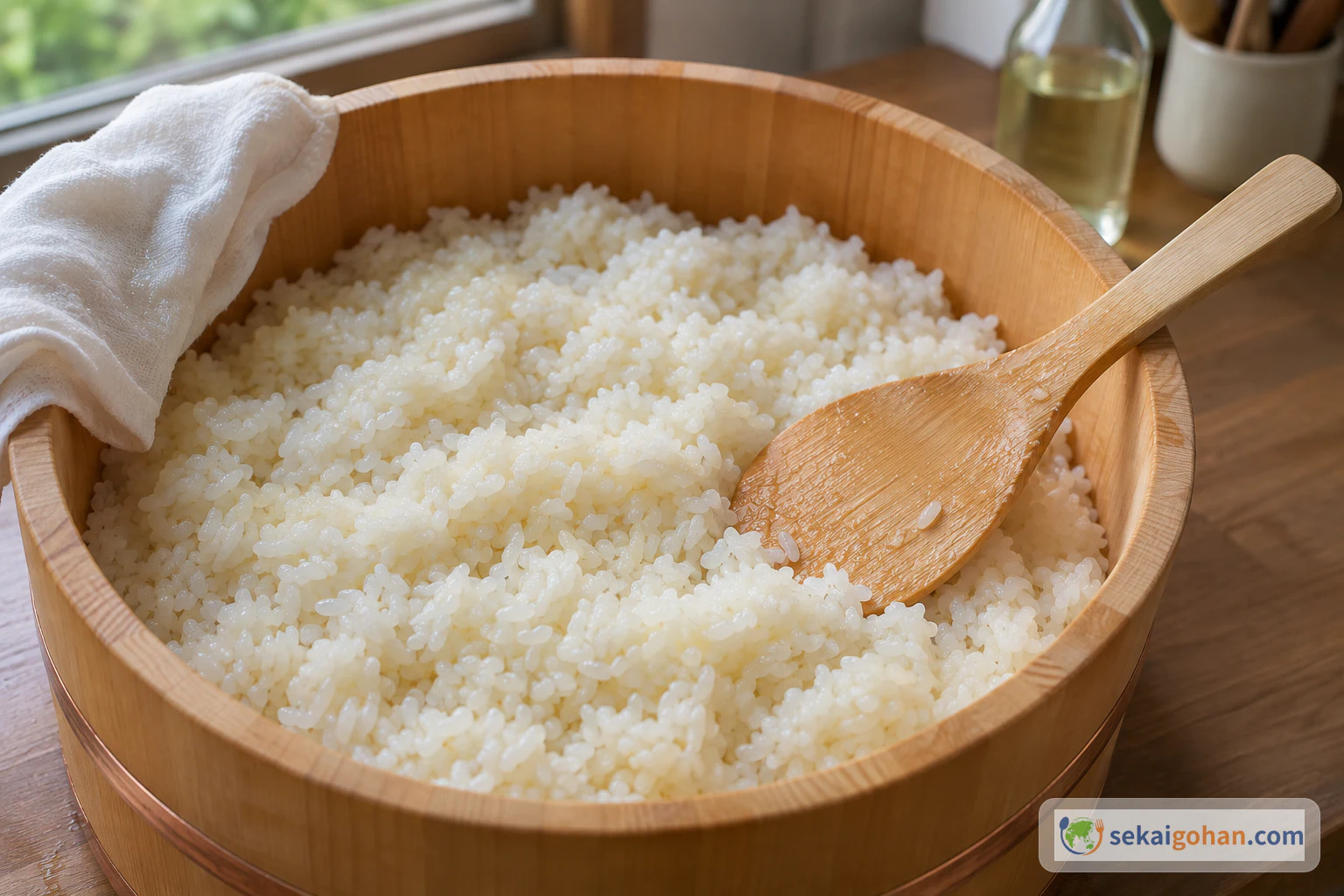
When the rice is done, lift out the kombu and set it aside. Turn the hot rice into the wide bowl or hangiri right away and spread it loosely. Pour the vinegar mix over it in a circle so it reaches the whole surface, not one spot. Leave it for 1 minute so the vinegar can work in.
6Cut through the rice and fan it
Hold the paddle on its edge and slice through the rice in cutting strokes, turning it over from the bottom as you go. Fan with your other hand the whole time so steam is driven off. Cutting keeps the rice from turning sticky, while pressing or stirring in circles crushes the grains into paste. Stop when every grain shines and the rice has lost its first heat, warm to the touch but no longer hot.
Cut, don't stirThink of the paddle as a blade, not a spoon. Short slicing strokes and steady fanning give separate, glossy grains. Each round stir smears starch between them.
7Cover with a damp cloth until you use it
Wet a clean cotton cloth with water and wring it out hard. Lay it over the rice, with the paddle beside the tub. The cloth stops the surface from drying while you get fillings or toppings ready. Use the rice soon. The surface under the cloth should stay moist and shiny, with no hard crust.