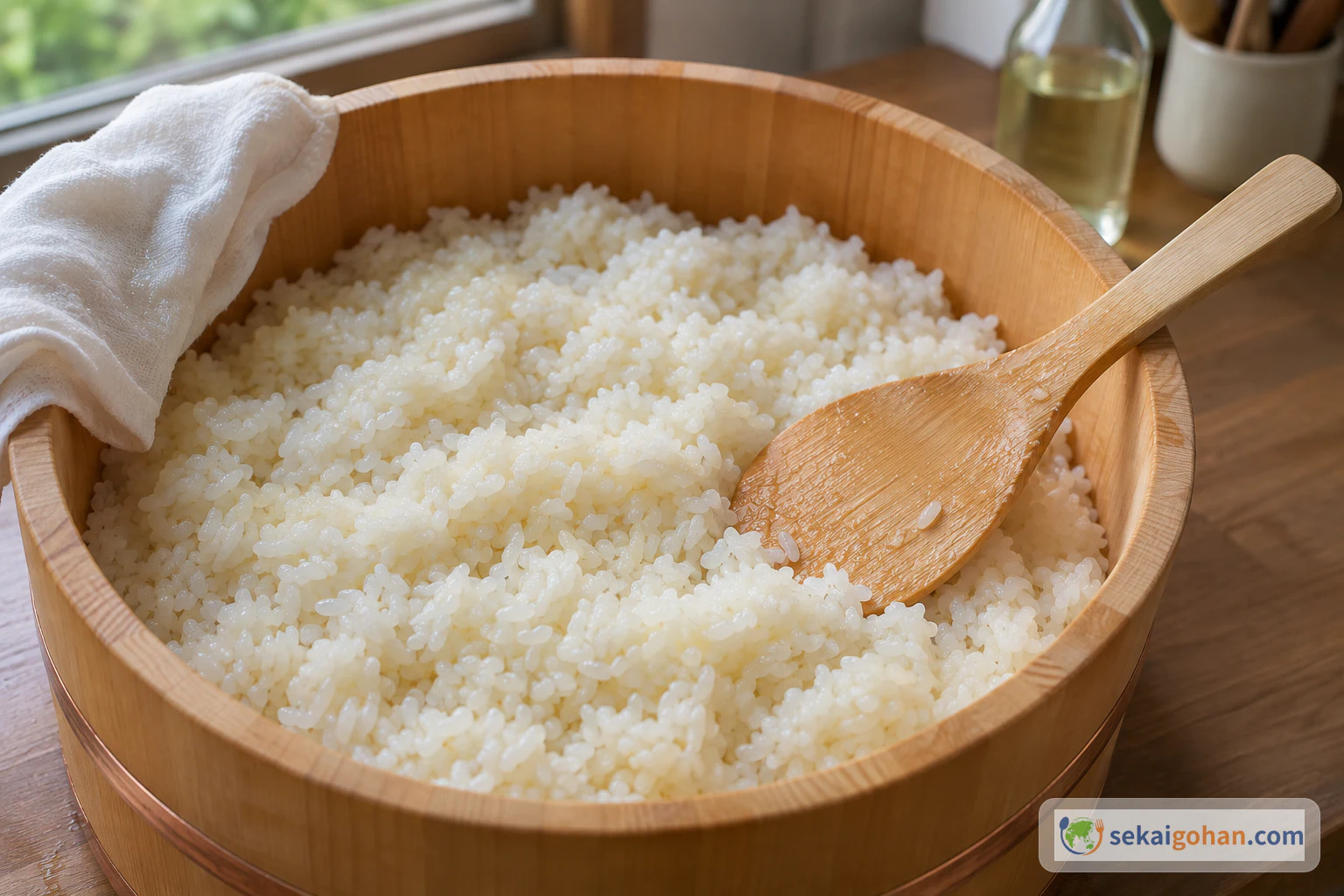
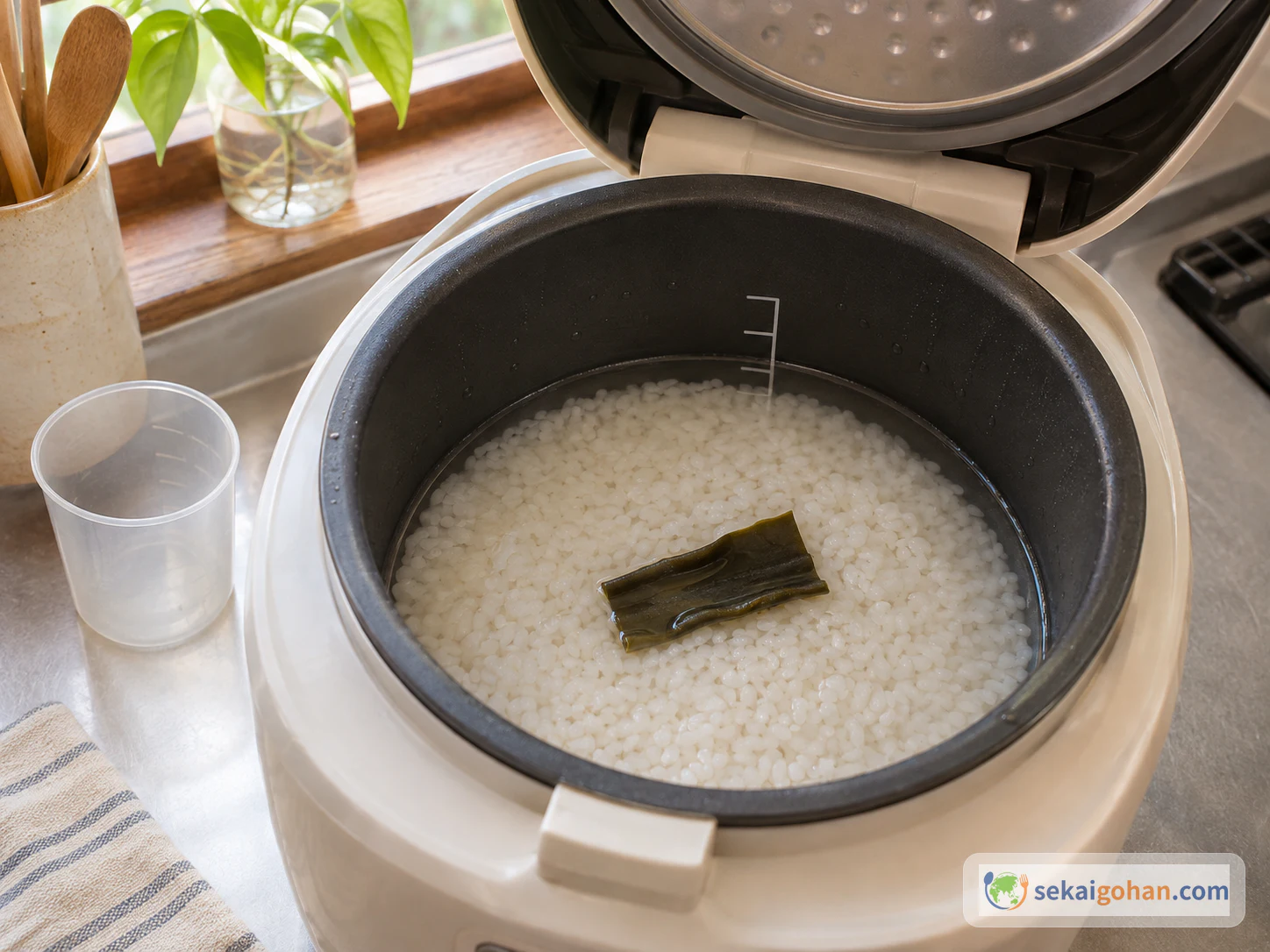
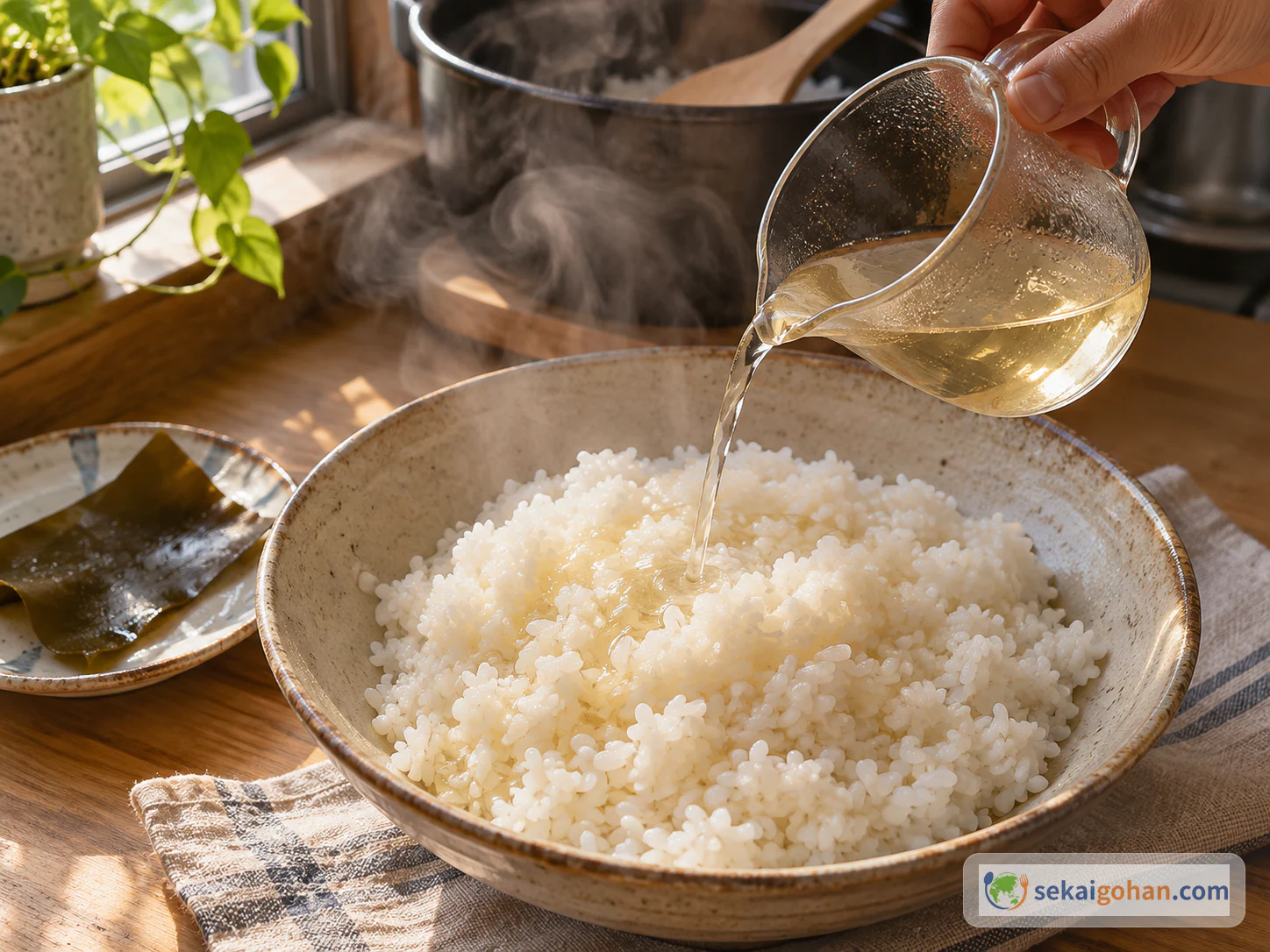
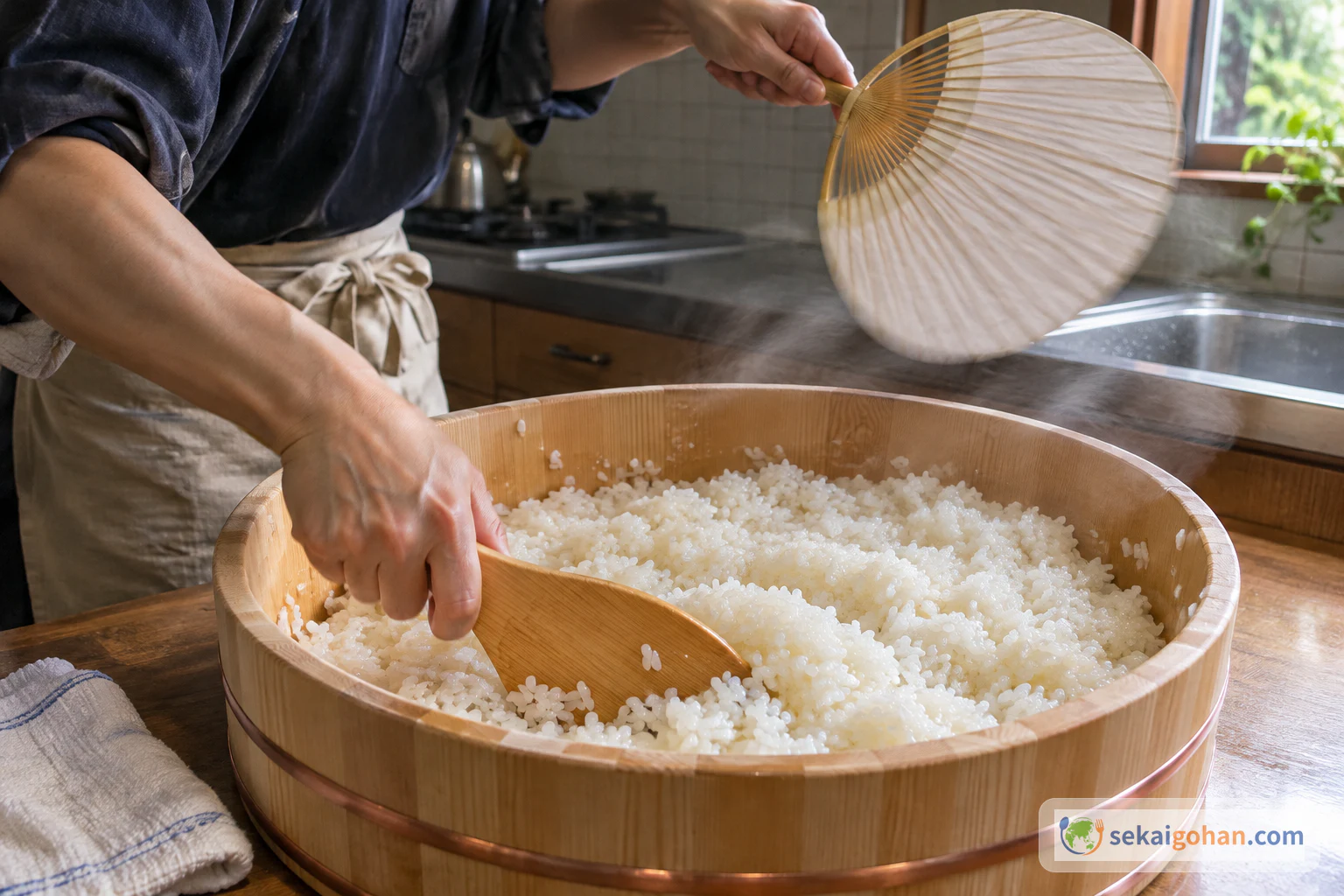
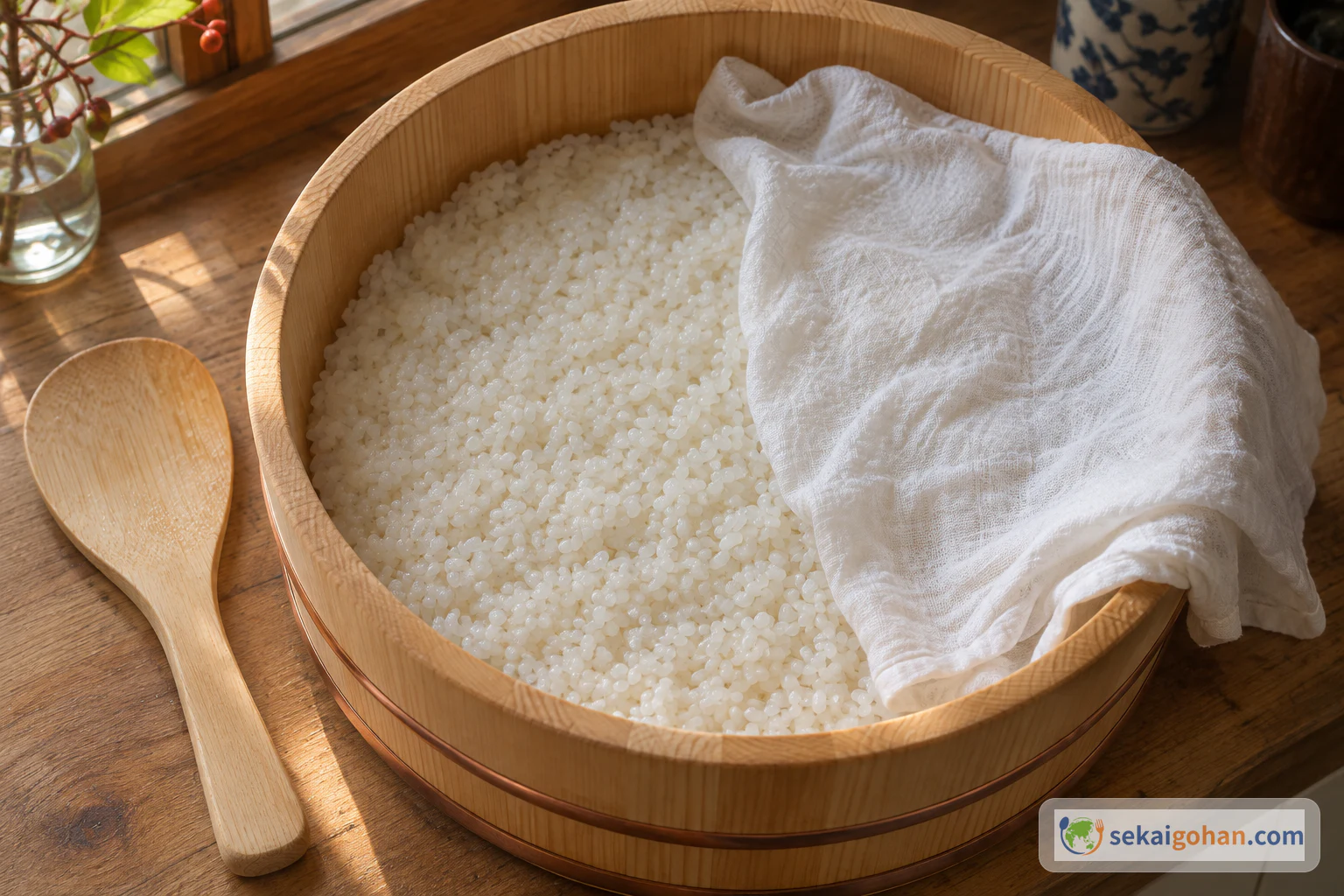
The rice cooker clicks off and you lift out the kombu. Then the hot rice goes into a wide bowl, and steam rolls up off it. You pour the seasoned vinegar over it in a slow circle, and for a moment the kitchen smells sharp and clean. Then the paddle starts cutting through the rice while the fan moves in your other hand, and the grains begin to shine. Sumeshi is Japanese rice seasoned with rice vinegar, sugar and salt, and it sits under nigiri, rolls, chirashi, inari pockets and hand rolls. Good sumeshi is tart first, lightly sweet, with salt at the edge, and each grain stays separate and glossy instead of clumping into paste.
A Bowl of Rice That Became the Base of Sushi
Sumeshi has carried different weight at different times. Nigiri from the Edo period is usually described as having about three times the rice of a piece today. Back then the rice was what filled you, and the topping came second. Nigiri began at street stalls. When sushi makers moved into proper shops, they kept the habit of shaping each piece at a counter in front of the customer. Over time the balance flipped, and today the topping gets the attention while the rice holds it up. The rice still decides whether a piece of sushi works. One long-running Tokyo shop, open since 1879, still seasons its rice with nothing but red vinegar and salt.
The same seasoned rice changes across regions. Around Tokyo, people usually lay toppings such as sashimi over a bed of sumeshi and call it chirashizushi. Around Osaka, the usual style is to chop the fillings small and mix them into the rice, and that dish is called barazushi. In Osaka, leftover barazushi gets steamed the next day and eaten warm as mushizushi, also called nukuzushi. That is one way sushi rice is served warm. Whether toppings go on top or get folded in, every one of these dishes starts with a bowl of rice like this one. You can read more about the wider table in Japan.
Sumeshi (酢飯) means "vinegar rice." It is also called sushi-meshi (すし飯), "sushi rice," and in English it usually goes by sushi rice. The words name the seasoned rice itself, before any fish, egg or vegetable goes near it.
Sumeshi is easiest to understand next to its neighbours. Korean gimbap rice is seasoned with sesame oil and salt and has no vinegar at all. Japanese sumeshi relies on vinegar, sugar and salt, added while the rice is hot and worked in until the grains shine.
Ingredients (serves 3 to 4)
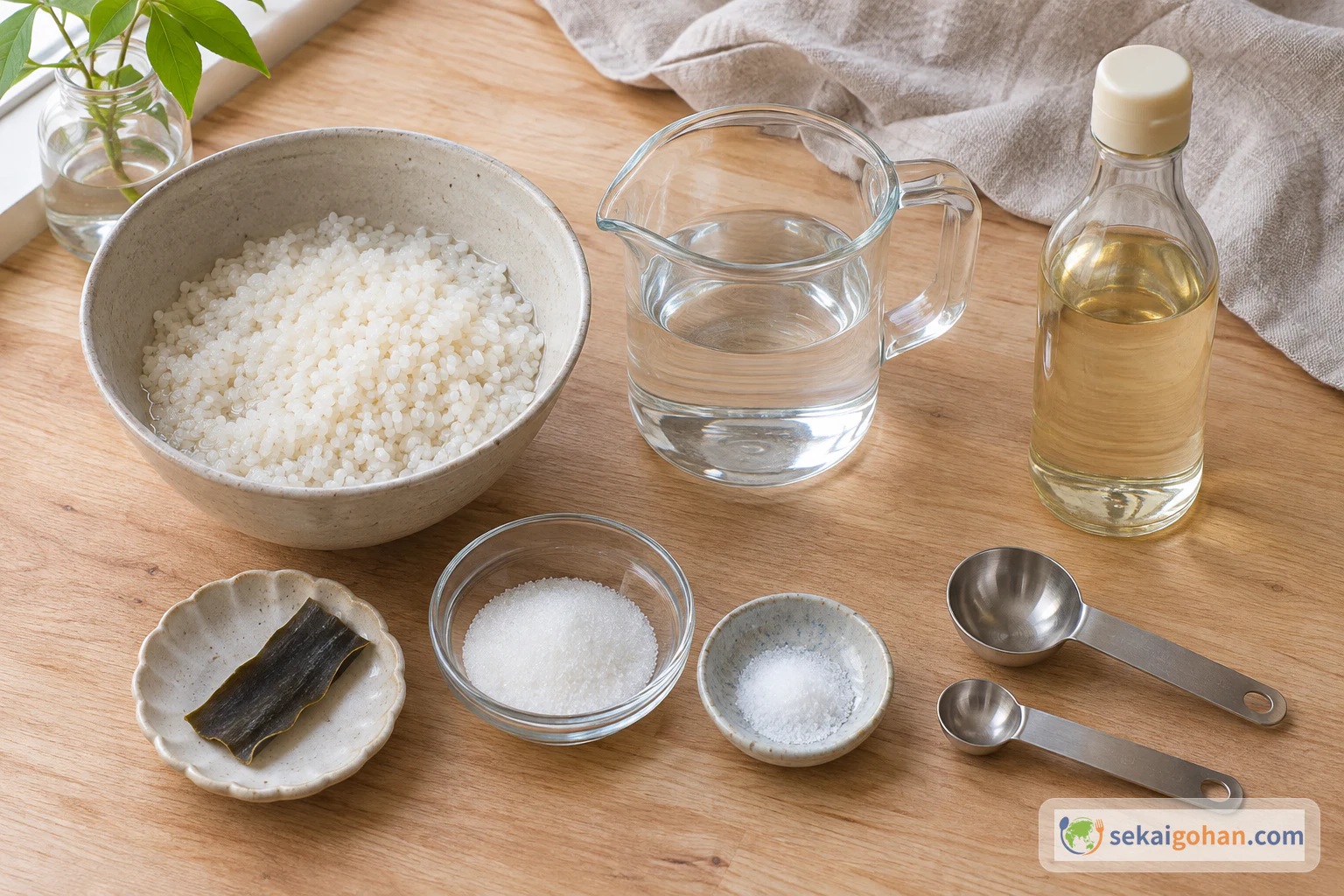
The rice and water are both measured in go, the Japanese rice-cooker cup. Use the same cup for both. Mix the three seasonings together before the rice finishes cooking.
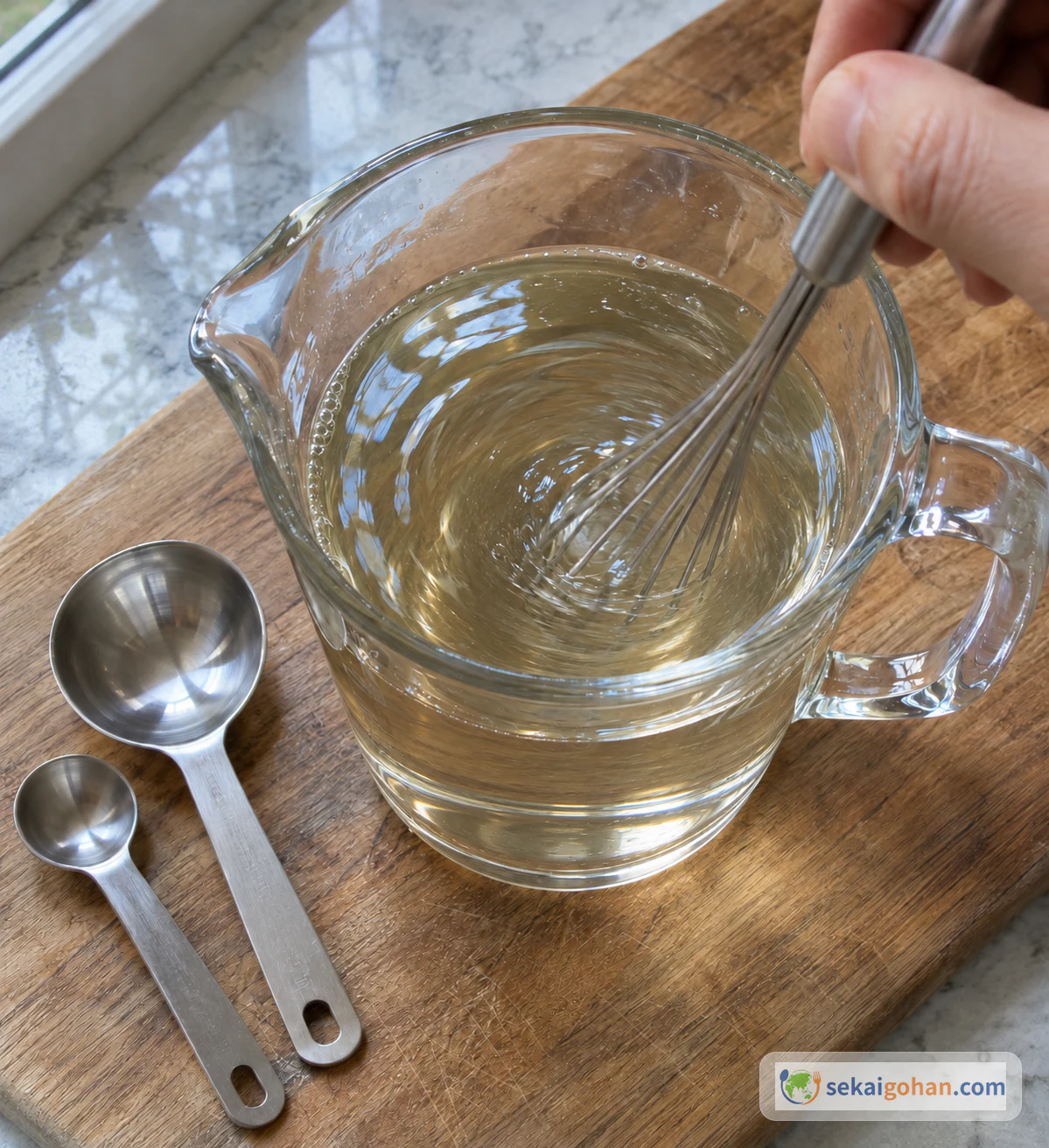
Stir the vinegar, sugar and salt together while the rice is still cooking, until the liquid is clear to the bottom. Undissolved sugar and salt land on the rice in gritty patches. Then you have to keep mixing to spread them, and that extra mixing crushes the grains.
Rice, rice vinegar, sugar, salt and kombu contain none of the major food allergens. Fillings, toppings and bottled sushi vinegar are a different matter. Read the label of each product you add, including any shared-facility statement.
Equipment
- Rice cooker with its inner pot and rice-cooker cup
- Large bowl and fine-mesh sieve
- Small bowl or jug and a small whisk or spoon
- Measuring spoons (tablespoon and teaspoon)
- Wide bowl or wooden hangiri (sushi rice tub)
- Rice paddle (shamoji)
- Uchiwa fan, or any flat hand fan
- Clean cotton cloth
Choosing Vinegar, and the Other Proportions You Will Meet
What you need to keep is short. Season the rice with rice vinegar, sugar and salt, add the vinegar while the rice is hot, mix with a cutting stroke so the rice never turns sticky, and fan it until it shines. If you keep those four, the rice tastes like sumeshi anywhere. Rice vinegar is mild and clean with some depth behind it, and it suits sushi well. You can use grain vinegar or pure rice vinegar instead at the same amount, but the character of the sourness changes, so the rice will not taste the same.
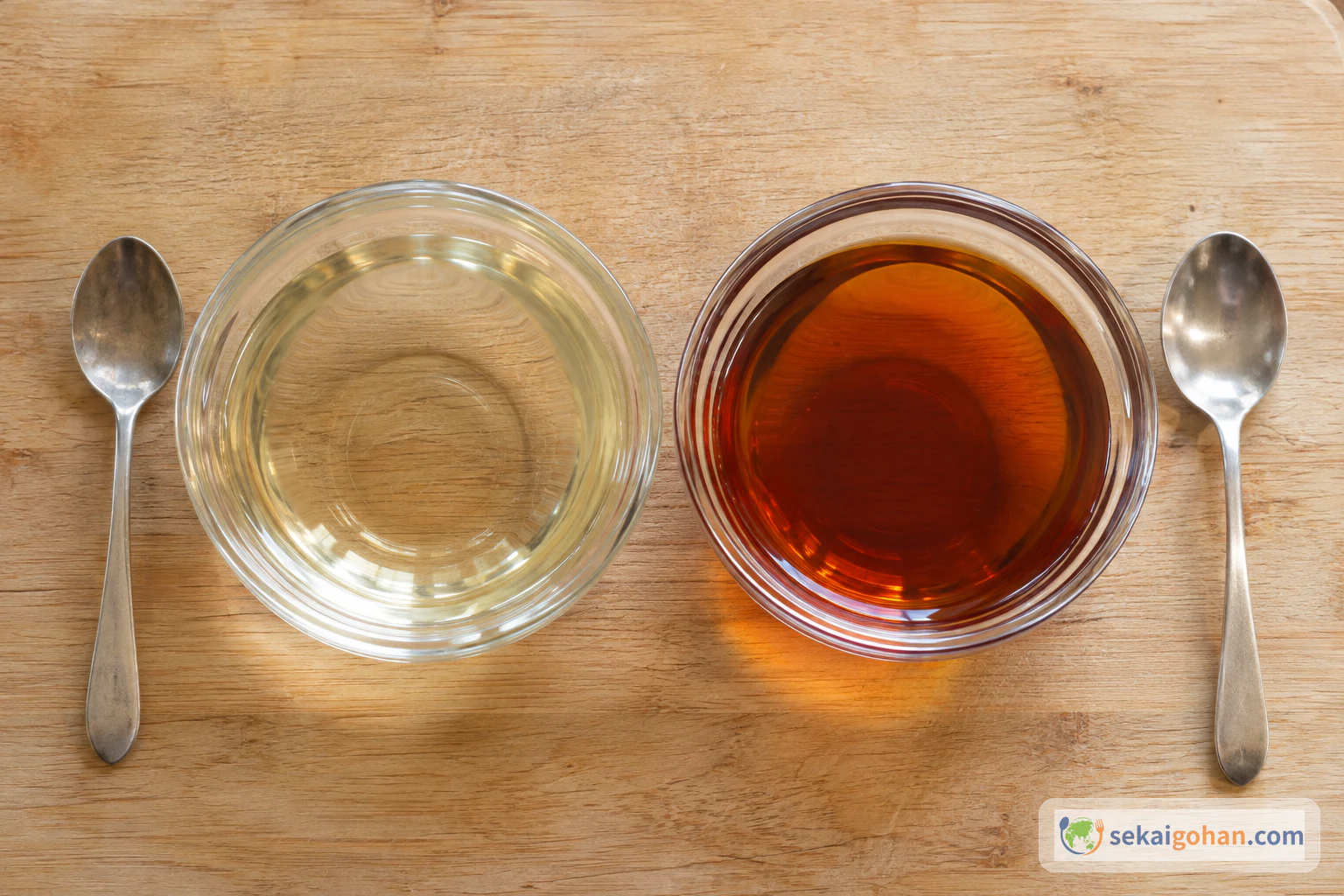
Red vinegar (akazu) is brewed from sake lees and belongs to the Tokyo nigiri tradition. It is a separate recipe from this one, so don't swap it in. The Tokyo red-vinegar rice uses 4 tbsp red vinegar, only ½ tsp sugar and 1 tsp salt for 2 go of rice. The rice is cooked with 2 tbsp sake and a 4- to 6-inch (10–15 cm) piece of kombu, with the water a little below the 2-go line. That rice is darker and much less sweet. Bottled sushi vinegar, sold premixed, saves measuring. Use the amount printed on its label, because each brand has its own sweetness and sourness.
Other proportions in everyday use spread widely:
| Version | Rice | Vinegar | Sugar | Salt | Extra |
|---|---|---|---|---|---|
| This recipe | 2 go | Rice vinegar 4 tbsp | 2 tbsp | 1 tsp | 2-inch (5 cm) kombu, water 2 go |
| Tokyo red vinegar | 2 go | Red vinegar 4 tbsp | ½ tsp | 1 tsp | Sake 2 tbsp, 4–6-inch (10–15 cm) kombu, water below the line |
| Osaka barazushi | 3 go | Rice vinegar 4 tbsp | 3 tbsp | 1 tsp | Kombu tea ½ tsp |
| Lighter rice vinegar mix | 2 go | Rice vinegar 3 tbsp | 2–3 tbsp | 1 tsp | — |
Why the sugar ranges from half a teaspoon to three tablespoons is not settled. Pick one row and follow it whole. If you average two rows, you lose any way to tell what went right or wrong.
Method
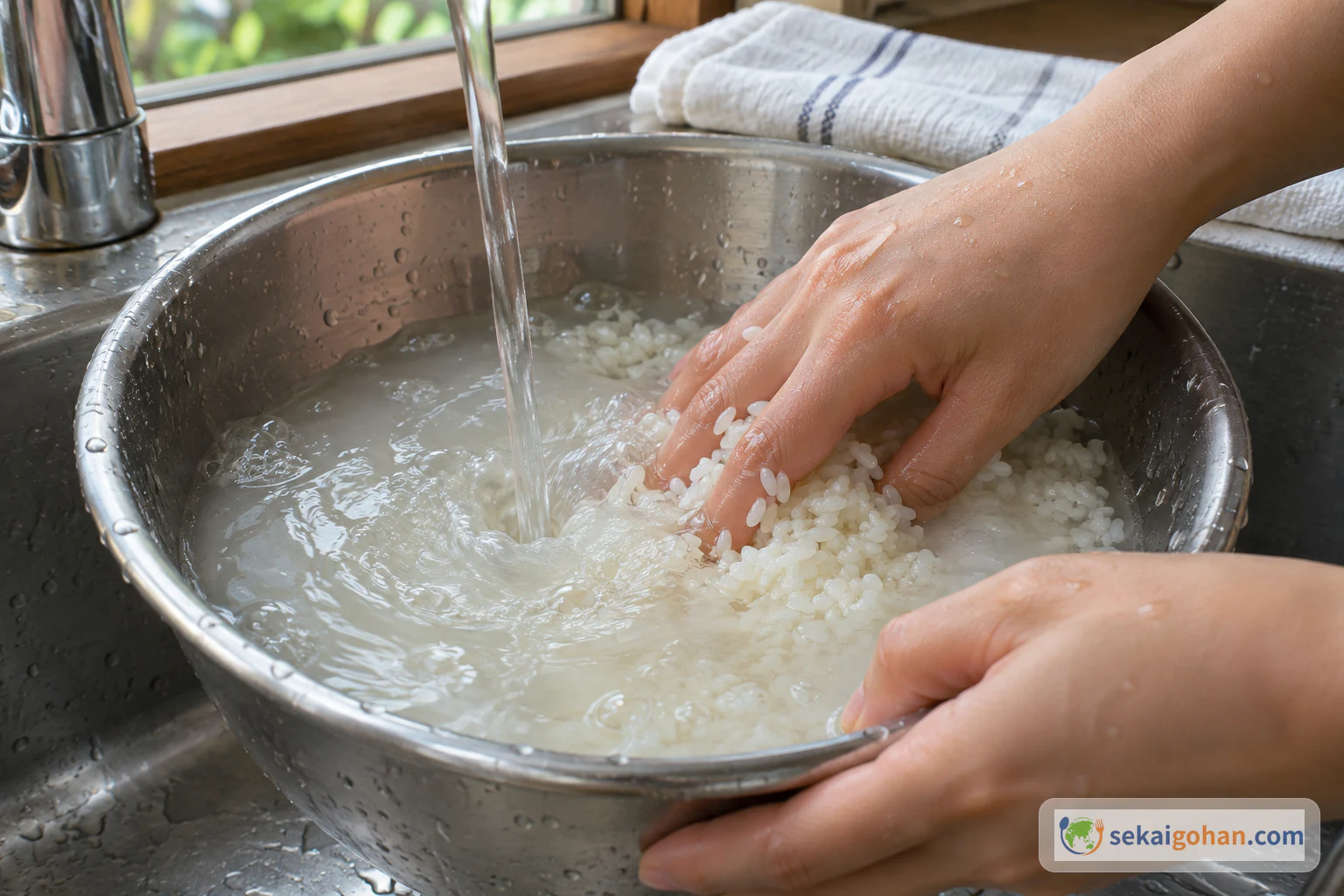
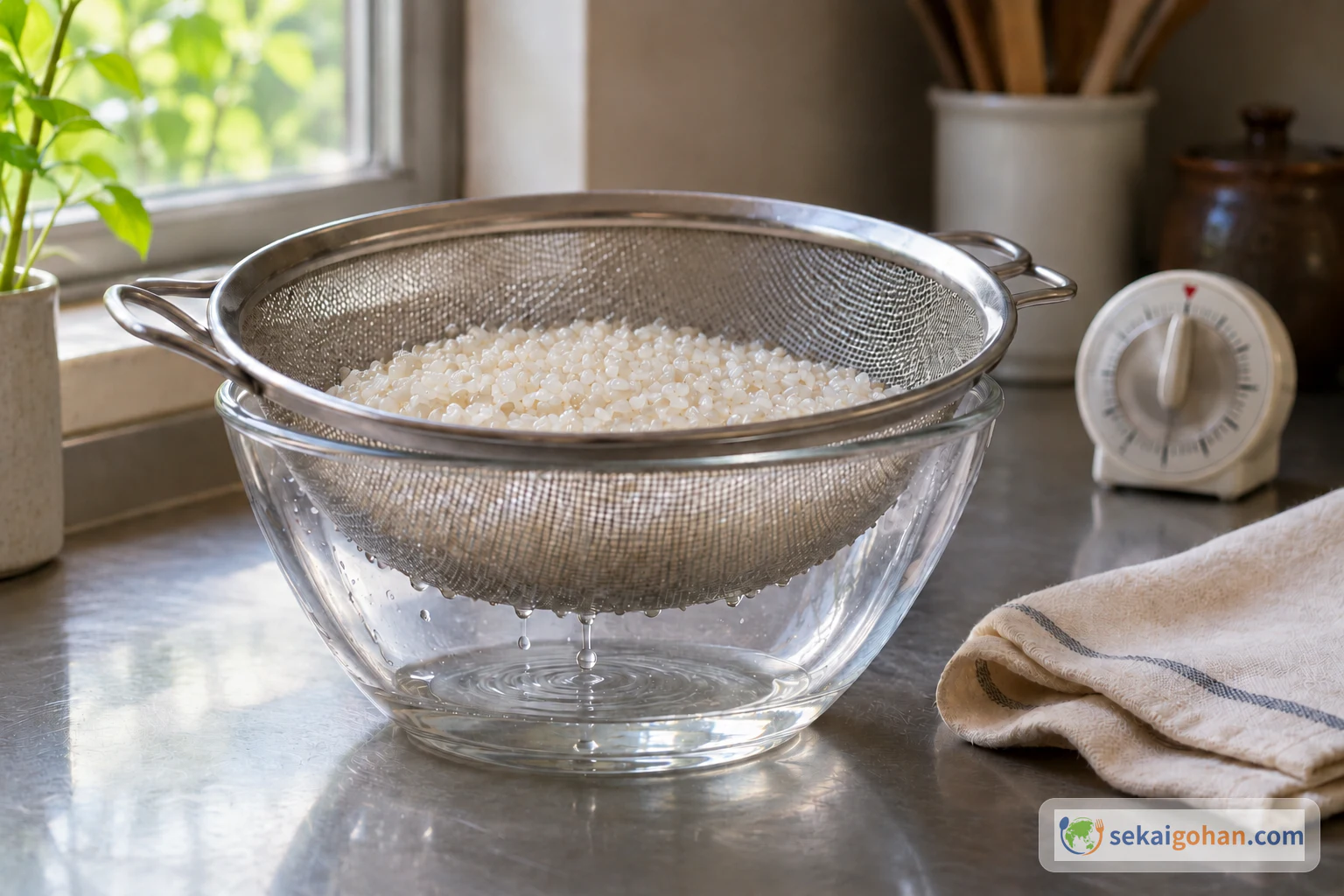
Rinse the rice first and let it drain. The draining is the main hands-off time. Once the rice is cooking, stir the vinegar mix together. The last part moves quickly: the rice goes into the bowl hot, gets the vinegar and 1 minute to soak it up, then the paddle and fan work together until the rice shines.
When It Goes Wrong
| What you see | Why | What to do |
|---|---|---|
| Sticky rice with crushed grains | Drained too briefly, mixed too long, or pressed down with the paddle | Drain for the full 30 minutes to 1 hour. Use only cutting strokes and stop as soon as the rice shines |
| Too sour or too sweet | Amounts taken from two different versions | Make this one exactly as written once. Next time, change only one of the three seasonings |
| Flat taste, or some patches plain and others sharp | Seasoning not dissolved, or vinegar poured in one spot | Dissolve the mix completely first. Pour it in a circle over the whole surface of the hot rice |
| Dry, hard surface | Fanned long after the rice turned glossy, or left uncovered | Stop fanning once the rice is glossy and no longer hot. Keep it under a wrung-out damp cloth until you use it |
Serving, Variations and Storage
At the table
One batch of sumeshi covers several dishes. Lay sashimi or other toppings over it for Tokyo-style chirashizushi. Fold in finely chopped fillings for Osaka-style barazushi. Pack it into fried tofu pockets for inari, or set it out with nori and fillings so everyone rolls their own hand rolls. Keep the rice under its cloth until everything else is ready, then serve it straight away.
Variations
- Red vinegar rice. Follow the Tokyo row in the table above in full, including the sake and the longer kombu. The rice turns beige and is much less sweet.
- Bottled sushi vinegar. Use the label amount in place of the three seasonings. It is quicker, but sweetness and sourness depend on the brand.
- Mixed-in barazushi style. Keep this seasoning and fold chopped fillings through the rice after fanning. The rice and fillings become one dish, and every spoonful tastes the same.
- Warm steamed sushi. In Osaka, refrigerated leftover barazushi is steamed the next day and eaten warm. The rice softens and the vinegar mellows. Only steam rice that went into the fridge promptly.
Storage
Never leave sumeshi sitting at room temperature. Divide what you are not eating into small portions and refrigerate promptly, or hold it at 149°F (65°C) or above, and keep the storage time short. Toxins that bacteria produce in rice left out are not destroyed by heat, so reheating or steaming cannot make that rice safe. Rice balls and sushi are typical sources of staphylococcal food poisoning, because the bacteria live on skin and pass easily to food handled with bare hands. Wash your hands well, and use a clean cloth for covering the rice.
Frequently asked questions
How do I make a smaller batch with 1 go of rice?
Halve everything. For 1 go of rice, use 1 go of water and 2 tbsp rice vinegar, 1 tbsp sugar and ½ tsp salt. Use a smaller piece of kombu as well. The method stays exactly the same, including the 1-minute rest after pouring.
My rice cooker has a sushi-rice water line. Should I use it?
For this recipe, fill to the normal 2-go line and cook on the normal setting. Drained rice plus 2 go of water already gives grains firm enough to take the vinegar. Some regional recipes use the sushi line, and the Tokyo red-vinegar rice is cooked a little below the line. Use those settings only with their own seasonings.
Do I need a wooden hangiri?
A wide bowl works. A wooden hangiri soaks up excess moisture and spreads the rice in a shallow layer, so it cools more evenly and stays less sticky. If you make sushi often, it is worth buying.
Does the vinegar make raw fish safe for hand rolls or nigiri?
No. Vinegar, salt, soy sauce and wasabi do not kill anisakis larvae, which live in fish such as mackerel, horse mackerel, salmon, tuna and squid. Buy fish labelled for raw eating, keep it refrigerated until you serve it, and use a clean knife and board that have not touched other foods. Pregnant people, older adults, small children and anyone with a weakened immune system should avoid raw fish and choose cooked toppings instead. Freezing at −4°F (−20°C) for at least 24 hours kills the larvae, and so does cooking to 158°F (70°C), or 140°F (60°C) for 1 minute.