Ingredients and steps on one page. Print it, or choose “Save as PDF” in the print dialog.
Sekai Gohan
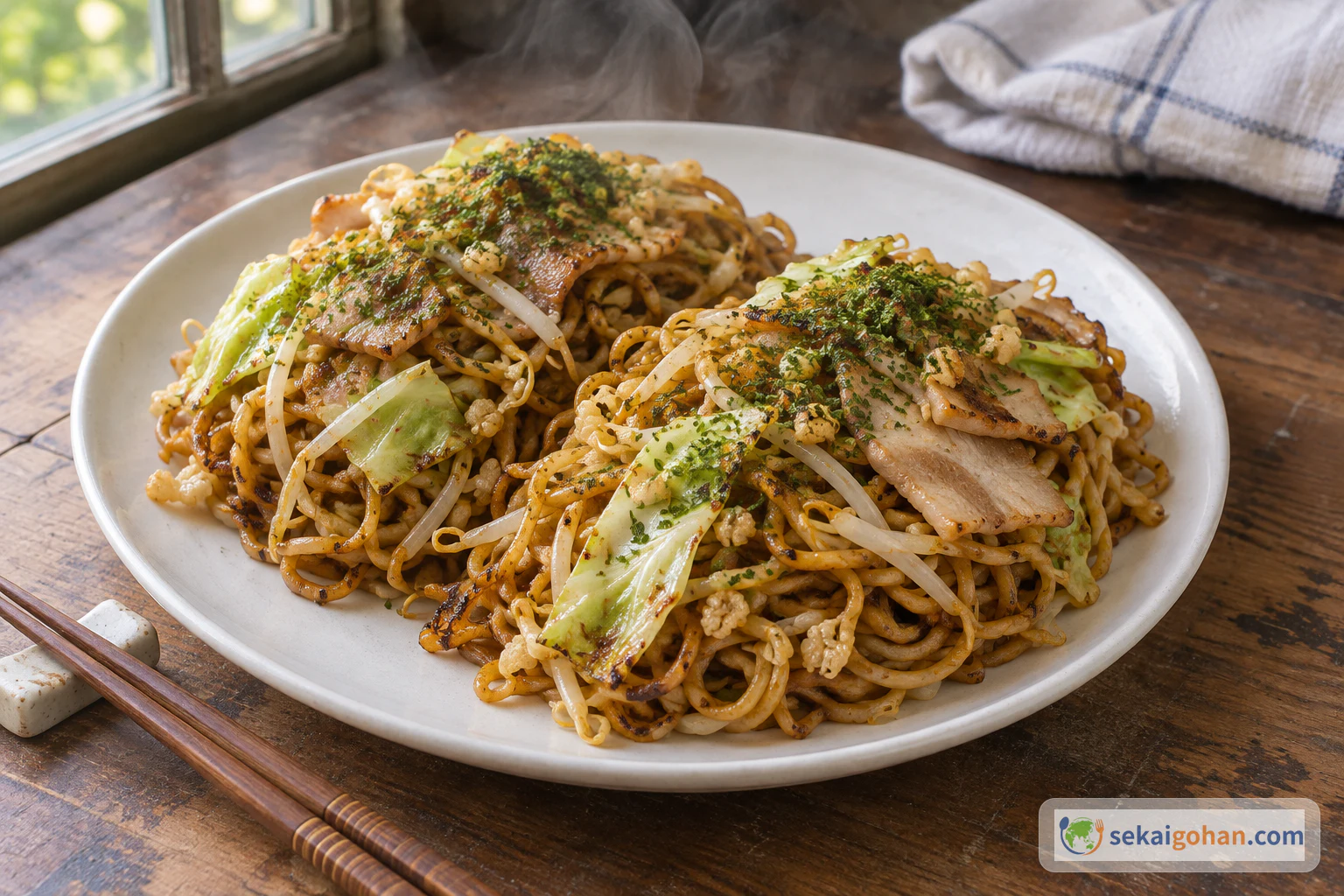
Yaki Soba: Japanese Sauce-Fried Noodles with Pork and Cabbage
Ingredients
| Ingredient | Amount | Role |
|---|---|---|
| Steamed yakisoba noodles (yakisoba-men) | 2 bundles | The base. Fried first to drive off moisture so the strands can take the sauce |
| Cabbage, cut into rough squares | 7 oz (200 g) | Sweetness and bulk |
| Bean sprouts (moyashi) | 3½ oz (100 g) | Crunch and lightness |
| Thinly sliced pork belly (buta bara) | 3 oz (80 g) | Fat and savoury depth |
| Tempura scraps (tenkasu), ideally with squid | ¾ oz (20 g) | Toasty richness and texture |
| Liquid yakisoba sauce | 3½ oz (100 g) | The backbone of the flavour, added last for aroma |
| Aonori (green laver flakes) | to taste | Sea-fresh aroma and colour to finish |
| Red pickled ginger (beni shōga), optional | to taste | Sharp, tart contrast on the side |
Steps
1Cut the vegetables and pork, loosen the noodles
Cut the cabbage into rough squares. Separate the slices of pork belly and cut them into pieces that are easy to eat. Snip the end of each noodle pack and loosen the noodles gently with your hands, working the bundle apart without pulling the strands until they snap. Clumps that go into the pan whole trap moisture inside and turn wet once the sauce goes in. The noodles are ready when you can lift them with chopsticks and they fall apart into single strands.
Raw pork and your boardKeep juices from the raw pork away from the cabbage, sprouts and noodles. Cut the cabbage first, and after cutting the pork wash the knife and cutting board, then pour boiling water over them.
2Fry the noodles alone over high heat
Heat the frying pan over high heat until it is thoroughly hot. Spread the loosened noodles across the pan in an even layer and leave them alone; no pressing or stirring. When the underside has browned in patches, turn the noodles over and fry the other side. The noodles are done when the surface smells toasty and the steam and crackling quiet down, which tells you the moisture has cooked off.
Give the noodles roomTwo bundles need the full surface of a 10- to 11-inch (26–28 cm) pan. In a smaller pan the noodles pile up and steam in their own moisture instead of frying, and that moisture follows them all the way to the plate.
3Cook the pork belly through
Push the noodles to one side of the pan. Lay the pork belly flat in the empty space, with no slices overlapping. Cook until the meat has completely changed colour, the fat has turned translucent and the edges have curled. If you have a thermometer, the centre of the meat should reach 167°F (75°C) and stay there for at least 1 minute. The pork is done when no pink remains anywhere and the fat glistens clear.
4Add the cabbage and bring everything together
Add the cabbage to the pork and stir-fry until it starts to wilt. Then pull the noodles back in and mix everything together. Stop while the cabbage still has some bite; cooked until limp and see-through, it releases water into the pan. The cabbage is ready when it has shrunk to about half its volume and its edges look translucent and glossy with pork fat.
5Add the bean sprouts and tempura scraps
Scatter the bean sprouts and tempura scraps over the pan and toss everything together. Bean sprouts are full of water, so keep this stage short; the sauce follows right away. Stop when the stems turn half-translucent and the thin root tails bend.
6Pour in the sauce and toss for about 30 seconds
Keep the heat high. Pour the sauce around the pan in a circle so it sizzles against the hot metal, then toss so it coats every strand. Keep tossing for about 30 seconds, until the smell turns from sharp and tangy to sweet and toasty. It is ready when the noodles are glossy and no liquid pools at the bottom of the pan.
Sauce last, and shortThe sauce is the final move, not a long simmer. Kept on the heat too long, its aroma fades, the sauce scorches at the edges and the noodles turn dry and crumbly.
7Plate and finish with aonori
Divide the noodles between two plates. Scatter aonori over the top, and set red pickled ginger beside them if you like. The noodles should look moist but hold together, with no liquid running onto the plate. Serve while they are still steaming.