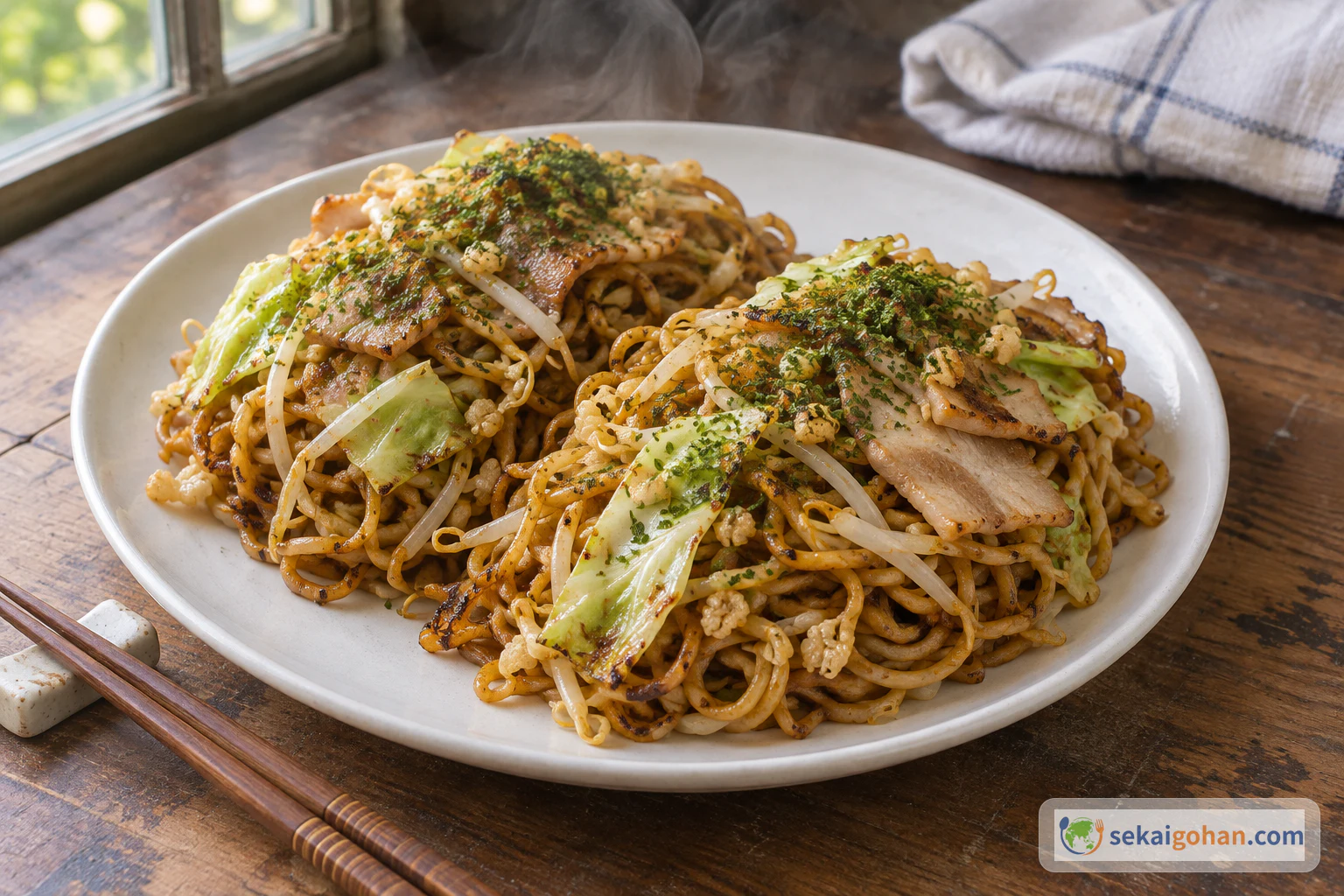
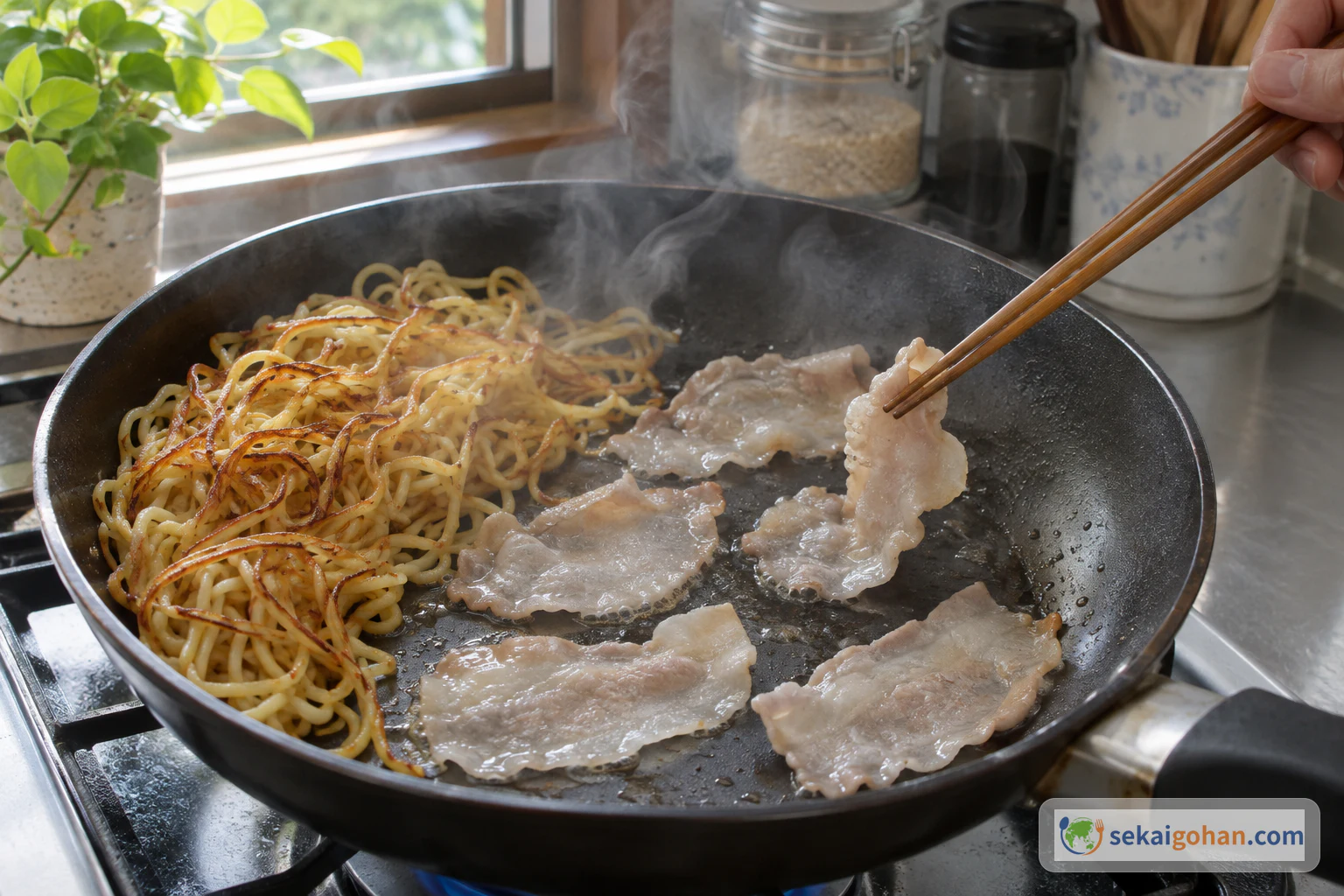
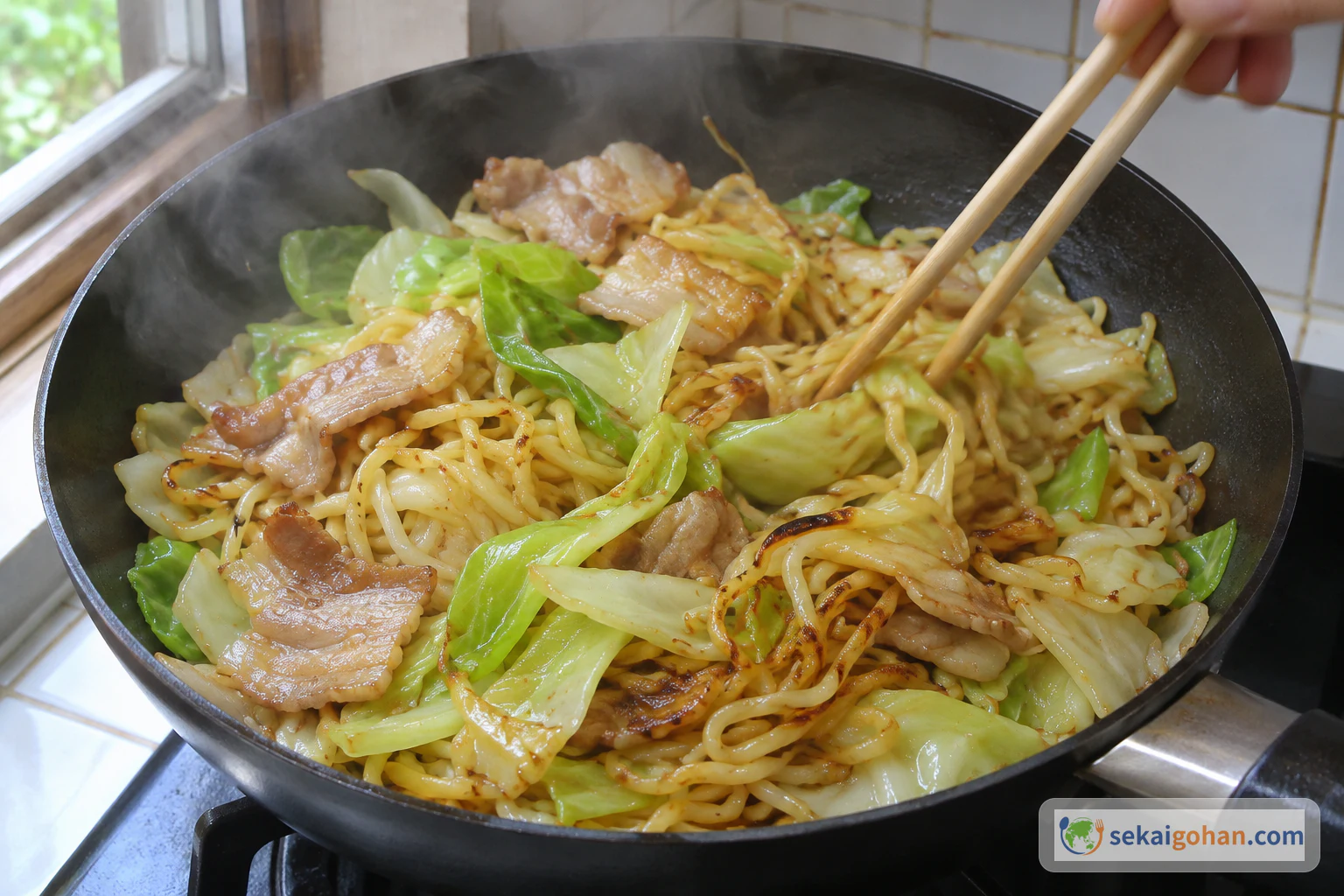
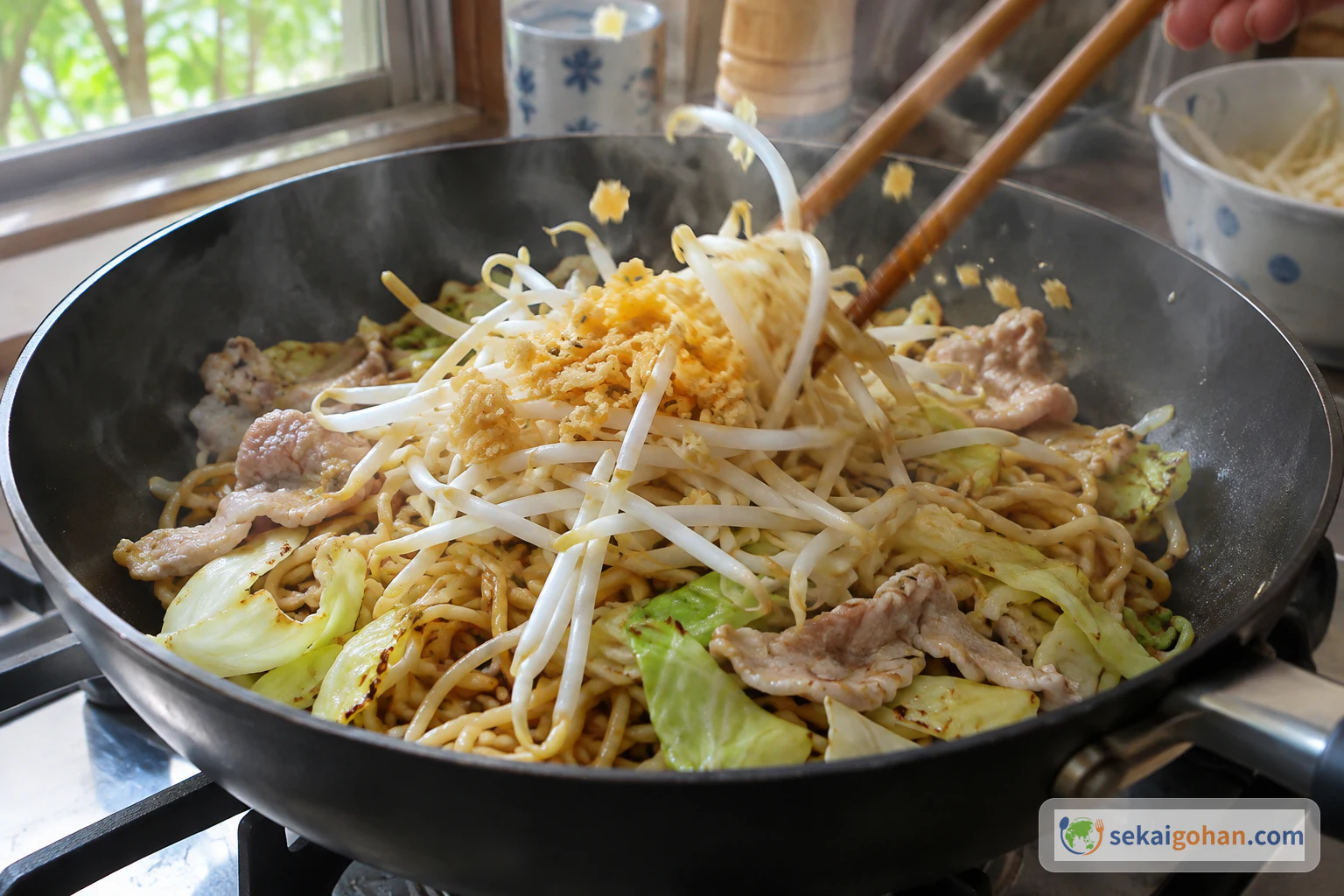
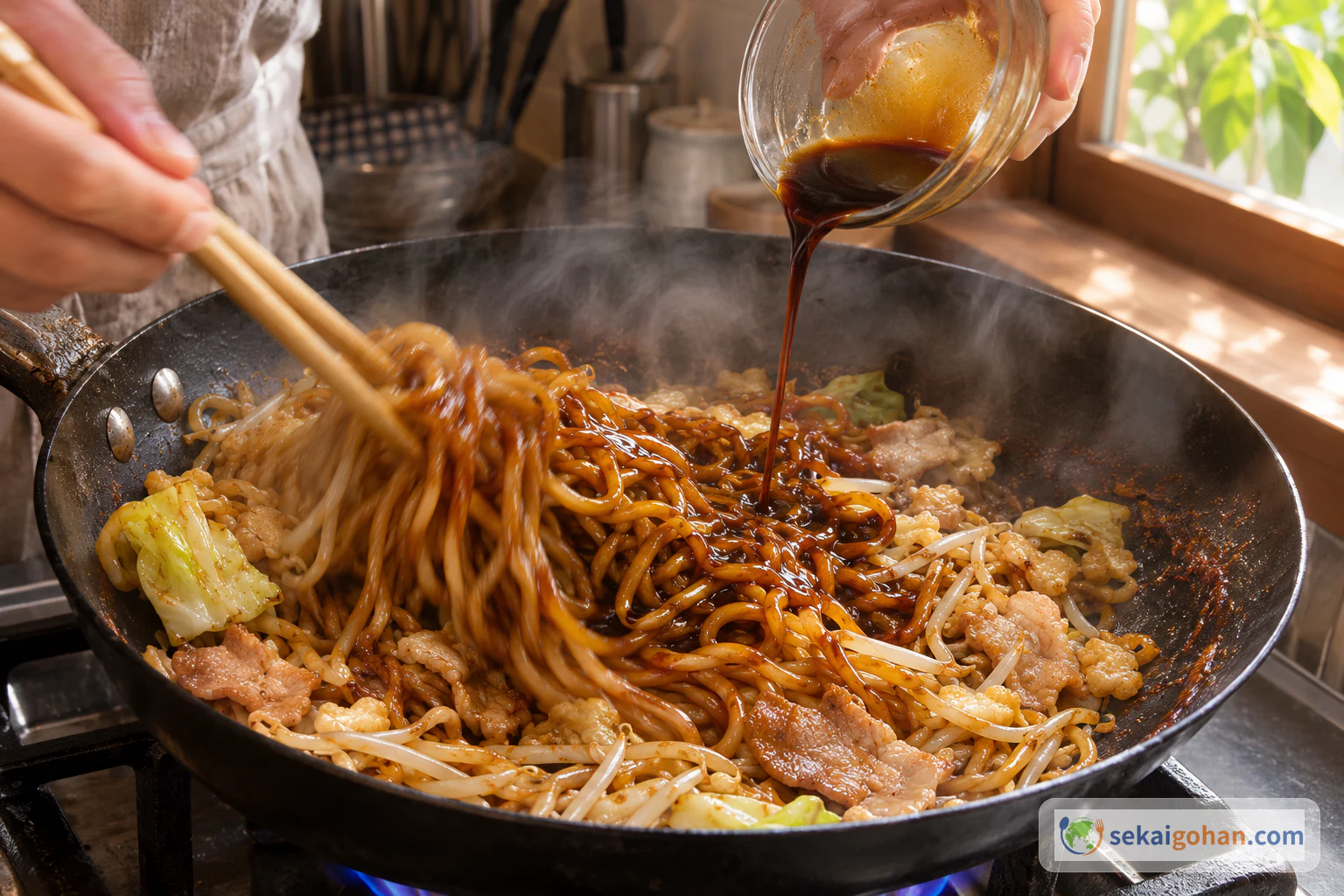
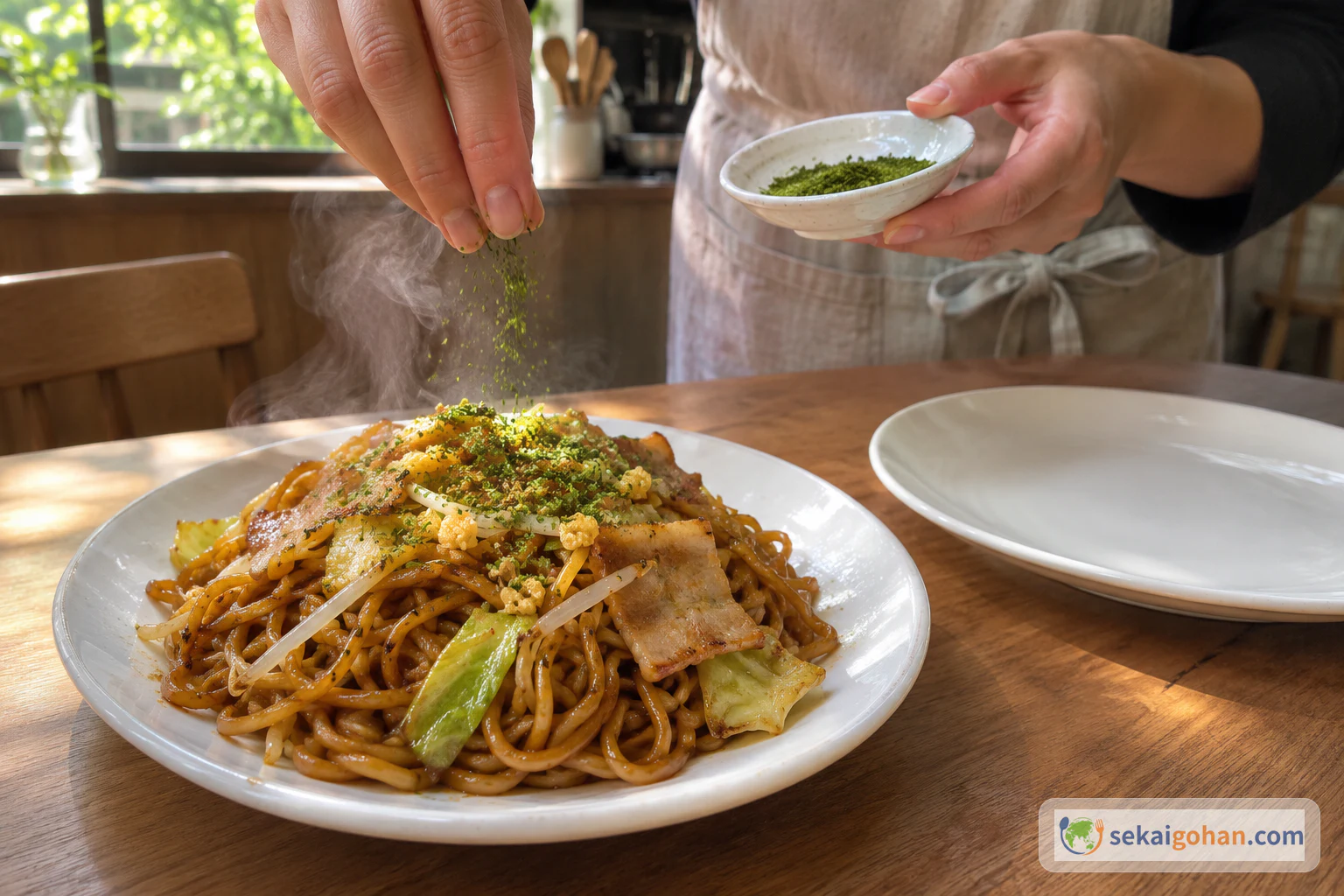
The sauce goes in last. It hits the hot pan with a loud hiss, a cloud of steam rises, and within half a minute the sharp, tangy smell turns sweet and toasty while every strand of noodle takes on a deep brown shine. That smell is sauce yakisoba, the pan-fried noodle dish cooked in Japanese home kitchens on ordinary weeknights and on the iron griddles of festival stalls. Steamed wheat noodles are fried until their edges crisp, tossed with pork belly, cabbage and bean sprouts, and finished with a thick, fruity, Worcestershire-style yakisoba sauce. A plate tastes sweet and tangy at once, with toasted noodle edges, soft-crunchy cabbage and a scatter of green aonori that smells of the sea.
A Noodle Dish Built on Worcestershire-Style Sauce
Born near Tokyo's noodle shops
Where sauce yakisoba began is not settled, but the usual account runs through Tokyo. Okonomiyaki, the griddle food it grew alongside, is traced back to moji-yaki, a batter snack of the late Edo period. In the Meiji 30s (roughly 1897 to 1906), Western-style food spread to ordinary people, and street stalls began cooking with Worcestershire sauce. Around the end of the Meiji era and the start of the Taishō era, factories making Chinese-style noodles opened around Asakusa. A dish imitating Chinese stir-fried noodles, seasoned with Worcestershire sauce instead of anything Chinese, is thought to be the starting point of sauce yakisoba. Through the Taishō years it settled into Tokyo's food life as one of the okonomiyaki family of griddle dishes, and it remains a fixture of festival stalls today. Chinese chow mein, its distant relative, belongs to a separate line of dishes.
In Japanese the dish goes by yakisoba, or sauce yakisoba (sōsu yakisoba) when people want to be clear about the seasoning. The noodles are sold as steamed Chinese-style noodles, often labelled specifically for yakisoba.
From weeknight pan to festival stall
At home, yakisoba is what gets cooked on a weekday evening when there is half a cabbage and a bag of bean sprouts in the fridge. It turns up as an after-school snack for children, and in summer it is the smell drifting from the griddles at shrine festivals. Across all of these the method stays the same. Fry the noodles first, then the fillings, and add the sauce last. Home yakisoba turns limp and wet when the moisture in the pan never gets driven off, and that order is how you drive it off. Plenty more of Japan's everyday cooking lives on the Japan page.
Fujinomiya, Yokote and Kansai
Several towns have built their own versions and turned them into local pride. In Fujinomiya, Shizuoka Prefecture, the noodles are firm and steamed, the dish carries nikukasu (crisp rendered pork scraps), and it is finished with dashi-ko, a powder of dried sardine shavings. The local rule is to fry with no water, or only the smallest amount, so the moisture cooks off. The town's school lunch version, adapted for home kitchens, takes a different route because it cooks for a crowd. It adds a scant ½ cup (100 ml) of hot water, covers the pan and steams the noodles for 20 minutes so they cook right through. Both belong to Fujinomiya. Shortly after the war, children there bought yakisoba as a snack at candy shops and okonomiyaki shops. A local society formed around the dish in 2000, it took the top prize at the B-1 Grand Prix in both 2006 and 2007, and in 2022 it received Japan's "100-Year Food" recognition.
Yokote, in Akita Prefecture, uses thick, straight, square-cut boiled noodles with cabbage and ground pork, a half-cooked fried egg on top and fukujinzuke pickles on the side. The sauce is Worcestershire blended with each shop's own mix, with the spiciness toned down. The usual story places its roots just after the Second World War, when an okonomiyaki stall owner went looking for a new dish and worked with local noodle makers until the present Yokote noodle took shape around 1953.
In the Kansai region, people favour thick, filling noodles with a rich, sweet sauce. Pork belly and squares of cabbage are the standard fillings, and aonori, red pickled ginger, squid and egg all appear too.
Yokote writes its dish as the town name followed by "yakisoba" in hiragana, and that spelling is trademarked. The form of the name is part of how the town looks after its local version.
Ingredients (serves 2)
For one plate, use half of every amount.
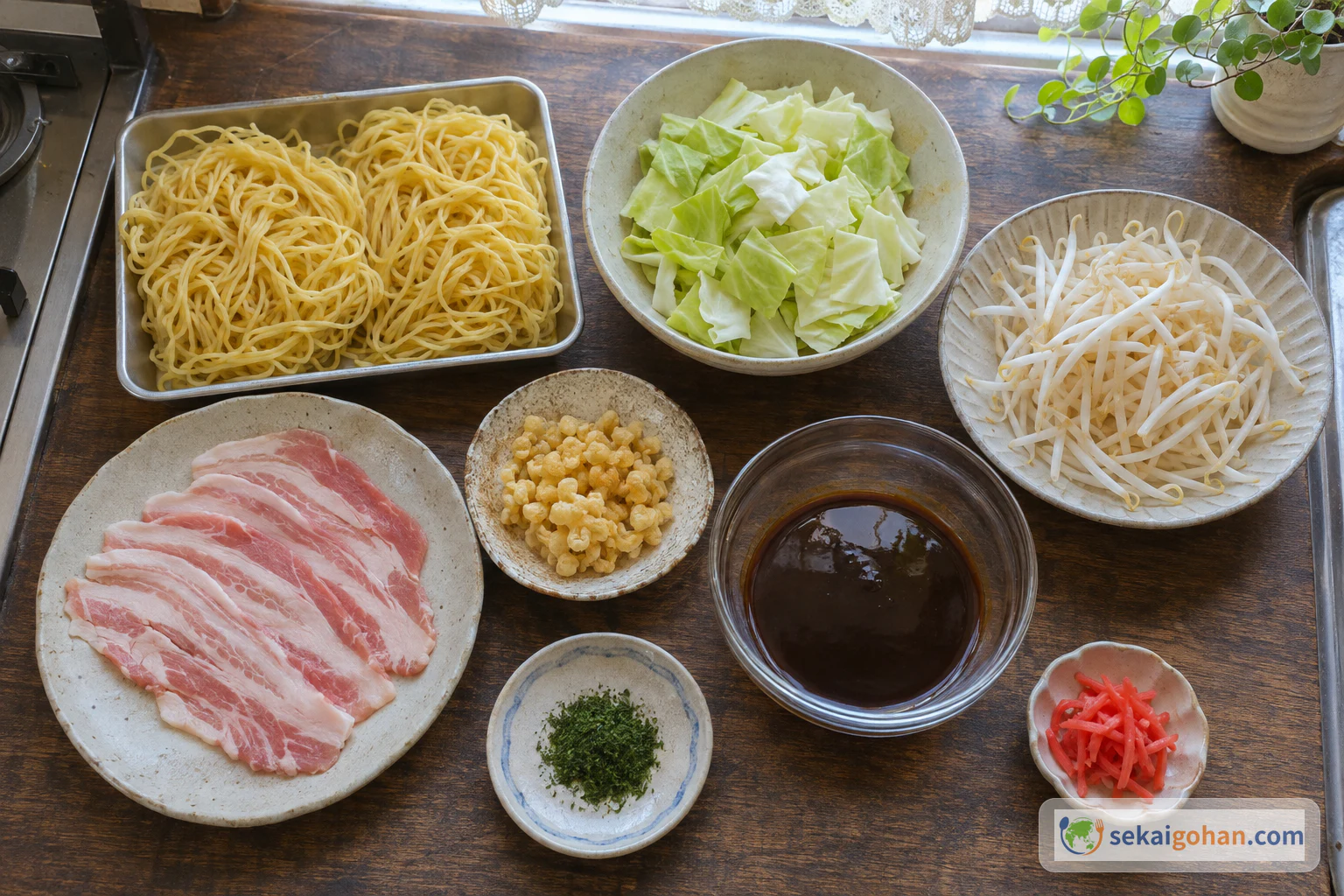
The noodles contain wheat, and yakisoba sauce contains soy and wheat. Tempura scraps made with squid tempura contain squid. Whether egg or shrimp is present depends on the product, so read the labels on the noodles, sauce and tempura scraps.
Weigh the sauce on a kitchen scale rather than measuring it by the spoon. Yakisoba sauces vary in thickness, sweetness and salt, and 3½ oz (100 g) for two bundles is the balance this recipe is built on.
Equipment
- A 10- to 11-inch (26–28 cm) frying pan
- Cooking chopsticks
- A wooden spatula
- Paper towels
Choosing the Noodles, Sauce and Scraps
You can find everything here at a regular supermarket or an Asian grocery store; the choices that matter are about which kind of each to pick up.
Noodles. Buy steamed noodles sold for yakisoba. The amounts and the dry-frying method are set for steamed noodles, so stay with them.
Sauce. Pick a liquid yakisoba sauce. Brands differ in thickness, sweetness and salt, so a new bottle can taste noticeably saltier or sweeter at the same weight. Many packs of steamed noodles come with a sachet of powdered sauce, which is a separate system: if you use it, follow the instructions on that pack and leave the 3½ oz (100 g) of liquid sauce out of it entirely. The cooking order (noodles alone first, then pork, cabbage, sprouts and sauce) works the same with either.
Tempura scraps. Scraps made with squid tempura bring a light seafood richness. Plain tempura scraps work at the same weight; the dish tastes slightly lighter and loses that seafood note.
Aonori and pickled ginger. A small bag of aonori goes a long way. Red pickled ginger is optional and adds tartness and a little heat beside the sweet sauce.
Method
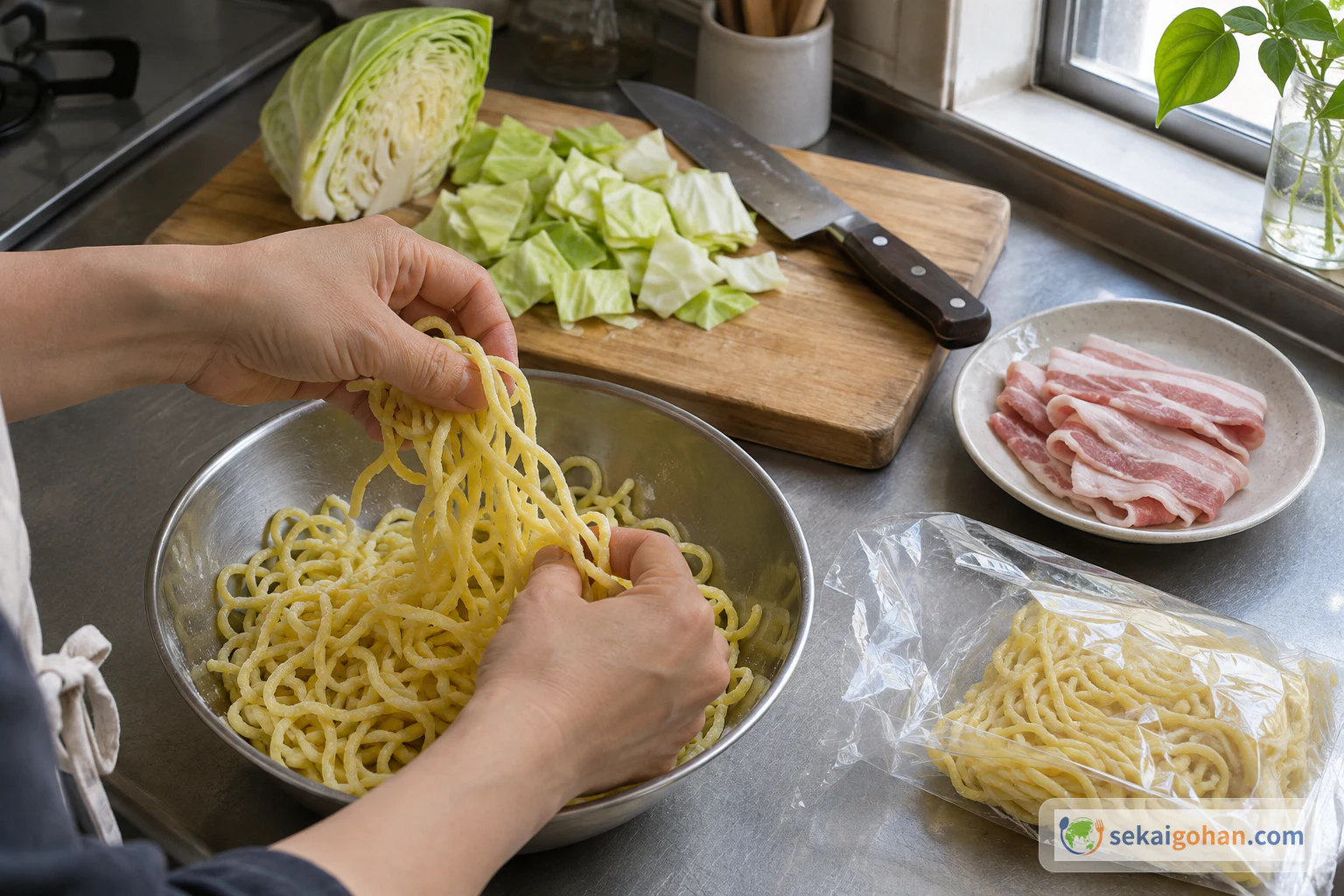
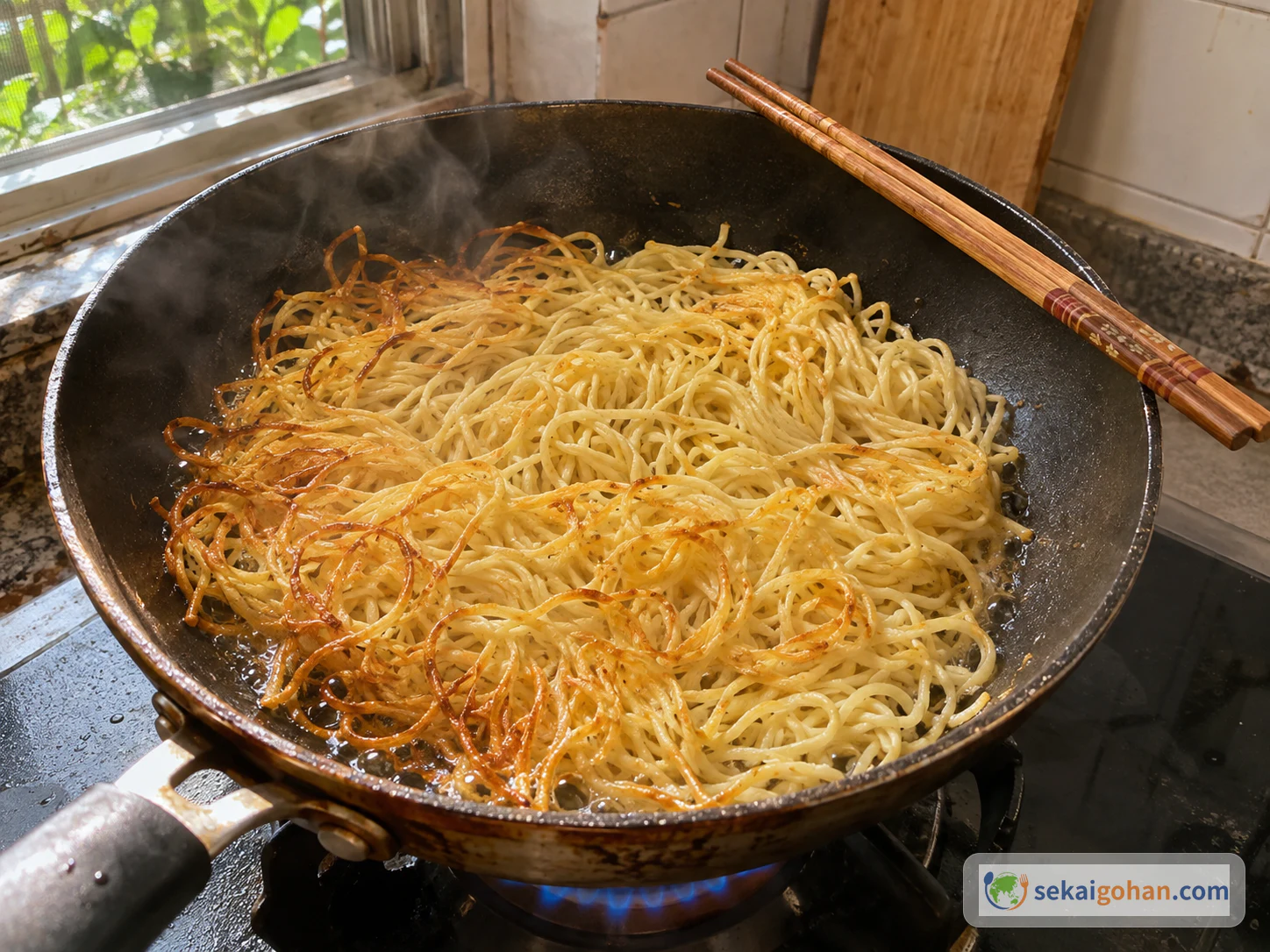
Cut and loosen everything before the pan goes on the heat, and pour the sauce into a small bowl. Once the noodles are frying, the work runs without a pause. The noodles fry alone, then move aside while the pork and vegetables go in one after another, and the sauce goes in last for a short, hot finish.
When It Goes Wrong
| What you see | Why | What to do |
|---|---|---|
| Limp, wet noodles | The moisture in the pan never cooked off | Fry the noodles alone first over high heat, shake excess water off the cabbage, add the sauce last and finish fast |
| Noodles stuck together in clumps | The bundles went in without enough loosening | Loosen the noodles by hand before frying. A light sprinkle of dried fish powder adds savoury depth and helps the strands stay apart |
| Little sauce aroma | The pan stayed on the heat too long after the sauce | Toss for about 30 seconds after the sauce goes in, then plate |
| Too salty or too bland | Sauces differ in salt and sweetness between products | With an unfamiliar sauce, add about 80 percent first, toss, taste, and then add the rest |
| Hard noodles | Not loosened, or not fried enough | Loosen first and fry until the surface turns toasty. Keep the pan dry rather than adding water |
| Scorched sauce | Cooked too long after the sauce went in | Finish quickly once the sauce is in |
Serving, Variations and Leftovers
At the table
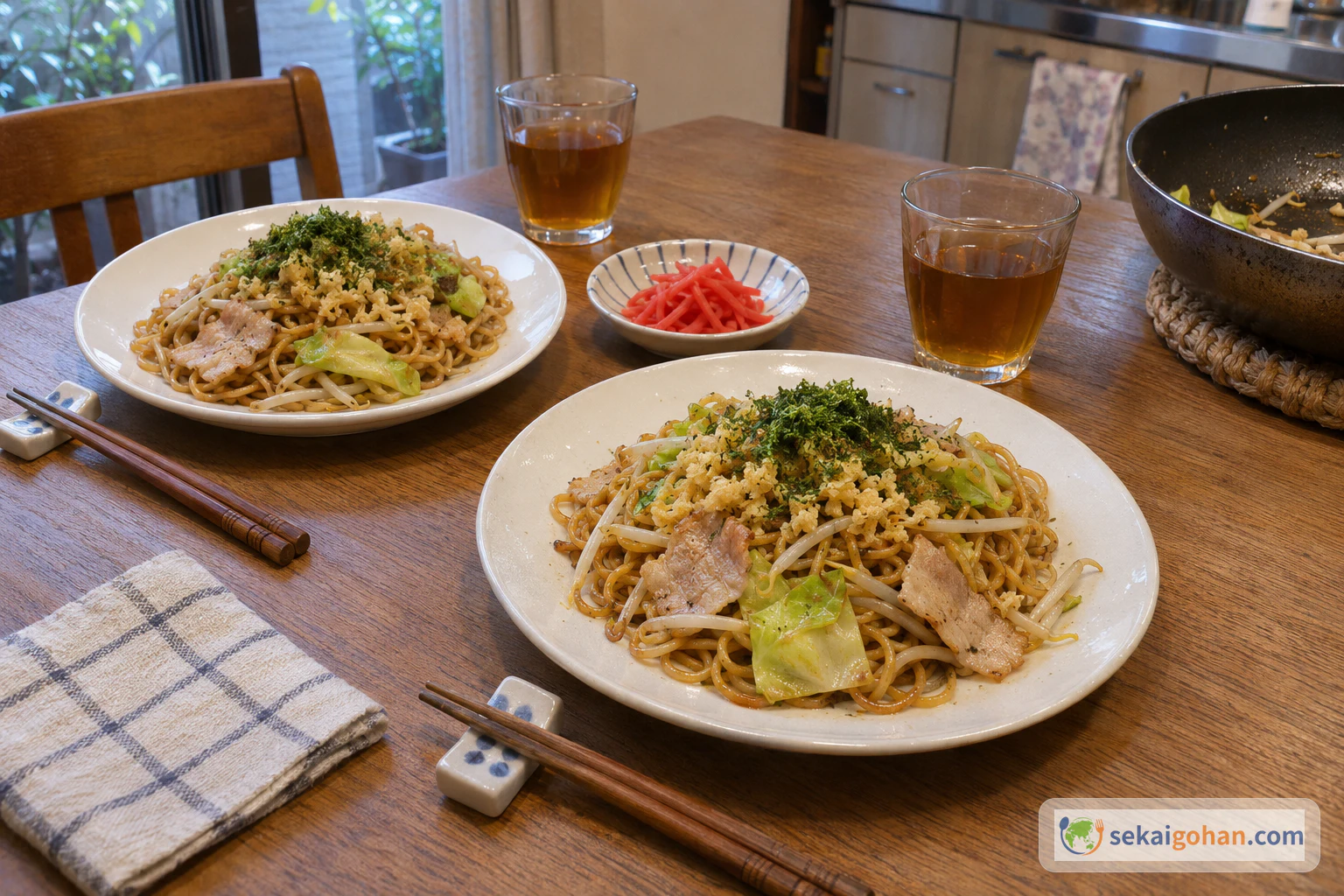
Yakisoba is a one-plate meal: noodles, meat and vegetables arrive together, ready the moment the sauce has coated them. It belongs to quick weeknight dinners and to the food you buy at a festival, eaten hot with chopsticks. Red pickled ginger on the side cuts through the sweet sauce and the pork fat.
Variations
- Fish powder. Sprinkle a little dried fish powder over the noodles. It adds savoury depth and helps keep the strands from sticking, in the same spirit as Fujinomiya's sardine powder.
- Fried egg, Yokote style. A half-cooked fried egg on top turns the yolk into part of the sauce and softens the tang.
- Sauce in two stages. Toss a little of the sauce through the noodles while they fry, then add the rest at the end. The noodles take on deeper colour and seasoning, and the finish is less sharp.
- Okonomiyaki sauce and soy sauce. For two servings, season with 5 tbsp okonomiyaki sauce and 2 tsp soy sauce, and top each plate with a fried egg. The result is thicker, sweeter and rounder than yakisoba sauce.
Leftovers
Divide leftovers into shallow containers so they cool quickly, then refrigerate them promptly. Don't leave them out at room temperature for long, and throw away anything that has sat too long. Reheat until it reaches 167°F (75°C) or above. In a frying pan, use medium-low heat and loosen the noodles as they warm, since the sauce scorches easily. In a microwave, stir the whole portion and heat again, stirring now and then, because it heats unevenly.
Frequently Asked Questions
Can I loosen the noodles in the microwave?
Yes, when the noodle pack gives microwave instructions; follow those. Then loosen the warm noodles by hand and fry them as usual. The cue in the pan stays the same: toasty edges and fading steam.
Can I make it with fresh or dried ramen noodles?
Stay with steamed yakisoba noodles. The amounts and the dry, high-heat method are set for steamed noodles, which go straight into the pan and fry in the hot pan without any boiling.
Can I leave out the tempura scraps?
You can. The plate turns lighter, with less toasty richness and less of that slightly crunchy, slightly soft texture the scraps give once the sauce soaks in. If you have them, use them; they make a big difference for their small weight.
How do I cook it for one?
Halve every amount: one bundle of noodles and half the pork, vegetables, tempura scraps and sauce. The steps and cues stay the same, and a single bundle fries even faster in a wide pan, so watch the noodles closely.