Ingredients and steps on one page. Print it, or choose “Save as PDF” in the print dialog.
Sekai Gohan
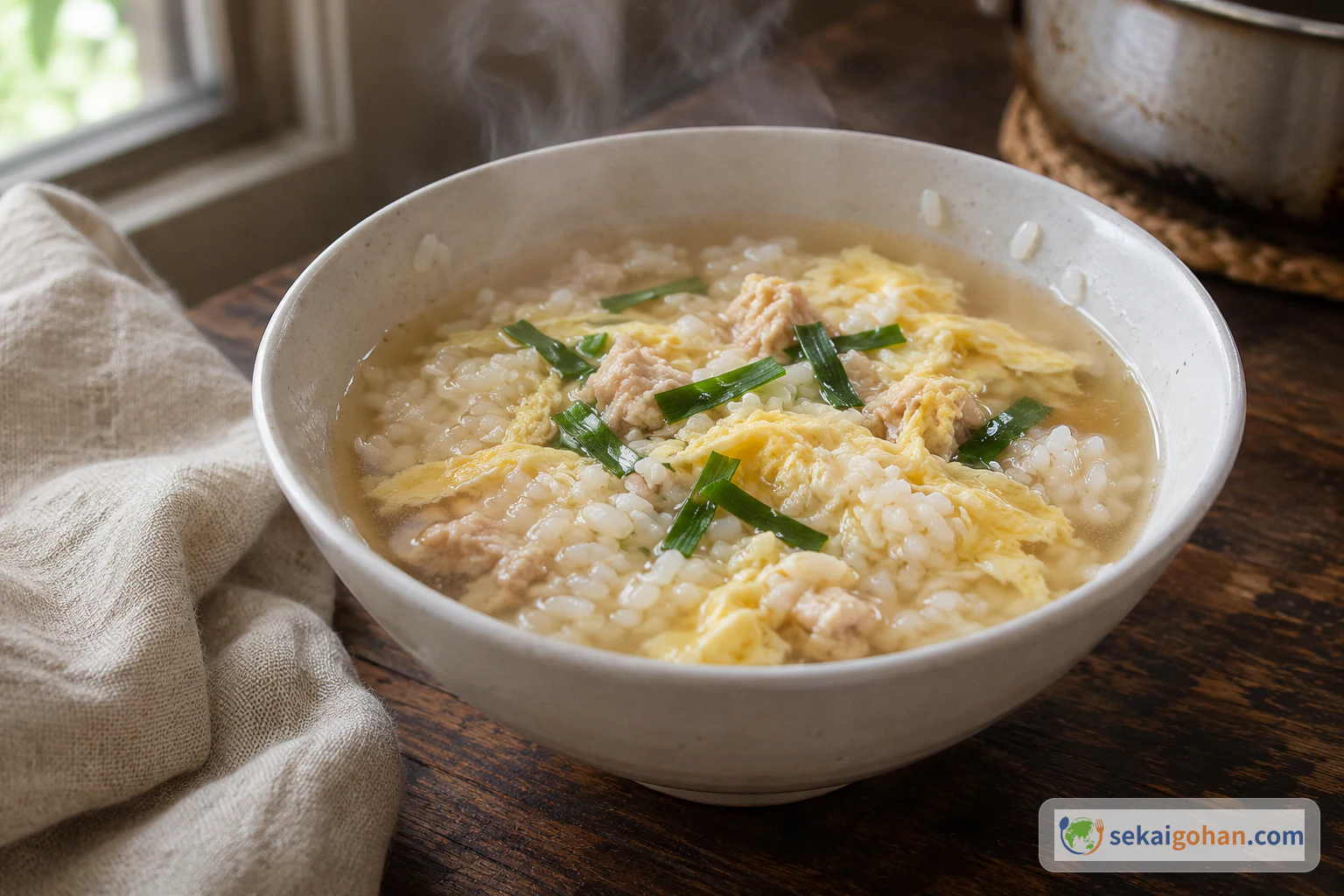
Zosui: Japanese Rice Simmered in Dashi with Egg
Ingredients
| Ingredient | Amount | Role |
|---|---|---|
| Cooked white rice (gohan) | 7 oz (200 g) | The body of the dish, rinsed before it goes in |
| Ground chicken (tori hikiniku) | 2 oz (60 g) | Savoriness and a little fat for the broth |
| Sake | 2 tbsp | Mixed into the chicken to take away its smell |
| Garlic chives (nira) | ½ bunch | Fresh aroma and green color at the end |
| Beaten egg | 1 egg | Binds the pot in soft ribbons |
| Katsuo dashi (bonito stock) | 1⅔ cups (400 ml) | The base of the broth |
| Soy sauce (koikuchi, regular dark) | 1 tbsp | Salt and aroma |
| Mirin (hon-mirin) | 1 tbsp | Gentle sweetness and gloss |
| Salt | a little | Sharpens the seasoning |
Steps
1Rinse and drain the cooked rice
Put the rice in a fine-mesh strainer and hold it under gently running water. Turn the grains lightly with your fingertips so they separate without being crushed. Keep going until the water dripping through the mesh is no longer cloudy. Then shake the strainer well and let it drain, because excess water in the pot dilutes the broth. The rice is ready when the grains are loose and separate and the water runs clear.
2Mix the chicken with sake
Put the ground chicken in a small bowl and add the sake. Stir with cooking chopsticks until the meat has soaked up the liquid. Keep it loose rather than kneading it into a paste, since kneaded meat stays in lumps in the pot. It is ready when the surface looks glossy and a clump lifted on the chopsticks crumbles apart.
3Cut the garlic chives
Line up the chives on the cutting board and cut them into ⅜-inch (1 cm) lengths. At that length they are short enough that no stringy pieces catch in the mouth, but still large enough to taste. Gather them on a small plate near the stove. They are ready when the cut ends are bright green and the sharp garlic-onion smell rises from the board.
4Bring the seasoned dashi to a boil
Pour the dashi into the saucepan and add the soy sauce, mirin and salt. If you are using dashi granules, dissolve them now. Bring the pot up over medium heat and hold it at a gentle boil. It is right when fine bubbles gather around the rim and the surface trembles without rolling.
5Crumble in the chicken and skim
Add the chicken a little at a time, breaking it apart with the chopsticks as it drops into the broth. The meat turns from pink to opaque white in loose crumbs. Grey-white foam gathers around the edge of the pot. Lift it away with a small ladle or skimmer, taking only the foam and leaving the broth. Move on when the chicken is white all through and the surface is clear again.
6Add the rice and simmer briefly
Tip the drained rice into the pot and loosen it with the chopsticks so it spreads through the broth. Let the edge of the pot come back to a simmer. Give it about a minute or two from there as a rough guide, until the grains have taken up the dashi and turned plump. Cooked too long, the rice breaks down and the pot turns to porridge. Stop while every grain is still whole and you can see thin broth between them.
7Add the chives, pour in the egg and turn off the heat
Scatter in the chives and give the pot one stir. Pour the beaten egg in a thin stream along the chopsticks, moving across the surface. Turn off the heat right away and leave the pot alone. The egg sets in the residual heat. When serving children, older people, anyone pregnant or anyone with weakened immunity, keep the heat on until the egg is completely set before turning it off. The zosui is done when the egg lies on top in soft, pale-yellow ribbons.