Ingredients and steps on one page. Print it, or choose “Save as PDF” in the print dialog.
Sekai Gohan
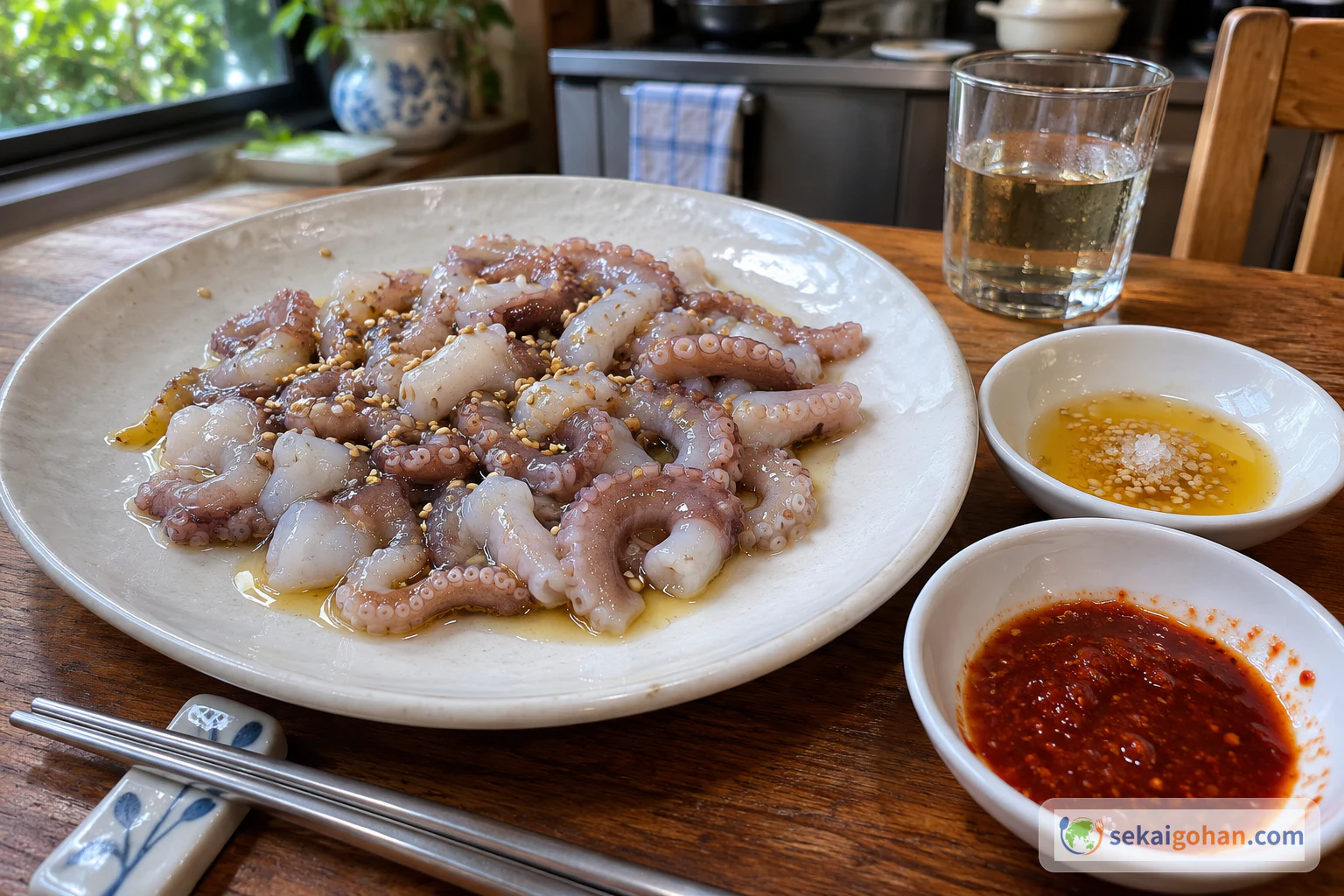
Sannakji: Korean Live Octopus Chopped with Sesame Oil
Ingredients
| Ingredient | Amount | Role |
|---|---|---|
| Live nakji (산낙지) | 2 | The dish itself; chewy, clean-tasting legs |
| Toasted sesame oil (참기름) | 1 tbsp | Dresses the chopped legs and forms the gireumjang dip |
| Salt (소금) | to taste | Seasons the legs and the gireumjang |
| Toasted sesame seeds (통깨) | a little | Scattered over the plate for aroma |
| Vinegar (식초) | 1 tbsp | Chojang dip; sharpness |
| Sugar (설탕) | 1 tbsp | Chojang dip; rounds the acid and heat |
| Gochujang (고추장) | 3 tbsp | Chojang dip; red chili paste, the body of the dip |
| Minced garlic (다진마늘) | 1 tsp | Chojang dip; bite |
| Toasted sesame seeds for the chojang (통깨) | 1 tsp | Chojang dip; nuttiness |
| Wheat flour (밀가루) | as needed | Rubbing the suckers clean; rinsed off before eating |
Steps
1Rub the suckers clean with flour
Put the nakji in the stainless bowl and scatter some flour over it. Rub the legs firmly between your fingers, working the flour into the suckers along their whole length; it turns grey as it lifts the grit and slime. Dip the nakji in the bowl of cold water just long enough to wash the flour away, then lift it straight out and pat it dry with paper towels. The legs are ready when they feel slick and clean, with no grit under your fingertips and no white streaks of flour left in the suckers.
2Remove the innards and the beak, and squeeze out the slime
Lay the nakji on the board, open the head and pull out the innards. At the center of the underside, where the legs meet, press out the small hard beak and cut it away. Run each leg between your thumb and finger from base to tip to squeeze out the slime, which carries most of the fishy smell. Give the nakji one more quick dip in cold water and pat it dry; it is done when the head is empty, nothing hard remains at the base of the legs, and the legs feel tacky rather than slimy.
3Chop the legs, tang tang
Cut the legs away from the head; only the legs go into this dish. Line them up on the board and chop with firm, straight strokes, letting the blade strike the board each time, into pieces ⅜ to 1¼ inches (1–3 cm) long. Smaller is better, so go back through the pile and cut any longer piece again. The pieces will curl and grip the board as you work; that is the nerve movement. Stop when every piece is short enough to chew comfortably in one bite.
4Mix the gireumjang and the chojang
For the gireumjang, pour part of the sesame oil into one small dish and add a pinch of salt. For the chojang, stir the vinegar, sugar, gochujang, minced garlic and the teaspoon of sesame seeds together in the second dish. Keep stirring until the sugar has dissolved and the paste loosens into an even sauce. The chojang is ready when it is smooth and glossy red, with no grains of sugar against the spoon.
5Toss with sesame oil and salt, and plate
Put the chopped nakji in the small bowl, pour over the rest of the sesame oil and add salt to taste. Toss with a spoon until every piece is coated; the oil also slicks the suckers so they grip the plate and chopsticks less. Tip the pieces onto a plate, scatter toasted sesame seeds over them and set the two dips beside it. Serve at once, while every piece shines with oil and the sesame seeds cling to the surface.