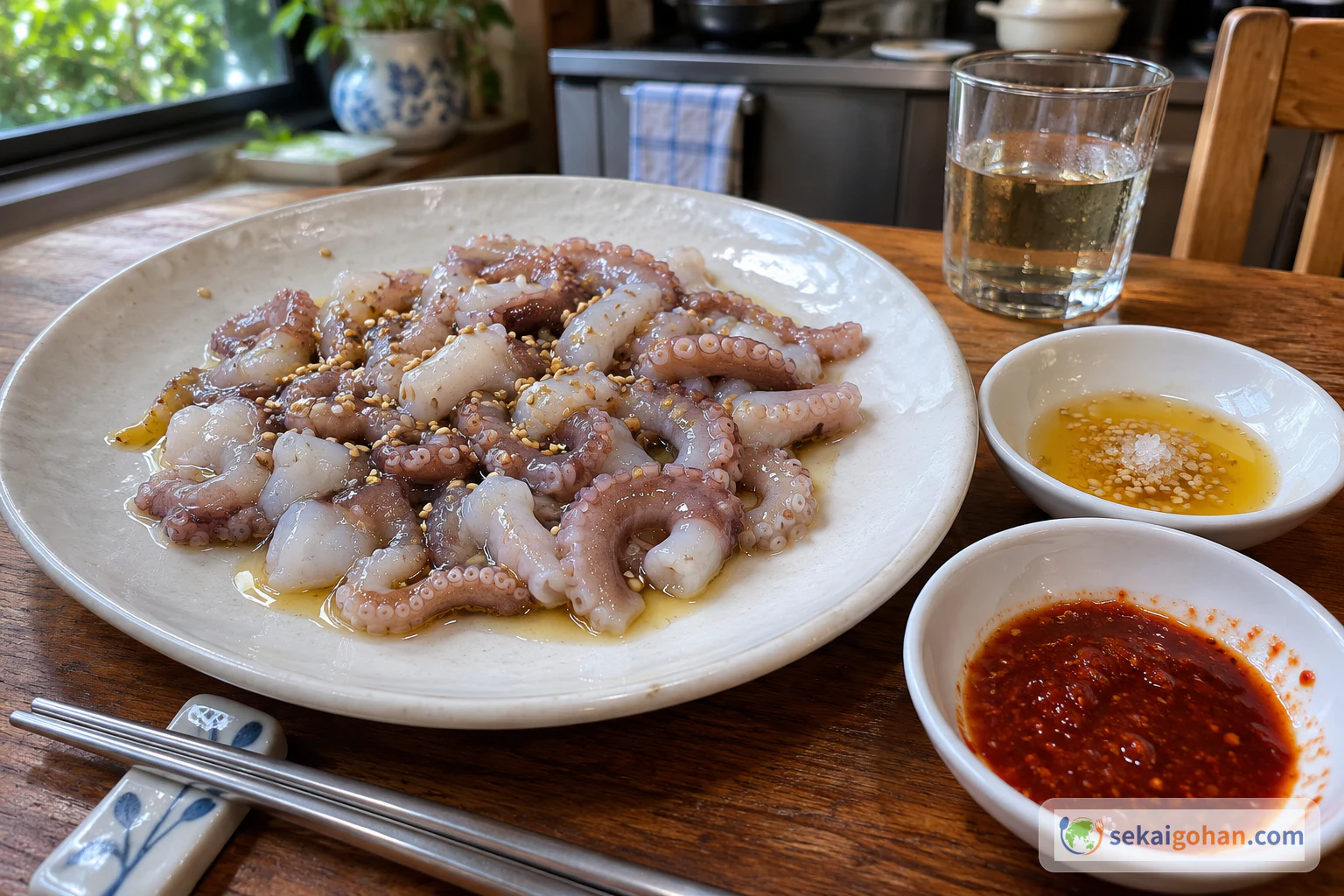
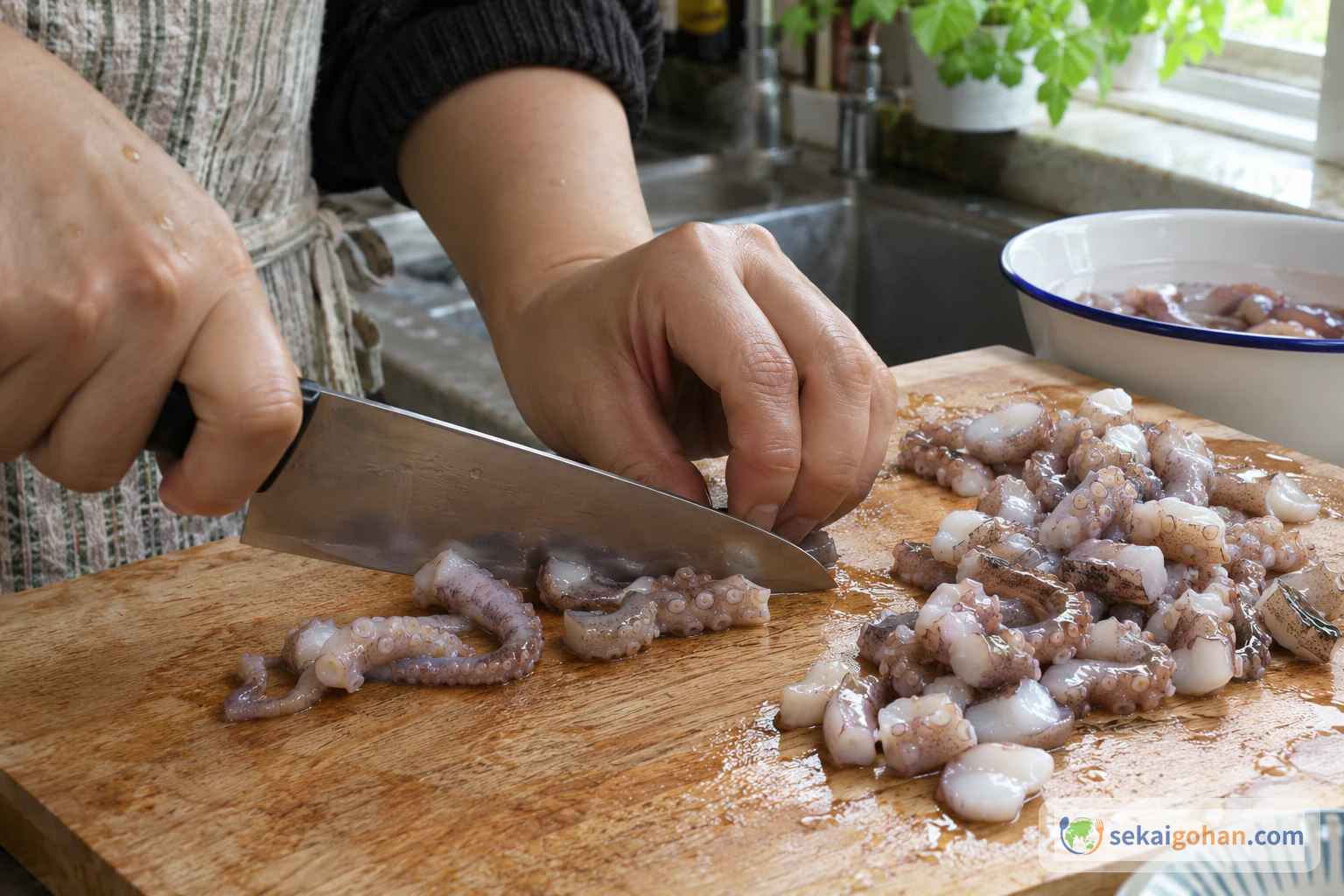
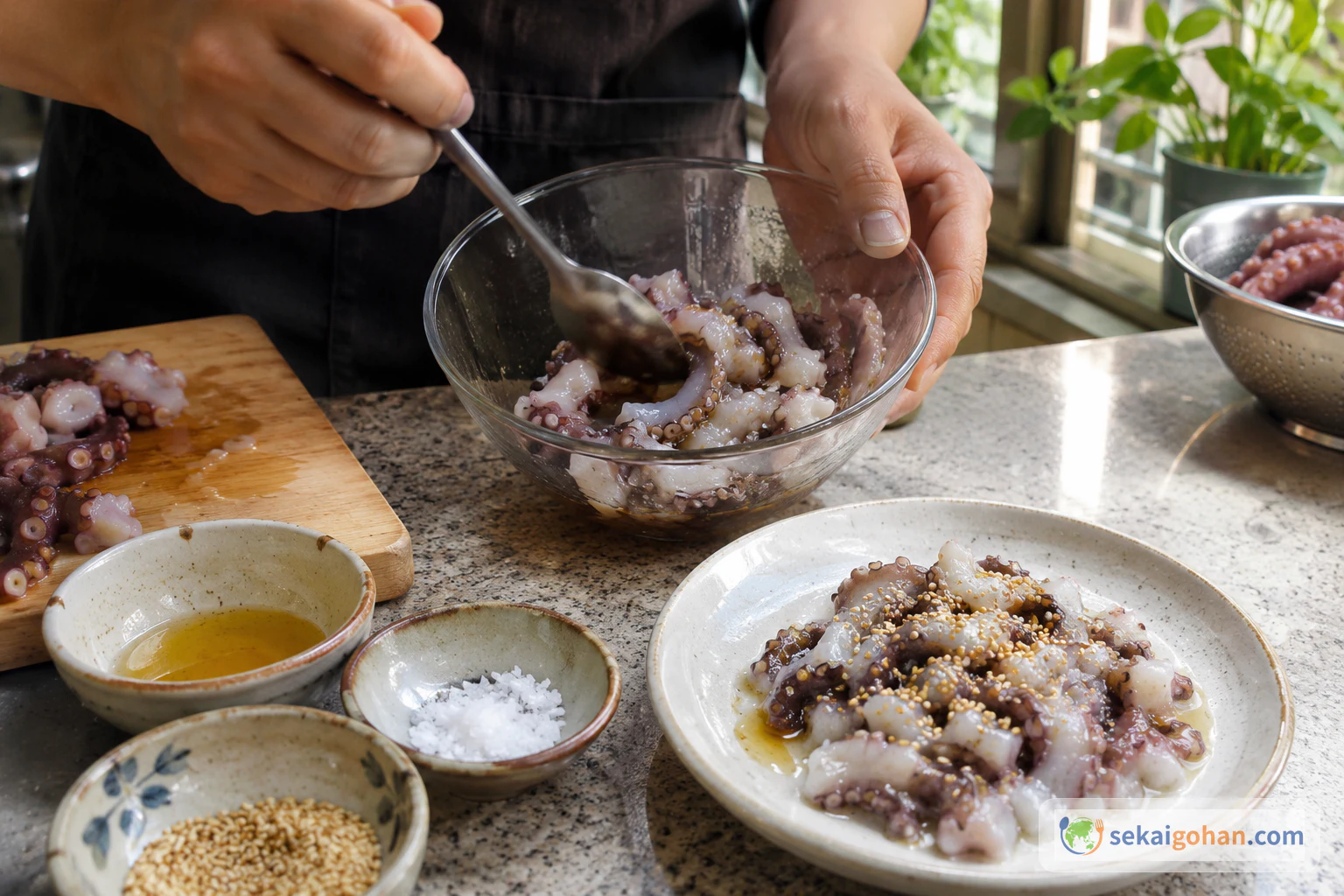
The knife comes down on the board again and again, tang, tang, tang, and the pile of pale legs beside it never quite lies still. Each small piece curls and stretches, its suckers catching the light under a gloss of sesame oil. A pinch of salt and a scatter of toasted sesame go on, two little dishes of dip go beside the plate, and the chopsticks reach in while the pieces are still moving. Sannakji is chopped live nakji eaten raw in Korea, and it tastes clean and faintly sweet of the sea, nutty from the oil, with a chew that springs back and suckers that cling lightly to the tongue.
Live Nakji and the Sound of the Knife
San-nakji simply means live nakji, and the name tells you exactly what arrives at the table: an octopus that was alive moments before it was cut. Nakji is Octopus minor, a small long-armed octopus from Korea's southern coast, a different animal from the large common octopus. In English it often gets labeled "baby octopus," which is a mistranslation. Sannakji belongs to the family of hoe, the raw seafood dishes of Korean cooking, and it is served at its plainest with sesame oil and toasted sesame seeds. In North Korea the word nakji points to squid, so this article follows the South Korean dish.
The most common way to prepare it is tangtangi. The legs are chopped into short pieces and tossed with sesame oil and salt, and the name comes from the sound of the blade striking the cutting board. The nakji is usually killed and then cut; eating one whole is rare. The movement on the plate comes from nerve activity in the legs, which keeps going after the animal has been cut, and restaurants explain that by the time the plate is served, the octopus is not strictly alive.
Sannakji is loved in Korea as stamina food, and an old saying holds that nakji puts strength back into a worn-out cow. Raw and cooked nakji differ little in nutrition, so the reputation lives in the folklore and the excitement of the plate.
At the table, and the debate around it
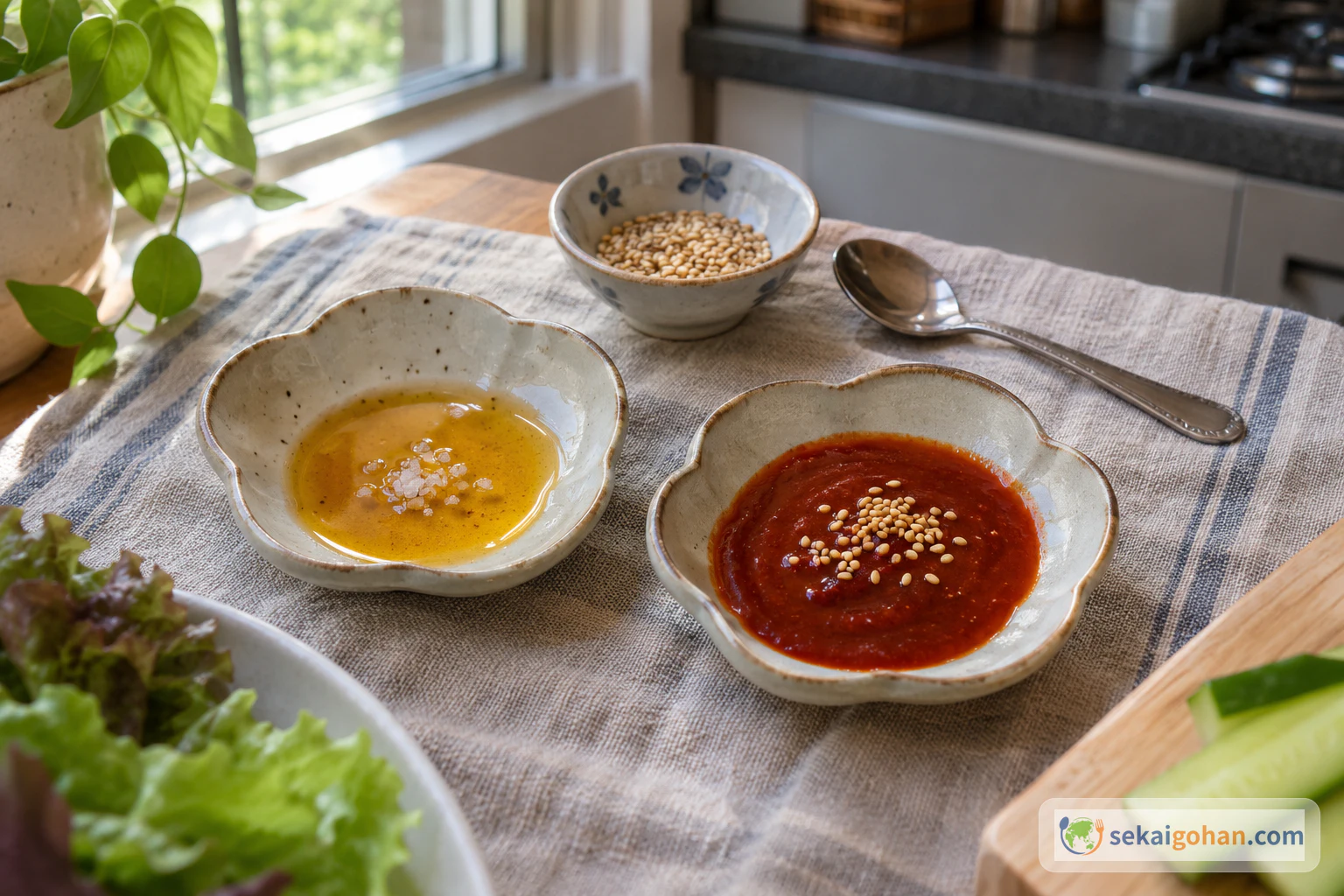
Sannakji is a drinking dish. It comes to the table with soju and small side dishes, picked at with steel chopsticks between glasses, the dips passed back and forth. Dressings stay simple: sesame oil and salt, sometimes ginger and sesame poured straight over the pieces, or a sharp, sweet red dip of gochujang, vinegar and sugar.
The dish also draws argument. Animal-rights activists abroad have protested against it, and in Korea the animal protection law covers vertebrates only, which leaves octopus outside it. Both sides remain part of how the dish is talked about today.
Cooked nakji dishes sit right next to it on Korean menus. Nakji yeonpo-tang is a soup, nakji-bokkeum and bul-nakji are fiery stir-fries, and each is its own dish with its own method. Tangtangi is the raw one, and everything about it depends on a fresh animal, a sharp knife and small pieces.
Ingredients (serves 3)
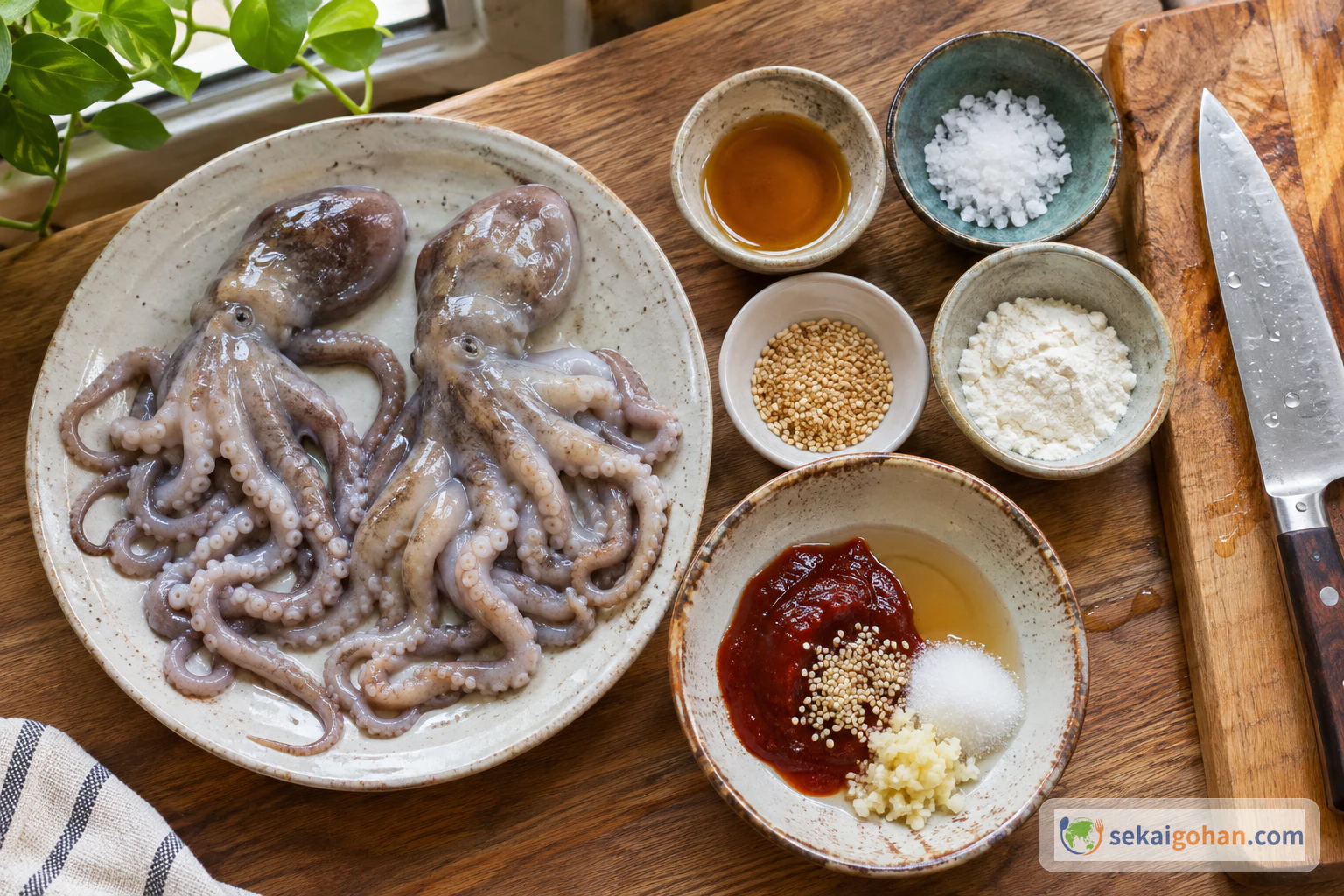
This dish contains octopus (a mollusc) and sesame. Wheat flour touches the nakji during cleaning. Check the gochujang label for allergens before you buy.
Equipment
- A sharp, heavy knife
- A sturdy cutting board kept for this job
- A stainless steel bowl for the flour rub
- A bowl of cold water
- Paper towels
- A small bowl for tossing
- Two small dipping dishes and a spoon
- Steel chopsticks for serving
Buying Nakji and Choosing the Rest
Everything here rests on a live nakji sold for eating raw. Look for it at a Korean or Asian seafood market or a fishmonger you trust, and buy it on the day you serve it. Keep it cold from the shop to the board.
The swaps run in one direction only. Common octopus or other species give a different animal with a different chew, so a plate made from them is a different dish. Boiled octopus dressed in sesame oil is pleasant, and it is cooked octopus, not sannakji. For the rest of the table, ordinary rice vinegar works well in the chojang, and gochujang is a fermented red chili paste with a heat and sweetness that miso or other bean pastes cannot stand in for.
Buy dark, roasted sesame oil with a strong nutty smell, the kind sold at Korean grocers. Light, untoasted sesame oil carries almost no aroma, and with only salt beside it, the oil is the flavor of the whole plate.
Buy nakji sold for eating raw, from a trusted fishmonger or grocer. Keep it cold and eat it the same day. Use a clean board, knife and bowls, kept apart from other food. People who are pregnant, elderly, very young or have weakened immunity should skip the raw dish and choose a fully cooked nakji dish.
Method: Clean, Chop, Dress, Eat
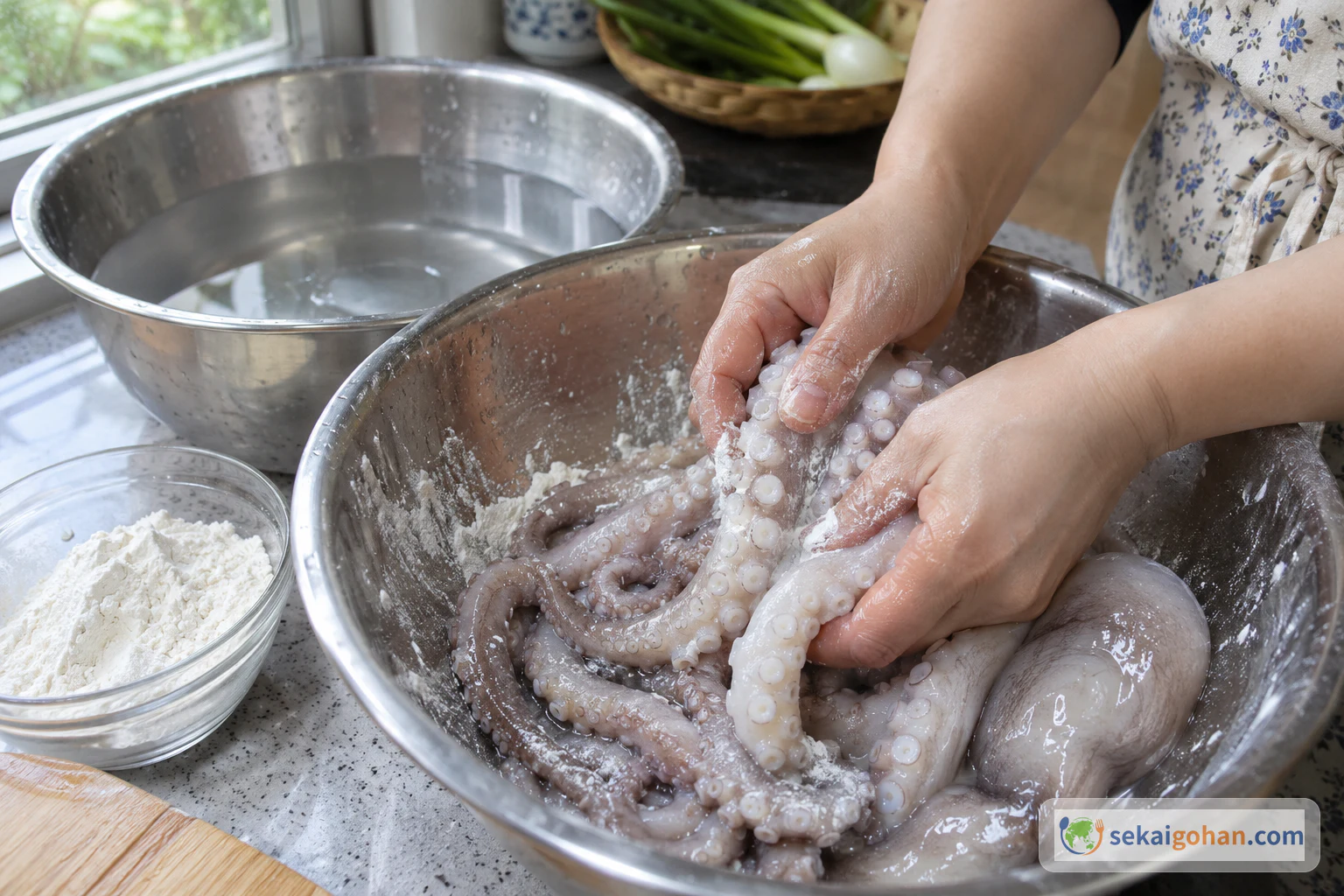
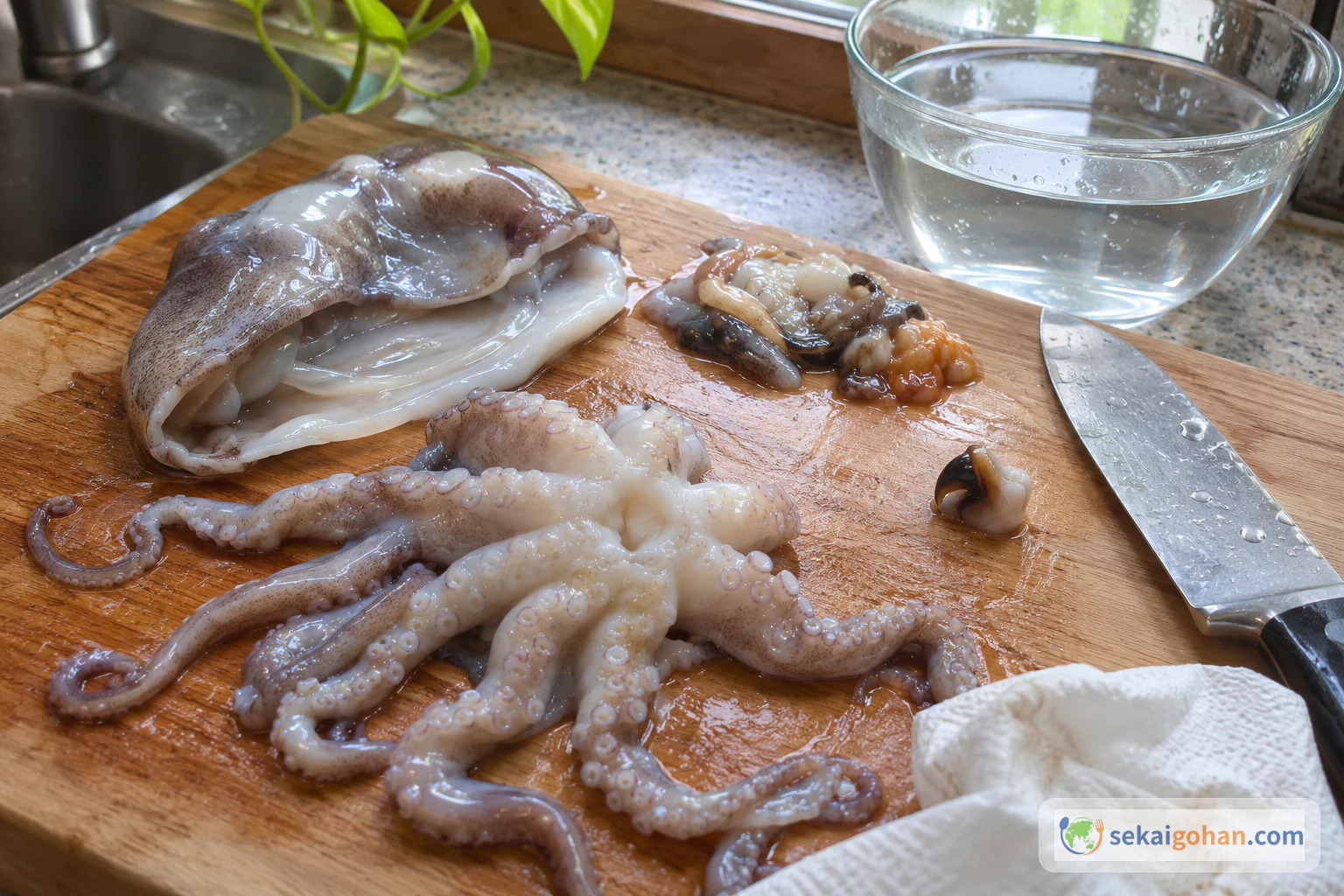
The work is short and runs in one direction. Clean the nakji first, then cut it, mix the two dips, and dress the pieces last so the plate goes to the table the moment it is ready. There is no waiting time anywhere in this dish, so have the board, the cold water, the dipping dishes and the people who will eat it all ready before you start. Cooks disagree on washing: some keep tap water away from nakji entirely because fresh water makes it smell fishy, others rub it with flour and rinse it off. The steps below take the middle path of a flour rub and the briefest cold rinse, then a thorough pat dry.
Chop and dress the nakji only when everyone is sitting down. The look and the springy chew fade as the plate waits, so treat the last two steps as one quick movement.
When It Goes Wrong
| What you see | Why | What to do |
|---|---|---|
| Pieces cling hard to the chopsticks or the mouth | Pieces too long, or not coated in oil | Chop them again into shorter pieces and toss once more in sesame oil |
| A fishy smell on the plate | Slime left on the legs, or the nakji sat in water | Squeeze the legs again from base to tip, keep any rinse to a quick dip, and pat dry well |
| Grit between the teeth | The suckers were not rubbed long enough | Rub the uncut legs with fresh flour until the flour stays clean, then dip and dry |
| Pieces look dull and lie flat | The plate waited too long after dressing | Dress only what the table will eat now and keep the rest of the cleaned nakji cold |
Serving and Variations
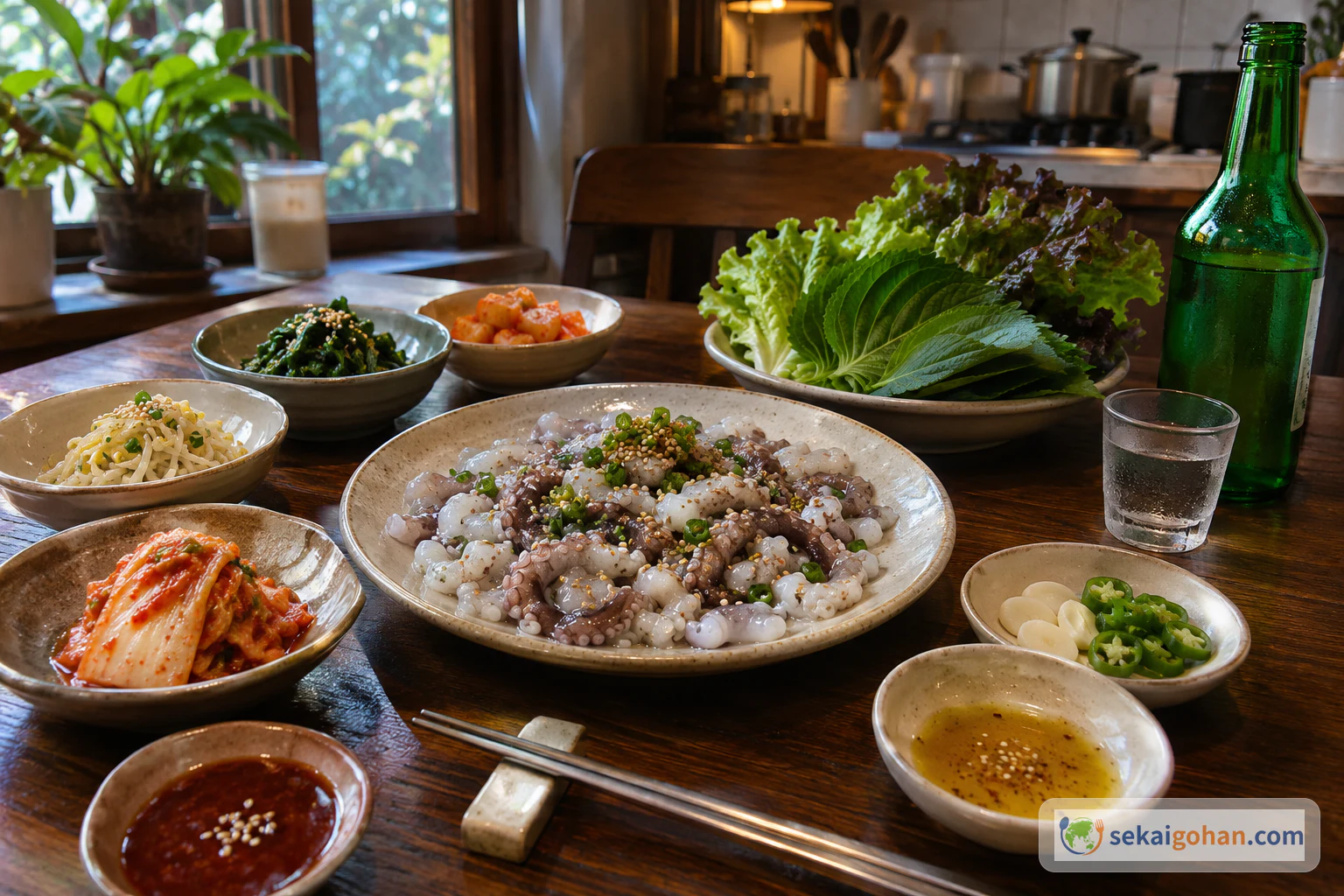
Put the plate in the middle of the table with the two dips, small side dishes and soju. The gireumjang keeps the taste close to the nakji itself, all sesame and salt and clean sea sweetness; the chojang wraps each piece in heat, vinegar and sugar, and it adds a sharper, hotter bite. Pick up one piece at a time, dip it, and chew it thoroughly before swallowing. Make only as much as the table will eat; any cleaned nakji waiting to be chopped stays cold and is eaten the same day.
The suckers can stick in the throat. Fatal cases have happened, mostly with whole nakji or large pieces; in one, a piece about 2¾ by 1½ inches (7 × 4 cm) blocked the entrance to the airway, and drinking was part of another. Keep every piece small and chew it well, cut the pieces smaller still when there is alcohol on the table, and never eat sannakji alone. Children, elderly people and anyone with trouble swallowing should not eat it.
Variations
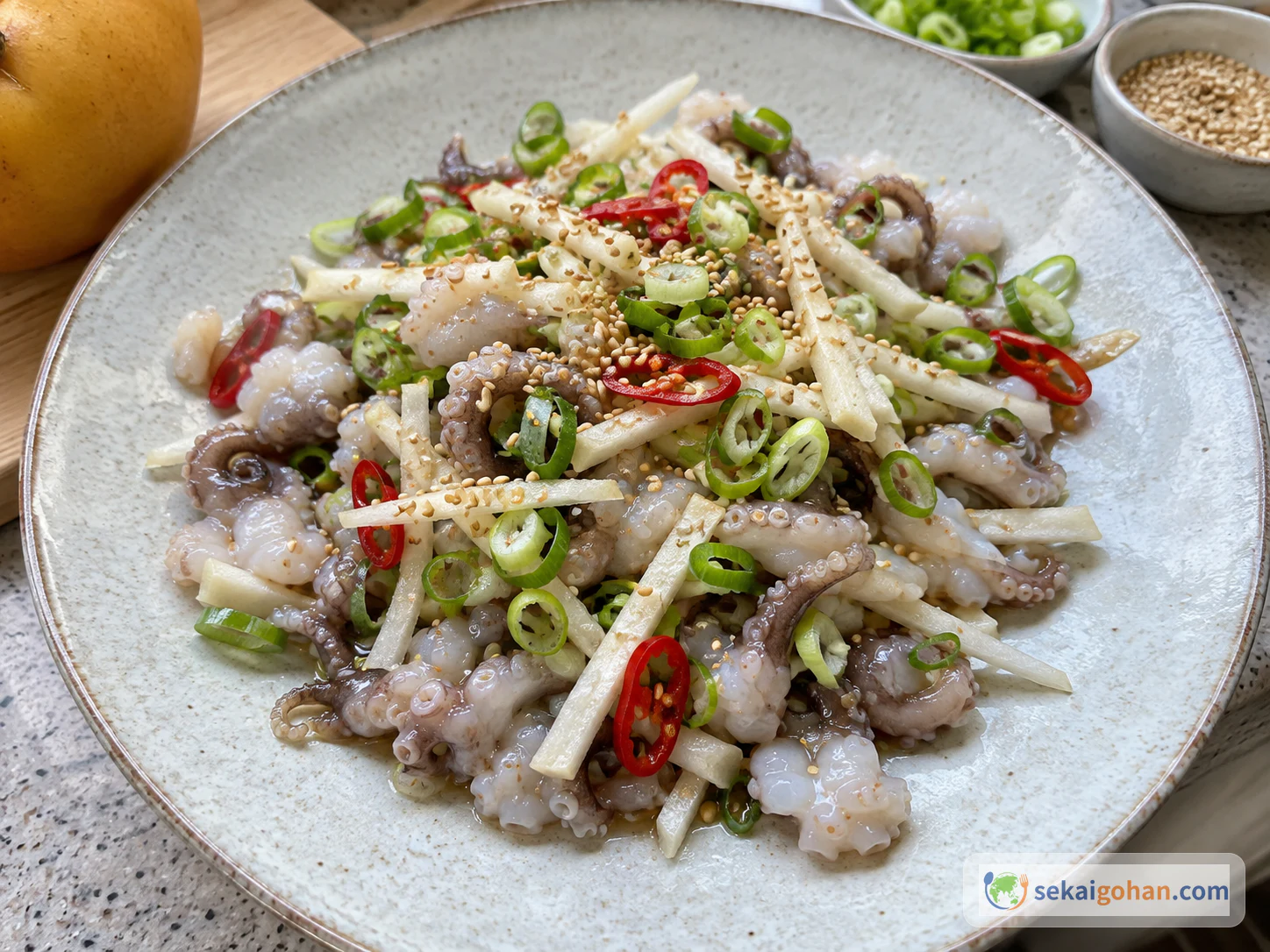
- Pear, scallion and chili. Thin matchsticks of Korean pear add a cold, juicy sweetness against the chew, sliced scallion adds a green bite, and thin red chili slices add heat. Finish with sesame seeds as usual.
- Ginger with the sesame oil. A little ginger poured over with the oil and sesame gives a sharper, warmer smell and cuts the sea flavor.
- Egg yolk. Restaurants sometimes crown the plate with a raw egg yolk. At home, leave it off; raw yolk adds its own food-safety risk to a dish that is already raw.
- The cooked route. For anyone who should skip raw seafood, nakji goes into cooked dishes such as yeonpo-tang soup or a spicy nakji-bokkeum stir-fry, which are separate dishes with their own methods.
Frequently asked questions
Is sannakji eaten while the octopus is still alive?
The nakji is killed and then cut, and eating one whole is rare. The pieces keep moving on the plate because the nerves in the legs stay active after cutting. By the time the plate is served, the octopus is not strictly alive.
Can I make it with frozen nakji or common octopus?
Sannakji is defined by live nakji, so frozen nakji or another octopus species makes a different dish with a different texture. Frozen nakji is not live, so it is not sannakji; in the cooked nakji dishes the nakji is rubbed with flour, rinsed and then heated. Boiled common octopus with sesame oil and salt is a good plate of its own, but it is cooked octopus.
Can I use the same board and knife for other food afterward?
Keep the board, knife and bowls for the nakji apart from other food while you work. When you are done, wash them well before they go back into use. A board set aside for raw seafood makes this simplest.
What does the head go into?
In tangtangi only the legs are chopped and served. The head is opened and emptied during cleaning.