Ingredients and steps on one page. Print it, or choose “Save as PDF” in the print dialog.
Sekai Gohan
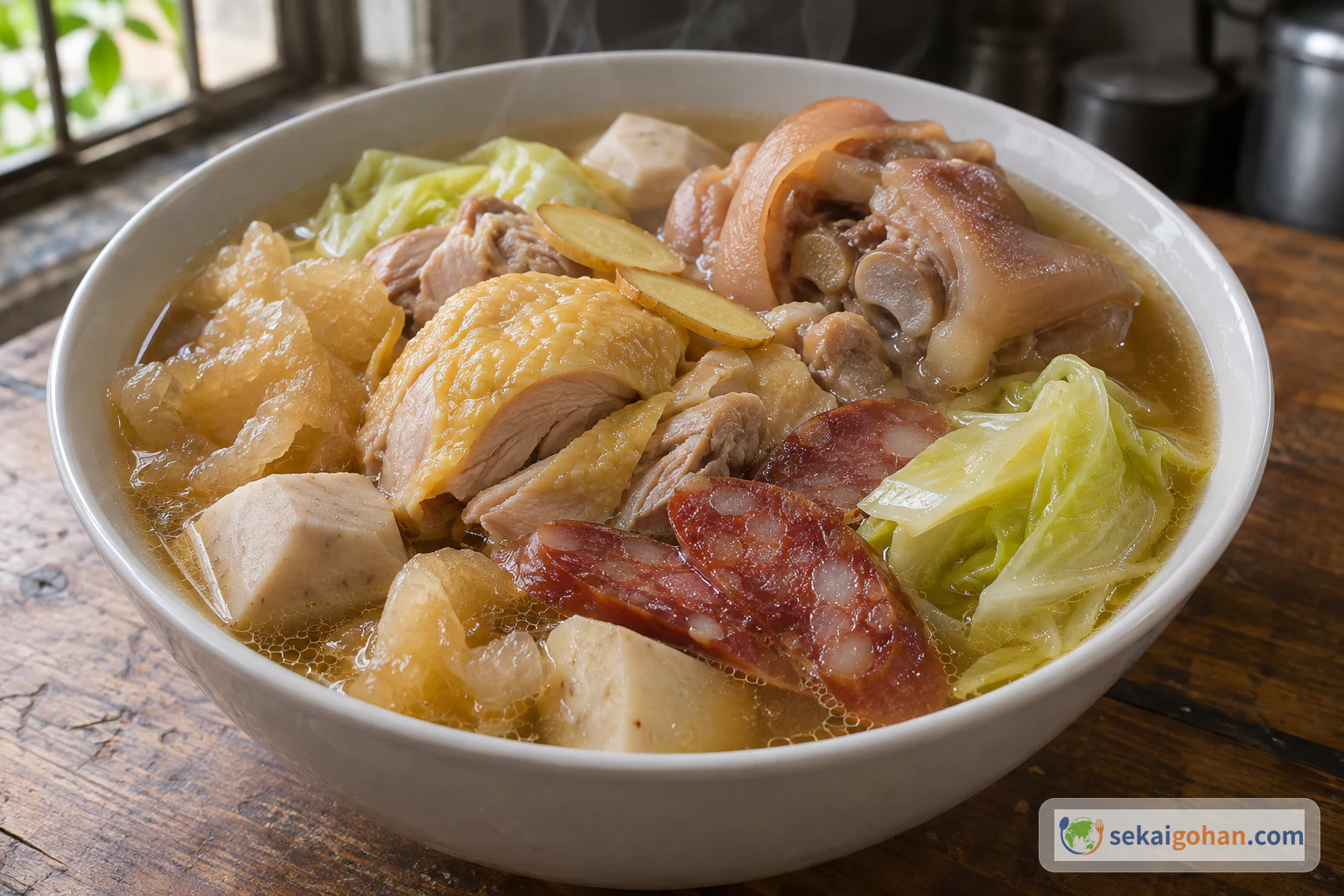
Tacho: Macanese Christmas Stew of Pork, Chicken and Cured Meats
Ingredients
| Ingredient | Amount | Role |
|---|---|---|
| Whole chicken (galinha) | 1, about 3 lb 5 oz (1.5 kg) | Poached whole with ginger and salt; its broth is the base of the stew |
| Pig's trotters (pé de porco) | 2 | Blanched, then simmered with ginger; their liquid is the second broth |
| Chinese cured sausages (lap cheong) | 8 | Steamed, then sliced; they take the place of Portuguese chouriço |
| Smoked goose (ganso fumado) | 1 medium | Cut and steamed; the smoky layer |
| Chinese cured pork belly (lap yuk) | 7 oz (200 g) | Steamed with the sausages |
| Chinese ham | 7 oz (200 g) | Goes into the chicken pot partway through poaching |
| Dried fried pork skin (pele) | 7 oz (200 g) | Soaked, cut and blanched; turns soft and silky in the broth |
| Small yams (inhame, iame chicu) | 12 | Boiled in their skins, peeled, warmed in chicken broth |
| Cabbage | 1 medium | Cut into 6 wedges and blanched |
| Split peas | 5 oz (150 g) | Scalded and rinsed; go into the pot with the yams |
| Fresh ginger | 2 slices for the chicken, a little for the trotters | Freshens the poaching water |
| Salt | to taste | Chicken pot, trotter pot, cabbage water and final seasoning |
| Pepper | to taste | Final seasoning |
| Cooking oil | a little | Goes into the cabbage blanching water |
| White rice, cooked without salt | as needed | Served alongside |
| Balichão (fermented krill relish), optional | a little | Served on the side |
| Lemon and thinly sliced onion, optional | a little | Served with the balichão |
Steps
1Wash, cut and blanch the pork skin
Fill a large basin with lukewarm water and put in the dried pork skin. Wash it twice, picking off any dirt and leftover hairs. Cut it into roughly 4-inch (10 cm) squares, blanch them in boiling water and drain. The skin is ready when a piece dents under your finger and slowly springs back. Skin that is still stiff now stays tough in the finished stew.
2Poach the chicken with ginger and ham
Put the whole chicken in a large pot with 2 slices of ginger and some salt. Add water until the chicken is just covered, bring it up and hold a gentle simmer. Partway through, add the Chinese ham at the side of the pot. The chicken is done when the leg joint moves freely, the juices run clear where a skewer goes in, and the thickest part has held 167°F (75°C) for 1 minute.
3Cool and carve the chicken
Lift out the chicken and ham and set the broth aside. This is the first of the two cooking liquids. Let the chicken cool completely before cutting, and put it in the refrigerator if it will sit for a while. Then cut it into serving pieces. Done right, the pieces come away cleanly with the skin still on.
Cool before you carveHot poached chicken shreds under the knife. Once it has cooled, the pieces keep their shape through layering, simmering and ladling.
4Blanch the trotters and throw out the water
Bring a pot of water to a boil and add the trotters. Boil them for 5 minutes. Pour off all the water along with the foam, and rinse the pot. The trotters should look cleaner and paler, and the scummy water goes down the drain.
Never skip the discardThe 5-minute blanch is what keeps the stew from smelling porky, and only if that first water is thrown away. Everything that tasted rank stays in it, and the second pot starts clean.
5Simmer the trotters with ginger
Return the trotters to the pot with fresh water, a little ginger and some salt. Simmer until the skin turns translucent and a skewer slides in easily all the way to the bone. Check that the meat beside the bone has reached 167°F (75°C) for 1 minute. Keep this liquid, which is the second broth.
6Steam the cured and smoked meats
Cut the smoked goose into pieces and arrange it on an enamel plate with the 8 sausages and the lap yuk. Set the plate in the steamer, cover, and steam for 10 minutes once the water boils. Slice the sausages thickly or on the diagonal. They are ready when fat has pooled on the plate and the sausage skins look glossy. Steam them much longer and the skins split.
7Boil the yams in their skins
Scrub the small yams and boil them whole, skins on. Drain them when a skewer goes in easily but each yam still holds its shape. Peel off the skins. They should come off in strips and leave a smooth, pale surface.
8Scald the peas and warm the yams in chicken broth
Rinse the split peas, scald them briefly in boiling water and rinse them in cold water. Stop when the surfaces wrinkle and a pea breaks under your finger. Put the peeled yams in some of the chicken broth and warm them over low heat. They should be hot through, golden at the edges, and unbroken.
9Blanch the cabbage wedges
Cut the cabbage into 6 wedges and wash them. Bring water with salt and a little oil to a boil, blanch the wedges and drain them well. The cabbage is ready when a skewer enters the core but the leaves still hold together. Overcooked here, the cabbage melts away in the final simmer.
10Layer the pot
In the largest pot, lay the trotters on the bottom. Add the chicken, then the ham, then the steamed sausages, lap yuk and goose, then the pork skin. Put the yams and split peas on next and set the cabbage wedges on top. When you are done the pot is full and the cabbage sits on top of everything else.
11Pour in both broths and simmer
Combine the chicken broth and the trotter liquid and pour them over the layers until the liquid comes halfway to two-thirds of the way up. Simmer over low heat until the whole pot is hot and steaming and the pork skin is soft and silky. Taste the broth, then season with salt and pepper. Keep the heat low so the bottom never scorches.
Salt lastThe ham, lap yuk and sausages give a lot of salt to the broth while everything simmers. Taste only after the pot is hot through, and don't reduce the liquid hard.