Ingredients and steps on one page. Print it, or choose “Save as PDF” in the print dialog.
Sekai Gohan
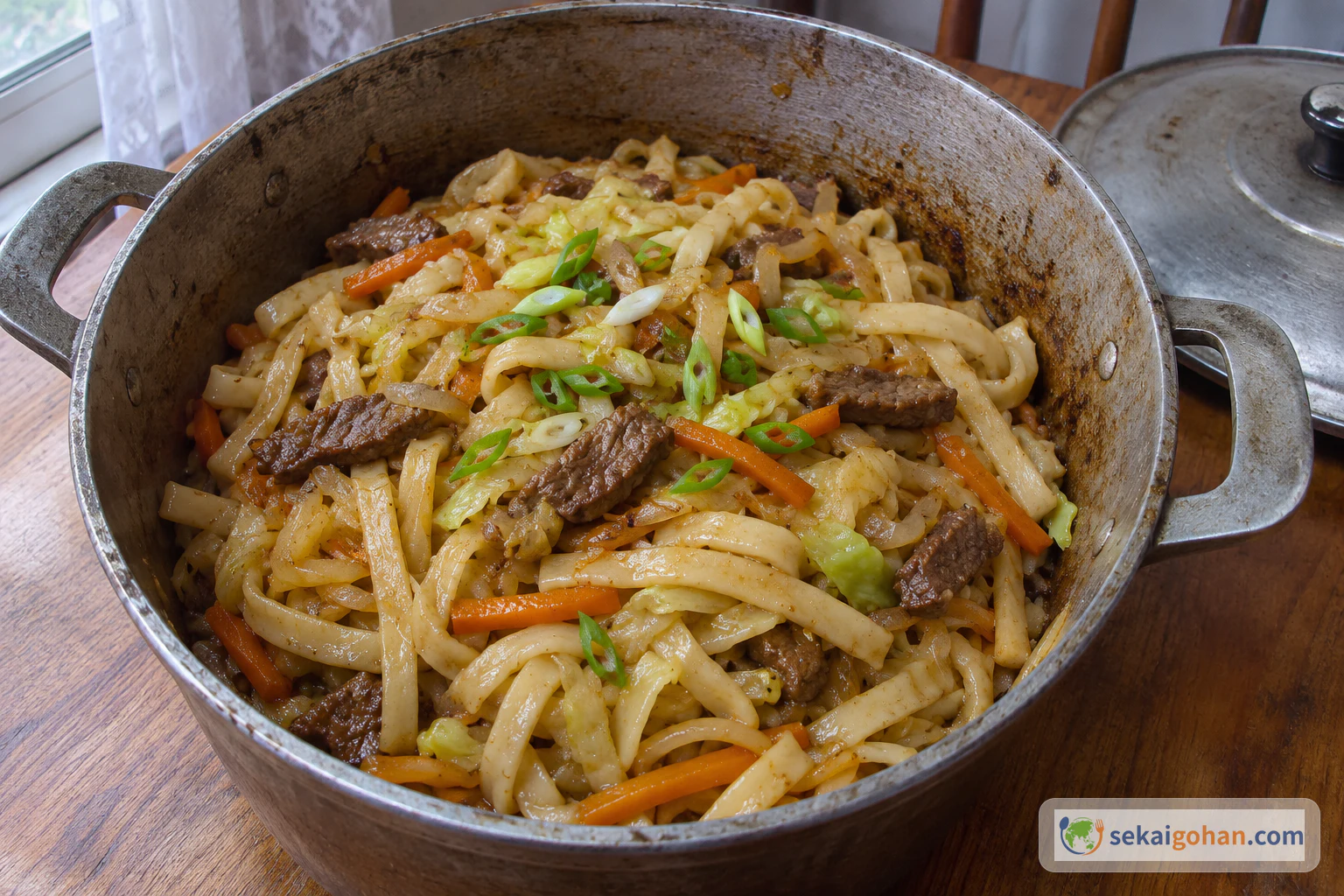
Tsuivan: Mongolian Hand-Cut Noodles Steamed over Meat and Cabbage
Ingredients
| Ingredient | Amount | Role |
|---|---|---|
| All-purpose flour (гурил, guril) | 10¾ oz (300 g) | The body of the noodles |
| Water for the dough (ус, us) | ¾ cup + 1½ tbsp (200 ml) | Makes a pliable dough |
| Flour for dusting | a little | Keeps the dough from sticking to the board |
| Oil for the dough layers | about 1 tbsp | Keeps the stacked layers apart so the noodles separate |
| Boneless mutton, beef or pork (мах, makh) | 7 oz (200 g) | Savory flavor and the fat that coats the noodles |
| White cabbage (байцаа, baitsaa) | 9 oz (250 g) | Bulk, sweetness and steam |
| Carrot (лууван, luuvan) | 3½ oz (100 g) | Sweetness and color |
| Onion (сонгино, songino) | 1 | Aromatic base, added in two halves |
| Garlic (сармис, sarmis) | 2 cloves | Aroma for the meat |
| Oil for frying | about 1 tbsp | Softens the onion and browns the meat |
| Salt (давс, davs) | about ½ tsp to start, then to taste | Seasons the stew that flavors the noodles |
| Black pepper | to taste | Warmth |
| Water for the stew | enough to reach two-thirds of the height of the vegetables | The steam that cooks the noodles |
| Spring onions | 1–2, optional | A fresh finish |
Steps
1Cut the meat and vegetables small
Shred the cabbage finely and cut the carrot into thin batons. Slice the onion into half-moons and divide it into two equal piles, one for the start and one for near the end. Cut the meat into small, thin strips, about half the size of a stew cube, and mince the garlic. Large pieces of meat will not cook through in the time the noodles take. You are ready when the board holds neat piles and the meat strips are no thicker than the carrot batons.
2Mix and rest the dough
Put the flour in a bowl, pour in the water, and work it with your hand until it comes together. Knead it into a smooth, pliable dough, and dust with a little flour if it sticks to your fingers. Cover the bowl with a cloth and let it rest for 15 minutes so it rolls out without shrinking back. The dough is ready when it comes cleanly away from the bowl and springs back slowly when you press it.
3Roll two sheets and oil them
Divide the rested dough into two pieces. On a floured surface, roll each into a round sheet of even thickness. Spread oil over the whole top surface of the first sheet, working it from the center to the edges. Lay the second sheet on top and oil its surface the same way. The top should shine all over. Any dry patch is a spot where the layers will weld together later.
4Halve, stack and cut the noodles
Cut the oiled pair of sheets in half and stack one half on the other, oiled side up. Halve and stack again, and keep going until you have a block about 2¾ × 10 inches (7 × 25 cm) and 2 inches (5 cm) tall. Slice across the block into strips a generous ⅛ inch (0.4 cm) wide. Leave the cut noodles together in little stacks rather than pulling them apart. Each stack should show clean, separate layers on its cut face. A face that looks like one solid slab means the layers lacked oil.
Oil every layer thinly and all the way to the edgeThis decides whether you get noodles or a lump. Too little oil between the sheets and the strands fuse in the steam. Spread a thin film over every surface, and keep the cut noodles in their small stacks so the steam can work between the layers.
5Soften half the onion, then the carrot
Heat the frying oil in the heavy pot over medium heat. Add the first half of the onion and stir until it turns translucent. Add the carrot and stir-fry for a few minutes. Move on when the carrot has gone limp and glossy with oil.
6Brown the meat and season
Add the meat and stir-fry until every strip has changed color. If the bottom starts to catch, add a splash of water and scrape it loose. Season well with the garlic, salt and pepper now, while the pot is still dry, so the cabbage's water doesn't wash out the salt later. The pot is ready when the meat is browned at the edges and a thin brown film coats the bottom.
7Wilt the cabbage under the lid
Add the cabbage on top of the meat, put the lid on and let it cook for a few minutes. Lift the lid and turn everything once so the cabbage meets the hot bottom. The cabbage releases its water here, so you can judge the next step by eye. Move on when the cabbage has collapsed to about half its volume and moisture shows at the bottom of the pot.
8Add water to two-thirds and the rest of the onion
Pour in water until it reaches about two-thirds of the height of the vegetables. Bring it to a simmer and cook for a few minutes, then taste the liquid and correct the salt. Scatter the remaining onion over the top and press it down lightly. The pot is right when bubbles rise from the bottom and the tops of the meat and cabbage sit above the waterline. If the water climbs higher than that, boil some off before the noodles go on.
The water line decides the textureThe noodles should steam, not boil. Below the two-thirds line, the steam cooks them and leaves the pot nearly dry. Above it, the noodles sit in liquid and turn gluey.
9Lay on the noodles and steam with the lid shut
Lay the noodle stacks gently over the vegetables in a loose layer, without stirring them into the liquid. Put the lid on and keep the heat at medium until steam builds and pushes the air out. Then turn it down to low and steam for about 15 minutes. Keep the lid closed the whole time, because every peek lets out steam and leaves the top layer raw. When steam escapes at the rim early on, it is time to turn the heat down.
10Fan the noodles and loosen them
Lift the lid. The water should be almost gone, and the noodles will be slightly reddish-brown and a little sticky on the outside. Fan fresh air over the pot with a small cutting board until the surface dries and the color settles, then pull the stacks apart with chopsticks or a fork and toss them through the meat and vegetables. Break one noodle from the top layer. It should have no white core and no floury taste. You are done when the strands come apart one by one.
11Serve with the pan juices
Scatter sliced spring onion over the pot if you are using it. Pile the noodles, meat and vegetables onto plates so each serving gets some of everything. Spoon the fat and juices from the bottom of the pot over the top. The plate is right when the strands are glossy and no pool of liquid gathers underneath.