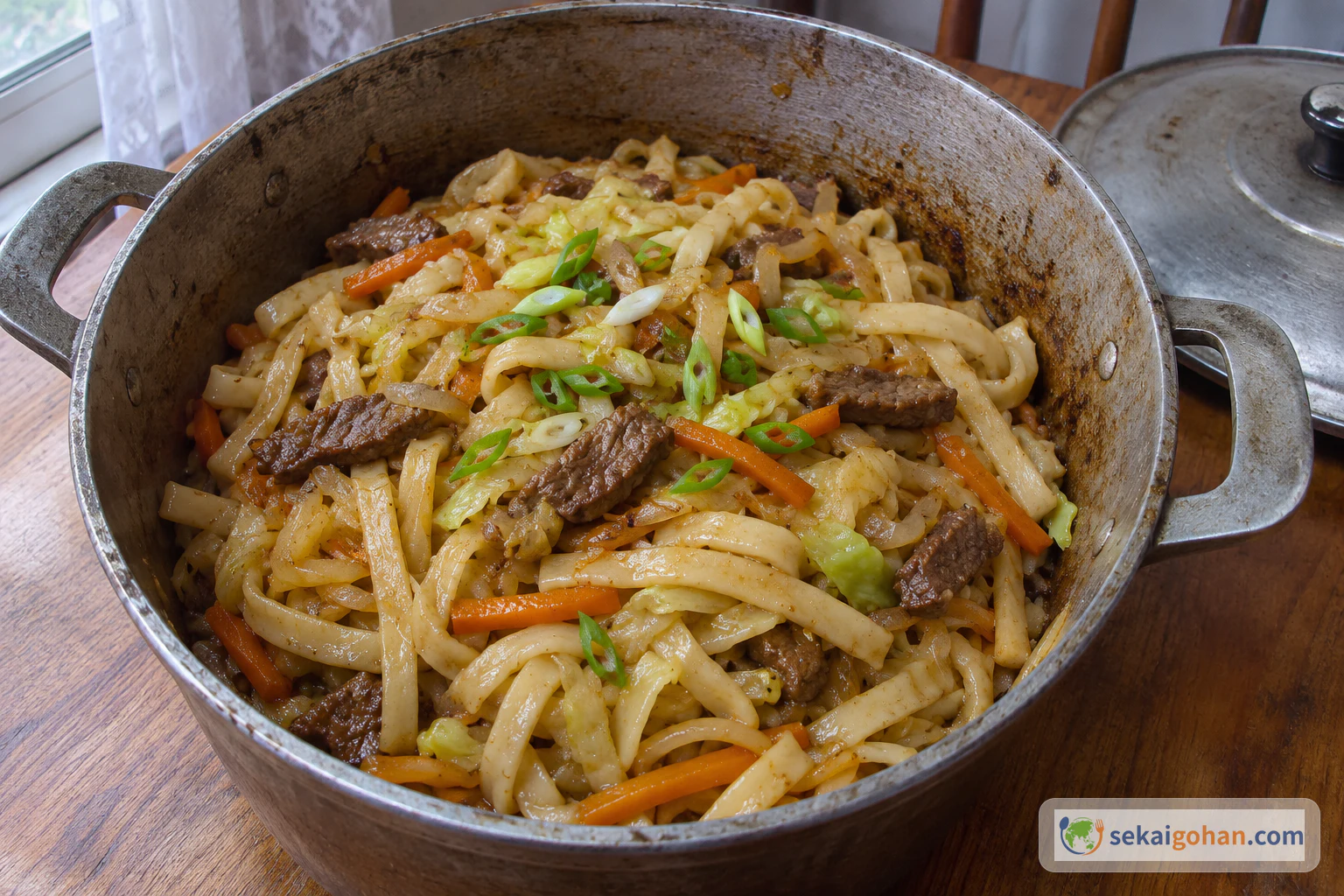
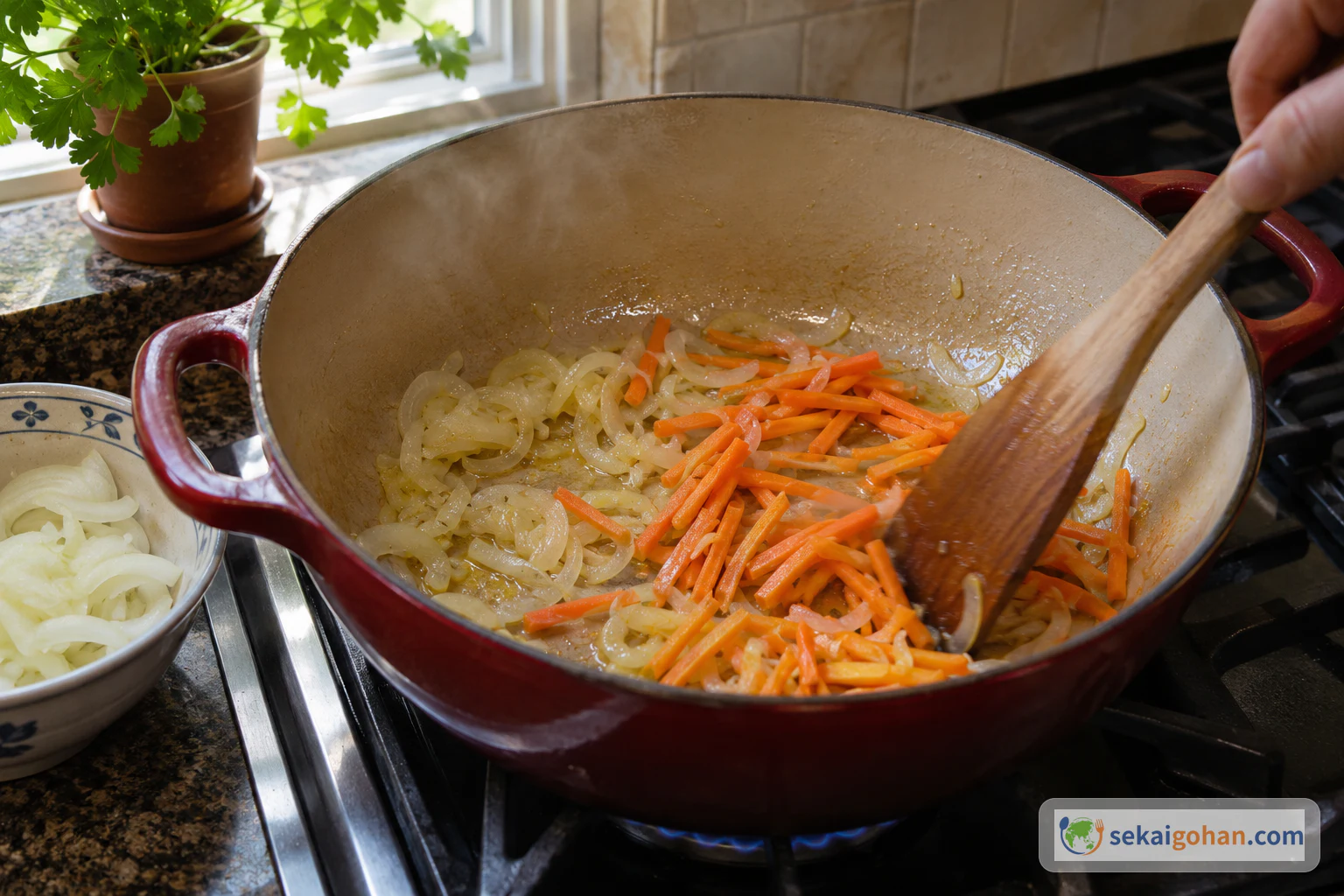
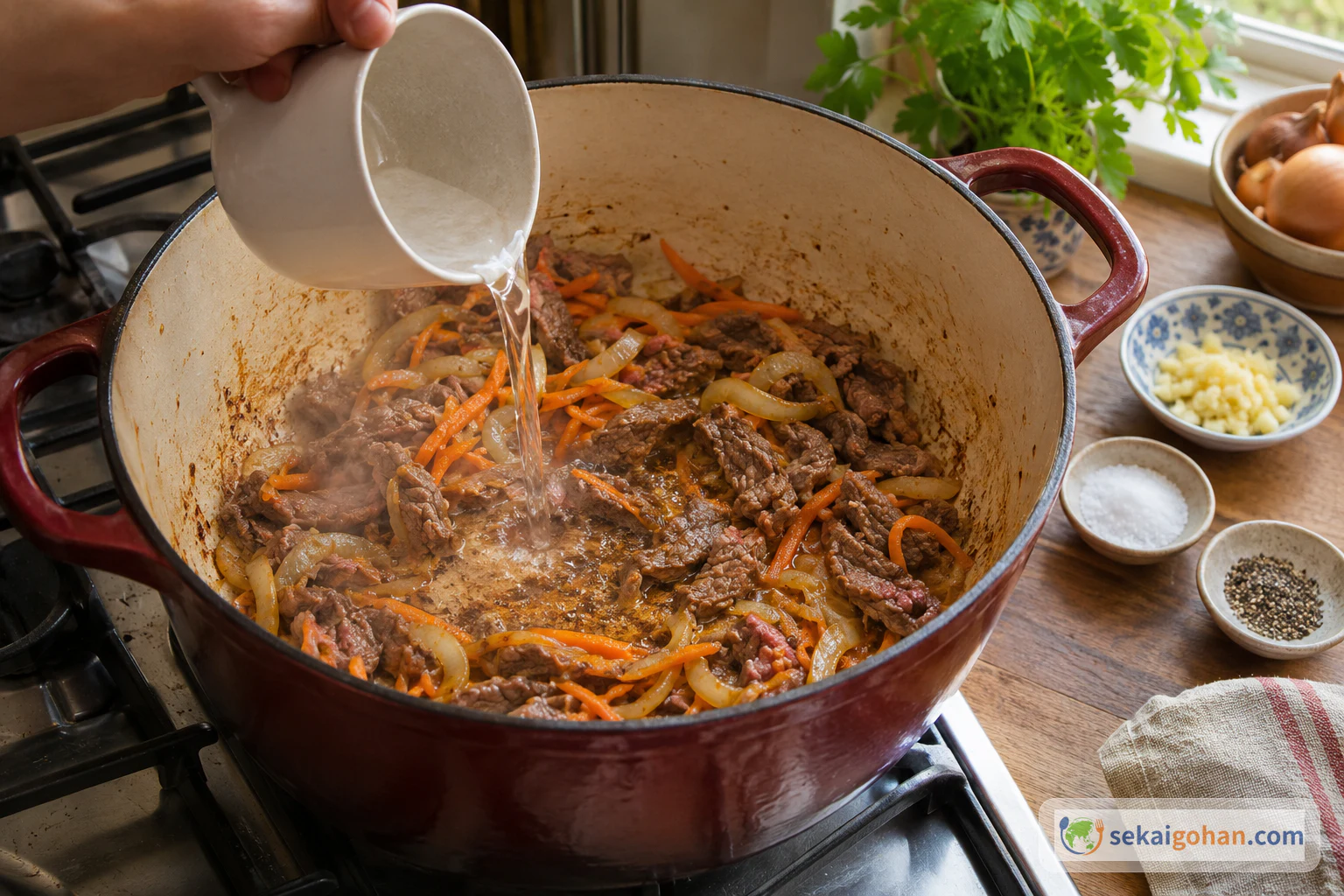
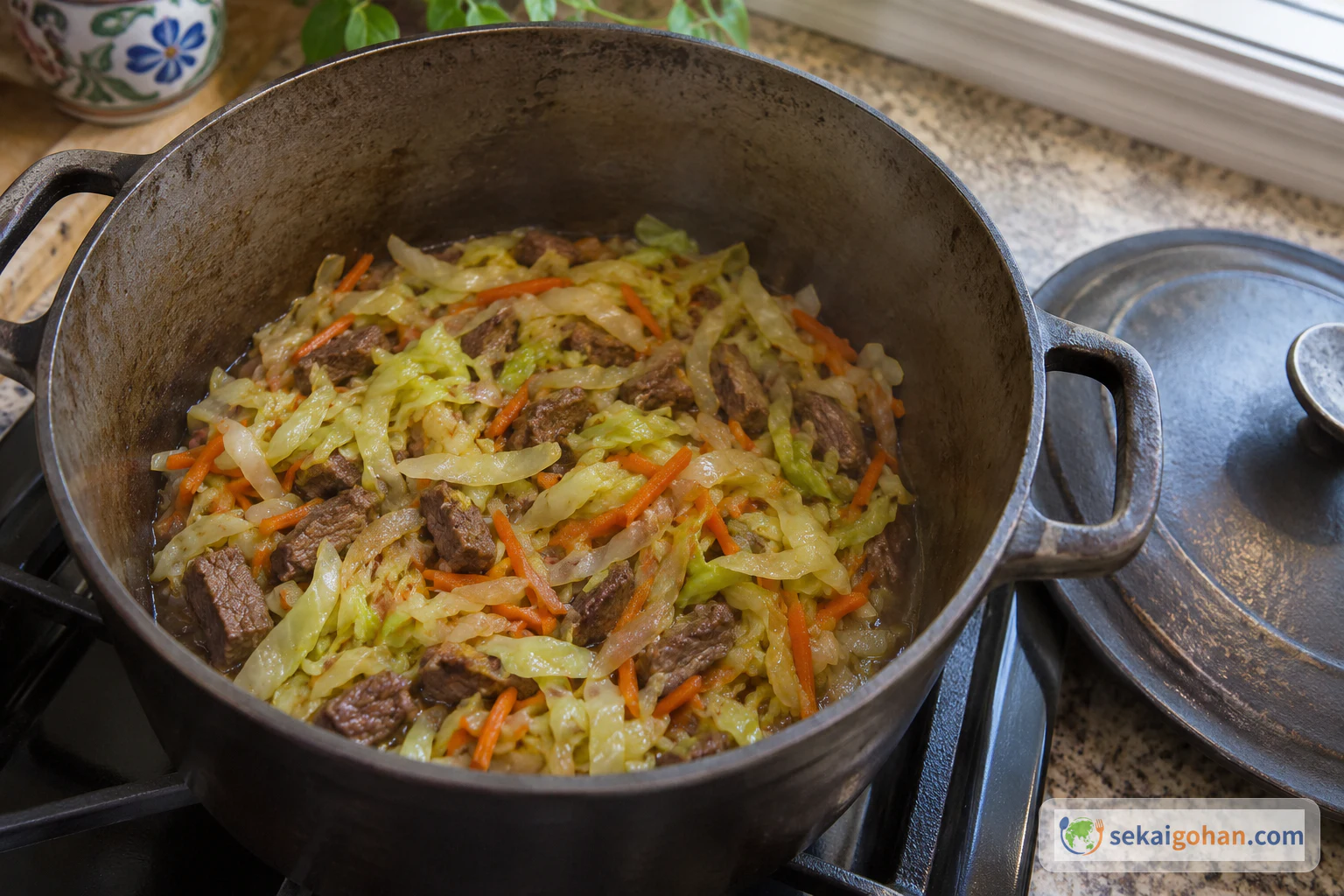
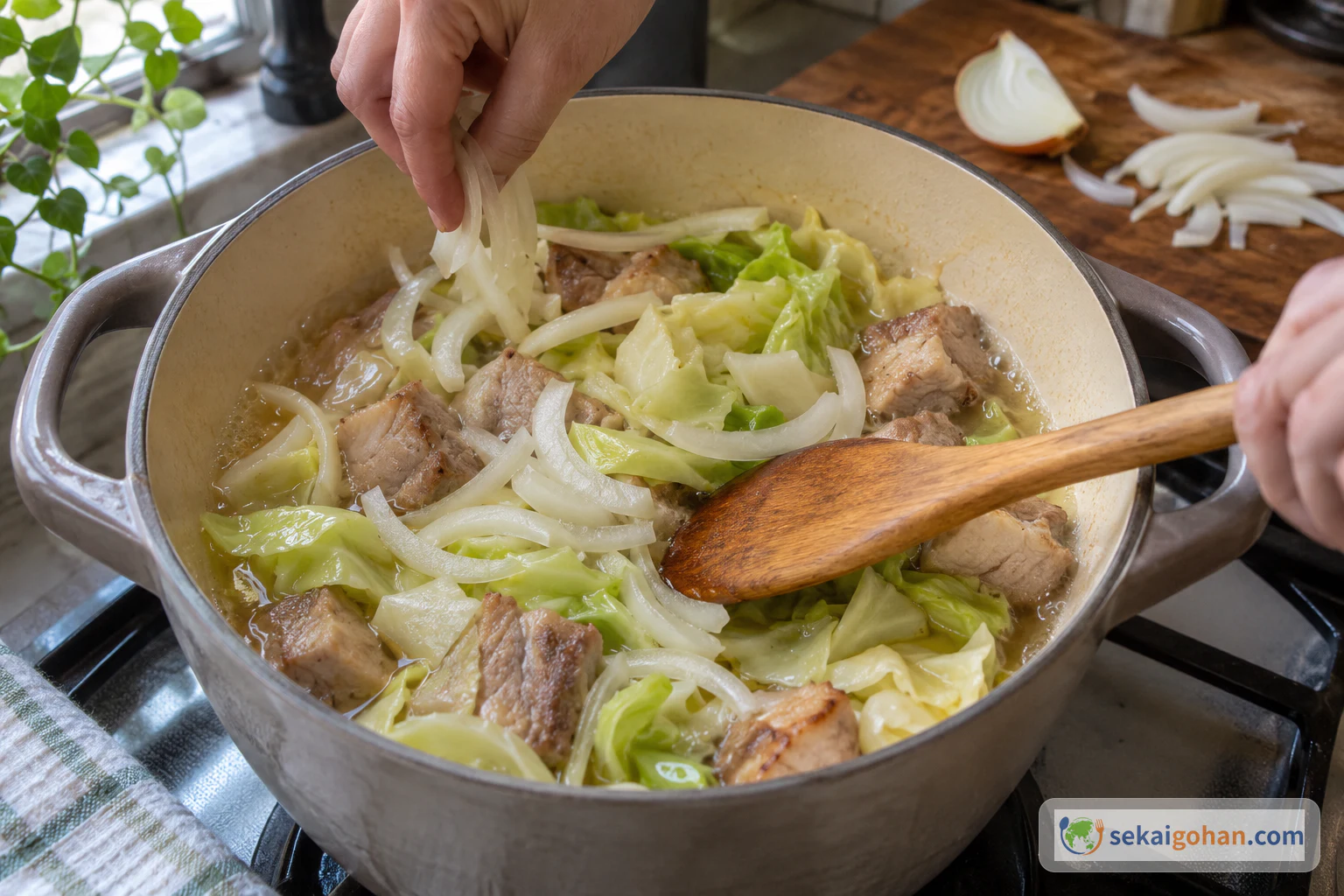
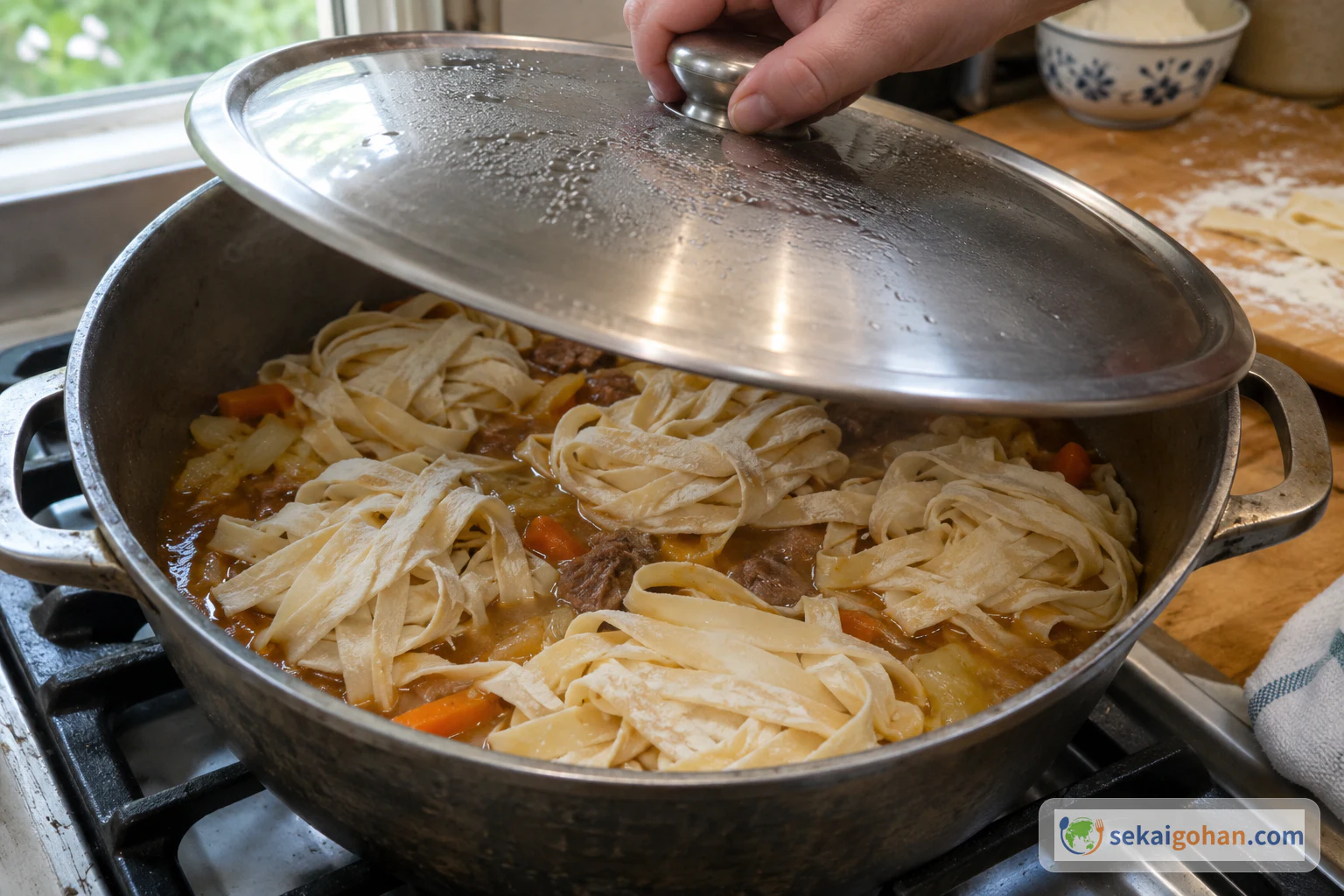
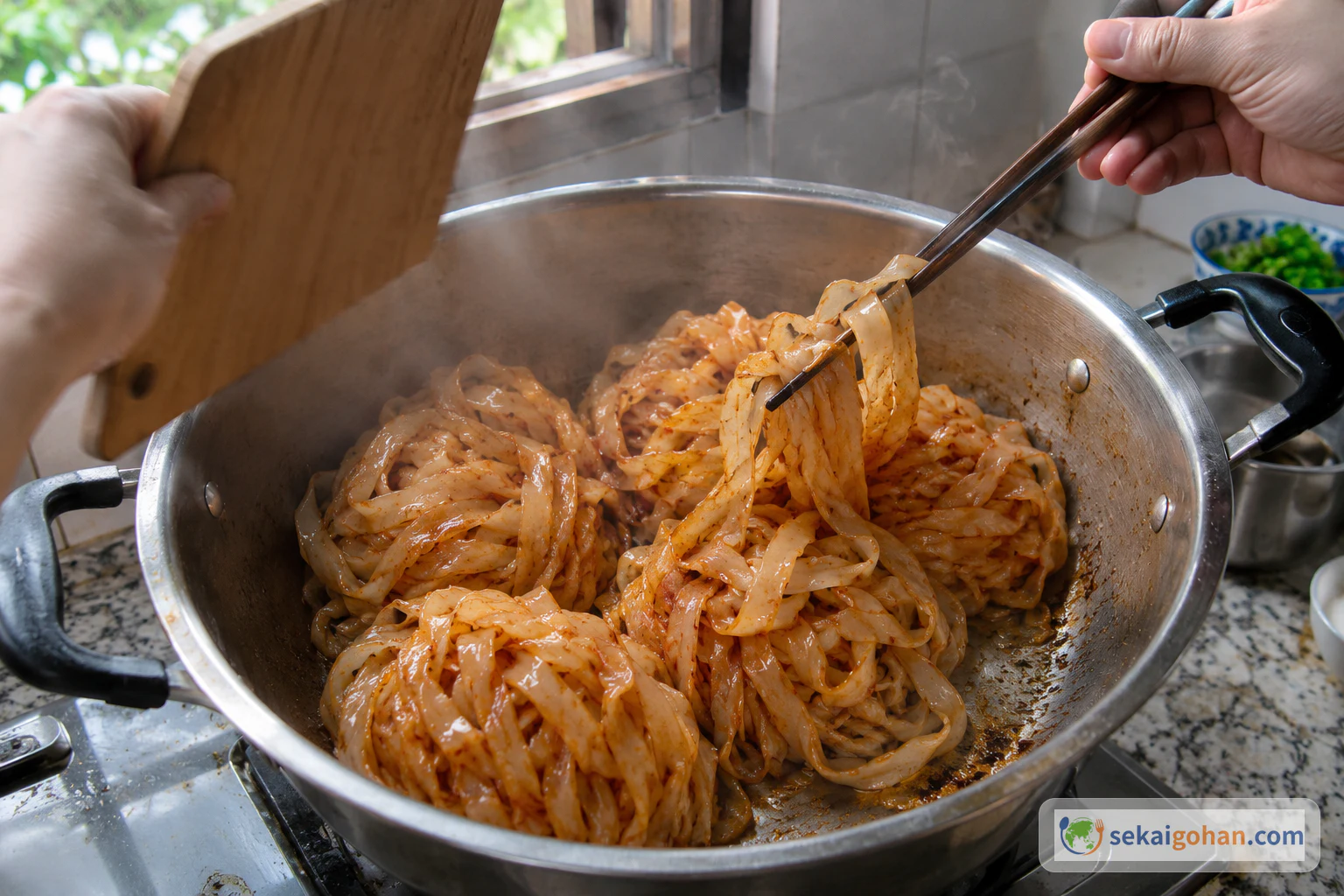
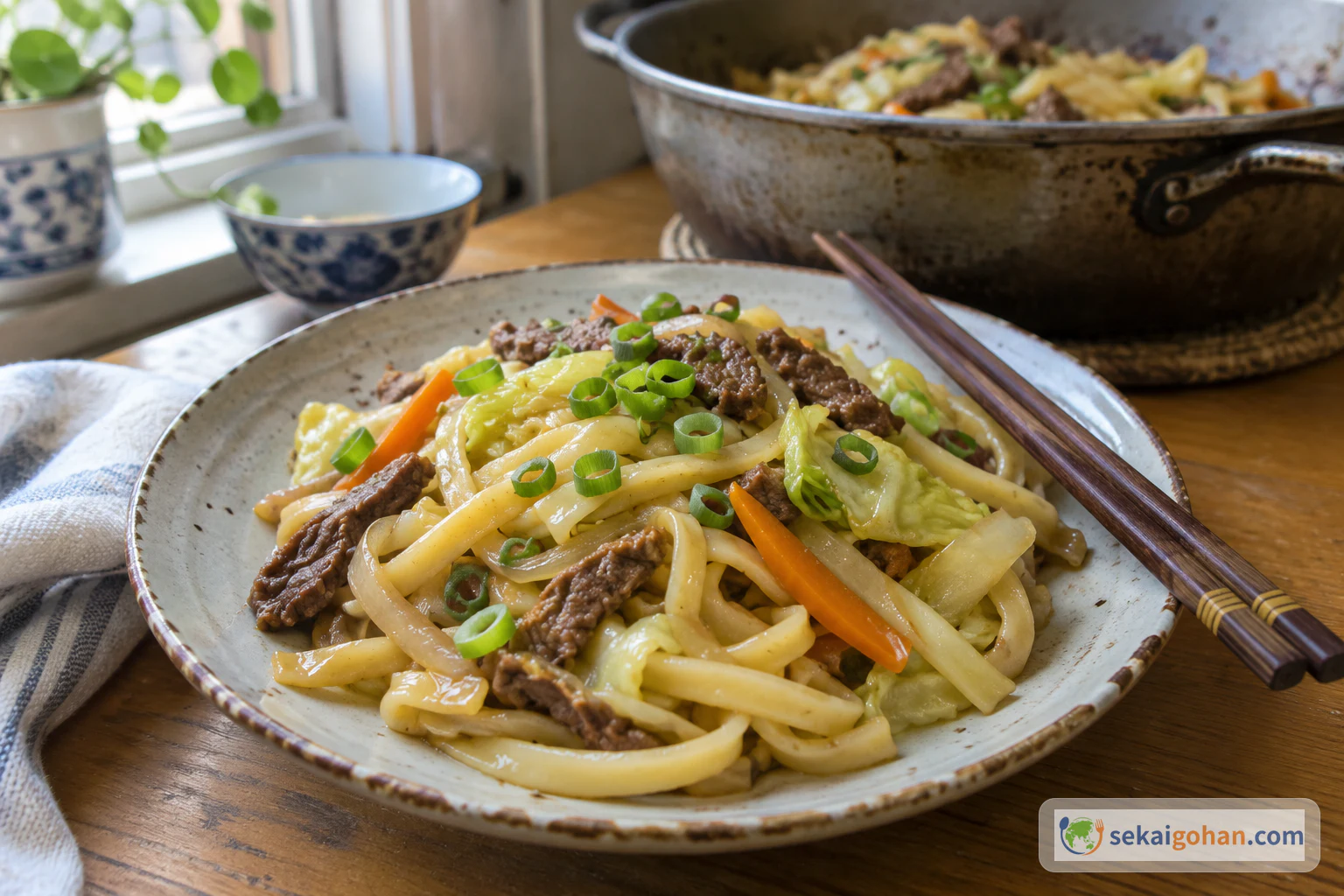
After fifteen minutes with the lid shut, you lift it and a cloud of steam rolls out of the pot. The noodles on top have turned slightly reddish-brown from the juices, and they cling to each other a little. You wave a small cutting board over the pot, and as the surface dries the strands start to come loose under your chopsticks. Tsuivan is Mongolian home cooking: raw hand-cut wheat noodles laid over a shallow stew of meat, cabbage and carrot, then cooked in the steam that rises from it. It tastes of meat fat, sweet onion and cabbage, and the noodles are chewy and glossy, with the pan juices soaked right into them.
From Griddled Flatbread to Steamed Noodles
The name and its neighbours
The name tsuivan (цуйван) is usually traced to chǎobǐng, a northern Chinese dish of thin flatbread cooked on a griddle, cut into strips and stir-fried with meat and vegetables. The Mongolian dish keeps the idea of strips of dough cooked with the meat but takes far more meat than its namesake. Chǎobǐng is a different word from chǎomiàn, the stir-fried noodles behind chow mein, and the two dishes are easy to confuse. How and when tsuivan settled into Mongolian kitchens is not settled.
Tsuivan is described as one of the most popular dishes in Mongolia. Families cook it at home and many local restaurants serve it. It sits easily beside khorkhog, the mutton cooked in a closed vessel, and buuz, the dumplings made from the same plain wheat dough rolled into wrappers instead of cut into noodles.
How it changes from pot to pot
Every household makes it a little differently. Some pots hold only noodles and meat, others add vegetables to taste. Mutton is the traditional meat, while beef and pork are also used, and so is horse meat. Borts, Mongolian dried meat, can stand in for fresh. Fatty meat is considered the better meat in Mongolia, and that fat is what coats every strand. Restaurant versions, especially in the cities, sometimes add soy sauce and extra vegetables such as broccoli, bell pepper and garlic scapes.
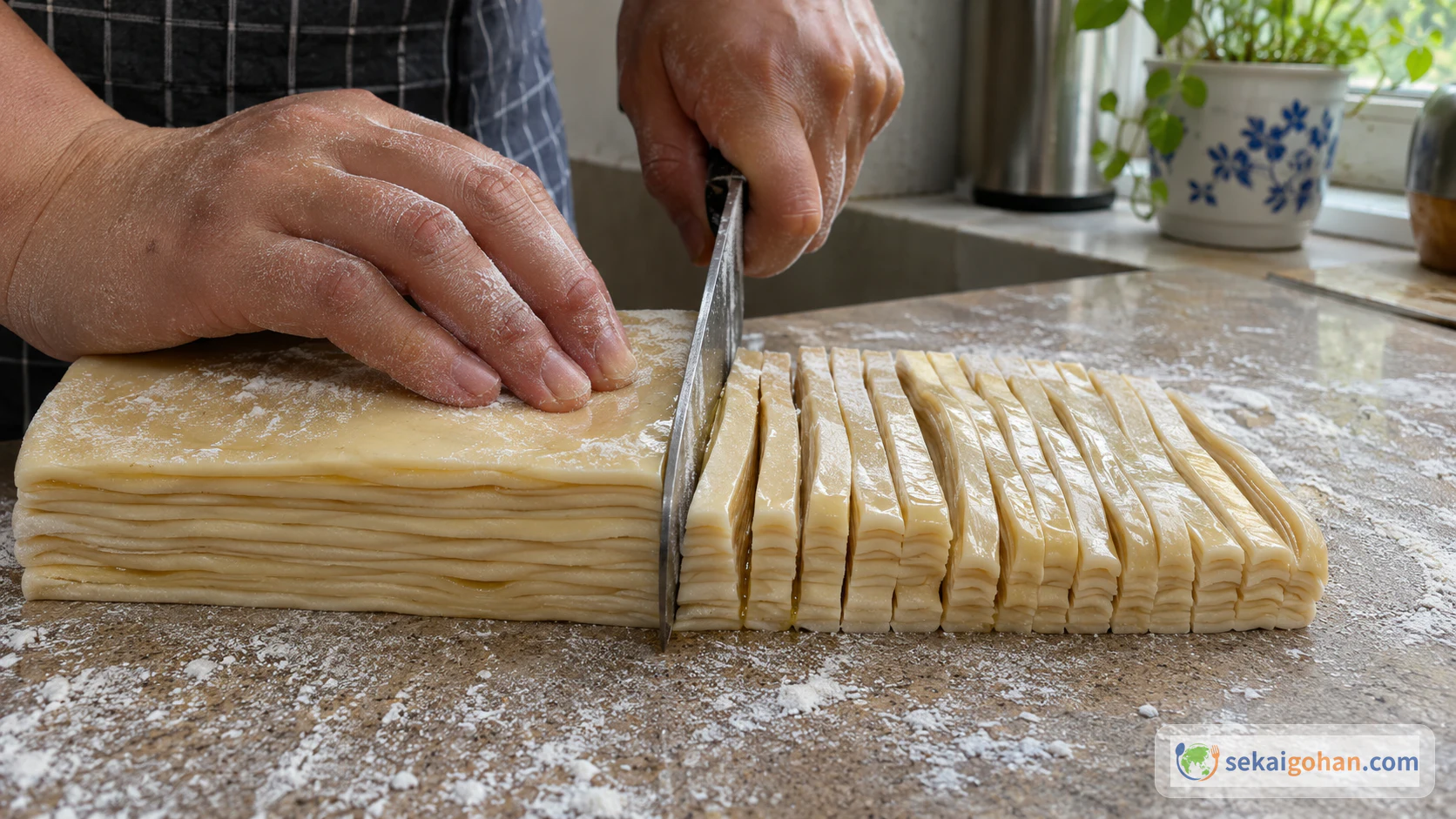
Cooks also disagree about the noodles. The method preferred today rolls the dough, oils it, stacks it and cuts it raw, then steams the noodles on top of the stew. Many cooks, including some nomadic households, toast thin sheets of dough on a dry griddle first and then cut them into strips. Which way is older is a matter of argument, and both are cooked in Mongolia. One Japanese recipe page explains steaming instead of boiling as a way to save water, which is scarce. It also means the noodles never touch a pot of boiling water. They cook in the steam from the meat and vegetables below.
Both names come from Chinese, but from different words. Tsuivan comes from chǎobǐng (stir-fried flatbread strips), and chow mein comes from chǎomiàn (stir-fried noodles). That is why some tsuivan is still made by cutting a griddled sheet into strips.
Ingredients
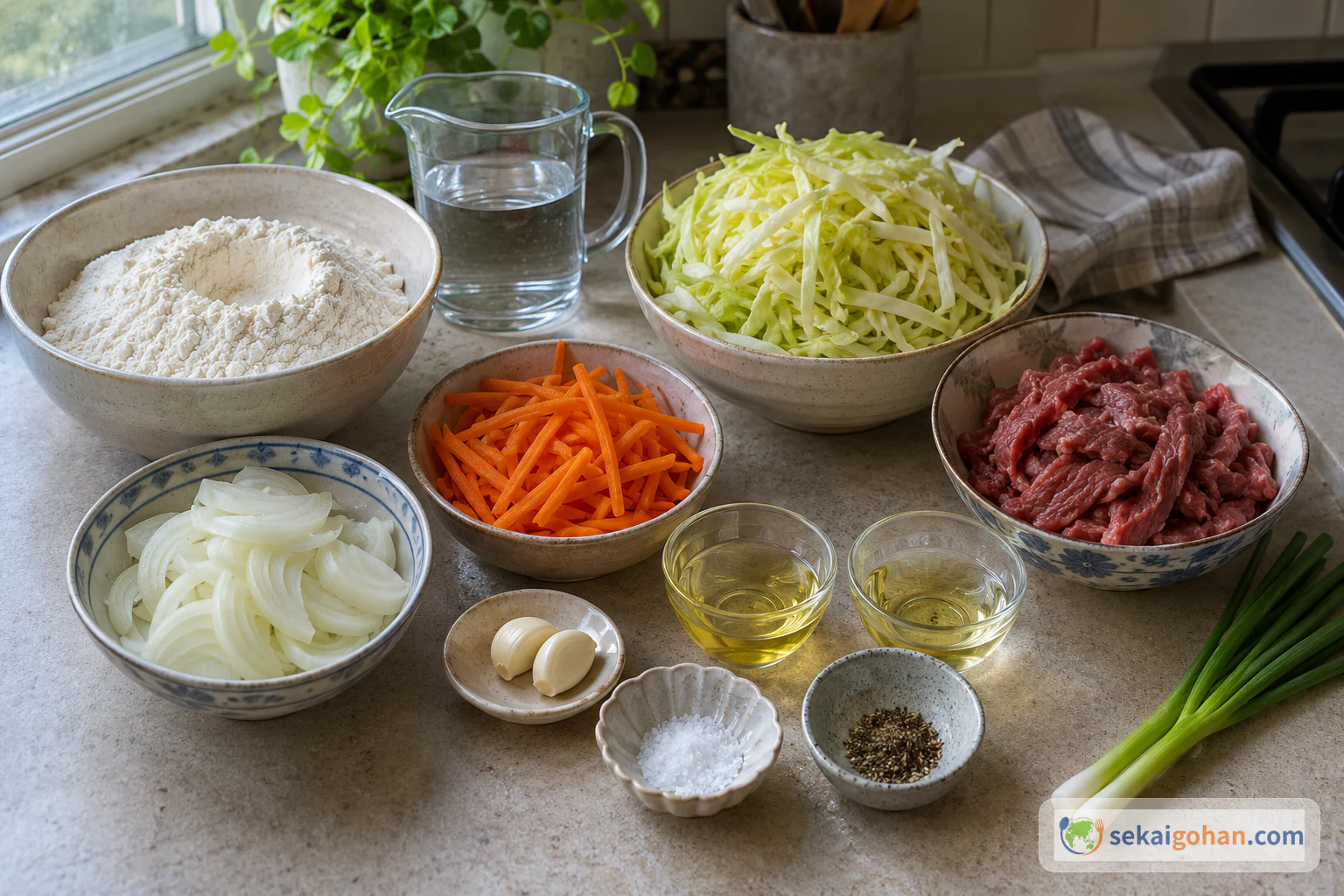
Choose a cut with visible fat, or leave the fat on. As it renders, it carries the flavor into the noodles. Lean meat works, but the dish tastes thinner. With very lean meat, drizzle a little oil over the pot at the end.
The dish contains wheat, which you can't leave out. The basic recipe has no egg, milk or soy. Adding soy sauce brings in soy, and making the dough with milk brings in milk.
Equipment
- Rolling pin, 12 inches (30 cm) or longer
- A floured work surface
- Heavy pot about 9½ inches (24 cm) across, with a tight-fitting lid
- Sharp knife and cutting board
- A second small cutting board (or similar flat board) for fanning
- Wooden spatula
- Chopsticks or a fork
- Mixing bowl and a clean cloth
Choosing and Substituting
Everything here is in an ordinary supermarket. For the flour, all-purpose flour gives a dough that holds its layers and cuts cleanly. Soft cake or pastry flour alone makes noodles that are tender and break easily. A blend that leans toward bread flour gives a chewier bite. Mix the dough with water only. That keeps it plain and lets the meat fat carry the flavor.
The meat sets the character of the pot. Mutton or lamb shoulder, boneless, gives the strongest aroma and the most traditional taste, and you will find it at a butcher that carries lamb. Beef shoulder or round cut into strips is milder and easy to find. Pork brings sweet fat. Whichever you choose, cut it yourself into small strips. The vegetables are white cabbage and carrot, and other vegetables can go in to taste. More cabbage means more water in the pot, so add extra and you will have to judge the water line more carefully. Grated garlic works as well as minced.
Method
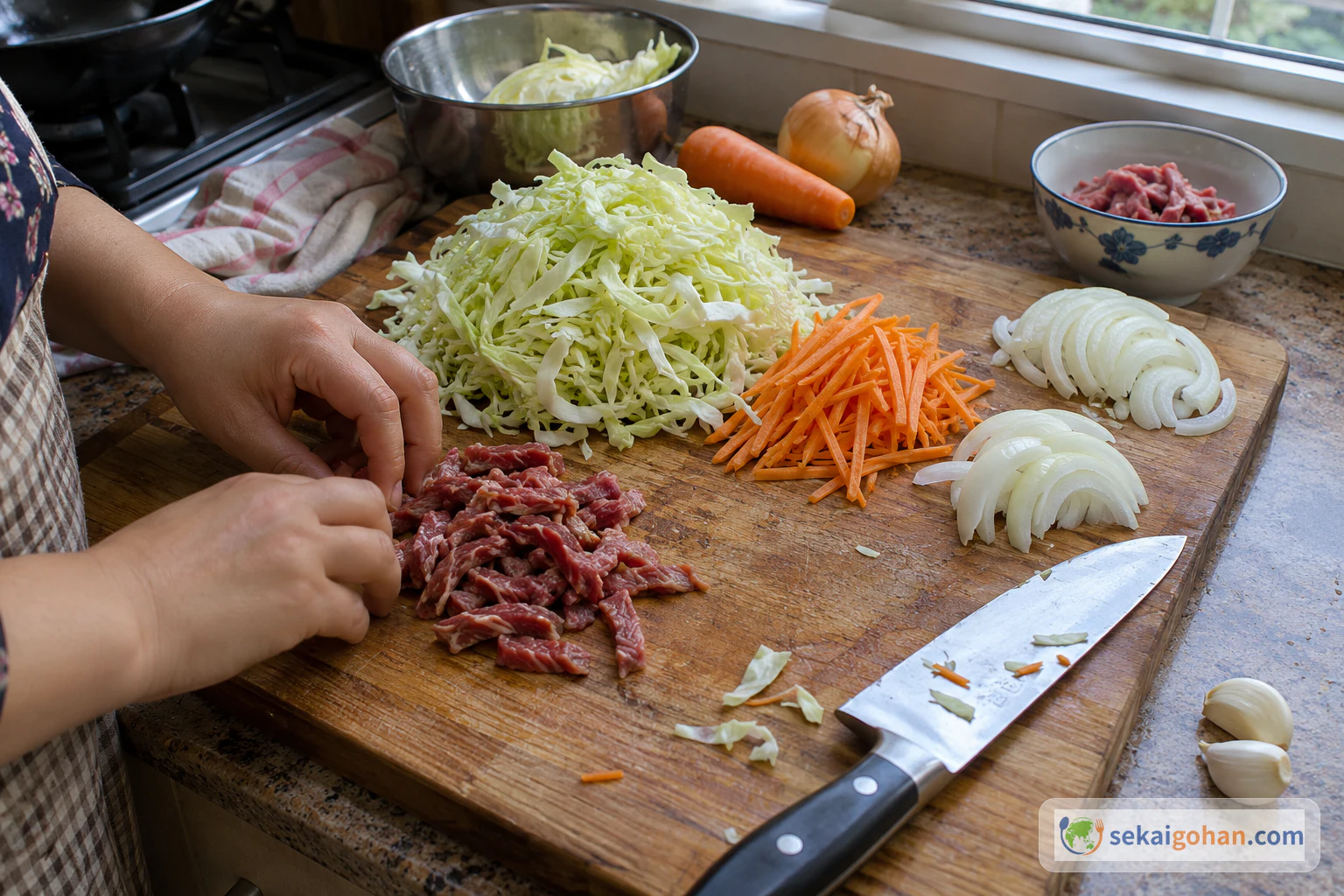
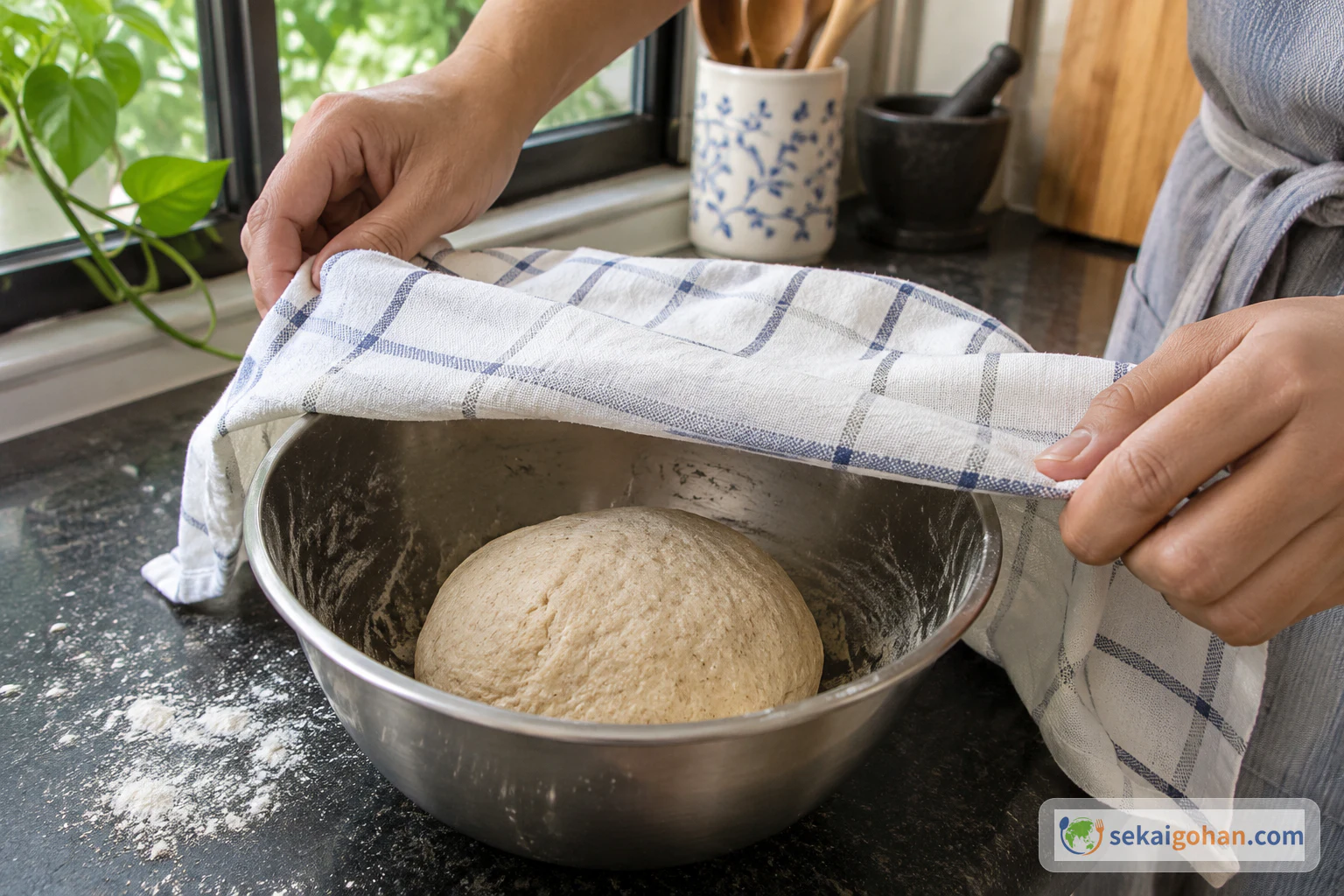
Cut all the meat and vegetables before you touch the flour. While the dough rests, you have a quiet stretch to clear the board. The noodles are rolled, oiled and cut before the pot goes on the heat, because once the stew starts, the steps follow quickly. The longest hands-off stretch is the 15-minute steam with the lid shut.
The noodles go into the pot raw and cook in the steam from below. They must be cooked to the center before you serve them. A noodle with a white core or a floury taste is not done. Cook the meat all the way through, and use strips of boneless meat, not ground meat.
When It Goes Wrong
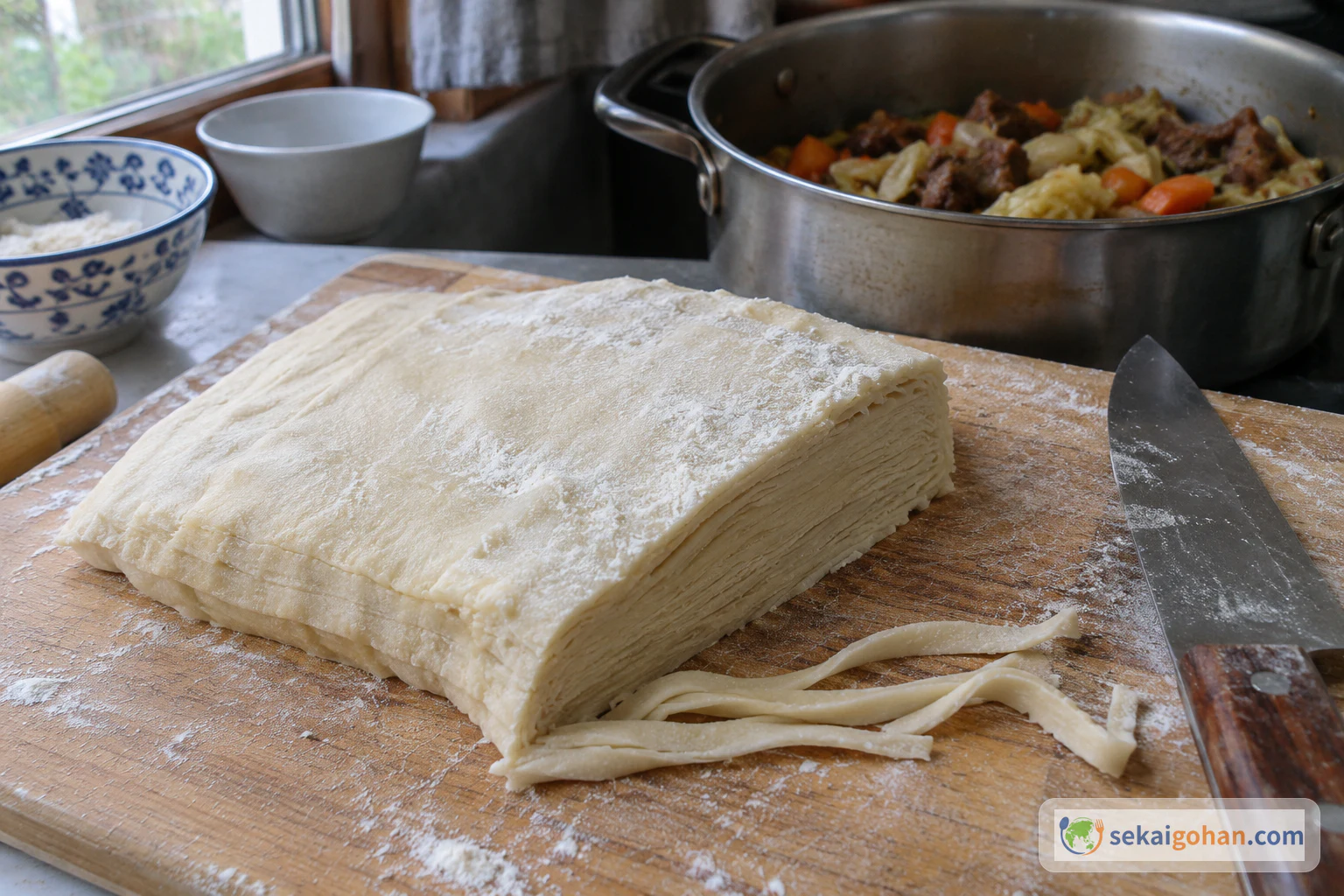
Most problems come from too little oil between the layers or too much water under the noodles. Check those two first.
| What you see | Why | What to do |
|---|---|---|
| The layered block fuses and won't separate into noodles | Too little oil between the sheets | Don't stack it further. Brush a thin film of oil over the surface and cut again. Use more oil next time |
| Noodles are gluey, like overcooked pasta | Too much water, so they boiled instead of steaming | Take the lid off and cook on low for a few minutes to drive off the liquid. Next time keep the water below two-thirds |
| White core in the top layer | Lid lifted, heat too low or stacks too thick | Put the lid back and steam on low for 3–5 minutes more. Make the stacks thinner next time |
| Noodles still sticky after fanning | Too little oil or not cooked long enough | Check for a white core and steam longer if you find one. Fan again and loosen with chopsticks |
| Burnt smell from the bottom | The water boiled away while the heat stayed on | Turn off the heat at once. Leave the scorched layer in the pot so its bitterness stays out of the dish |
| Meat is tough | Pieces cut too large to cook through | Slice the tough pieces thinly and return them to the pot. Cut the meat smaller next time |
Serving, Variations and Leftovers
At the table
Tsuivan is a one-pot meal, so the pot comes to the table and needs nothing else beside it. Spring onion is the usual finish. Some people season their own plate with ketchup or another condiment. It is an option at the table, not part of the dish.
Variations
- Mutton: Use 7 oz (200 g) boneless mutton or lamb shoulder. Let its fat render first and use less frying oil. The aroma is stronger, and this is the traditional direction.
- Beef: Shoulder or round cut into strips gives a milder pot. Add a little more pepper to make up for it.
- More meat: Increase the meat to 10¾ oz (300 g) for a heavier pot. Keep the water at the two-thirds line and set the final salt at the end.
- Griddled noodles: Roll the dough thin and cook it in a dry pan on both sides until golden and no longer sticky. Oil it, roll or stack it, and cut it into strips. Add the strips to the boiling stew, cook on high heat for 3 minutes, then on low for about 10. The noodles taste toasty and stick less, and this method replaces the 15-minute steam rather than adding to it.
Leftovers
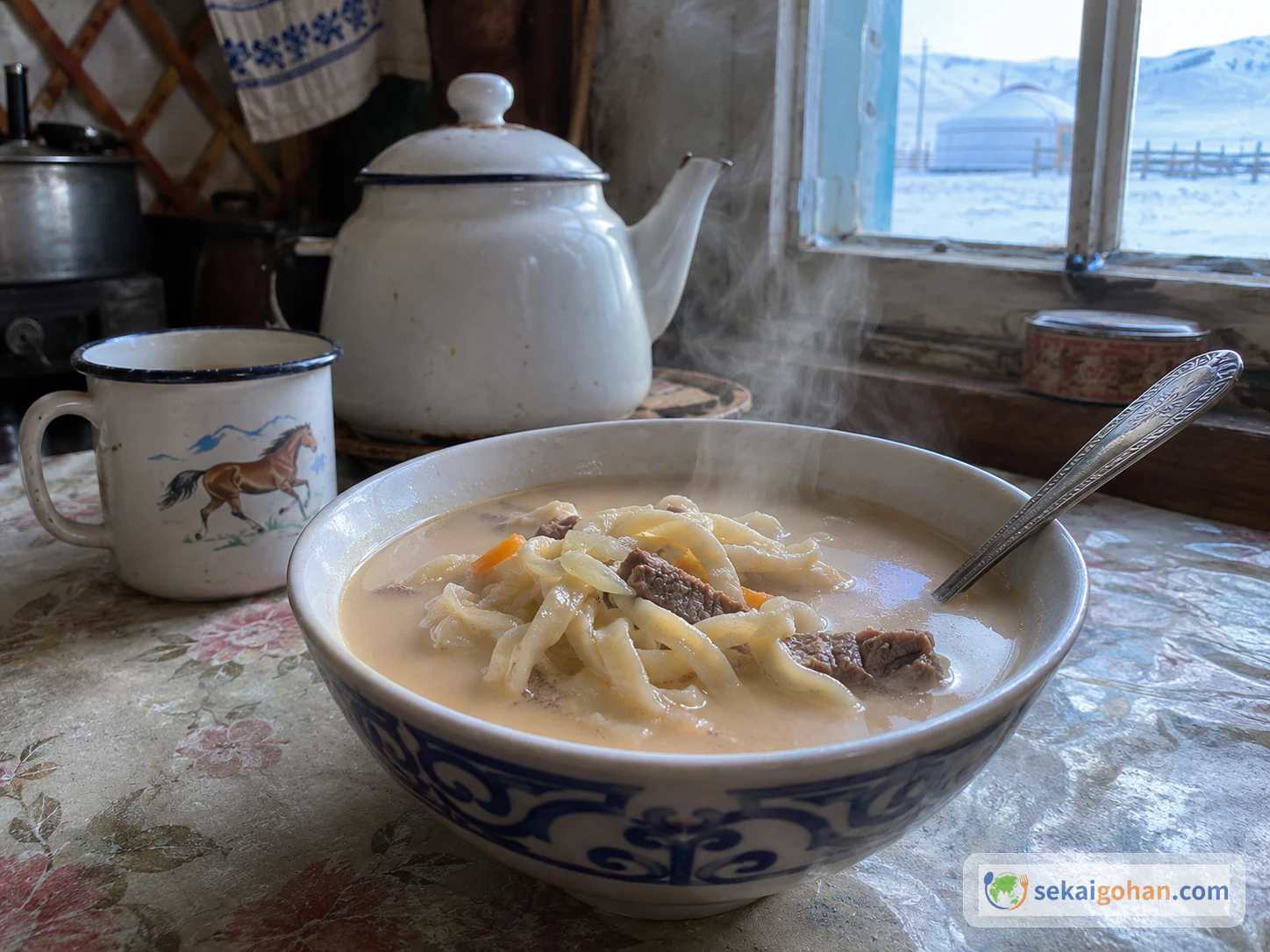
Refrigerate leftovers and eat them by the next day. Reheat until the whole pot is hot all the way through. One food blogger describes Mongolian households that sink the last of the previous night's tsuivan into a bowl of hot salted milk tea (süütei tsai) for breakfast.
Frequently Asked Questions
Can I add soy sauce?
Yes. Some city restaurants add it, though the basic recipe here has none. Pour 1–2 tsp around the edge of the pot at the very end so it sizzles briefly before you toss everything together. It adds soy to the allergens and pulls the flavor away from the meat fat toward soy.
I've seen tsuivan dough made with milk. Does it work here?
Milk dough belongs to a shorter version, with thinner noodles and a much shorter steam. It is not the usual way, and it adds milk to the allergens. For the method above, mix the dough with water so the layers and timing behave as described.
Can I use something other than cabbage and carrot?
Yes, add other vegetables to taste. Cut them as fine as the cabbage so they cook in the same time. Watery vegetables add liquid, so check the two-thirds line again before the noodles go on.