Ingredients and steps on one page. Print it, or choose “Save as PDF” in the print dialog.
Sekai Gohan
Guoshao Yi Mian: Tainan Fried Egg Noodles Simmered in a Small Pot
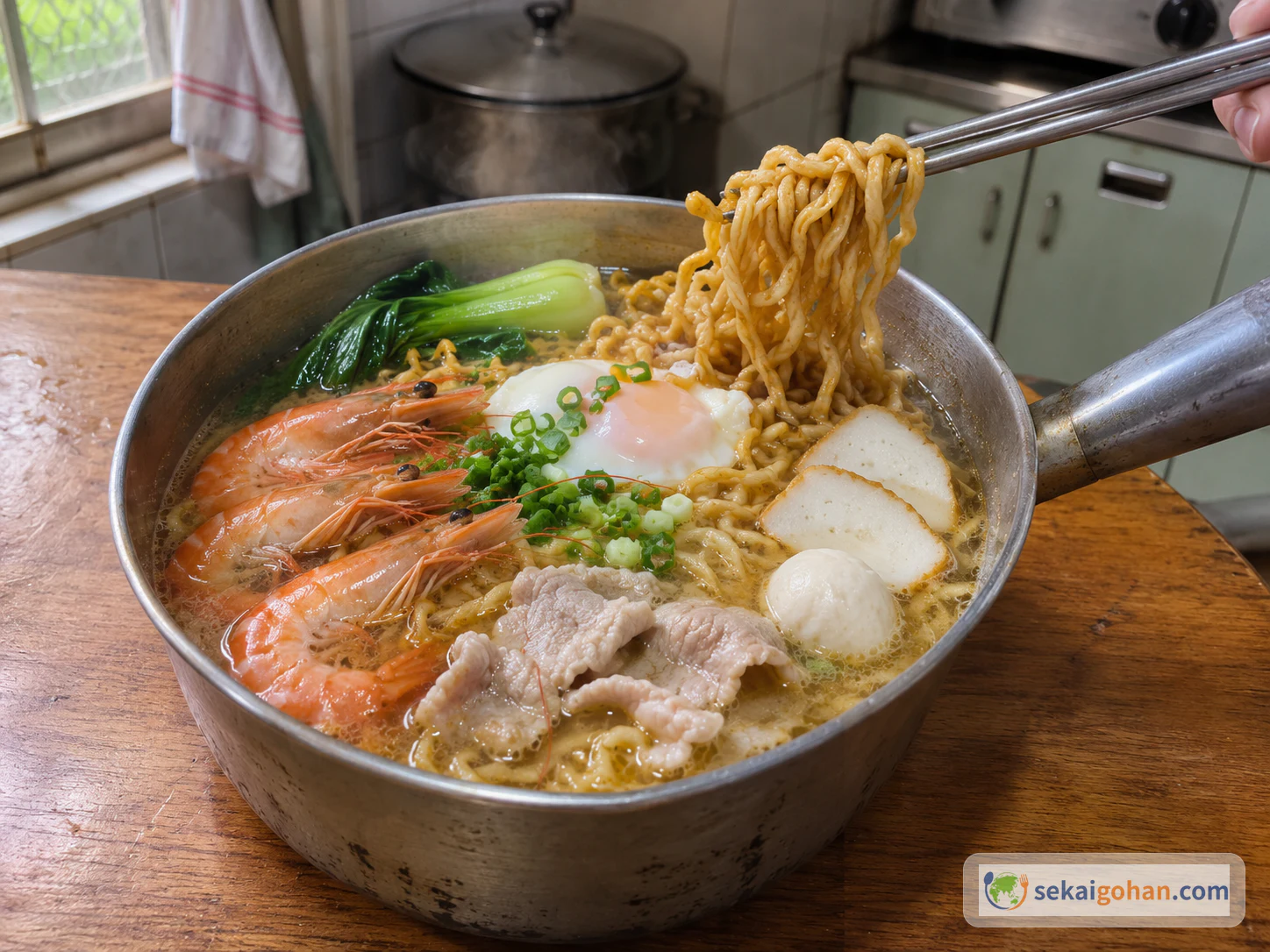
Ingredients
| Ingredient | Amount | Role |
|---|---|---|
| Fried yi mian noodles (意麵) | 1 nest | The main event. Soaks up broth and swells |
| Water | 2 cups (500 ml) | Base of the broth |
| Bonito dashi sachet (鰹魚高湯包) | 1 | The backbone of the broth's flavor |
| Thinly sliced pork shoulder (梅花豬肉片) | 3½ oz (100 g) | Savory depth and substance |
| Head-on shrimp (草蝦) | 3 | Sweetness and aroma |
| Fish balls and fish cake (火鍋料) | 1¾ oz (50 g) | Bounce and body |
| Bok choy (小白菜) | 3½ oz (100 g) | Greens and sweetness |
| Egg (雞蛋) | 1 | Richness and a soft, silky finish |
| Scallions (青蔥) | 1 oz (30 g) | Fresh finishing aroma |
Steps
1Cut the greens and set out the toppings
Trim the base of the bok choy and cut it into 1½–2-inch (4–5 cm) lengths, keeping the stems and leaves in separate piles. Slice the scallions thinly and set them aside for the very end, because they never go into the simmer. Rinse the shrimp, spread out any pork slices that are stuck together, and halve any large fish cakes. You are ready when every topping sits on its own plate within reach of the stove.
2Simmer the dashi for 10 minutes
Pour the water into the saucepan, add the dashi sachet and bring it to a gentle simmer. Keep the surface quiet, with only small bubbles rising around the sachet, and simmer for 10 minutes. Lift out the sachet and let it drip back into the pot. The broth is ready when it is clear, pale gold and smells of smoky bonito.
3Cook the shrimp, pork and fish cakes
Slide the shrimp, pork and fish cakes into the simmering broth, laying the pork slices flat so they cook evenly. These take the longest to cook, so they go in before anything else. Skim off any foam that gathers at the edge and keep the simmer gentle. Move on when the shrimp shells are orange-red and the pork has changed color all the way through.
4Add the noodles last
Once the meat and seafood are cooked, add the noodle nest. Press it under the broth and loosen it gently with chopsticks as it softens. The fried noodle is already cooked, so it only needs time to soak up broth and separate. It is ready when the strands are loose and glossy, and a strand still springs back at the center when you bite it.
5Add the bok choy and the egg
Bring the pot back to a boil. Add the bok choy with the stems first and the leaves on top, then crack the egg into a gap between the noodles. Keep it at a lively simmer without stirring so the egg holds its shape. Stop when the bok choy is bright green and the egg white is opaque. For a firm yolk, cover the pot and keep it on the heat until the yolk is set through.
6Finish with scallions and serve in the pot
Turn off the heat and scatter the scallions over the top while the broth is still steaming. Set the pot on a folded cloth or a trivet and take it to the table as it is, or tip everything into a deep bowl. Start eating right away, before the noodles drink up more broth. The scallions should smell sharp and fresh over the bonito steam.