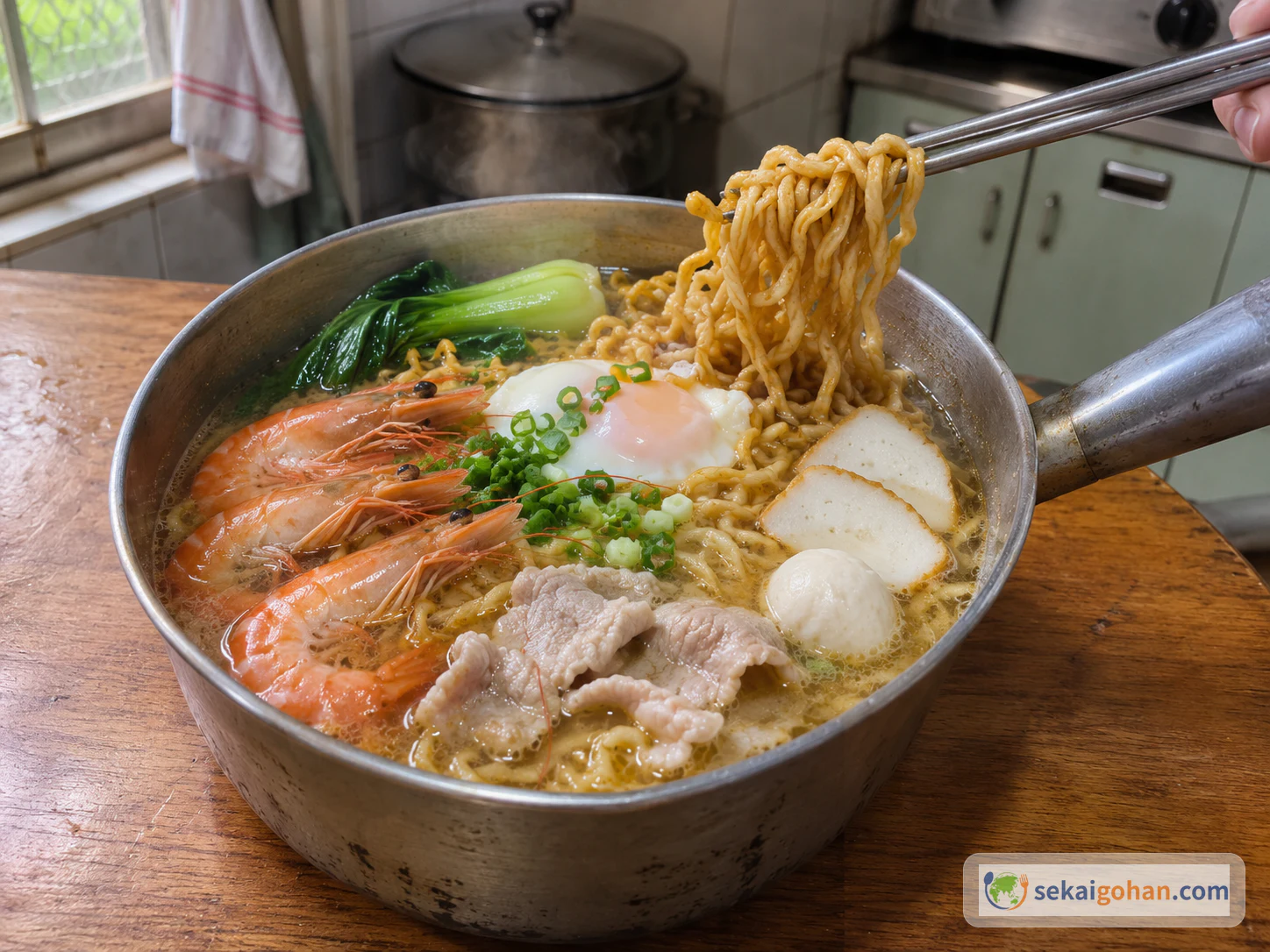
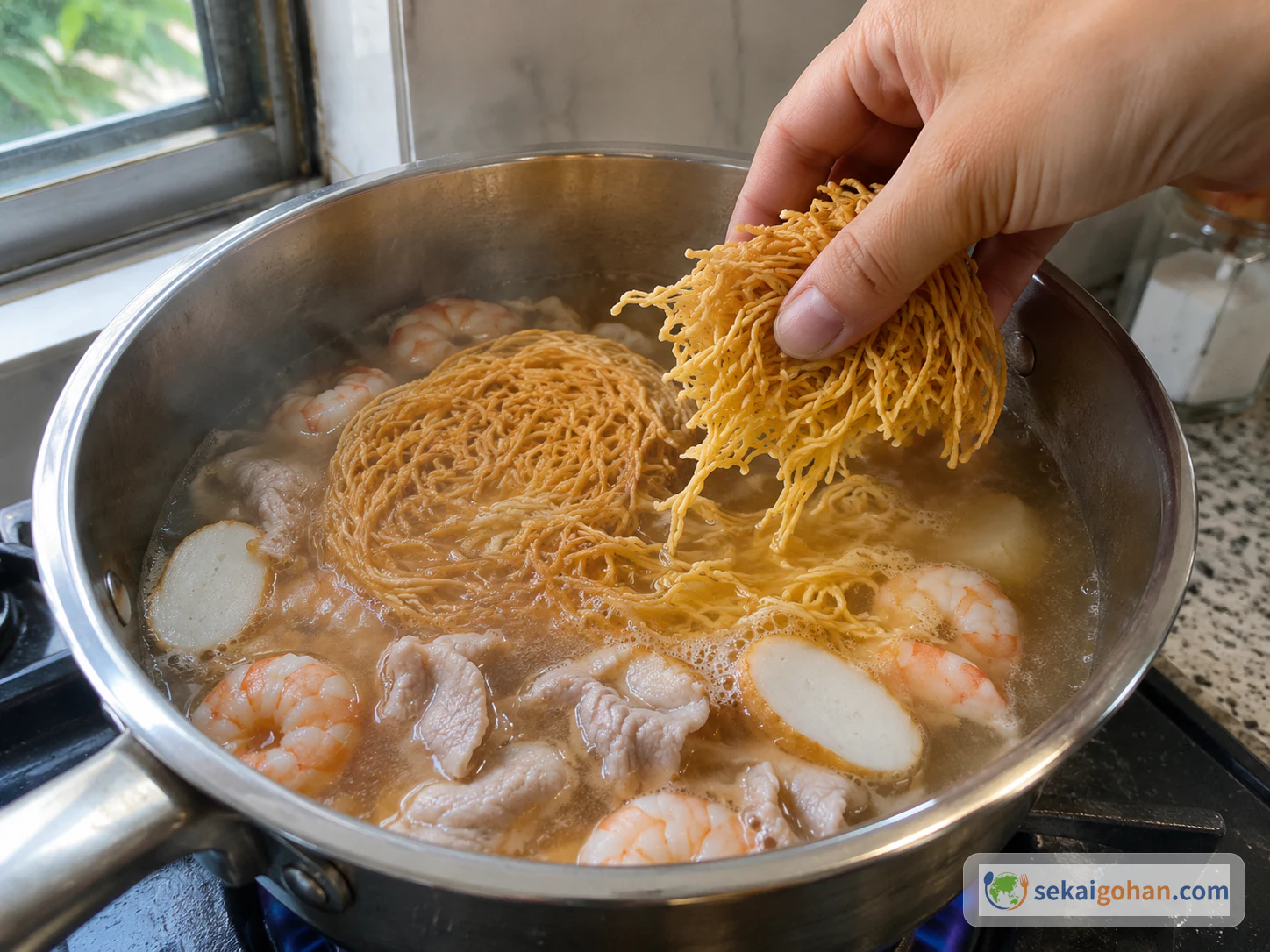
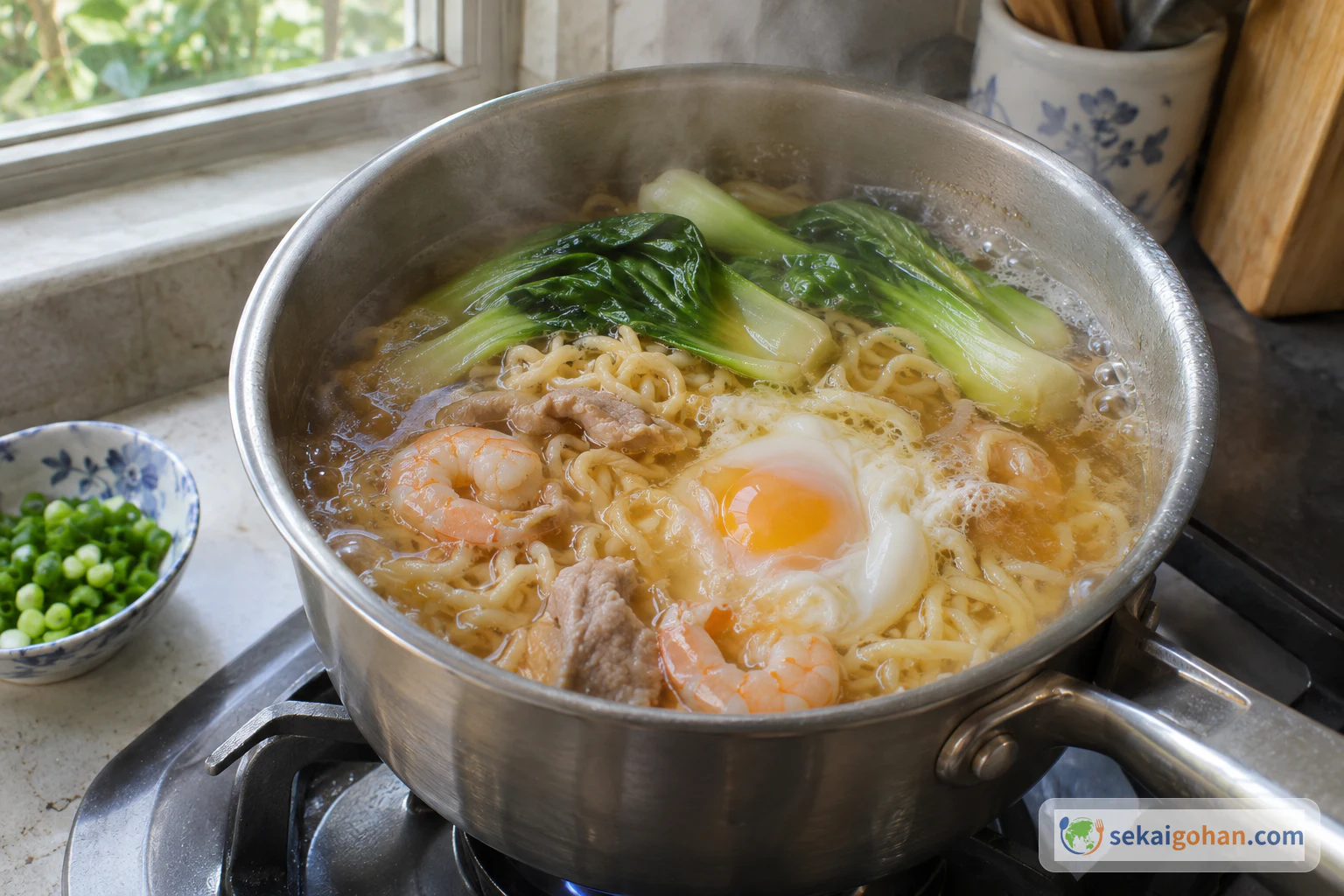
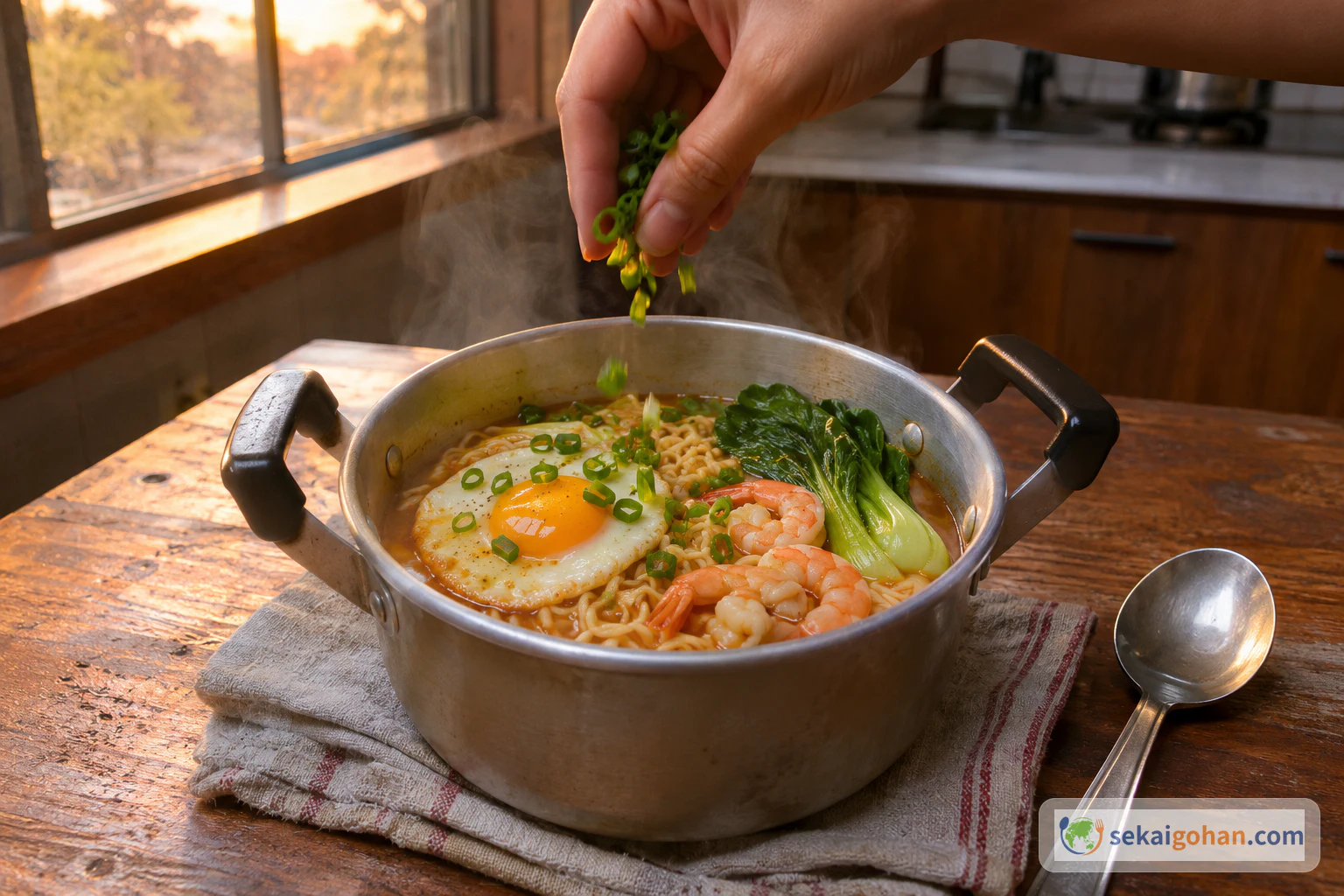
A round nest of golden fried noodles goes into a small pot of bonito broth. Within moments it softens, drinks up the broth and comes apart into wavy strands. Shrimp turn orange-red beside it, and an egg cracked on top sets white around a soft yolk. Guoshao yi mian (鍋燒意麵) is the one-person pot of Tainan, in southern Taiwan. It is cooked to order and carried to the table still steaming, and it tastes clean and savory: smoky bonito, sweet shrimp, and noodles soft on the outside with a springy center.
A small pot of fried egg noodles from Tainan
In Tainan this pot turns up at every hour. People eat it for breakfast, as an afternoon snack and as a late-night meal. One Tainan shop on the city's tourism site opens at six in the morning and closes before noon. Each order gets its own small pot, cooked fresh, and that rhythm of one pot per customer is the dish. Every shop builds its broth differently, from bonito flakes, kombu, dried flatfish, meat bones or vegetables. Common toppings are a half-set egg, greens, fish balls, sliced fish cake, crab sticks and small pieces of pork. Li Mama Minzu Guoshao has been cooking it since 1963, and Chengshi Guoshao Yi Mian received a Michelin Bib Gourmand in 2023. You can find more of the island's dishes on our Taiwan page.
Two faces of the same noodle
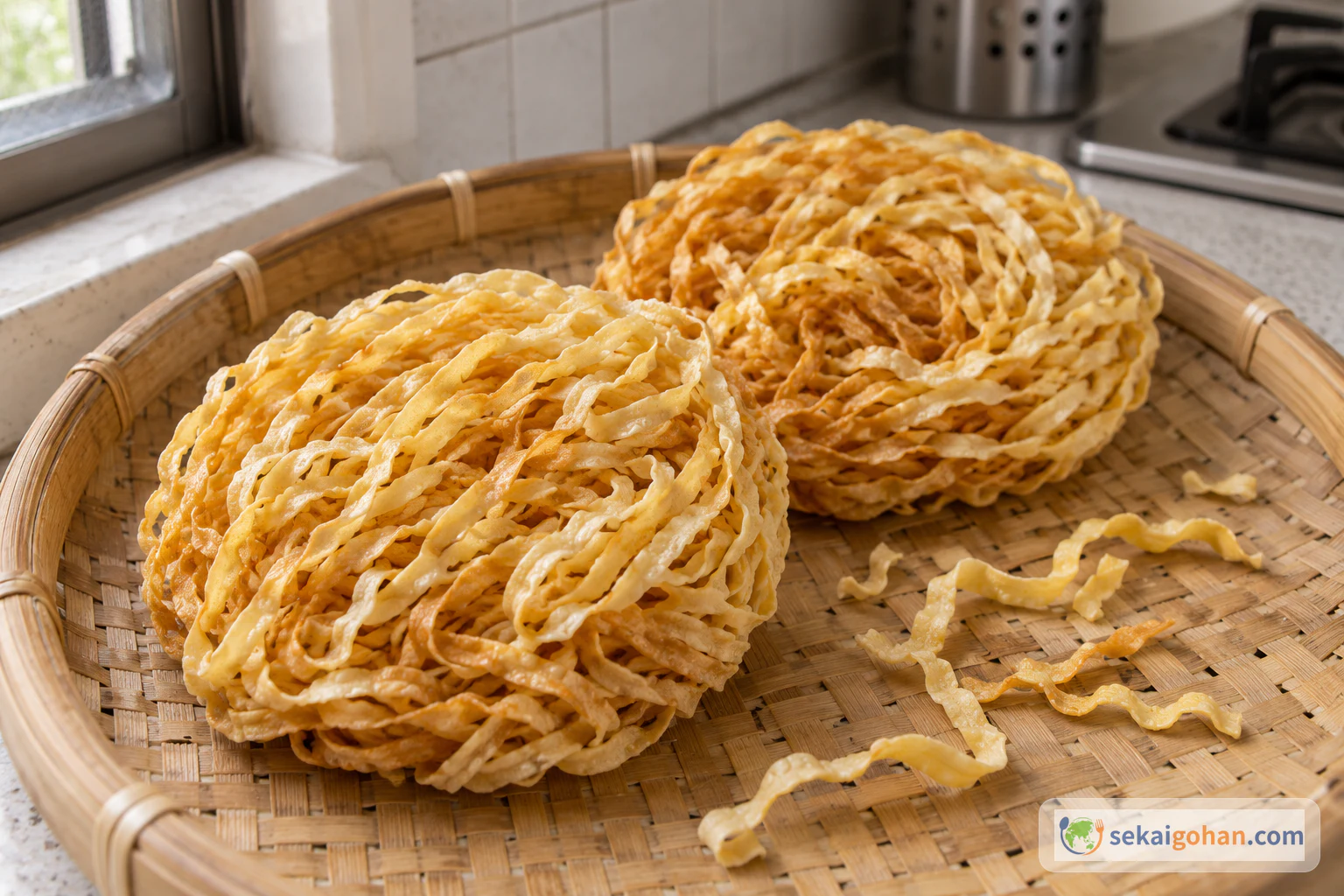
Yi mian (意麵) is a Taiwanese egg noodle. Wheat flour is kneaded with chicken or duck egg, which makes it firmer and springier than plain flour-and-water noodles. It comes in two forms. In Yanshui, the town that claims the noodle's birth, duck egg takes the place of water in the dough. The dough is stiff and hard to work, and the noodles are dried in the sun without preservatives. Those unfried noodles are eaten dry-tossed, in soup or stir-fried. In Tainan city the dough is pressed into nests and fried. Frying drives out moisture, so the noodles keep longer and their open, airy texture soaks up broth fast. Guoshao yi mian uses the fried nests, and so does eel yi mian (鱔魚意麵), where rice-field eel, onion and noodles are stir-fried over high heat and finished in a sweet-and-sour sauce.
The small-pot format and the name guoshao are often traced to Japanese nabeyaki udon. In that story, Tainan cooks swapped the udon for fried yi mian and built the pot around a bonito or fish broth with egg, vegetables, hotpot balls and seafood.
The English spelling causes confusion. "Yi mein" in English usually means the Cantonese e-fu noodle (伊麵), made from flour, egg and alkaline water, flattened, then fried and dried into bricks. That is a different noodle from a different kitchen. This pot is Taiwanese yi mian, and nothing in it comes from the Cantonese dishes.
Where it began
Where yi mian began is not settled, and three stories are told. In the first, Fuzhou-born cooks in Koxinga's army brought the method to Yanshui during the Ming-Zheng period, which is why the noodle is also called Fuzhou yi mian. In the second, set in the Tongzhi era, a man named Chen Wanmei switched from fish noodles to a duck-egg dough. In the third, Huang Zhongliang, who came from Fujian, started selling the noodles in Yanshui around 1923. Yanshui was once a busy harbor, and its Yuejin port was counted as the fourth port of Taiwan in the old saying "first the prefectural city, second Lukang, third Monga, fourth Yuejin." The town still holds a yi mian festival every year.
The most common story is that the duck-egg dough was so stiff that the kneaders let out a grunt, "yi" (噫). A related story says the noodle was first called li mian (力麵), "strength noodles." Other explanations are a sound shift from you mian (幼麵, "fine noodles") and a link to the Cantonese yifu noodle.
Ingredients (serves 1)
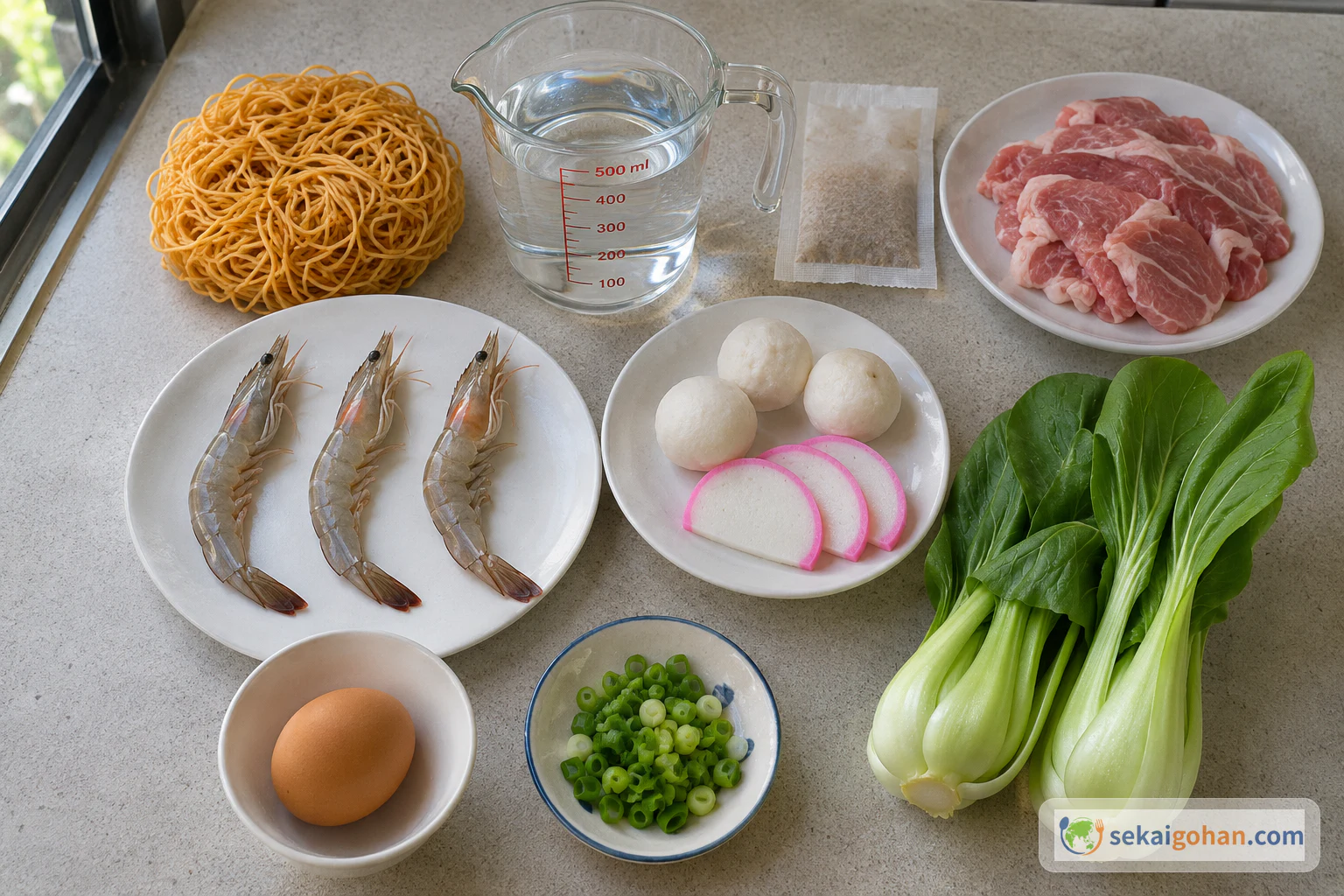
This is one pot for one person. To cook for two, double every amount. The list has no salt, soy sauce or pepper, because the dashi sachet carries the seasoning. Taste the finished broth before adding anything.
Stick to fish balls, fish cake and similar seafood products, and keep to the amount above. A pot crowded with processed hotpot balls looks cheap and makes the broth heavy.
This dish contains wheat (noodles, fish cakes), egg (noodles, egg), shrimp, fish (dashi, fish cakes) and soy (fish cakes). Fish balls and fish cakes vary in additives and allergens, so check the label on each pack.
Equipment
- Small one-handled saucepan, about 6–7 inches (16–18 cm) across
- Measuring cup
- Kitchen scale
- Knife and cutting board
- Chopsticks for loosening the noodles
Choosing and substituting
The fried noodle nest is the one thing worth a special trip. Look in Taiwanese or Chinese grocery stores, or online, for "guoshao yi mian" or "yi mian," sold dried or frozen. They usually come packed one nest at a time, and the weight per nest varies by brand, so check the label. If you cannot find them, fried thin noodles sold for crispy chow mein come closest in texture. They make a related pot, not the same one. Udon and instant ramen behave too differently and turn this into another dish.
| Item | Swap | What changes |
|---|---|---|
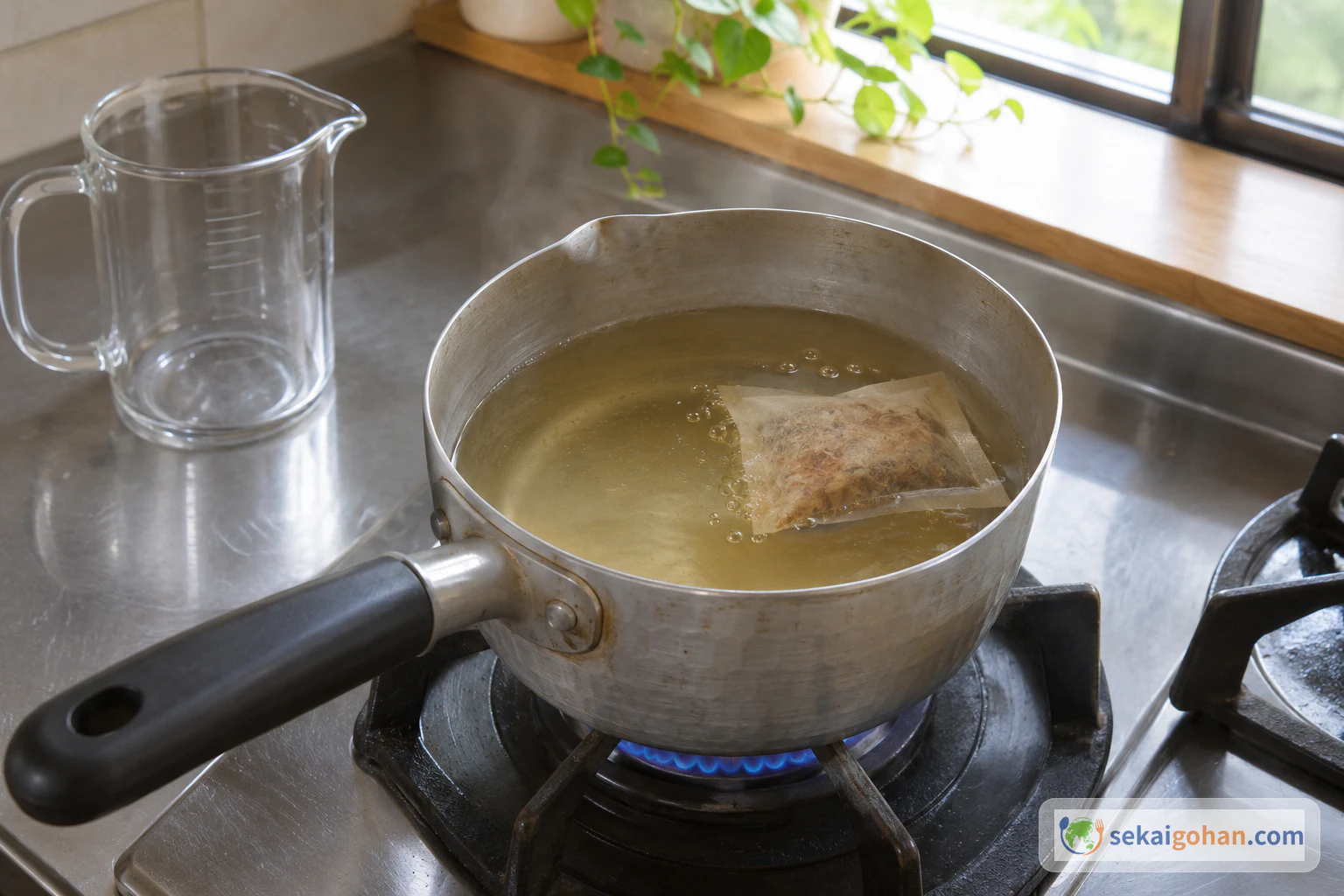
| Bonito dashi sachet | Granulated dashi | It contains salt. Follow the strength on the label instead of counting one portion per 2 cups (500 ml) |
| Pork shoulder | Pork loin or belly | Loin is leaner. Belly adds fat and makes the broth heavier |
| Head-on shrimp | Peeled shrimp | Easier to eat. The heads give the broth more depth |
| Fish balls and fish cake | Chikuwa or other fish cakes | Keep to seafood-based products for a clean broth |
| Bok choy | Pak choi or baby bok choy | Close match. The leaves are tender and need only a short time at the end |
| Scallions | Finely shredded scallion whites | Sharper and crisper on top |
Method
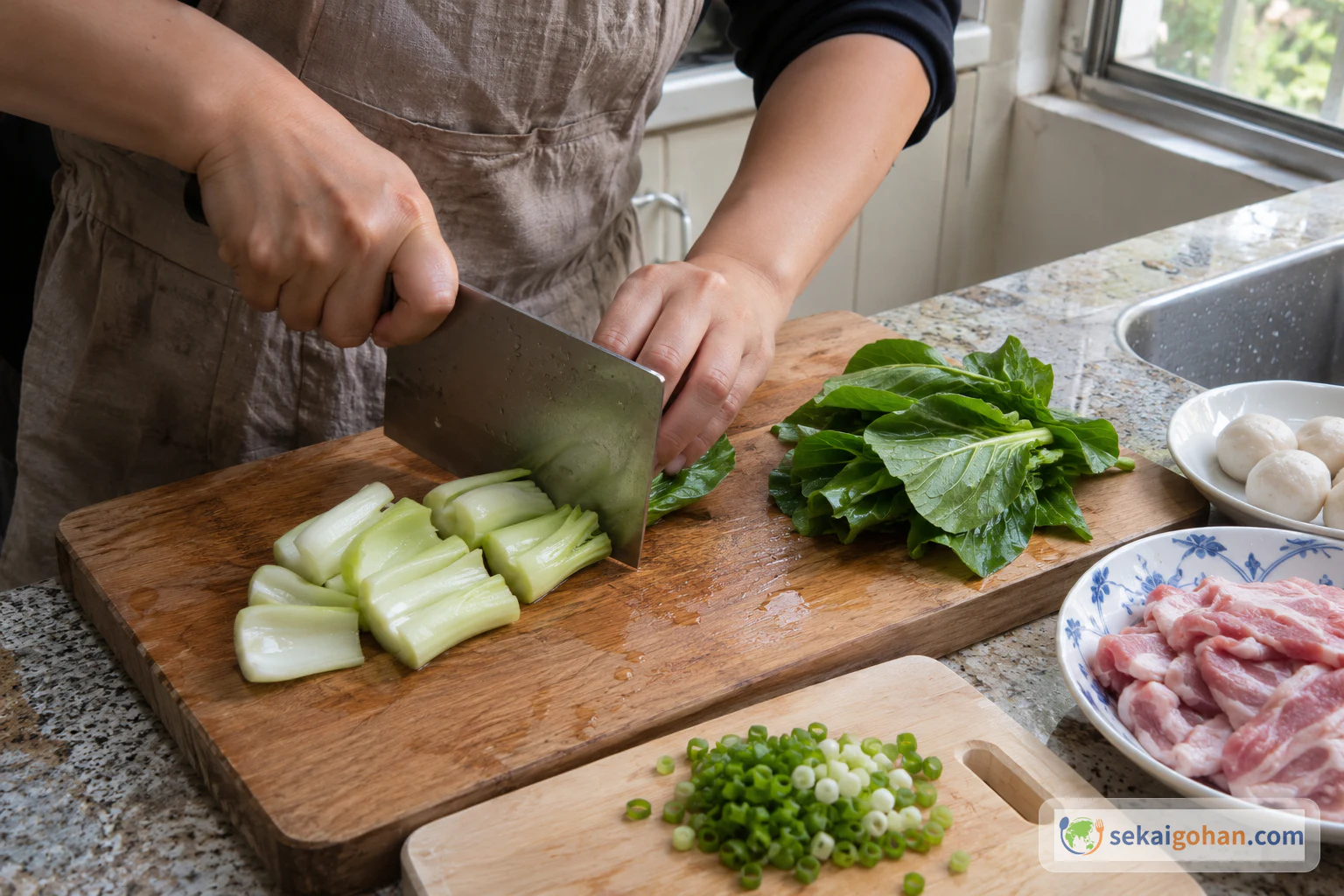
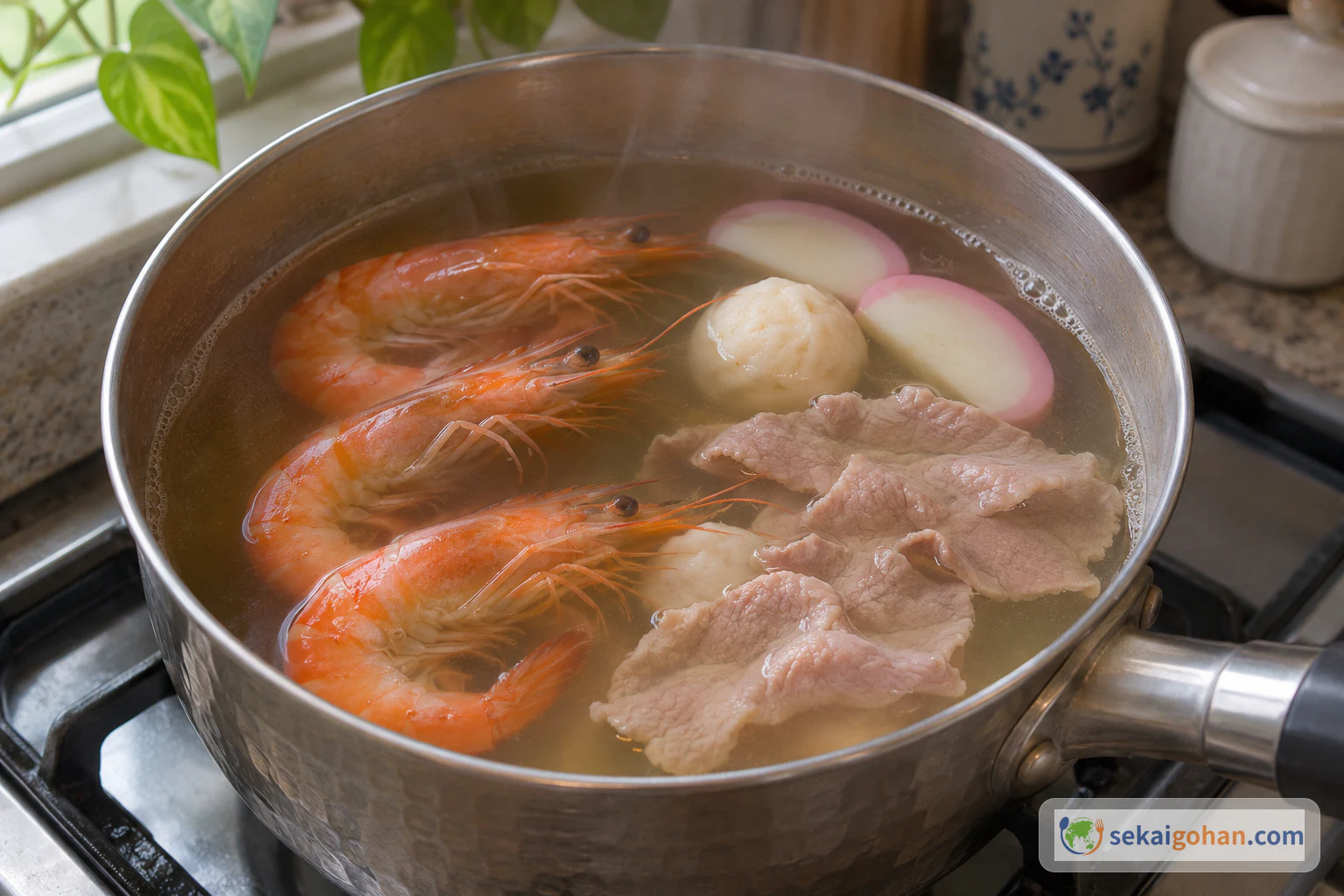
Cut the greens and set out everything else before you light the stove. Once the broth is ready the pot moves quickly, and the whole thing takes about 15 minutes. The order matters more than anything else: broth first, then meat and seafood, then the noodles, and the greens and egg last.
Fried yi mian keeps swelling for as long as it sits in hot broth. If you add it early, or leave it simmering while you deal with the egg, it turns soft and falls apart and the broth goes cloudy. Add it last and keep the pot moving.
In Tainan shops the egg usually arrives half-set with a runny yolk. Keep a soft yolk for eggs sold as safe to eat raw and used within their date. In Japan, the best-before date on eggs marks how long they can be eaten raw: 21 days at most, including 7 days in a home refrigerator. Any egg not sold for raw eating needs cooking that kills salmonella, which can get inside even through the shell. For anyone pregnant, older people, children and anyone with weakened immunity, cook the yolk all the way through. If an egg is past its date, crack it and check that it looks normal, then cook until the whole dish reaches 158°F (70°C). Store shell eggs at 50°F (10°C) or below.
When it goes wrong
| What you see | Why | What to do |
|---|---|---|
| The noodles swell, break up and cloud the broth | The fried noodles cooked too long | Add them only after the toppings are cooked. Move on as soon as they loosen |
| The broth tastes thin or too salty | The water didn't match the dashi's recommended strength, especially with granulated dashi | Measure the water against the label. If it is still thin, add a little light soy sauce |
| The shrimp are tough | Overcooked | Lift them out once the shells turn red, or add them just before the noodles |
| The bok choy turns brown and limp | Added too early | Wait for step 5. If the stems are thick, give them about 10 seconds' head start over the leaves |
| The broth is greasy | Too many fish cakes, or fatty pork | Keep the fish cakes to seafood and to the amount listed. Use pork shoulder |
| The egg is rubbery, or the white is still runny | The heat was too high or too brief | Turn off the heat once the white is set and the yolk still wobbles. For a set yolk, cover the pot so the top cooks through |
Serving, variations and storage
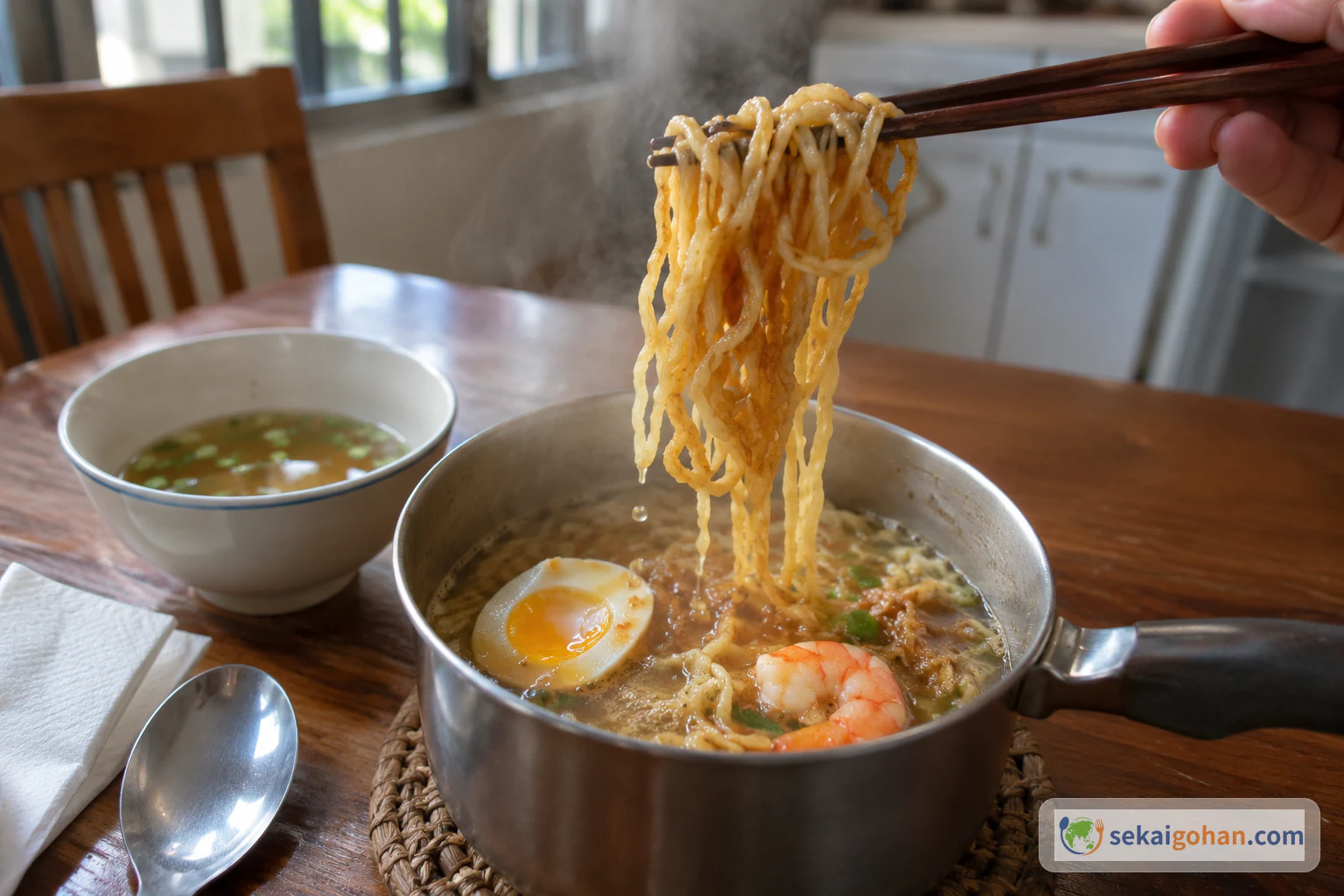
Guoshao yi mian is a whole meal in one pot. Put chopsticks and a spoon on the table, and a small bowl for anyone who wants to cool the broth. It works as breakfast, a mid-afternoon snack or late-night food, just as it does in Tainan.
Variations
Each of these leaves the core pot as it is and changes one thing.
- Shacha finish: Stir ½–1 tsp shacha sauce into the broth at the end for a savory, smoky note. Too much buries the bonito.
- White pepper: Dust a little ground white pepper over the bowl. It is the smallest change, and it gives the broth a gentle heat.
- Light soy and mirin: Add ½ tsp light soy sauce and 1 tsp mirin to the broth for a touch of color and sweetness. Dark soy sauce darkens the broth and makes it saltier.
- Richer broth: Put chicken carcass or pork bones in cold water, bring to a boil, cook for 2 minutes and drain. Simmer them uncovered with the bonito broth for about 30 minutes, or 10–20 minutes longer with pork bones. Dried small fish or sakura shrimp, toasted in a little oil until fragrant, deepen it further, and a splash of rice wine suits seafood.
- Ribbon egg: Beat the egg and pour it in a thin stream instead of cracking it whole. You get soft egg ribbons through the broth in place of a single yolk.
Making ahead
Eat it the moment it is done. The fried noodles keep drinking broth and turn soft, which is why takeaway orders keep the soup and noodles separate. To get ahead, make the broth and cook the toppings in advance, then cook the noodles just before eating. Do not keep noodles sitting in the broth.
Frequently asked questions
Can I use the sun-dried Yanshui noodles?
You can cook them in this broth, but they do not soak up liquid and swell the way the fried nests do. The result is a noodle soup with a different texture. For the soft, broth-soaked Tainan pot, use fried yi mian.
How do I make two servings?
Double every ingredient, including the water and the dashi. In Tainan each person gets their own pot, so two small saucepans side by side work well. A larger pot also works if you share it out at the table.
Do I have to serve it in the pot?
The small pot keeps the broth hot and is how it reaches the table in Tainan, but a warmed deep bowl works too. Move everything into the bowl quickly so the noodles stop soaking.
Should I peel the shrimp?
Leave them whole. The heads and shells flavor the broth, and you peel them at the table. Peeled shrimp are easier to eat and still taste sweet, though the broth will be a little lighter.