Ingredients and steps on one page. Print it, or choose “Save as PDF” in the print dialog.
Sekai Gohan
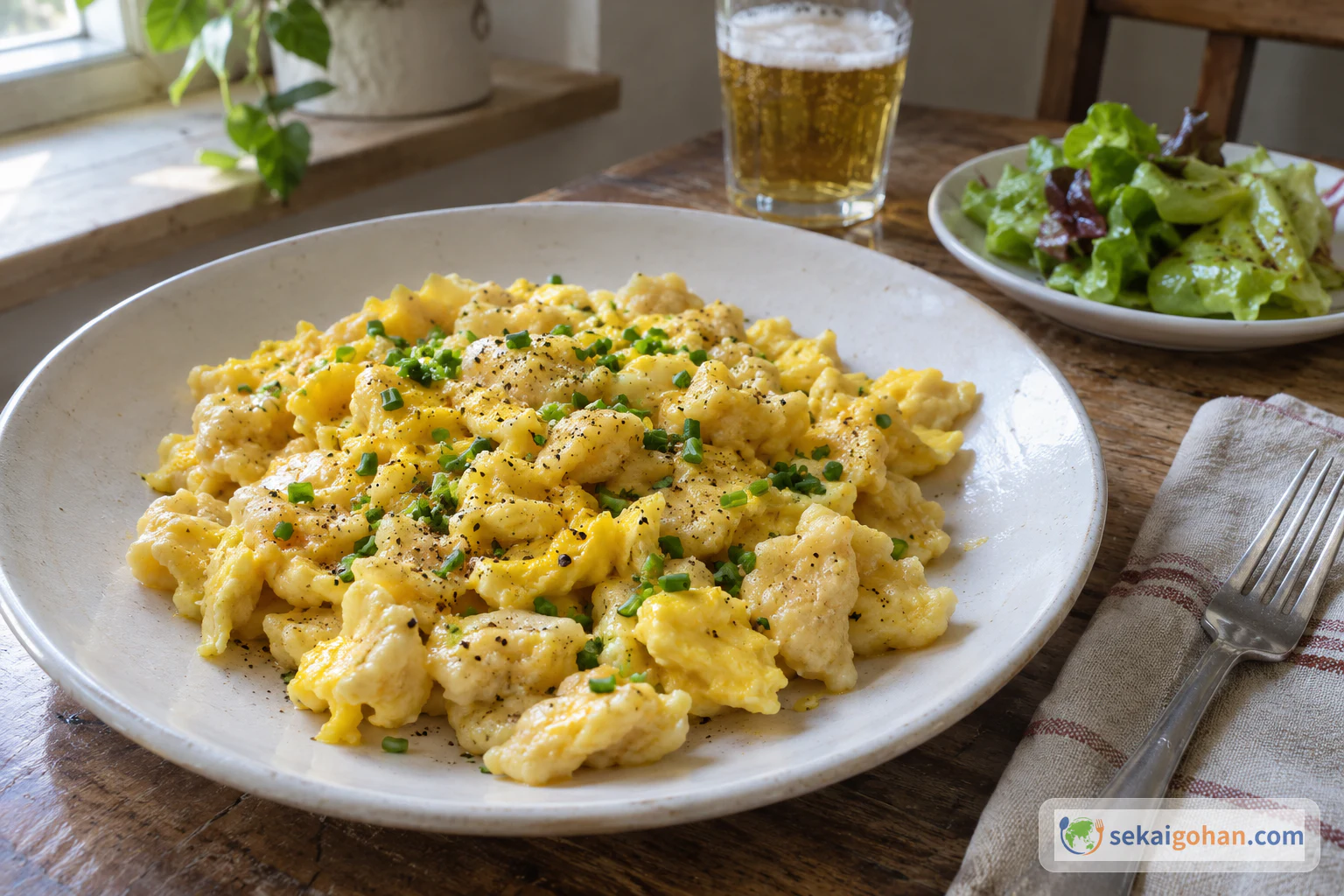
Eiernockerl: Viennese Egg Dumplings Tossed in Butter
Ingredients
| Ingredient | Amount | Role |
|---|---|---|
| Plain wheat flour, fine (Mehl, glatt) | 10¾ oz (300 g) | Body of the dumplings |
| Eggs, for the dough | 3 | Bind the dough |
| Milk | ½ cup + 2 tbsp (150 ml), plus a little more if needed | Loosens the dough |
| Butter, melted, for the dough | 2 tbsp | Richness inside the dumplings |
| Salt, for the dough | a pinch | Seasons the dough itself |
| Salt, for the cooking water | as needed | Seasons the dumplings as they boil |
| Neutral oil | a few drops | Keeps the drained dumplings apart |
| Butter or clarified butter (Butterschmalz), for frying | 2 tbsp | Warms and lightly colours the dumplings |
| Eggs, for the egg mixture | 4 | The soft coating that binds the dish |
| Salt, for the egg mixture | to taste | Seasons the egg |
| Black pepper | to taste | Bite in the egg |
| Ground nutmeg | to taste | Warm aroma in the egg |
| Chives | as needed | Fresh, oniony finish |
Steps
1Boil the water and mix the dough
Fill the large pot with plenty of water, salt it well and bring it to a rolling boil. In a second pot or a sturdy bowl, put the flour, the melted butter, the three eggs and a pinch of salt. Pour in the milk and stir hard with a wooden spoon until no dry flour is left. Keep the dough soft; if it is stiff, work in a little more milk. It is ready when it falls heavily from the spoon and the trail it leaves holds for a moment before settling.
2Press the dough into the boiling water
Do this immediately, because dough left standing turns gluey. Hold the colander over the pot, scrape in a portion of dough and push it through the holes with the rubber spatula. Work in batches so the water never stops boiling. Short strands and blobs should drop into the water and sink, and the boil should come straight back.
3Lift them out once they float
Watch the surface. The dumplings sink first, then rise as they cook through. When every dumpling of the batch has come up and bobs on the surface, drain them into a colander.
4Rinse cold and oil them
Run cold water over the drained dumplings, then shake the colander until they stop dripping. Sprinkle over a few drops of oil and turn them gently with a wooden spoon. Do not skip the oil; without it they glue together into one mass in the pan. They are ready when each dumpling rolls loose on its own with a faint sheen.
5Season the egg and heat the butter
Crack the four eggs into a small bowl and add salt, pepper and nutmeg. Mix briefly with a fork, just until the yolks and whites are combined; do not whip them. Set the bowl beside the stove and put a stack of plates somewhere warm. Heat the frying butter in the large pan over moderate heat until it has melted and foams at the edges but has not turned brown.
6Toss the dumplings in butter
Tip the dumplings into the foaming butter. Keep the pan moving, shaking and tossing constantly so every dumpling rolls through the butter and nothing sits still long enough to stick. Keep going until they are hot right through. They are ready when the edges turn light gold and the pan smells of warm butter.
Shallot for more depthFor a deeper, more savoury finish, chop a shallot finely and fry it with the dumplings in this step. The sweetness of the egg then has something to push against.
7Pour the egg and stop within two minutes
Pour the egg mixture over the dumplings in a slow circle. Turn them gently so the egg flows between them, and take the pan off the heat within 2 minutes. Stirring on and on, or high heat, turns the egg into dry crumbs. Stop while the egg has set into soft, glossy sheets and still looks wet in places.
Fully set egg for children and vulnerable eatersThe finished egg here is soft. Children, pregnant people, anyone who is ill and older people should avoid egg dishes that are not fully cooked. When any of them are eating, keep the pan on the heat and stir until the egg is completely set with no wet patches; the texture becomes crumbly and scrambled, and the dish is still good.
8Plate on warm plates
Spoon the Eiernockerl onto the warmed plates straight from the pan. Snip or scatter the chives over the top, with a last grind of pepper if you like. Serve at once, while the egg still holds a shine and the chives wilt slightly from the heat.