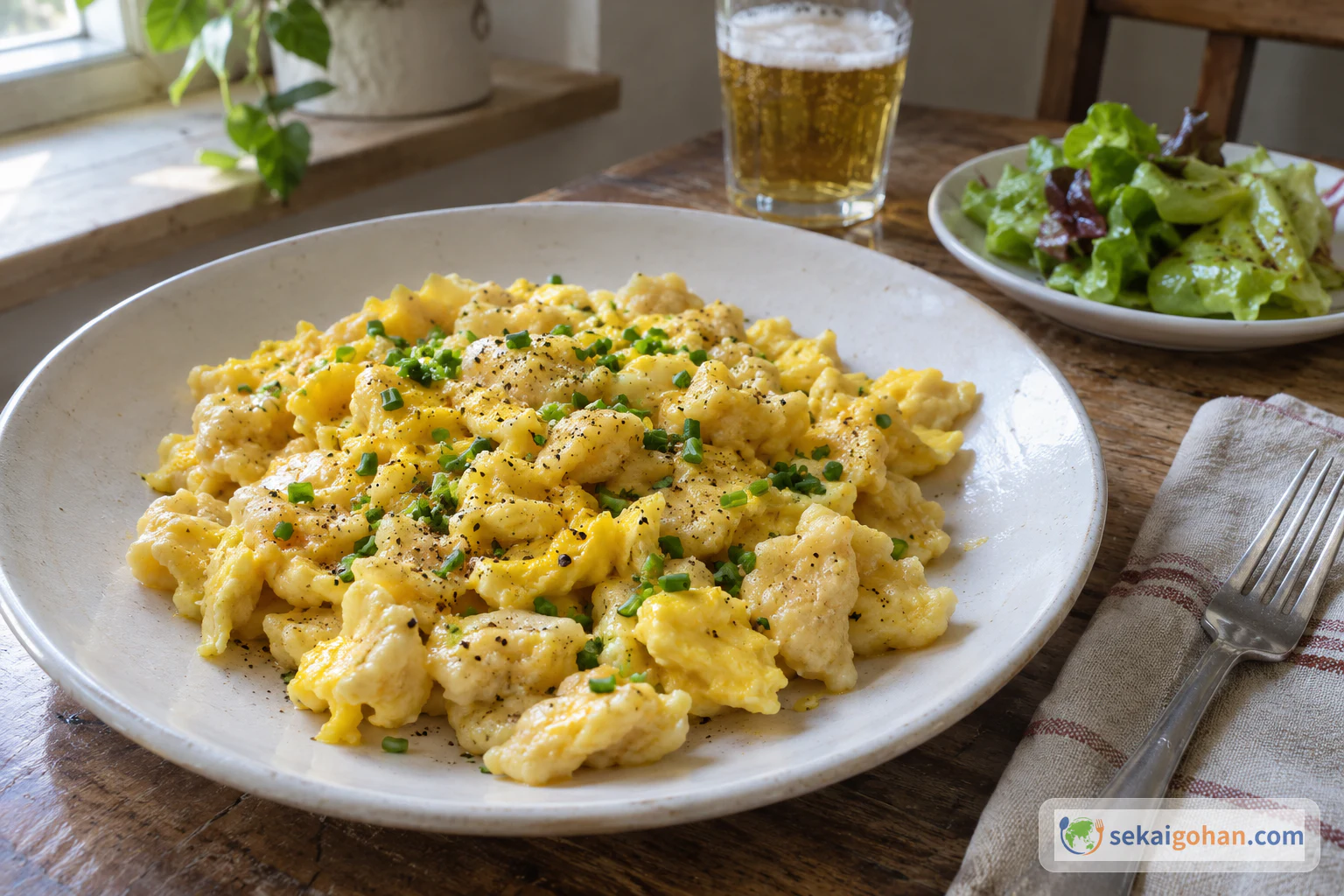
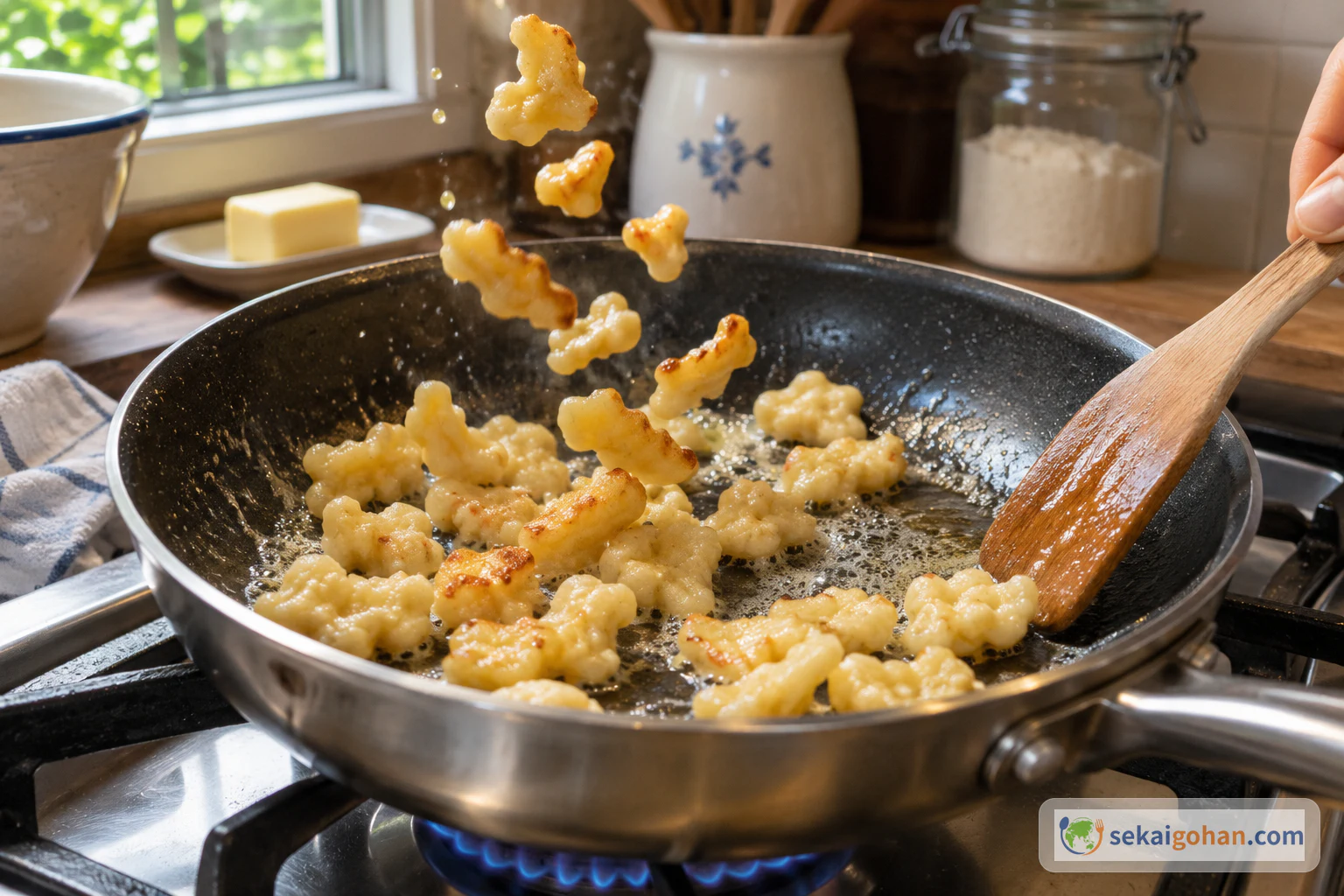
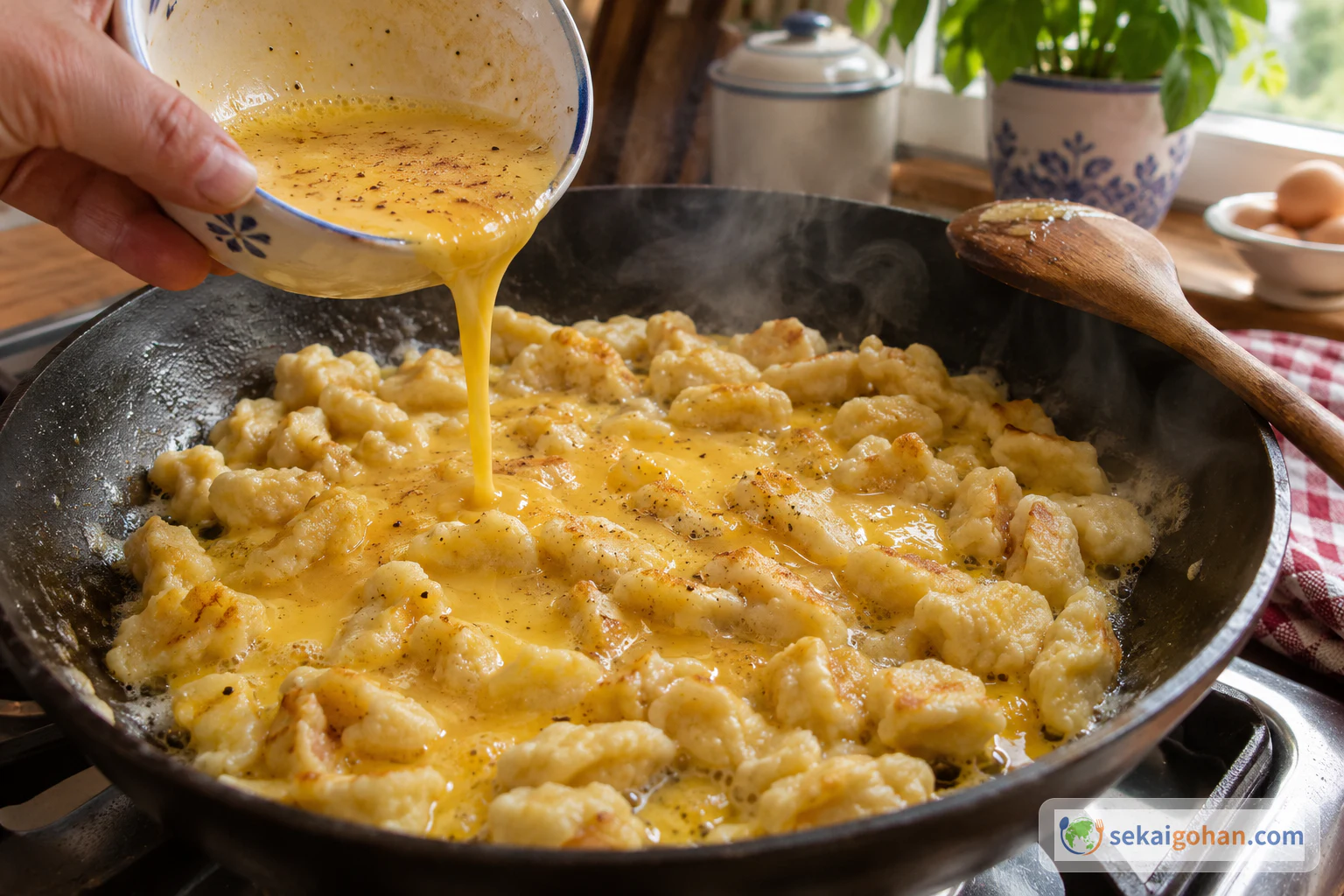
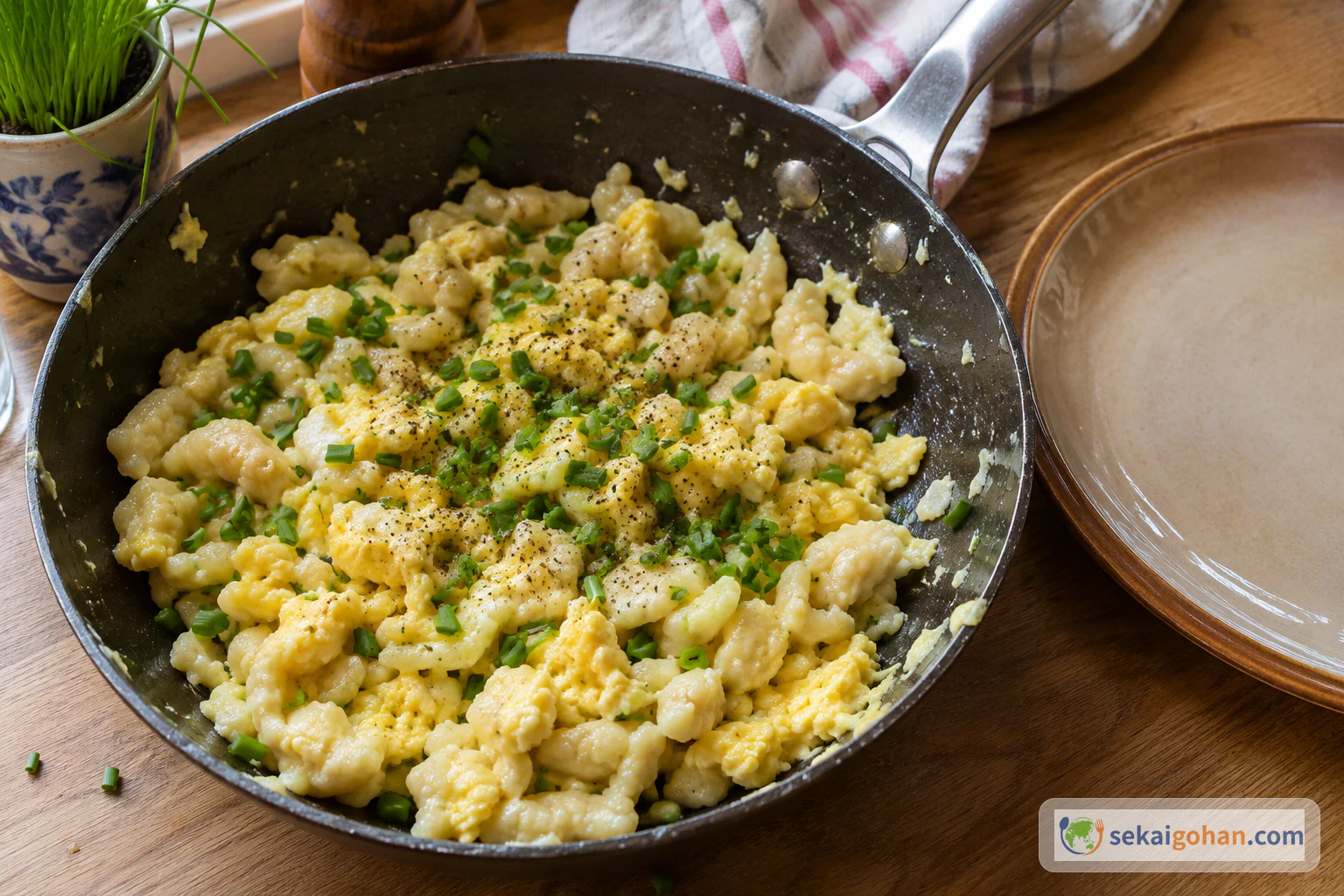
The butter foams at the edge of the pan, and the small pale dumplings rattle across it as you shake. Then the beaten egg goes in, flecked with pepper and nutmeg, and within seconds it turns from a thin yellow stream into soft, glossy sheets that cling to every dumpling. That moment, with the smell of browned butter and fresh chives rising off the pan, is Eiernockerl. It is a Viennese plate of tiny flour dumplings boiled in salted water, warmed in butter and bound with barely set egg. It tastes of butter, egg and a little nutmeg, soft and savoury, and it is eaten hot with a sharp green salad and a glass of beer.
A Little Lump of Dough Called Nockerl
What the name holds
The name splits cleanly in two. Eier means eggs, and Nockerl is a small dumpling, so this is literally "egg dumplings"; in the plural, Austrians say Eiernockerln. Vienna counts it among its own delicacies, yet it belongs just as much to ordinary home kitchens across Austria, where it is cooked for small children as readily as for adults. In those family kitchens it often looks a little different, with part wholegrain spelt flour, the dough dropped into the water from a spoon, and the egg left to set fully before it is stirred.
Nockerl is a diminutive of Nock or Nocken. In Upper German, Nock first meant a small, stubby hill, a sense recorded in the 16th century; its use for a flour dumpling appears in writing in the 18th century and is probably older. The root goes back to an Indo-European word for something pressed or pinched into a lump. The same word in Austria also names whipped, foamy sweets, which is why one "Nockerl" can be dinner and another dessert.
Fasting days and flour dishes
The Viennese kitchen as people know it today took shape in the 19th century, pulling in influences from all corners of the old empire. Until after the First World War, the Catholic Church set as many as 148 fast days a year: every Wednesday and Friday that was not a feast day, and often Saturdays too. A police order of 1829 required inns to serve fasting dishes, and meat only when a guest explicitly asked for it. Cookbooks kept meat dishes and fast-day dishes in separate chapters. In the Biedermeier years milk, cheese, eggs and lard were allowed on fast days, and Mehlspeisen, the flour dishes, were far more than cakes; they carried the main meal on meatless days. Flour, egg, milk and butter on one plate fits that world exactly, though whether Eiernockerl itself began as fasting food is not settled.
Home to home
Ask three Austrian households for their Eiernockerl and you get three recipes. This one uses smooth, fine flour, three eggs in the dough and four in the finish. A grandmother's version from Lower Austria uses coarser flour, extra yolks and more milk, rests the dough before pressing it through a Nockerl sieve with a dough scraper, and stretches the egg with a splash of soda water and cream. The flour, the number of eggs and the tool move from kitchen to kitchen; the butter, the dumplings and the softly set egg stay.
There is also a modern shadow over the dish, and Austrians know it. An unproven story holds that Eiernockerl was Hitler's favourite food, and the dish has become a code in neo-Nazi circles around his birthday, April 20. In 2021 a police officer in Burgenland was convicted after posting a photo of Eiernockerl with green salad on that date. In 2023 a state hospital in Amstetten served Eiernockerl and salad on April 20; the regional health company apologised, explaining that the menu runs on an eight-week cycle and landed on that day by chance. On the other 364 days of the year, it is simply what's for dinner.
Ingredients (serves 4)
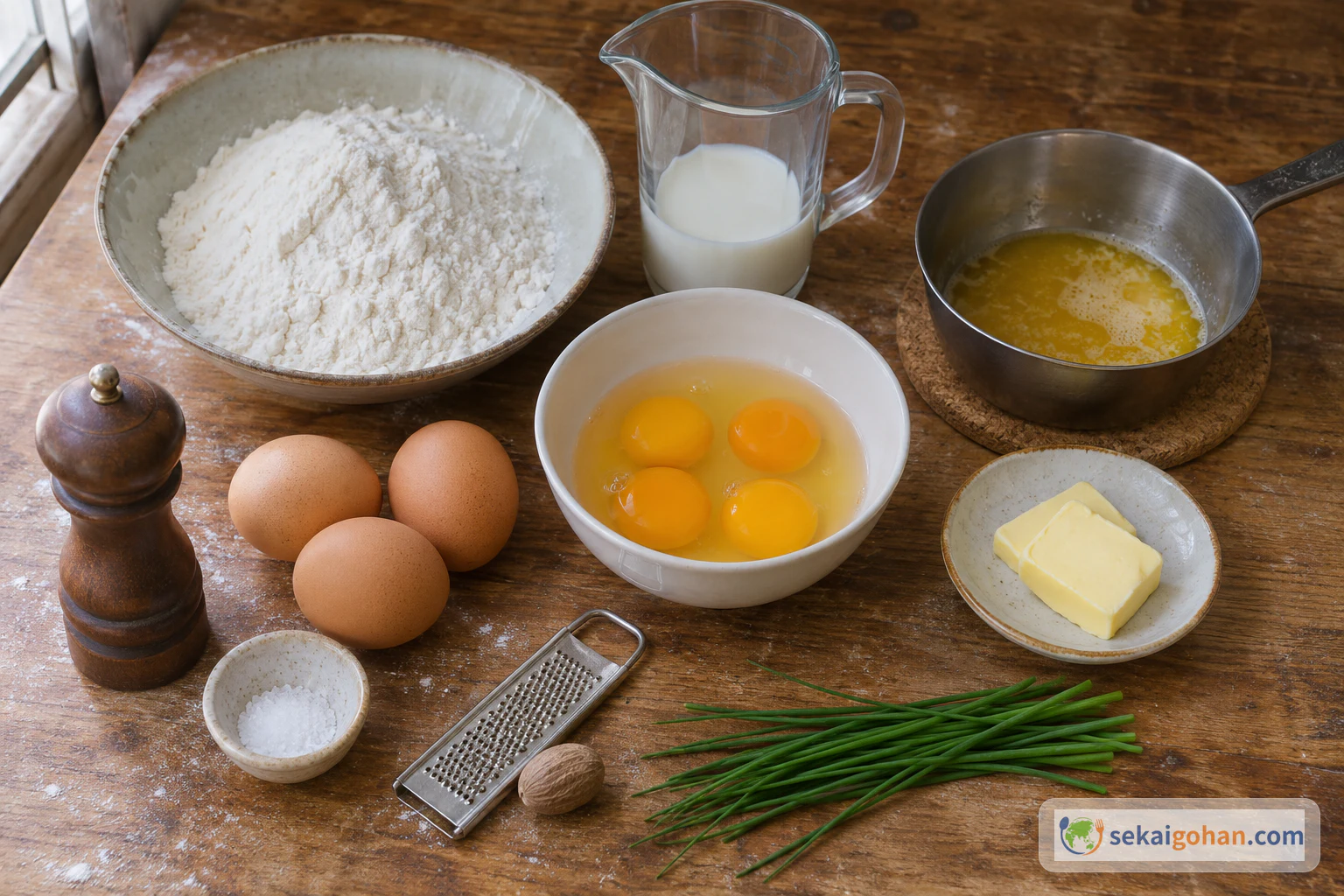
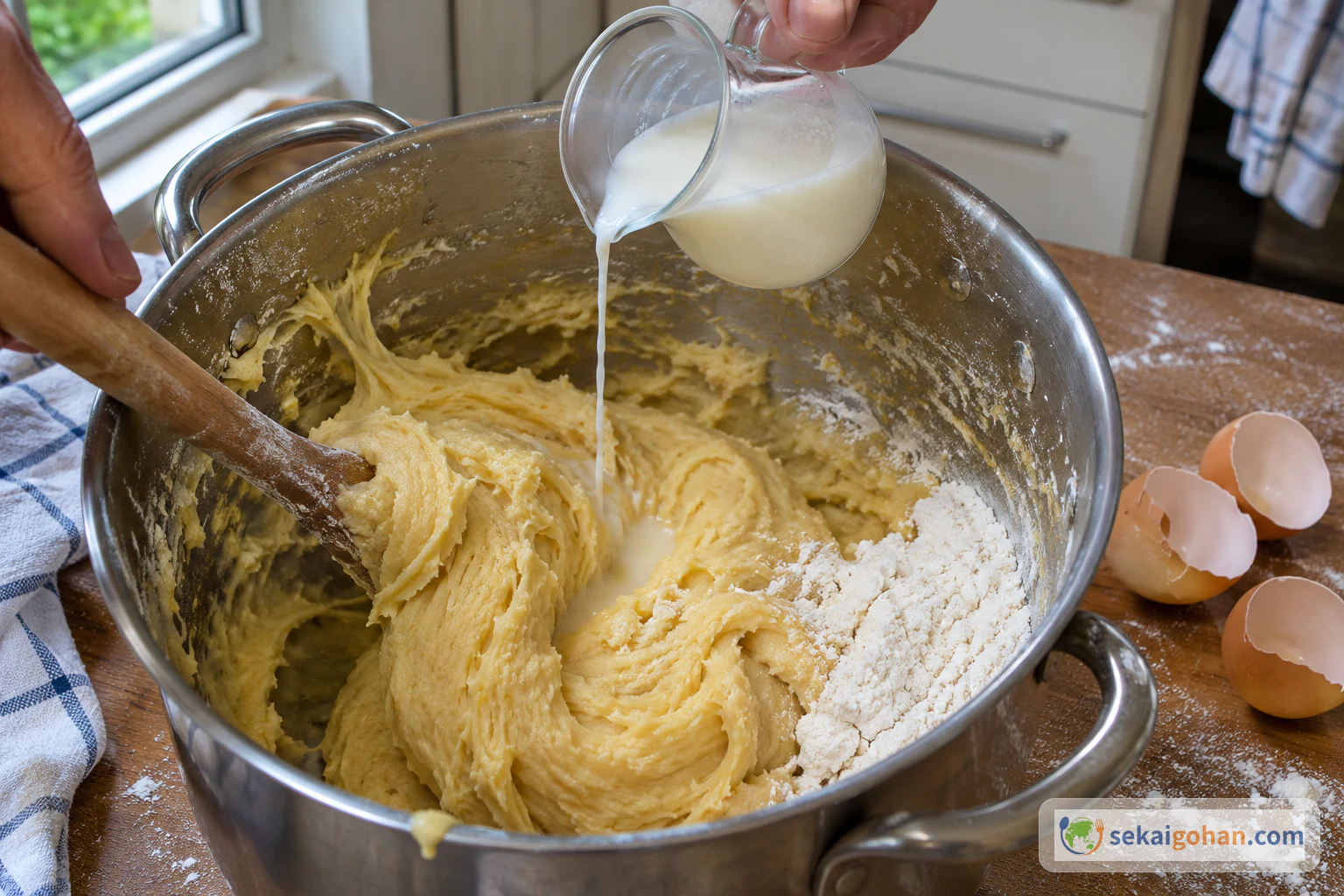
The melted butter belongs in the dough; the second butter is for the pan. The three eggs and the four eggs do different jobs, so never halve one group alone. Salt goes into the dough, the water and the egg; skip one and the whole plate tastes flat.
Eiernockerl contains wheat, egg and milk (milk and butter). If you use a processed product such as clarified butter or ghee, check its label for allergens.
Equipment
- A large pot, at least 4 quarts (4 L)
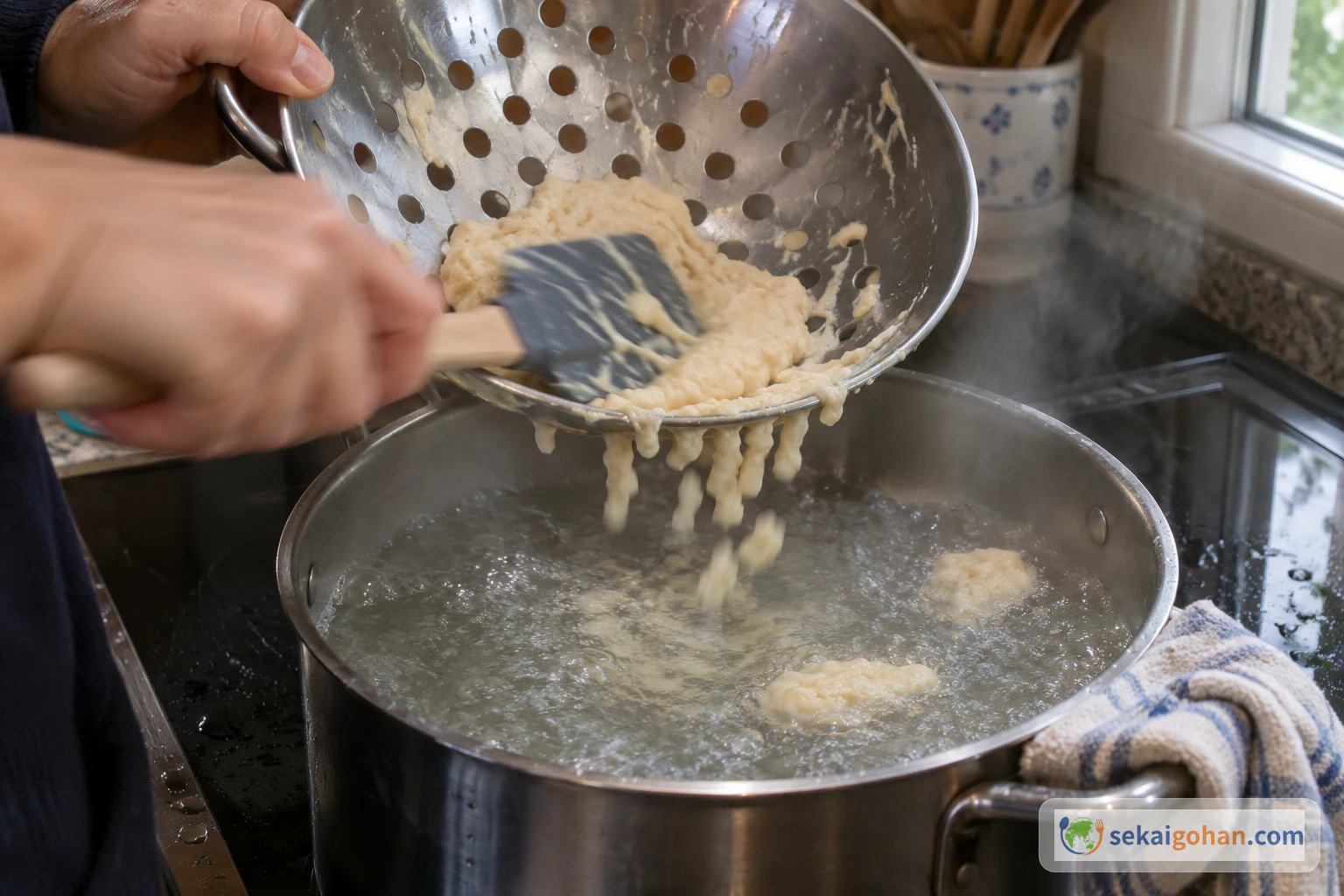
- A colander with large round holes, 7–8 inches (18–20 cm), or a spaetzle press
- A rubber spatula and a wooden spoon
- A second colander or the same one, for draining
- A large frying pan
- A small bowl and fork for the egg mixture
- Warmed plates
Choosing and Substituting
The flour is the one ingredient worth thinking about. Austrian glatt flour is fine and smooth; outside Austria, plain all-purpose flour does the same job and gives a dough that holds its shape in boiling water. Soft cake flour on its own makes a slack dough that breaks apart in the pot. Everything else is supermarket shopping, and each swap changes something small:
| Swap | What it does |
|---|---|
| Ghee for Butterschmalz | Burns less easily; the aroma is lighter than butter |
| Whole nutmeg, freshly grated, for ground | A brighter, stronger scent in the egg |
| White pepper for black | A softer edge in the finish |
| Thin scallion greens for chives | Weaker, but the same oniony direction |
| Soy milk for milk | The dough loses richness and aroma |
Medium eggs are a good guide; in Austria these weigh about 2 oz (53–63 g) each. Because the finish keeps the egg soft, freshness and handling matter more here than in most dishes.
Salmonella sits mainly on the outside of the shell and at the boundary between white and yolk, and when you crack eggs at home the contents inevitably touch the shell. Never wash eggs; washing strips the shell's protection and lets bacteria in. Wipe off any dirt before cracking and keep broken shell out of the bowl. Eggs from day 22 after laying onward, that is, from six days before the best-before date, go only into dishes that are cooked through; for this recipe, use them only in the fully set version described in step 7.
Method
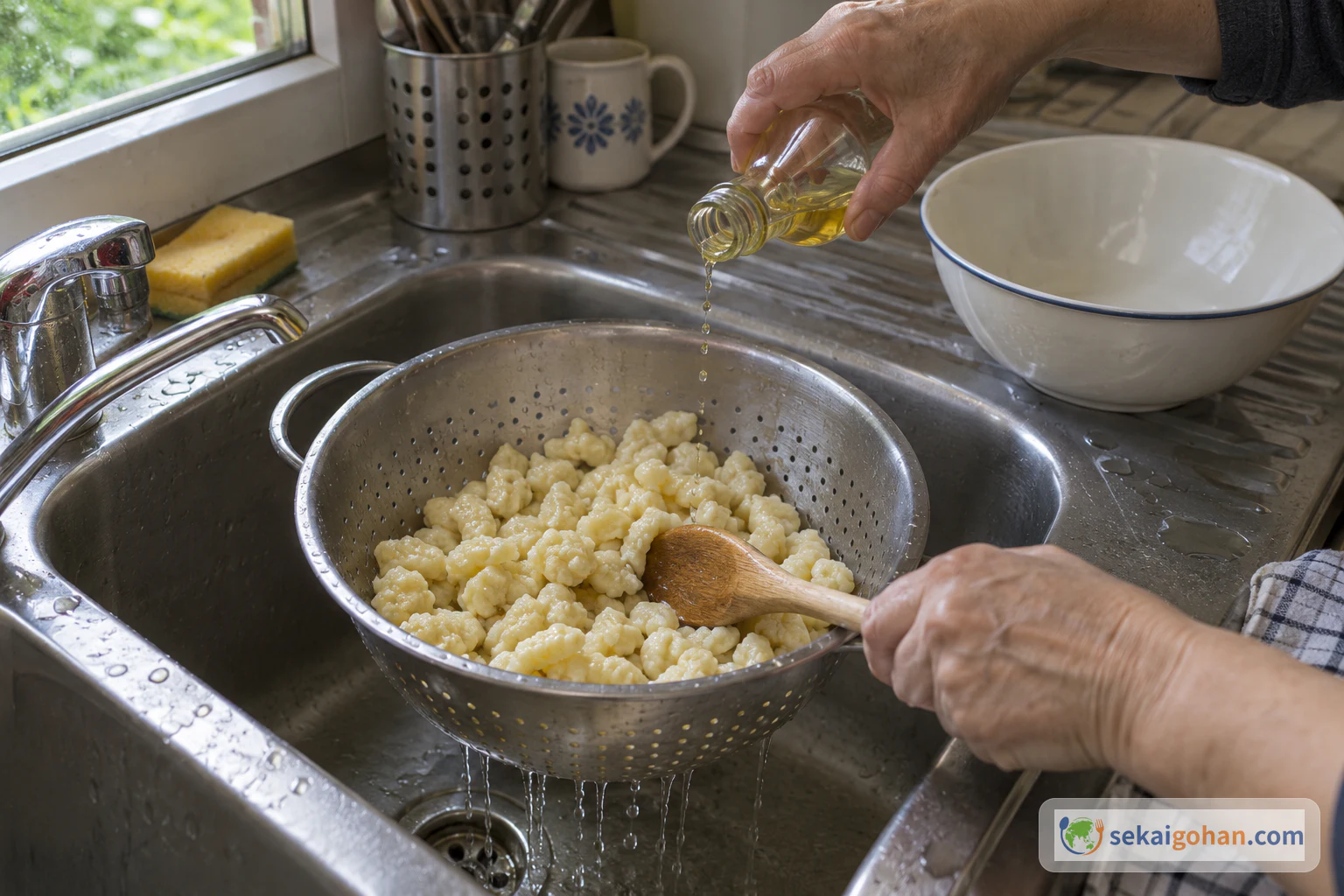
The work runs in one line and does not wait for you. Get the water boiling before you touch the flour, because the dough has to go into the pot the moment it is mixed. Beat the egg mixture and warm the plates while the dumplings drain, so the last three steps, butter, egg and plate, follow each other without a pause.
Two moves decide this dish: a dough soft enough to fall through the holes, and an egg finish that ends while the egg still shines. Everything between them is simple boiling and tossing.
When It Goes Wrong
| What you see | Why | What to do |
|---|---|---|
| The dough runs through the holes in threads and won't form dumplings | Too much milk | Work in flour a little at a time until the dough falls heavily from the spoon |
| The dough is too stiff to press through | The flour has drunk up the liquid | Stir in a little more milk |
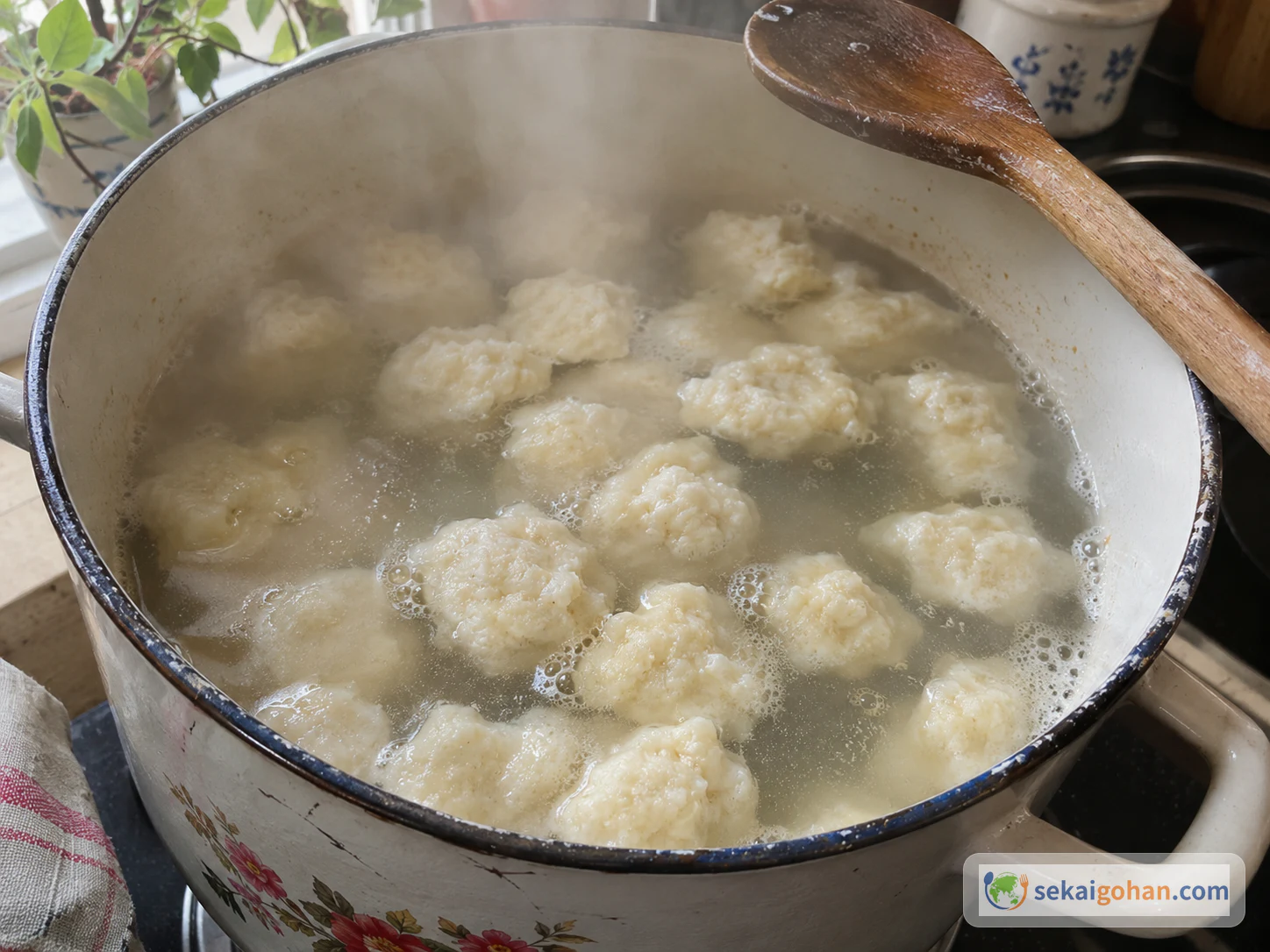
| Dumplings fall apart, or the water stops boiling | Too little water, or too much dough at once | Use a big pot, keep it at a rolling boil and press the dough in batches |
| Dumplings stick together in a lump | The oil after rinsing was skipped | Drain well and turn them with a few drops of oil before they go in the pan |
| The egg turns dry and crumbly | Heat too high, too much stirring, or more than two minutes | Use moderate heat and take the pan off within 2 minutes |
| The whole dish tastes flat | Salt went only into the water | Salt the dough, the water and the egg |
Serving, Variations and Storage
At the table
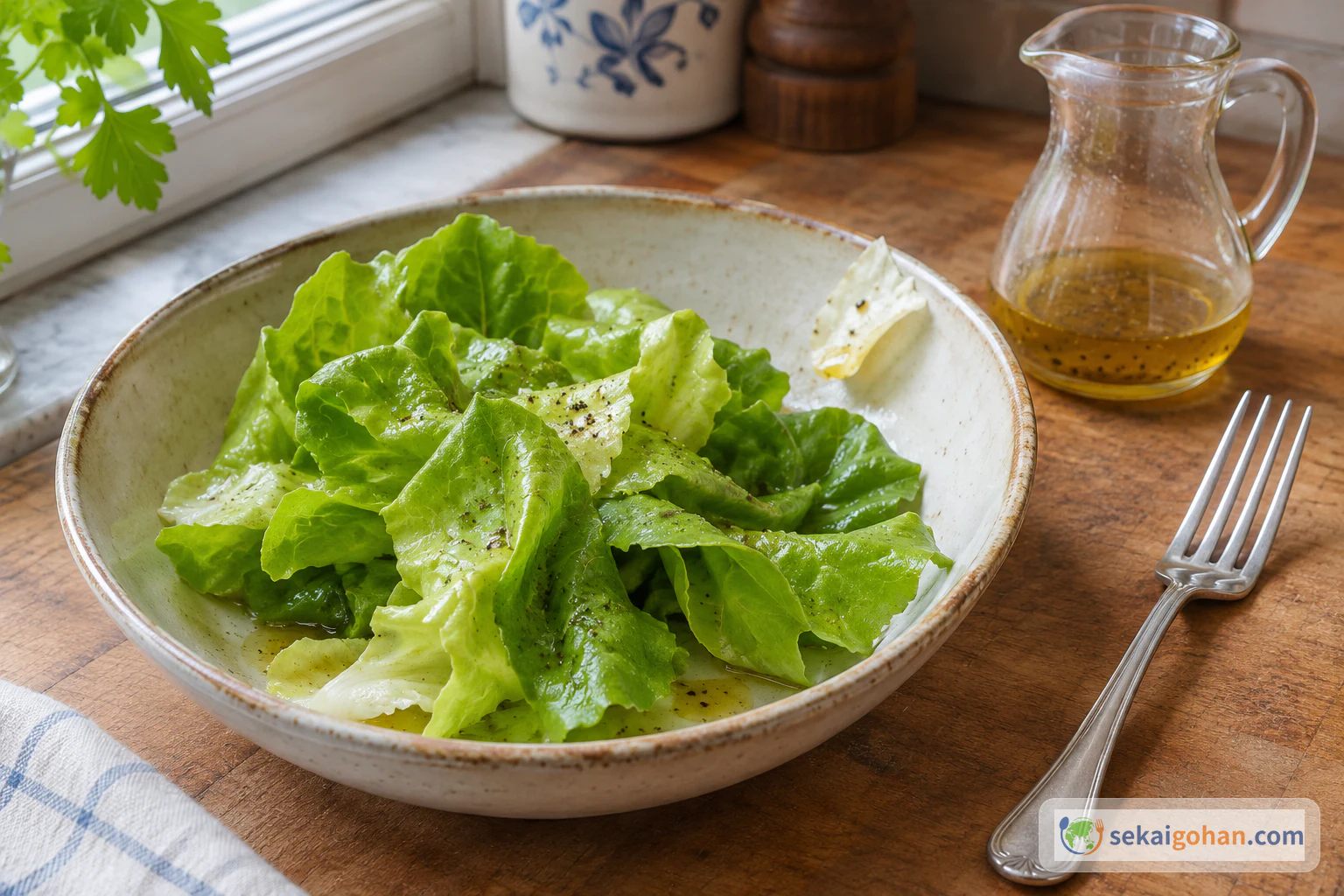
Eiernockerl comes to the table as a main course, with a green salad and a beer. The salad matters: plain leaves dressed with oil and vinegar cut through the butter and egg, and the beer's bitterness and bubbles wash the richness away between forkfuls. It is a weeknight plate, quick and filling, and it is just as much at home on a family table with children as in a Viennese inn.
Variations
- Endive salad with pumpkin seed oil. Dress endive with white balsamic vinegar, olive oil, salt, pepper and a pinch of sugar, then finish with dark pumpkin seed oil. The bitterness and acidity cut the butter harder than a lettuce salad.
- Soda water and cream in the egg. A splash of each in the beaten egg gives a fluffier, lighter coating.
- Part wholegrain flour. Replacing some of the flour with wholegrain spelt gives the dumplings a nuttier, toastier taste and a slightly coarser bite.
- Spoon-dropped dumplings. Dropping the dough from a spoon gives larger, uneven dumplings with a homely look (see the FAQ below).
Storage
Cool leftovers quickly, put them in a covered container and refrigerate promptly. Eat them by the next day. Reheat until hot all the way through, and do not leave them standing at room temperature. The fully set version turns firmer each time it is reheated.
Frequently Asked Questions
Is this the same as Salzburger Nockerl?
No. Salzburger Nockerl is a sweet dessert from Salzburg, and its "Nockerl" uses the other meaning of the word, the foamy, whipped sweet. Eiernockerl are savoury flour dumplings with egg and chives, eaten as a main course.
How is Eiernockerl different from Spätzle?
Spätzle, the egg noodles of Swabia in southern Germany, belong to a separate family with their own dough and shaping; Käsespätzle layers them with cheese. Eiernockerl stays with Austrian Nockerl: small dumplings, finished in butter with softly set egg and no cheese. The small dumplings floated in clear soup, such as the semolina Grießnockerl served with Viennese boiled-beef broth, are another dish again.
I don't have a colander with big holes. What else works?
Drop the dough from a spoon. Dip a spoon into the boiling water, scoop up a small piece of dough and let it slide into the pot, dipping the spoon again each time so the dough comes off cleanly. Lift the dumplings out once they all float, exactly as in step 3.
What do "glatt" and "griffig" on Austrian flour mean?
They describe how fine the flour is ground. Glatt is smooth and fine, griffig is coarser and feels grainy between your fingers. The labels say nothing about protein content, so plain all-purpose flour is the right match for this dough.