Ingredients and steps on one page. Print it, or choose “Save as PDF” in the print dialog.
Sekai Gohan
Kapama: Bansko Sauerkraut, Meat and Rice Baked in Clay
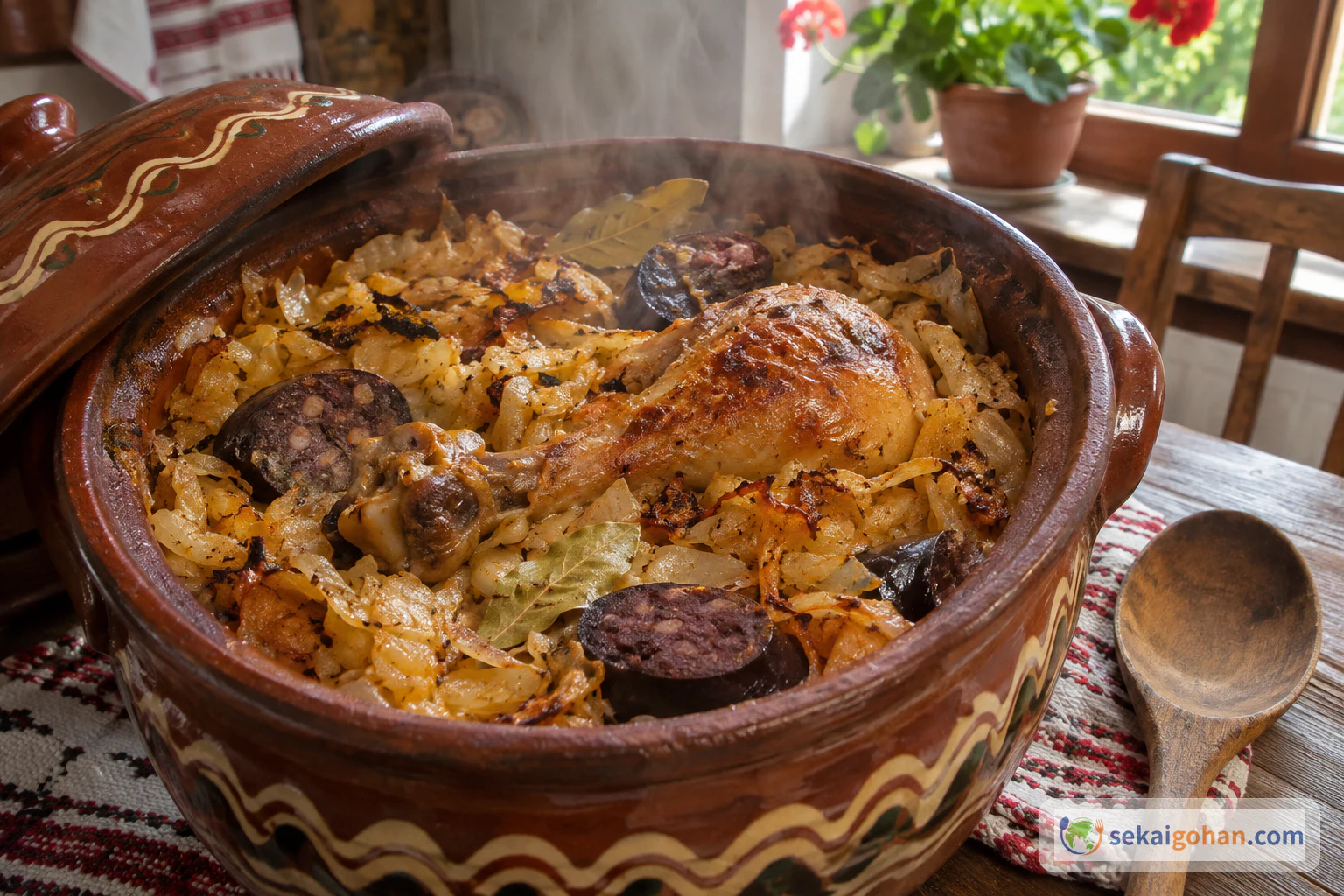
Ingredients
| Ingredient | Amount | Role |
|---|---|---|
| Sauerkraut (кисело зеле, kiselo zele), store-bought | about 12 oz (330 g) | Sourness, moisture and the salt for the whole pot. Soaked and squeezed before use |
| Pork (свинско, svinsko), a fatty cut such as shoulder, in pieces | 9 oz (250 g) | The middle meat layer. Its fat runs down into the rice |
| Beef or veal (телешко, teleshko), shank or shoulder, in pieces | about 5 oz (135 g) | The bottom meat layer |
| Blood sausage (кървавица, karvavitsa), in rounds | about 6 oz (165 g) | Dark, rich layer near the top |
| Bone-in chicken leg (пилешко бутче, pileshko butche) | 1 | The top layer |
| Uncooked white rice (ориз, oriz) | 7 oz (200 g) | Soaks up the juices between the layers |
| Bay leaves (дафинов лист, dafinov list) | 1–2 | Aroma tucked between the layers |
| Black pepper | to taste | Fried with the rice |
| Oil | a little | For frying the rice |
| White or red wine | about 3½ tbsp (50 ml) | Poured over the layers before sealing |
| Beetroot (optional) | about 5 oz (135 g) | Earthy sweetness and color, only if you like it |
Steps
1Soak and squeeze the sauerkraut
Put the sauerkraut in a large bowl of cold water and loosen the strands with your fingers so the water reaches all of it. Leave it to soak, then taste a strand to decide whether it needs longer. When the salt has eased and a clean sourness is left, lift it out in handfuls into a colander. Wring each handful hard over the bowl. It is ready when it feels damp but no longer drips when squeezed.
2Fry the rice with black pepper
Heat a little oil in a wide frying pan. Add the uncooked rice and stir it with a wooden spatula so every grain is coated. Grind in black pepper and keep stirring until the pepper smells warm. Take it off the heat when the grains look glossy and the edges turn slightly translucent.
3Build the layers
Divide the sauerkraut into four portions and the rice into three. In the pot, layer them in this order: sauerkraut, beef, rice, sauerkraut, pork, rice, sauerkraut, blood sausage, rice, sauerkraut. Lay the chicken leg on top. With these amounts, one round of layers fills the pot. Spread each layer evenly without pressing it down. The pot is built when the chicken sits on a last bed of cabbage with no rice showing.
Keep the rice off the walls and the topRice that touches the hot clay wall or sits uncovered near the lid dries out and stays hard. Keep each rice layer just inside the edge, and always cover it with sauerkraut or meat before the next layer.
4Add the bay leaves and wine, then seal
Tuck the bay leaves between the layers. If you are using beetroot, tuck it in among the layers too. Pour the wine evenly over the whole pot. Lay a sheet of foil over the rim, set the lid on top and press the foil down hard all around the edge. The pot is sealed when the lid sits tight with no gap where steam could escape.
The seal decides the dishNothing is added during baking, so the only liquid the pot ever has is what comes out of the cabbage, meat and wine. If steam leaks out, the rice dries and the top scorches. Press the foil all the way around.
5Bake hot until it boils
Set the oven to 480°F (250°C) and put the pot on a rack in the middle. Bake for 30 minutes. Toward the end, listen at the oven door. A steady bubbling sound from inside the pot means it has come to a boil.
Clay pots and high heatCheck the maximum oven temperature for your clay pot or cocotte before you start. If it is rated below 480°F (250°C), bake at the highest temperature it allows. Never put a cold clay pot into a hot oven, because a sudden jump in heat can crack it. An oven thermometer shows whether your oven runs hotter than its dial.
6Lower the heat, bake slowly, then open at the table
Without opening the oven, turn it down to 300°F (150°C). Bake for 3 hours. Leave the lid sealed the whole time, even if you are curious. The pot is ready to come out after the full 3 hours. Then put on oven mitts, set the pot on a heatproof trivet on the table, and loosen the foil at the rim. Lift the lid so it tilts away from you and the steam rises on the far side. Check the thickest part of the chicken next to the bone and a piece of pork from the middle layer. Serve when the meat is cooked right through, the cabbage is soft and the rice is tender.