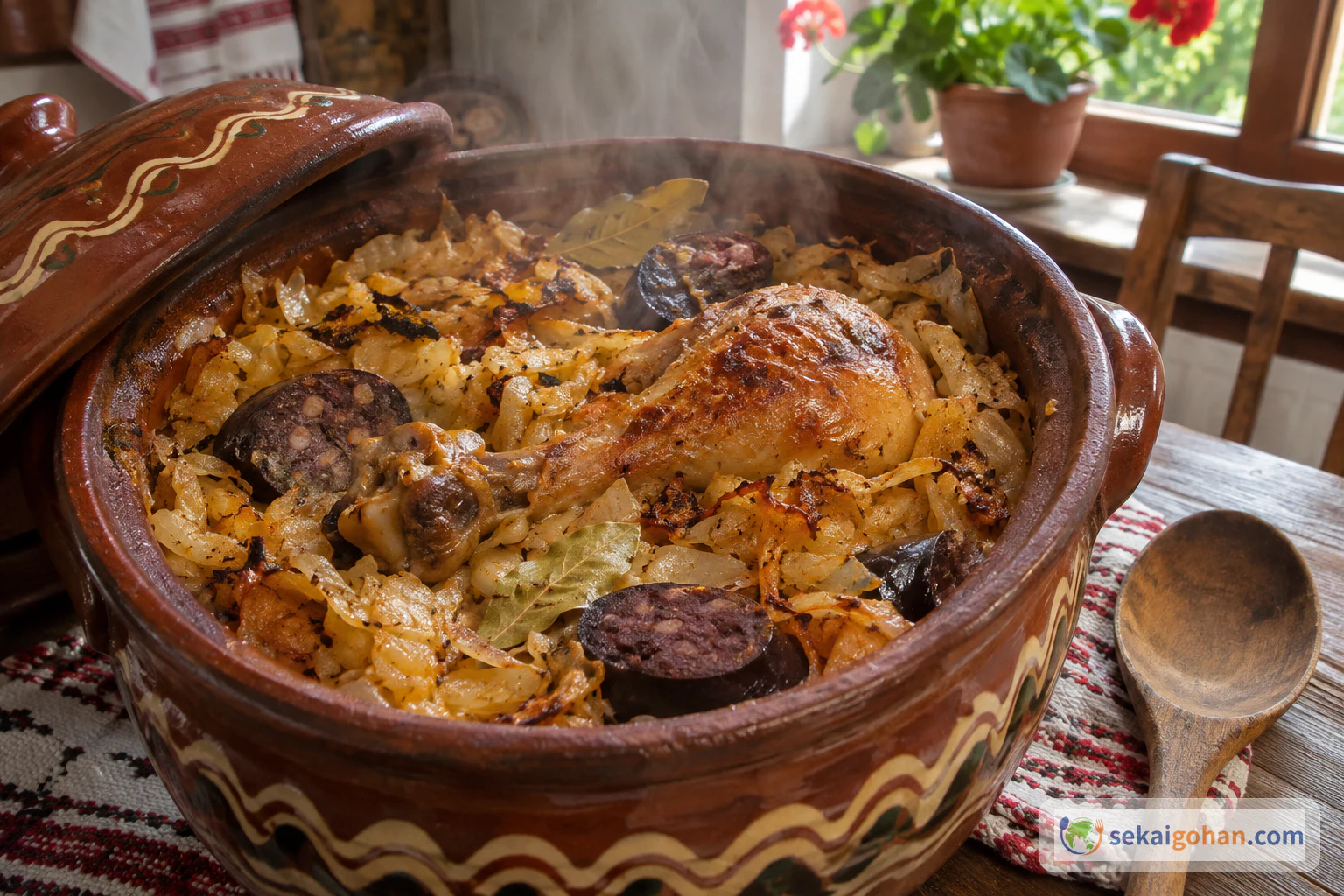
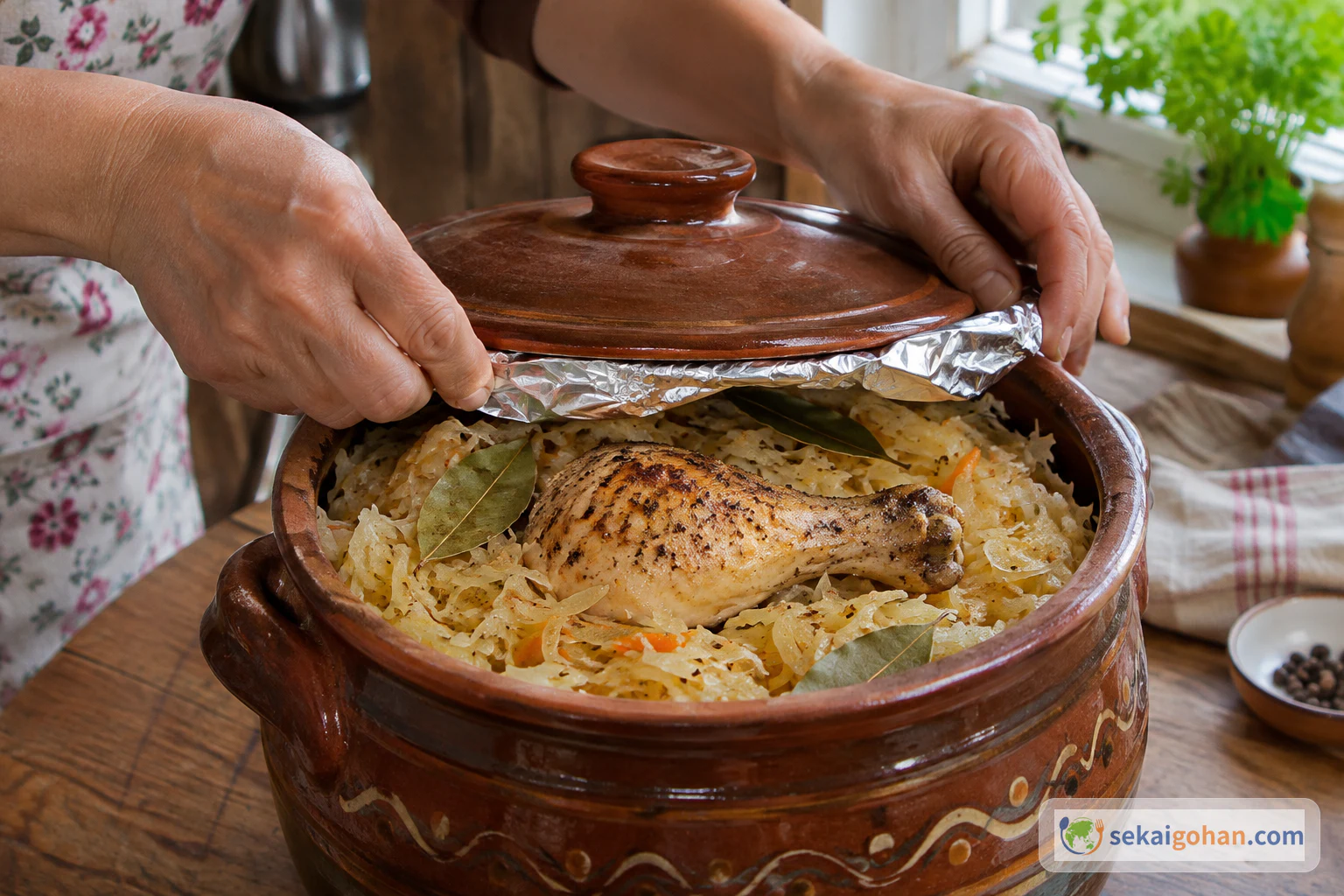
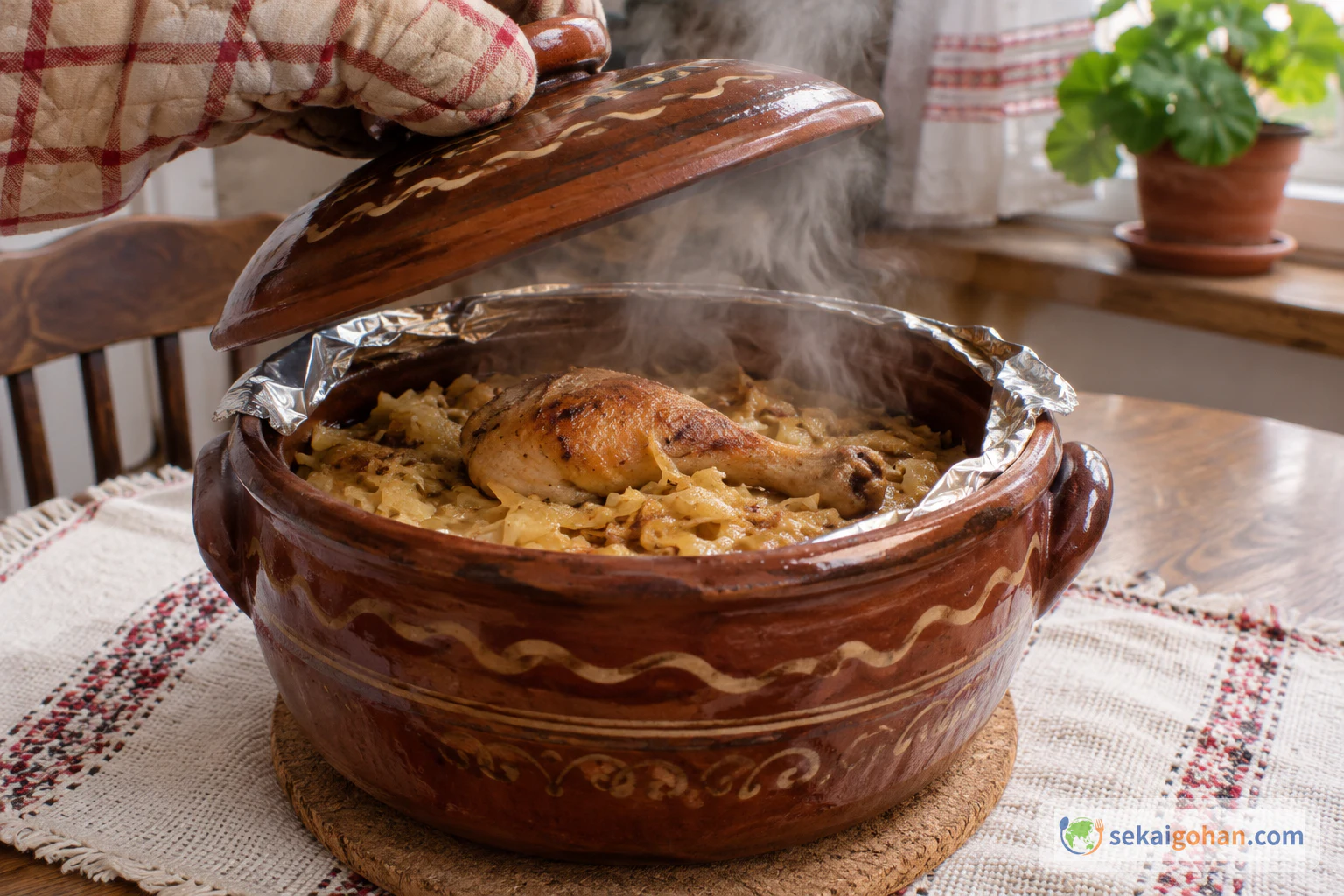
The pot comes to the table still sealed. Someone loosens the foil and lifts the lid, and a cloud of sour, peppery steam rises over a chicken leg resting on soft, browned cabbage. Under it, hidden until the first spoon goes in, are rice, pork, beef and dark rounds of blood sausage, stacked in the order they went in. That is kapama from Bansko, the mountain town in southwest Bulgaria. The sauerkraut gives it a clean sourness, the meats and sausage give it richness, and the rice soaks up everything that drips down through the layers during the long, closed bake.
A Sealed Pot from the Foot of the Pirin Mountains
Bansko sits at the foot of the Pirin mountains, and kapama is one of the stews and clay-pot dishes served there. In Bulgaria it belongs to the family of stews and clay-pot dishes, and in Bansko and nearby Dobrinishte it is served in folk-style taverns and restaurants. The cooking of this area is known for its stews, made from old home recipes and local produce. Kapama fits that description: sour cabbage, several meats and rice, layered in clay and sealed so nothing escapes while it bakes.
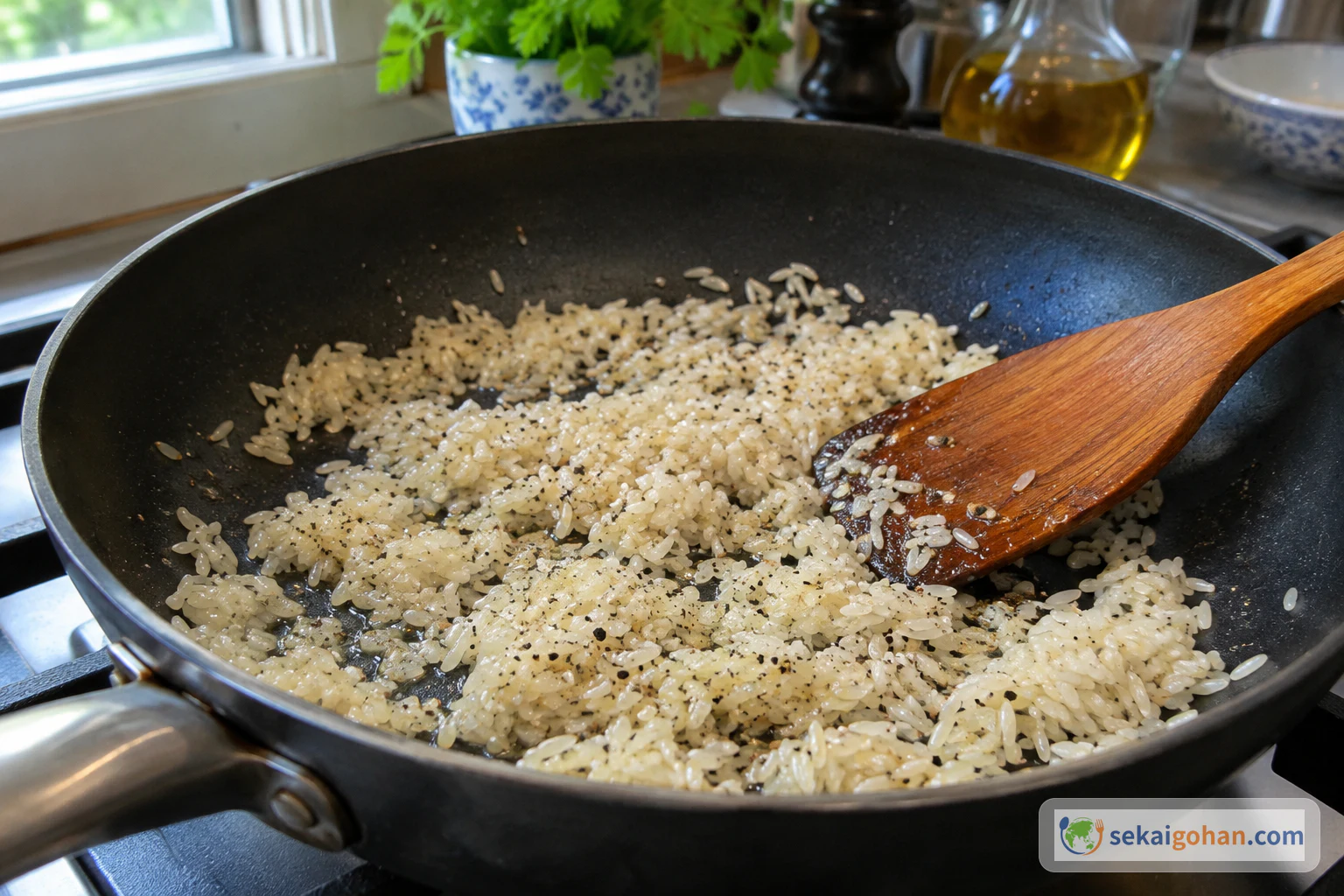
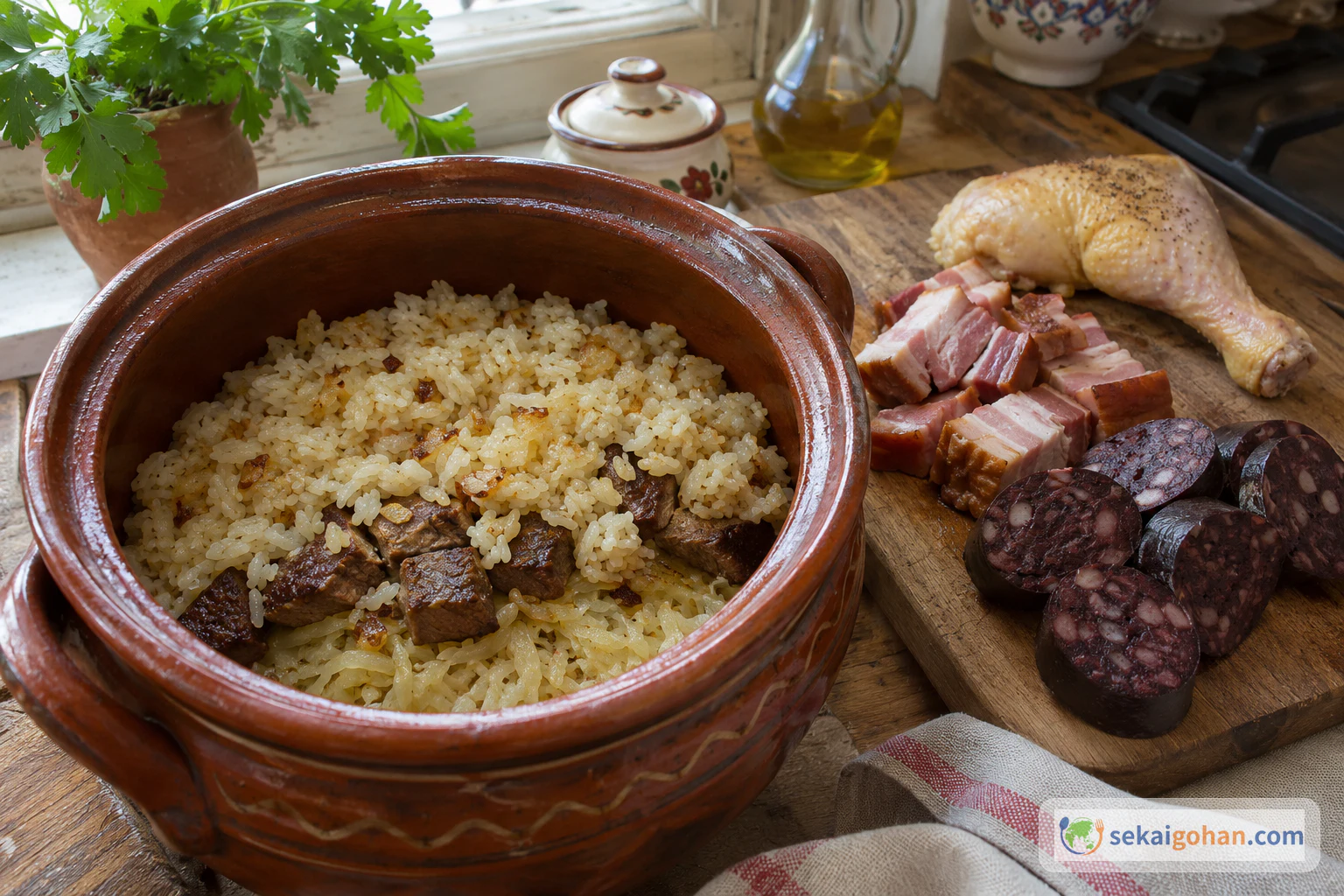
The method is the whole idea. Nothing is stirred and the meats are not browned first. The rice is fried with black pepper, and then the meats go into the pot raw, in layers. Sauerkraut goes on the bottom and between every layer of meat, so the meat juices and the cabbage's sour liquid run down into the rice below. When the pot is sealed, the steam stays inside, and the long bake turns the cabbage silky and the meat soft.
How households and taverns differ
Every kitchen in the region has its own kapama. Some cooks line the bottom of the pot with whole cabbage leaves before the first layer. Some fry the rice together with chopped sauerkraut and beetroot, oil, black pepper, bay leaf and salt, then add white wine and water. Others add pork fat (salo) along with pork, veal and chicken, and pour in red wine and water. Some cooks seal the lid with dough rather than foil. A more general Bulgarian home kapama uses sauerkraut, pork, chicken and sausage with only a little rice, baked low and slow for hours. Across all of these, baking time runs from about 3 to 5 hours, depending on the heat and on whether the clock starts when the pot goes in or when it comes to a boil.
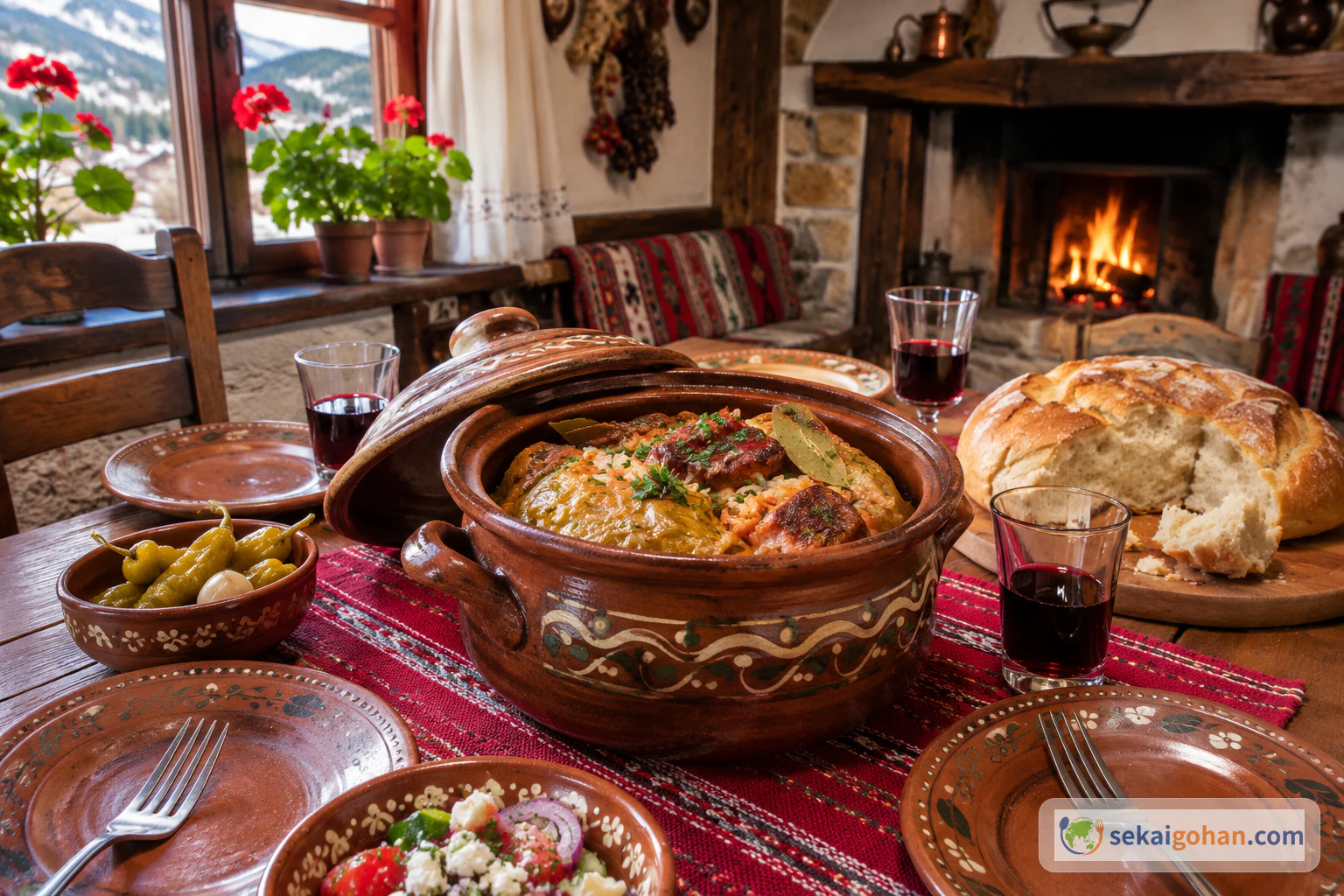
Greek and Turkish cooking also have dishes called kapama. They are different dishes. Here kapama means the Bansko layered pot of sauerkraut, meats, blood sausage and rice.
Ingredients
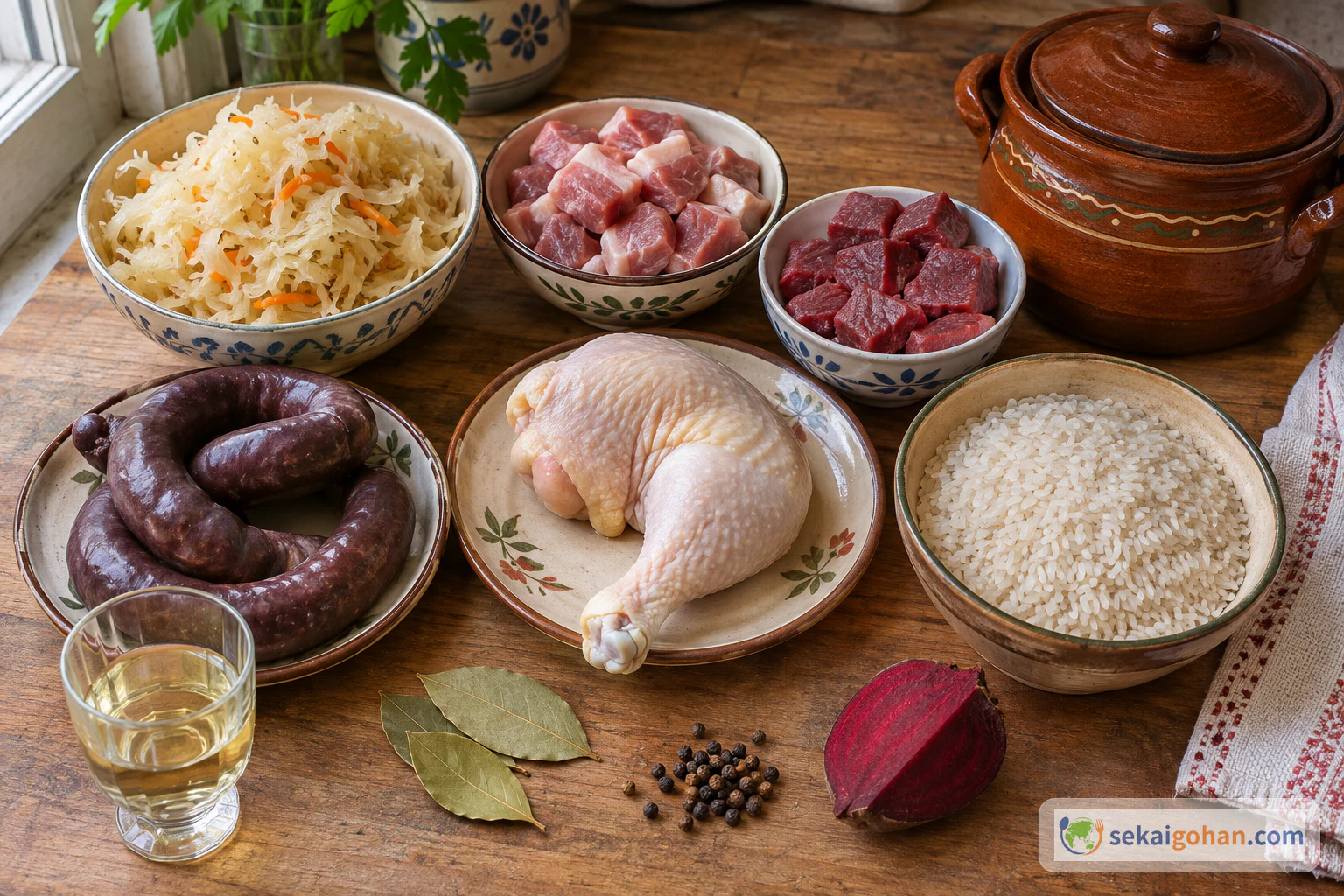
These amounts fill a pot of about 3¼ to 3¾ quarts (3–3.5 L) with one full round of layers.
There is no added salt. The sauerkraut carries all the salt the pot needs, which is why soaking it to the right level matters so much.
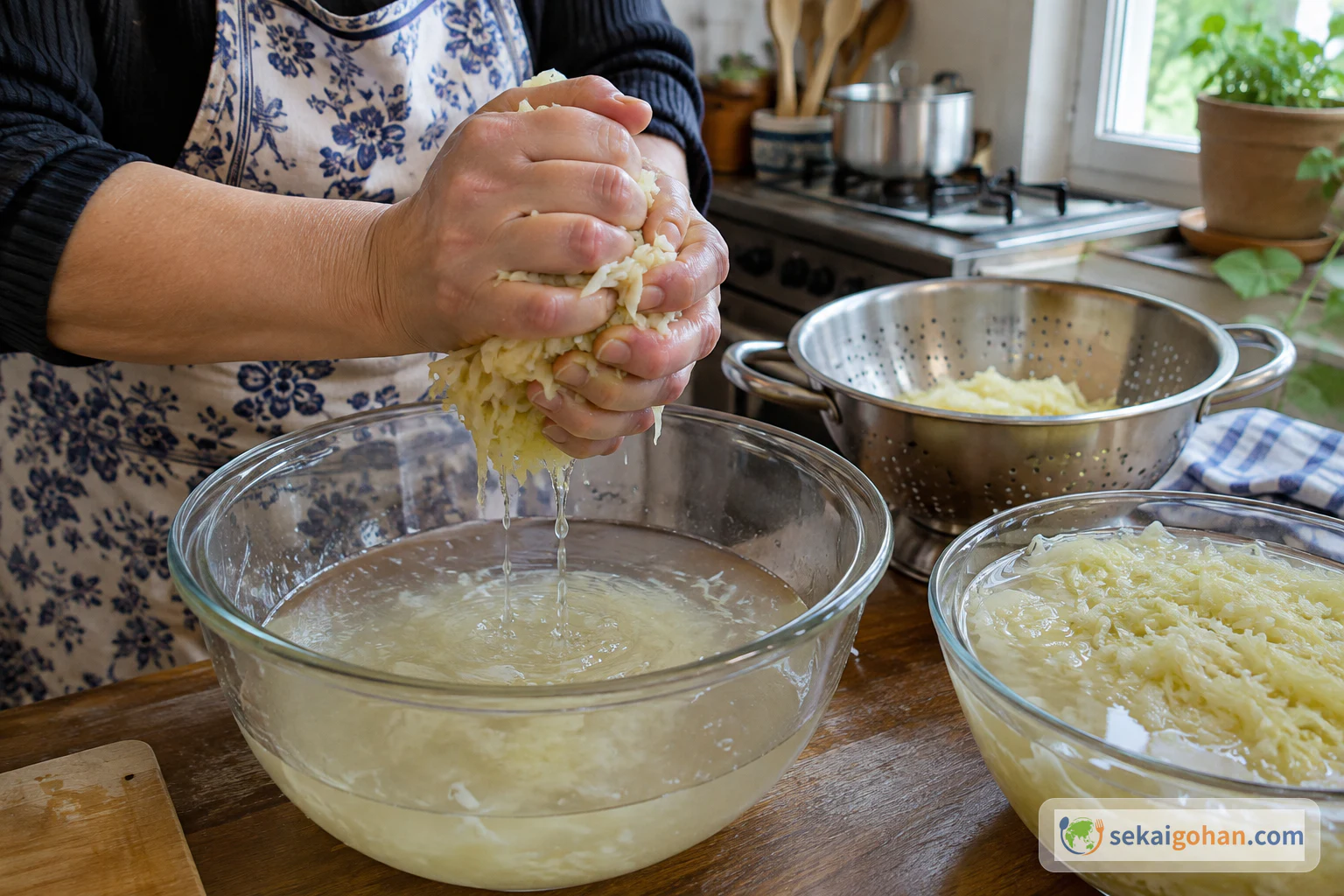
Sauerkraut varies widely in salt and sourness from jar to jar. Taste a strand after soaking and squeezing it. It should taste pleasantly sour and lightly salted. If it still tastes harsh with salt, soak and squeeze it again. Once the pot is sealed, there is no way to fix the salt.
Check the labels on the blood sausage, the sauerkraut and any swap sausage for additives and allergens. The dish contains wine. If you seal the lid with dough instead of foil, the seal contains wheat flour.
Equipment
- Heavy lidded clay pot or oven-safe casserole (cocotte), about 3¼ to 3¾ quarts (3–3.5 L), rated for the oven temperature you will use
- Heat-resistant aluminum foil
- Large bowl and colander
- Wide frying pan and wooden spatula
- Oven thermometer
- Heatproof trivet and oven mitts
Choosing and Substituting: What to Keep, What to Let Go
The sauerkraut is not negotiable. Jarred or bagged sauerkraut from a supermarket or a Central or Eastern European shop works well. Use store-bought sauerkraut, not a home ferment, and judge it by taste after soaking.
For the meats, pick cuts that can take a long bake. Pork shoulder brings the fat that keeps the rice moist. Beef shank or shoulder stays tender in the closed pot, and veal gives a milder, paler layer. A bone-in chicken leg is the right piece for the top, since it sits closest to the lid and the bone keeps the meat from drying out.
Blood sausage is the hardest item to find outside Bulgaria. Boudin noir or black pudding from a butcher or specialty shop is the closest match. A smoked sausage can take its place, but the pot then tastes smoky instead of dark and rich, and the dish moves away from Bansko kapama. Beetroot can be left out with no loss to the structure. It adds an earthy sweetness and stains the cabbage pink.
| Keep for a Bansko taste | Fine to let go abroad |
|---|---|
| Sauerkraut on the bottom and between every layer | The exact cuts of pork and beef |
| Rice fried with black pepper before layering | Beetroot |
| A tight seal on the lid | Clay, if you have a heavy oven-safe cocotte instead |
| Blood sausage | White or red wine, either one works |
Method: Prepare, Build, Seal, Then Leave It Alone
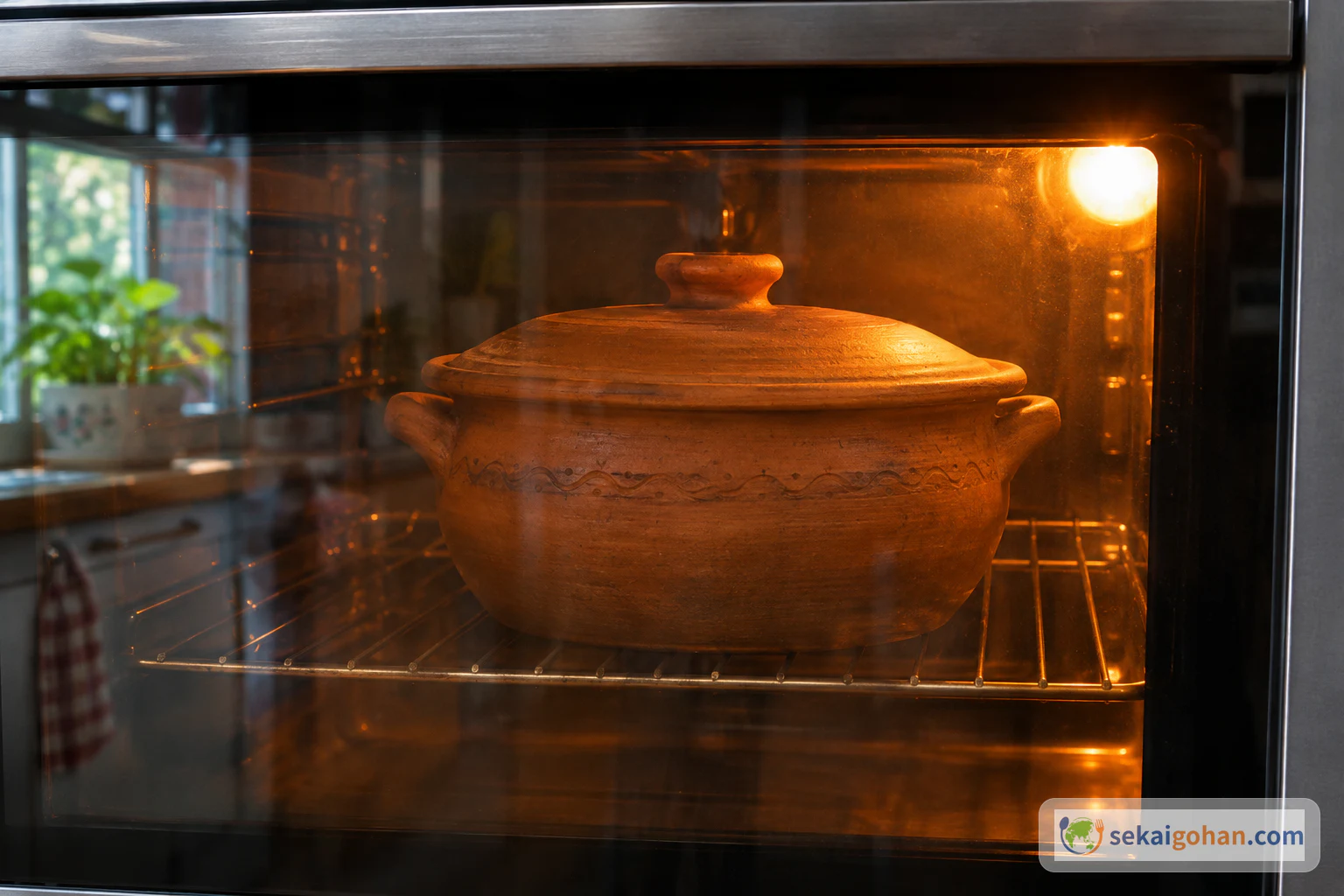
All the work comes first. Soak the sauerkraut, fry the rice, cut the meats, and then build the pot in one go. Once it is sealed and in the oven, the next 3½ hours are hands-off. Do not open it until it reaches the table.
This pot holds pork, chicken and blood sausage. A smaller pot heats through differently from a large one, so always check that the meat is fully cooked at the center before serving. If it is not, reseal the lid and return the pot to the oven at 300°F (150°C), then check again.
When It Goes Wrong
| What you see | Why | What to do |
|---|---|---|
| The whole pot tastes too salty | The sauerkraut was not soaked enough | Serve it with plenty of bread. Next time, soak until a tasted strand is mild before you squeeze it |
| The rice is hard or chalky | Steam escaped, or the rice was not fried and coated in oil | Reseal and bake longer at 300°F (150°C). Next time, fry the rice and press the foil tighter |
| The top is dry and the cabbage is scorched at the edges | The seal leaked | Pick off the scorched bits and spoon juices from the bottom over the top. Seal with foil all the way around next time |
| The chicken is not cooked at the bone | The top layer heats last, and a small pot cooks differently | Reseal and keep baking at 300°F (150°C), then check again |
| The pot cracked | It went cold into a hot oven, or the oven was hotter than the pot is rated for | Do not serve food from a cracked pot. Check the rating and start with the pot at room temperature |
Serving and Other Ways to Make It
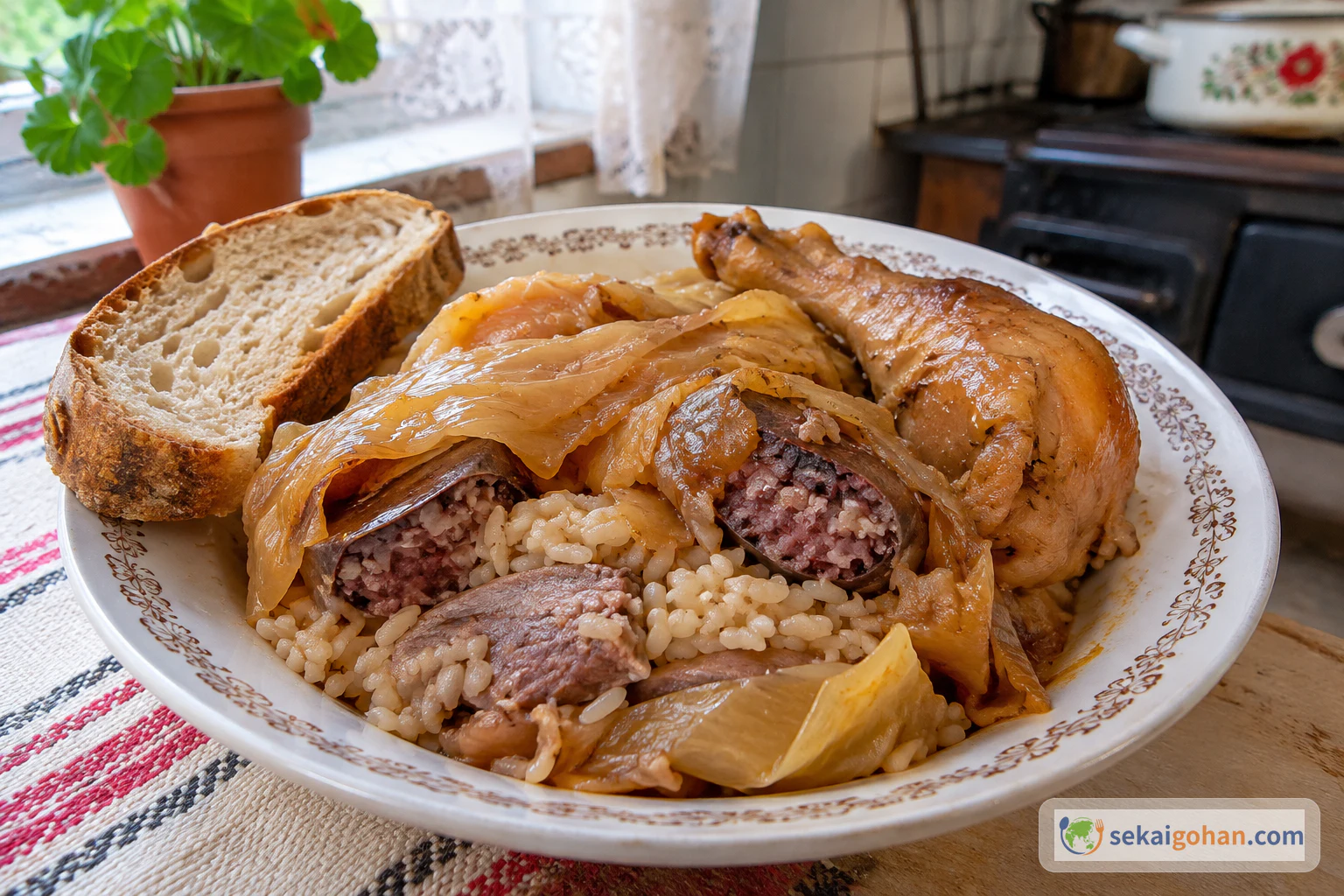
At the table
Kapama is served straight from the pot. Spoon down through all the layers so each plate gets cabbage, rice and every kind of meat, and give the chicken its own place on the plate. Rustic bread on the side is good for the juices that collect at the bottom of the plate. A glass of the same wine that went into the pot goes well with it.
Variations
- Dough seal instead of foil. Press a flour-and-water dough around the rim before setting the lid on, in place of foil, and keep the seal tight all the way around.
- Cabbage leaves on the bottom. Line the pot with whole sour cabbage leaves before the first layer. They protect the bottom layer from the hot clay and keep it from catching.
- White wine and water, fried beet with the rice. Fry chopped sauerkraut and beetroot together with the rice, pepper and bay, then pour in white wine and water before sealing. The rice turns pink and the pot tastes earthier.
- A longer bake. Some versions bake about 5 hours from the boil, or 4 to 5 hours at a low heat. The meat becomes even softer and the cabbage darker. Keep the seal tight for the extra hours.
Frequently asked questions
Can I make kapama without blood sausage?
Yes, by using a smoked sausage in its place. The pot then tastes smoky instead of deep and rich, so it is a different kapama. If you can find boudin noir or black pudding, use it.
Do I have to use beetroot?
No. Beetroot is optional. It adds an earthy sweetness and a pink stain to the cabbage and rice, and without it the pot tastes cleaner and more sour.
Can I use an enameled cast-iron casserole instead of clay?
Yes. A heavy lidded oven-safe cocotte of about the same size holds heat well for the long bake. Seal it with foil under the lid the same way and check that it is rated for the temperatures you will use.
Which wine should I use?
Either white or red works. White wine with water keeps the flavor bright and lets the sauerkraut lead. Red wine darkens the pot and adds weight next to the blood sausage.