Ingredients and steps on one page. Print it, or choose “Save as PDF” in the print dialog.
Sekai Gohan
Zereshk Polo ba Morgh: Iranian Barberry Rice with Saffron Chicken
Ingredients
| Ingredient | Amount | Role |
|---|---|---|
| Ground saffron (za'farān), for the rice | ¼ tsp | Melted over ice into the saffron water that dyes the rice |
| Ice cubes | 3 | Melt slowly to draw color and aroma from the saffron |
| Bone-in chicken thighs (morgh) | 4 thighs, or 2.2 lb (1 kg) chicken thigh | The main dish. Take the thighs with the bone in or use boneless meat; either works |
| Onion (piyāz) | 1 large | Quartered. Adds sweetness and body to the sauce and is lifted out at the end |
| Vegetable oil, for browning the chicken | 4 tbsp | Browns the chicken. What is left in the pan goes into the stew pot |
| Tomato paste (rob-e goje) | 4 tbsp | The red color, sweetness and acidity of the sauce |
| Ground turmeric (zardchube) | 2 tsp | Yellow color and an earthy note |
| Black pepper | 1 tsp | Sharpens the aroma |
| Ground saffron, for the chicken | ¼ tsp | Stirred into the sauce as a powder |
| Freshly boiled water, for the sauce | 2 cups (470 ml) | The braising liquid |
| Salt, for the sauce | to taste | Adjusted when the chicken is done |
| Basmati rice (berenj) | 2 cups (400 g) | Long grains that stay separate |
| Water, for parboiling | as needed | Enough for the rice to move freely |
| Salt, for parboiling | 2 tbsp | Seasons the grains. Most of it rinses away |
| Vegetable oil, for the pot base | 4 tbsp | Crisps the bottom layer into tahdig |
| Dried barberries (zereshk) | 1 cup (60 g) | The sourness and the red color |
| Sugar (shekar) | 5 tbsp | Softens the sourness of the berries |
| Vegetable oil, for the barberries | 1 tbsp | For the quick fry |
| Hot water, for the barberries | 2–3 tbsp | Melts the sugar into a glaze |
| Sliced pistachios (optional) | 2 tbsp | A festive garnish |
| Sliced almonds (optional) | 1 tbsp | A festive garnish |
Steps
1Start the saffron on ice
Put 3 ice cubes in a small glass and sprinkle ¼ tsp ground saffron over them. Set the glass somewhere warm and leave it while the ice melts on its own, which takes about an hour. If your ice cubes are large and will not melt in time, dissolve the saffron in 2 tsp boiling water instead and let it cool. The color will be a little paler because there is more liquid. The saffron water is ready when the ice has melted completely and the liquid is a deep gold.
2Skin and brown the chicken
If the thighs have skin, grip it with a paper towel and pull it off. Heat 4 tbsp oil in a frying pan and lay in the chicken. Let it brown for a few minutes, turn each piece with tongs, then brown the other side for 2–3 minutes. Keep the color light, because the chicken simmers for close to an hour. Move on when both sides are golden and the pieces release from the pan without sticking.
3Build the red sauce base
Lift out the chicken and pour the oil left in the frying pan into the stew pot. Set the pot over medium heat and fry the quartered onion for a few minutes. Add the tomato paste, turmeric and black pepper and stir them through the oil for a short time. Pour in 2 cups (470 ml) freshly boiled water, then add ¼ tsp ground saffron and some salt. The base is right when the raw smell of the paste is gone, the oil has turned red and the paste dissolves smoothly into the water.
4Simmer the chicken
Lay the chicken in the sauce with the browned top side facing down and bring it to a boil. Turn the heat to medium-low, cover and simmer for 45 minutes to 1 hour. After 30 minutes, turn every piece over so the other side sits in the sauce. While the chicken simmers, move on to the rice. Halfway through, the sauce should bubble gently around the pieces and the inside of the lid should be beaded with steam.
5Rinse and parboil the rice
Rinse the basmati in cold water 3–4 times, until the water runs clear, and drain it. Bring a large pot of water to a boil, about seven-tenths full, so the rice can move freely, and stir in 2 tbsp salt. Add the rice, bring it back to a boil and cook until the outside is soft but the center still has bite, 3 to 10 minutes depending on the rice. Drain it into a fine sieve and run cold water over it right away to stop the cooking and rinse off the extra salt. Break a grain in half. A thin white core in the middle means it is ready.
6Lay the saffron base and mound the rice
Set the heavy pot over medium heat and coat the bottom with 4 tbsp oil. Toss a small amount of the parboiled rice with a few teaspoons of the saffron water and spread it evenly over the bottom. Pile the rest of the rice on top in a loose cone, without pressing it down. Poke several holes into the mound with the handle of a wooden spoon, reaching about halfway down. Leave the pot uncovered until steam rises from the holes or you hear the oil sizzle at the bottom.
7Cover with a towel-wrapped lid and steam
Wrap a clean kitchen towel around the lid and gather the corners on top, well away from the heat. Fit the lid on tightly, turn the heat to low and steam for 50 to 60 minutes. The towel soaks up the condensation so it does not drip back onto the rice, and the holes let the steam reach every layer. At 50 minutes, pinch a grain from the top. The rice is done when the towel is damp, steam rises at the rim and the grain is tender all the way through.
8Finish the chicken
While the rice steams, check the chicken. A chopstick should slide easily into the thickest part. On bone-in thighs, no red juice should remain around the bone, and the center must reach 167°F (75°C) for at least 1 minute. If the sauce looks thin, take the lid off and let it bubble for a few minutes. Taste, add salt and lift out the onion quarters. The sauce is ready when it clings to the meat in a glossy, brick-red coat.
9Fry the barberries for one minute
Put the barberries in a sieve, rinse them and drain them well. About 5 minutes before the rice is done, heat 1 tbsp oil in a small pan over medium-low heat. Add the barberries, 5 tbsp sugar and 2–3 tbsp hot water and stir quickly for about a minute, then take the pan off the heat. Stop the moment the berries swell and turn glossy. Any darkening means they have cooked too long.
10Turn the rice out onto the platter
Lay a large platter upside down over the pot. Put on oven mitts, hold the pot and platter together with both hands and flip them in one quick motion. Lift the pot straight up. If you would rather not flip it, spoon the rice onto the platter and lift out the crust separately. A good turn-out leaves a dome of loose grains with a golden crust of tahdig.
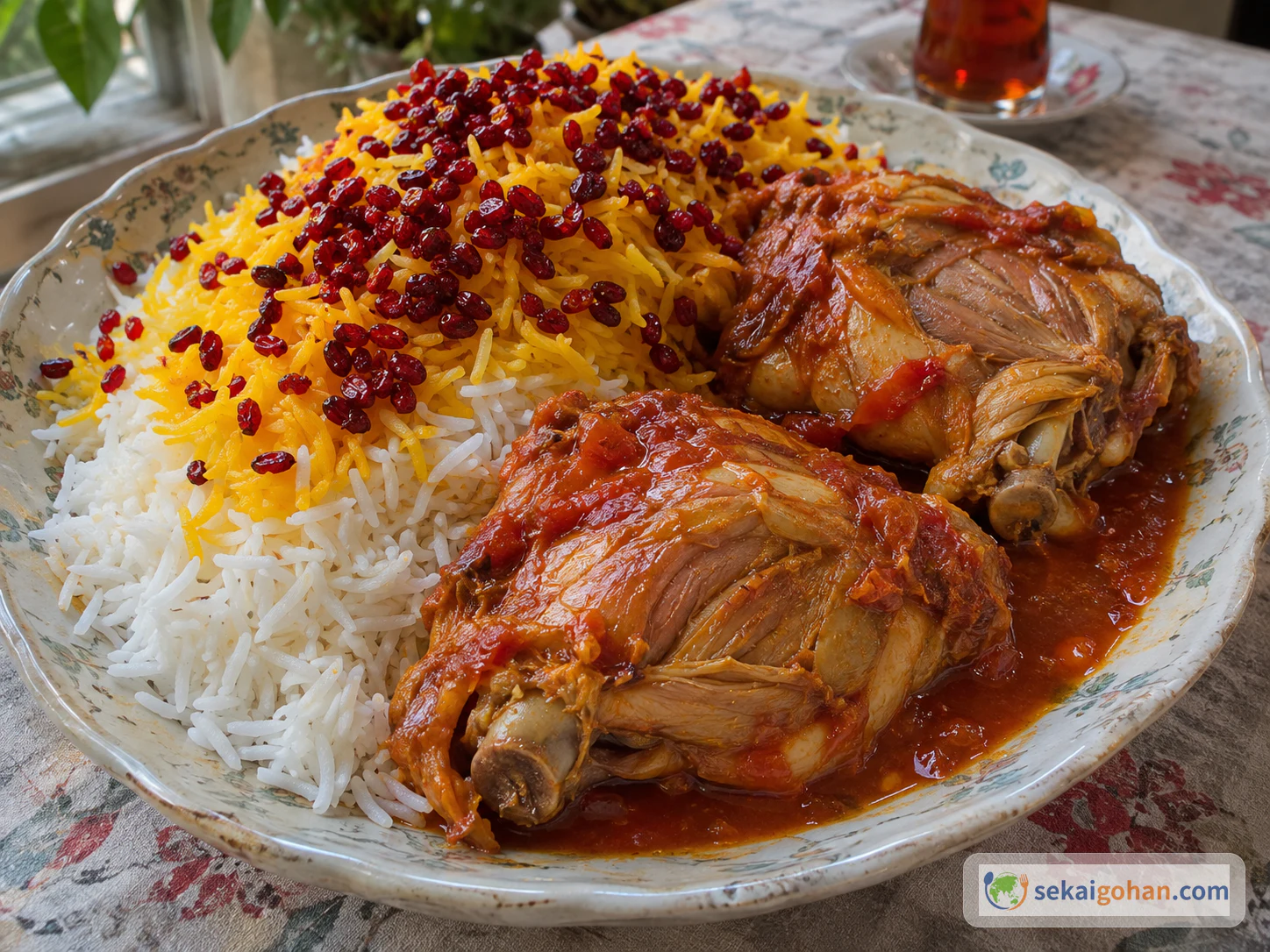
11Build the three layers and serve
Toss a few spoonfuls of the white rice with the rest of the saffron water until it turns bright yellow. Shape the white rice on the platter, lay the saffron rice over the top and spoon the barberries over the saffron rice. Add the pistachios and almonds now if you are using them. Break the crust into pieces and set them around the edge. Serve the chicken and its sauce in a separate dish or beside the rice. The platter is ready when white, yellow and red sit in distinct layers rather than mixed together.