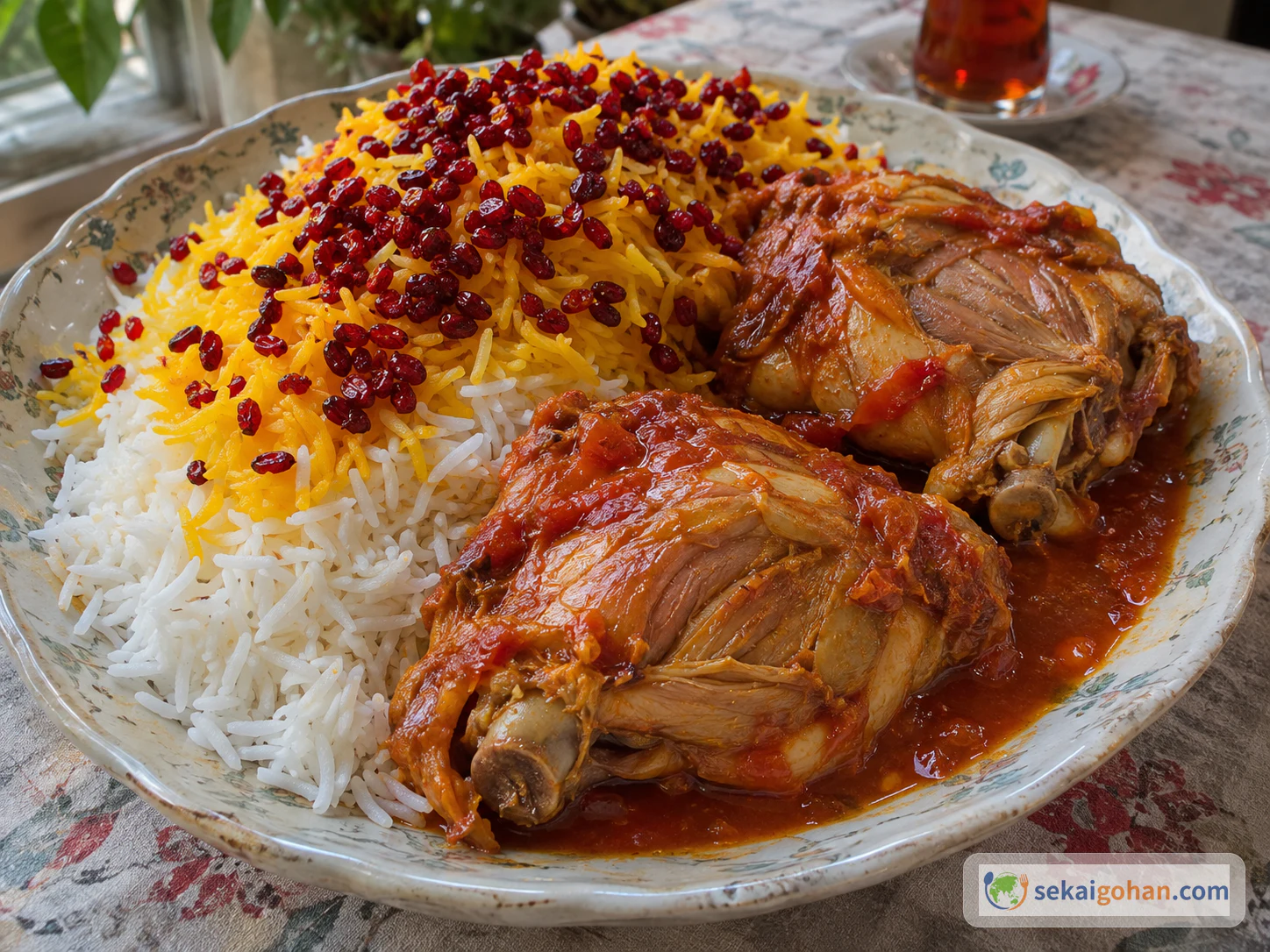
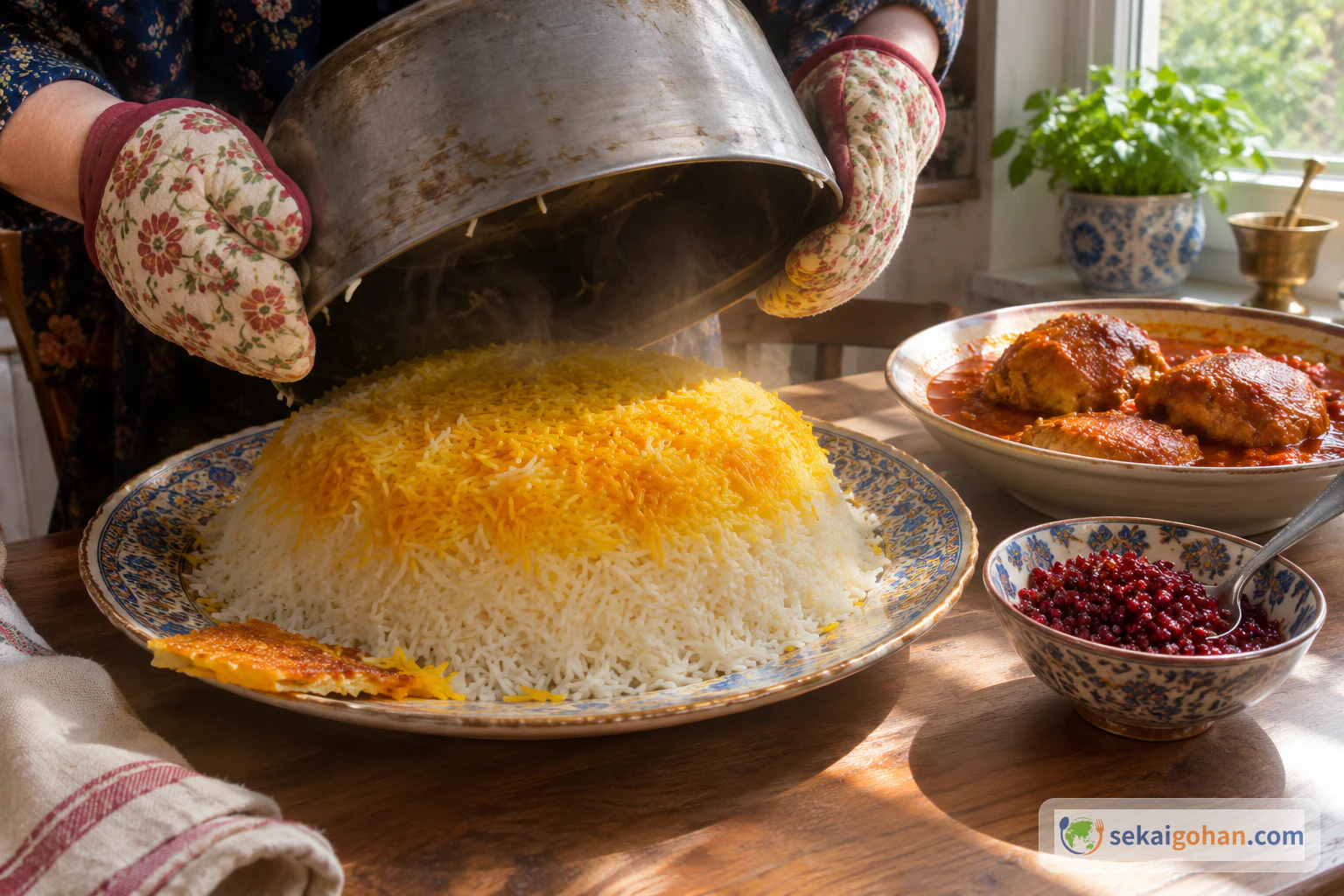
You turn the pot upside down onto a wide platter and lift it away, and a dome of long, separate basmati grains slides out with a golden crust on top. Saffron rice goes over the white rice, then a spoonful of barberries just out of the pan, glossy and red as rubies. Next to the rice sits a dish of chicken thighs in a brick-red sauce of tomato, turmeric and saffron. Zereshk polo ba morgh is two Iranian dishes served together. In every forkful you get the sharp sweet-sour pop of the berries, the floral smell of saffron through the rice and the deep, soft tomato flavor of the braised chicken.
Two dishes on one platter
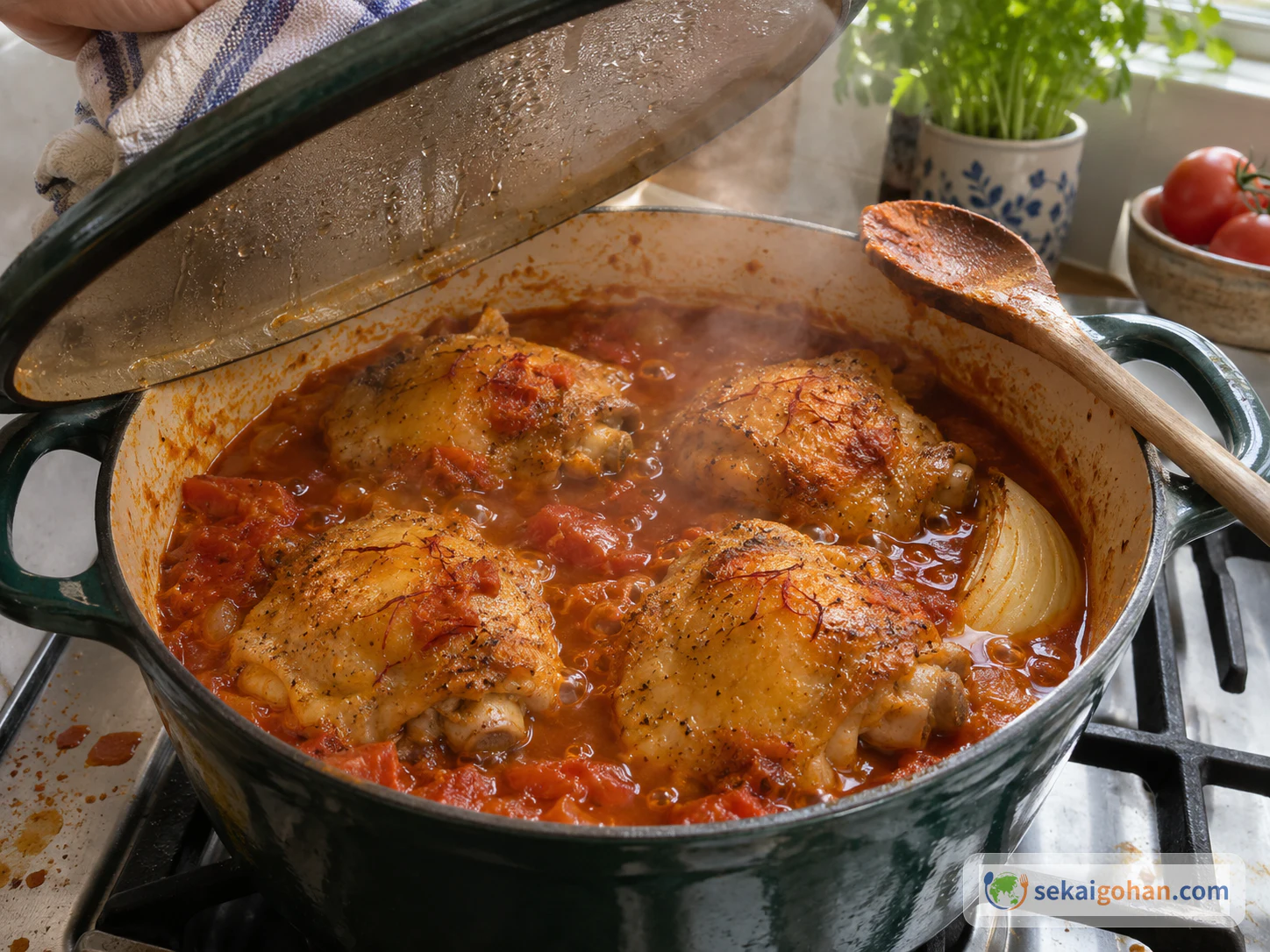
The name tells you what is on the plate. Zereshk is the dried barberry, polo is rice steamed in layers with other ingredients, and morgh is chicken. The chicken half is a khoresh-e morgh, thighs browned and then simmered in tomato paste, turmeric and saffron. The rice half is zereshk polo, basmati that is parboiled and steamed, partly dyed with saffron and topped with barberries fried briefly in sugar. Each half works without the other. Plenty of cooks make the rice alone and serve something else beside it. With the chicken added, it becomes a full meal on one platter.
In Persian it is written زرشک پلو با مرغ, and you will see it spelled both polo and polow in English. Ba means "with", so zereshk polo ba morgh is "barberry rice with chicken". When a menu lists only zereshk polo, you are getting the rice without the chicken.
Weddings, street stalls and the longest night
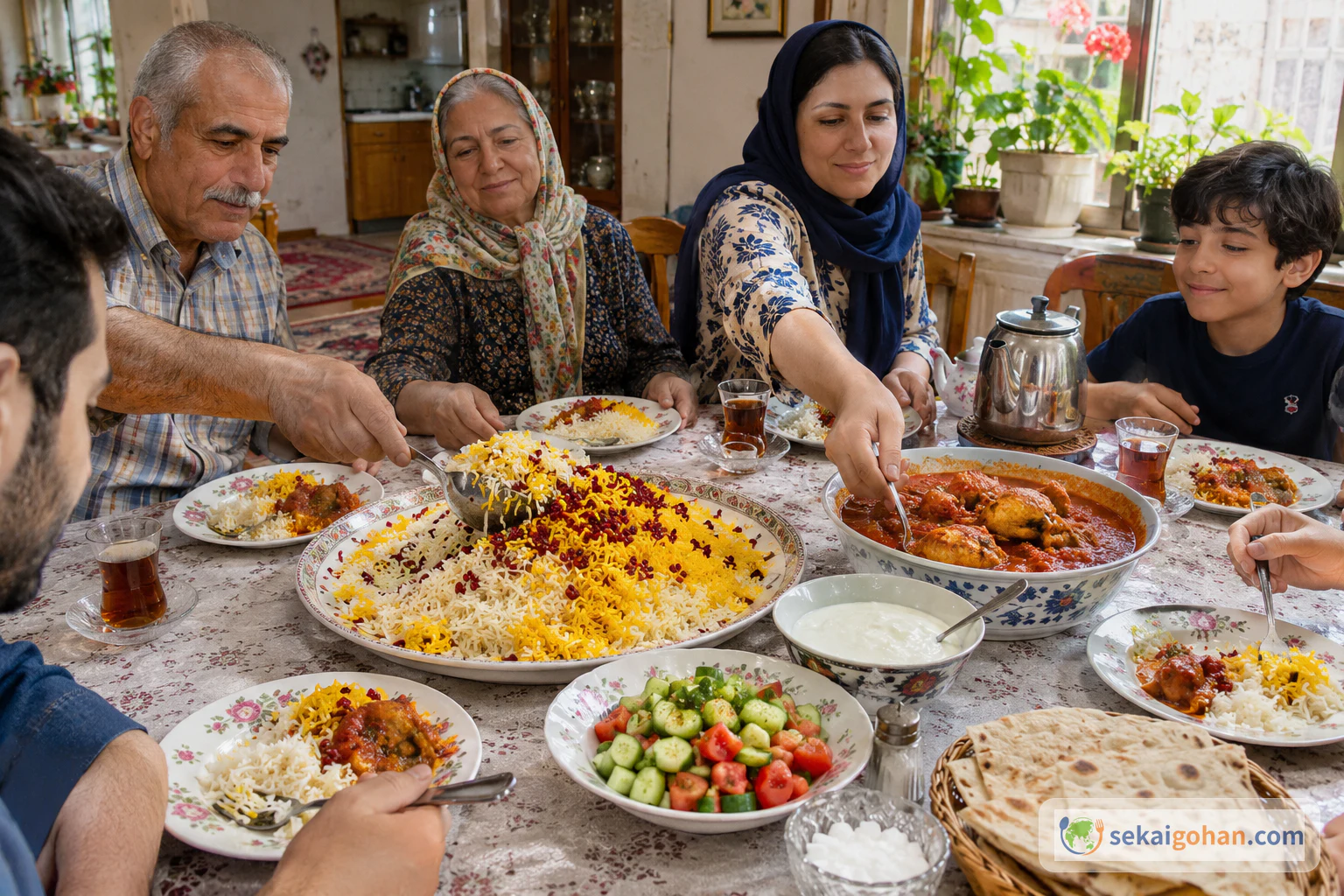
This is a celebration dish. It is served at weddings and other feasts because it looks striking on the table and is easy to make in large batches. It is also everyday street food. In Tehran, the food stalls on Sie-Tir Street, across from the National Museum, sell zereshk polo ba morgh as a regular dish next to fesenjan, all kinds of ash and falafel, and the street gets busiest after dark. Some families also serve this rice on Yalda, the winter-solstice night, though that is one household's custom and not a fixed rule. Wherever it is served, the plate is recognized by its three colors kept apart: white rice, a band of saffron yellow and red berries on top.
Where the barberries grow
Iran grows more barberries than any other country. According to a tourism announcement from Iranian officials, South Khorasan province holds about 97 percent of Iran's barberry fields and produces about 95 percent of the world's crop. Zirkuh and Qaenat are the main growing areas, and Qaenat barberries are treated as the region's signature produce. The village of Afin calls itself the world capital of seedless barberries and now receives farm tourists. Outside Iran, barberries usually come in small, expensive bags, so cooks use them sparingly.
How households differ
The biggest difference between households is the sugar. For one cup of barberries, some cooks use 2 teaspoons, others use a tablespoon, and the version here uses 5 tablespoons, which makes the topping noticeably sweet. Even the sweetest version uses sugar only to soften the sourness, never to cover it. Some kitchens use butter where this recipe uses vegetable oil, which gives a heavier flavor. The neighboring rice dishes from the Iranian kitchen are different dishes. Tahchin is a saffron and yogurt rice cake that uses barberries only as a garnish. Baghali polo uses the same parboil-and-steam method with fava beans and dill. Shirin polo and morasa polo are festive rice dishes made with candied fruit and nuts.
Ingredients (serves 4)
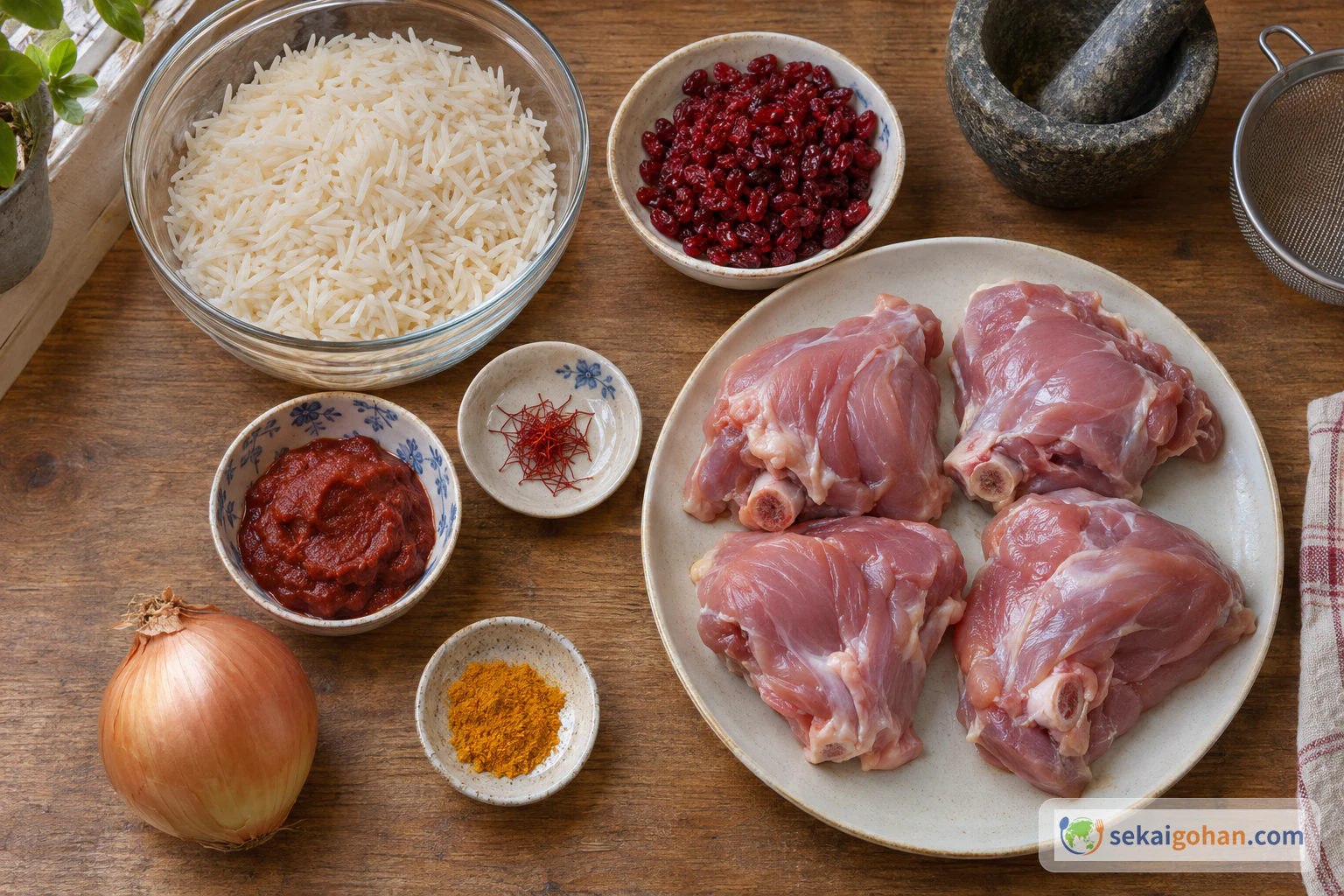
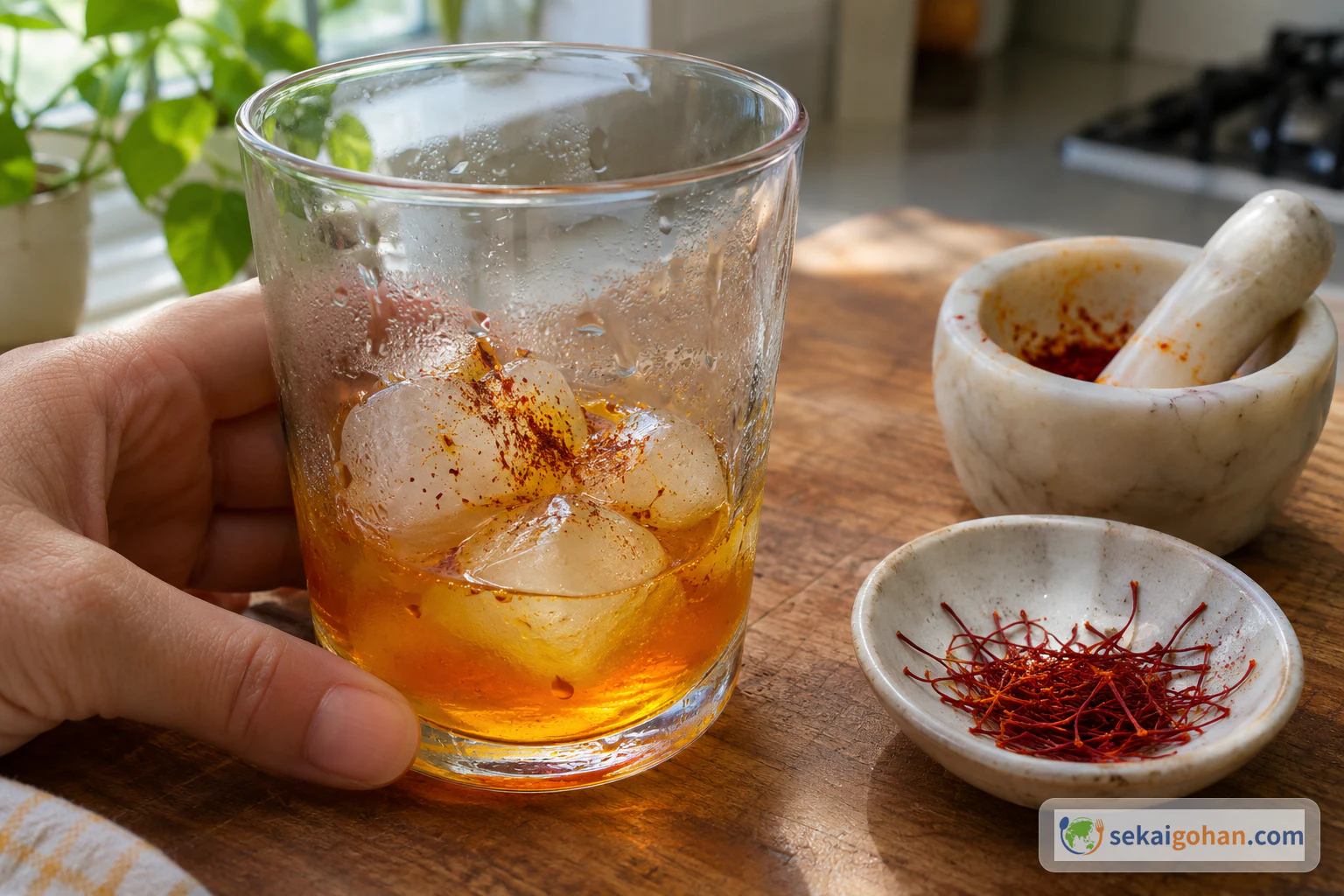
The saffron goes in as two separate ¼ tsp portions. One portion becomes saffron water for the rice. The other goes straight into the chicken sauce as a powder. If you buy threads, grind them to a powder in a mortar before measuring, because whole threads release their color slowly and unevenly.
This version uses no dairy (no butter, no yogurt) and none of its ingredients contains gluten. The pistachios and almonds are optional. Leave them out for anyone with a tree-nut allergy, and tell your guests when you include them.
Equipment
- Heavy 8- to 9-inch (20–22 cm) pot with a tight-fitting lid, nonstick if you have one
- Frying pan and tongs
- Second pot for the chicken
- Large pot for parboiling the rice
- Fine-mesh sieve
- Small pan for the barberries
- Clean cotton kitchen towel
- Mortar and pestle
- Wooden spoon
- Large shallow serving platter and oven mitts
Choosing and substituting
Three ingredients decide whether this tastes Iranian, and they are the ones you have to look for. Buy them first, from a Middle Eastern or Iranian grocer or online. The chicken, onion and tomato paste can wait until the day you cook.
Long-grain basmati is essential. The method depends on grains that stay firm through a short boil and then steam into separate, fluffy strands. Short-grain sticky rice such as Japanese rice turns gummy through the boil and steam, so you end up with a different dish. Jasmine rice works in an emergency, but its aroma takes the dish somewhere else.
For barberries, buy by color. Bright red berries are fresh. Dark, brownish berries are old and taste flat. Search for "dried barberries" or "zereshk". Dried cranberries with a little lemon juice are sometimes suggested as a swap, but they are sweeter, they smell different and they lack the sharp sour bite, so skip the dish rather than substitute them.
Saffron threads are worth buying even in a small amount. Turmeric already colors the chicken, and it gives color only, without the saffron aroma that defines the rice. The other swaps are minor:
| Ingredient | Swap | What changes |
|---|---|---|
| Bone-in thighs | Boneless thigh, same weight | Easier to eat. It falls apart sooner, so check it earlier |
| Black pepper | White pepper | A milder aroma |
| Vegetable oil | Any neutral oil | Nothing noticeable |
| Vegetable oil | Butter | A heavier, richer flavor, as some households make it |
| Tomato paste | Any tube or can | Nothing. Measure it by the spoon |
Method
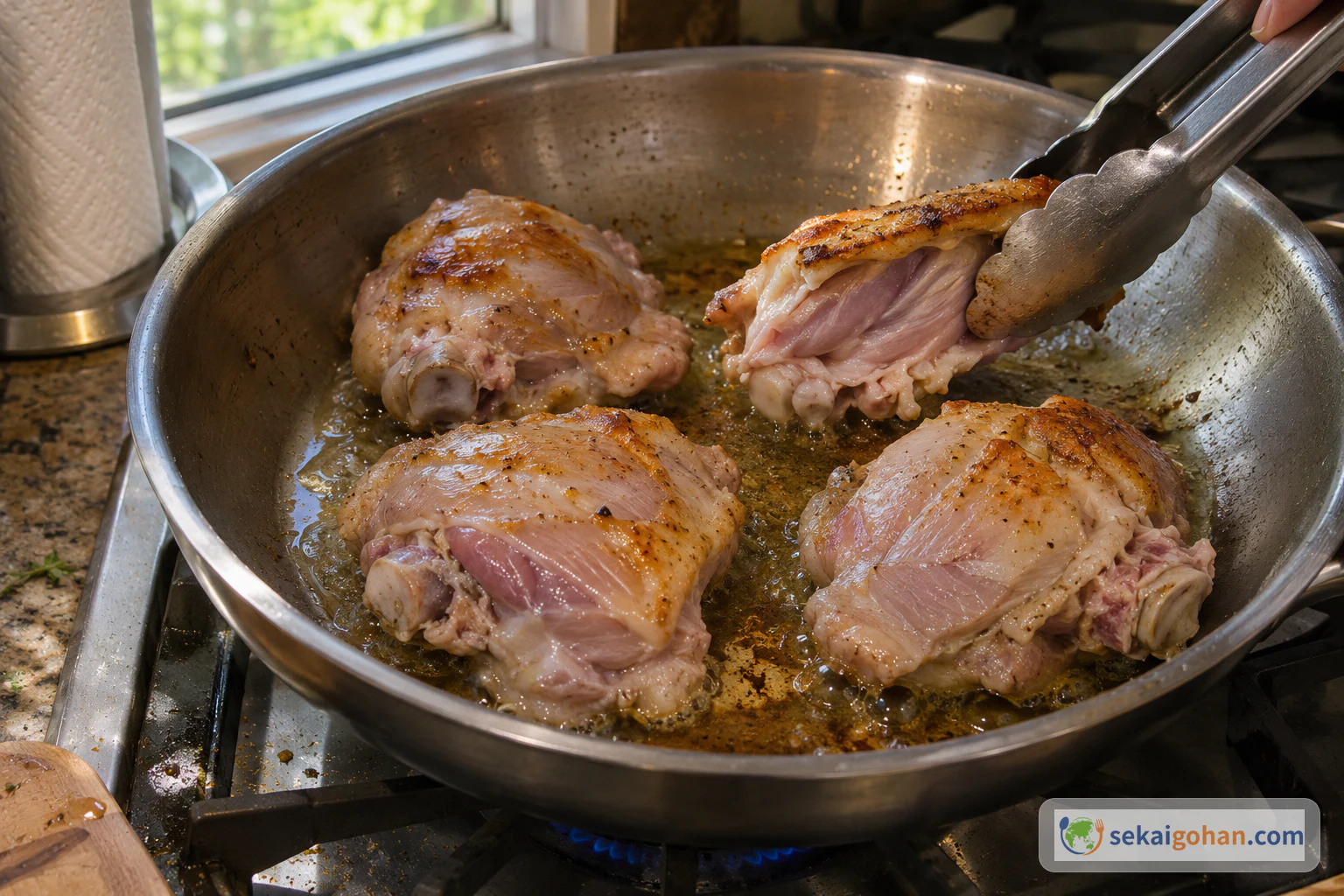
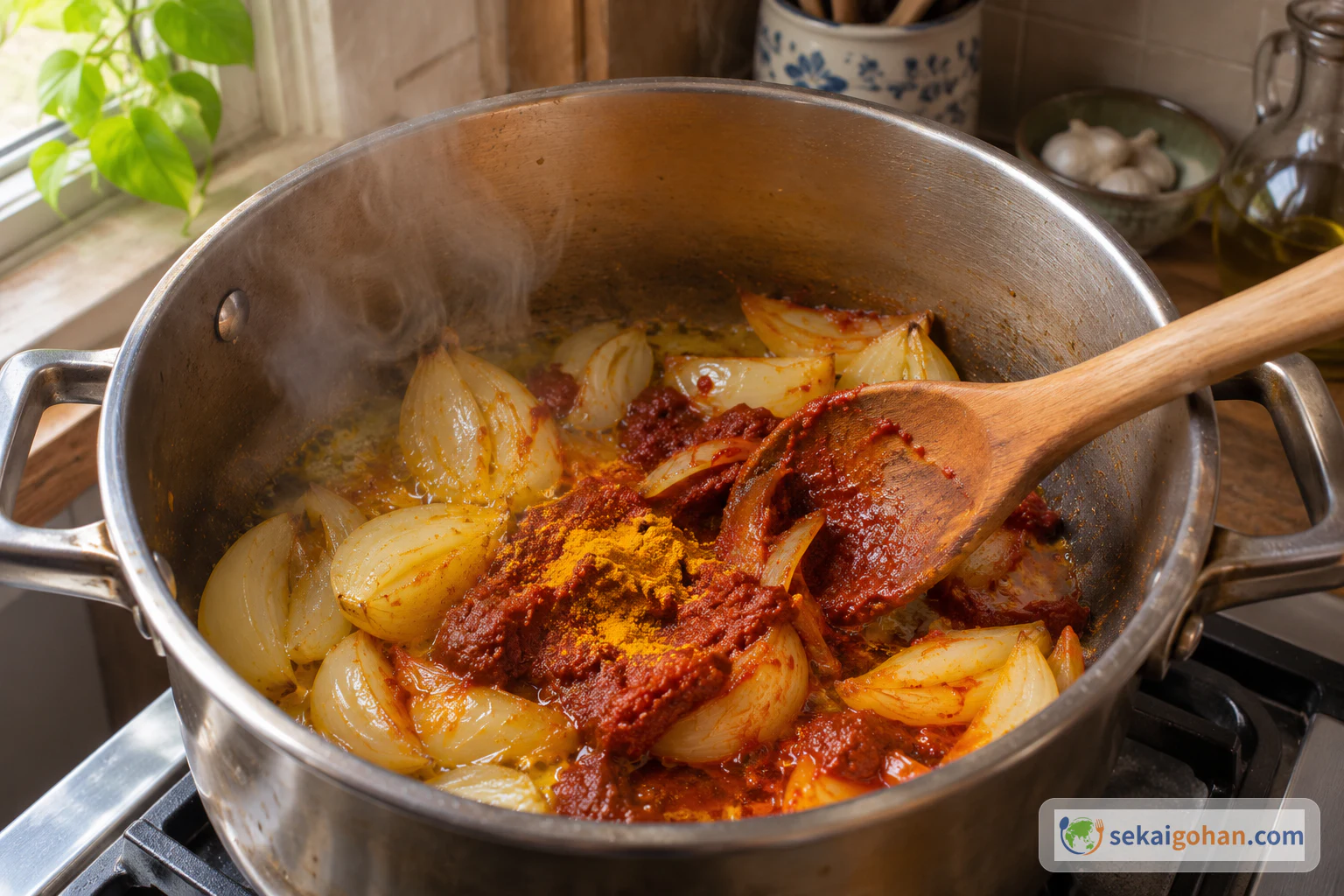
Start the saffron an hour ahead, because the ice melts slowly. Then brown the chicken and get it simmering. While it braises, rinse and parboil the rice and set it to steam. The long, hands-off stretch is when the chicken simmer and the rice steam overlap, and you finish the chicken while the rice steams. The barberries go into the pan only in the last few minutes, right before you serve.
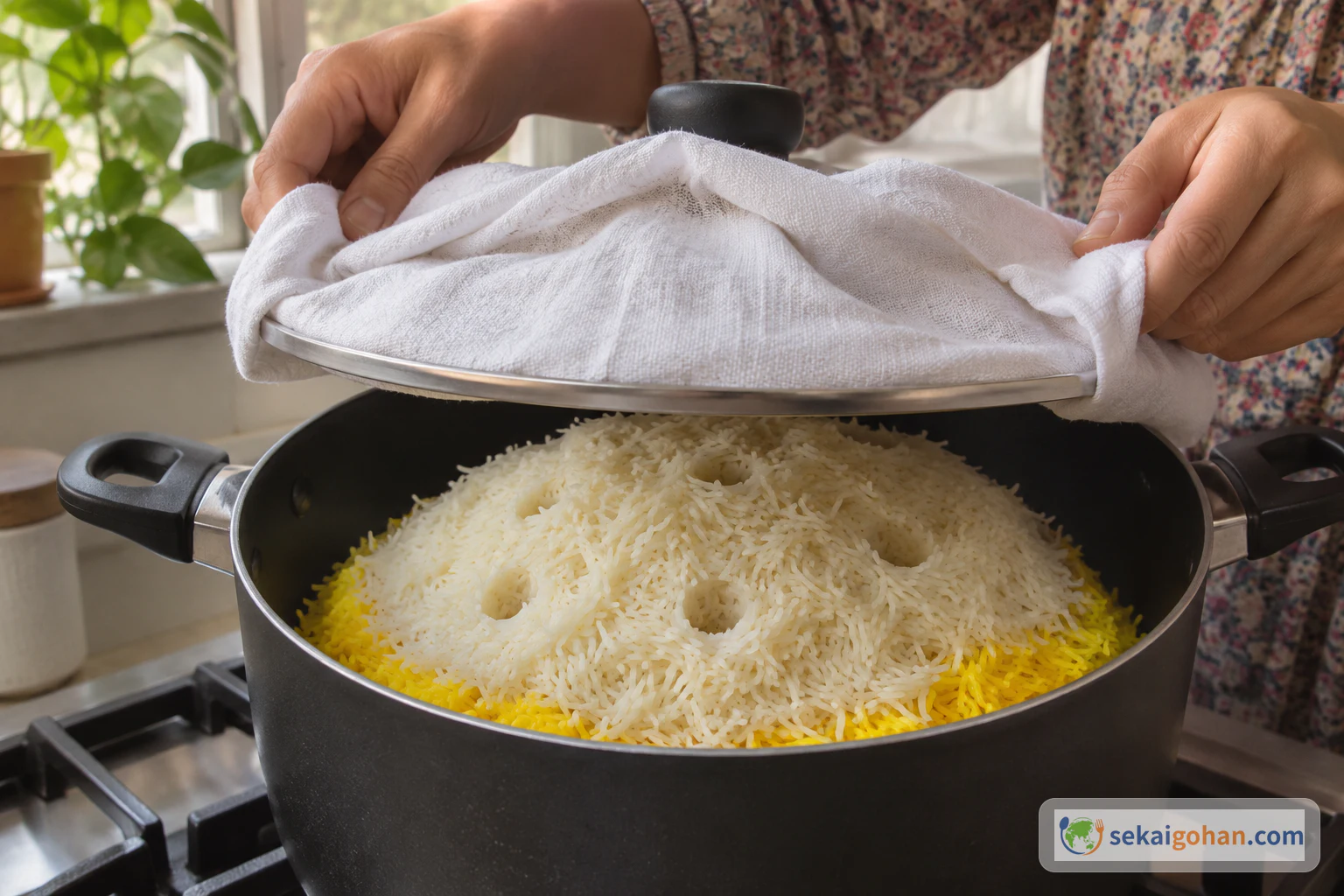
Use a separate cutting board and knife for the raw chicken, and keep them away from anything served raw. After handling the meat, wash your hands and wash the tools. Fresh chicken carries the same risk as any other raw chicken. Cook it until the center reaches 167°F (75°C) for at least 1 minute. Oil spatters when the thighs go into the pan, so lay them in away from you. When you wrap the lid in a towel, fold the corners up so no part of the cloth can touch a flame or an induction cooktop.
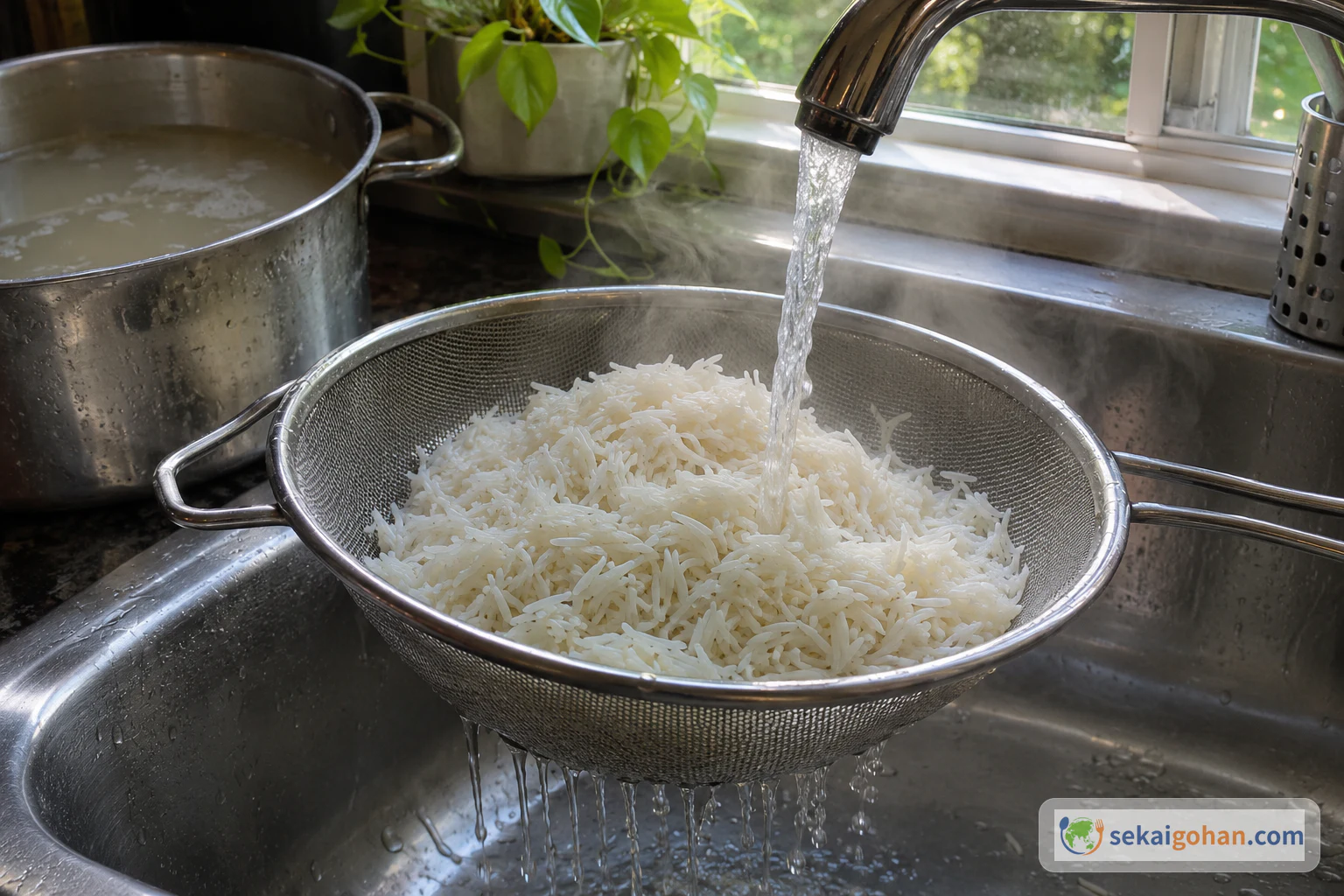
Stop boiling while a thin white core still shows in the center of a grain. During the hour of steaming the grains finish cooking and turn long and separate. If they are already soft all the way through when they leave the water, they break and turn mushy in the pot.
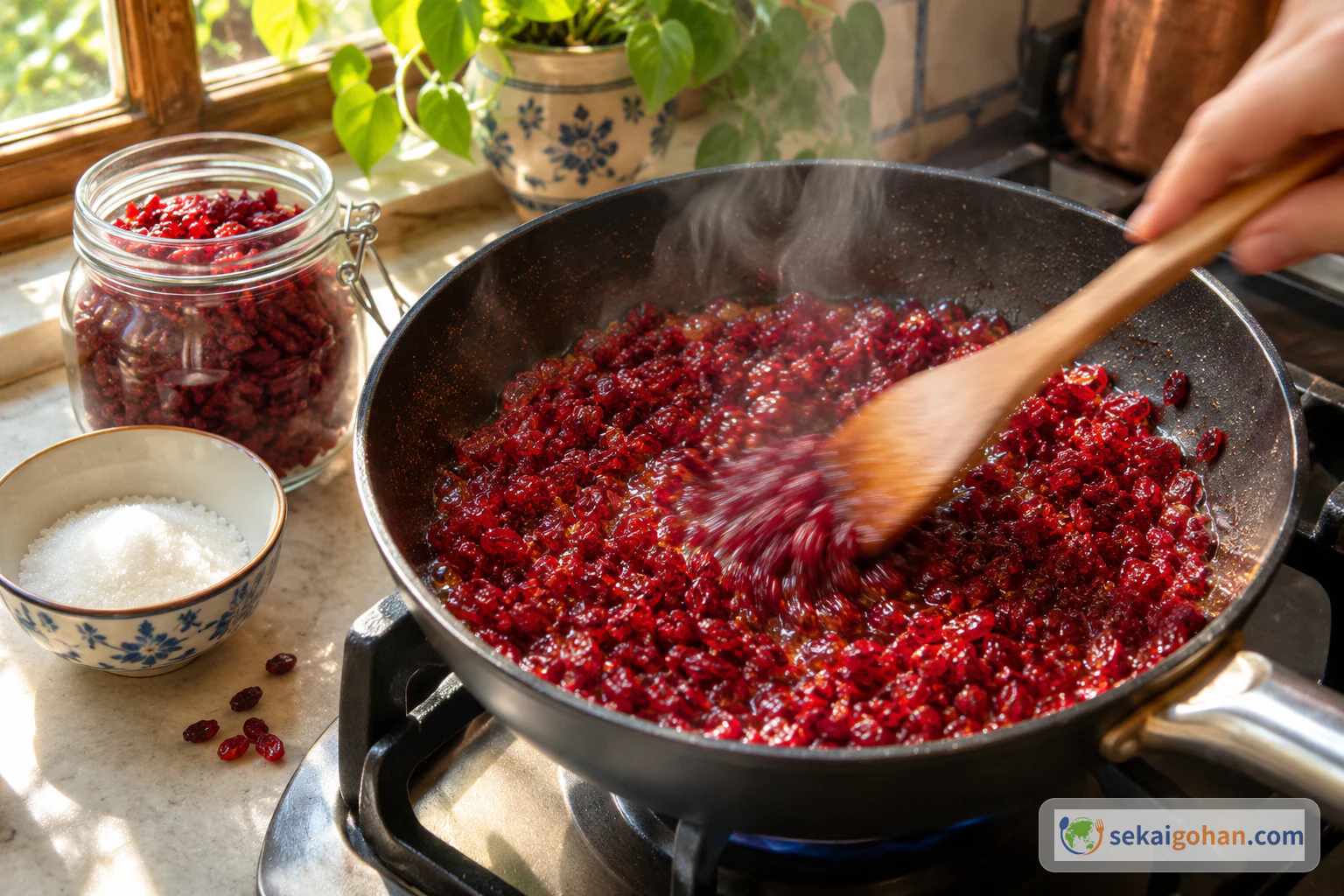
Have the barberries, sugar and hot water measured before the pan goes on the heat. Barberries burn quickly. About one minute of fast stirring is all they get, and pushing past it turns them dark and bitter.
When it goes wrong
| What you see | Why | What to do |
|---|---|---|
| Rice is wet and clumped | Parboiled too long, or not drained well | Shorten the steam and swap in a dry towel on the lid. Next time, take the rice out of the water a minute sooner |
| Crust burned or stuck to the pot | Heat too high, or too little oil on the bottom | Turn the heat to low as soon as the pot sizzles. Leave burned pieces on the side of the platter and keep them out of the rice |
| Barberries black and bitter | Fried past about a minute | Make a fresh batch. Stirring burnt berries in spreads the bitterness through the whole dish |
| Chicken tough | Not simmered long enough, or the heat was too high and the sauce reduced | Add a little water, cover and cook on low for another 15 minutes |
| Sauce watery | The chicken released its juices | Uncover and simmer for a few minutes |
| Whole dish too sweet | 5 tbsp sugar is more than your taste | Squeeze a little lemon over each serving at the table |
Serving, variations and storage
At the table
Put the platter in the middle with the chicken beside it and let everyone help themselves. Because the layers are separate, each person decides how many barberries go into each bite. For a feast, the same rice goes just as well with lamb cooked in saffron and yogurt in place of the chicken.
Variations
- Zereshk polo on its own. Make only the rice half and serve it with another stew or with grilled fish. It works well for a lighter lunch.
- Boneless thighs for a weeknight. Use 2.2 lb (1 kg) boneless thigh, check it sooner because it falls apart faster, and slice it to serve.
- Yogurt tahdig. Mix yogurt into the rice for the bottom layer. The base becomes thicker and the crust browns more deeply. This version contains dairy.
- Barberries steamed in the layers. Layer the barberries into the rice before steaming. They perfume the grains, but their red fades to brown, so cooks keep some aside to scatter on top. Some households also sprinkle advieh, the Persian spice mix, between the layers.
Keeping leftovers
Let the rice and chicken cool, then put them in separate shallow containers, cover and refrigerate. To reheat the rice, sprinkle it with a little water, cover it and steam it over low heat or in the microwave until the grains loosen. Reheat the chicken in its sauce in a pot until the sauce boils, and warm the crust separately so it stays crisp. The chicken and sauce freeze well. The rice loses its texture in the freezer, so keep it in the refrigerator.
Frequently asked questions
Why does the parboiling water need 2 tablespoons of salt?
The grains absorb some of the salt as they boil. The cold rinse afterward washes most of it away. Use the full amount, because the rinse is part of the method.
My barberries are hard and shriveled. Can I soak them?
Yes. Soak them in water for about 5 minutes, then drain them well before frying. Some households always soak barberries for 5 to 15 minutes. Dry berries soften enough in the minute of frying.
Can I use less sugar?
Yes. Use 3 to 4 tablespoons if you want the berries to stay sharper and more sour. Some other recipes use much less than 5 tablespoons. Keep the frying time the same, because less sugar does not make the berries any less likely to burn.
Can I make it with chicken breast?
The thighs are chosen because they hold together and turn tender over the long simmer, and breast meat dries out over that time. For a softer, quicker option, use boneless thigh instead.