Ingredients and steps on one page. Print it, or choose “Save as PDF” in the print dialog.
Sekai Gohan
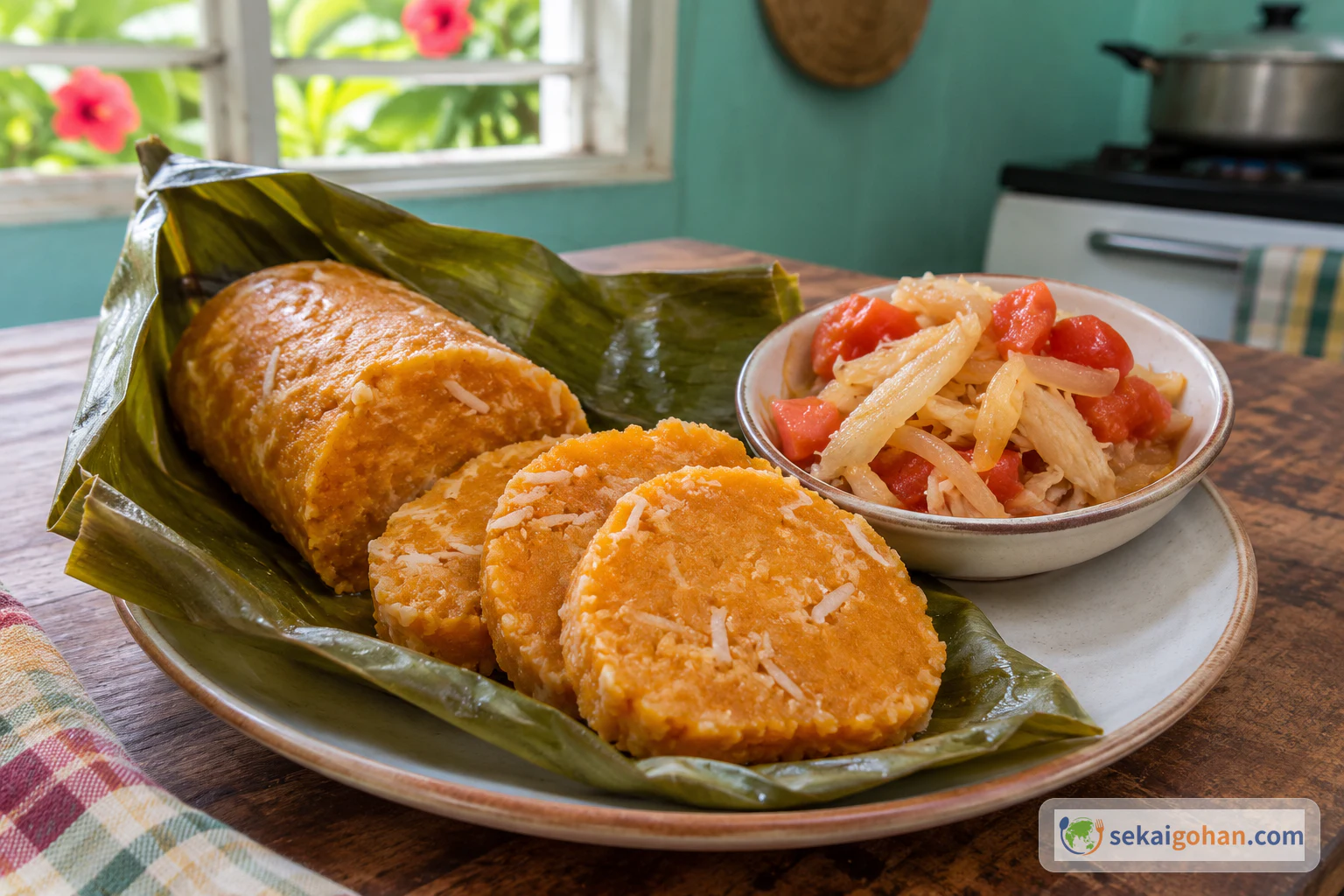
Ducana: Antiguan Sweet Potato and Coconut Dumpling in Banana Leaf
Ingredients
| Ingredient | Amount | Role |
|---|---|---|
| Sweet potato, raw | 2 (grated to 2 cups) | The body of the dumpling; its raw starch helps bind the dough |
| Grated coconut, unsweetened | 1 cup | Flavor, moisture and the white flecks in each slice |
| All-purpose flour | 1¼ cups, plus more as needed | Firms the dough so it holds in the pot |
| Granulated sugar | ½ cup (120 ml) | Gentle sweetness |
| Unsalted butter, softened | 3 tbsp | Roundness, and keeps leftovers from drying out |
| Ground cinnamon | 1½ tsp | Warm spice |
| Nutmeg, freshly grated | ¾ tsp | The core Caribbean spice note |
| Vanilla extract | 1 tsp | Aroma |
| Salt | ½ tsp | Keeps the sweetness from tasting flat |
| Raisins (optional) | ¼ cup (60 ml) | Small bursts of sweetness |
| Water or milk | 3–4 tbsp, only if needed | Brings a dry, crumbly dough together |
| Banana leaves | About 5 rectangles, 8 × 10 inches (20 × 25 cm) | The wrapper, and a light leaf aroma |
Steps
1Grate the sweet potato and add the coconut
Peel the sweet potatoes and grate them on the fine holes of the box grater straight into the mixing bowl, until you have 2 cups. If you use a food processor, pulse in short bursts rather than letting it run. Do not squeeze out the juice and do not rinse the shreds. Add the 1 cup grated coconut and mix. The bowl should hold short, fine, moist orange shreds flecked with white, with no long strands.
Keep the juice and the starchThe raw starch in the grated sweet potato helps hold the dumpling together. Squeezing or rinsing it away leaves you needing more flour, and more flour pushes the taste toward bread.
2Work in the butter, sugar and spices
Add the softened butter, the sugar, cinnamon, nutmeg, vanilla and salt to the bowl. Add the raisins now if you are using them. Mix everything with your hand, pressing the butter into the shreds so it spreads evenly. Stop when no lumps of butter or streaks of sugar remain and the whole mass is an even, glossy orange.
3Add flour a little at a time and squeeze
Add the 1¼ cups flour about ⅓ cup (80 ml) at a time, mixing well after each addition. After each round, pick up a handful and squeeze it in your fist. If it slumps and runs, add more flour. If it cracks at the edges, add water or milk 1 tbsp at a time, staying within 3–4 tbsp. The dough is right when the squeezed handful holds its shape and lifts cleanly off your palm.
Trust your fist, not the cupSweet potatoes vary in moisture, so the flour amount moves every time. Too little flour and the dumpling falls apart in the pot; too much and it tastes like bread. Stop adding the moment the squeeze test passes.
4Soften the banana leaves
Wipe the thawed leaves clean. Pass each one over a gas flame for a few seconds, or dip it briefly in boiling water if you cook on induction. Cut out the thick center rib, then cut the leaves into rectangles about 8 × 10 inches (20 × 25 cm) with scissors. The leaves are ready when they look glossy and dark green and fold without splitting.
Flame and hot waterKeep the flame low and the leaf moving, and keep your hands above the leaf edge. When dipping leaves in boiling water, use tongs and let the leaf drain over the pot before you handle it.
5Wrap and tie the parcels
Scoop ⅔ cup (160 ml) dough onto the center of a leaf and shape it into a low, squat log. Fold the long sides over the dough, then fold in both ends. Tie with twine, leaving a little slack, because the dough swells as it cooks. If a leaf tears, wrap the parcel in an extra layer of foil and carry on. Each parcel should be closed on all sides and loosely snug under its string.
6Simmer gently for 35 to 45 minutes
Bring the large pot of unsalted water to a boil, then lower the heat to a gentle simmer. Lower in the parcels so they are fully submerged, and press them down with a plate if they float. Keep the surface at small, lazy bubbles the whole time. Lift them out at 35 minutes for a softer dumpling, or leave them to 45 minutes for one firm enough to slice and fry the next day.
Gentle water keeps parcels wholeA hard rolling boil is the main reason parcels burst open. Turn the heat down as soon as the water rises toward a full boil.
7Rest, unwrap and slice
Lift the parcels out with tongs and leave them for 10 minutes. Cut the twine with scissors and open the leaf. Slice the dumpling into thick rounds on the leaf. It firms further as it cools, so the slices hold their shape better the longer they sit. The inside should be firm and springy, with white coconut flecks and slightly translucent edges.