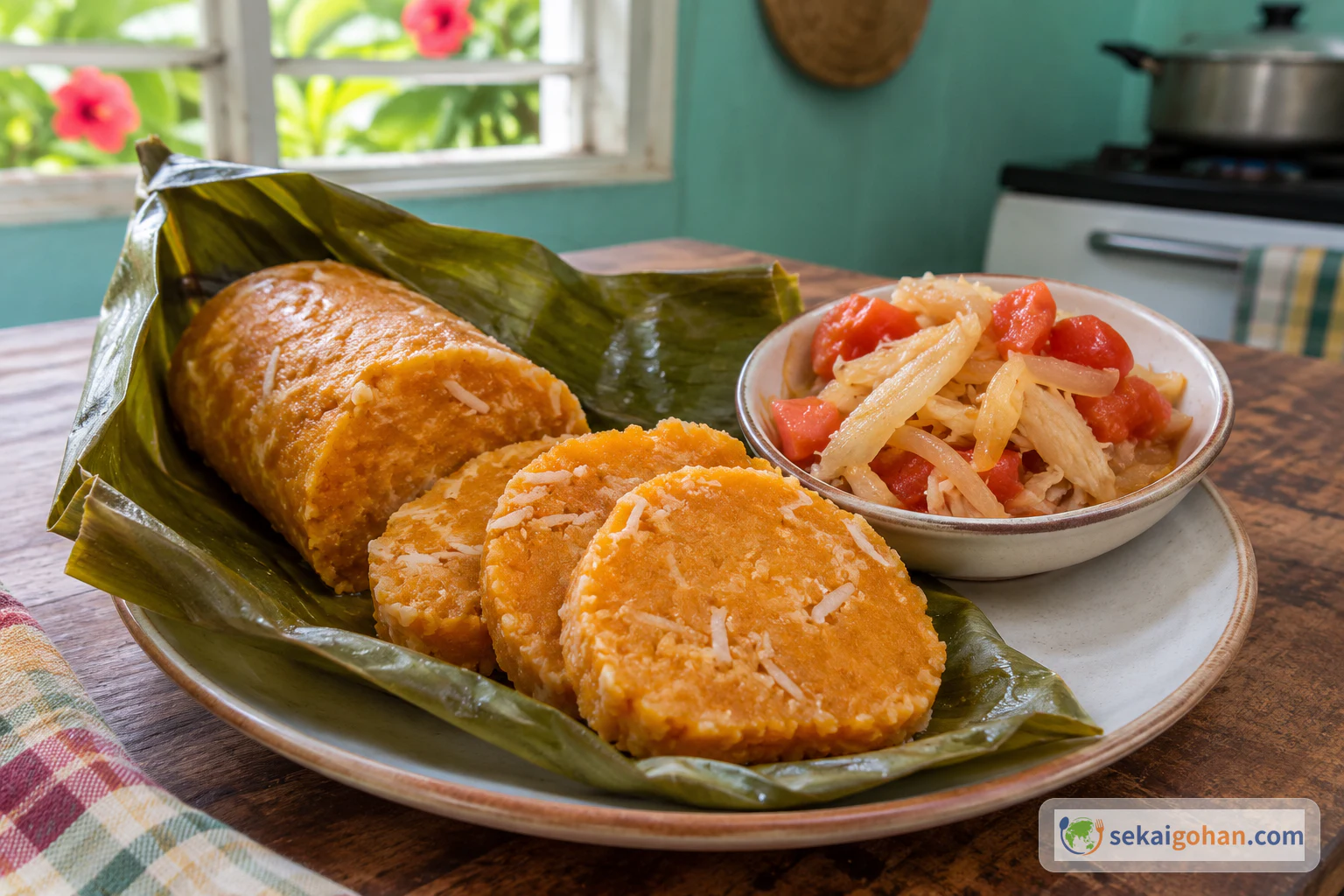
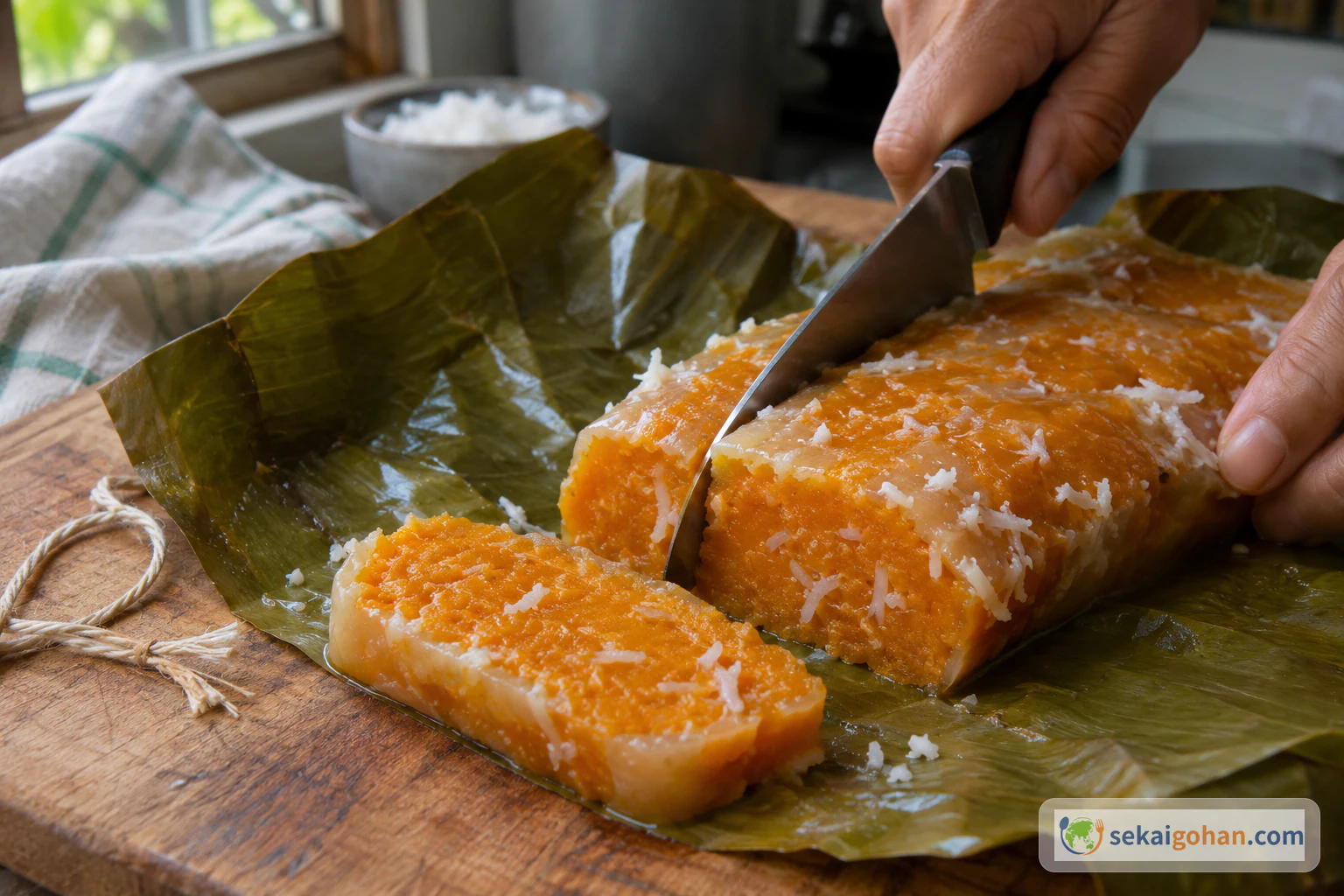
The twine is cut, the banana leaf falls open, and a dense orange log sits on the green, steaming gently and smelling of cinnamon, nutmeg and coconut. The knife goes through it cleanly, and each thick round shows white flecks of coconut and edges that have turned slightly translucent in the water. On a Good Friday or a Sunday morning in Antigua, that slice goes straight onto a plate next to salted cod stewed with onion and tomato. Ducana is a boiled dumpling of raw grated sweet potato and coconut, lightly sweet and warmly spiced, firm and springy enough to slice, and made to sit beside something salty.
Sweet Potato, Coconut and Salt Fish on an Antiguan Morning
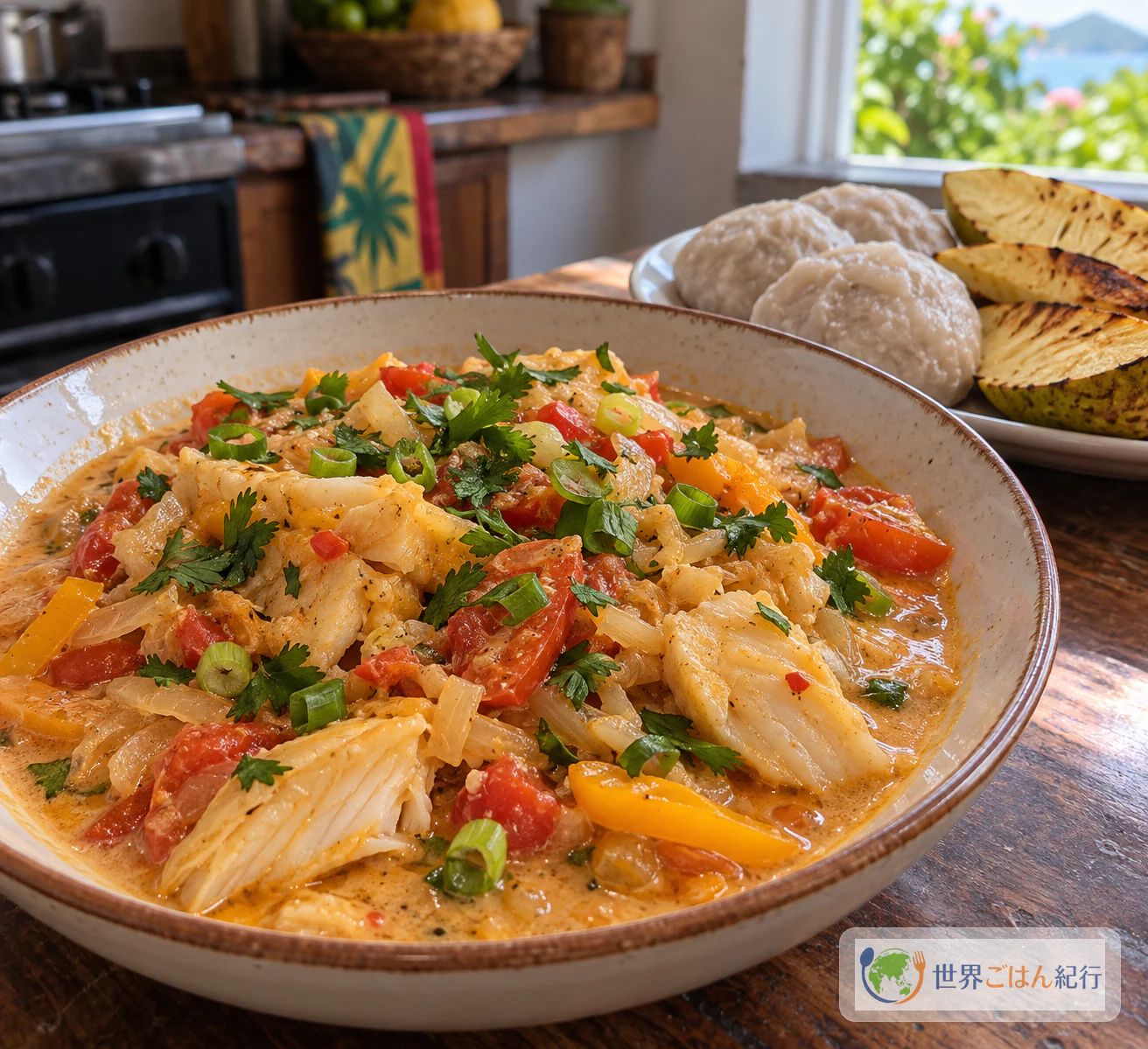
Ducana belongs to the home table of Antigua and Barbuda, and it turns up in local restaurants as well. Its fixed dates are Good Friday, a day when many households keep meat off the table, and the Sunday breakfast. On those mornings it shares the plate with saltfish, salted cod soaked and then stewed with onion, tomato, sweet pepper, thyme and oil, and with chop-up, a soft cooked mash of spinach, eggplant and okra. Bread from a wood-fired oven and boiled eggs often fill out the same breakfast.
The sugar in the dough is held back so the dumpling can play the sweet side of a salty plate, much the way cornbread sits beside a bowl of chili. Eaten alone, a slice tastes of sweet potato and spice with a gentle sweetness; with a forkful of saltfish, the two pull each other into balance. The fish is the partner, the ducana is the side, and that is how the plate is built.
Leaves, islands and households
The dough goes into banana leaves in most kitchens, and some cooks wrap it in sea grape leaves instead. The same dish under the same name is made on Montserrat and across the Leeward Islands, and related versions appear in St Vincent and in Trinidad and Tobago. Households also split over raisins: some always add a handful, others leave them out, and the argument has no winner.
The wider food of the islands grew out of hard times under colonial rule, when meals were built from what could be grown, gathered or saved from waste. Sweet potato, coconut and a leaf from the garden fit that pattern well, although where ducana itself was first made is not settled.
The names sound close, but Jamaica's duckanoo (also called blue drawers or tie-a-leaf) is a different dish: a soft, pudding-like parcel built on cornmeal and green banana. Antiguan ducana is sweet potato and coconut, and it boils to a firm dumpling you can slice.
Ingredients (makes 5 dumplings)
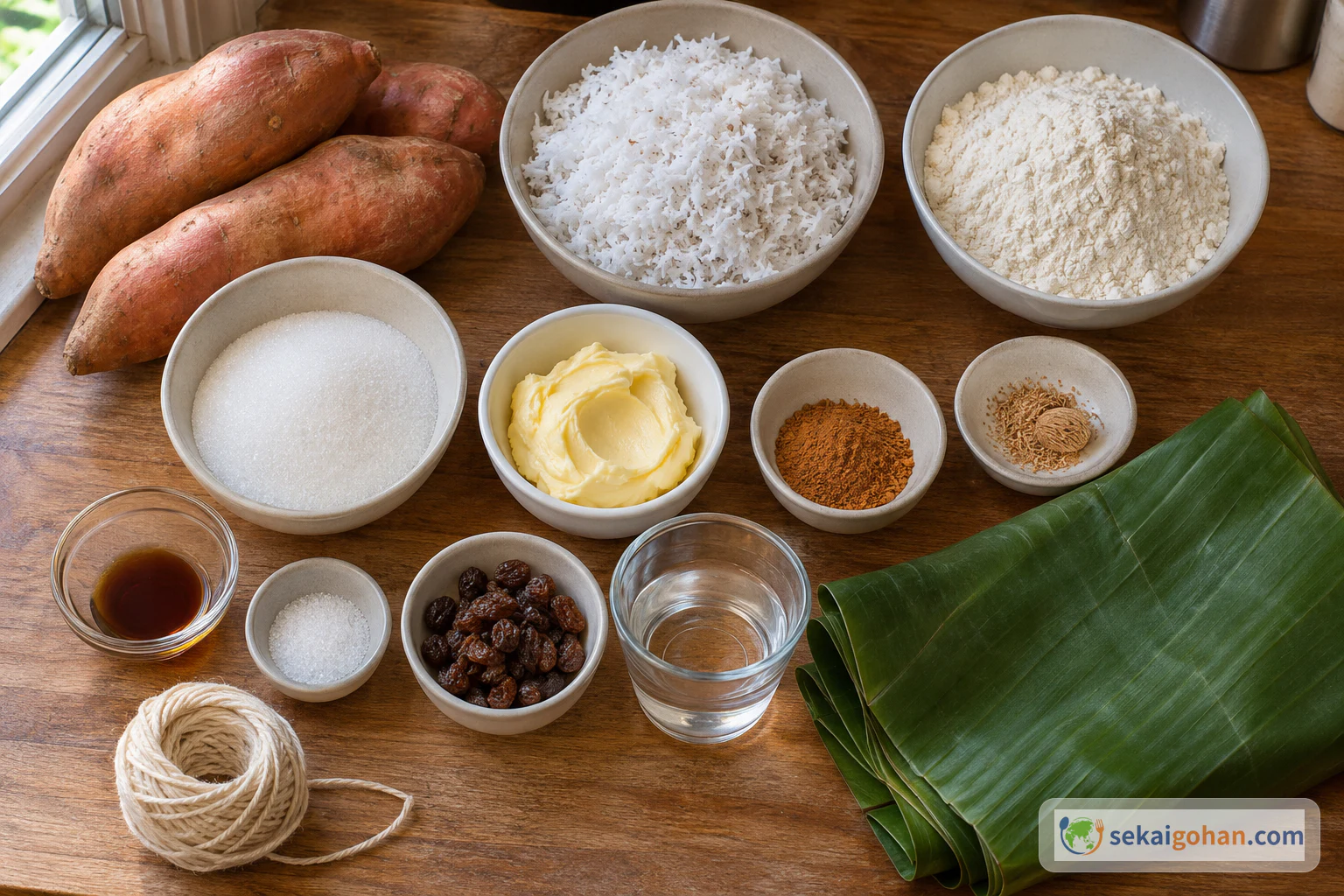
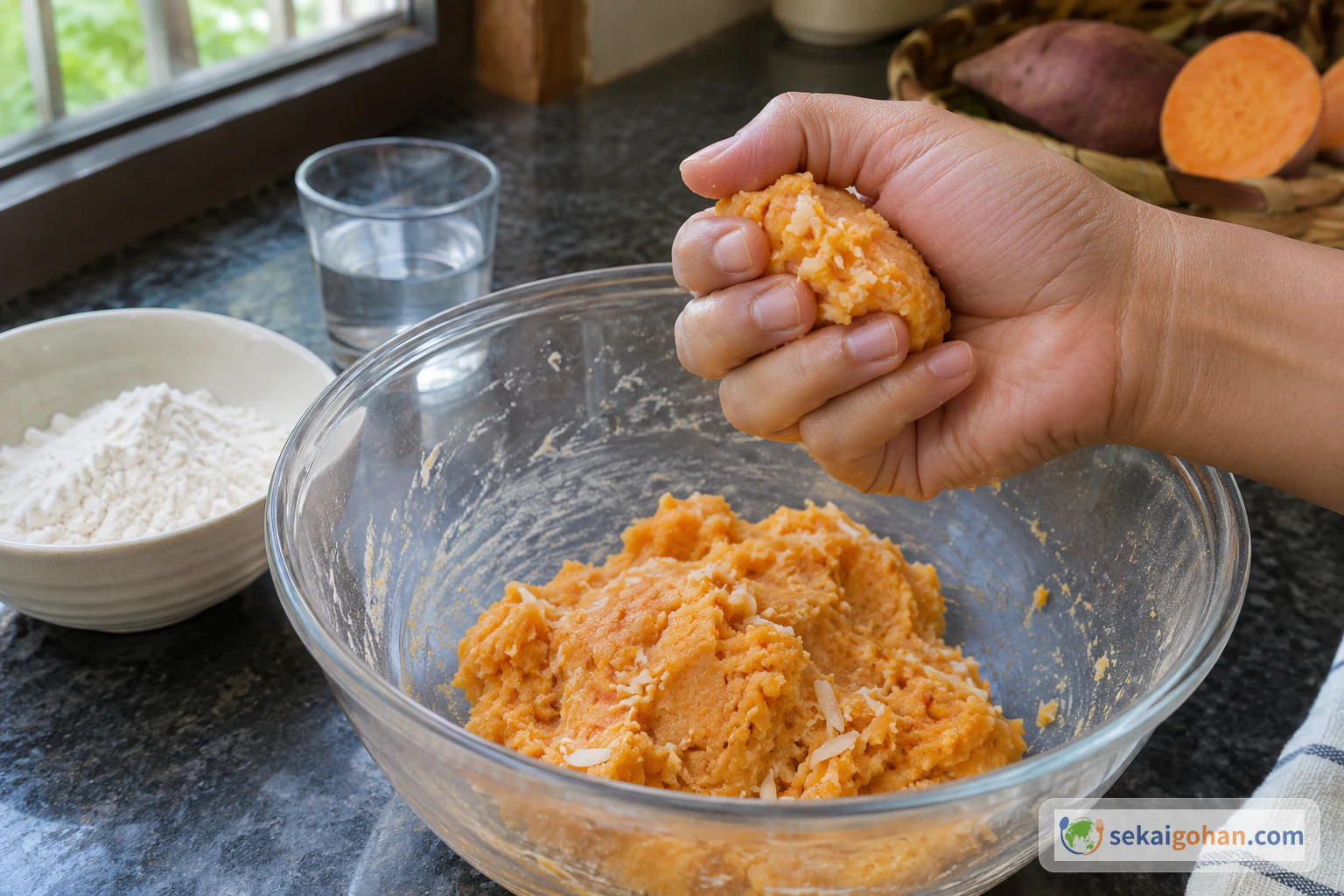
The amount of flour moves with the moisture in your sweet potatoes, so treat the 1¼ cups as the starting point and let the squeeze test in step 3 decide the rest.
Ducana contains wheat (flour), dairy (butter, and milk if you use it) and coconut. Check the labels on frozen coconut and banana leaves for any other allergen statements.
Equipment
- Box grater with fine holes, or a food processor used in short pulses
- Large mixing bowl
- Kitchen scissors, for cutting the leaves and the twine
- Kitchen twine
- Heavy-duty aluminum foil, for patching torn leaves or wrapping without leaves
- A large pot that holds all five parcels fully under water
- A heatproof plate to weigh the parcels down
- Knife and cutting board
Choosing and Substituting
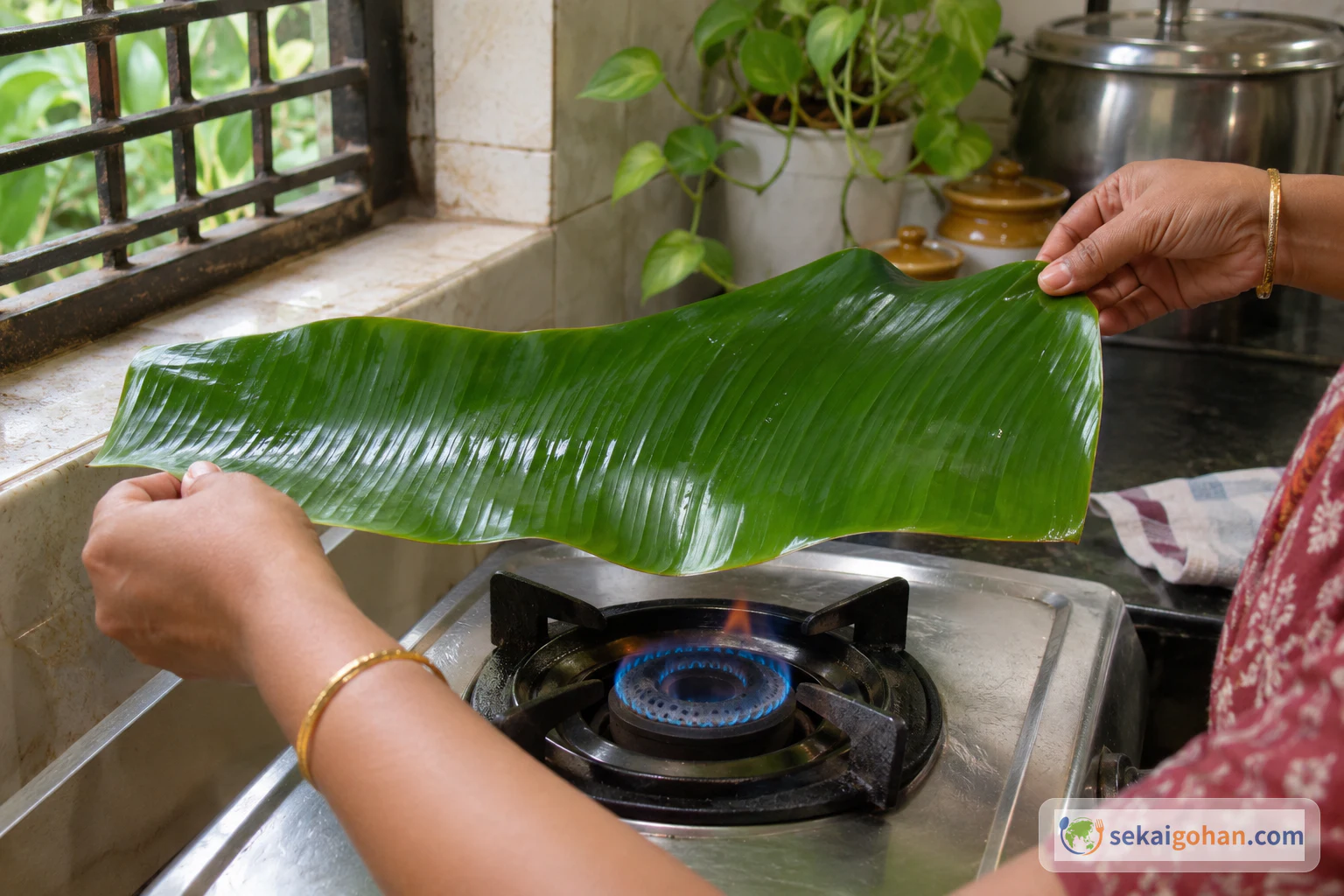
Frozen banana leaves from specialty grocers are the thing worth seeking out. Thaw them before use. Heavy foil can stand in for the leaves; the dumpling then simply lacks the faint green aroma of the leaf.
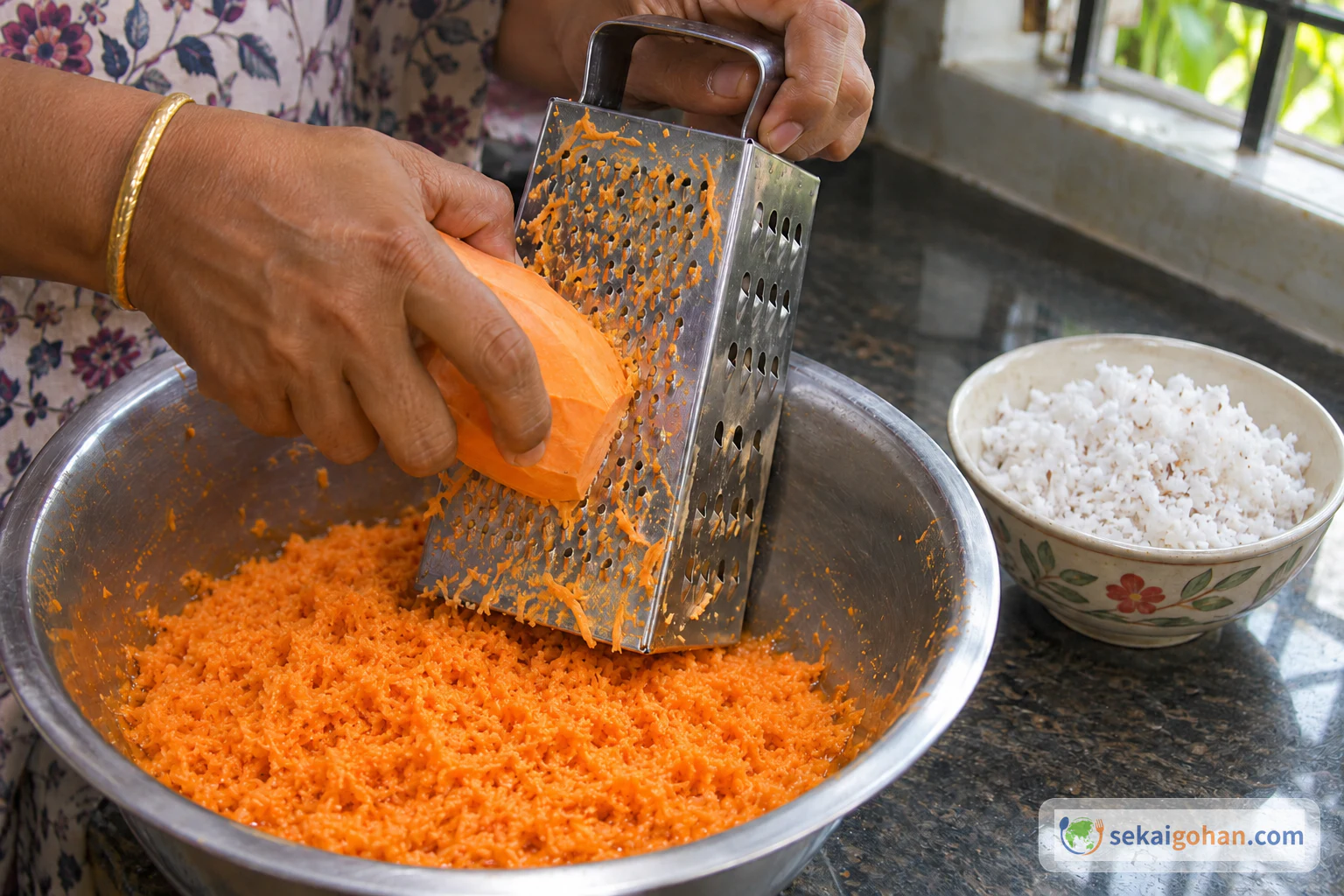
For the sweet potato, an orange-fleshed, sweet variety comes closest. Grate it raw and use everything that lands in the bowl, juice included.
Fresh grated coconut is best, and frozen grated coconut is the next choice. Sweetened shredded coconut works if that is all you can find; cut the sugar by 2 tbsp to make up for it.
Brown sugar in place of granulated gives a deeper, more caramel-like flavor. Salted butter works too; reduce the added salt so the dough does not end up too salty. Whole nutmeg grated just before mixing has a brighter smell than the ground kind, but ground nutmeg is fine.
Method
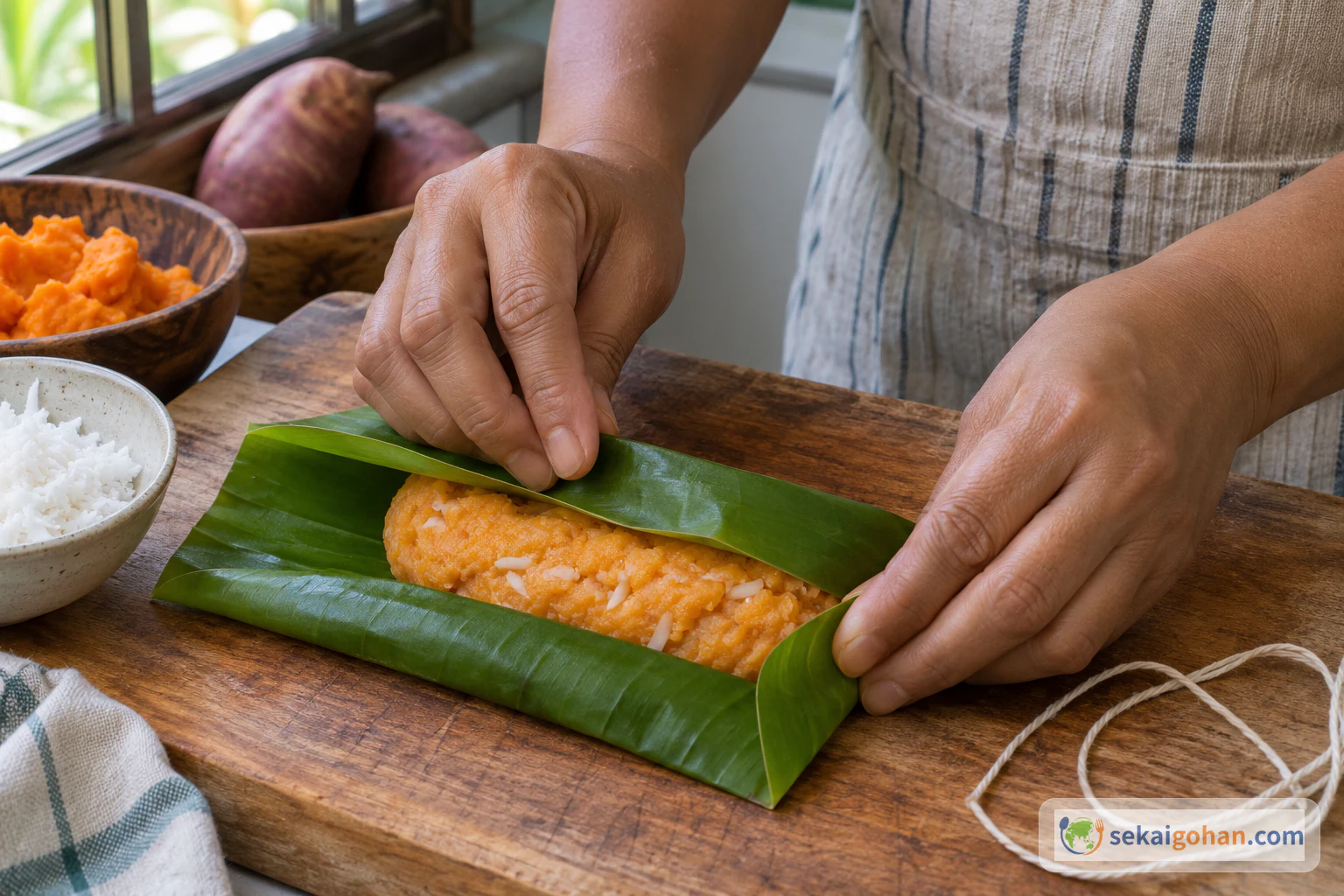
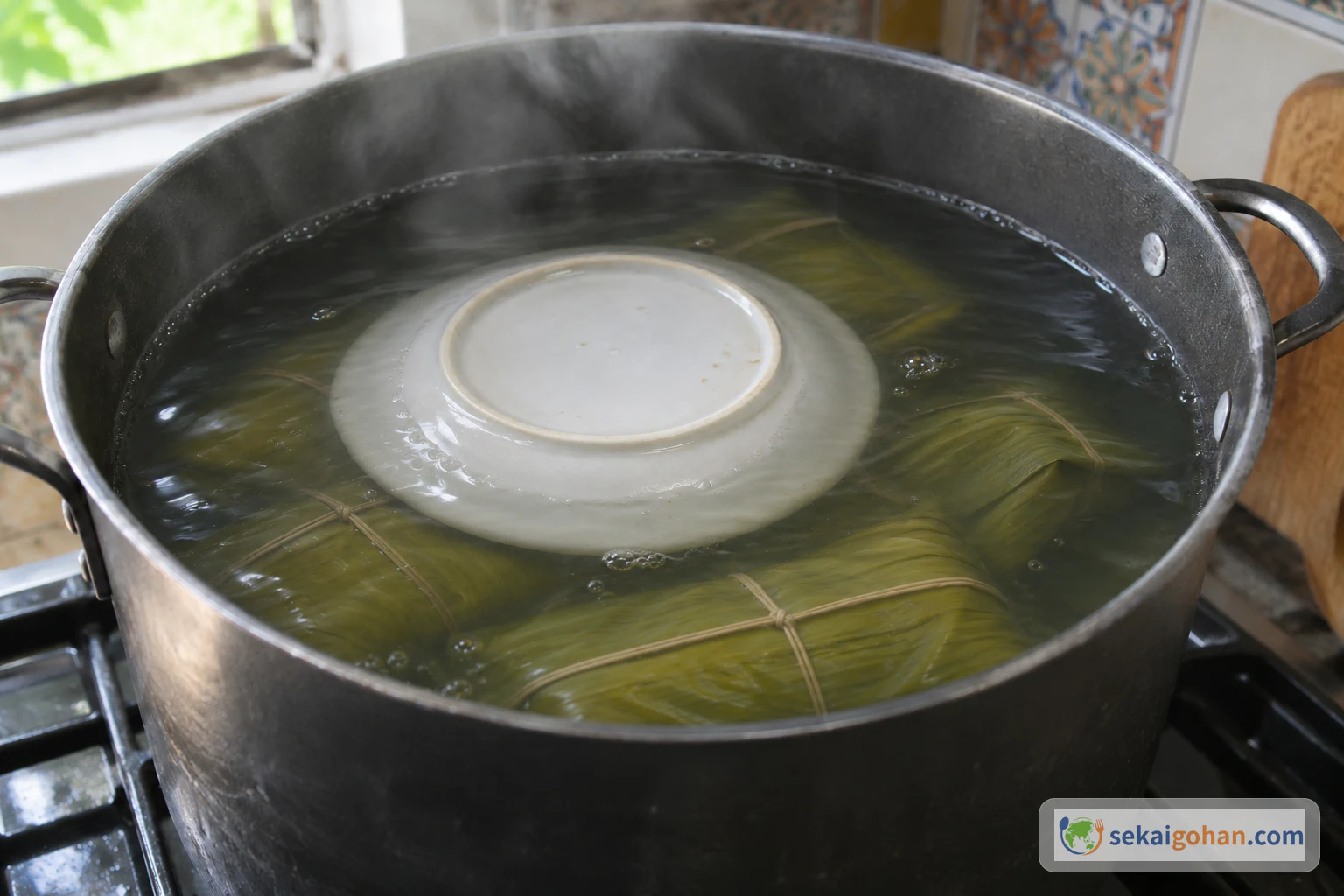
The work runs in one line: grate, mix and test the dough, soften the leaves, wrap, then let the pot do the rest. Put a large pot of unsalted water on to heat while you wrap so it is ready when the parcels are. The 35 to 45 minutes of gentle simmering is hands-off time, so use it to start the saltfish and chop-up.
The parcels hold heat and release steam when opened. Use tongs to lift them and open the leaf away from your face.
When It Goes Wrong
| What you see | Why | What to do |
|---|---|---|
| The dumpling falls apart in the pot | Too little flour | Next batch, keep adding flour until the fist-squeeze test passes before wrapping |
| The dough tastes like bread | Too much flour | Stop adding flour as soon as a squeezed handful holds; add the last portions in small amounts |
| A parcel opened in the water | The water boiled too hard, or the twine was tied with no slack | Keep the pot at a gentle simmer and leave a little room in the tie for swelling |
| The leaf tears while folding | It was not softened enough, or it split along the rib | Add a layer of foil around the parcel and continue |
| The dough does not hold together | The sweet potato was grated into long strands | Grate on the fine holes, or pulse in short bursts, so the shreds are short and even |
| The dumpling tastes flat | The salt was left out | Keep the ½ tsp salt in every batch; it is what lifts the sweetness |
Serving, Leftovers and Variations
At the table
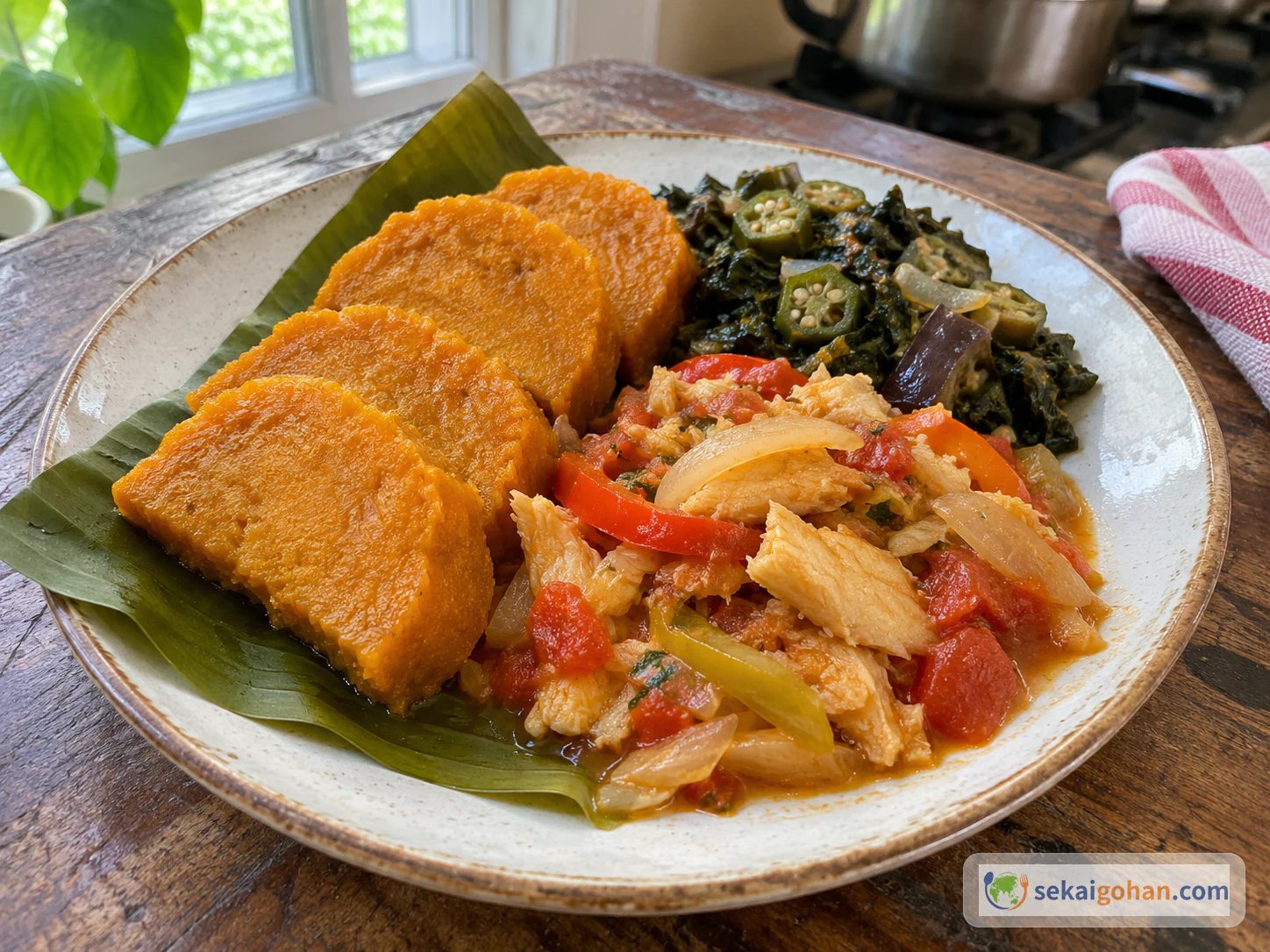
Serve the slices with saltfish stewed with onion, tomato, sweet pepper, thyme and oil, and a spoonful of chop-up. If the ducana is the only thing on the plate, a little butter on a warm slice is enough. Ducana is eaten warm after its rest, and it is good at room temperature too.
Buy commercially salted cod. Soak it in water in the refrigerator, change the water several times, and discard every batch of soaking water before you cook the fish.
Storing and reheating
Store the dumplings still in their leaves. They keep for 4 days in the refrigerator and 3 months in the freezer. To reheat, put the wrapped parcel back into simmering water for 10 minutes. The microwave turns ducana hard, so use the pot.
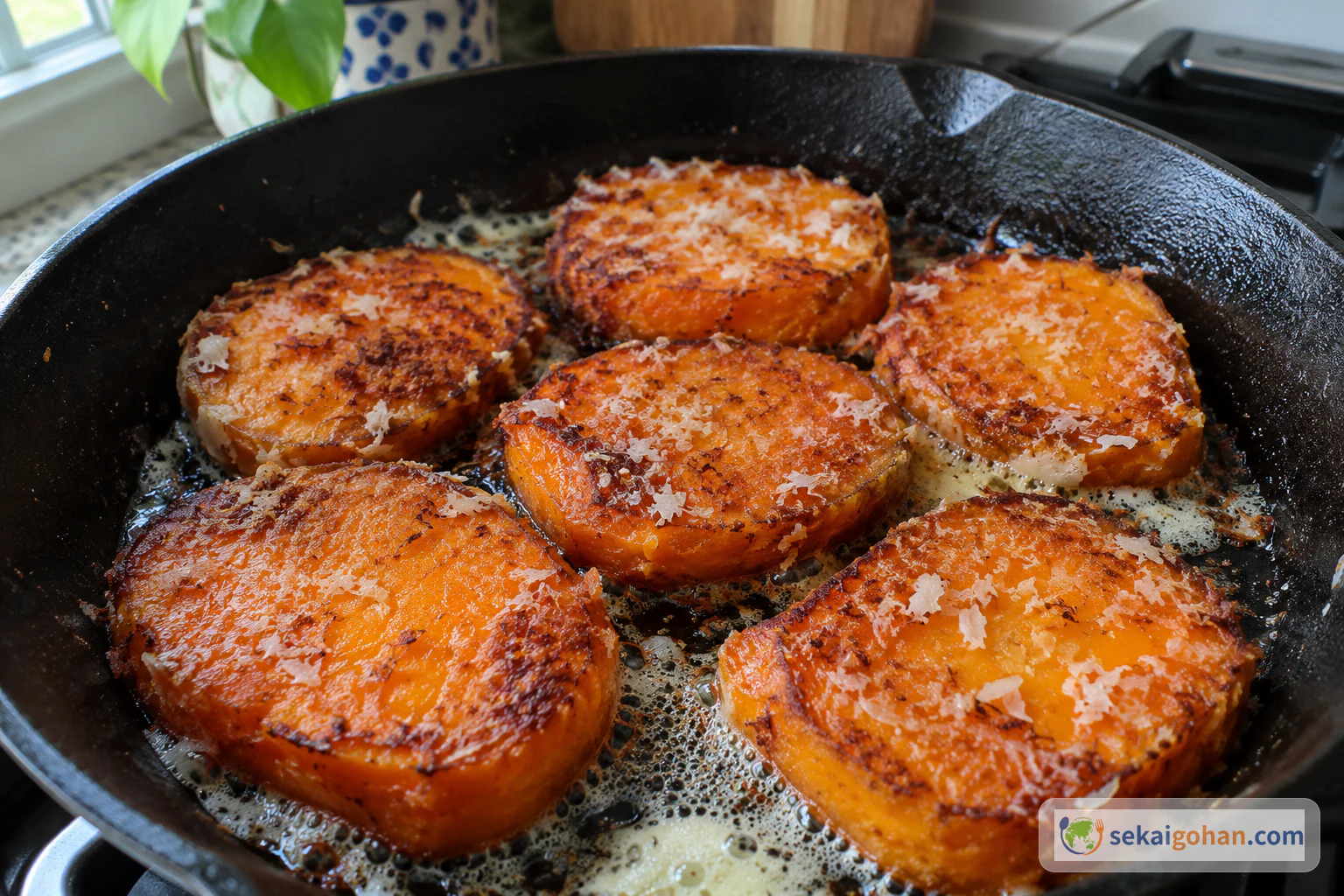
Leftovers are just as good fried. Cut chilled ducana into slices about ½ inch thick and fry them in butter on both sides until the edges turn crisp and golden.
Variations
- Firmness: the 35-to-45-minute range sets the result. Shorter gives a softer, tender slice for eating right away; longer gives a firmer slice that fries cleanly the next day.
- Brown sugar in place of granulated deepens the sweetness toward caramel.
- Raisins in or out: leave them out for an even, smooth slice, or add them for small sweet bursts against the salty fish.
- Extra flavorings: mashed ripe banana makes the dough sweeter and softer, chopped nuts add crunch, grated carrot adds color and an earthy sweetness, 1 tbsp rum adds warmth, and a little ground clove sharpens the spice.
Frequently Asked Questions
Can I taste the raw dough to check the sweetness?
Check the seasoning on a cooked slice instead. Once you know how a batch tastes, adjust the sugar, salt or spice the next time you mix. The squeeze test is the only check the raw dough needs.
Can I make one large ducana instead of five?
Two smaller parcels cook more evenly than one big one, and they are safer to handle in the pot. A giant parcel leaves the center behind while the outside overcooks, so keep to the ⅔ cup (160 ml) portions or close to it.
Should I use water or milk to loosen the dough?
Either works. Water keeps the taste clean and lets the sweet potato and coconut lead; milk adds a little richness and adds dairy to the dish. Add it 1 tbsp at a time and stop as soon as the squeezed dough stops cracking.
Do the leaves get eaten?
The leaf is the wrapper. Open it at the table or on the board and serve the slices on top of it, then set the leaf aside when you eat.