Ingredients and steps on one page. Print it, or choose “Save as PDF” in the print dialog.
Sekai Gohan
Dutchie: Canadian Square Raisin Yeast Doughnut
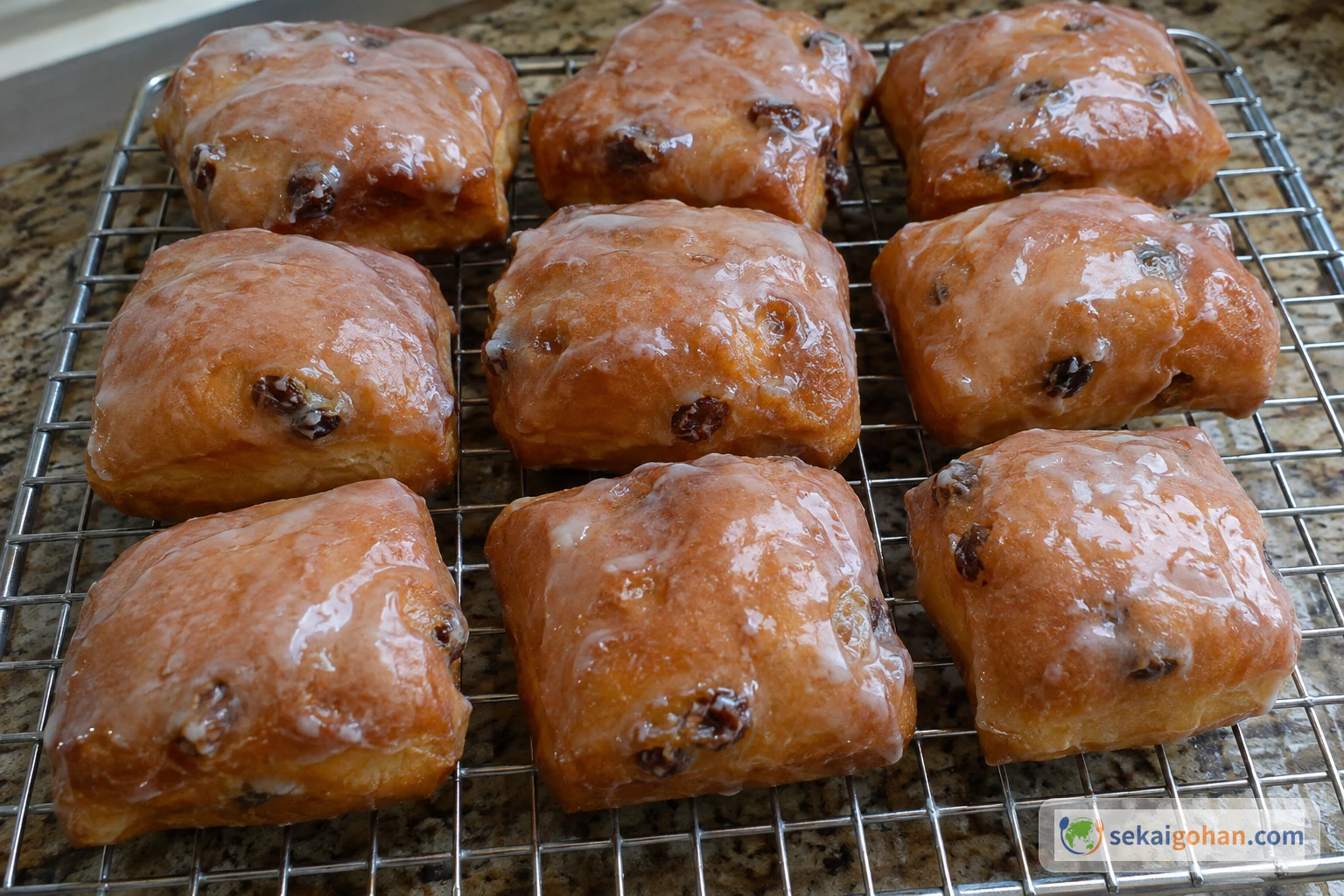
Ingredients
| Ingredient | Amount | Role |
|---|---|---|
| Buttermilk, at room temperature | 4½ oz (125 g) | Tang and a tender crumb |
| Sourdough starter, 100% hydration, active and at its peak | 1¾ oz (50 g) | Flavor and extra lift |
| Light brown sugar | 1½ oz (40 g) | Sweetness with a hint of molasses |
| Kosher salt | about ⅕ oz (5 g) | Seasoning |
| Instant yeast | about ⅕ oz (5 g) | The main rise |
| Whole egg, beaten, at room temperature | 1½ oz (40 g) | Richness and color |
| Vanilla extract | about ⅕ oz (6 g) | Aroma |
| Whole nutmeg, freshly grated | about ⅓ of a nutmeg | Fresh, warm spice note |
| Bread flour | 4½ oz (125 g) | Structure and chew |
| All-purpose flour | 3¼ oz (90 g) | Softness |
| Whole wheat or spelt flour | 1¼ oz (35 g) | Nutty, wholesome depth |
| Unsalted butter, softened | 1½ oz (40 g) | Richness and a soft crumb |
| Raisins | 4½ oz (125 g) | Sweet, chewy bursts |
| Neutral frying oil, such as canola | about 1 quart (about 1 L) | Frying |
| Icing sugar (powdered sugar), for the glaze | about 6½ oz (180 g) | Body of the glaze |
| Kosher salt, for the glaze | ¼ tsp (1 g) | Keeps the glaze from tasting flat |
| Ground cinnamon, for the glaze | ½ tsp | Warm spice |
| Hot water, for the glaze | about 1½ oz (45 g) | Loosens the glaze |
| Vanilla extract, for the glaze | 1 tsp | Aroma |
Steps
1Mix and knead the first dough
Put the room-temperature buttermilk, starter, light brown sugar, salt, instant yeast, beaten egg and vanilla into the mixer bowl. Add the bread flour, all-purpose flour and whole wheat or spelt flour on top. Fit the dough hook and knead on medium-low speed for 3 to 5 minutes. Hold back the butter and the raisins for now. Move on when no dry flour is left.
2Work in the butter and fold in the raisins
Add the softened butter in two additions, letting the first disappear before adding the second. Knead on medium-low for about 5 minutes, until the dough passes the windowpane test: stretch a small piece between your fingers and it thins out enough for light to show through without tearing. Drain the soaked raisins and pat them dry. Fold them into the dough by hand, a handful at a time. Stop when the raisins are evenly spread and the dough is smooth and supple again.
Gluten first, raisins lastPass the windowpane test before any raisins go in. If the dough tears, knead a little longer and test again. Folding the fruit in by hand keeps the raisins whole and stops them from smearing through the crumb.
3Rise briefly, then chill
Shape the dough into a smooth ball and set it in a lightly oiled container. Cover it and leave it at room temperature for 30 to 45 minutes, until it has grown by about one-third. Then put it in the refrigerator for 6 to 24 hours.
4Roll and cut into nine squares
Turn the cold dough out onto a lightly floured counter. Roll it into an 8 × 8-inch (20 cm) square about ½ inch (1.3 cm) thick, squaring the edges as you go. Cut it into a three-by-three grid with a bench scraper to make 9 pieces. Set each piece on its own parchment square on a tray and cover loosely with lightly oiled plastic wrap. The cuts should be clean, with straight sides and raisins showing at the edges.
5Proof until puffy
Leave the tray in a warm place for 60 to 90 minutes. The squares are ready when they have nearly doubled and look soft and pillowy, with slightly rounded corners. Toward the end of the proof, pour the oil into the heavy pot. It should be about 3 inches (7.5 cm) deep and fill no more than half the pot. Leave the squares covered until the oil is hot, so their surfaces don't dry out.
6Fry two or three at a time
Heat the oil to 360°F (182°C). Pick up 2 or 3 squares by their paper and lower them into the oil, paper and all. When the paper releases, pull it out with tongs. Fry for about 3 minutes in total, turning once halfway, and keep the oil at about 350°F (177°C) as you go. Lift each doughnut out with the skimmer onto the rack once both sides are an even, deep gold.
Small batches hold the heatNever fry more than 2 or 3 at once. Each cold square pulls the oil temperature down. Too many at a time makes the doughnuts greasy and pale. Check the thermometer between batches and let the oil come back up before the next ones go in.
7Glaze while warm
Let the doughnuts cool on the rack for about 5 minutes. Meanwhile, whisk the icing sugar, salt, cinnamon, hot water and vanilla until completely smooth. The glaze is meant to be thin and runny. Dip the top and sides of each doughnut, let the excess drip off, and set it back on the rack. Leave it for about 10 minutes, until the glaze has set into a sheer, dry shell.