Ingredients and steps on one page. Print it, or choose “Save as PDF” in the print dialog.
Sekai Gohan
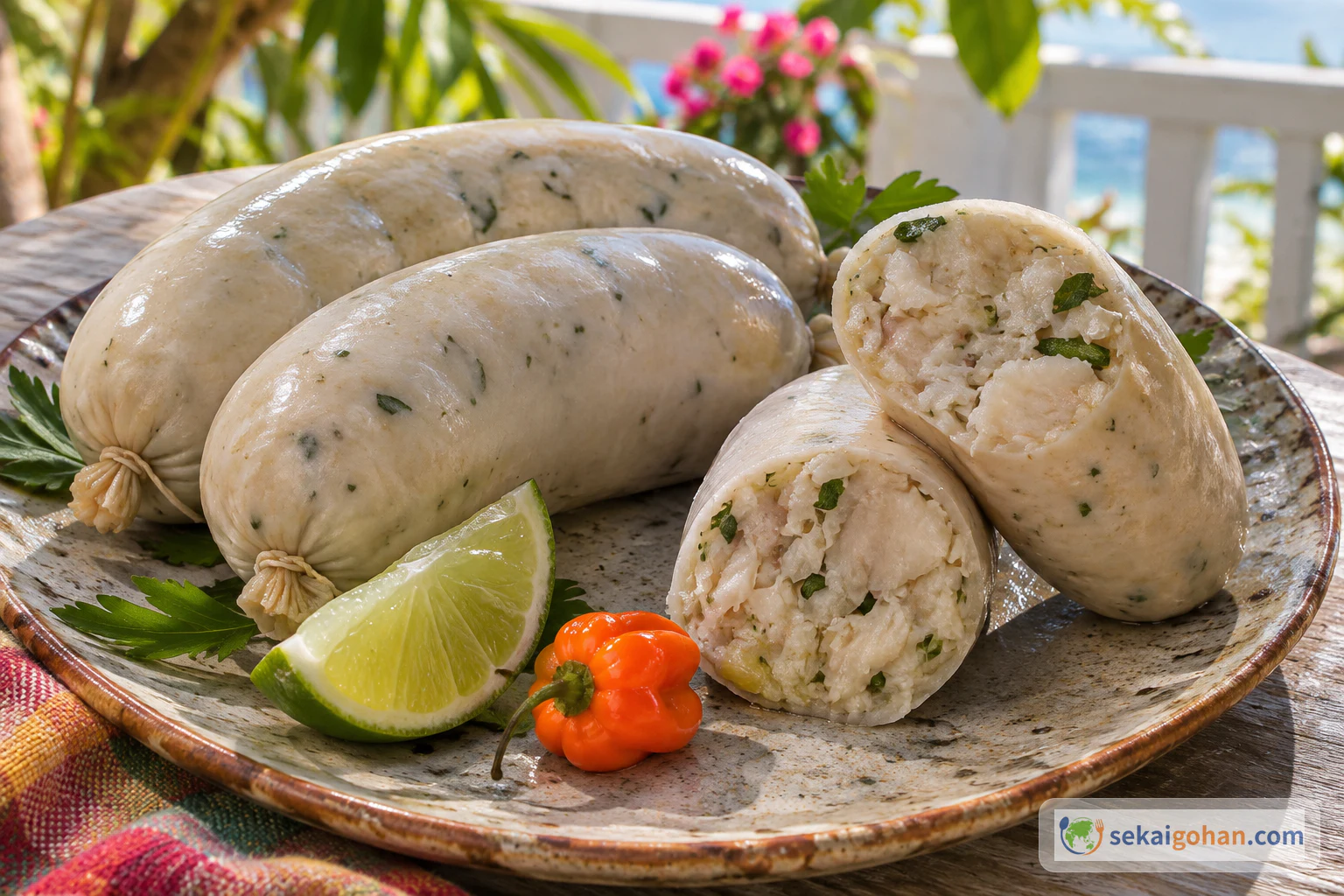
Boudin de Poisson: Caribbean White Fish Sausage Poached in Casing
Ingredients
| Ingredient | Amount | Role |
|---|---|---|
| White fish fillets (filet de poisson blanc) | about 1 lb 2 oz (500 g) | The body of the farce |
| Lime (citron vert) | 1, juiced | Marinade, brightness |
| Garlic (ail) | 2 cloves, chopped | Marinade |
| Seasoning pepper (piment végétarien) | 1, chopped | Pepper aroma in the marinade; seeds in or out to taste |
| Salt and pepper (sel, poivre) | to taste | Marinade seasoning |
| Stale bread (pain rassis) | about 9 oz (250 g) | Binds the farce |
| Yellow onion (oignon jaune) | 1 | Sweetness and body |
| Cive or green onion (ciboule) | 4 stalks | Green, oniony aroma |
| Flat-leaf parsley (persil plat) | 4 sprigs | Fresh herb note |
| Thyme (thym) | 2 sprigs | The creole herb backbone |
| Ground bois d'Inde (bois d'Inde moulu) | a pinch | Warm, clove-like perfume |
| Sunflower oil (huile de tournesol) | 5 tbsp | Softness in the mouth |
| Semi-skimmed milk (lait demi-écrémé) | a little | Smooths the farce |
| Hot pepper (piment fort) | to taste | Heat |
| Pork casing, size 32/34 (boyau de porc) | about 6½ ft (2 m) | Casing |
Steps
1Marinate the fish in lime, garlic and pepper
Cut the fish fillets into pieces and put them in a glass bowl. Squeeze in the juice of the lime, then add the chopped garlic, the chopped piment végétarien, and salt and pepper. Turn the pieces so each one is coated. Cover and refrigerate for at least 2 hours. After that, the fish and its marinade go into the farce.
2Soak and squeeze the bread
Tear the stale bread into pieces and put it in a bowl of water for 10 minutes. Lift it out by handfuls and squeeze hard, pressing until almost no water runs between your fingers. The bread binds the farce. Any water left in it goes straight into the boudin. Stop when almost no water comes out.
3Blend the farce and add the milk gradually
Cut the onion into chunks and roughly chop the cive, parsley and thyme leaves. Put the fish and all its marinade in the blender with the bread, onion, herbs, bois d'Inde and sunflower oil, and add hot pepper to taste. Blend until the mixture is pale and smooth, flecked with green. Then add milk a little at a time, blending between additions. Stop when the farce is smooth and creamy and still holds a soft mound on a spatula.
Stop the milk earlyA loose farce is the hardest problem to fix. It is difficult to stuff and comes out soft in the casing. Add milk only until the mixture turns smooth. When it starts to look glossy and slack, you have gone far enough.
4Desalt the casing and cut the twine
Run the pork casing under water and put it in a bowl of fresh water to soak off the salt. While it soaks, cut the kitchen twine into 6-inch (15 cm) lengths and keep them beside your work surface. Set the funnel next to them. The casing is ready when it feels soft and supple between your fingers, with no grains of salt clinging to it.
5Fill the casing and tie it into links of four
Slide one end of the casing onto the funnel and tie the other end with a piece of twine. Push the farce through the funnel so the casing fills evenly along its length. Tie the casing off with twine about every 3 inches (8 cm), and form the boudins into chains of four. The full batch makes 20 boudins in 5 chains. Each link should be plump and evenly round, with a little give when you press it.
6Poach in barely trembling water for 30 minutes
Heat a wide pot of water until the surface trembles, with only a few tiny bubbles rising. Lower the chains of boudin into the water and keep the heat at that gentle tremble for 30 minutes. Never let it boil, because boiling water bursts the casings. Watch the surface throughout. A slight quiver with isolated small bubbles is the right heat.
Hold the tremble, not a simmerMost of the result is decided here. Keep the water just below a simmer, adjusting the burner as the pot settles after the boudins go in. When in doubt, lower the heat.
7Check with a toothpick and lift out
At the end of the poach, prick one boudin with a toothpick. If only oil comes out, that is the cue that the boudin is done. If anything else seeps out, keep poaching at a tremble and test again. When the check passes, lift the chains out of the water gently so the casings stay whole.