Ingredients and steps on one page. Print it, or choose “Save as PDF” in the print dialog.
Sekai Gohan
Charque: Bolivian Salt-Dried Meat Fried Crisp Over Mote
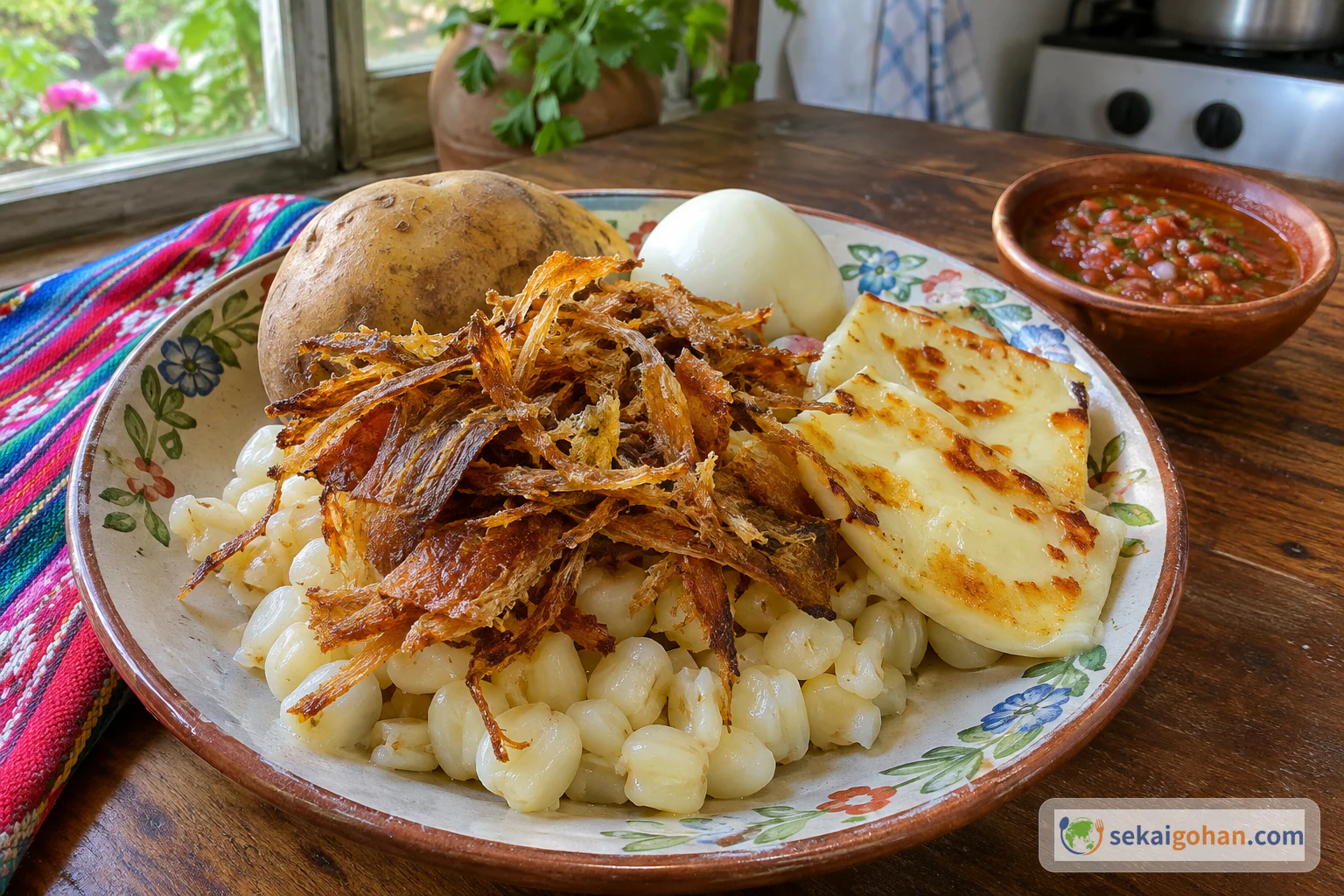
Ingredients
| Ingredient | Amount | Role |
|---|---|---|
| Charque (beef or llama), weighed dry as bought | 14 oz (400 g) | The star: soaked, boiled, pounded and fried crisp |
| Oil | ¼ cup | All the oil for frying the charque and then searing the cheese in the same pan |
| Large potatoes (papa imilla), skin on | 4 | Boiled whole in salted water; one per plate |
| Eggs (huevo) | 4 | Hard-boiled; one per plate |
| Cooked white mote (mote blanco) | 1 lb 10 oz (750 g) | The soft bed of large white corn kernels under everything |
| Fresh cheese (queso), sliced | 9 oz (250 g) | Seared slices, two per plate |
| Salt | to taste | For the potato water only; the charque boils in unsalted water |
| Red llajwa | to serve | The shared table sauce of tomato and locoto |
Steps
1Soak the charque overnight
The evening before you cook, put the 14 oz (400 g) of charque in a large pot or bowl. Cover it with plenty of plain water, keeping every piece under, and leave it overnight. The excess salt draws out into the water. By morning the pieces are still dark but more pliable, and the water has turned slightly cloudy.
2Rinse and boil in unsalted water
Drain the charque and rinse it well under running water. Put it in a pot of fresh water with no salt and bring it to a boil. Simmer for about 15 minutes, then lift the pieces out with a slotted spoon onto a board.
3Pound the charque into threads
When the charque is cool enough to handle, put it in a heavy-duty zip bag on a wooden board. Pound it with a wooden mallet and keep the fat in with the meat. Turn the bag and work over every piece. Stop when you can pull the meat apart into threads with your fingers, before it breaks down into crumbs or powder.
Threads, not dustPounding is what makes charque easy to bite. Too little and it stays leathery. Too much and it turns to crumbs that scorch in the oil. Pull a piece apart by hand now and then: once it separates easily into strands, stop.
4Boil the potatoes in their skins
Put the 4 potatoes, unpeeled, in a pot of water and salt it to taste. Bring it to a boil and simmer for about 15 minutes, until tender. When they are tender all the way through, drain them and keep them in their skins.
5Hard-boil the eggs
In a separate pot, cover the 4 eggs with water and bring it to a boil. Cook them until they are hard-boiled. Cool them enough to handle, peel them and cut one in half. The yolk should be set all the way through, with no glossy, runny centre.
6Dry the charque and fry it crisp
Spread the shredded charque on a clean towel and pat it as dry as you can. Heat the ¼ cup of oil in a wide, heavy skillet until hot. Add the charque and stir it around until it turns golden and crisp. Tip it into a metal strainer over a bowl to drain, and leave the remaining oil in the pan for the cheese.
Hot oilWater left in the meat makes hot oil spit. Dry the charque thoroughly, lower it into the pan gently rather than dropping it from a height, and keep your face and hands back. Never leave the hot pan unattended.
7Sear the cheese in the same pan
Set the skillet back over the heat with only the oil left from the charque. Lay in the cheese slices without crowding them. Sear them 1–2 minutes per side, turning once with a spatula. They are ready when both faces are browned and the edges are softening, with each slice still in one piece.
One pan, one measure of oilThe cheese picks up the flavour of the charque from the oil it was fried in. Use only what is left in the pan. Extra oil makes the cheese greasy rather than seared.
8Warm the mote
Put the cooked mote in a separate pot with water and warm it. Stir it once or twice so the kernels heat evenly. Lift a spoonful to check: the kernels should be swollen, white and steaming hot through. Drain them in a colander.
9Build the plates
Spread a bed of mote on each of four plates. Pile the fried charque on top, then add a peeled egg, a potato in its skin and two slices of seared cheese. Put the bowl of red llajwa on the table for everyone to share. The plate is ready to serve when the cheese is still soft and the charque still crackles under a fork.