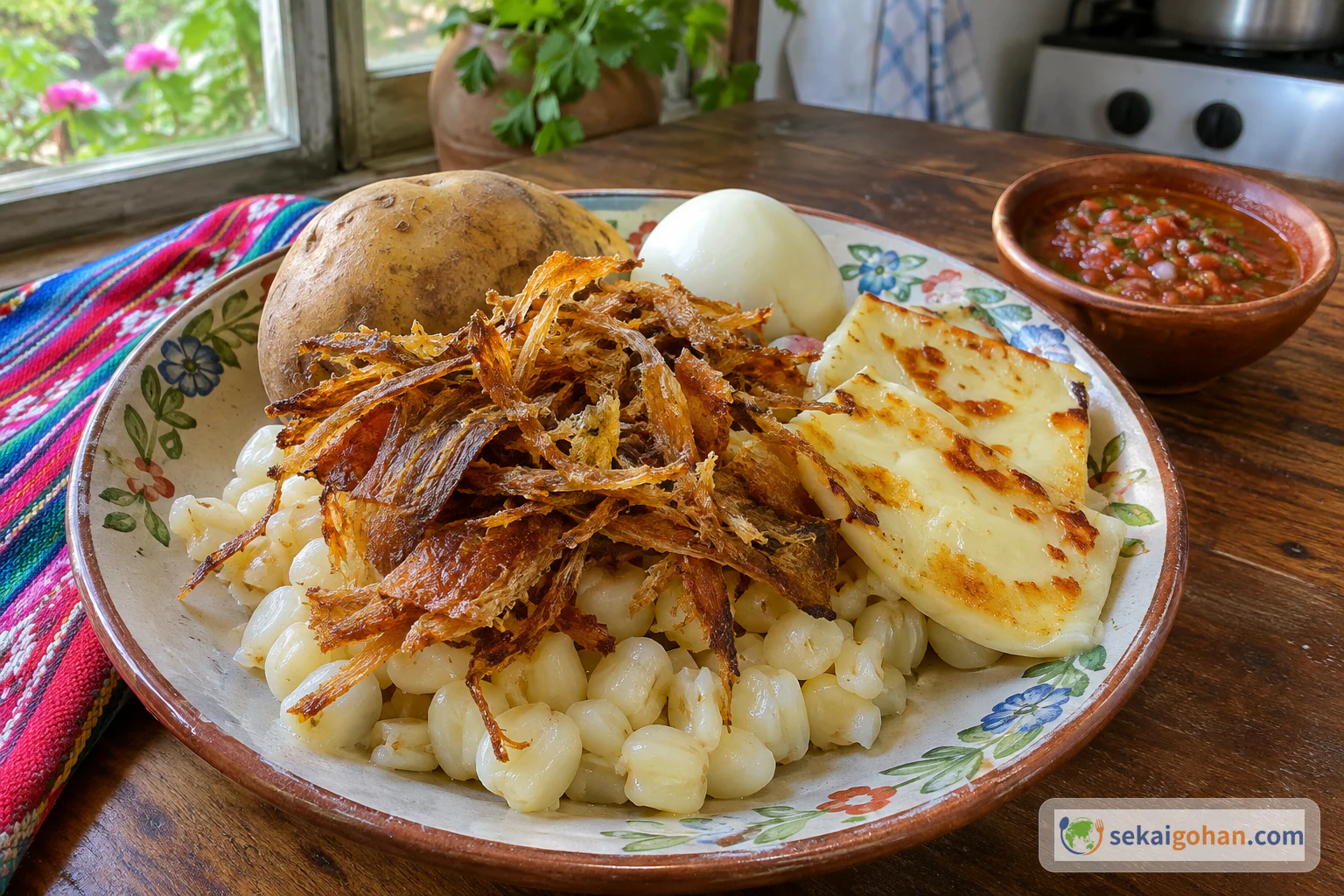
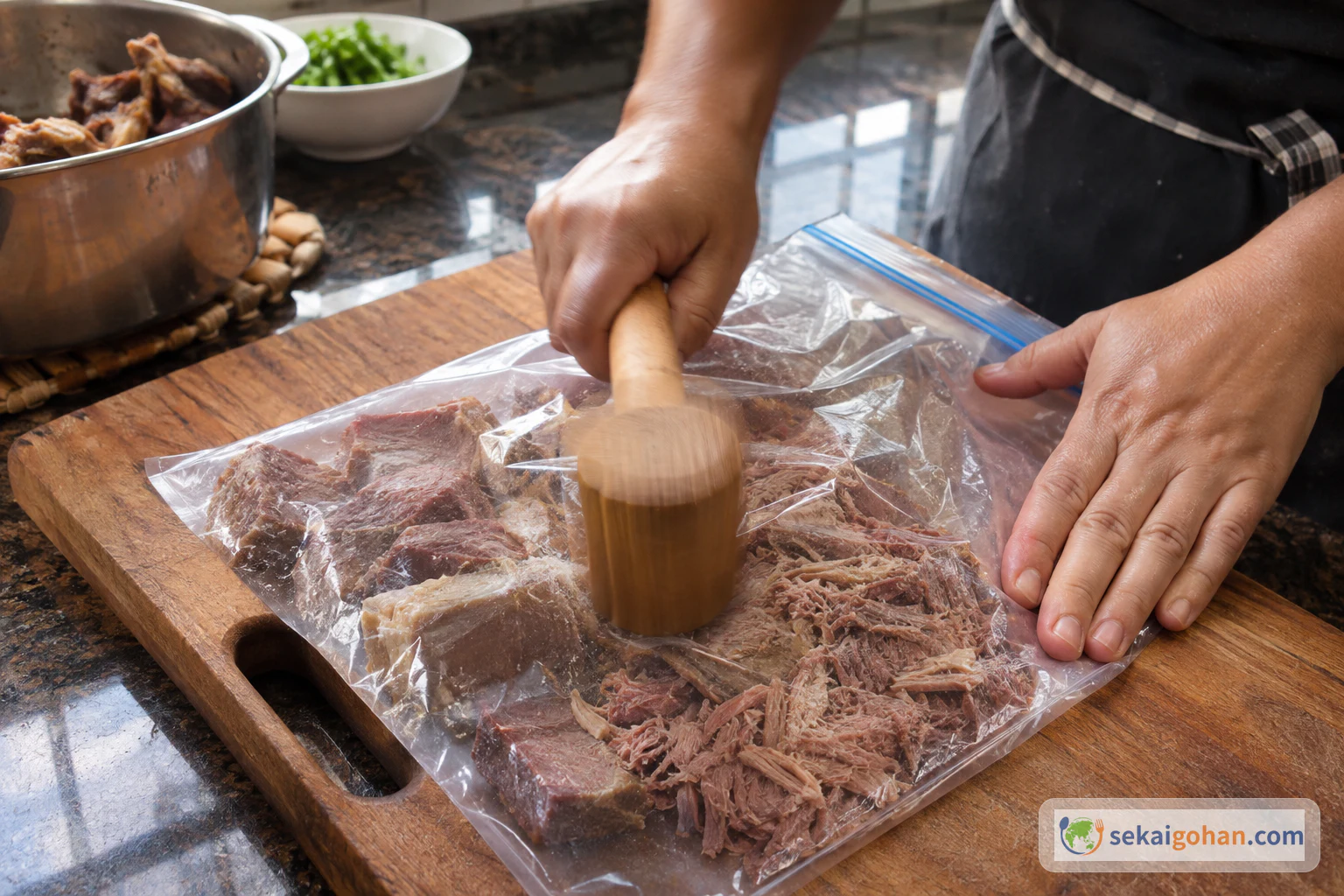
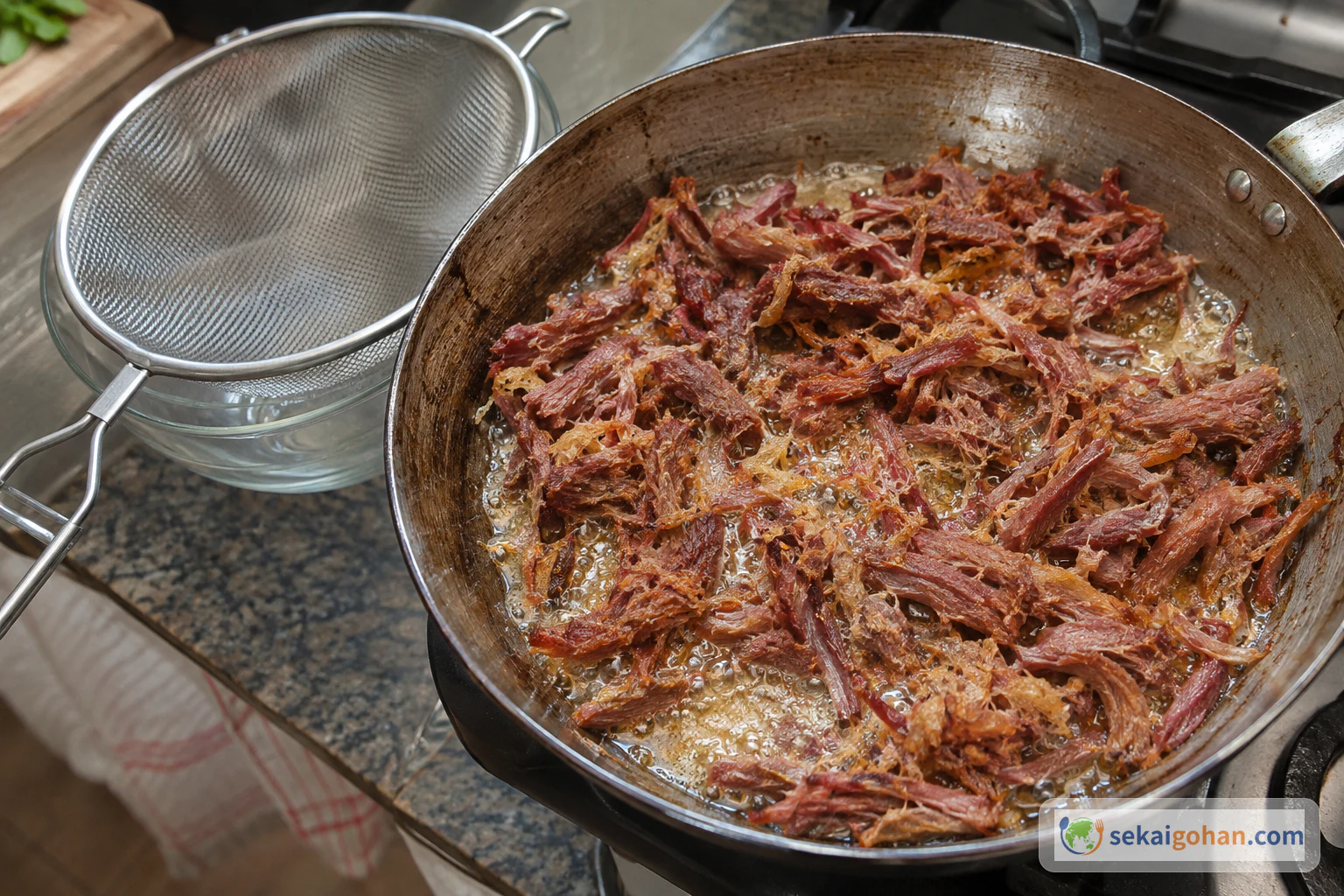
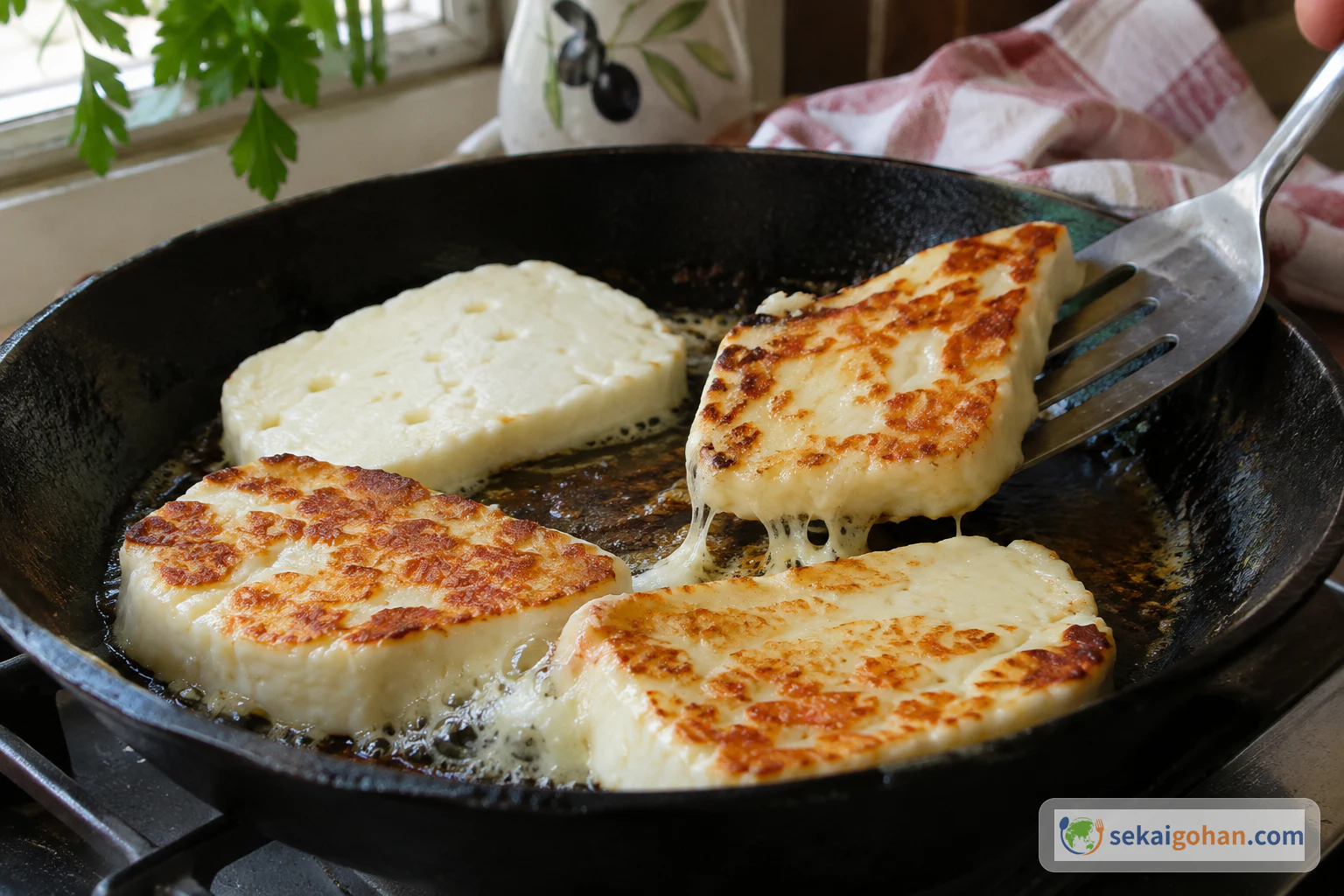
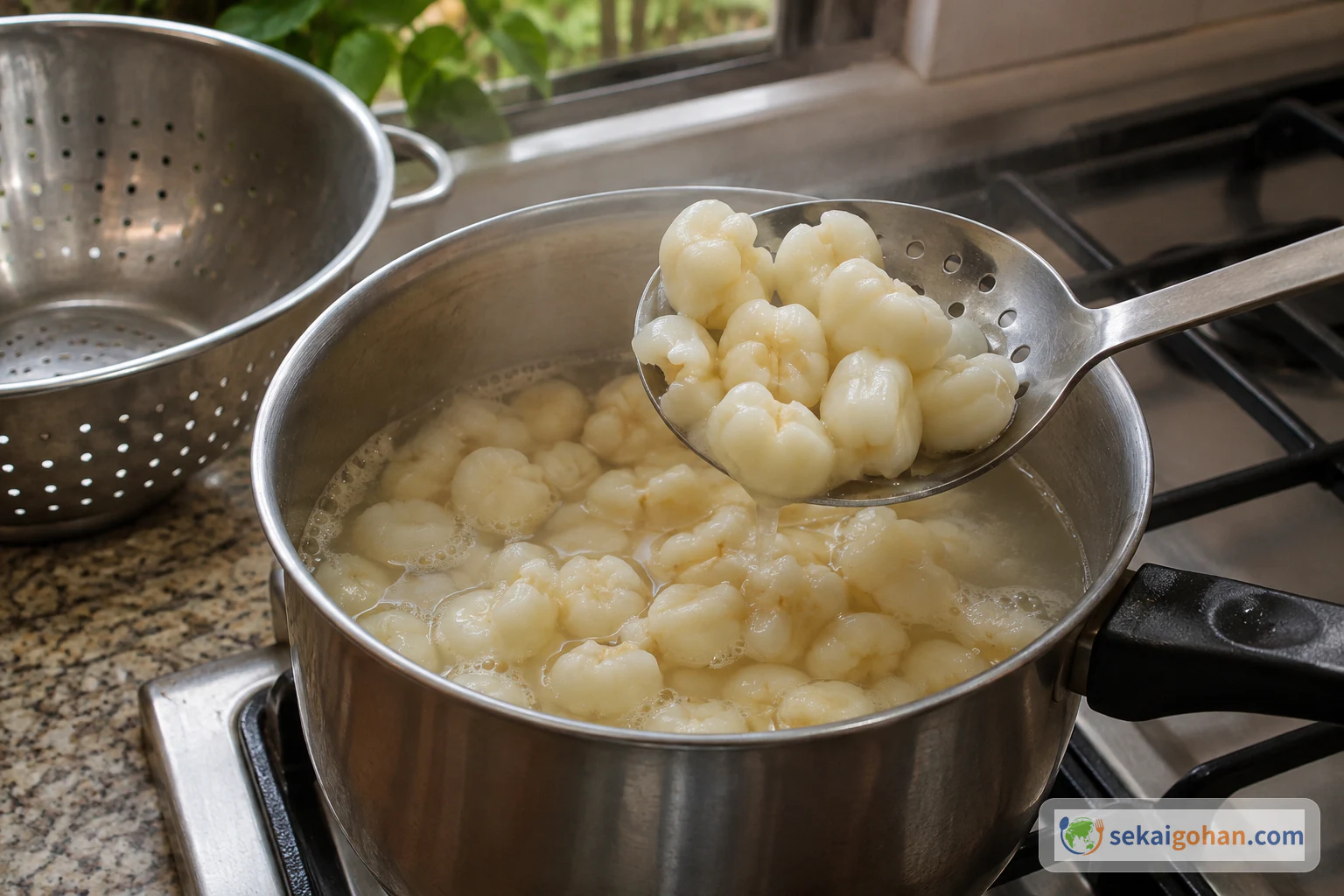
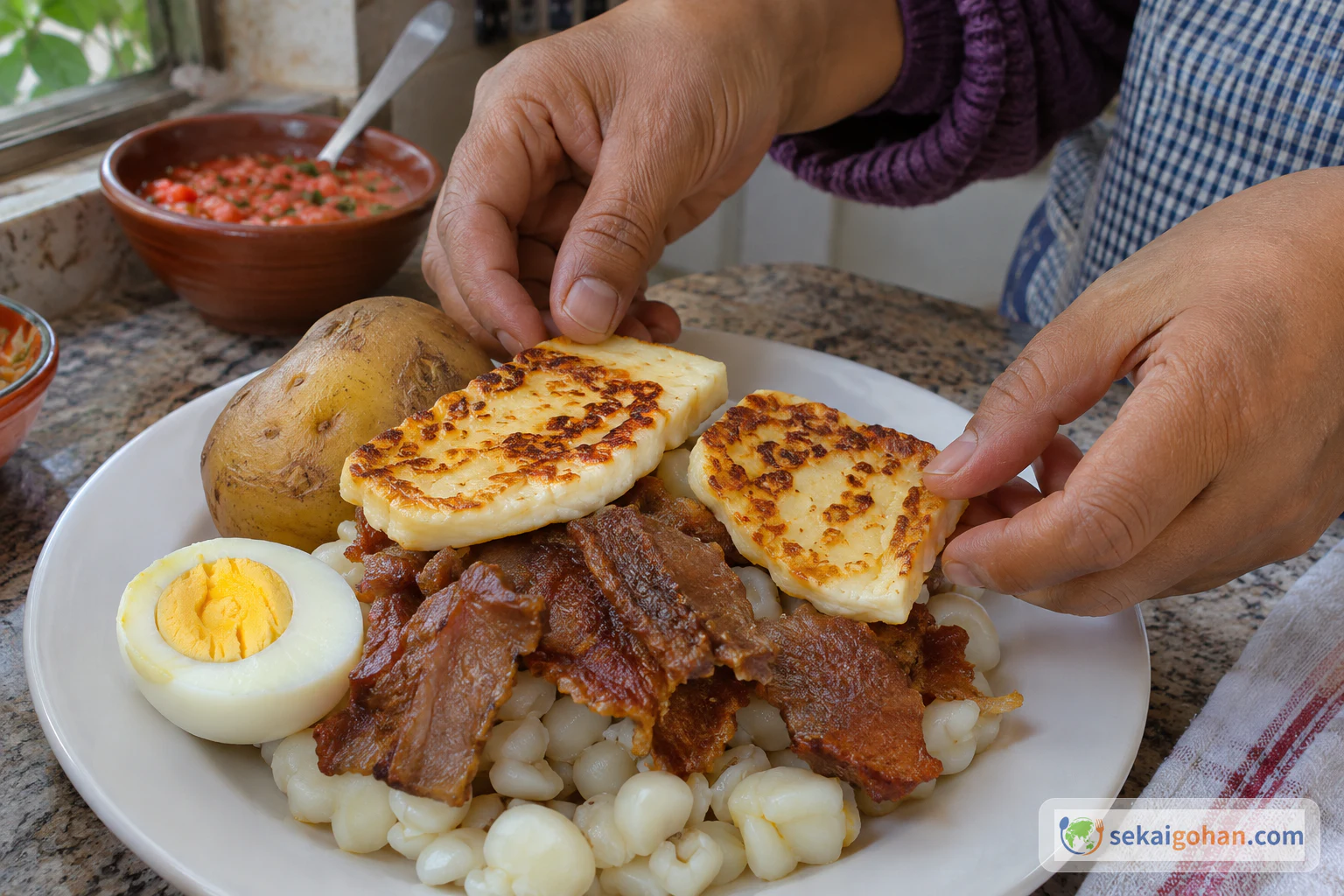
The pounded threads of charque go into the hot oil dry and loose, and within moments they crackle and turn the colour of toasted bread. Lifted onto a metal strainer, they are salty, crisp at the tips and chewy where the fat still clings to the fibres. That pile goes onto a bed of soft white mote, with a potato boiled in its skin, a hard-boiled egg, two slices of browned fresh cheese and a small bowl of red llajwa on the side. This plate is charquekán, the dish of Bolivia's Oruro department. Charque, the country's salt- and sun-dried meat, is its main ingredient.
From a Highland Larder to an Oruro Plate
What charque is
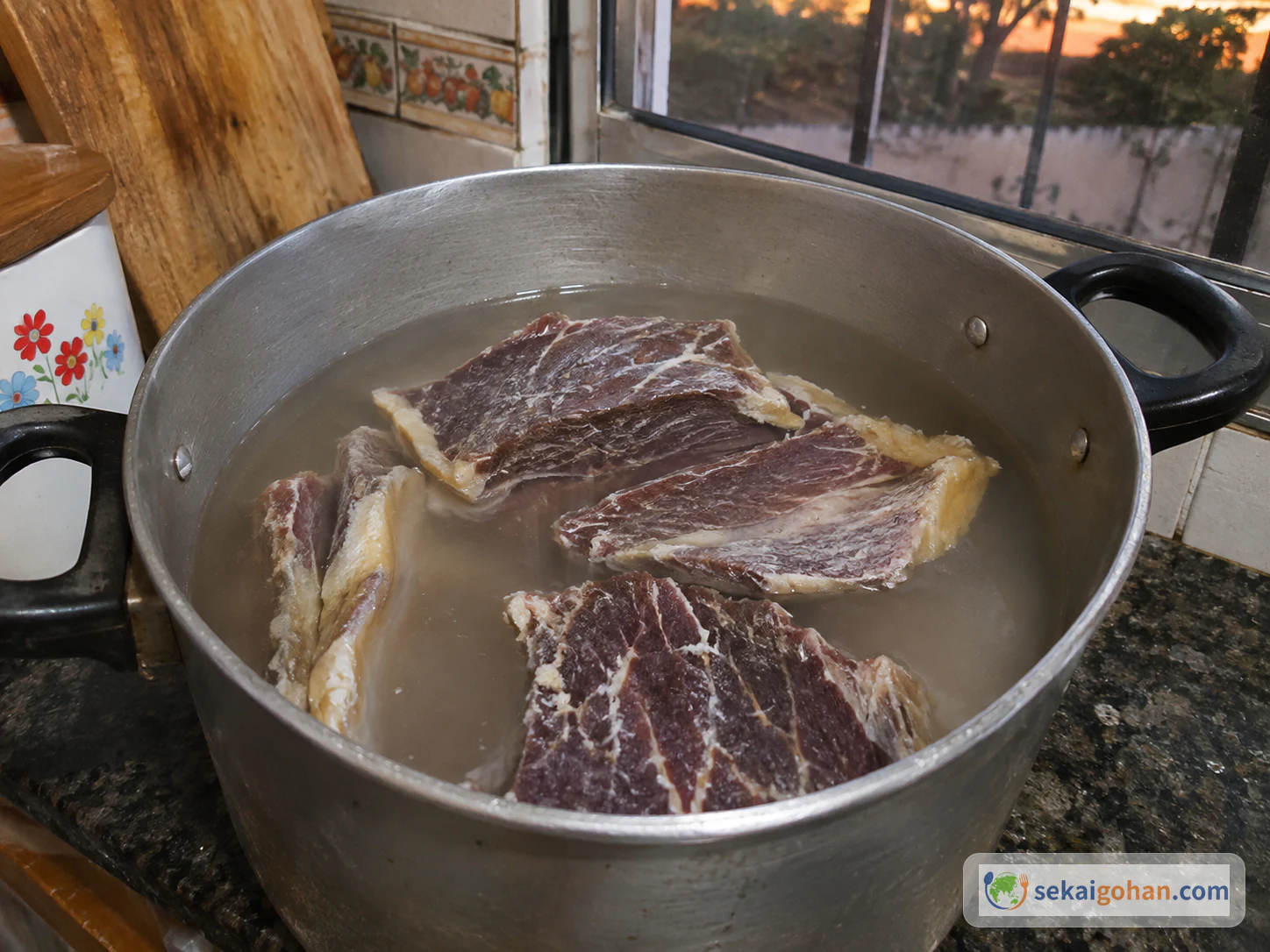
Charque is beef or llama meat preserved with salt and dried in the sun, an old technique for keeping meat a long time. The meat is sliced thin and the fat is trimmed off. It is rubbed with coarse salt and left overnight, then rubbed with fine salt and left another night, and then dried in the sun. Through the whole process a fine net, like a mosquito net, keeps flies off. What comes out is dark, stiff and crusted with salt. It is a pantry ingredient more than a dish, and it gets eaten with vegetables or with llajwa. In Bolivia it is the main ingredient of two dishes, charquekán and majadito.
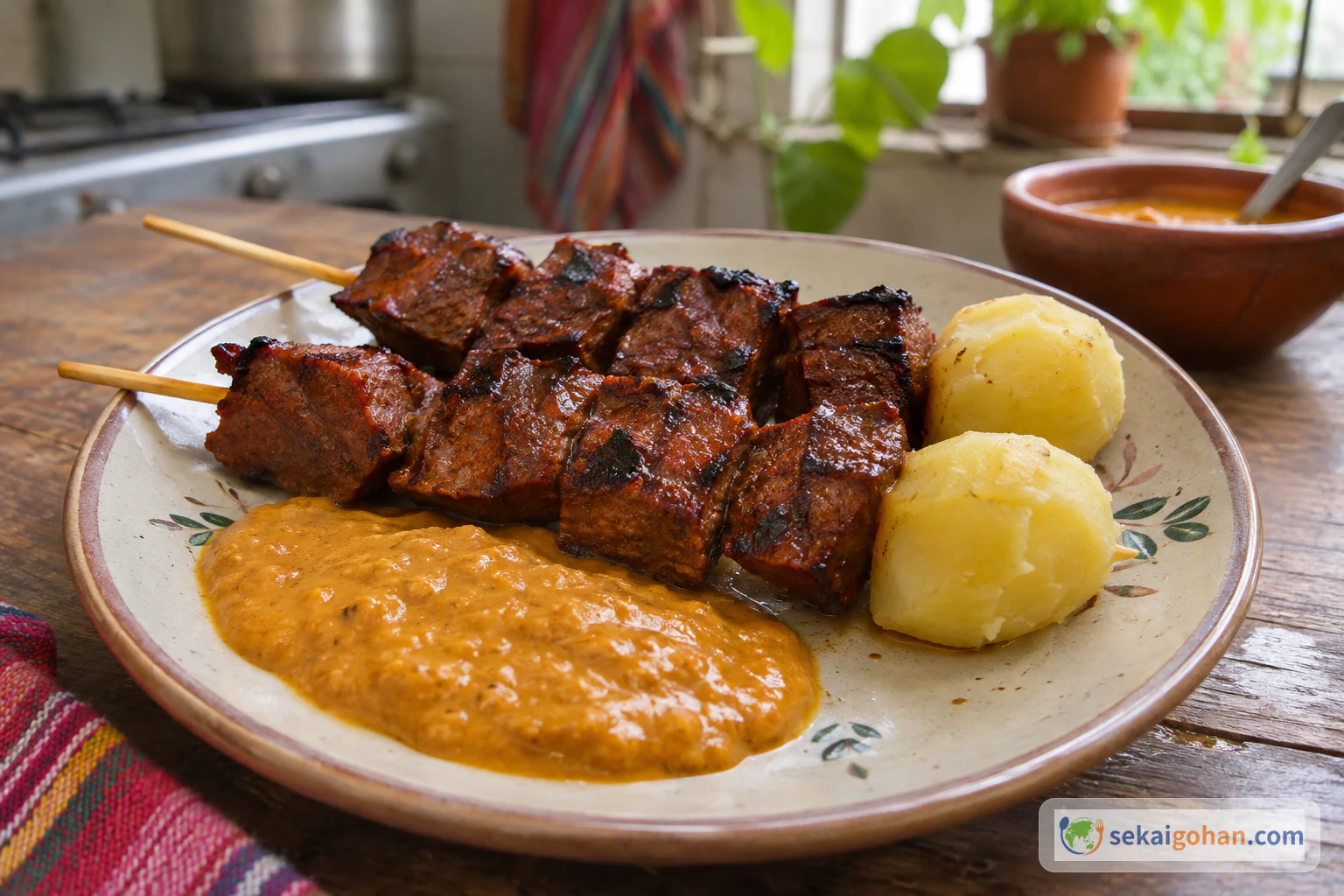
Charque is a different thing from the sweet, spiced beef jerky sold in packets. It is also not the same as Brazil's carne seca or Peru's charki, and Chile's charquicán, a stew whose name sounds close, is another dish entirely. Bolivian charque gets soaked, boiled, pounded and fried, and the crisp, salty threads that come out of the pan are what the whole plate is built around.
Charquekán, the Oruro way
Charquekán belongs to Oruro, and the plate usually comes together the same way. Mote goes down first: big kernels of peeled white corn, soft and slightly chewy. The fried charque goes on top, then the egg, the potato in its skin and two slices of cheese seared in the same pan as the meat. Red llajwa comes alongside. Both beef and llama charque are used. How the dish began is not settled. At the table, people break open the potato with a fork and spoon llajwa over the meat and mote, so every bite picks up some salt, starch and heat.
It sits comfortably beside other Bolivian plates built on meat and potatoes, like silpancho. The difference is the meat itself: here it is a preserved meat brought back to life in water, then pushed to crispness in oil. For more of the country's table, see our Bolivia page.
Llajwa is the small shared bowl of sauce found on Bolivian tables, traditionally ground by hand on a flat stone batán. The basic version is locoto chilli and tomato. Green llajwa leaves out the tomato, and a brown version adds onion and the herb quirquiña. In the highlands it can carry guacataya; in the east, cumarito or ulupica chillies with onion, oil and vinegar. Charquekán gets the red one.
Ingredients (serves 4)
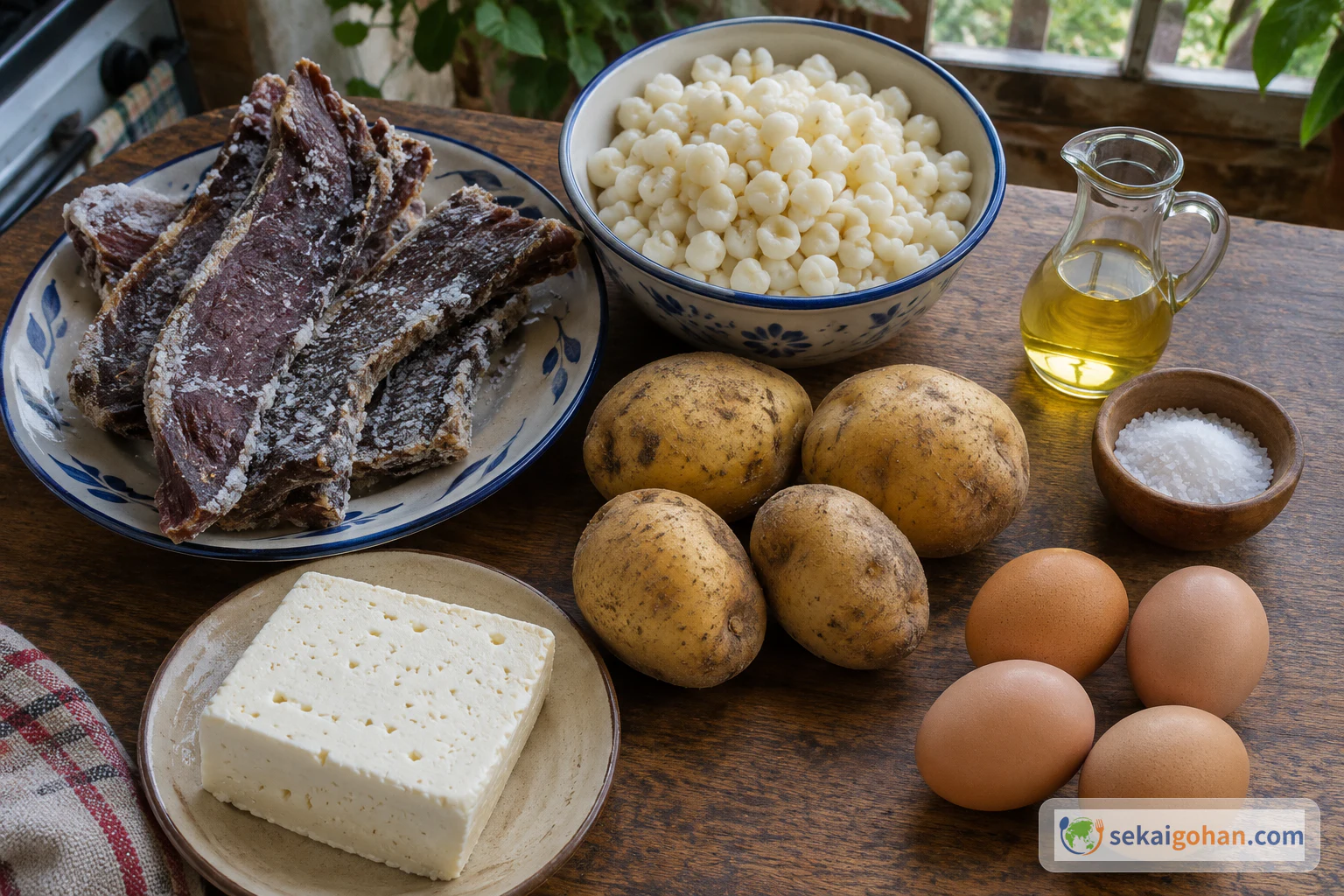
This plate contains milk (cheese) and egg. If you use a substitute for charque or a bought llajwa, check the label for other allergens.
Equipment
- Large pot or bowl for the overnight soak
- Separate pots for the charque, potatoes, eggs and mote
- Slotted spoon and colander
- Heavy-duty zip bag, wooden board and wooden mallet (meat mallet)
- Wide, heavy skillet
- Metal strainer set over a bowl
- Spatula
- Small bowl for the llajwa
Buying Charque, Mote and Cheese Away from Bolivia
What makes this plate taste of Oruro is the pairing of crisp, pounded, salty meat with chewy mote, finished with potato and seared cheese. Keep those and the dish holds up. Lose them and you have a different plate.
| Ingredient | What to look for | What a swap changes |
|---|---|---|
| Charque | Import grocers or online shops; read the label and check the salt | Plain, unsweetened salt-dried beef comes closest. Ordinary beef jerky with sugar, spices or soy sauce makes the meat sweet and the flavour moves away from charque |
| Mote | Peeled large-kernel white corn; canned or dried hominy sold for pozole is the closest | Sweet corn is a different thing: soft, sugary, and it turns the plate sweet. Dried hominy needs cooking first, following its package, before you warm it in step 8 |
| Cheese | Bolivian fresh cheese is salty and slightly springy | Halloumi, or a drained cottage-style fresh cheese, sears and keeps its shape. Mozzarella melts in a different way and spreads in the pan |
| Potatoes | Imilla is a highland Bolivian variety | Any large potato that boils well in its skin works, with a different flavour and texture |
| Llajwa | Locoto chilli is hard to find outside Bolivia | Fresh tomato with a little green chilli and cilantro, kept mild, makes a simple stand-in; the flavour changes without locoto |
How long charque needs to soak varies by product, which is why you taste it after boiling.
Charque is never eaten raw. Judge the salt by tasting a small shred once it has been boiled in step 2. If it is still sharply salty, it needed a longer soak in fresh water; make a note for next time.
Method
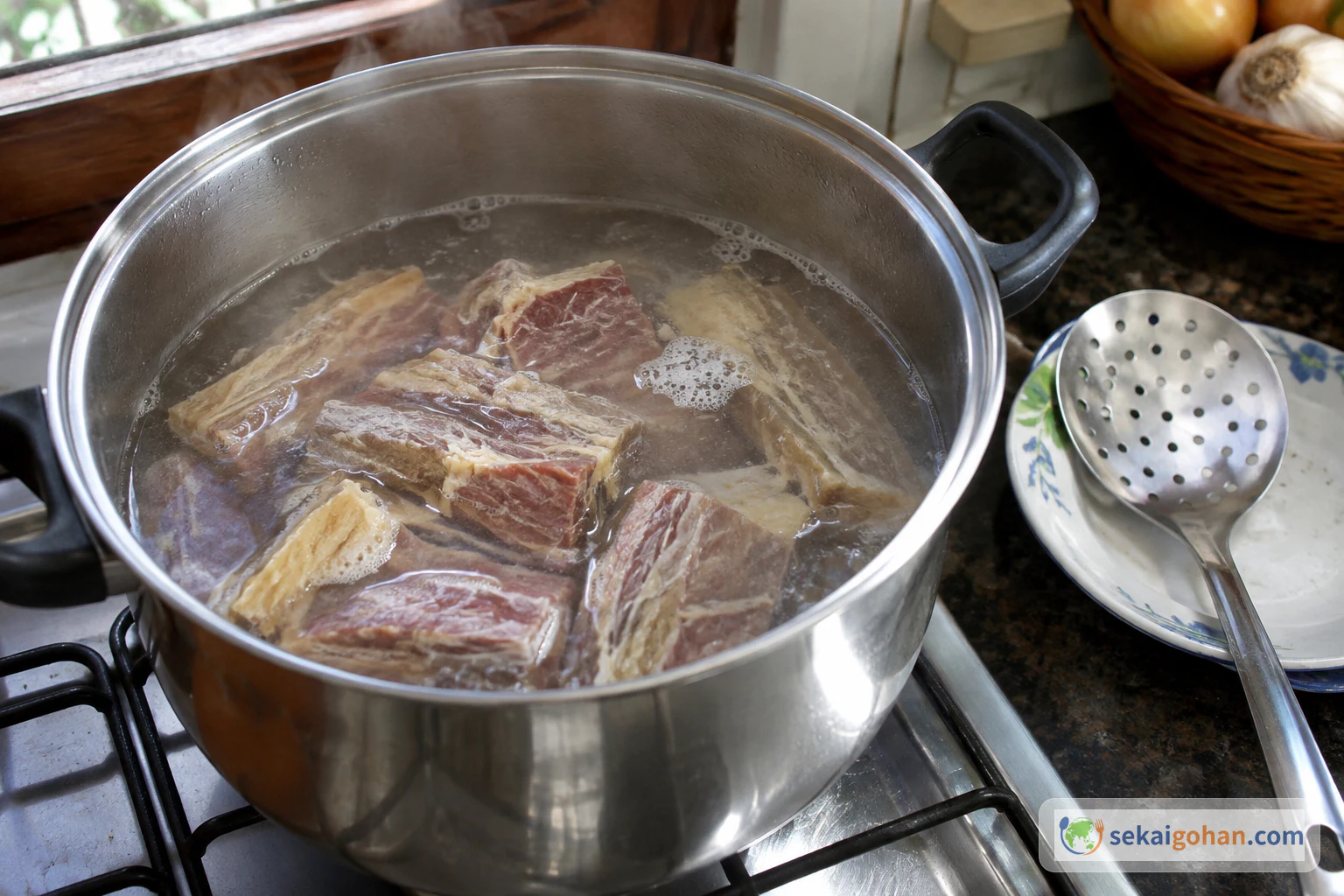
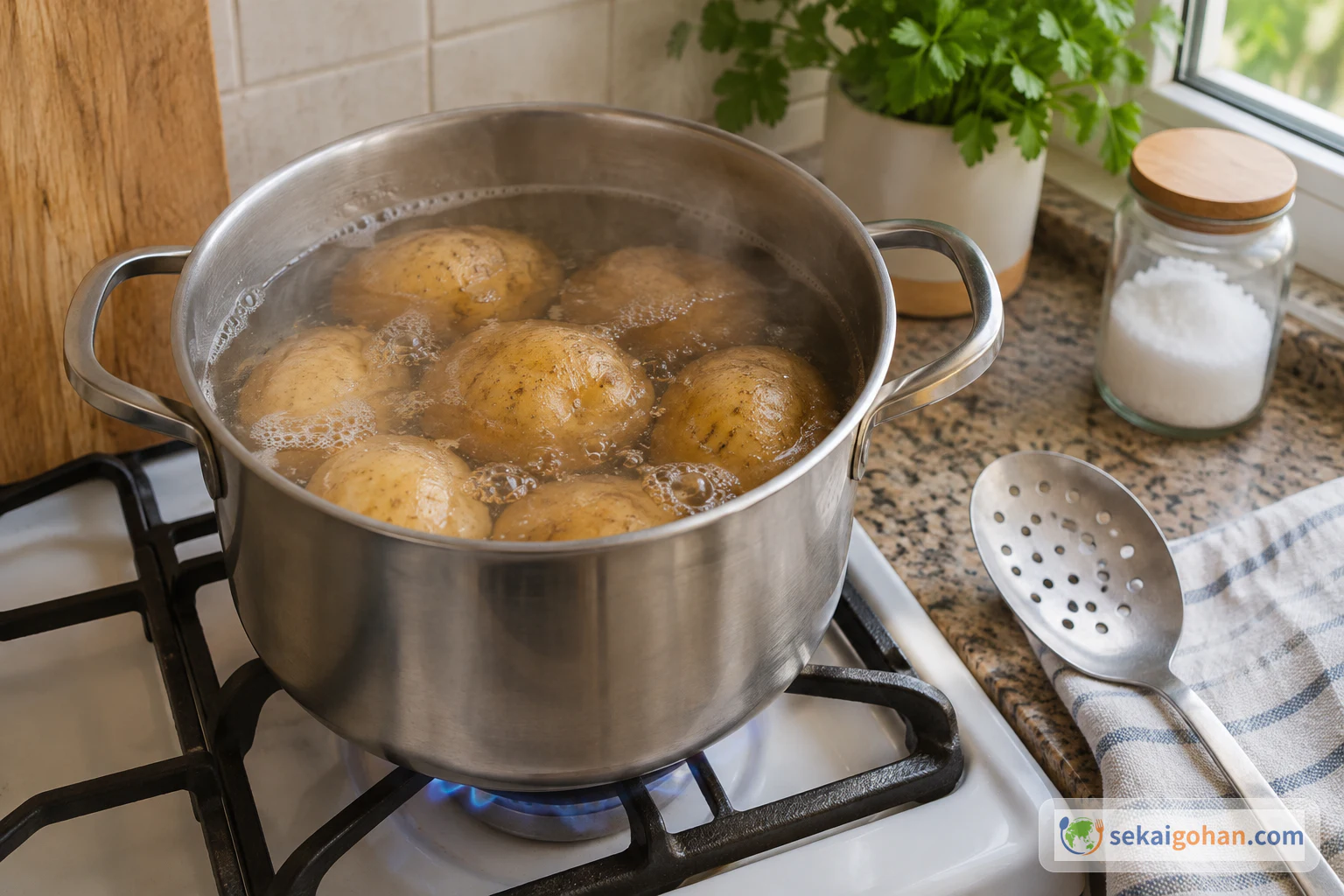
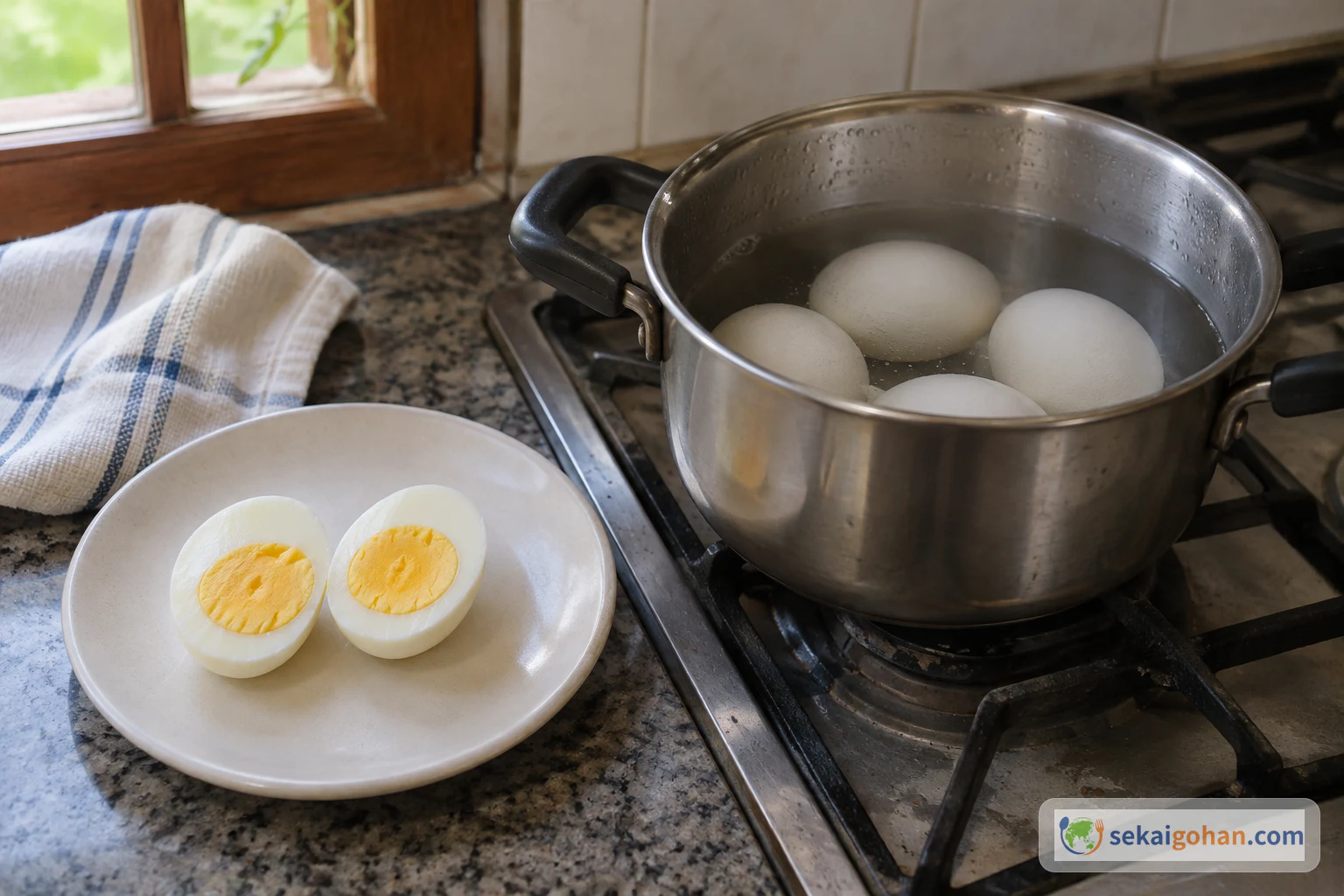
Start the evening before with the soak. On the day, the charque is boiled and pounded first. The potatoes, eggs and mote each cook in their own pot, so get them going while you work the meat. The frying and the cheese come last, in one pan, just before you plate, so the charque is still crackling when it reaches the table.
When It Goes Wrong
| What you see | Why | What to do |
|---|---|---|
| The fried charque tastes harshly salty | The soak was too short for that product | Next time, soak it longer in plenty of fresh water and taste a shred after boiling |
| The meat is leathery and hard to bite through | It was not pounded enough | Pound until the meat pulls apart into threads with your fingers |
| The charque fries into dark crumbs | It was pounded to powder | Stop pounding at long strands; crumbs scorch before the rest is golden |
| The oil spits and the meat steams instead of crisping | The shreds went in wet | Pat them dry on a towel first and make sure the oil is hot before they go in |
| The cheese spreads into a puddle | The cheese melts too easily | Use a fresh cheese that holds its shape, such as halloumi |
| The plate tastes sweet and the corn is soft | Sweet corn was used instead of mote | Use white hominy; its chew balances the crisp meat |
Serving, Variations and Storage
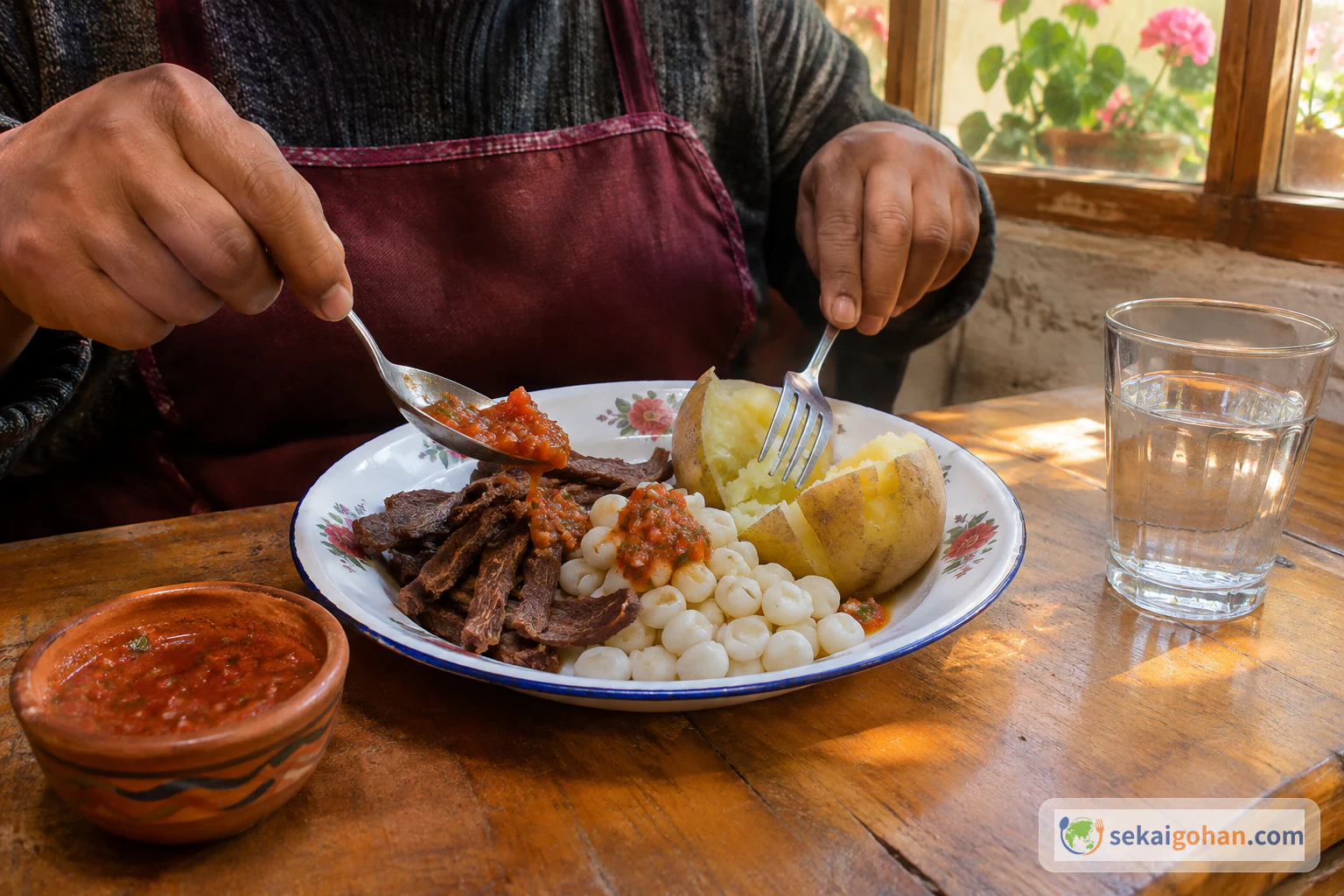
At the table
Charquekán is a full plate on its own, with meat, corn, potato, egg and cheese, so it needs nothing beside it except the llajwa. Set one shared bowl of llajwa in the middle, the way it sits on Bolivian tables, and let each person add as much as they like. Eat it mixed: a bit of potato, a spoonful of mote, a tangle of crisp charque and a dab of sauce in every forkful.
Variations
- Llama charque. Both beef and llama charque are used for charquekán. The method stays the same.
- Without the cheese. A simpler home plate serves the fried charque with potatoes, mote and hard-boiled egg, with spicy llajwa alongside. It is lighter and puts more weight on the meat.
- A different llajwa. The brown version, with onion and quirquiña, is earthier. Green llajwa, made without tomato, is sharper and greener in taste. Either one changes the mood of the plate more than any other swap.
Storage
Cook and eat charquekán on the same day. Once a pack of charque is opened, keep it sealed, dry and refrigerated. Dried meat picks up moisture from the air, and microbes can grow again once it does.
Frequently Asked Questions
Can I make charque at home?
Buy it ready-made. Traditional charque is salted over two nights and dried in the open sun under a net, and no home-kitchen version of that method is given here. Food-safety guidance for home-dried meat says it should be heated to 160°F (71°C) before drying, or dried in a 160°F (71°C) oven and then heated at 275°F (135°C) for 10 minutes. Most home dehydrators stop at 140°F (60°C), which is not hot enough.
Can I use beef jerky instead?
Only plain, unsweetened, salt-dried beef comes close. Packaged jerky is usually seasoned with sugar, spices or soy sauce, and that flavour stays through soaking and frying. The plate ends up sweet and spiced instead of clean and salty.
Does it have to be llama?
No. Charquekán is made with beef charque as well as llama charque, and the soaking, boiling, pounding and frying are the same for both. Use whichever you can find.
Is llajwa very hot?
It is built on locoto chilli, so it carries real heat, and charquekán is often served with a spicy one. Start with a small spoonful over the mote and potato, which soften the heat. If you are making the tomato and green chilli stand-in, keep the chilli light the first time.