Ingredients and steps on one page. Print it, or choose “Save as PDF” in the print dialog.
Sekai Gohan
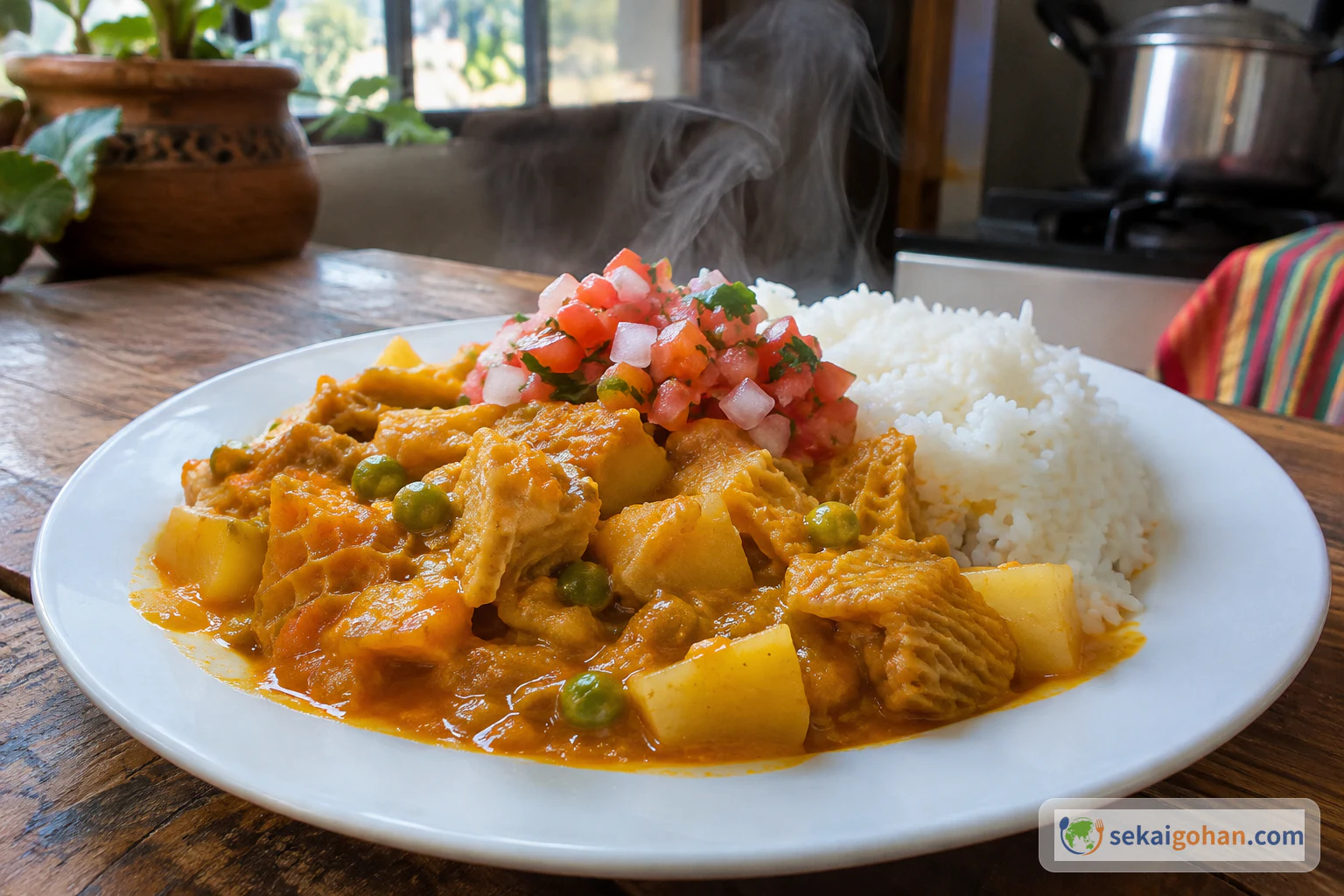
Ranga Ranga: Bolivian Tripe Stew with Yellow Chili and Rice
Ingredients
| Ingredient | Amount | Role |
|---|---|---|
| Beef tripe, precooked (panza or libro) | 1⅔ lb (750 g) | The heart of the dish, diced after its aromatic boil |
| Large onion, whole and peeled | 1 | Flavors the water the tripe boils in |
| Bay leaf | 1 | Aromatic for boiling the tripe |
| Whole black peppercorns | 1 tsp | Aromatic for boiling the tripe |
| Large onion, thinly sliced | 1 | Base of the sofrito |
| Oil | as needed | For the sofrito |
| Dried oregano, crumbled by hand | 1 tsp | Herbal backbone of the sauce |
| Green peas | ½ cup (120 ml) | Sweetness and color; tells you when to add the potatoes |
| Ground yellow chili (ají amarillo molido) | ½ spoonful; start with ½ tsp and add to taste | The yellow color and fruity heat; this measure stands in for one whole ají amarillo |
| Ground yellow paprika | 1 tsp | Extra color and a round sweetness |
| Ground cumin | a pinch | An earthy note under the chili |
| Tomato, chopped | ½ | Acidity and body in the sauce |
| Hot water or broth | 1 cup (240 ml) | The only liquid in the stew |
| Potatoes (optional) | 4 | Body; their starch thickens the sauce |
| Rice | 1 cup (240 ml) | Toasted, then cooked |
| Garlic, minced | 1 clove | For the rice |
| Large onion, thinly sliced | ½ | For the rice |
| Boiling water | 2 cups (480 ml) | For cooking the rice |
| Cold water | a little, as needed | To finish the rice in steam |
| Salt | to taste | For the sauce and the rice |
| Fresh tomato and onion, for the sarsa | as needed | The cool, sharp salad on top |
| Parsley, finely chopped (optional) | 1 tsp | Finishing garnish |
Steps
1Boil the tripe with aromatics
Put the precooked tripe in a pot and cover it with cold, unsalted water. Add the whole peeled onion, the bay leaf and the peppercorns. Bring it to a boil and let it bubble steadily. Cook until the tripe is hot all the way to the center.
2Dice the tripe
Lift the tripe out of the pot and let it cool until you can handle it. On a board, cut it into medium cubes, all about the same size, so they finish together in the stew. Keep the cubes in a bowl while you start the sauce.
3Build the yellow sofrito
In a second pot, warm a little oil and cook the sliced onion until it turns translucent. Add the oregano, the peas, the ground ají, paprika and cumin, and the chopped tomato, and stir them through the onion. Pour in the hot water or broth and season with salt. The sauce is right when it turns a deep yellow-orange and simmers steadily.
4Add the potatoes and tripe and simmer
Watch the peas. When they are half cooked, still firm in the middle, add the potatoes, cut into chunks, and the diced tripe. Stir everything into the sauce and keep it simmering, stirring now and then so nothing catches. Cook until the potatoes are tender, the tripe is soft and the whole pot is piping hot.
5Toast the rice
Heat a dry pan until it is hot. Add the rice and stir it constantly so it toasts evenly. Add the minced garlic and the half onion, thinly sliced, and keep stirring. Stop when the grains are pale golden and the garlic smells nutty, not burnt.
6Boil the rice hard
Tip the toasted rice, garlic and onion into the cooking pot. Pour in the boiling water and add salt. Keep the heat high and let it boil until the water has boiled away.
7Finish the rice in steam
Turn the heat down to low. If the grains are still firm at the center, sprinkle in a little cold water and let the steam finish them. Repeat a little at a time until they are cooked. The rice is done when the grains are tender, separate and fluffy when you loosen them with a fork.
8Plate it
Spoon the stew onto flat plates and set a mound of rice beside it. Top with the tomato and onion sarsa, and scatter the parsley over the stew if you like. Serve right away, while the sauce is glossy and steaming and the sarsa is still cold.