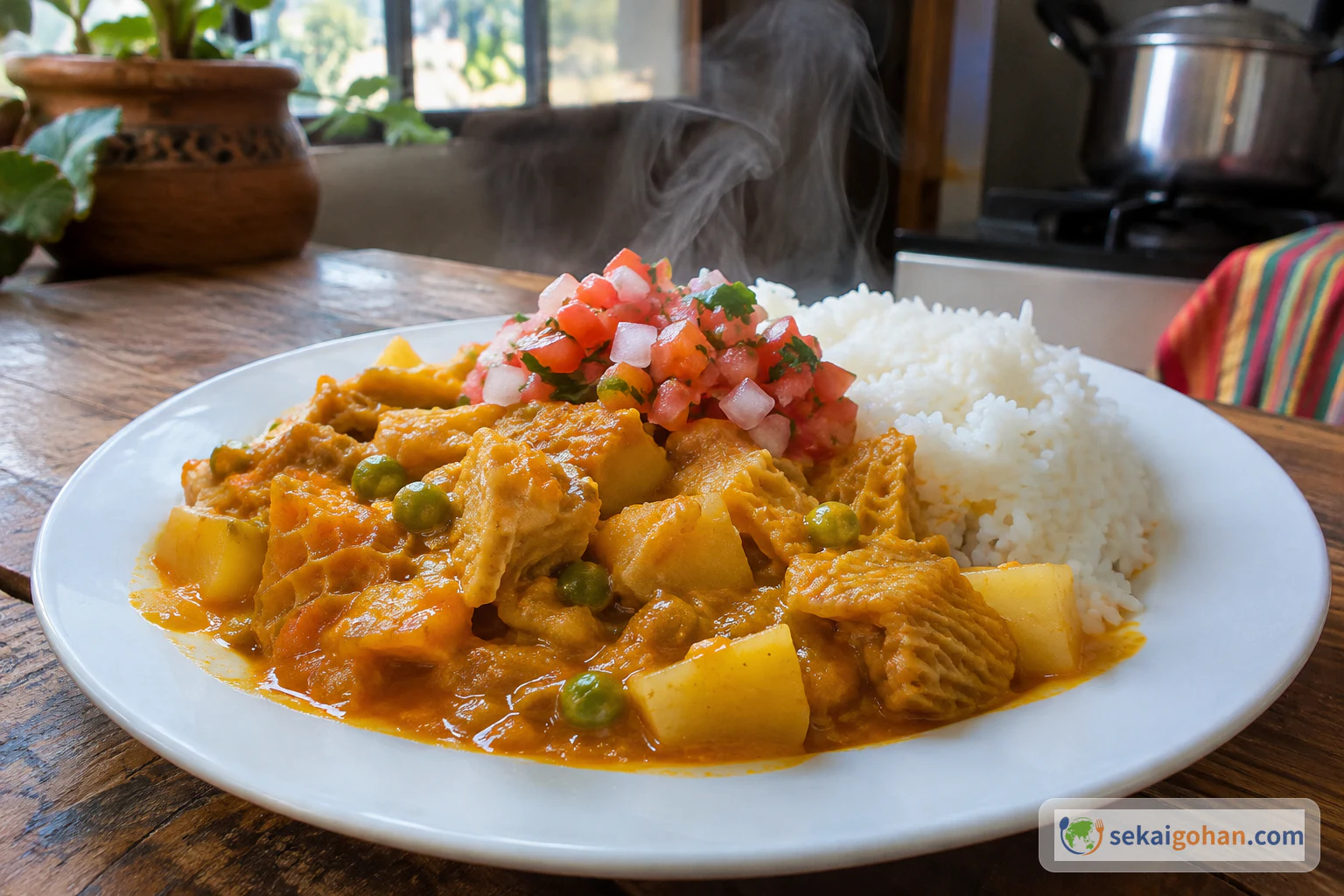
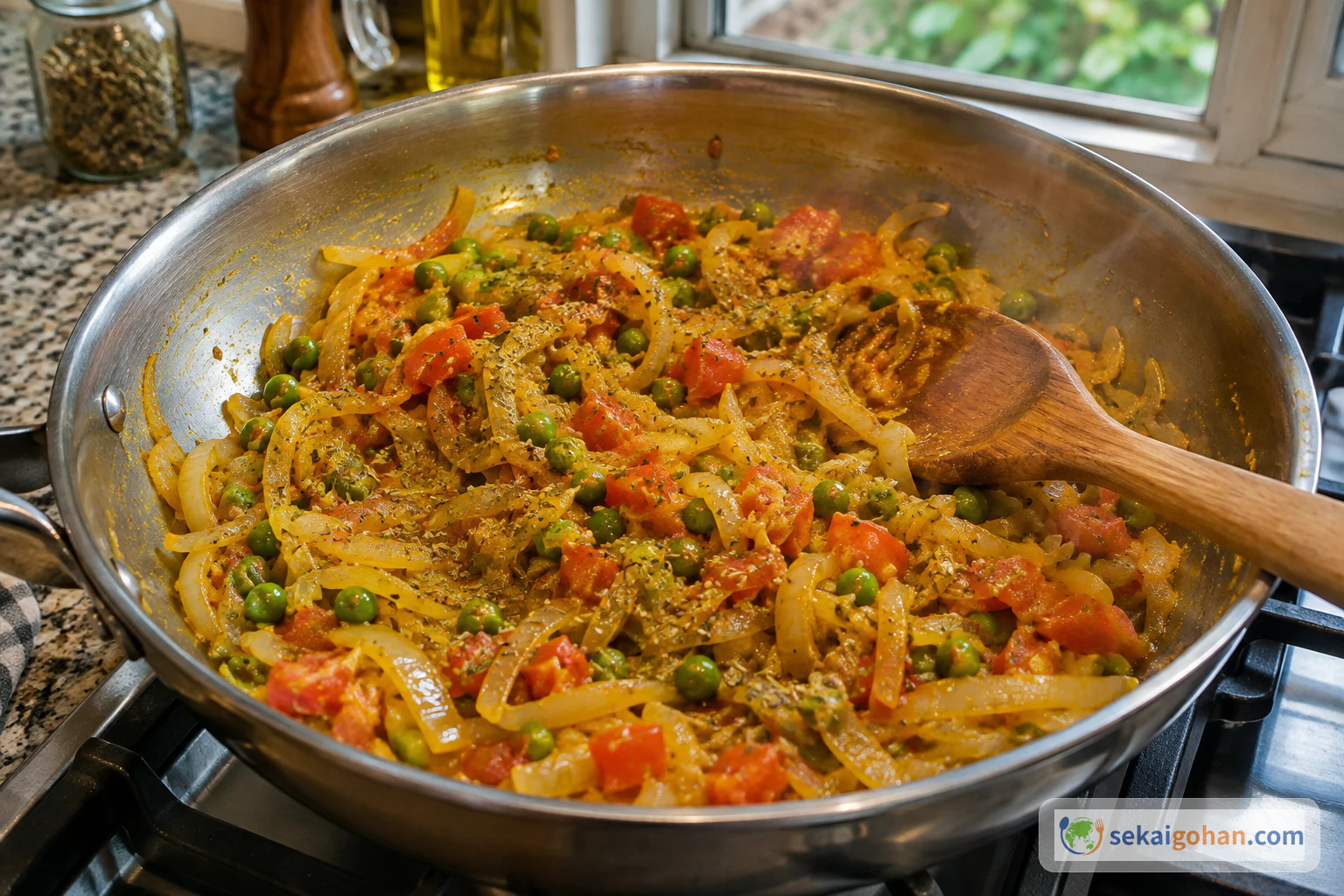
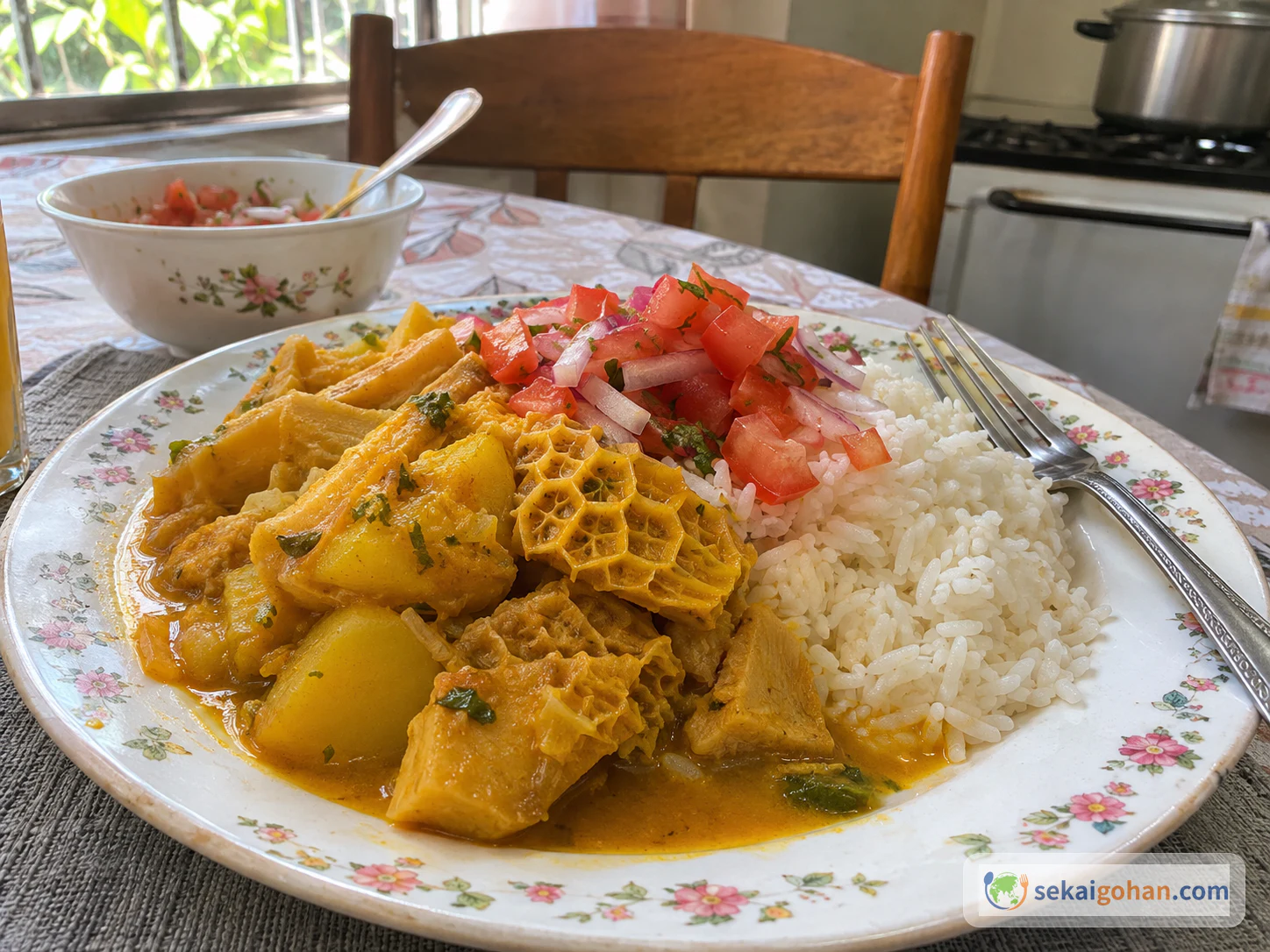
The moment that matters comes when the ground yellow ají hits the pan. The sliced onion has just gone clear in the oil, the crumbled oregano smells green and dry, and then the powder turns everything a deep yellow-orange that will color every cube of tripe and potato. In Bolivia's valleys, ranga ranga is eaten in the middle of the morning. It is a plate of diced beef tripe and potato in a yellow chili sauce, served beside rice that was toasted golden before it cooked, with a cool salad of tomato and onion on top. The tripe is soft with a little spring to it, the sauce has a fruity, gentle heat with a thread of cumin, and the fresh sarsa cuts through all of it.
A Mid-Morning Plate from the Valleys
Ranga ranga belongs to the valley cooking of Bolivia. It is not a dinner dish. People eat it mid-morning, and it is sold on the street for that hour. Carnival is its big season, and in Tarija it is one of the dishes people look for during the festivities.
Where it began is not settled. Tarija is the usual answer, and from there it is said to have spread. Other accounts place it in Cochabamba, and the dish's early history is thinly recorded. One explanation ties it to soups of the colonial period, but that stays an idea rather than a fact.
The core is the same everywhere: well-cooked beef tripe, chopped, in a sofrito of ají amarillo with boiled potato, and a criolla-style sauce of tomato and onion on the side. Simpler versions stop there. The version here is fuller, with green peas in the sauce and a mound of toasted rice that makes the plate a complete meal.
Two kinds of stomach go into ranga ranga. Panza is the rumen, the thicker, springy tripe. Libro or librillo is the omasum, the "book" tripe with thin leaves that gives a crisper, more delicate bite. Both are used, and neither one is the single correct choice.
Ingredients
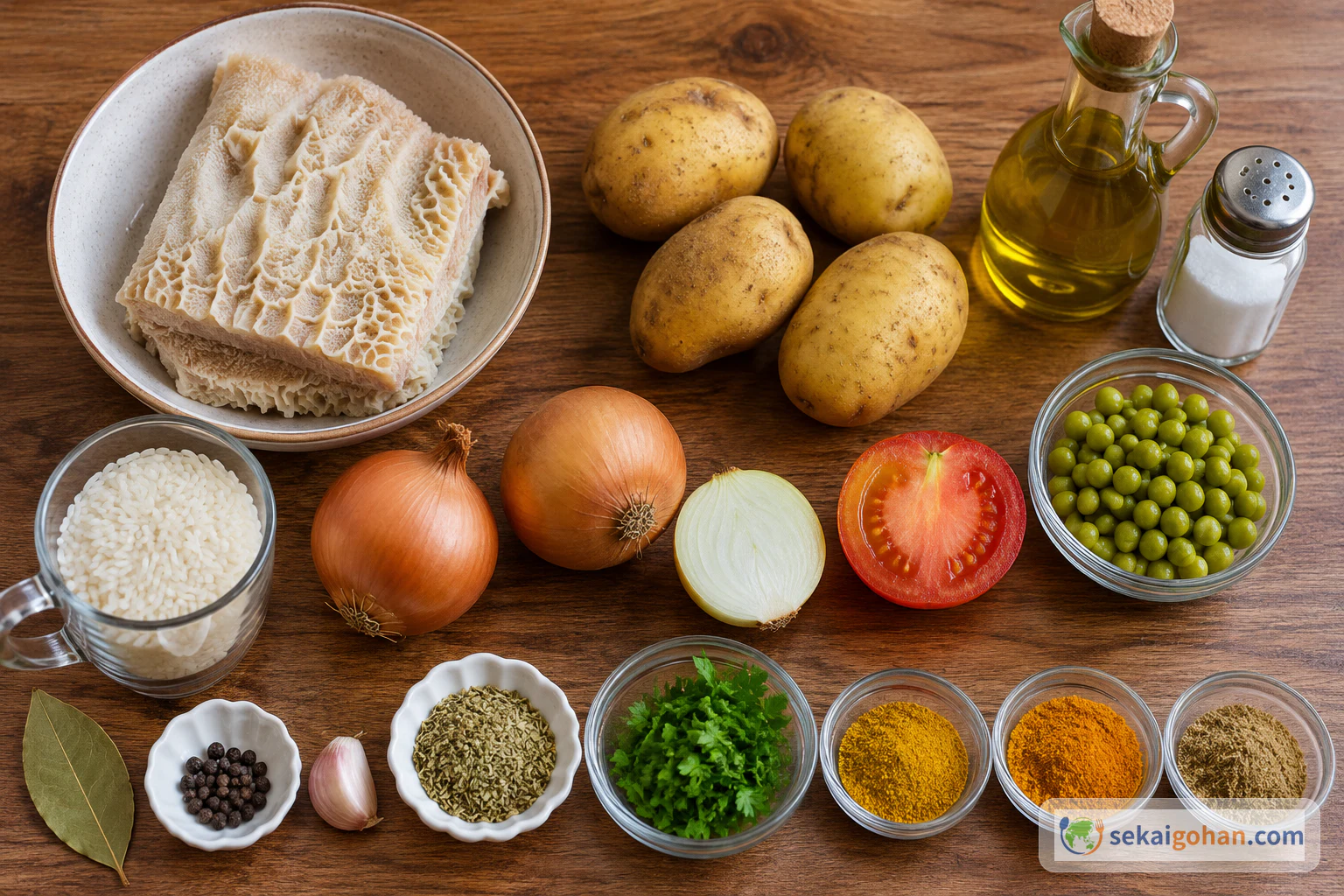
None of the main allergens (wheat, milk, egg, peanut) are in this recipe. If you use store-bought broth, check its label, because some broths contain wheat, milk or other allergens.
Equipment
- A pot for boiling the tripe
- A second pot or wide pan for the stew
- A dry pan for toasting the rice
- A pot for cooking the rice
- Cutting board and a sharp chef's knife
- Wooden spoon
- Flat plates for serving
Choosing the Tripe and the Chili
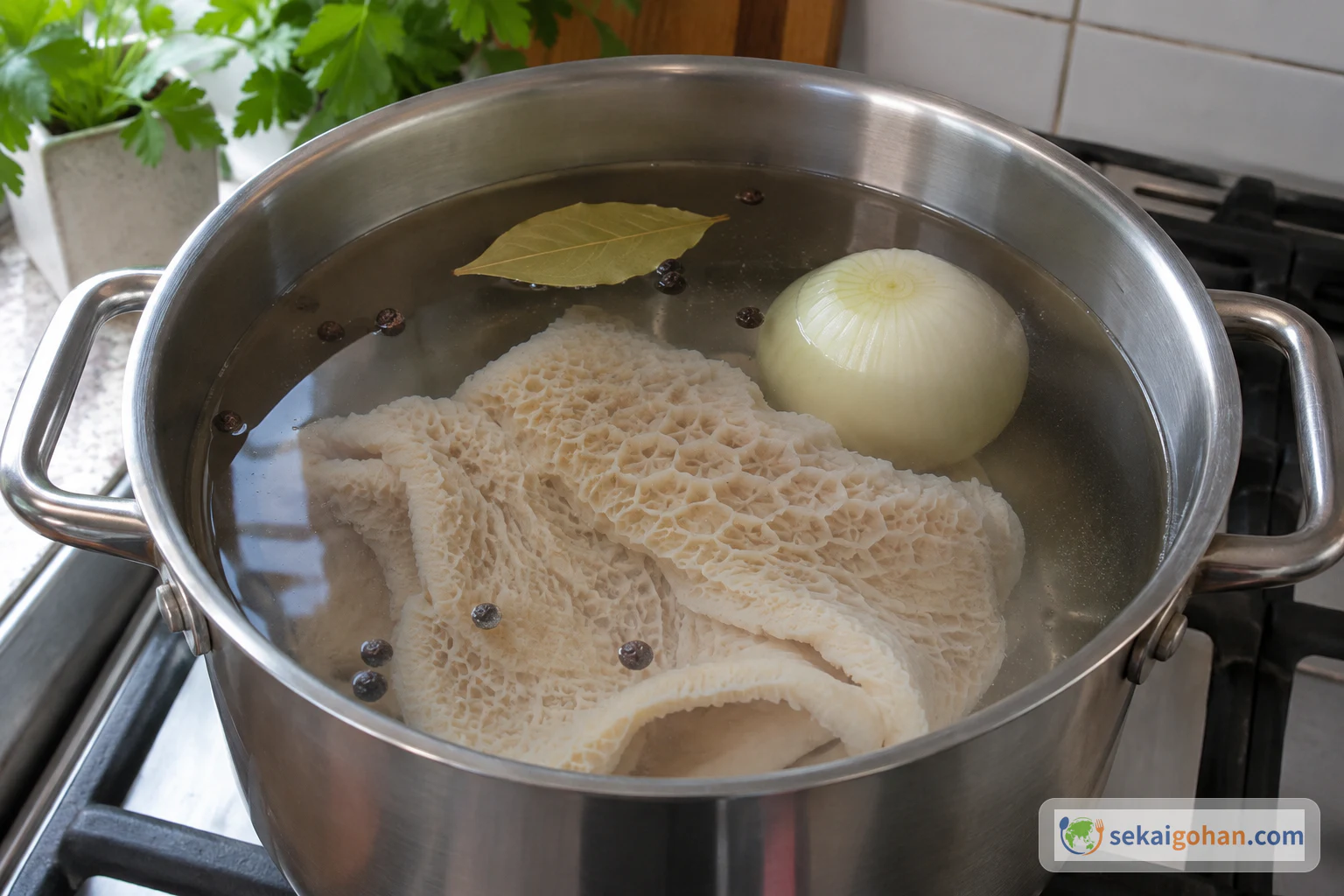
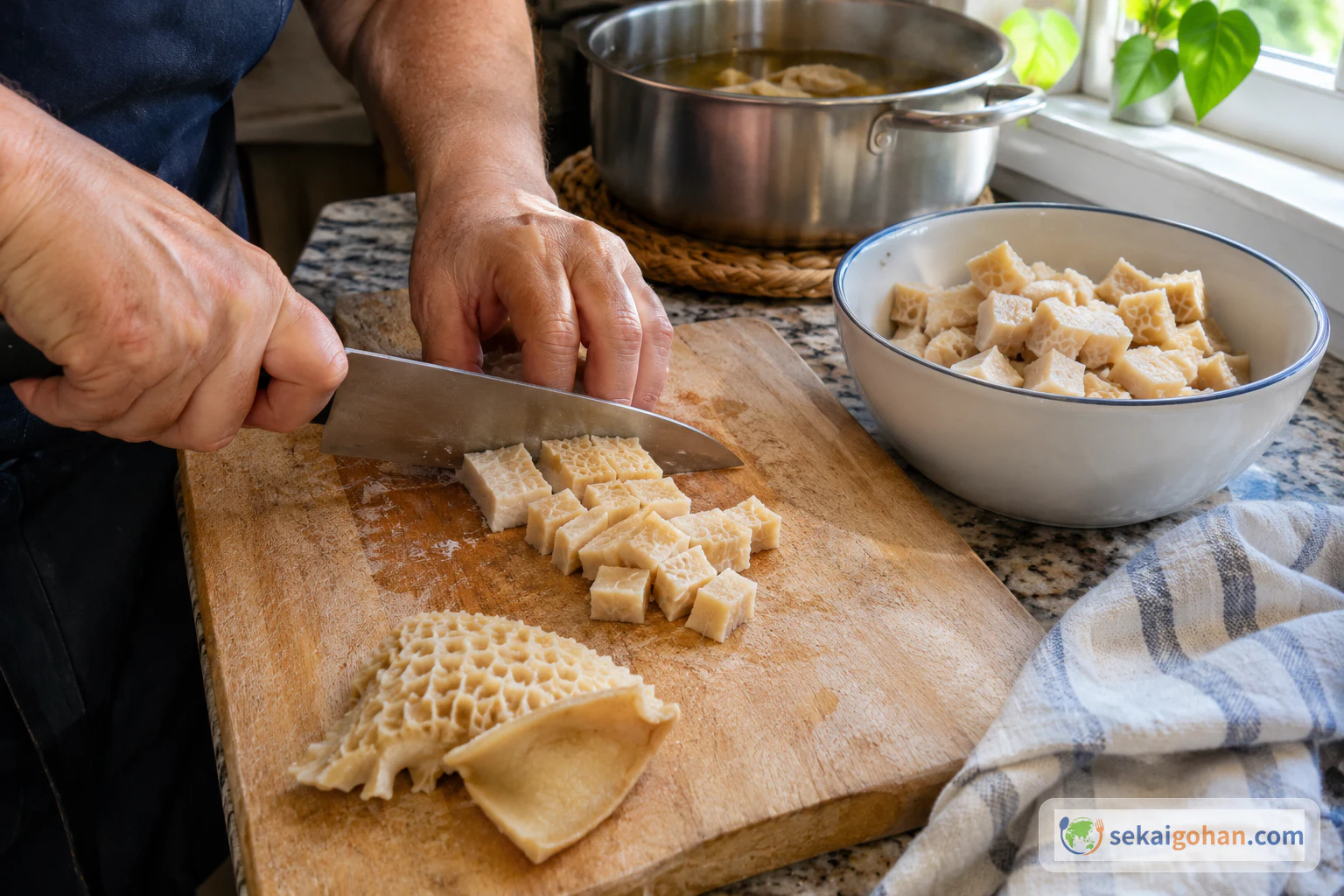
Buy tripe that is already precooked. This recipe starts from precooked tripe, which you then boil again with onion, bay and pepper. Rumen gives thick, springy cubes; book tripe gives thinner, crisper pieces with more surface for the sauce to cling to. Either one gives you ranga ranga, so let texture and what your butcher has decide.
The chili is the one ingredient worth tracking down. Look for ají amarillo molido (ground yellow ají) in Latin American shops or online. It gives both the sunny color and a heat that tastes of fruit. Swap in another chili powder or a hot paprika and the color, the heat and the aroma all shift, and the plate stops tasting like the valleys. The yellow paprika and cumin are easy supermarket buys. Frozen green peas work fine.
Ground ají varies a lot from bag to bag. Put in ½ tsp, let the sauce simmer a minute, taste, and keep adding until you reach the full measure or the heat you want.
Method
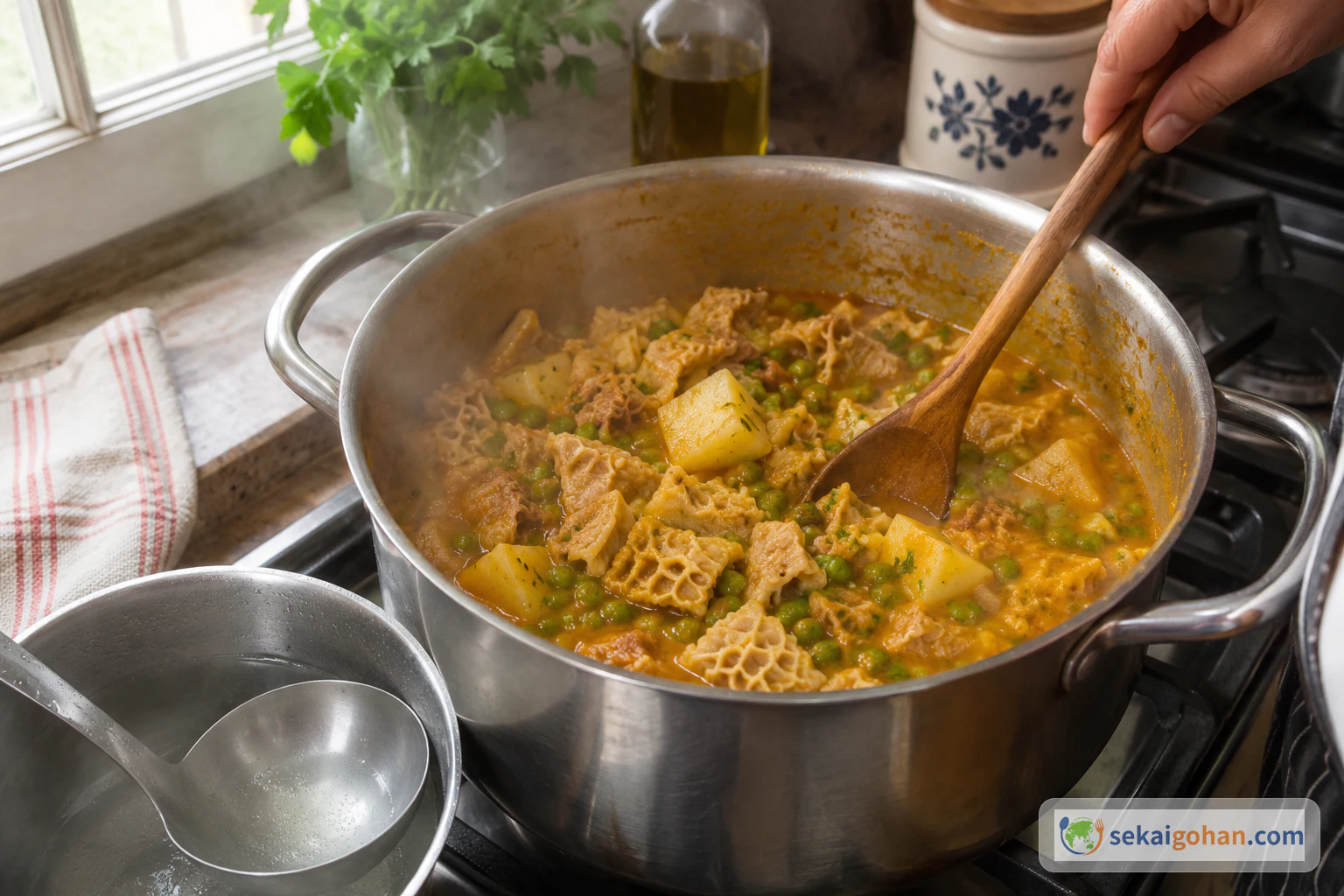
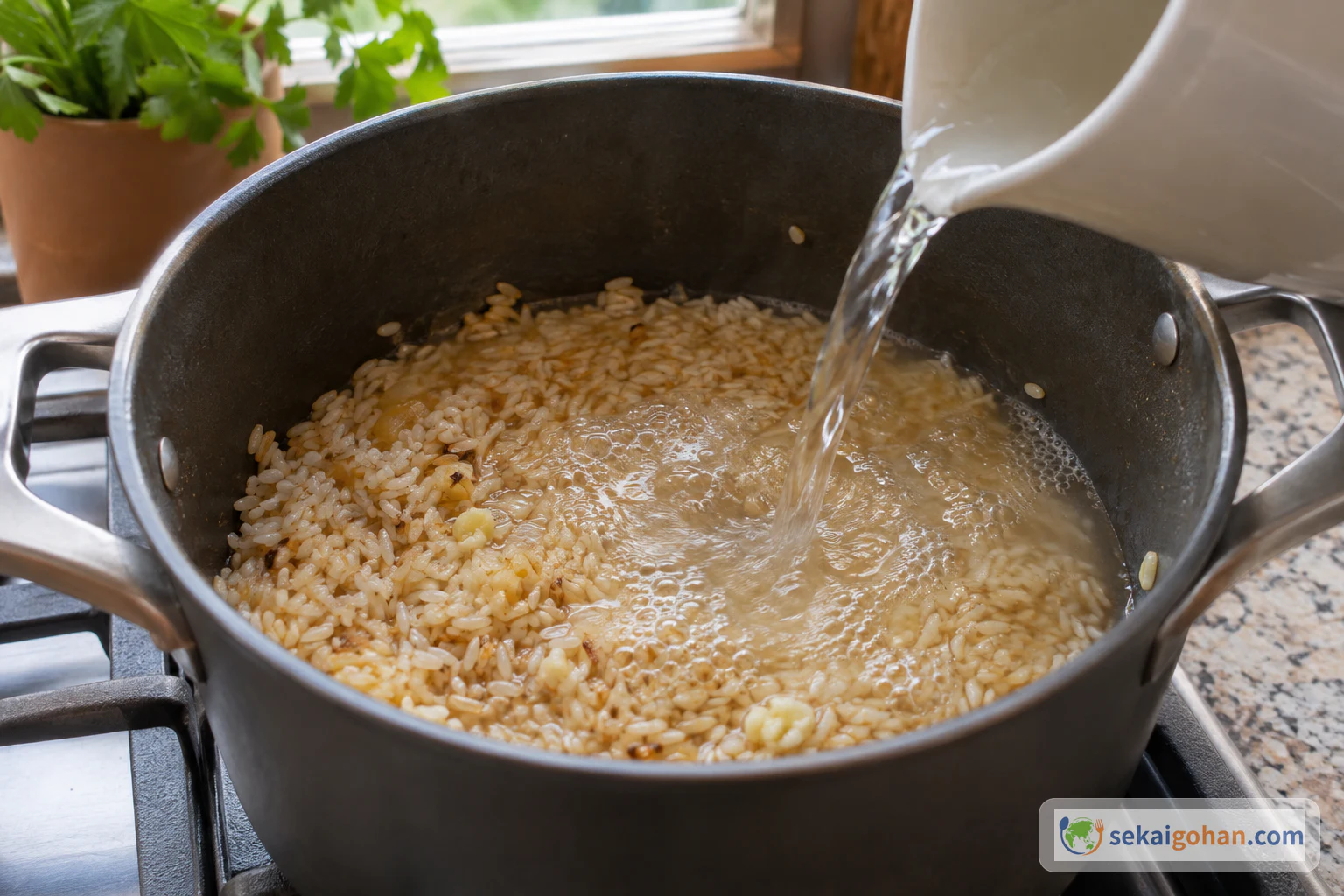
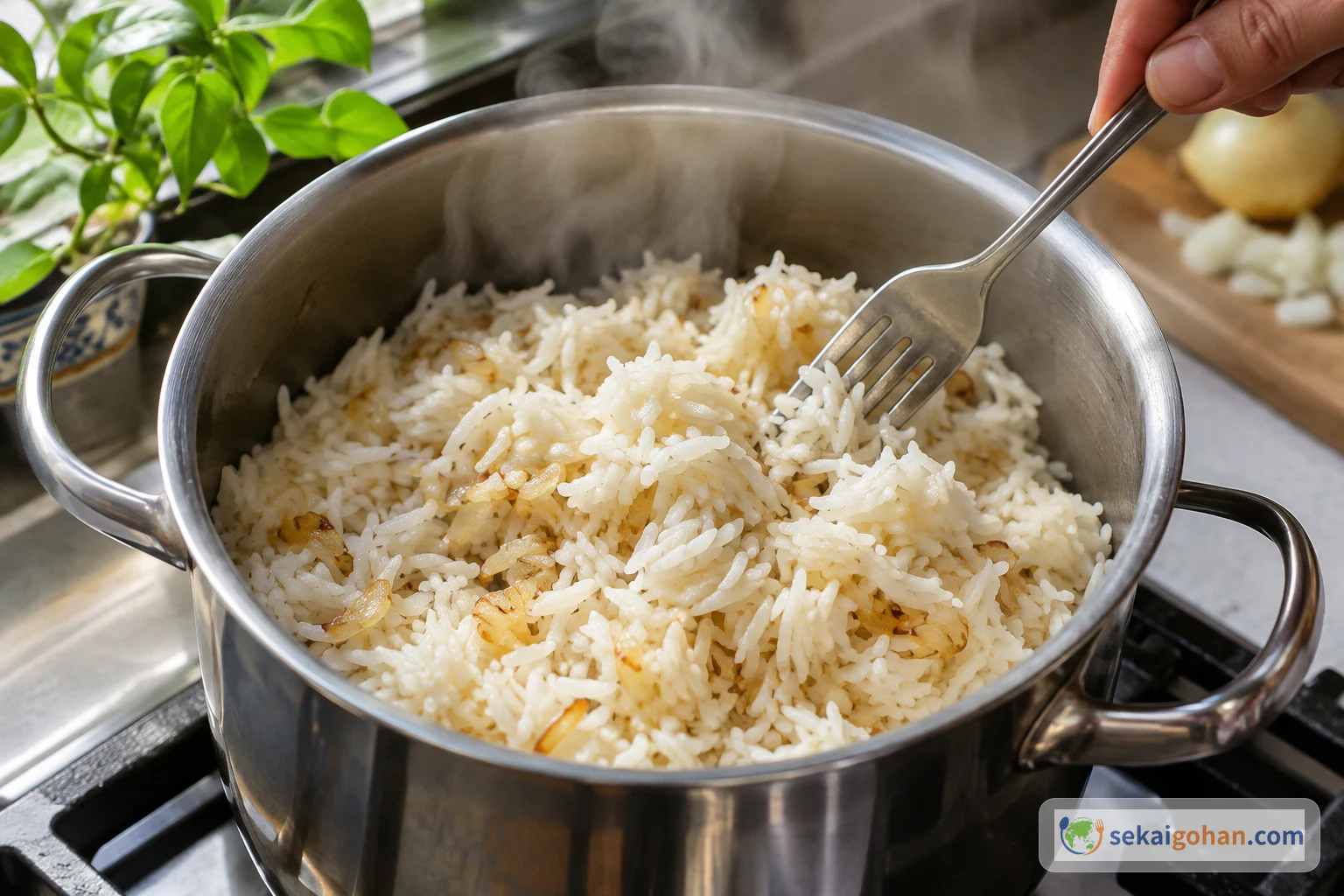
There are two pots going at once. Boil and dice the tripe first, then start the sauce. The stew needs an occasional stir while the potatoes soften, so the rice goes in that time: toast it, boil it, and let it finish on low heat. By the time the potatoes are tender, the rice is ready to fluff.
Clean beef tripe thoroughly and cook it until it is hot to the center. Precooked tripe still gets its full boil in step 1 and is heated through again in the stew.
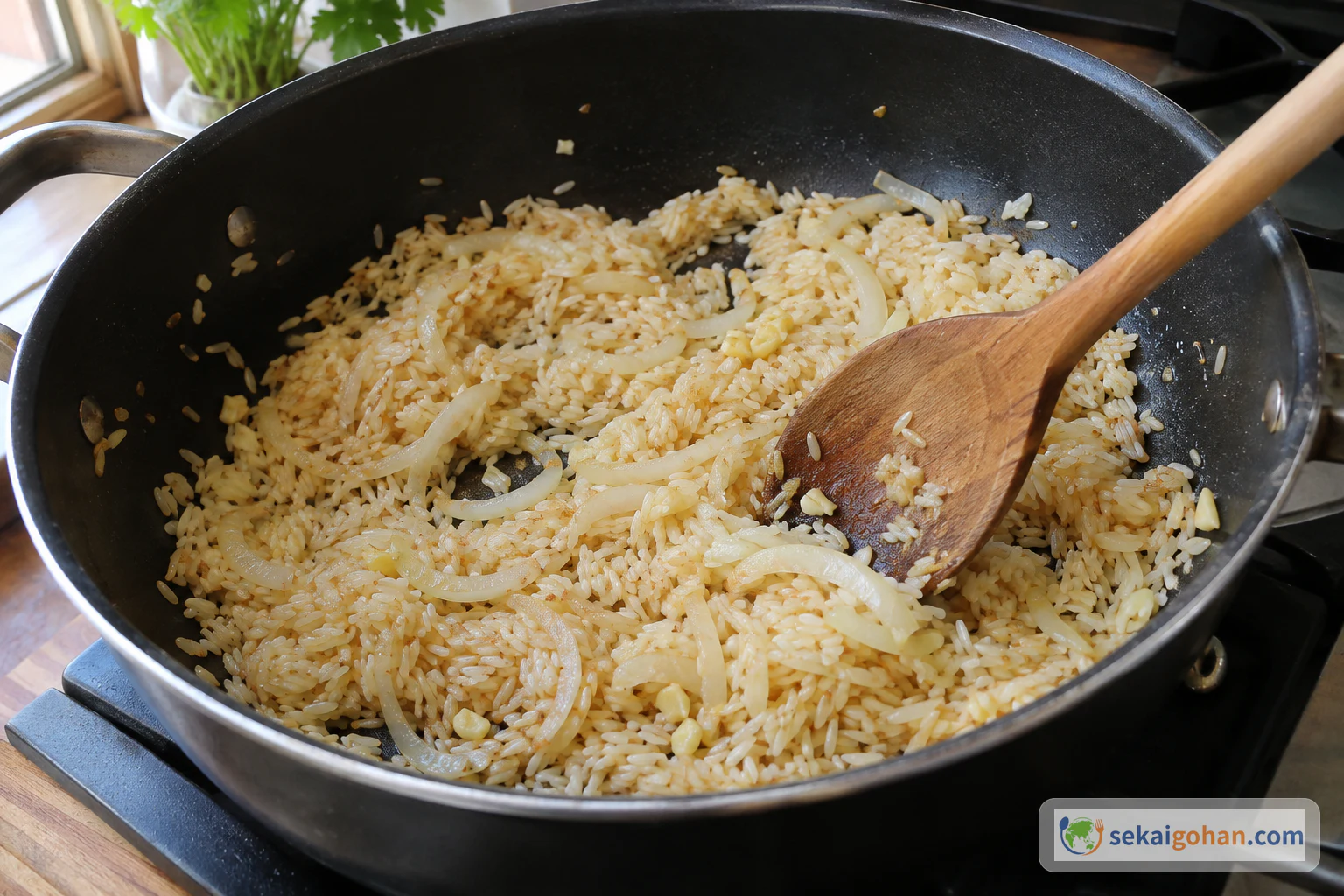
The pan for the rice stays dry. The grains turn golden from the heat alone, and the garlic and onion take on color with them. That toasted flavor is what makes the rice match the stew.
When It Goes Wrong
| What you see | Why | What to do |
|---|---|---|
| The tripe smells strong | It was not cleaned well enough, or the aromatic boil was rushed | Rinse it thoroughly, then give it the full boil with onion, bay and pepper before dicing |
| The sauce is thin and watery | Extra liquid went in, or the potatoes have not softened yet | Simmer with the lid off until the potato starch thickens the sauce |
| The potatoes are tender but the peas are mush | The potatoes went in too late | Next time, add the potatoes and tripe while the peas are still half cooked |
| The tripe is still chewy | It has not cooked long enough | Keep simmering until it is soft and hot right through |
| The rice is hard at the center | The water boiled off before the grains were done | Keep the heat low and add cold water a little at a time, letting the steam work between additions |
| The rice tastes bitter | The garlic burned while toasting | Toast over steadier heat and keep stirring; stop at pale golden |
Serving and Variations
At the table
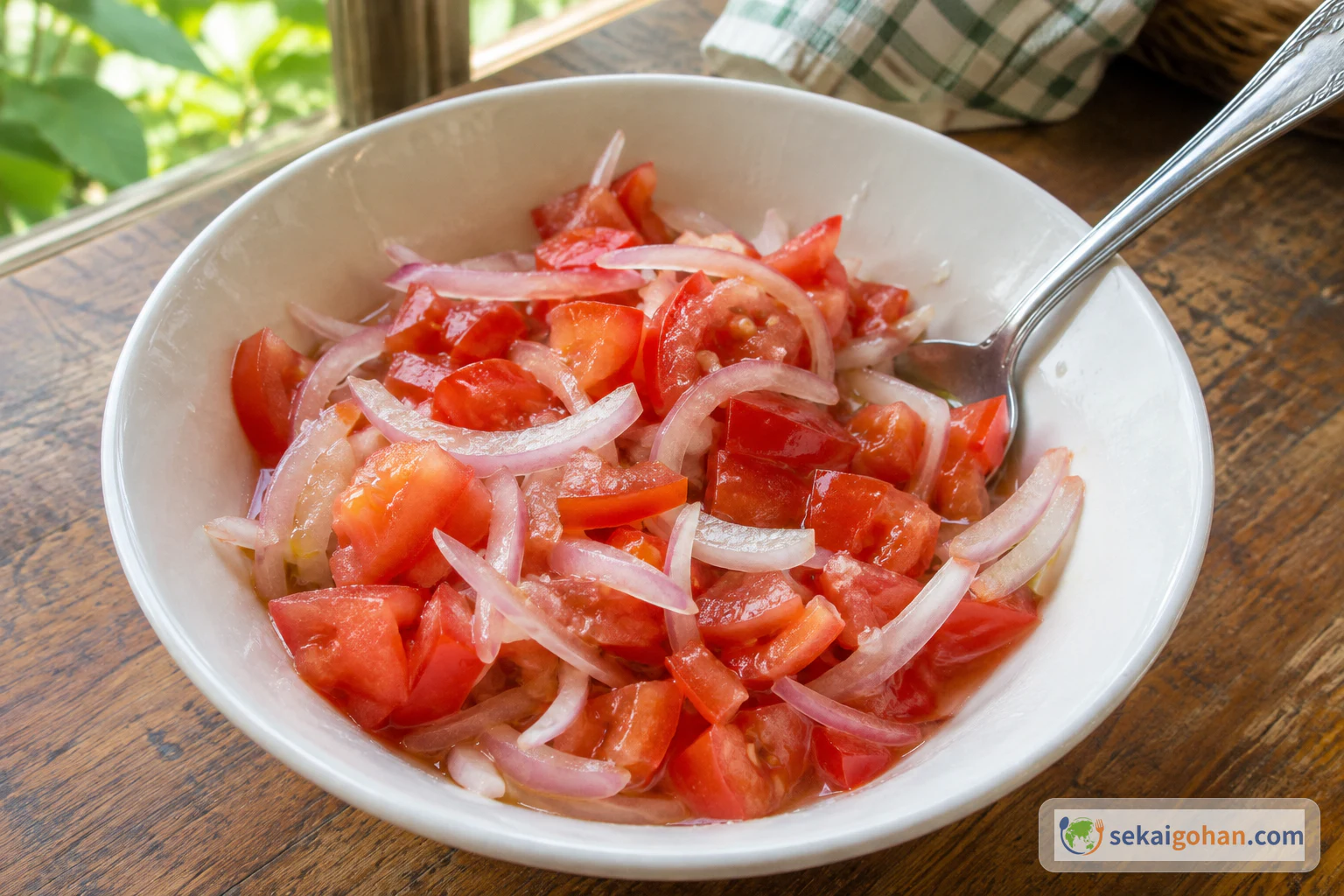
Serve ranga ranga mid-morning, as it is eaten in Bolivia, or as a hearty brunch. The sarsa is part of the dish: diced fresh tomato and thinly sliced onion, seasoned with salt. Its sharpness and cold crunch balance the soft, warm tripe. Each person gets one flat plate with stew, rice and sarsa together, so every forkful takes a little of each.
Variations
- Without potatoes. The potatoes are optional. Leave them out and the plate centers on the tripe and peas, and the sauce stays a little looser.
- The simpler version. Leave out the rice and peas and serve the tripe and potato in the yellow ají sofrito with the tomato and onion sauce. The plate gets plainer and leans harder on the chili.
- Book tripe or rumen. Book tripe gives thin, crisp pieces that soak up sauce. Rumen gives fat, springy cubes. The flavor stays the same while the feel in the mouth changes completely.
Storing leftovers
Ranga ranga is best eaten the day it is made. To keep leftovers, cool them quickly, then cover and refrigerate them promptly, with the rice in its own container. Reheat the stew until it is hot all the way through.
Frequently asked questions
Can I start from raw tripe?
Yes, but raw tripe needs its own preparation before step 1. Clean it thoroughly and cook it until it is tender and hot to the center. Then continue with the aromatic boil and the rest of the method.
How hot is ranga ranga?
It has a warm, fruity heat that is not fierce. Ají amarillo brings more color and flavor than burn, and the potato and rice soften it further. Adjust it with the ground ají in the sauce, adding a little at a time.
Can I use honeycomb tripe?
Precooked honeycomb tripe works in this method. It is a substitute rather than one of the two cuts named for this dish, so the bite differs from panza or libro. Boil it, dice it and simmer it exactly the same way.
Should I use water or broth for the sauce?
Either works. Broth gives the sauce a deeper base, and water keeps the ají and oregano more in front. If the broth is salted, add less salt to the sauce and taste before plating.