Ingredients and steps on one page. Print it, or choose “Save as PDF” in the print dialog.
Sekai Gohan
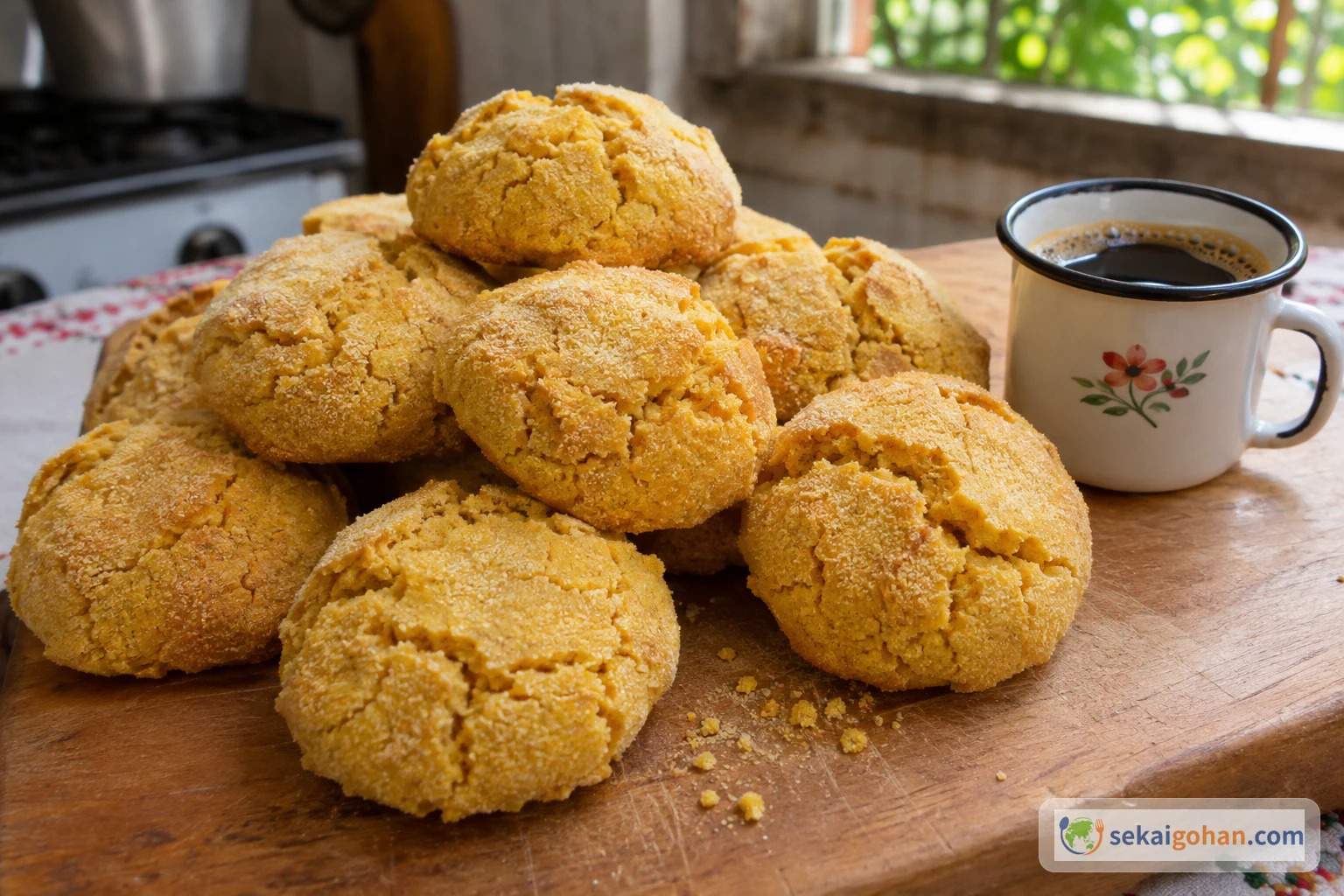
Broa: Small Brazilian Cornmeal Cakes with Cracked Tops
Ingredients
| Ingredient | Amount | Role |
|---|---|---|
| Water (água) | ¾ cup (180 ml) | Cooks and swells the flour |
| Milk (leite) | ¾ cup (180 ml) | Richness and a soft crumb |
| Neutral vegetable oil (óleo) | ¾ cup (180 ml) | Moistness and browning |
| Sugar (açúcar) | ¾ cup (180 ml) | Sweetness |
| Salt (sal) | ½ tbsp (5 g) | Sharpens the corn flavour |
| Fubá (fine corn flour, fubá de milho) | 1⅔ cups (200 g) | Main flour and the corn taste |
| Wheat flour, all-purpose (farinha de trigo) | 1⅔ cups (200 g) | Holds the dough together |
| Eggs, large | 5 | Lift and lightness |
| Baking powder (fermento em pó) | ½ tbsp (7 g) | Rise in the oven |
| Fubá for coating | ½ cup (60 g) | The dry, cracked shell |
Steps
1Boil the liquids
Heat the oven to 350°F (180°C) for 8–10 minutes so it is ready when the dough is. Put the water, milk, oil, sugar and salt in the saucepan. Set it over the heat and stir while it comes to a boil. It is ready when the liquid is bubbling, beads of oil float on top, and you feel no grains of sugar when the spoon scrapes the bottom.
2Add the flours all at once
While the liquid heats, stir the fubá and wheat flour together in the small bowl until the colour is even. Once the pan boils, tip in all of the flour at once and beat hard with the wooden spoon. The liquid disappears into the flour almost right away. Keep beating until no dry patches are left and a thick yellow mass forms.
3Cook the dough, then cool it
Keep stirring over the heat for about 3 minutes. The dough should come together like coxinha dough, holding in one mass and pulling away from the sides of the pan. Scrape it into the large bowl and leave it to cool to lukewarm (amornar), warm like skin and cool enough that an egg will not set in it. Touch the middle of the mass, not the edge, to check. The edge cools first.
Cook the flour all the wayKeep stirring for the full 3 minutes, until the dough leaves the sides of the pan in one mass. The cooked flour holds five eggs and still shapes into balls, and it gives the broa its soft inside.
4Beat in the eggs, then the baking powder
Add the eggs a little at a time, and beat each addition in before adding the next. At first the dough slides around and seems to separate, then it pulls back together, looser each time. When all five eggs are in, add the baking powder and mix until you see no streaks. The dough is ready when it is smooth, glossy and light, and soft enough to drop heavily from the spoon.
Eggs only into lukewarm doughIf the dough is still hot, the eggs set in small bits and the dough will not turn smooth. Let it cool to lukewarm, then add the eggs slowly so each one goes all the way in.
5Coat and roll the balls
Spread the coating fubá on the plate and rub a little oil on your hands. Pinch off a small piece of dough, drop it into the fubá, and roll it into a ball between your palms. Oil your hands again whenever the dough starts to stick. Each ball is done when it is coated all over and feels dry on the outside.
Oil on the hands, fubá on the doughThe soft dough sticks to dry hands and tears. A film of oil on your palms and a full coat of fubá on each ball keep the rounds neat, and that dry coat is what cracks in the oven.
6Space them on the pan
Set the balls on the 14-inch (35 cm) pizza pan with space between each one. The batch makes about 20, so keep them about the same size to bake evenly. Leave gaps wide enough that the rounds will not touch as they puff. The pan is ready when every ball sits on its own with pan showing all around it.
7Bake until golden and cracked
Bake in the preheated 350°F (180°C) oven for about 20 minutes. The balls rise and the fubá coat begins to split. Take them out when they are golden and the tops are cracked all over. If they are still pale and smooth, keep baking and check again.
8Serve warm or at room temperature
Move the broas to a plate or a basket. Eat them warm or at room temperature, with butter or jam and a cup of coffee. Break one open with your hands instead of cutting it. The inside should be soft and yellow under a crackly shell.