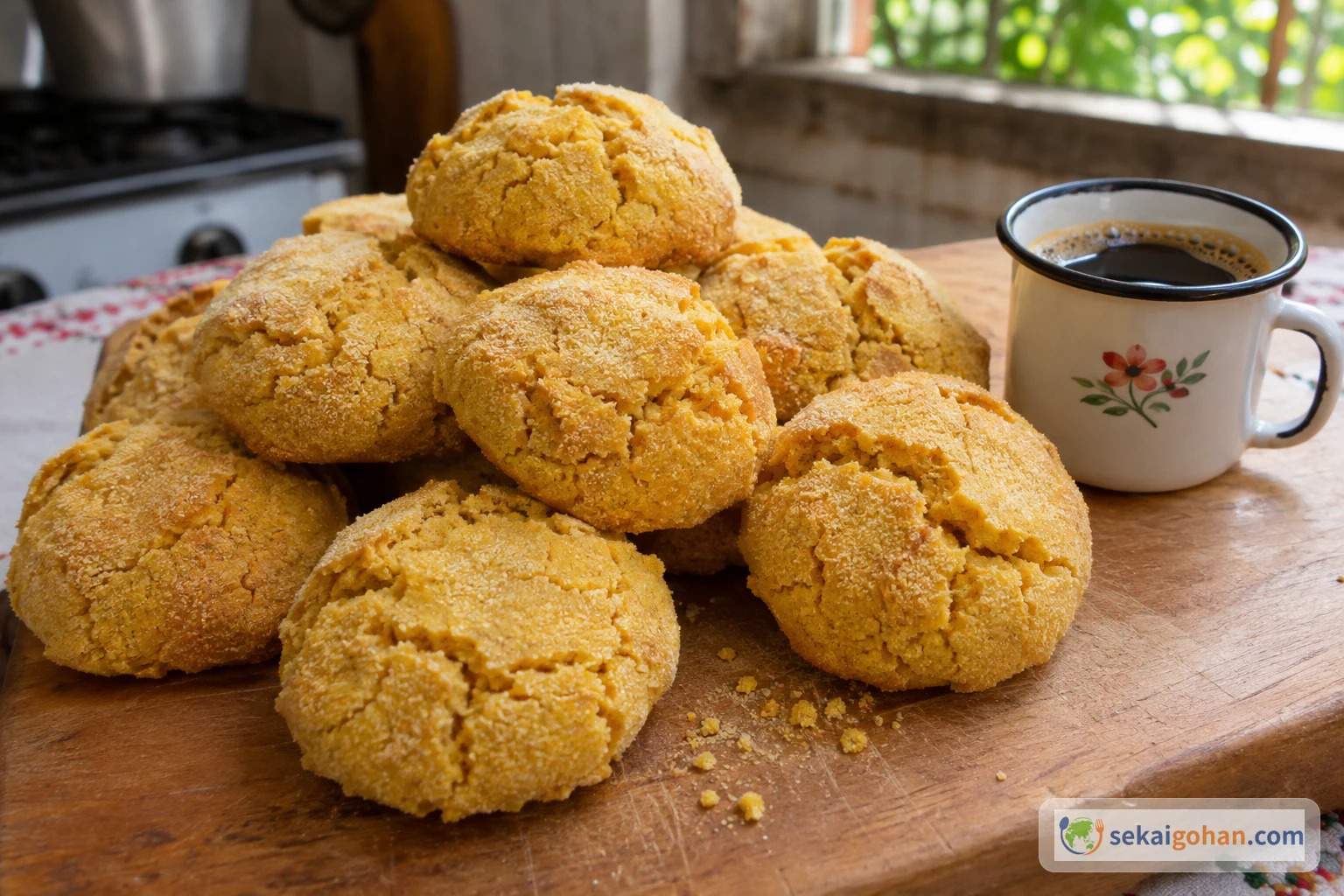
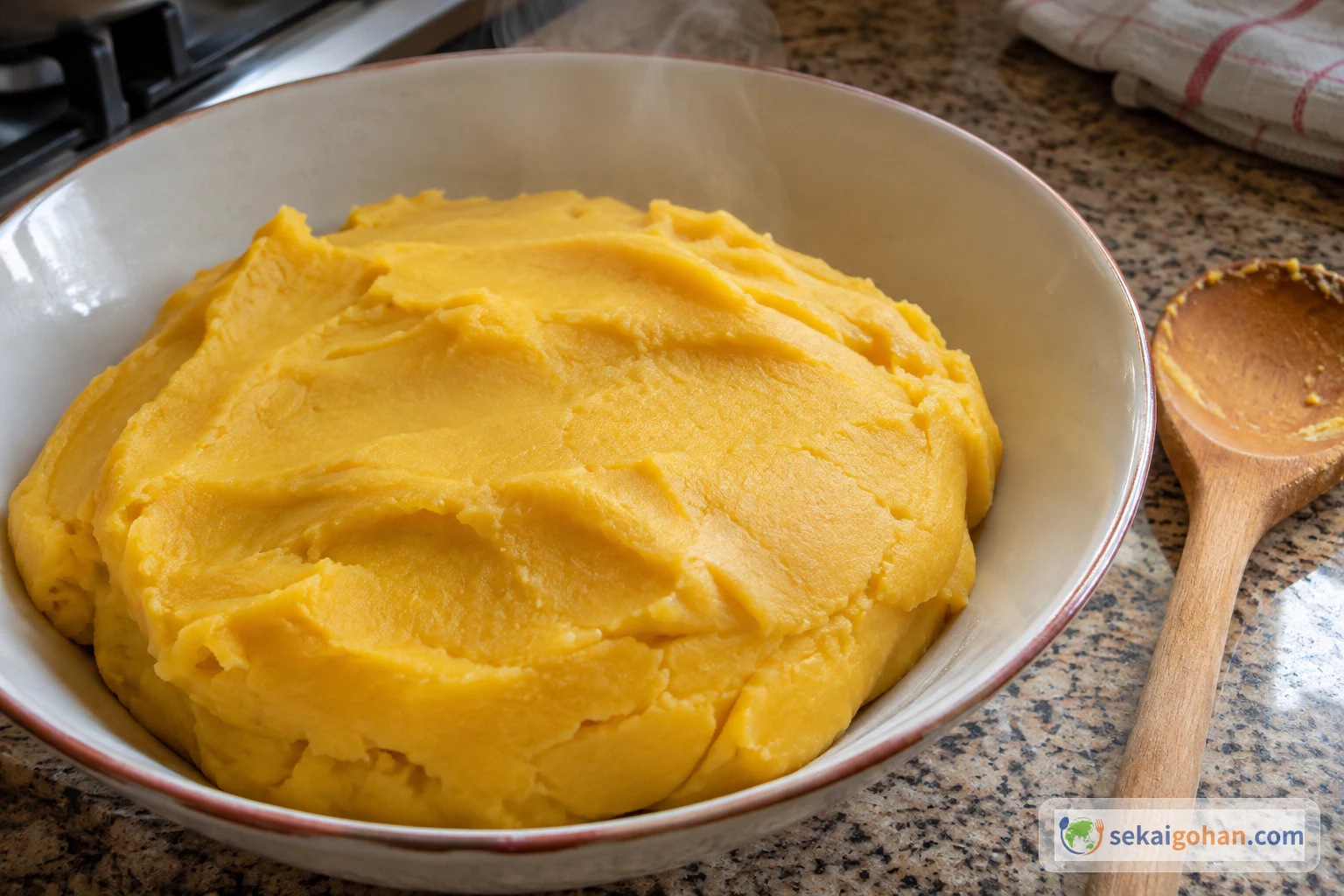
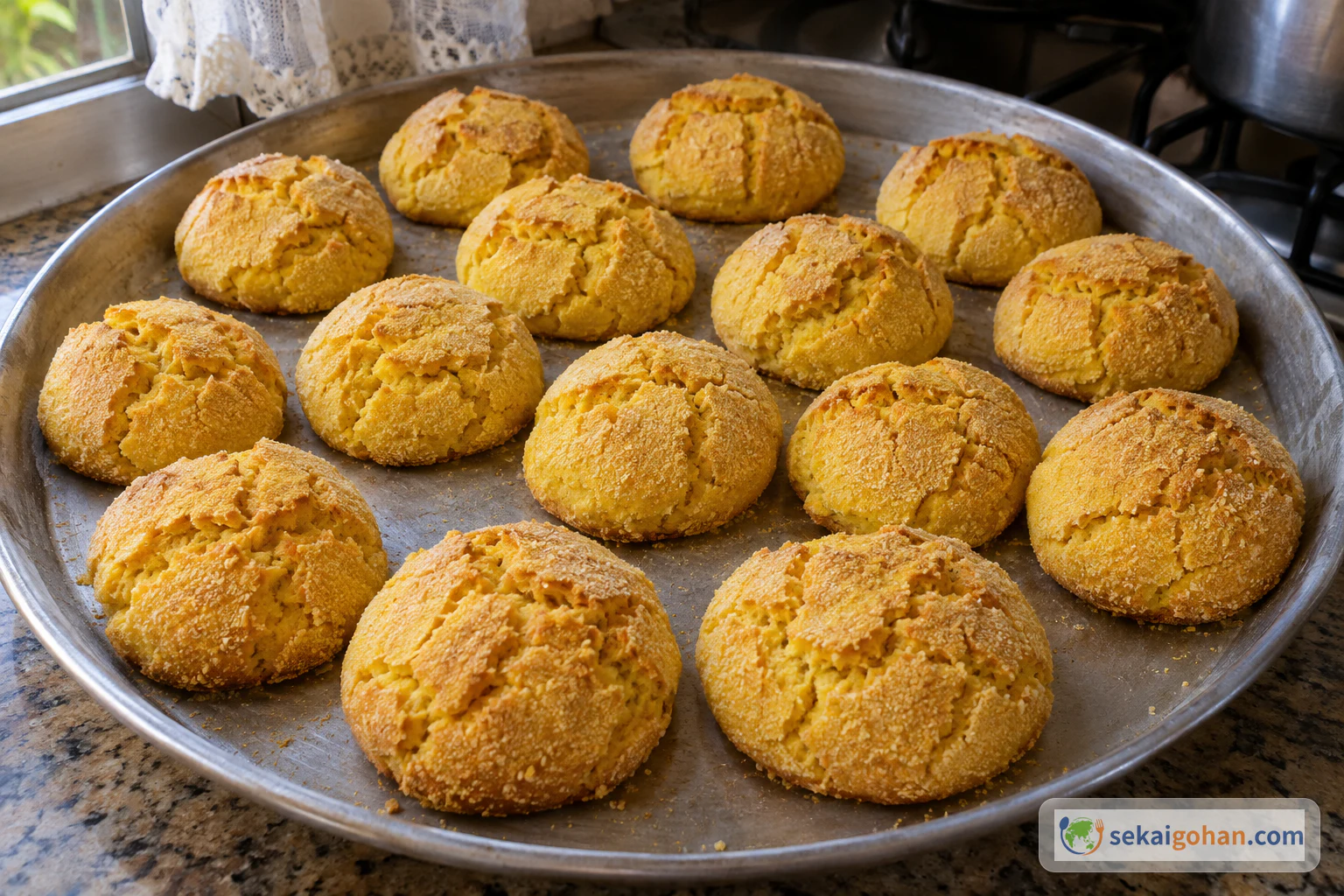
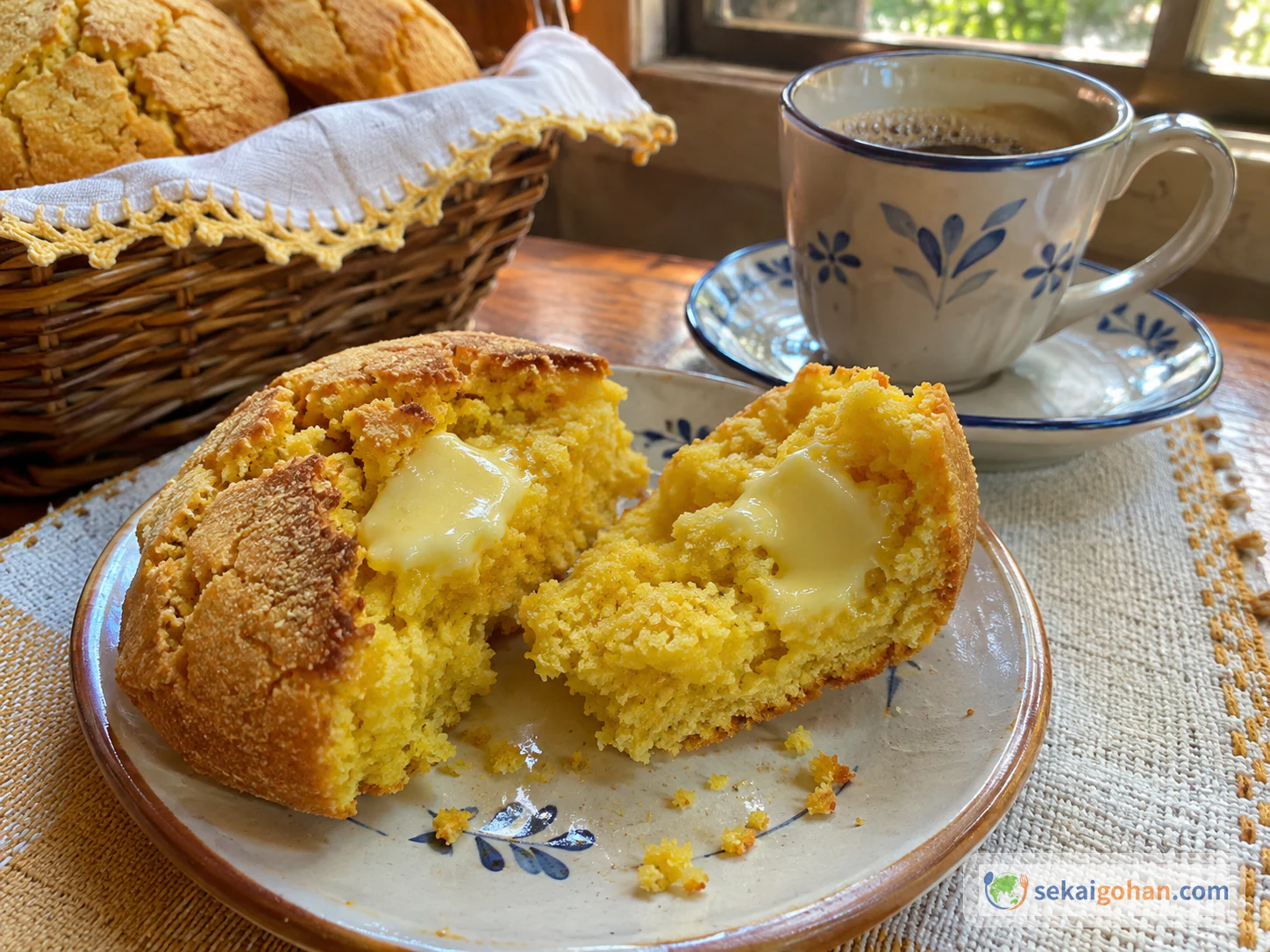
Near the end of the bake, the yellow coating of fubá on each little ball splits open. Rough cracks run across the tops, and the kitchen smells of toasted corn. That is broa de fubá. It is the small, round bakery broa that sits next to the coffee at a Brazilian breakfast table, with a thin, crackly cornmeal shell on the outside and a light, soft inside. It is mildly sweet and tastes plainly of corn, and it is best broken open while still warm with a little butter melting into the crumb.
One Name, Many Breads
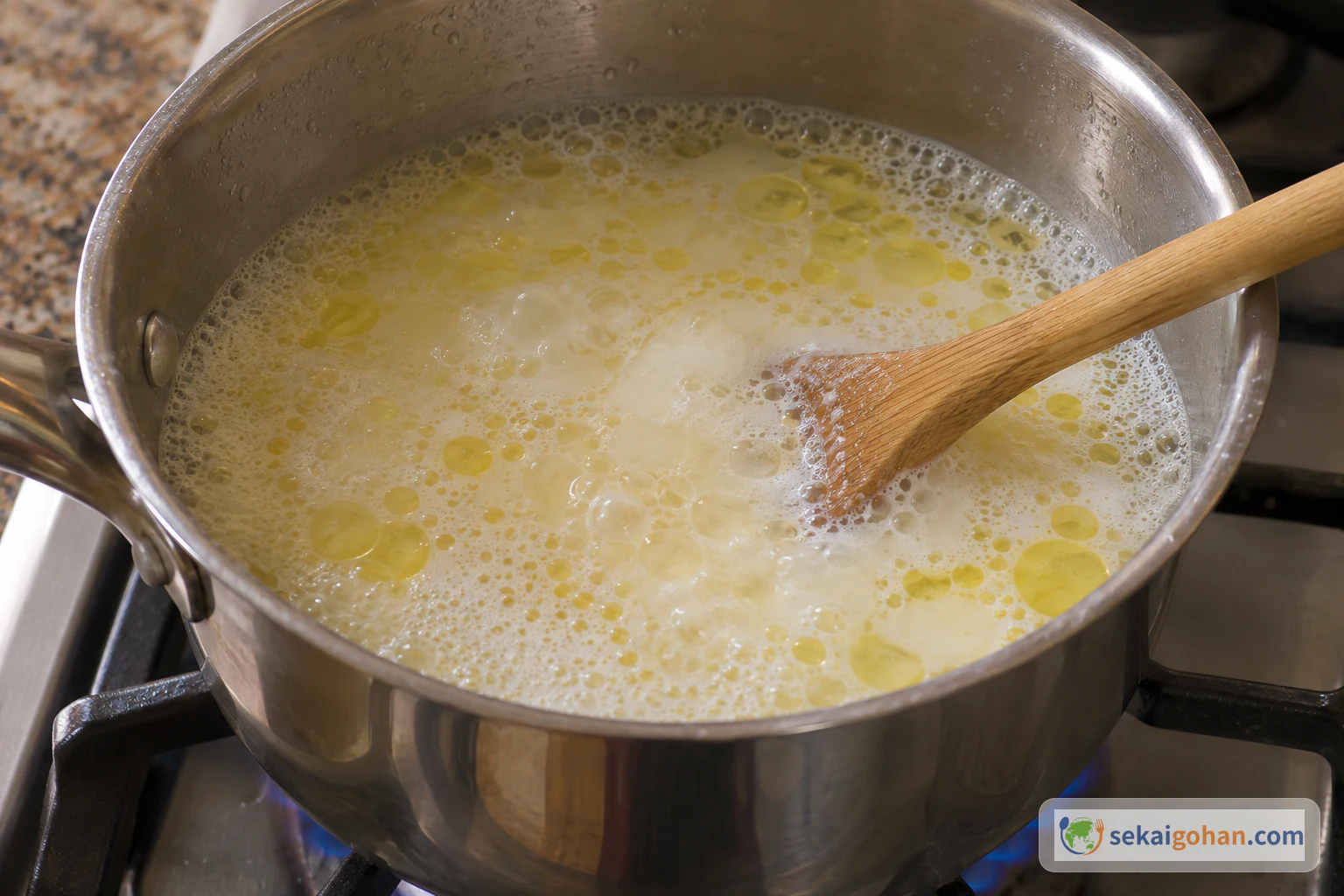
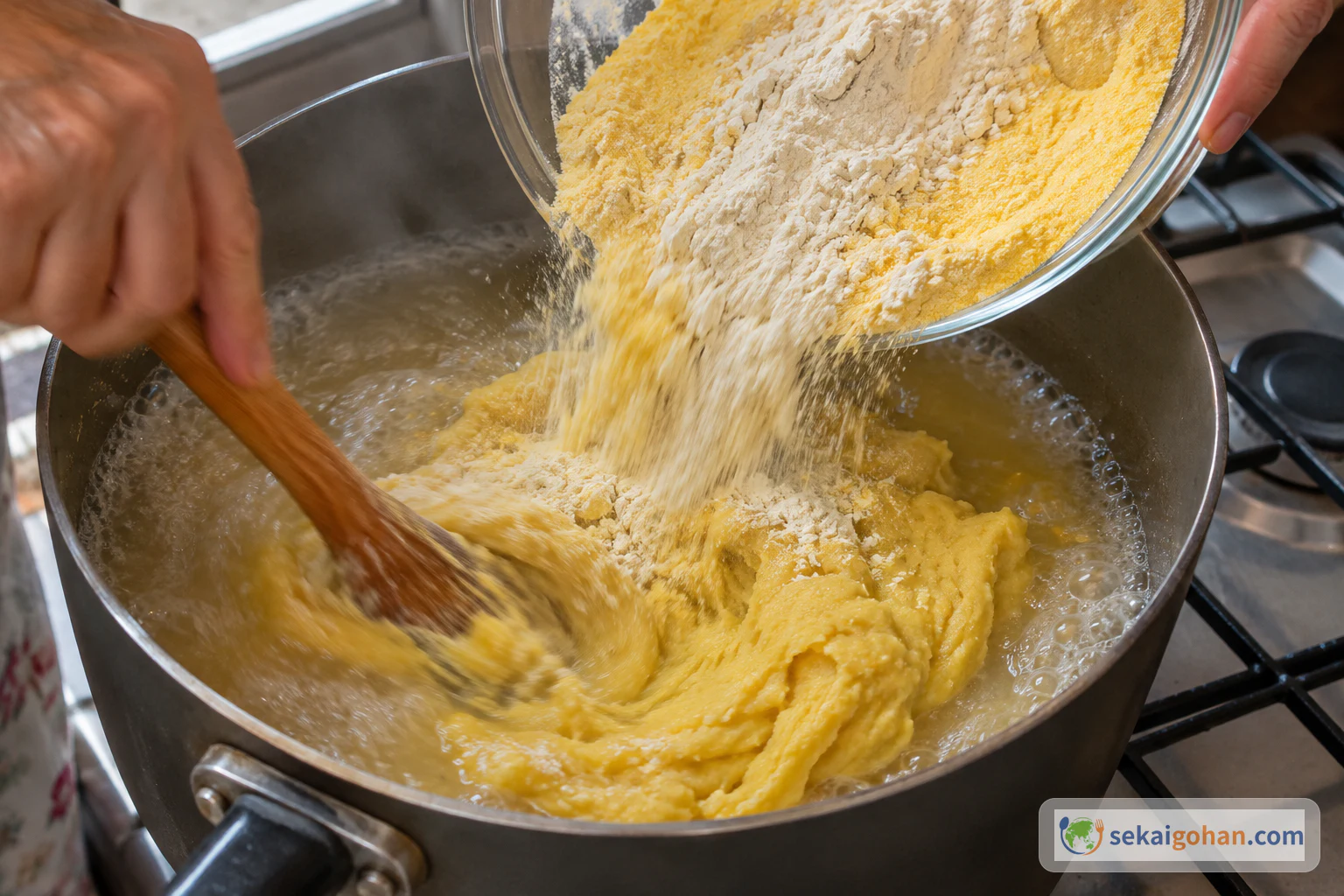
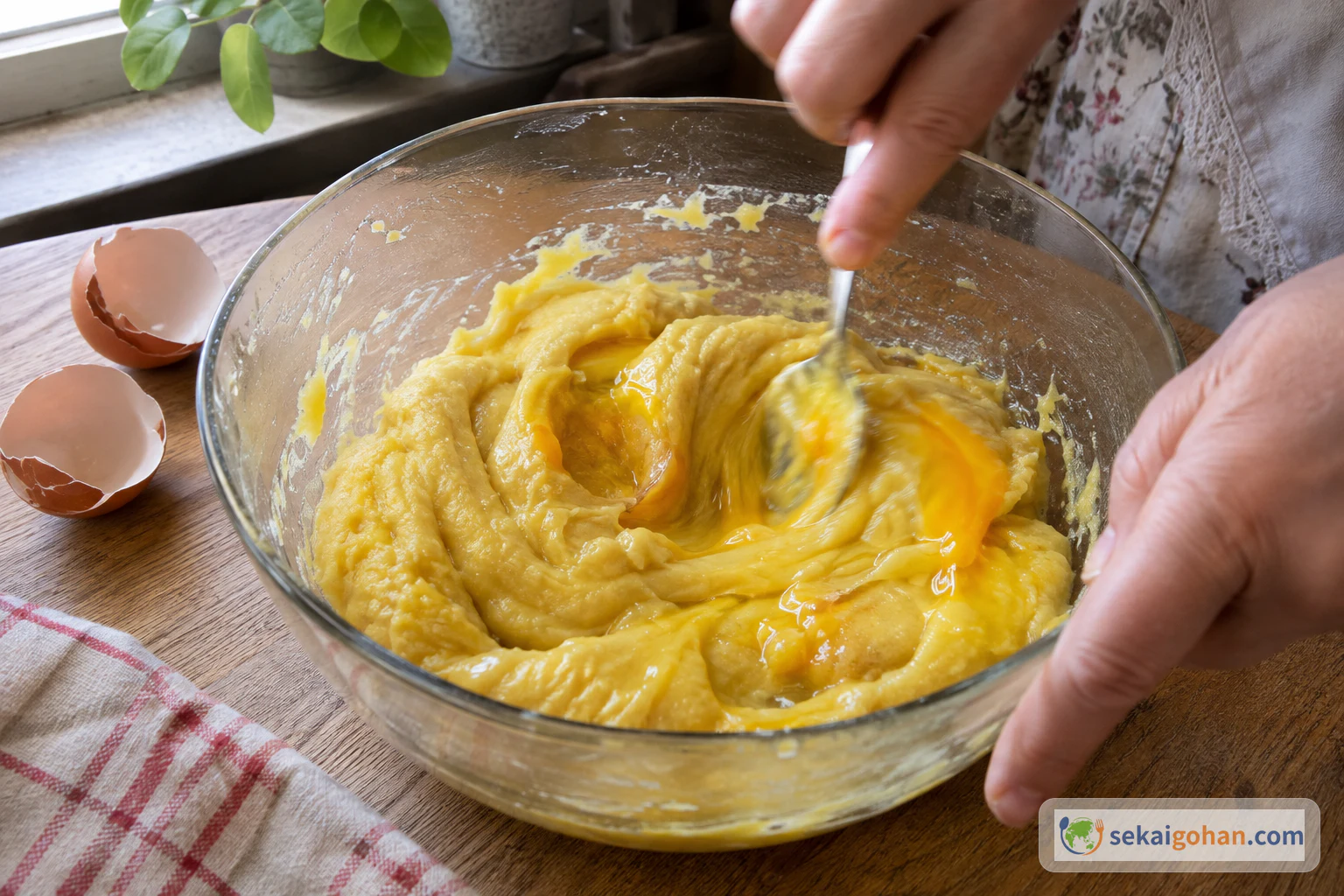
In Brazil the word broa covers more than one thing. This article is about the small round broa de fubá of the padaria, the neighbourhood bakery. Each one is small and made from fubá (fine corn flour) and wheat flour, which are cooked in a pan with milk and oil before the eggs go in. Cooking the flour first is what sets this dough apart. Cooked flour holds the eggs and turns into a soft dough that can be shaped, and in the oven it puffs and cracks under its coat of dry fubá.
How the name shifts across Minas Gerais
Travel a few hours inside Minas Gerais and the same word points at a different bake. In some parts of the state the flat, fairly hard disc is called broinha, and in the south of Minas that same disc is a broa. A large corn cake baked in a tin is a broa in Juiz de Fora, but in the south it is bolo de fubá. People from towns close together use the names differently and will argue about which is correct. Read any Brazilian menu or recipe with that in mind.
In Minas Gerais, the small hard disc is a broinha in some places and a broa in others. The big cake from a tin is a broa in Juiz de Fora and a bolo de fubá further south. The bakery rounds in this recipe are broa de fubá.
Portugal's broa and the other cousins
Portugal and Galicia have their own broa. It is a yeast bread made with corn, rye and other grains. Corn reached Europe from the Americas after the fifteenth century, and before that rye was the main grain in those loaves. The Brazilian broa is a different bake, closer to a cornbread or a small cake, and it has no yeast. Whether its roots lie in Portuguese baking or in the older corn cooking of Brazil is not settled. Some people say the big broa is the traditional form and the cookie-sized rounds came later, and some say erva-doce (fennel seed) is what makes a broa Brazilian. This dough is plain, and fennel is one of the variations below. The name also reaches further: in the Philippines broas are ladyfingers, and in Guyana they are sugar cookies.
For more of the country's cooking, see the Brazil page. Broa belongs to the same breakfast and coffee table as pão de queijo, but it is made from corn and wheat and has no cassava starch or cheese.
Ingredients (makes 20)
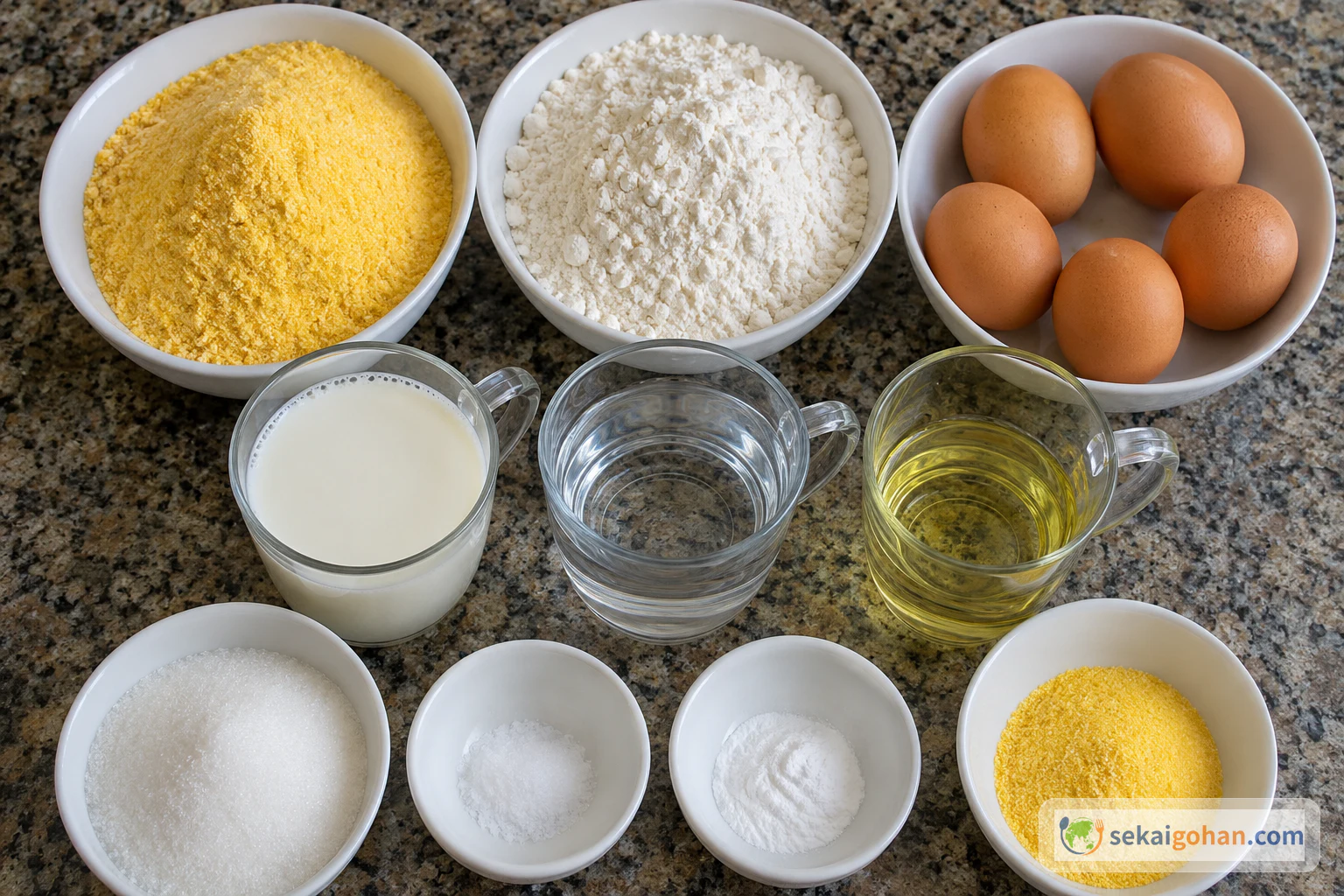
You will probably have some coating fubá left over, because it only needs to dress the outside of each ball.
This dough contains wheat, eggs and milk. Raw dough is not for eating. The eggs go into dough that has cooled to lukewarm, and baking cooks them.
Equipment
- Medium saucepan
- Wooden spoon
- Small bowl for mixing the two flours
- Large, wide bowl for cooling and mixing the dough
- Small plate for the coating fubá
- 14-inch (35 cm) round pizza pan
- Measuring cups and spoons, and a kitchen scale for the flours
Choosing Fubá and the Rest
Fubá is fine-ground corn flour. You can find it at import food shops and online. Packs labelled "corn flour", "cornmeal" or "polenta" in other countries are ground to different sizes and are not the same product. If you buy one of them, check the grind on the pack and choose the finest one you can find, since a coarser grind may leave a gritty bite. Fubá is the one ingredient worth tracking down.
The other ingredients are easy to find at a supermarket. Use all-purpose flour for the wheat flour. For the oil, use one with little taste, so the corn flavour comes through. Use large eggs and ordinary baking powder.
| Keep | Let go |
|---|---|
| Fubá in the dough and as the coating | The brand of oil, as long as it tastes neutral |
| Cooking the flour in the hot liquid before the eggs | Fennel seed, which is a variation |
| Small, separate rounds with space between them | Serving warm, since room temperature is just as right |
Method
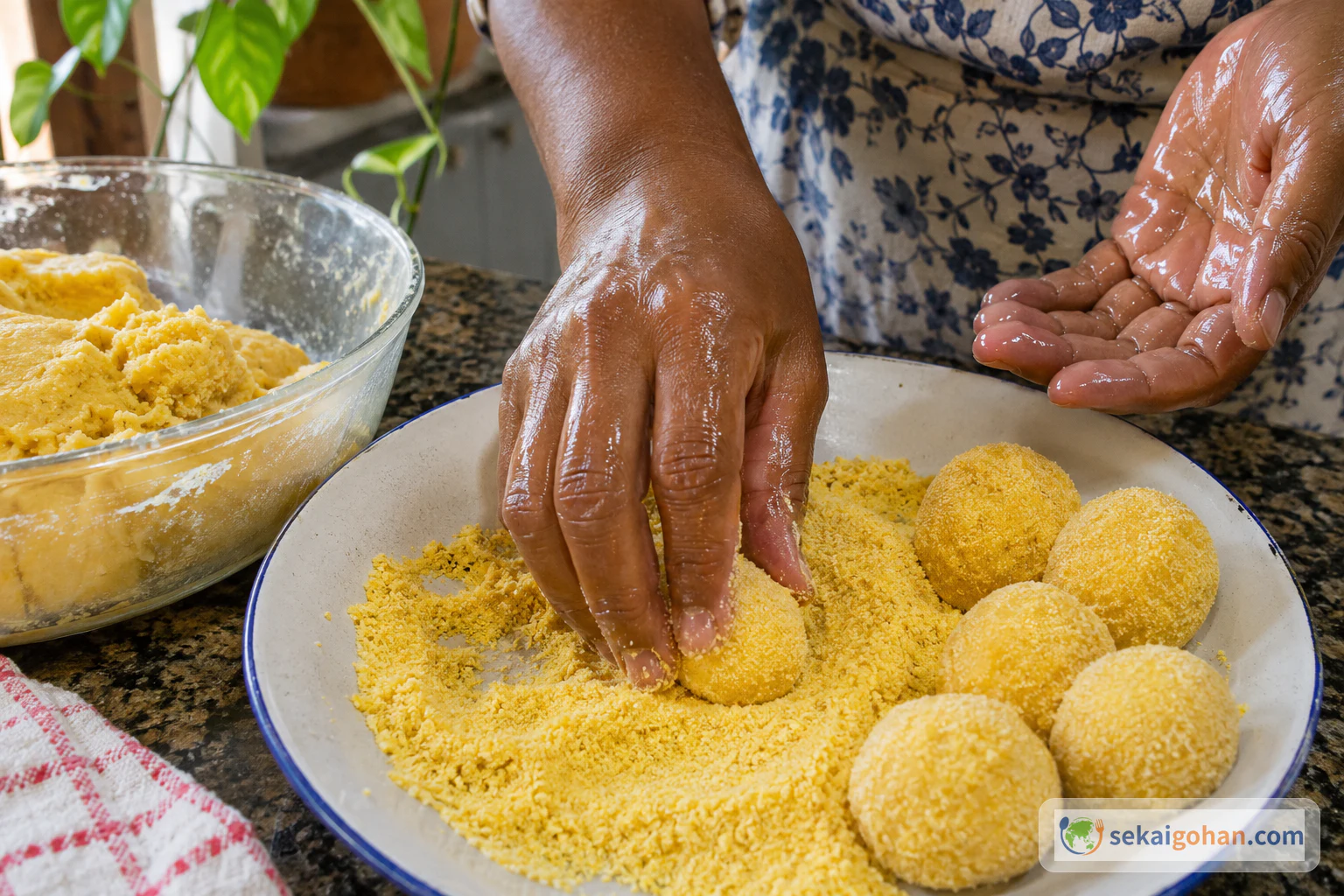
The work happens in one short stretch at the stove and then a wait. You boil the liquids, cook the flours in them until a dough forms, and let that dough cool to lukewarm. The cooling is the only real pause, so use it to set out the eggs, the coating fubá and the pan. After the eggs go in, shaping and baking follow without a break.
The pan holds boiling liquid with oil and sugar in it, and the dough is hot when it forms. Stir with a long wooden spoon, keep your hands clear when you tip in the flour, and let the dough cool before you touch it.
When It Goes Wrong
| What you see | Why | What to do |
|---|---|---|
| Small cooked bits in the dough after the eggs | The dough was still hot | Next time, cool it until the middle is only lukewarm. Add the eggs slowly |
| Lumps when the flour goes in | The flour went in slowly, or the stirring stopped | Add all the flour at once to boiling liquid and beat right away |
| Dough sticks to your hands while shaping | Dry hands or a thin coating | Oil your hands again and roll each piece fully in the fubá |
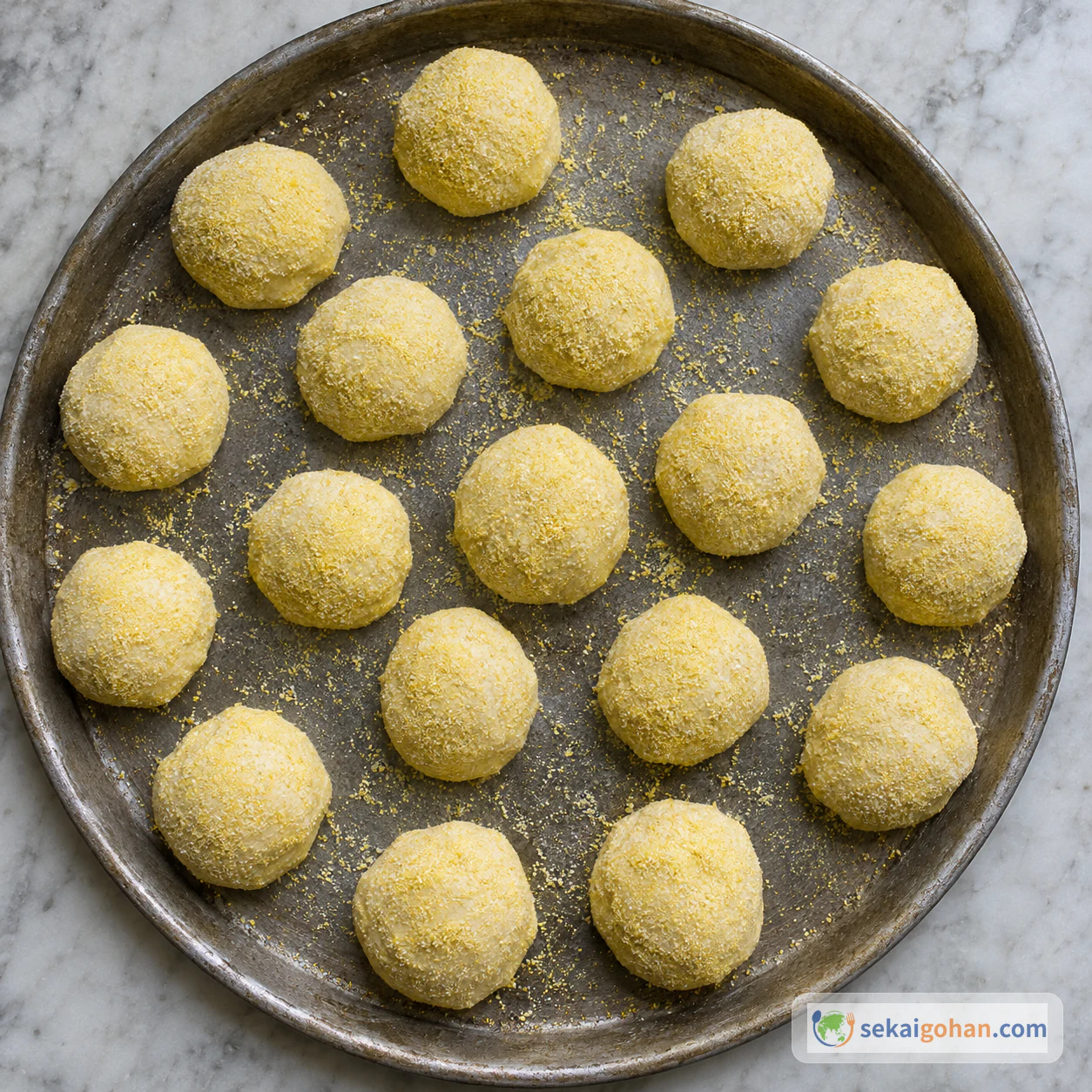
| The rounds bake into one another | Too many on the pan | Leave wide gaps. Use a second pan or bake in two batches |
| Pale and smooth, no cracks | Taken out too early | Bake until golden with cracks across the tops |
| A gritty bite | Coarse cornmeal may have been used | Look for fine-ground fubá |
Serving, Variations and Storage
At the table
Broa is breakfast food and a snack for the afternoon coffee break. Put out a basket of them with butter or jam and a pot of black coffee, and let everyone break their own open.
Variations
- Erva-doce (fennel seed): Stir a little into the dough with the baking powder for an anise scent. Some cooks consider this the classic Brazilian flavour.
- Citrus zest: Grate a little citrus zest into the dough to make the corn taste brighter.
- Corn kernels: Fold some into the dough for bites of sweet, juicy corn in the soft crumb.
- Coconut milk: Cook it into the pan liquids for a rounder broa that smells of coconut.
Storage
Let the broas cool completely, then store them in an airtight container.
Frequently asked questions
Do US measuring cups work for the liquids and sugar?
Yes. These amounts use a cup in which ¾ cup is 180 ml, the same as a US cup. Measure the water, milk, oil and sugar in a standard ¾ cup. Weigh the two flours for the most even dough.
How big should each ball be?
Small. The whole batch makes about 20, and that many fit spaced out on one 14-inch (35 cm) pan. Make them the same size so they bake at the same pace and all crack together.
Is broa the same as pão de queijo?
No. Pão de queijo is made from cassava starch and cheese and is chewy and stretchy inside. Broa is made from fubá and wheat flour with eggs, and it bakes into a soft crumb under a dry, cracked cornmeal shell.