Ingredients and steps on one page. Print it, or choose “Save as PDF” in the print dialog.
Sekai Gohan
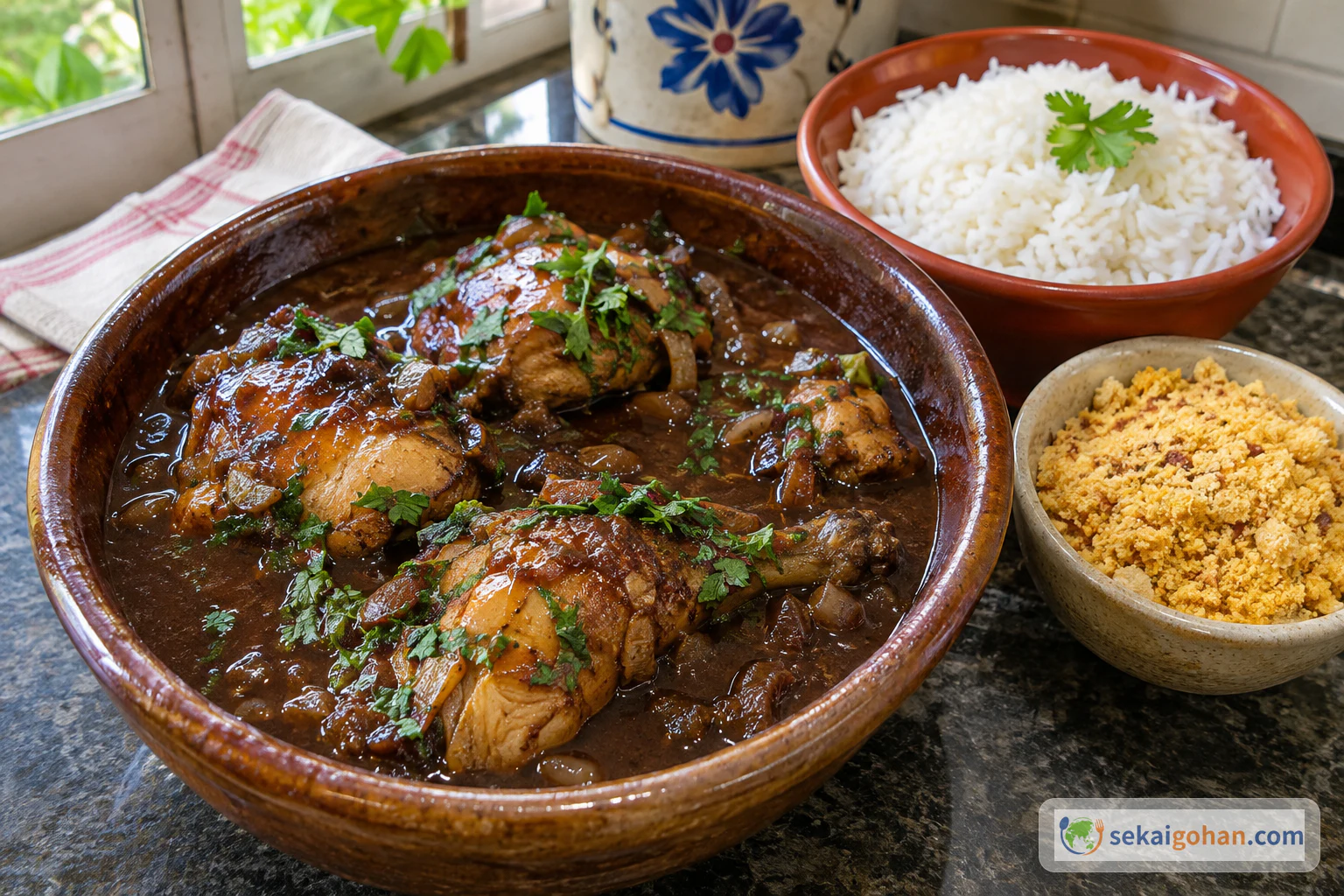
Galinha à Cabidela: Northeast Brazilian Chicken Stewed in Its Own Blood
Ingredients
| Ingredient | Amount | Role |
|---|---|---|
| Chicken (galinha), cut into medium bone-in pieces | ½ bird | The meat and the backbone of the broth |
| Salt (sal) | to taste | Seasons the chicken from the start |
| Ground cumin (cominho) | to taste | Warm, earthy aroma |
| Colorau | to taste | Red color in the seasoning |
| Tempero baiano | to taste | Brazilian mixed seasoning that rounds out the spice |
| Chili or pepper (pimenta) | to taste | Heat |
| Tomato (tomate), chopped | 1 | Acidity and moisture |
| Onion (cebola), chopped | 1 | Sweetness |
| Garlic (alho), crushed | 3 cloves | Aroma in the pot |
| Bell pepper (pimentão), chopped | ½ | Green, peppery aroma |
| Fresh coriander (coentro), chopped | to taste | In the pot and scattered over at the end |
| Tomato paste (extrato de tomate) | ½ teacup (½ xícara de chá) | Color and savory depth |
| Hot water (água quente) | 4¼ cups (1 L) | The broth |
| Fresh chicken blood (sangue de galinha) | 1 teacup (1 xícara de chá) | Thickens, darkens and enriches the sauce |
| Vinegar (vinagre) | a little | Mixed into the blood so it stays smooth |
| Garlic, for the blood mixture | a little | Flavors the blood before it goes in |
| Fresh coriander, for the blood mixture | a little | Flavors the blood before it goes in |
Steps
1Season the chicken in the pot
Put the medium bone-in chicken pieces in a large pot. Sprinkle over salt, cumin, colorau, tempero baiano and chili. Mix well with your hands, rubbing the seasoning into every piece and into the folds of skin. The chicken is ready when every surface is evenly tinted red-orange and no pale patches remain.
2Cook with the vegetables and tomato paste
Add the chopped tomato, onion, crushed garlic, chopped bell pepper, coriander and the tomato paste to the pot. Set it over heat and stir so the paste coats the chicken. Cook for 5 minutes, stirring now and then. Move on when the tomato has softened into a moist red coating around the chicken and the onion smells sweet.
3Mix the blood with vinegar and strain it
Heat the water in a kettle or saucepan now so it is hot when you need it. Pour the blood into a small bowl and add a little vinegar, a little garlic and a little coriander. Beat everything together until the mixture is smooth and even. Pour it through a fine-mesh sieve into a clean bowl. The strained blood should run smooth and dark red, with any clots and solids left behind in the sieve.
Vinegar first, alwaysMix the vinegar into the blood before it goes anywhere near the pot. Blood clots easily, and the vinegar keeps it liquid long enough to pour it in smoothly. Straining afterward catches anything that has already set, so the finished sauce comes out silky.
4Add the hot water and bring to a boil
Pour the hot water into the pot over the chicken and vegetables. Scrape the bottom with a wooden spoon to lift any tomato paste that has stuck. Turn up the heat and bring it all to a boil. Move on when the broth is at a full boil and has turned an orange-red from the tomato.
5Pour in the strained blood
With the broth boiling, pour the strained blood mixture into the pot in a steady stream. Then stir it through the broth so it spreads evenly. Watch the color: the red broth turns dark brown as the blood mixes in. Continue once the whole pot has gone the same dark shade with no red streaks.
Wait for the boilAdd the blood only once the water has come back to a full boil. A boiling broth takes the blood in cleanly and starts to darken right away. Have the strained bowl next to the stove before the water goes in, so you are not straining while the pot waits.
6Simmer until tender and thick, then finish with coriander
Simmer the stew until the chicken is tender and the sauce has thickened. Stir from the bottom now and then so the thickening sauce does not catch. It is done when the chicken is tender and the sauce coats a spoon in a thick, glossy brown layer. Taste and adjust the salt, cumin and chili, then scatter chopped coriander over the pot.