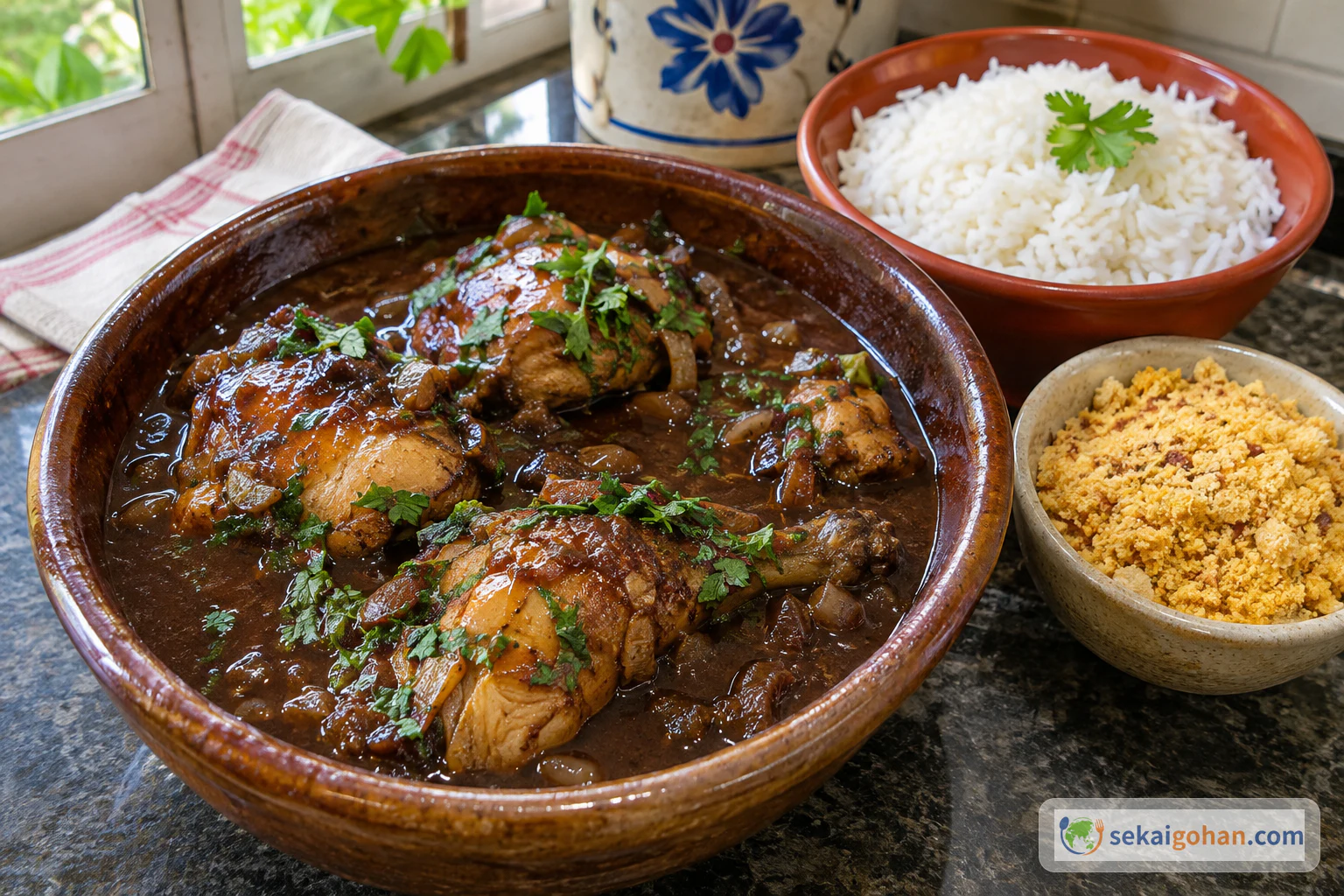
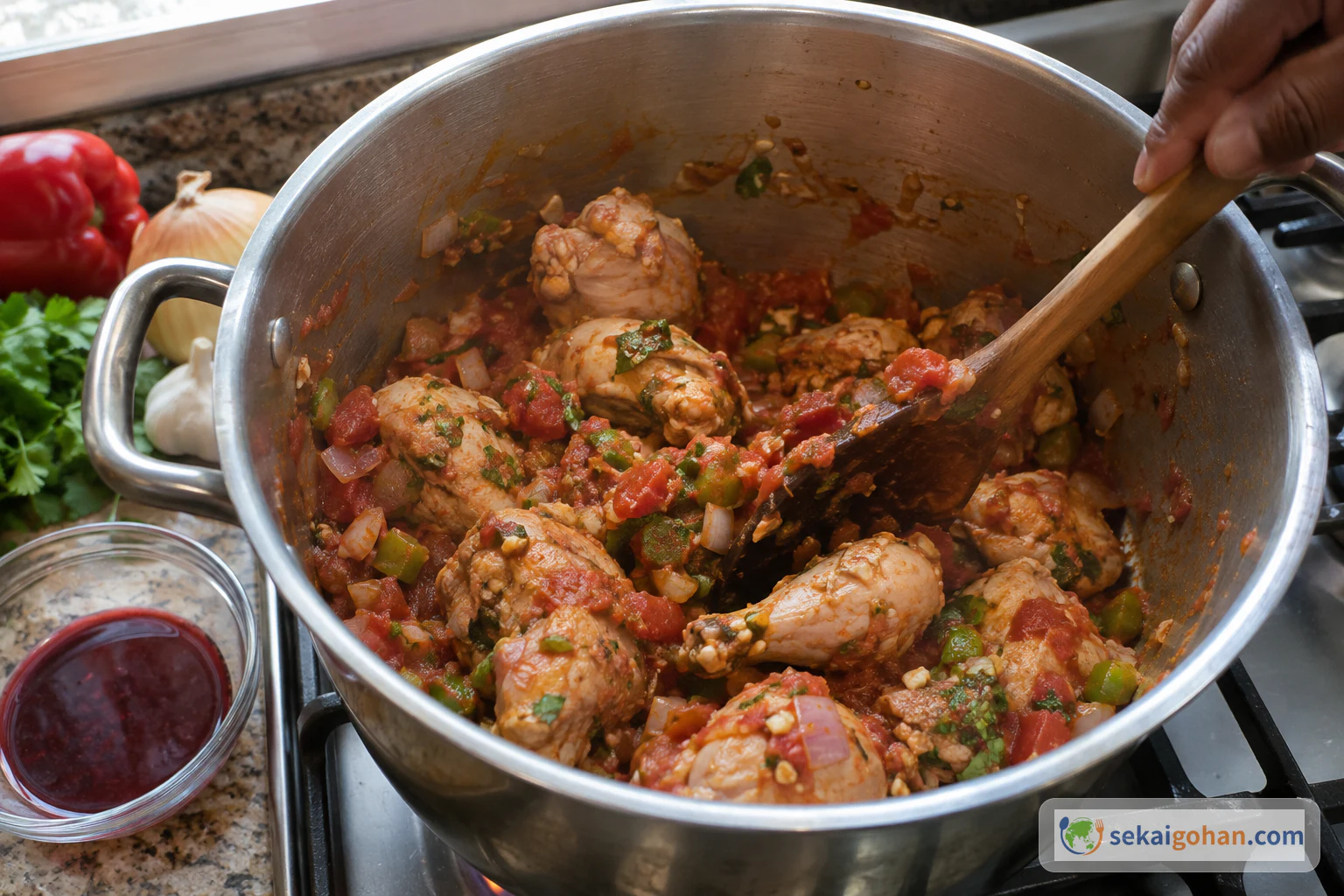
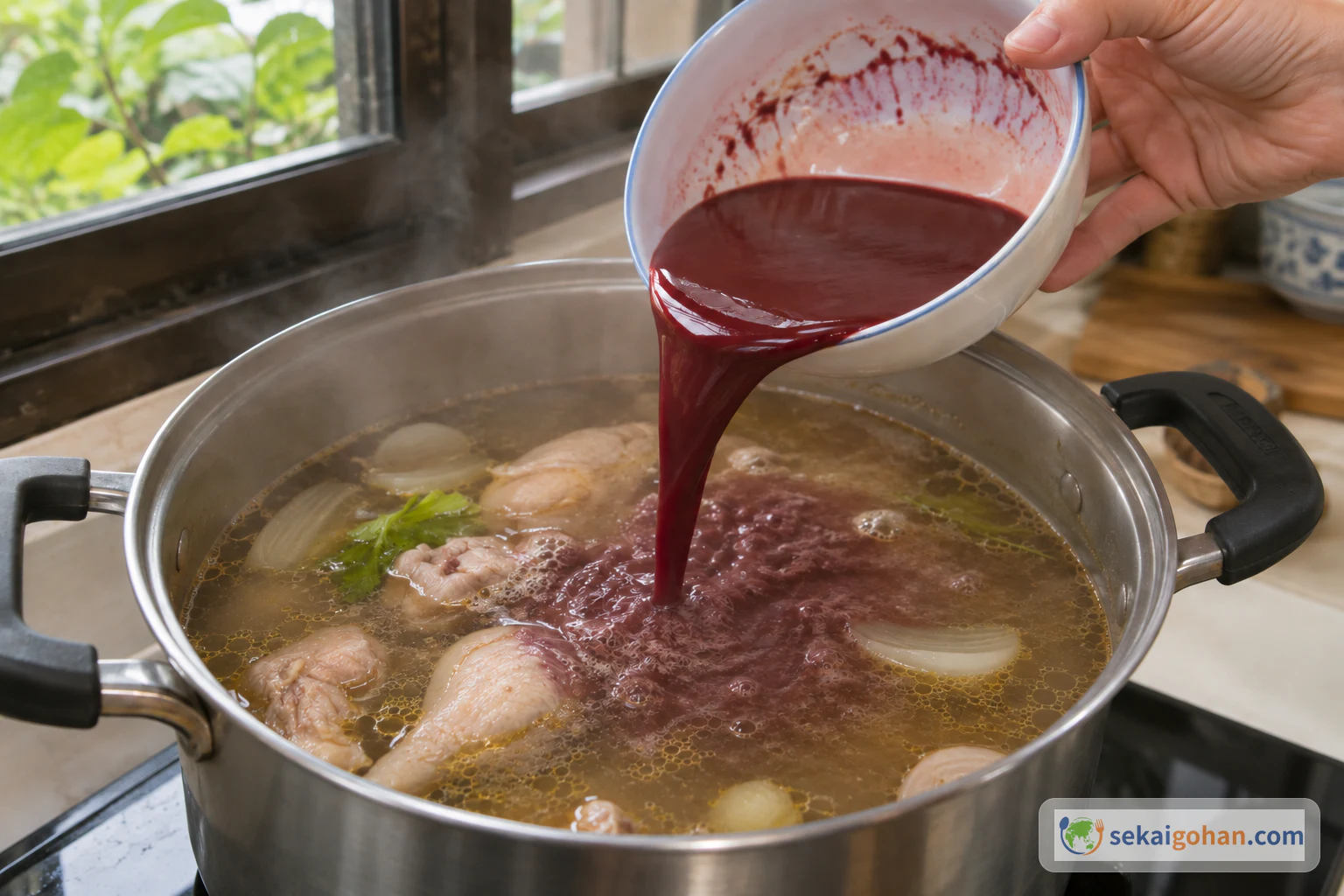
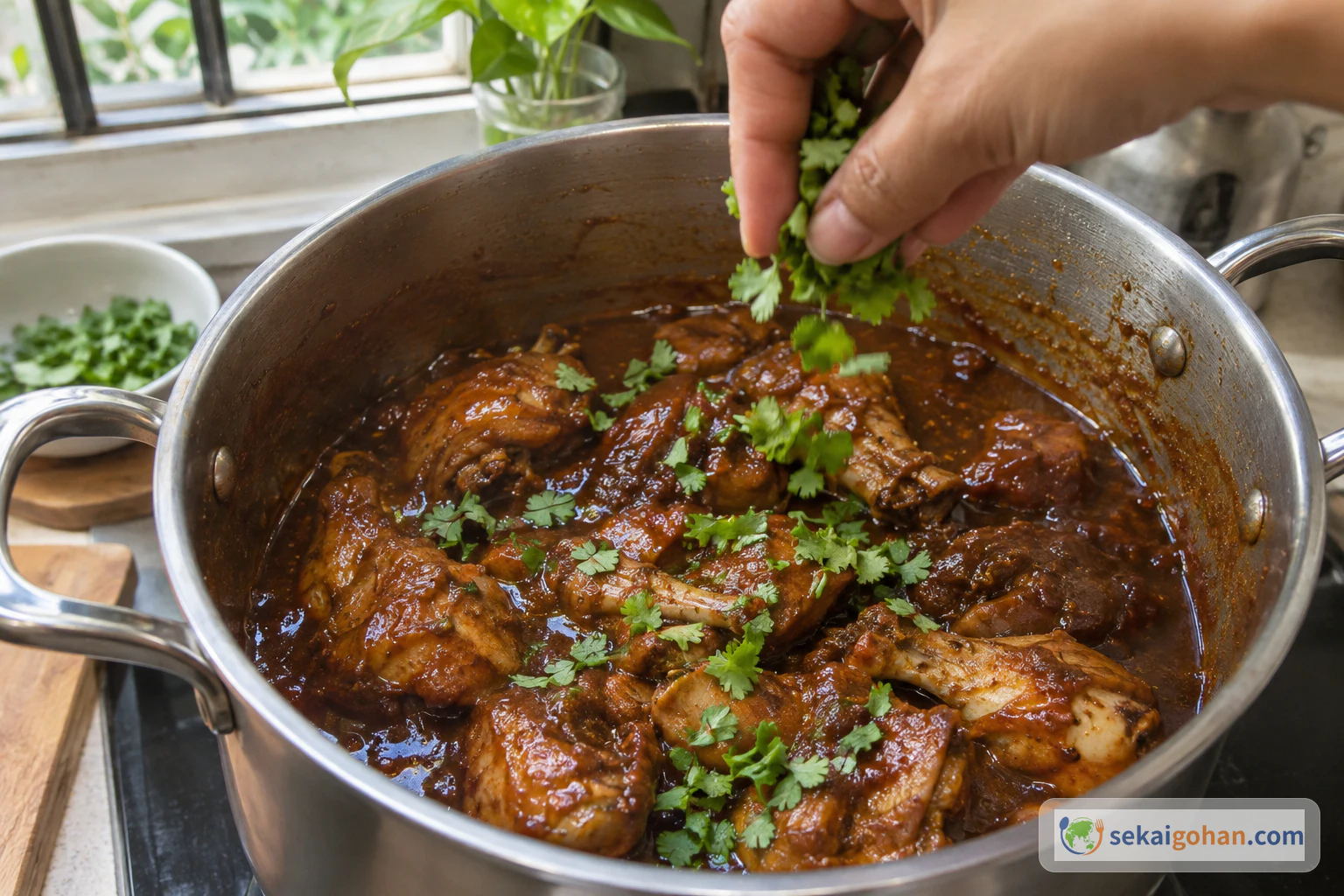
The tomato broth is boiling hard and the kitchen smells of cumin and coriander. Then a small bowl of strained blood goes into the pot, and the red broth turns a deep, glossy brown that slowly thickens around the chicken. That is galinha à cabidela, a chicken stew from northeast Brazil whose sauce gets its body, color and depth from the bird's own blood. It tastes savory and full, with tomato and pepper in the background and a little sharpness from vinegar. In Alagoas it comes to the table with rice, beans, pirão and salad, and people work the dark sauce into their farofa with a fork.
Chicken, Blood and a Dark Sauce from Alagoas
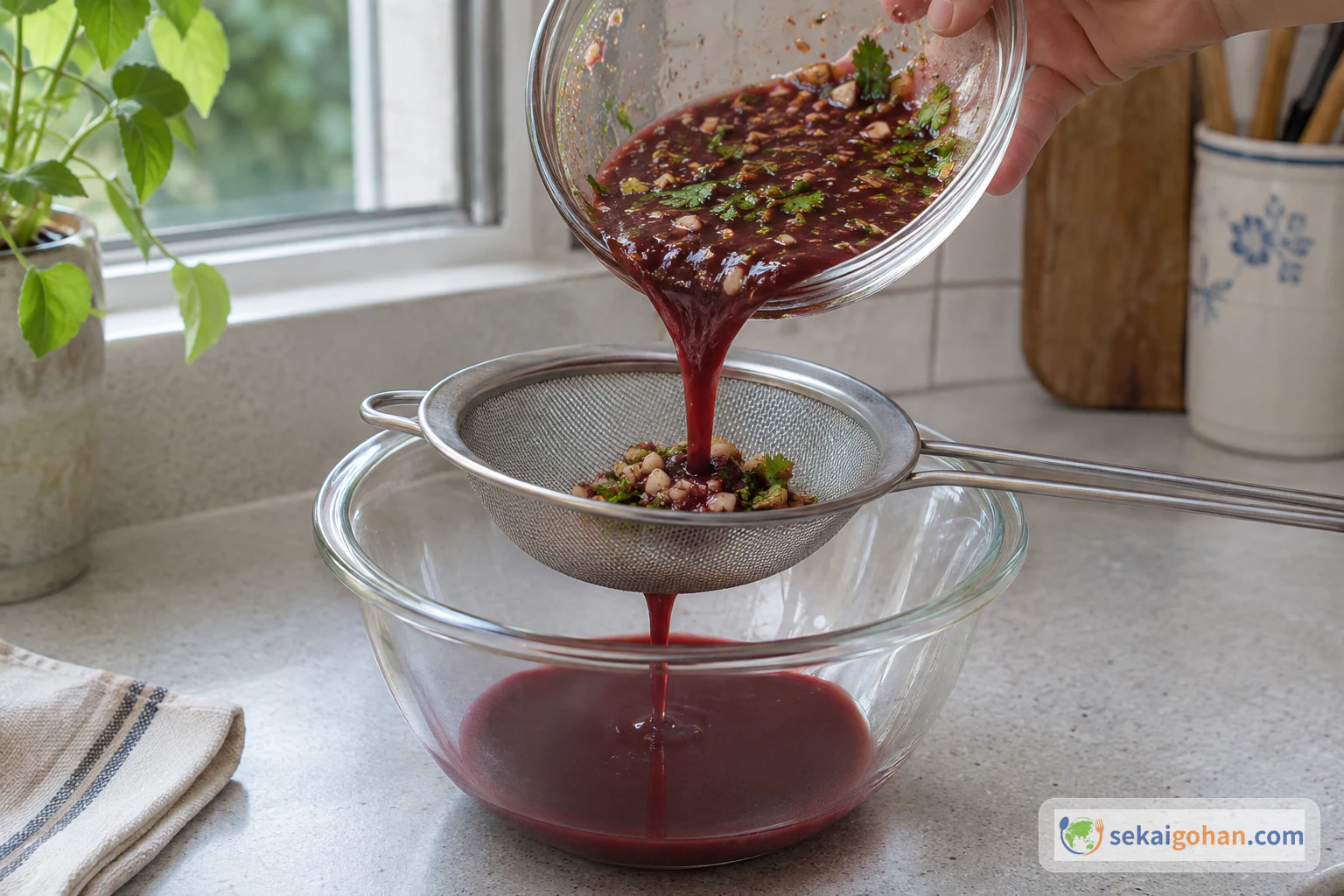
In Alagoas the dish has two names, galinha à cabidela and galinha ao molho pardo, and people use them for the same pot. Molho pardo means "brown sauce," which describes what the blood does to the broth. The blood never goes in raw and alone. It is mixed with vinegar first, or with lemon, so it stays smooth instead of clotting. In some kitchens garlic and coriander are beaten in too, and then the mixture is strained before it meets the chicken.
In Alagoas it counts as a local tradition rather than a restaurant novelty. A small eatery in Marechal Deodoro serves it as a house specialty, and one bar in Ipioca has been cooking it for more than forty years. The sides stay fairly constant: straw-colored rice, homemade beans, pirão, farofa and a fresh salad. The rice is always cooked separately and spooned next to the chicken. The sauce is the point of the plate, so everything else on it is there to soak it up.
Portugal has a cabidela of its own, arroz de cabidela, and the two are easy to confuse. In the Portuguese dish the rice cooks in the same pot as the meat, and the blood and vinegar go in at the very end. The Brazilian galinha à cabidela keeps the rice apart and lets the chicken simmer in the darkened sauce until it is tender. If you want a Brazilian chicken stew with another color entirely, xinxim de galinha is built on a different base. More dishes from the same kitchen are collected under Brazil.
Galinha à cabidela (also called galinha ao molho pardo) is the blood-thickened chicken stew of Alagoas. Arroz de cabidela is the Portuguese version, with the rice cooked in the pot. Some Brazilian recipes also use the name "Cabidela" for a big blood-free pot of beef, paio sausage, chicken and eggs cooked for sixty people. That one is a different dish altogether.
Ingredients (serves 6)
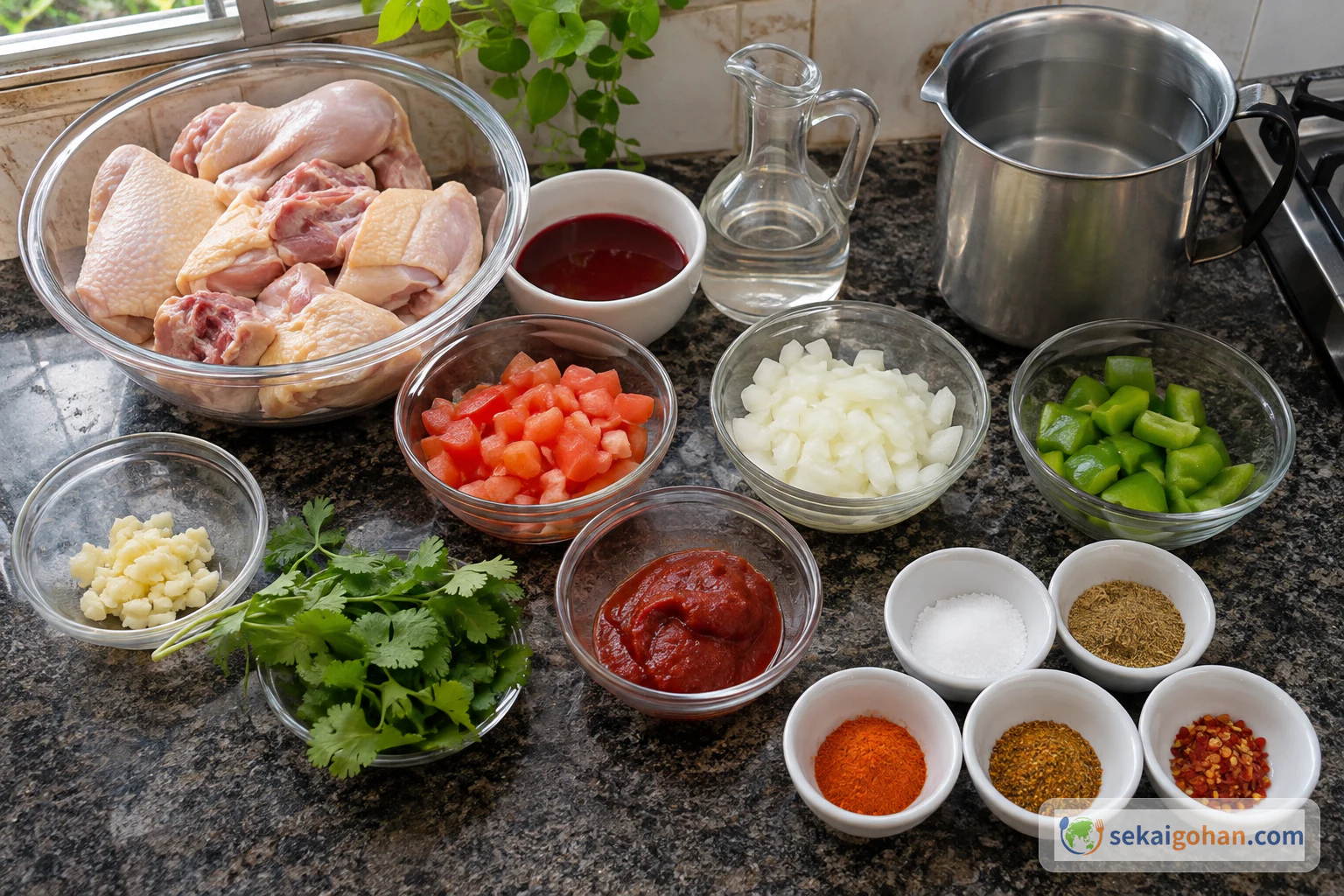
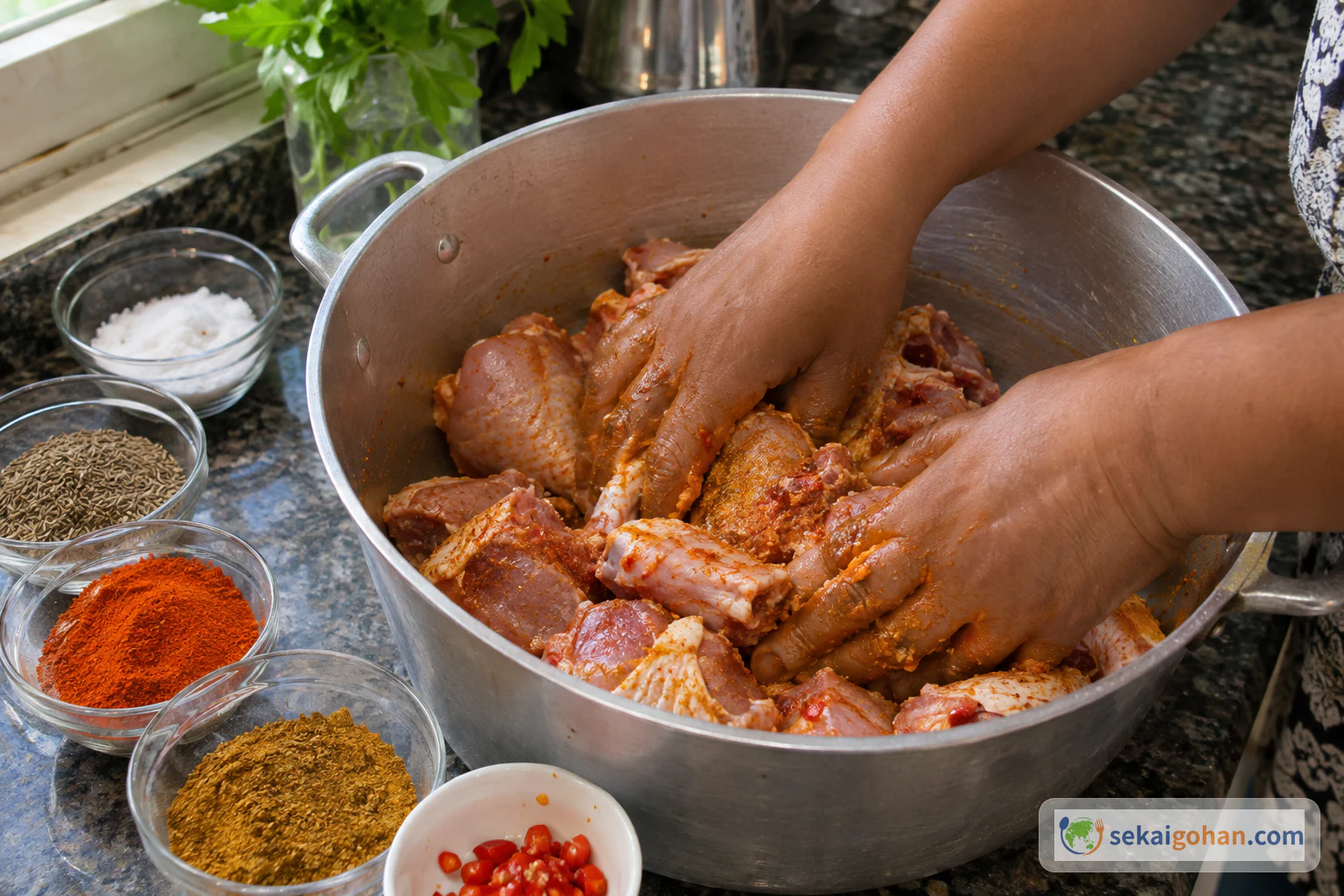
The spices are added to taste, so season the chicken lightly at first and taste the finished sauce before adding more.
None of the listed ingredients is a common major allergen. Tempero baiano and other spice blends can contain additional ingredients, so check their labels and any shared-facility statements.
Equipment
- Large, heavy pot with room for the chicken and the broth
- Kettle or saucepan for heating the water
- Small mixing bowl and whisk or fork for the blood
- Fine-mesh sieve
- Clean bowl to strain the blood into
- Wooden spoon
- Knife and cutting board for the vegetables
Choosing and Substituting
The blood is the one ingredient you cannot replace. In Brazil, cooks ask the butcher for fresh blood along with a fresh chicken, and they get both on the same day. Outside Brazil chicken blood can be hard to find. Without it the dish turns into a tomato chicken stew, which is a different dish.
For the chicken, pick a bird with real flavor. The stew relies on the meat and bones for its broth, so mild, quick-cooking pieces give a thinner taste. Keep it bone-in and cut into medium pieces so it holds together through the simmer.
| Ingredient | Where to look | Swap and what it changes |
|---|---|---|
| Colorau | Brazilian or Latin American grocers, online | Sweet paprika gives a similar red color, but the flavor is not the same |
| Tempero baiano | Brazilian grocers, online | Leaving it out makes the seasoning plainer. Lean on cumin and chili |
| Pimentão | Any supermarket | A green or red bell pepper both work. Red is sweeter |
| Coentro | Any supermarket | Fresh coriander (cilantro) is the same herb. Keep it fresh, not dried |
| Farofa for the table | Brazilian grocers, or make your own | Toasted cassava flour is what soaks up the sauce. See farofa |
Method: Season, Boil, Then Darken the Sauce
The work moves in one direction. You season the chicken and cook it with the vegetables. While that cooks, you mix and strain the blood, so it is ready the moment the broth boils. After the blood goes in, the pot needs time to simmer, and the cook mostly waits and checks.
Dishes made with blood can carry harmful pathogens if they are not well cooked, and some toxins survive heat. Use fresh blood and keep it and the raw chicken cold until you use them. Wash your hands, boards and bowls after handling either one. Cook the stew until the chicken is tender and cooked through to the bone and the sauce has thickened.
All the spices go in to taste, and the blood and the reduction both change how the sauce tastes. Season the chicken lightly in step 1 and make the real adjustments only when the sauce is thick.
When It Goes Wrong
| What you see | Why | What to do |
|---|---|---|
| Lumps or dark specks in the sauce | The blood clotted before it went in. It was not mixed with vinegar, or not strained | Next time, beat in the vinegar as soon as the blood is in the bowl and always strain. Skim out any large lumps now |
| The sauce stays thin | It has not simmered long enough | Keep simmering until it coats a spoon. In Alagoas some cooks also use a little farinha to adjust the broth |
| The chicken is still firm on the bone | Not cooked long enough, or a tougher bird | Keep simmering until the chicken is tender. If the sauce gets too thick first, add a splash of hot water |
| Sharp, sour taste | Too much vinegar in the blood | Use less vinegar next time. Now, a little more salt and simmering help round it out |
| Flat, dull flavor | Spices added too cautiously | Add salt, cumin and chili a pinch at a time at the end, tasting between additions |
Serving and Variations
At the table
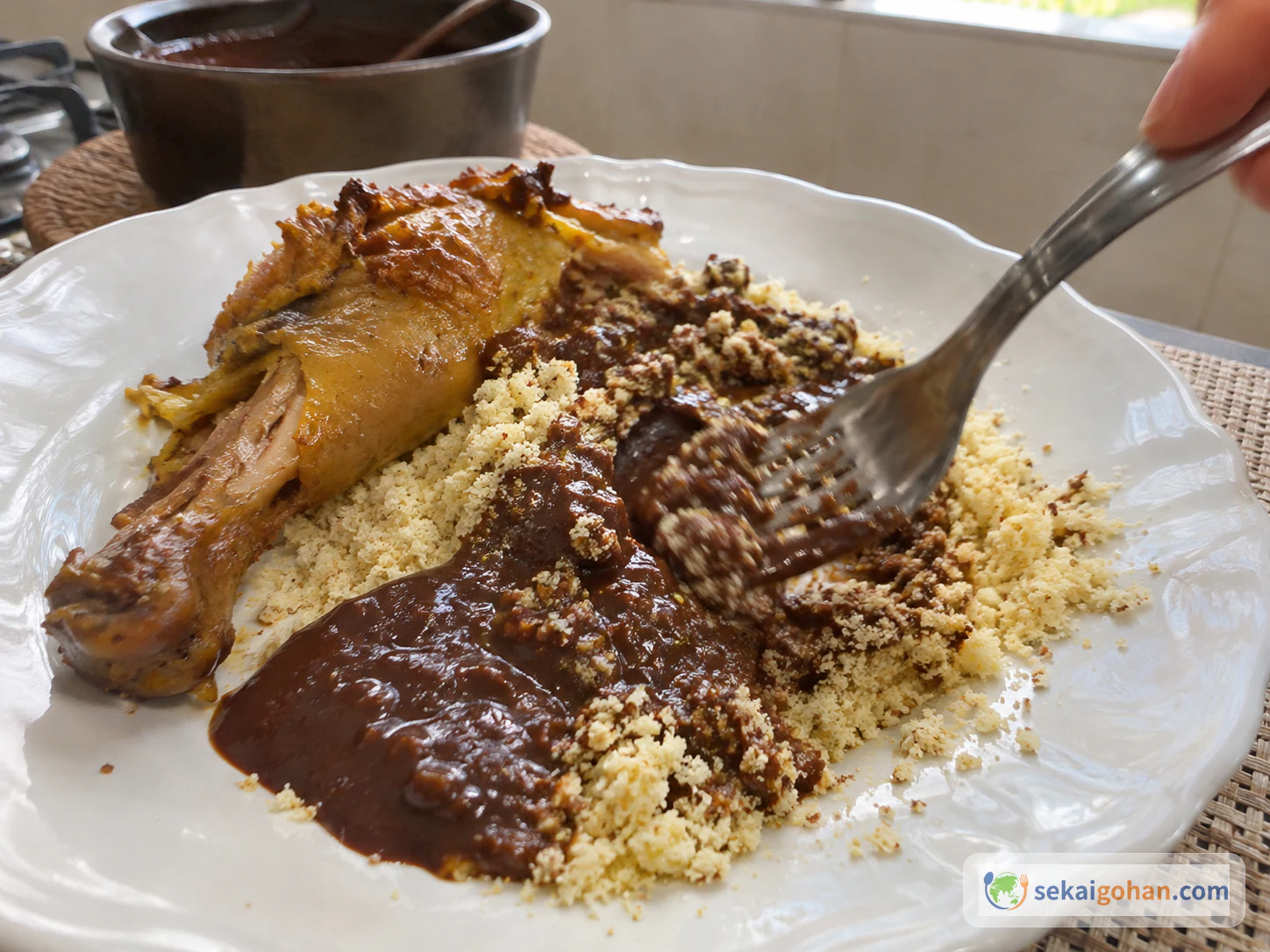
Serve the chicken and plenty of sauce with rice cooked on its own, beans, pirão and a fresh salad, the way it comes in Alagoas. Put farofa on the table too. Many people move the chicken to one side of the plate and fork the dark sauce into the farofa until it turns into a moist, savory crumble. Beans fit the meal easily. If you want a heavier Brazilian spread, feijoada belongs to the same family of slow pots.
Variations
- Herbs in the pot. One Alagoas eatery adds mint, basil and bay leaf. They make the sauce smell fresher and greener, which suits the dark, rich base.
- Farinha in the sauce. Stirring a little flour into the broth makes the sauce heavier and more spoonable, closer to pirão.
Frequently asked questions
Can I make it without blood?
You can cook the same chicken with the same vegetables and spices, but you get a red tomato stew. The sauce stays thin and lacks the dark color and depth that make the dish cabidela. Treat it as a different chicken stew and serve it the same way.
Can I use lemon instead of vinegar?
Yes. In Alagoas, cooks mix the blood with either vinegar or lemon. Add a little, beat it in well and strain the mixture as usual. Lemon gives the sauce a fresher sourness.
Which vinegar should I use?
Any plain vinegar you cook with works. Its job is to keep the blood liquid, and only a little goes in. Choose one without a strong flavor of its own so it does not take over the sauce.
Can I keep leftovers?
Let the stew cool, then refrigerate it promptly in a covered container. Reheat it until it is steaming hot all the way through and the sauce bubbles before serving. The sauce thickens as it cools, so loosen it with a little hot water while it warms.