Ingredients and steps on one page. Print it, or choose “Save as PDF” in the print dialog.
Sekai Gohan
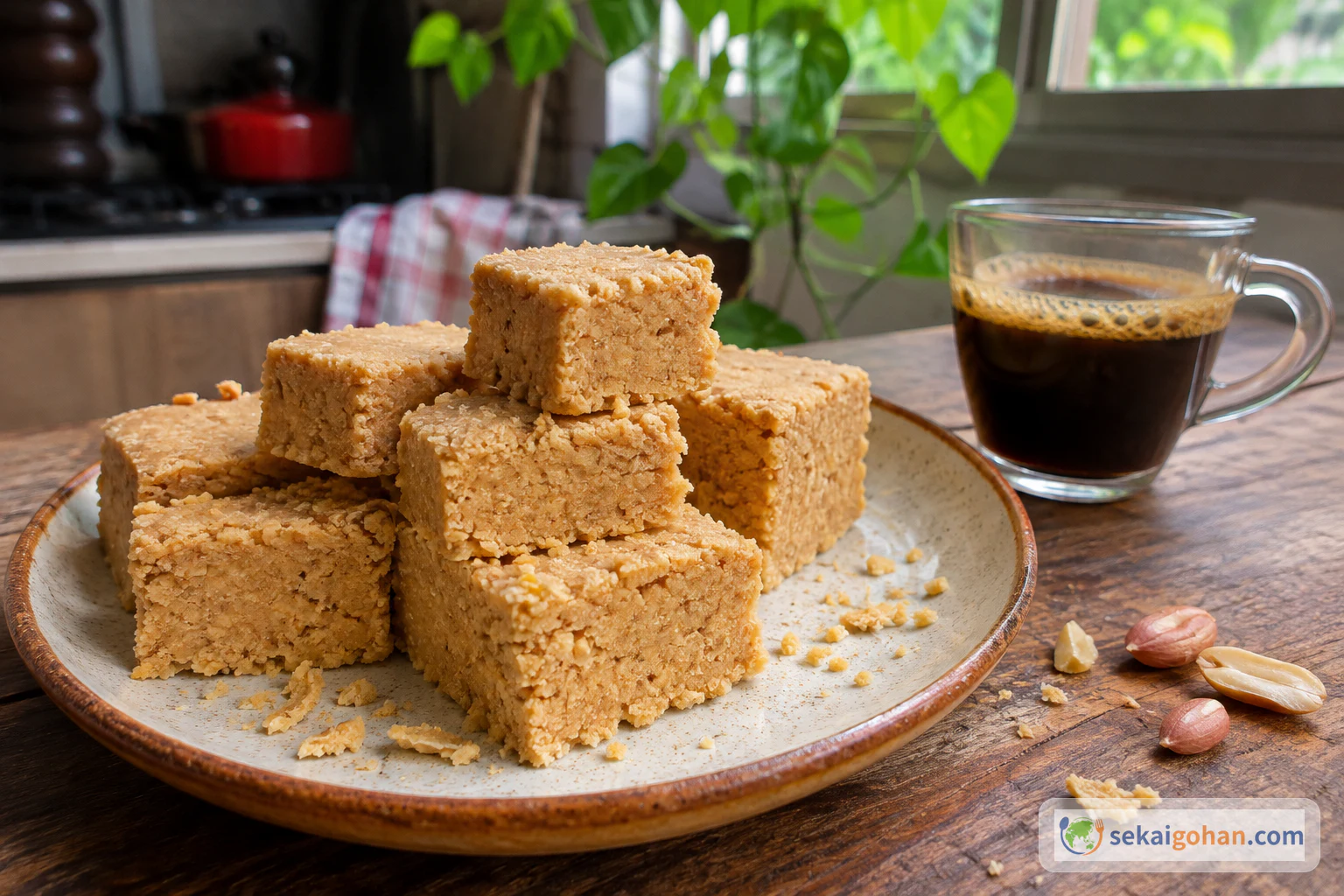
Paçoca: Brazilian Crumbly Peanut and Cassava Flour Candy
Ingredients
| Ingredient | Amount | Role |
|---|---|---|
| Raw fine white cassava flour (farinha de mandioca crua, fina e branca) | 3½ oz (100 g), weighed before toasting | The crumbly backbone of the texture |
| Shelled unsalted roasted peanuts (amendoim torrado, descascado e sem sal) | 10¼ oz (290 g) | The main flavour and body |
| Granulated sugar (açúcar cristal) | 8 oz (230 g) | Sweetness, and helps the block set |
| Salt (sal) | 1 pinch | Sharpens the sweetness |
Steps
1Toast the cassava flour
Weigh 3½ oz (100 g) of raw cassava flour and set a pinch aside on a saucer for comparing colour later. Put the rest in a large dry frying pan over low heat. Stir constantly so the flour on the bottom does not scorch, for about 7 minutes. Stop when the flour is an even pale gold all through.
2Cool the flour completely
Tip the toasted flour out of the hot pan into a bowl so it stops cooking. Leave it until it is completely cold. Set the reserved raw pinch beside it. The toasted flour should look clearly golden next to the white, and it should feel cool when you touch it.
Wait for cold flourOnly use the flour once it is fully cold. Put the reserved raw pinch where you can see it, and judge the toasting by the difference in colour rather than by the clock.
3Process into an even sand
Put the peanuts, the cooled flour, the sugar and the salt in the food processor. Run it at medium speed. Stop now and then and scrape the sides down so everything is ground evenly. Stop when the mixture is a uniform, coarse sand with no whole peanuts left and no sign of paste.
Food processor bladeTurn the processor off and let the blade stop completely before you lift the lid to scrape. Keep your fingers away from the blade.
4Squeeze-test the mixture
Take a small handful and squeeze it firmly in your fist. Open your hand and look at it. The mixture is ready when the lump holds its shape but still looks crumbly. If it falls back into loose sand, process briefly and test again.
Stop before the pasteProcess in short runs and squeeze often once the mixture looks even. Over-processing turns it into peanut paste, and then you lose the crumble that gives paçoca its name.
5Press into the lined pan
Line a small pan with parchment paper. Tip in the mixture and spread it into the corners. Press down hard with your palm and the back of a spoon until the surface is level. Stop when the slab is dense and compact all over, with no loose crumbs at the edges.
6Cut and unmould
Cut the pressed slab into squares or rectangles with a sharp knife. Lift the pieces out of the pan gently, using the parchment to help. Handle them lightly, because they are firm but fragile. The pieces are done right when they keep clean edges and shed only fine crumbs.