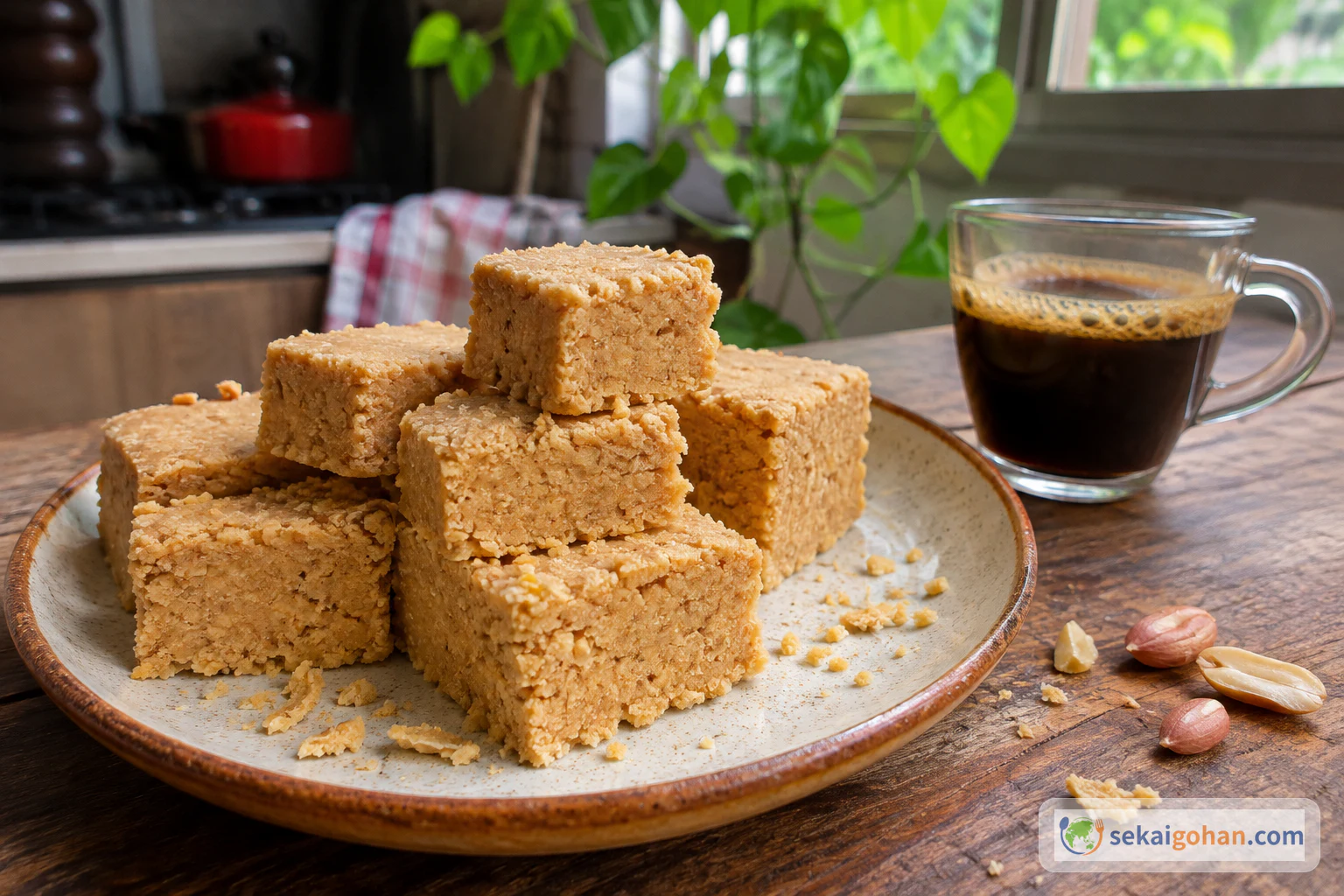
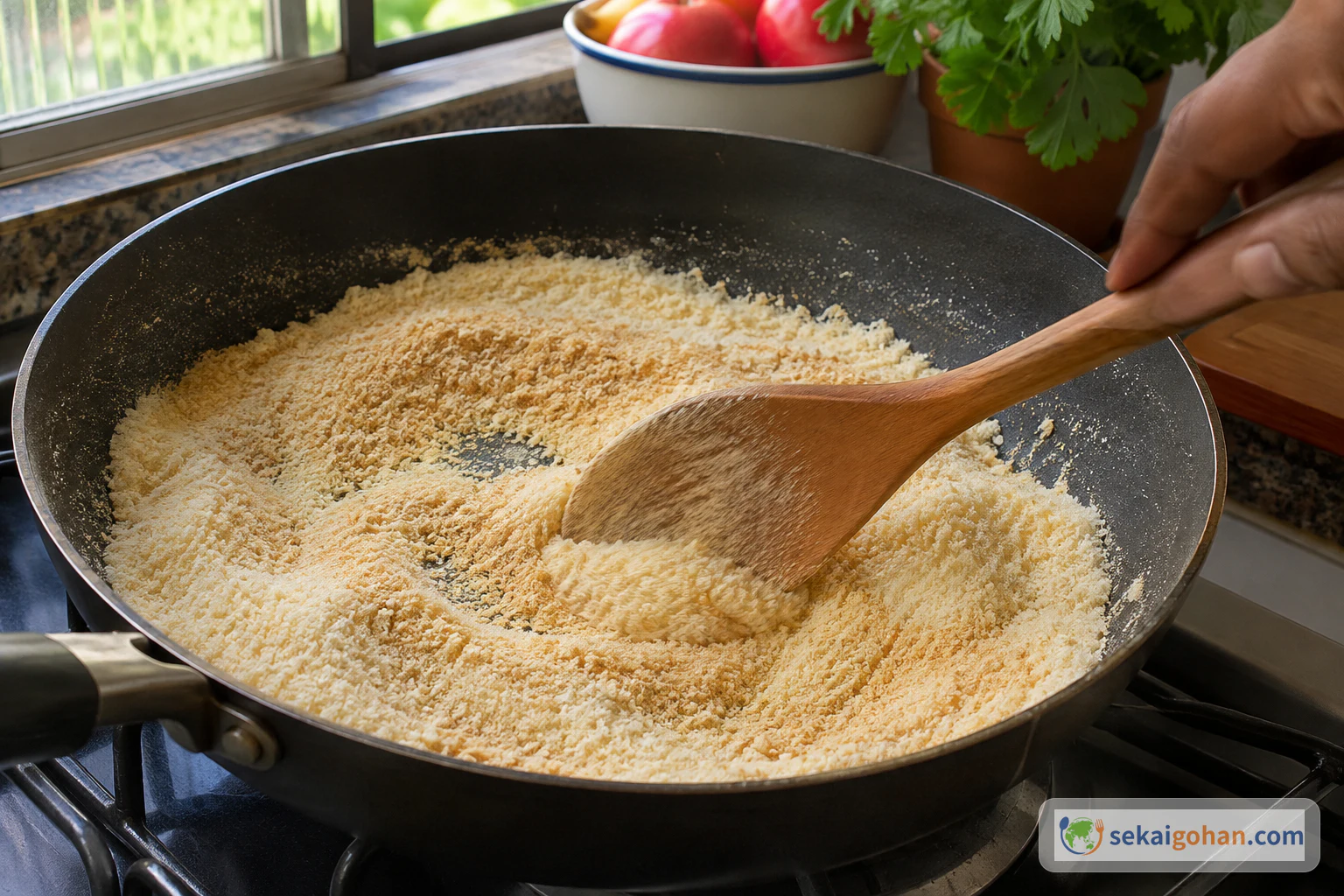
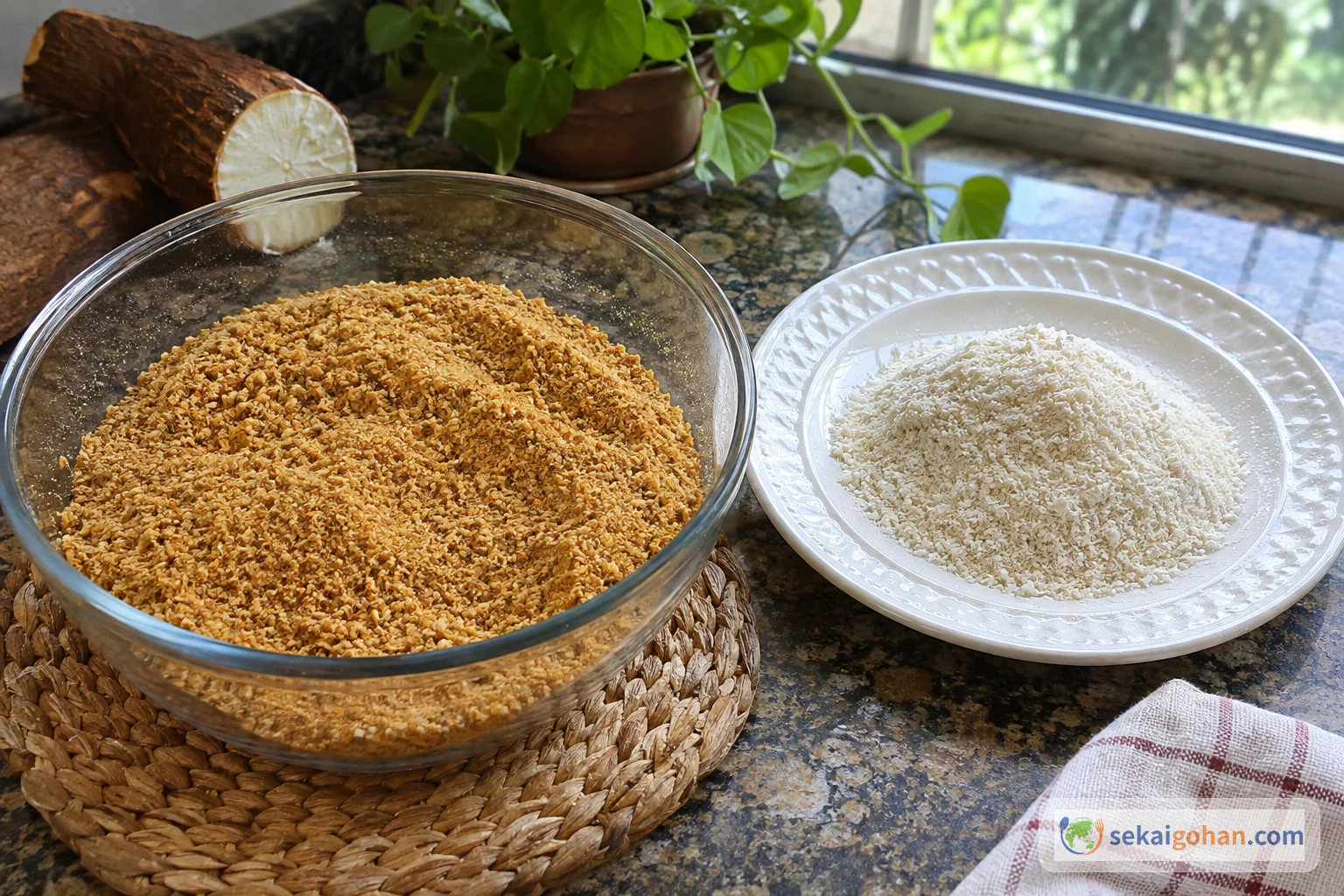
The cassava flour starts out chalk-white in the dry pan. After a few minutes of steady stirring over low heat it turns a pale, even gold, and that colour decides the whole sweet. Paçoca de amendoim is ground peanuts, toasted cassava flour and sugar pressed into a block and cut into small squares. It belongs to Brazil's June festivals and to the afternoon cup of coffee. One bite is sweet and deeply peanutty, with a pinch of salt that sharpens it, and the piece crumbles softly as you eat it.
A Name That Means "Crumble"
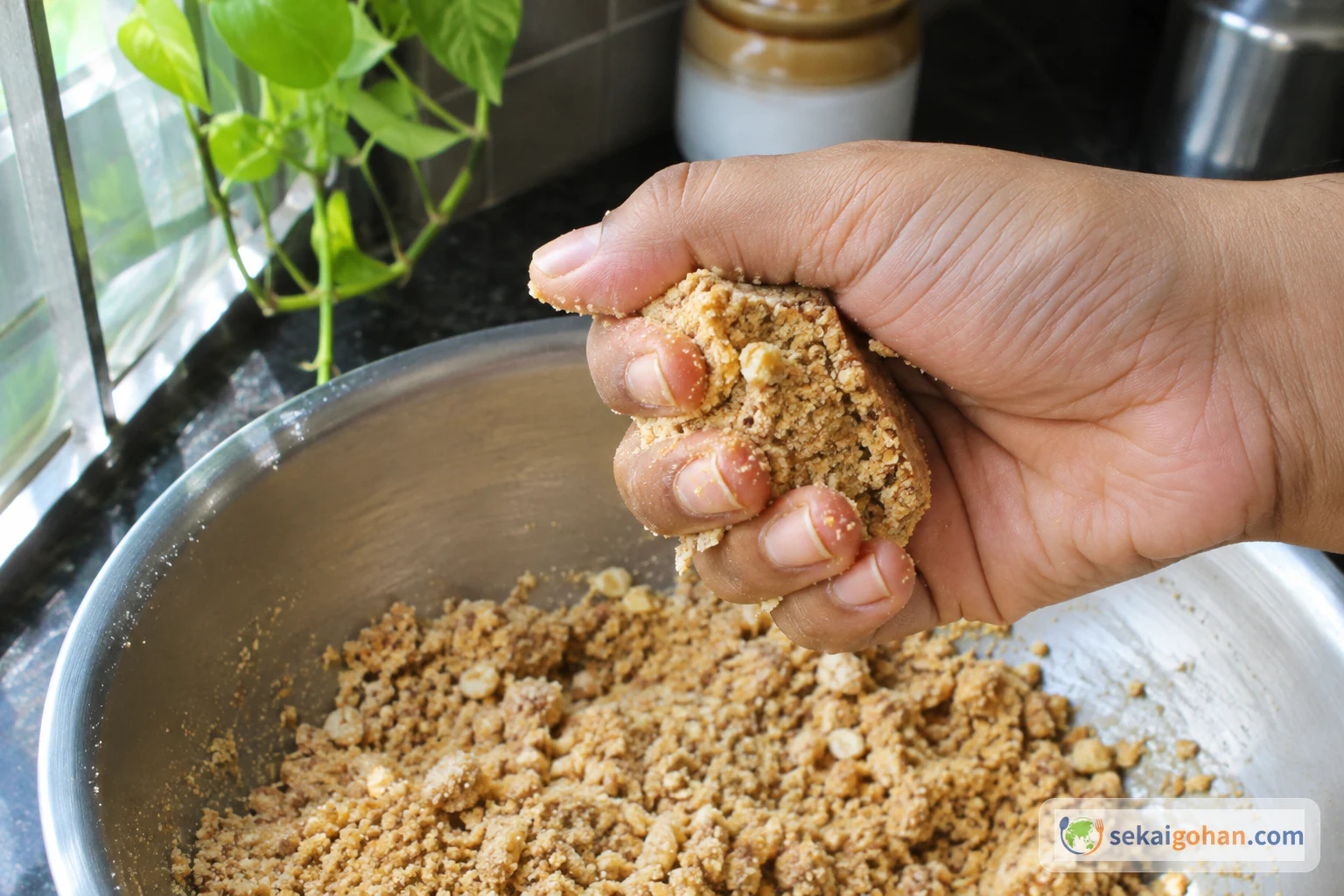
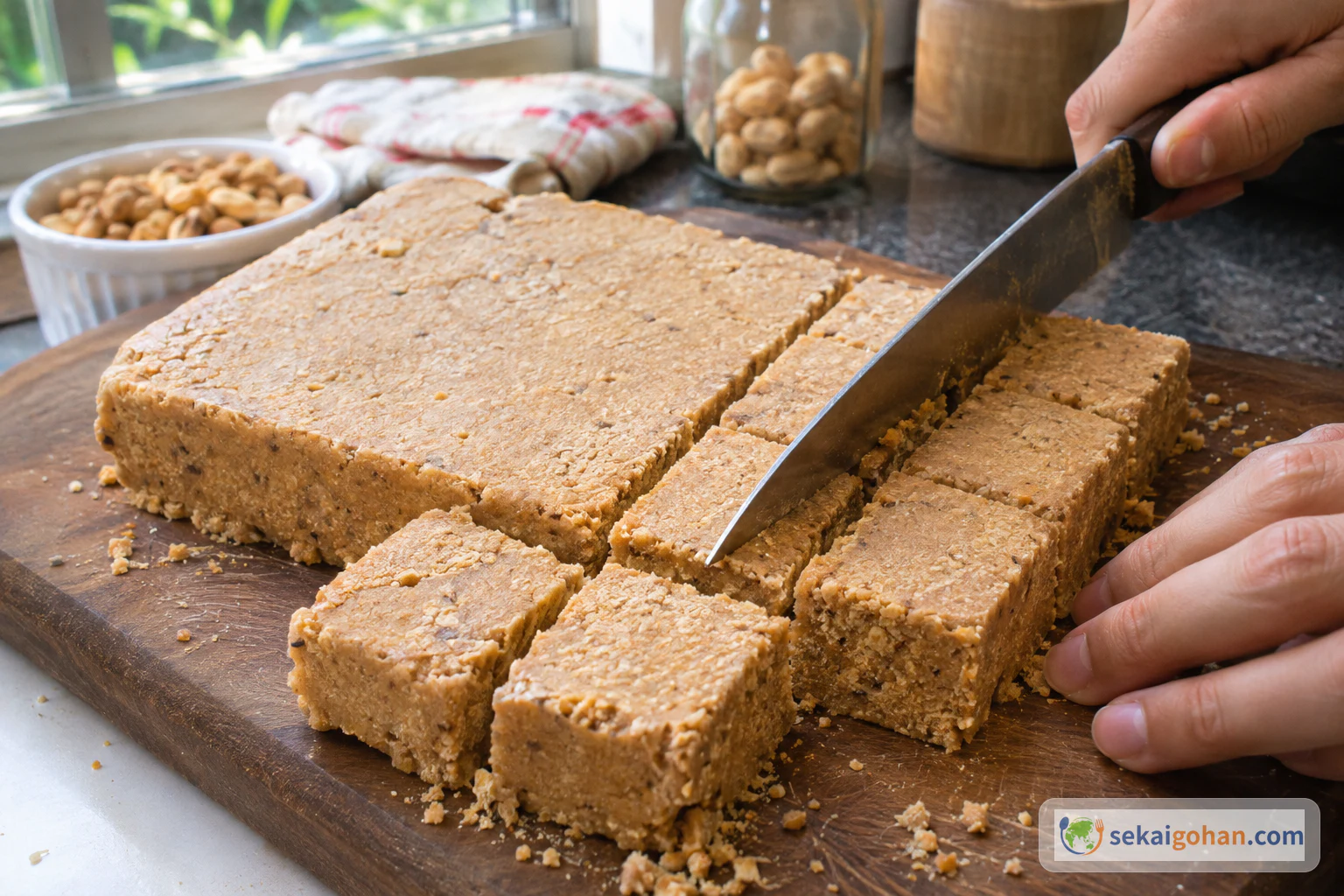
The word paçoca is usually traced to the Tupi pa-soka, which means to crumble or break apart by hand. The name fits. A good piece holds its shape when you cut it and pick it up, then breaks into fine, sandy crumbs the moment you bite. The traditional sweet is made from roasted peanuts that are ground, then shaped and pressed firm enough that they do not fall apart under the knife.
Brazil has two paçocas, and they share only the name and the cassava flour. The older one is savoury. It began as an Indigenous dish of flour and meat pounded together in a mortar, and it is said to have spread with travellers, mine workers and the tropeiros, the mule-train drivers, because it was easy to carry on long journeys. The paçoca in this recipe is the sweet one, made with peanuts and sugar.
From São Paulo's interior to the June festivals
The sweet version is usually said to come from the interior of São Paulo state, which today grows about 80% of Brazil's peanuts. In its early days it was reportedly called doce de amendoim, simply "peanut sweet", with the name paçoca taking hold around the 1980s; that timeline is not settled. It is now a fixed part of the Festa Junina, the June festivals, and a typical sweet of the Southeast. For more of the country's cooking, see our Brazil page.
This recipe makes squares or rectangles. A popular shape is the rolha, a small round "cork". Some homes also pack the loose mixture into paper cones and eat it straight from the cone.
Ingredients (makes 15 pieces)
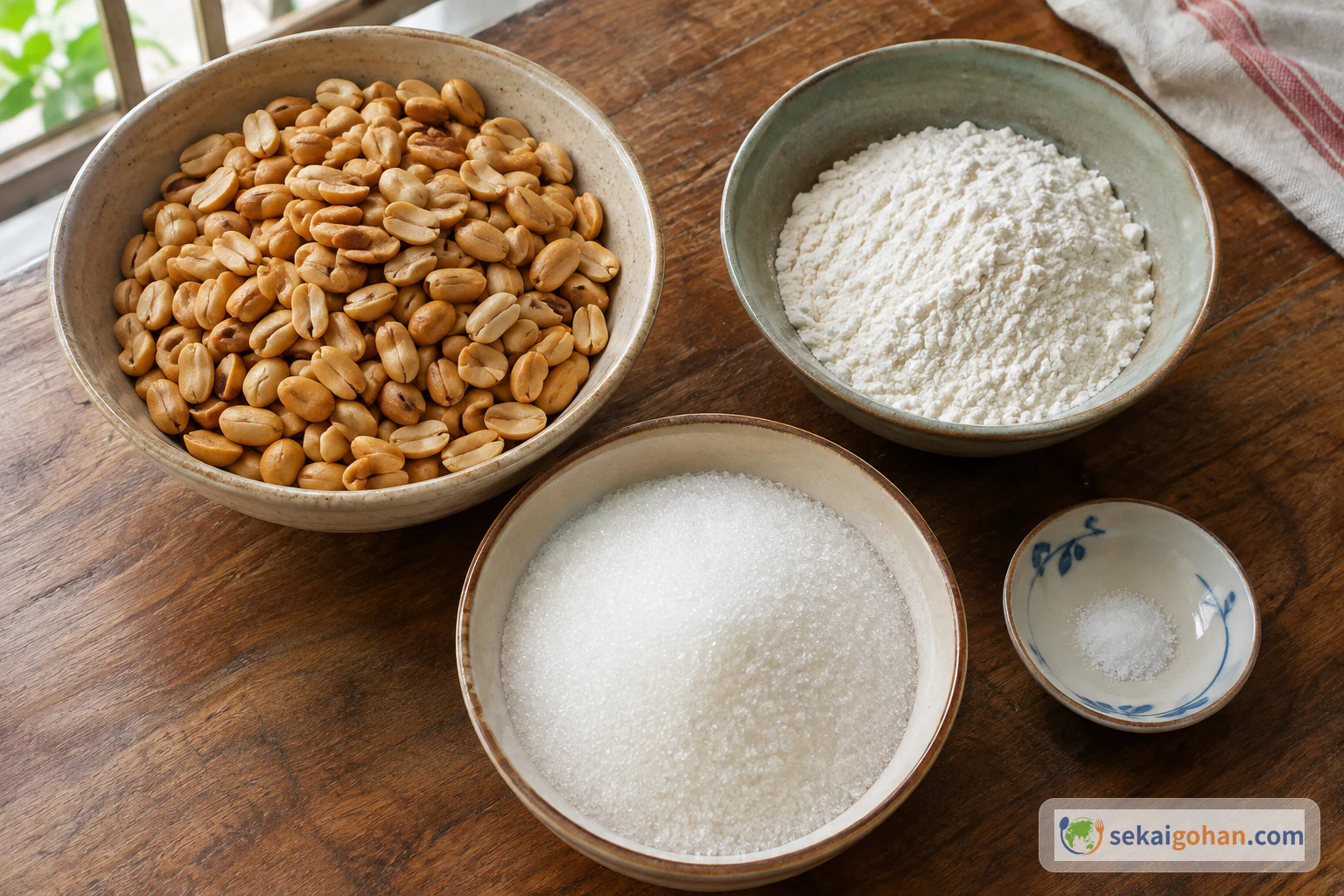
Weigh everything on a kitchen scale. The block holds together only through the peanuts, sugar and pressure, so the weights are the recipe.
Paçoca is built on peanuts, a major allergen. Keep it away from anyone with a peanut allergy, and read the labels on the peanuts and cassava flour for other allergens and shared-facility statements.
Equipment
- Kitchen scale
- Large frying pan
- Wooden spoon or heatproof spatula
- Small saucer for the reserved raw flour
- Food processor
- Rubber spatula for scraping
- Small pan or mould
- Parchment paper
- Sharp knife and cutting board
Choosing and Substituting
Cassava flour is the one thing worth tracking down. Look for Brazilian farinha de mandioca in a Brazilian or Latin American shop or online, and choose the fine, white, raw kind, labelled crua. You toast it yourself at home.
Potato starch, tapioca starch and wheat flour are different ingredients. Each one changes the texture, and none gives the sandy crumble of paçoca. Treat them as a different sweet rather than a stand-in.
For the peanuts, buy them shelled, skinless, unsalted and already roasted. They are usually easy to find in a supermarket, and you do not roast them again. Ordinary granulated sugar is a close match for Brazilian açúcar cristal.
Method
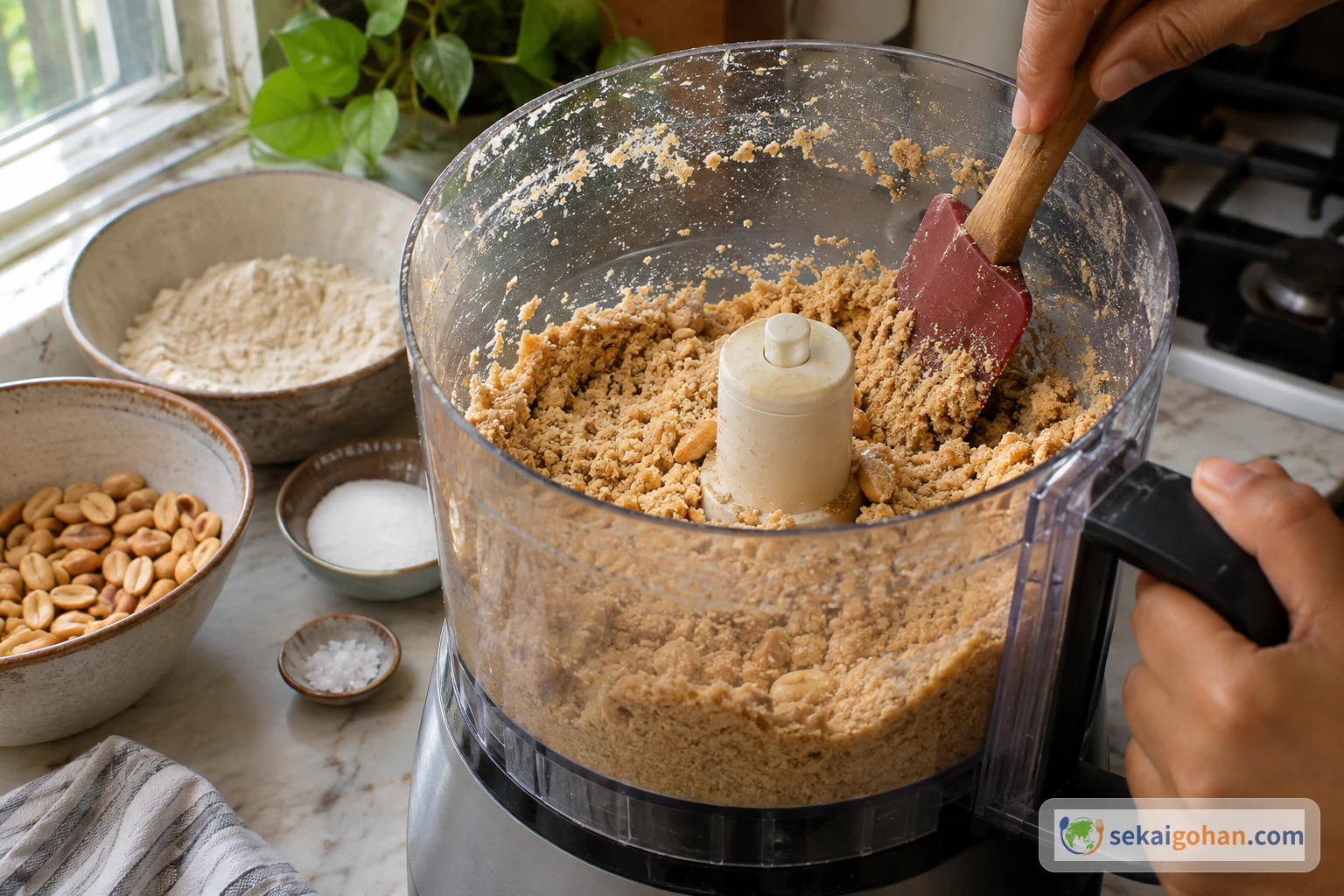
The whole sweet takes about 20 minutes, and the only heat is the toasting of the flour. Toast it first. While it cools completely, weigh the peanuts and sugar. After that it is all processor and hands.
When It Goes Wrong
| What you see | Why | What to do |
|---|---|---|
| The mixture is glossy and smooth, like peanut butter | Processed too long, so the peanut oil came out | Next time process in short runs and squeeze-test as soon as the mixture looks even |
| The squeezed lump falls apart | Processed too little | Process briefly and squeeze again |
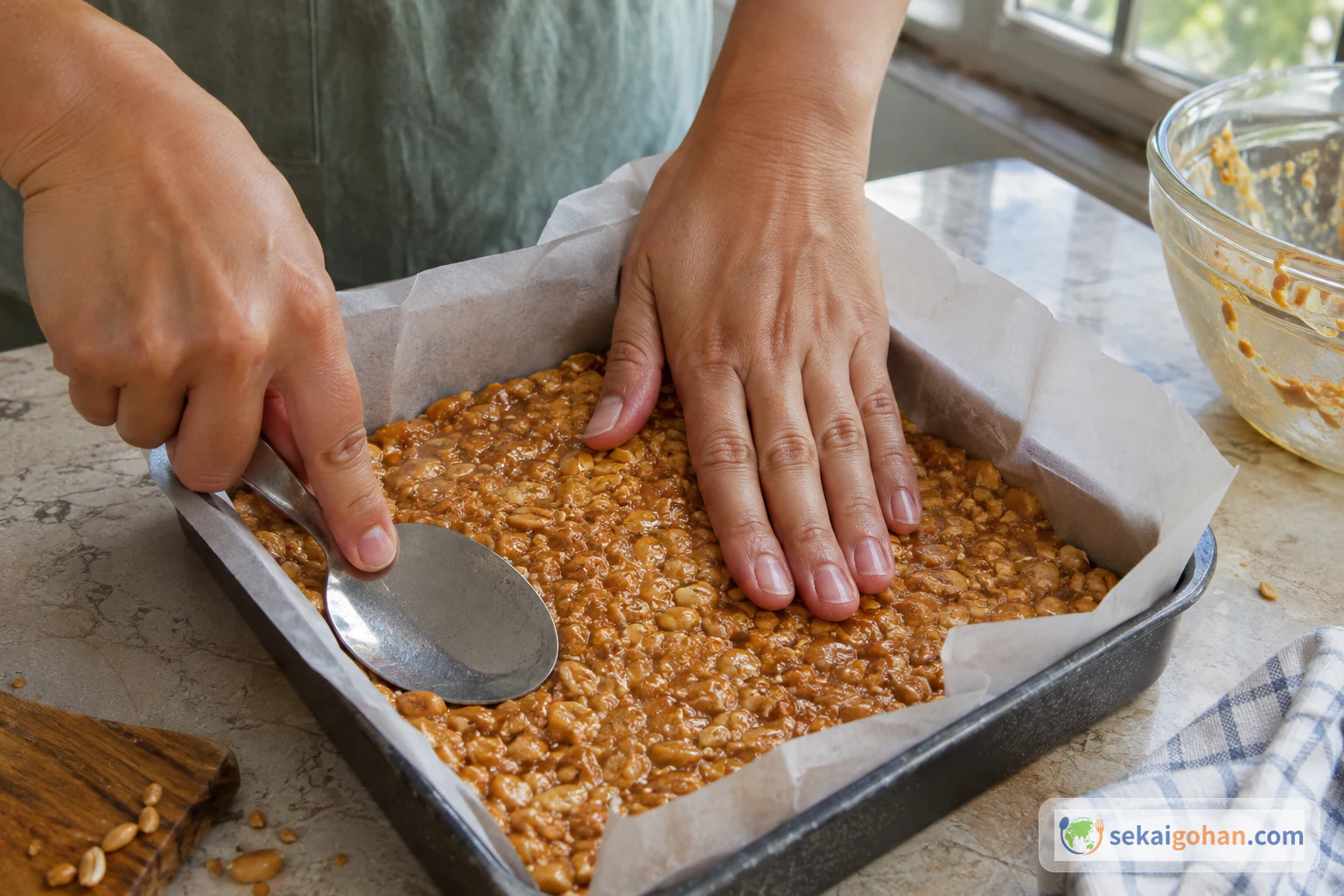
| The pieces crumble apart as you cut | The slab was not pressed hard enough | Press firmly into every corner until the surface is dense and level |
| The flour tastes flat and floury | Toasted too little | Toast until it is clearly golden next to the raw pinch |
| The flour has dark or scorched specks | Heat too high, or not stirred enough | Start again with fresh flour over low heat, stirring constantly |
Serving and Variations
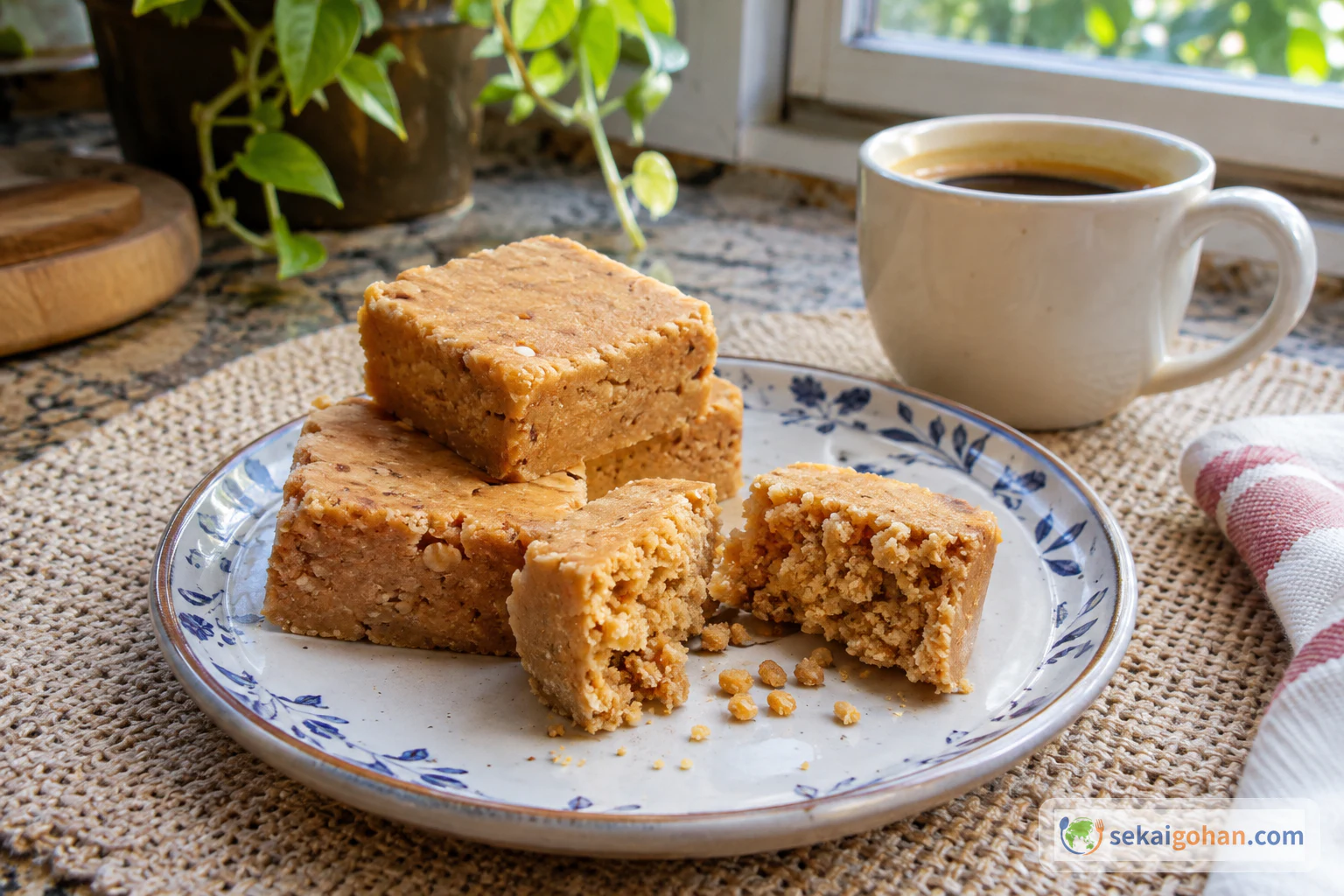
Eat paçoca at room temperature, on its own or with a cup of coffee. During the June festivals it sits beside the other festival sweets. At home it makes a small afternoon treat, and a crumb or two always lands on the table.
Variations
- More peanut, less sugar. Some households use a mix that is heavier on peanuts and much lighter on sugar, and they serve it loose in paper cones. It is served loose, so it does not need to hold a firm cut.
- Powdered sugar and finely ground flour. This version uses powdered sugar and grinds the flour fine.
- The cork shape. Press the mixture into small rounds instead of a slab for the rolha shape. Follow the same mixture; the rounds are small.
Frequently asked questions
Can I use peanut butter instead of whole peanuts?
Peanut butter is already a paste, and that is the stage this recipe is careful to stop short of. This recipe is written for whole roasted peanuts, and peanut butter would not give the sandy crumble described here. Start from whole roasted peanuts.
Can I use salted peanuts?
Use unsalted peanuts. The single pinch of salt is enough to sharpen the sweetness, and salted peanuts would make the whole block taste salty.
Why toast flour that is sold ready to use?
The flour for this sweet is sold raw, which is why the label says crua. Toasting it in the dry pan is the only cooking in the recipe, and it gives the flour its golden colour and its role in the texture.
Can I cut down the sugar?
The sugar sweetens, and it also helps the pressed mixture set into a block that you can cut. Keep the full amount for squares. For a less sweet result, try the looser paper-cone style instead.